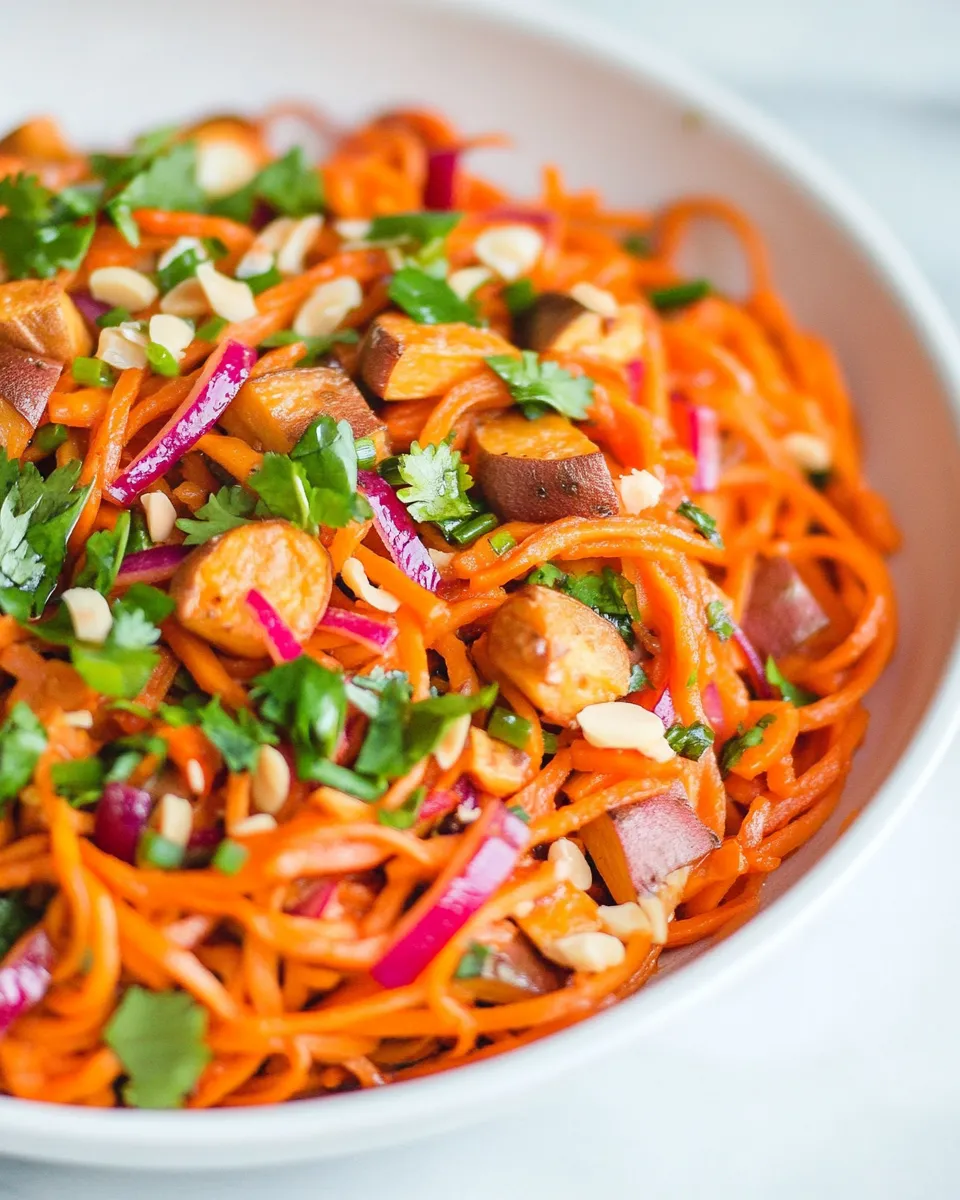
This is a weeknight recipe I come back to when I want something bright, textural, and quick enough to make after work. It leans on a creamy, tangy almond sauce that clings to spiralized sweet potatoes and ties together chunks of tofu and crisp vegetables. Think sweet, salty, citrusy, and a little spicy in each forkful.
No hard-to-find ingredients and no fuss: most of the pantry items are things I keep on hand. The technique is straightforward — make the sauce, cook the veg and tofu, then finish everything in the skillet with the sweet potato noodles. It’s forgiving, which is why I can make it in different moods and seasons.
Below you’ll find a practical shopping list, the exact ingredient notes, flexible options, tools, and the step-by-step directions you’ll follow at the end. Read through the tips so the textures come out right: the sweet potatoes should be tender but still noodle-like, and the tofu should have a little golden edge.
Shopping List
- 1/4 cup creamy almond butter (or peanut butter)
- 2/3 cup water
- 1/4 cup freshly squeezed lime juice
- 1/4 cup soy sauce (regular or tamari)
- 1 tbsp minced or grated ginger
- 1 tbsp minced garlic
- 1 tbsp maple syrup (or agave syrup)
- 1 tbsp avocado oil (or another neutral oil)
- 1/2 yellow onion
- 1 Thai chili pepper or 1/2 jalapeño pepper (optional)
- 1/2 red bell pepper
- 1 cup thinly sliced red cabbage
- 1 cup chopped broccoli
- 1 cup cubed extra firm tofu (about 1/2 a 12 oz. package)
- 2 medium sweet potatoes
- 1/2 cup chopped fresh cilantro
- 1/4 cup chopped toasted almonds or peanuts
- Lime wedges for serving
Ingredients
- 1/4 cup creamy almond butter, or peanut butter — the base for the sauce; use creamy for a smooth, pourable texture.
- 2/3 cup water — thins the sauce so it coats the noodles without being gluey.
- 1/4 cup freshly squeezed lime juice — brightens the sauce and balances sweetness and salt.
- 1/4 cup soy sauce, regular or tamari — provides savory umami; tamari if you want gluten-free.
- 1 tbsp minced or grated ginger — sharp, aromatic bite; grate for best texture.
- 1 tbsp minced garlic — foundational savory flavor; mince fine so it disperses.
- 1 tbsp maple syrup, or agave syrup — adds a gentle sweetness to round the sauce.
- 1 tbsp avocado oil, or another neutral oil — for stir-frying the vegetables and tofu.
- 1/2 yellow onion, diced or thinly sliced — softens and sweetens as it cooks.
- 1 Thai chili pepper or 1/2 jalapeño pepper, minced, optional — adds heat; adjust or omit to taste.
- 1/2 red bell pepper, chopped or thinly sliced — color and sweetness.
- 1 cup thinly sliced red cabbage — crunch, color, and body in the veg mix.
- 1 cup chopped broccoli — quick to cook and adds heft and green color.
- 1 cup cubed extra firm tofu, about 1/2 a 12 oz. package — protein that crisps at the edges when seared.
- 2 medium sweet potatoes, peeled, tips removed, and spiralized (see notes) — the noodles; peel and spiralize to get even strands.
- 1/2 cup chopped fresh cilantro, loosely packed — fresh finish that lifts the dish.
- 1/4 cup chopped toasted almonds or peanuts — crunch and contrast; toast if you buy raw.
- lime wedges, for serving — extra acidity at the table for brightness.
Thai-Style Sweet Potato Noodles, Made Easy
This dish is essentially three short passes: make and warm the almond-lime sauce, sear the vegetables and tofu, then toss the spiralized sweet potatoes with the sauce until just tender. Each pass is quick, which keeps the sweet potatoes from turning to mush and keeps the vegetables crisp-tender.
The sauce is a simple whisk-together of almond butter, lime, soy, ginger, garlic, maple, and water, warmed just enough to emulsify and soften. You’ll keep it warm while you cook the veg and tofu so it pours and coats without clumping. The final covered cook of the sweet potato noodles steams them gently in the sauce — that’s the trick to getting tender but structured noodles.
Why You’ll Keep Making It
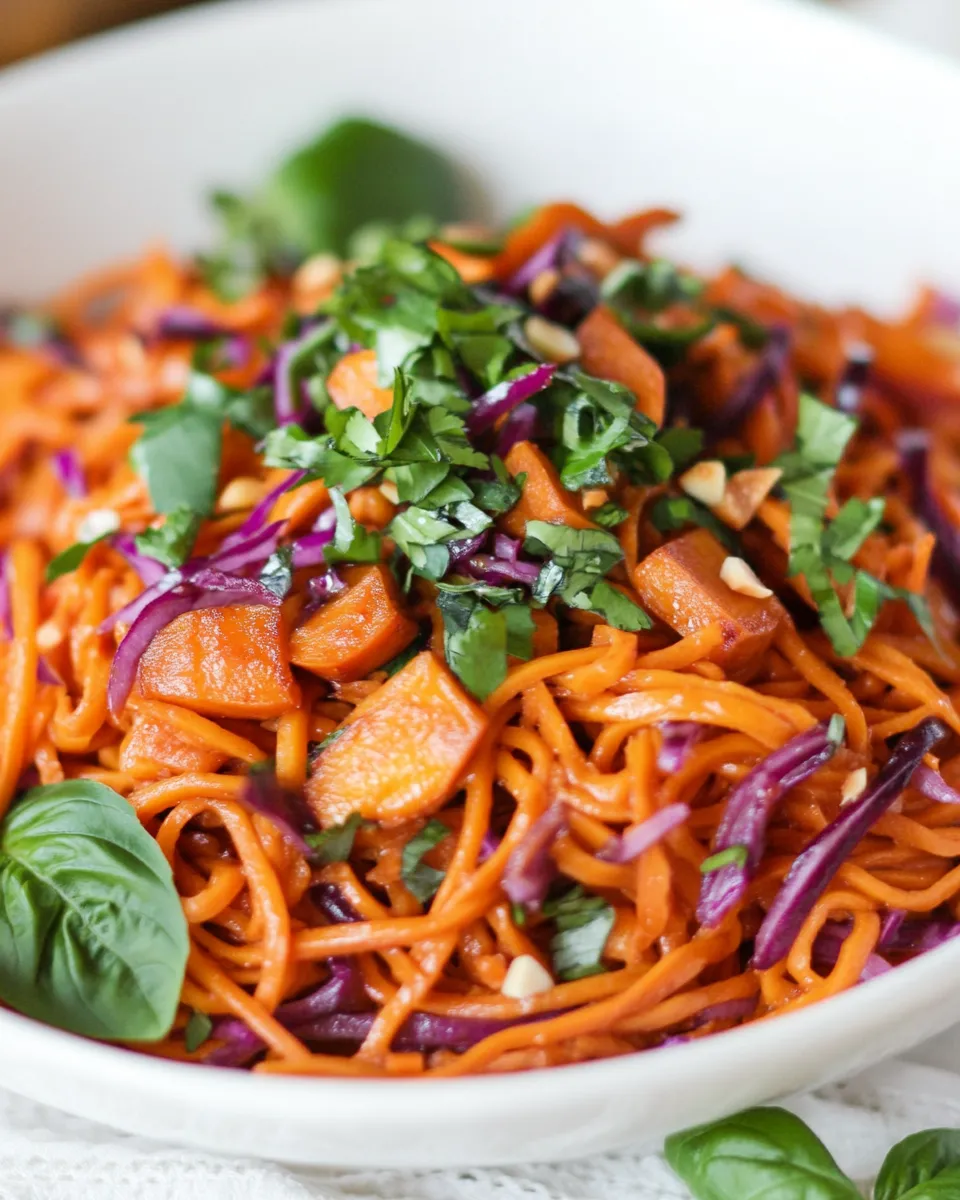
It hits satisfying contrasts: creamy sauce, crisp vegetables, tender sweet potato noodles, and crunchy nuts on top. The flavor profile (lime, peanut/almond, soy, ginger) feels familiar and comforting but bright and different from a standard pasta or grain bowl.
It’s also adaptable and forgiving. If you’re short on time, you can prep elements ahead: slice the veg, cube the tofu, make the sauce. If you’re cooking for someone who likes heat, leave the chili in; if not, leave it out and add lime and cilantro at the table. It works hot, room temperature, or chilled, which makes it useful for leftovers or packed lunches.
Ingredient Flex Options
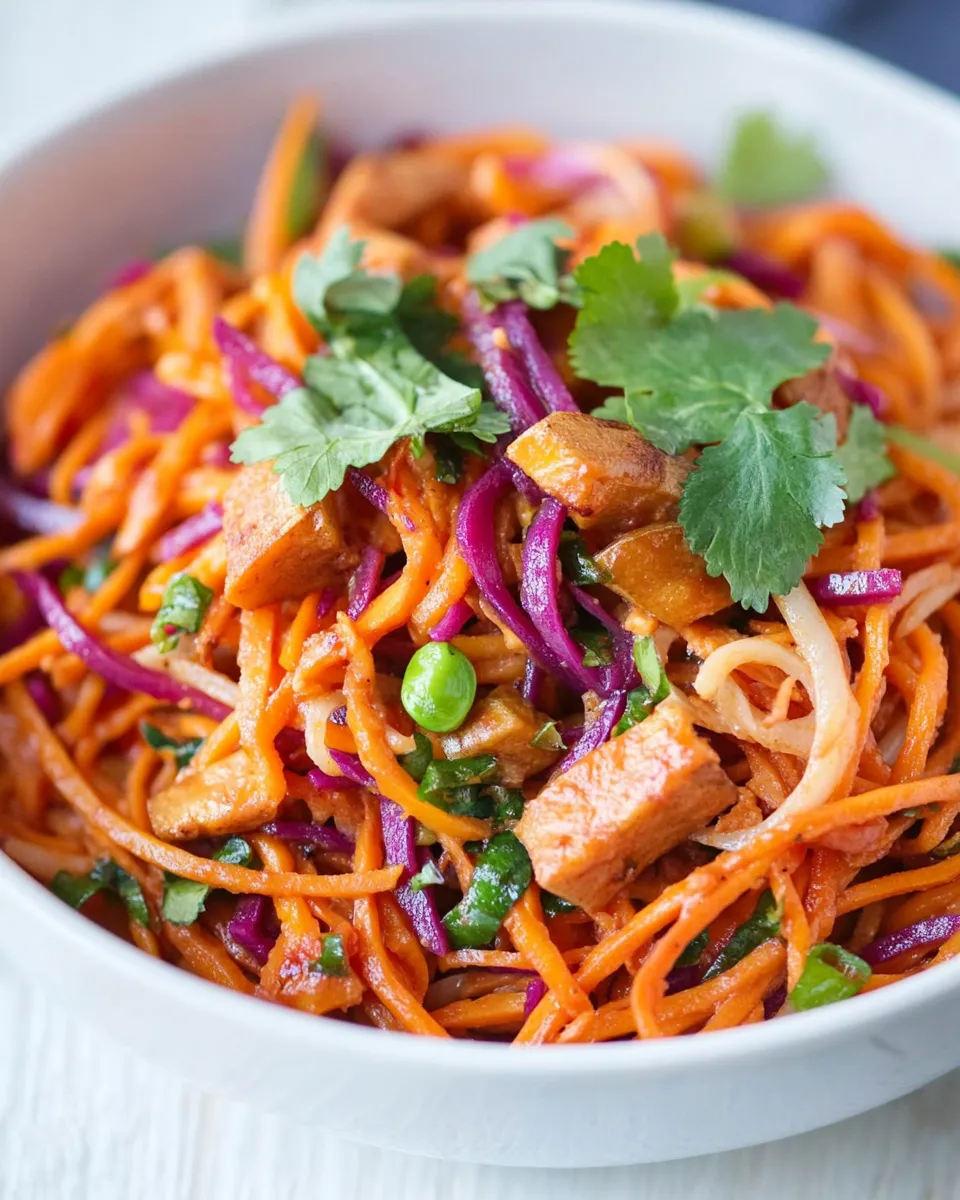
Stick to the provided ingredients, but use the alternatives already listed and small technique swaps to suit your kitchen.
- Almond butter vs peanut butter — either works. Peanut will taste more classic Thai; almond feels lighter and slightly sweeter.
- Avocado oil or another neutral oil — use what you have. The goal is a high smoke point to crisp the tofu and lightly soften vegetables.
- Thai chili or 1/2 jalapeño — scale the heat. Remove seeds for less heat; keep them for more kick.
- Sweet potato noodles — if you don’t have a spiralizer, you can use a peeler to make thin ribbons or buy pre-spiralized sweet potatoes. The texture will vary, but the method remains the same.
- Toasted almonds or peanuts — either adds the needed crunch. If you only have raw nuts, quickly toast them in a dry skillet until fragrant.
Prep & Cook Tools
Must-haves
- Spiralizer (or vegetable peeler for ribbons)
- Large skillet with a lid
- Small saucepan
- Whisk and spatula
- Sharp knife and cutting board
Nice-to-haves
- Tongs for tossing the noodles
- Citrus juicer for the lime
- Kitchen thermometer (useful for checking pan temperatures)
Don’t Do This
Don’t overcook the sweet potatoes. They should be tender but still hold their shape. Overcooked sweet potatoes get mushy fast and lose that noodle-like texture.
Don’t skip warming the sauce. If you pour a cold nut butter sauce over the raw noodles, it’s harder to coat evenly and can clump. Warm it until just simmering, then keep it on the lowest heat while you finish the veg.
Don’t crowd the pan when searing the tofu. Push the vegetables to the sides and give the tofu space in the center so it can develop a golden edge. If the pan is crowded, the tofu will steam instead of sear.
Warm & Cool Weather Spins
Warm weather: Serve the finished bowl at room temperature or lightly chilled. The sauce is bright with lime, so it reads great as a cool salad. Toast the almonds, toss them in at the last minute, and serve with lime wedges.
Cool weather: Serve hot straight from the skillet. The covered step makes the noodles warm through and cozy. Add a little extra maple syrup if you want a touch more comfort-sweetness against the savory soy.
Pro Perspective
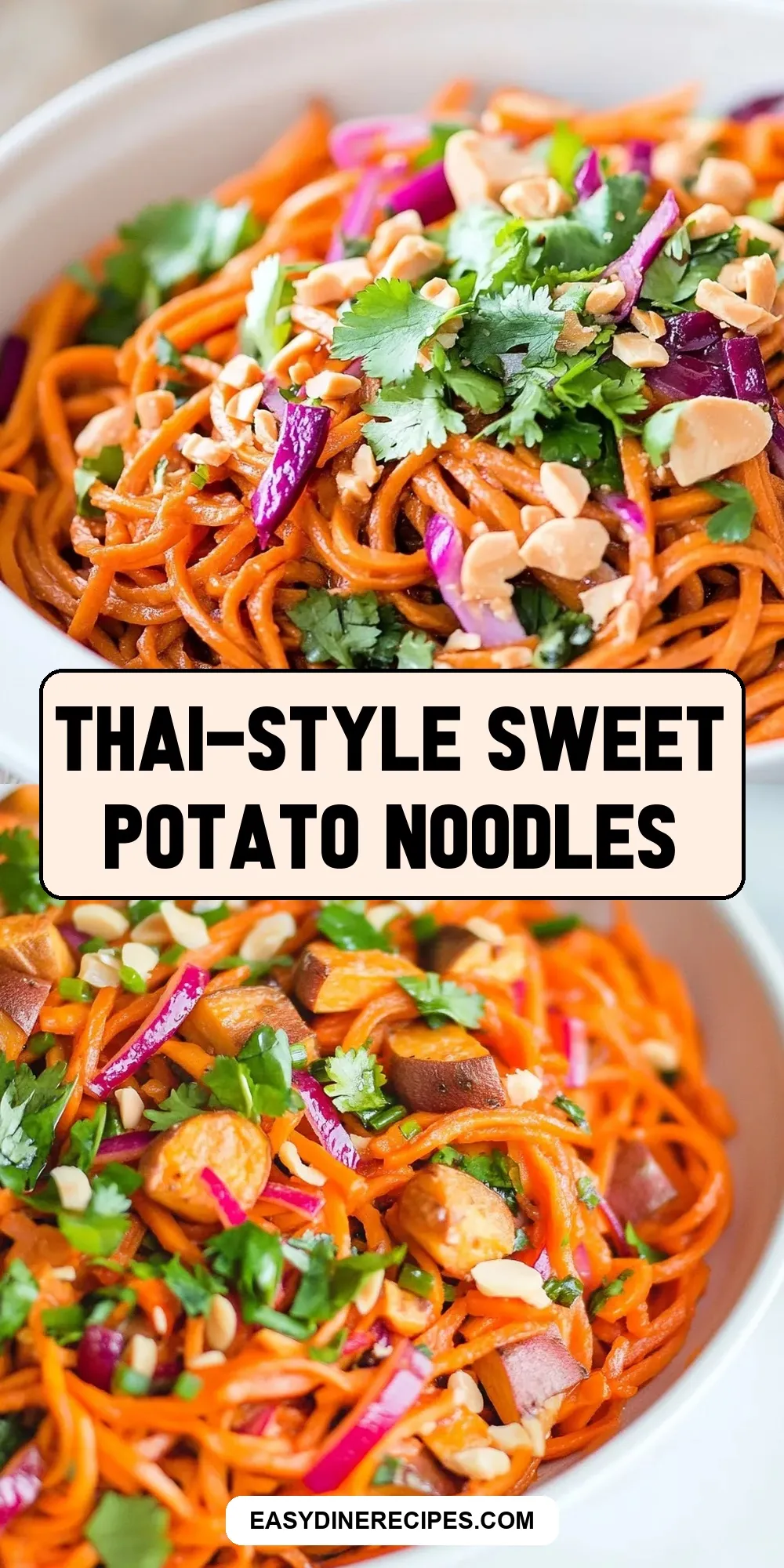
Texture is everything here. I aim for three contrasts: seared tofu, crisp-tender veg, and al dente sweet potato noodles. Timing keeps those three in balance — cook the quicker veggies first, save denser ones for last, and always sample the sweet potato a couple minutes before you expect it to be done.
Control the pan moisture. If the pan gets dry while you’re cooking the veg, add a splash of water (up to 1/4 cup) to deglaze and keep things moving. That little splash helps loosen any fond and keeps the vegetables from sticking without diluting flavor.
Finally, keep the sauce warm—not boiling—so it stays glossy and pours easily. A rapidly boiling nut sauce can separate or thicken too fast; gentle heat keeps it silky.
Refrigerate, Freeze, Reheat
Refrigerate: Store leftovers in an airtight container for up to 3 days. The sweet potatoes will soften more over time, and the texture will shift but remain tasty.
Freeze: I don’t recommend freezing the assembled dish; the sweet potatoes and tofu change texture when frozen and thawed. If you must, freeze the sauce separately and reheat gently, then toss with freshly cooked sweet potatoes.
Reheat: Reheat gently on the stovetop over low heat with a splash of water to loosen the sauce and prevent sticking. Microwaving works for quick reheats, but do it in short bursts and stir to avoid hot spots.
Reader Q&A
Q: Can I make this nut-free? A: The recipe’s sauce base is almond or peanut butter. If you need nut-free, omit that ingredient and substitute a seed butter like sunflower seed butter, but note that isn’t listed in the ingredient source — follow any allergy-safe swaps you trust.
Q: What if I’m short on time? A: Make the sauce and chop the vegetables in advance. Spiralize the sweet potatoes right before cooking so they don’t oxidize. The assembly and final cook are quick.
Q: Can I use a different protein? A: The source uses extra-firm tofu. If you prefer another protein, cook it separately and fold it in at the end, but remember to adjust cooking times according to what you use.
Q: How spicy is this? A: Heat comes from the Thai chili or jalapeño. Use half a jalapeño or omit the chili entirely for a mild version. You can always add more heat at the table.
Ready, Set, Cook
- In a small saucepan, combine the almond butter, water, lime juice, soy sauce, minced or grated ginger, minced garlic, and maple syrup. Whisk over medium heat until the mixture is smooth and begins to simmer.
- Reduce the heat to low, cover the saucepan, and cook the sauce for 10 minutes, uncovering to stir periodically. Keep the sauce warm on the lowest heat until ready to use.
- Meanwhile, heat the avocado (or neutral) oil in a large skillet over medium-high heat.
- Add the diced or thinly sliced yellow onion and the minced Thai chili or jalapeño (if using) and the chopped or thinly sliced red bell pepper. Cook, stirring occasionally, for about 3 minutes, until the onion and pepper begin to soften.
- Add the thinly sliced red cabbage and chopped broccoli to the skillet. Cook, stirring, for about 5 minutes, until the broccoli turns bright green and begins to tenderize.
- Push the vegetables to the outer edges of the skillet to make a clear space in the center. Add the cubed extra-firm tofu to the center and cook without stirring for about 3–5 minutes, until the bottom of the tofu is lightly golden. Then stir the tofu together with the vegetables.
- Continue to cook the combined vegetables and tofu for another 3–5 minutes, until the broccoli is tender to your liking. If the pan becomes dry or the vegetables begin to stick, add a splash of water (up to about 1/4 cup) and stir to deglaze the pan. Transfer the cooked vegetables and tofu to a clean bowl and set aside.
- Wipe the skillet if needed, then add the spiralized sweet potatoes to the empty skillet. Pour the warm almond sauce from the saucepan over the sweet potatoes and gently toss or stir to coat the noodles evenly.
- Cover the skillet and cook over medium heat until the sauce is gently simmering, then continue cooking covered for about 8 minutes. Test the sweet potatoes for doneness; they should be tender but not mushy. If needed, continue cooking up to a total of 15 minutes, checking every few minutes.
- When the sweet potatoes are cooked to your preference, remove the skillet from the heat and fold the reserved cooked vegetables and tofu back into the sweet potato noodles until everything is evenly combined and heated through.
- Divide into bowls and garnish with the chopped fresh cilantro and chopped toasted almonds or peanuts. Serve with lime wedges alongside; the dish can be served hot, at room temperature, or chilled.
If you make this, tell me how you balanced the heat and whether you used almond or peanut butter — small swaps change the final character in delicious ways. Enjoy.
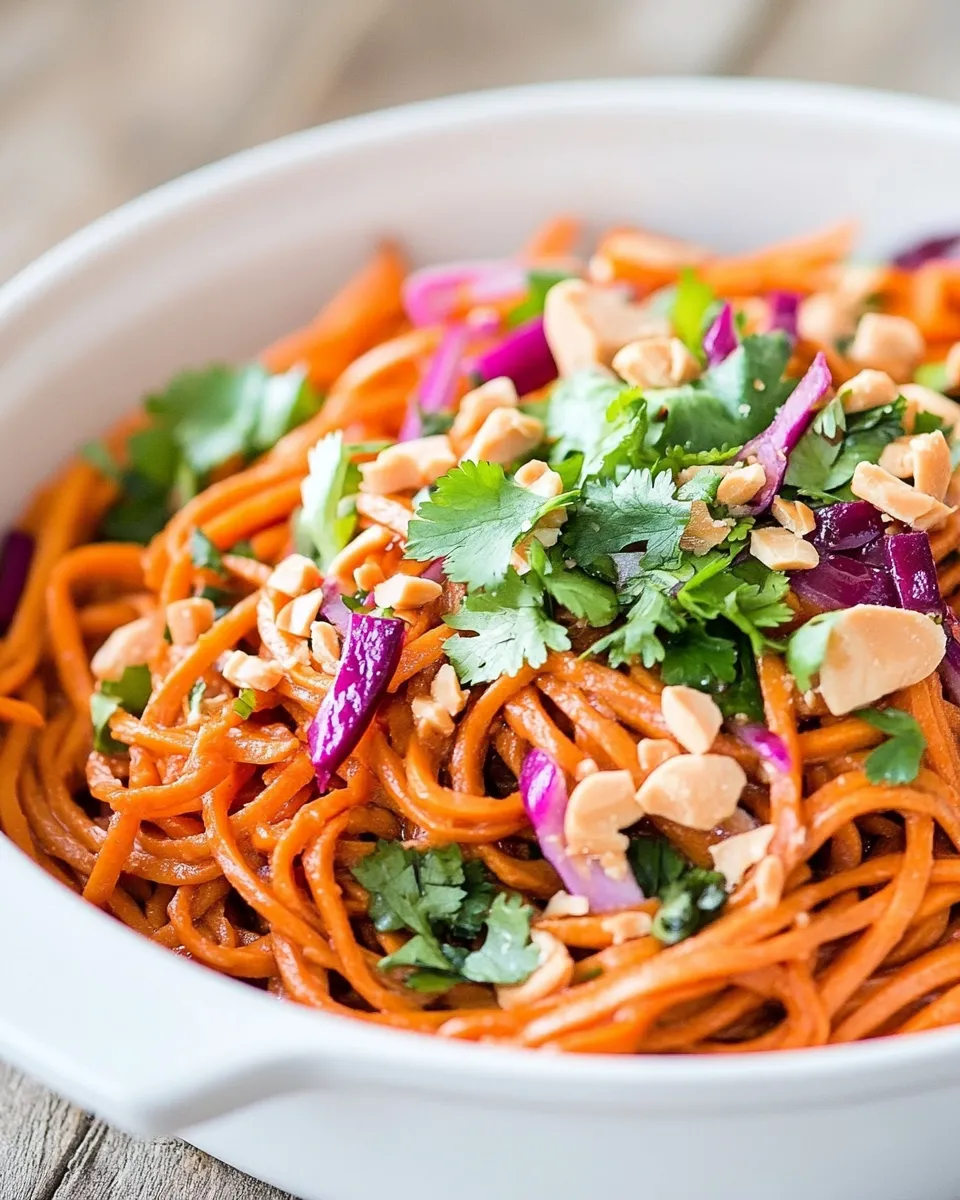
Thai-Style Sweet Potato Noodles
Equipment
- spiralizerhandheldorhand-crank
Ingredients
Ingredients
- 1/4 cupcreamy almond butter or peanut butter
- 2/3 cupwater
- 1/4 cupfreshly squeezed lime juice
- 1/4 cupsoy sauce regular or tamari
- 1 tbspminced or grated ginger
- 1 tbspminced garlic
- 1 tbspmaple syrup or agave syrup
- 1 tbspavocado oil or another neutral oil
- 1/2 yellow onion diced or thinly sliced
- 1 Thai chili pepper or 1/2 jalapeño pepper minced, optional
- 1/2 red bell pepper chopped or thinly sliced
- 1 cupthinly sliced red cabbage
- 1 cupchopped broccoli
- 1 cupcubed extra firm tofu about 1/2 a 12 oz. package
- 2 mediumsweet potatoes peeled, tips removed, and spiralized (see notes)
- 1/2 cupchopped fresh cilantro loosely packed
- 1/4 cupchopped toasted almonds or peanuts
- lime wedges for serving
Instructions
Instructions
- In a small saucepan, combine the almond butter, water, lime juice, soy sauce, minced or grated ginger, minced garlic, and maple syrup. Whisk over medium heat until the mixture is smooth and begins to simmer.
- Reduce the heat to low, cover the saucepan, and cook the sauce for 10 minutes, uncovering to stir periodically. Keep the sauce warm on the lowest heat until ready to use.
- Meanwhile, heat the avocado (or neutral) oil in a large skillet over medium-high heat.
- Add the diced or thinly sliced yellow onion and the minced Thai chili or jalapeño (if using) and the chopped or thinly sliced red bell pepper. Cook, stirring occasionally, for about 3 minutes, until the onion and pepper begin to soften.
- Add the thinly sliced red cabbage and chopped broccoli to the skillet. Cook, stirring, for about 5 minutes, until the broccoli turns bright green and begins to tenderize.
- Push the vegetables to the outer edges of the skillet to make a clear space in the center. Add the cubed extra-firm tofu to the center and cook without stirring for about 3–5 minutes, until the bottom of the tofu is lightly golden. Then stir the tofu together with the vegetables.
- Continue to cook the combined vegetables and tofu for another 3–5 minutes, until the broccoli is tender to your liking. If the pan becomes dry or the vegetables begin to stick, add a splash of water (up to about 1/4 cup) and stir to deglaze the pan. Transfer the cooked vegetables and tofu to a clean bowl and set aside.
- Wipe the skillet if needed, then add the spiralized sweet potatoes to the empty skillet. Pour the warm almond sauce from the saucepan over the sweet potatoes and gently toss or stir to coat the noodles evenly.
- Cover the skillet and cook over medium heat until the sauce is gently simmering, then continue cooking covered for about 8 minutes. Test the sweet potatoes for doneness; they should be tender but not mushy. If needed, continue cooking up to a total of 15 minutes, checking every few minutes.
- When the sweet potatoes are cooked to your preference, remove the skillet from the heat and fold the reserved cooked vegetables and tofu back into the sweet potato noodles until everything is evenly combined and heated through.
- Divide into bowls and garnish with the chopped fresh cilantro and chopped toasted almonds or peanuts. Serve with lime wedges alongside; the dish can be served hot, at room temperature, or chilled.
Notes
Julienne Peeler: For a more affordable method that requires a bit of elbow grease, consider this hand-held spiralizing tool. It’s similar to a vegetable peeler but has additional vertical blades that julienne the veggies with each swipe.
Pre-Cut Noodles: If you’re looking for the most convenient option, pre-cut noodles are for you! Many well-stocked grocery stores now sell fresh sweet potato noodles in the prepared produce section.
Refrigeration:Leftover sweet potato pasta noodles keep covered in an airtight container in the refrigerator for up to 5 days.
Freezing:Once cooled to room temperature, you can also freeze the noodles in a freezer-safe container for up to 3 months. Defrost them overnight in the refrigerator.
Reheating:Warm the sweet potato pasta in a saucepan over low heat with a splash ofvegetable stockor broth for 5 minutes, stirring periodically, or in the microwave on gentle heat until hot.
Multitask.Save time by simmering the sauce while stir-frying the vegetables and preparing the garnishes while the sweet potato noodles cook.
Prep the ingredients ahead.For the smoothest cooking and multitasking, have the sweet potatoes spiralized and the rest of the ingredients chopped and measured before firing up the stovetop.
Adjust the sweet potato cooking time.Test the noodles after 8 minutes of simmering. If they are too firm, continue cooking them, checking them every few minutes for doneness. To prevent mushy noodles, don’t cook them longer than 15 minutes.
Serve at any temperature.For a warm meal, serve it piping hot, though this sweet potato noodle recipe is also totally tasty served cold or at room temperature.