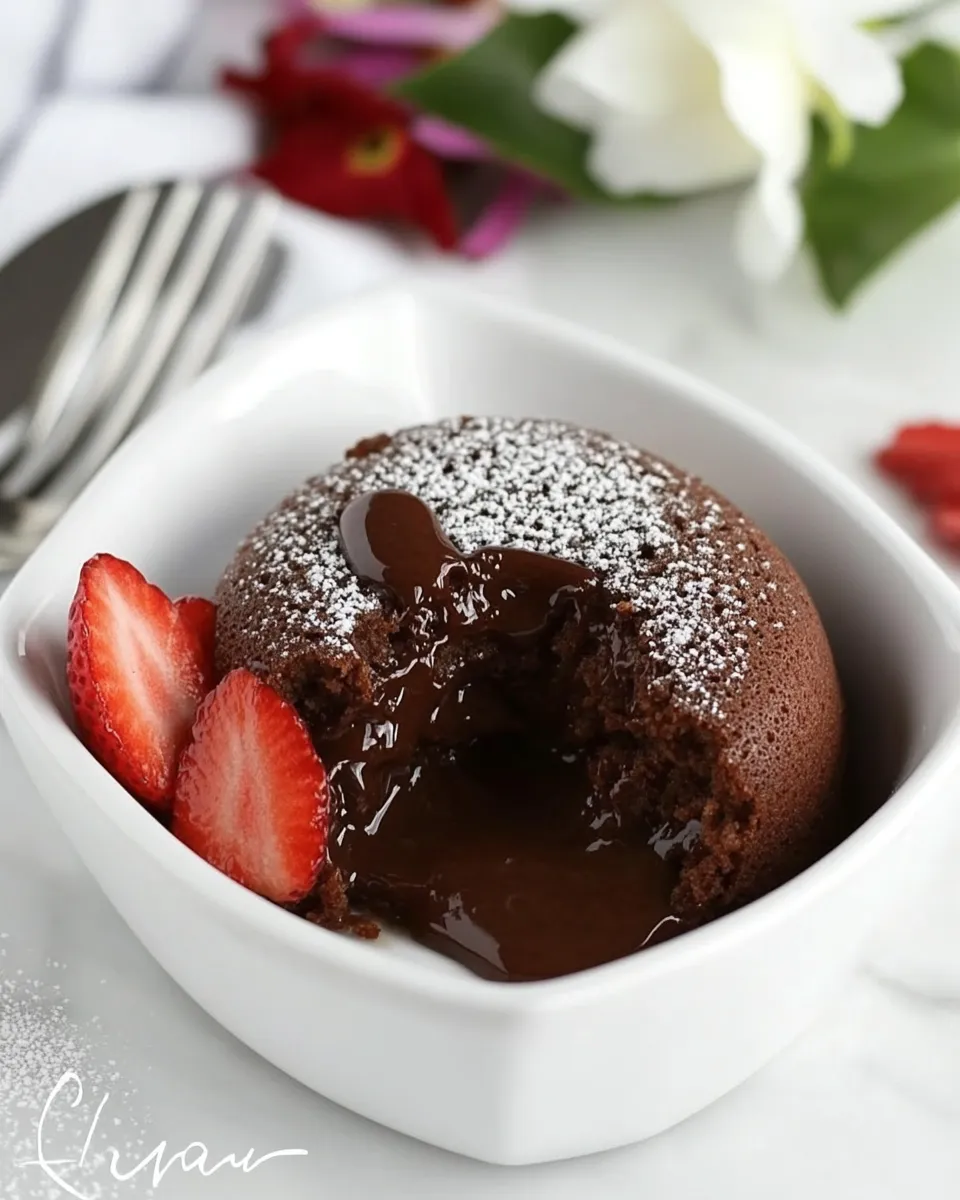
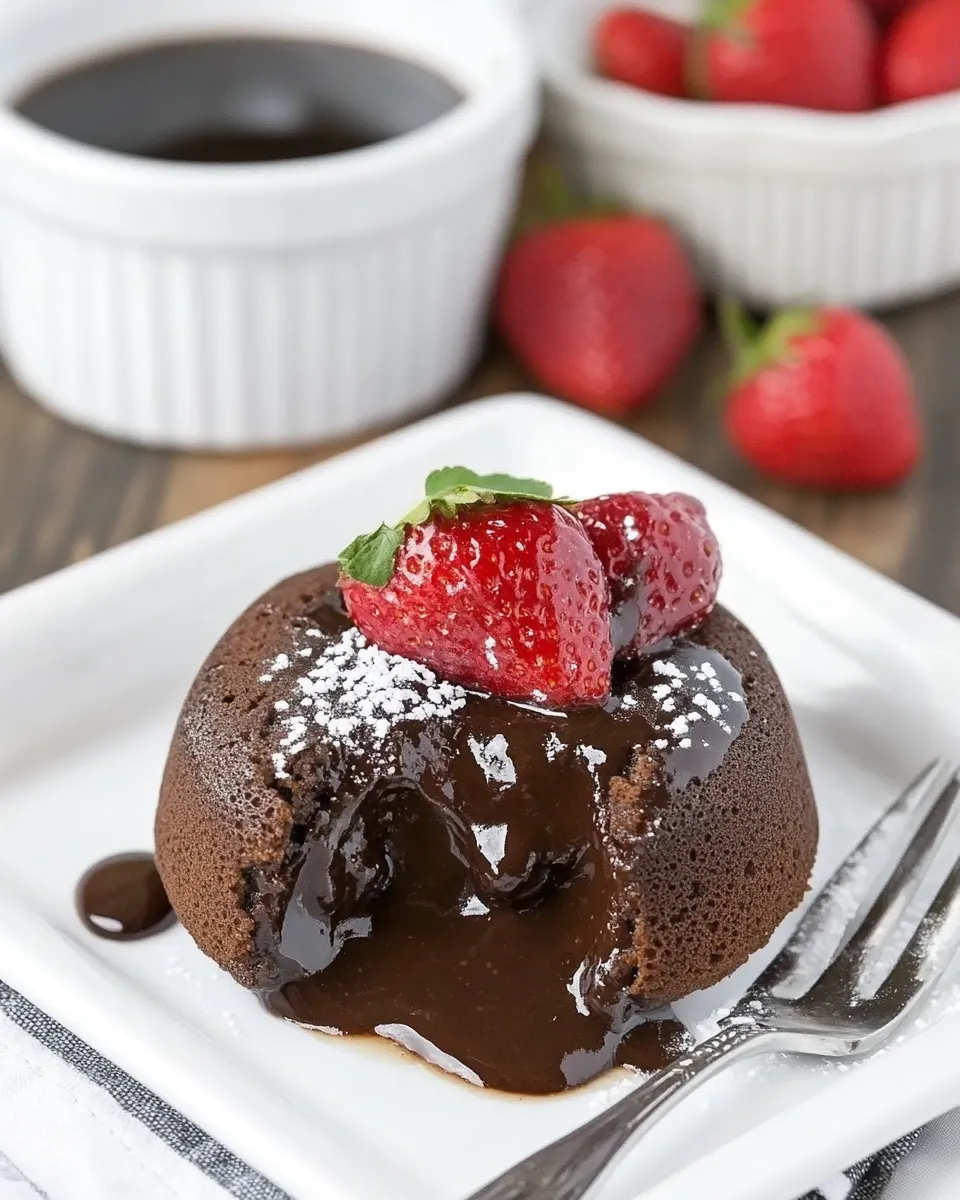
These chocolate lava cakes are one of those small, reliable luxuries: quick to make, dramatic to serve, and deeply satisfying. I turn to this recipe when I want something impressive without hours in the kitchen. The centers are molten, the edges are set, and the whole thing comes together with ingredients you likely already have.
Timing and a few small tricks make the difference between a gooey center and a fully set cake. I’ll walk you through the exact steps, the tools I use, and the little reality-checks that keep these from overbaking. There’s a rhythm to it: prepare the ramekins, melt the chocolate, temper the eggs, bake, invert, and serve immediately.
No nonsense, just practical guidance. If you follow the steps and watch your oven closely during that 6–10 minute window, you’ll turn out molten-centered cakes every time. Below you’ll find the ingredient list, the method, substitutions for dietary needs, troubleshooting, and serving ideas for every season.
What’s in the Bowl
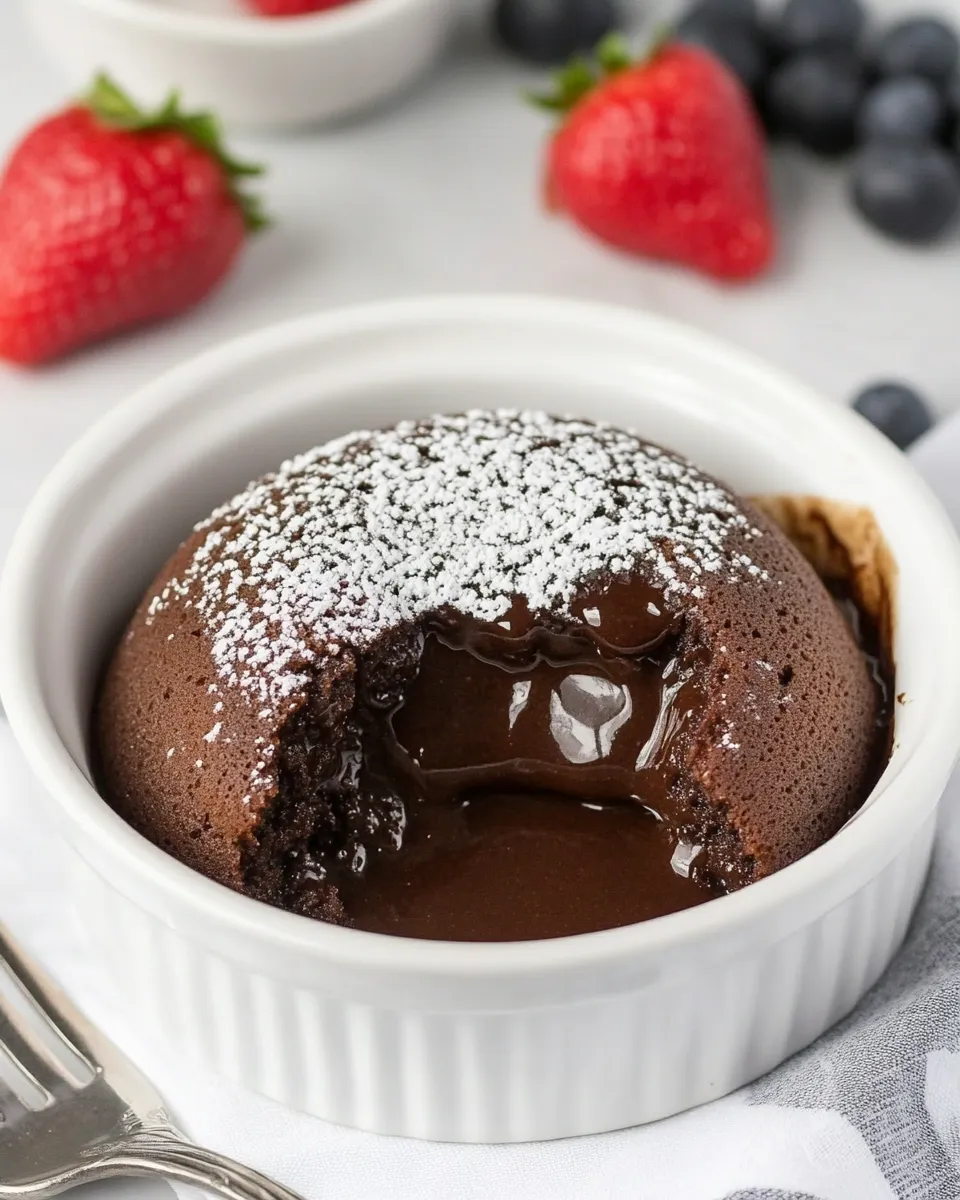
At its heart this recipe is very simple: chocolate, butter, eggs, sugar, and a touch of flour. The richness comes from the butter and egg yolks; the structural lift comes from a minimal amount of flour. Because the batter is concentrated, you need to be gentle and precise — both when combining and when baking.
The cakes are small (four 4-ounce ramekins), so they bake fast. That’s why preheating and ramekin prep matter. A hot oven and well-buttered, floured ramekins help build the set edges while keeping the centers molten.
Ingredients
- 1 stick butter, plus more for ramekins — provides fat for a silky texture and flavors the batter; extra butter prevents sticking.
- 4 ounces semi-sweet chocolate, chopped (may substitute bittersweet if you love an intense chocolate experience) — the chocolate is the backbone of the flavor; chop it finely so it melts evenly.
- 2 eggs — whole eggs add structure and lift.
- 2 egg yolks — extra yolks deepen richness and create a custardy center.
- 1/4 cup sugar — balances the chocolate and helps with the cake’s tenderness.
- 2 teaspoons flour, plus more to dust the ramekins — just enough to give the cakes shape without making them cakey; dusting ramekins helps release the cakes cleanly.
Method: Classic Lava Cakes
- Preheat oven to 450°F (230°C) and position a rack in the center.
- Prepare four 4-ounce ramekins: butter the insides with the extra butter, cut parchment rounds to fit the bottoms and press them into the ramekins, butter the top of each parchment round, then dust the insides of the ramekins with a little of the extra flour and tap out the excess. Set the ramekins aside.
- Place the chopped chocolate and 1 stick butter in a microwave-safe bowl and melt gently in short bursts, stirring frequently, until smooth. (Alternatively, melt together over a double boiler.) Let the chocolate mixture cool until just warm.
- In a mixing bowl, beat the 2 eggs, 2 egg yolks, and 1/4 cup sugar with a mixer or whisk until the mixture is pale and slightly thickened.
- Temper the eggs by adding one small spoonful of the warm chocolate mixture to the egg mixture and whisking to combine, then add the remaining chocolate and stir until fully incorporated.
- Sprinkle the 2 teaspoons flour over the batter and fold or mix just until the flour disappears and the batter is uniform. Do not overmix.
- Divide the batter evenly among the prepared ramekins.
- Place the filled ramekins on a baking sheet and bake until the edges are set but the centers remain soft and slightly jiggly, about 6–10 minutes (times vary by oven; many take about 9 minutes).
- Remove the baking sheet from the oven and let the ramekins sit 1–2 minutes. Run a thin knife or metal spatula around the inside edge of each ramekin to loosen the cakes.
- Invert each ramekin onto a serving plate and gently lift it off; if a cake does not release, wait another 30–60 seconds and try again. Serve immediately.
What Sets This Recipe Apart
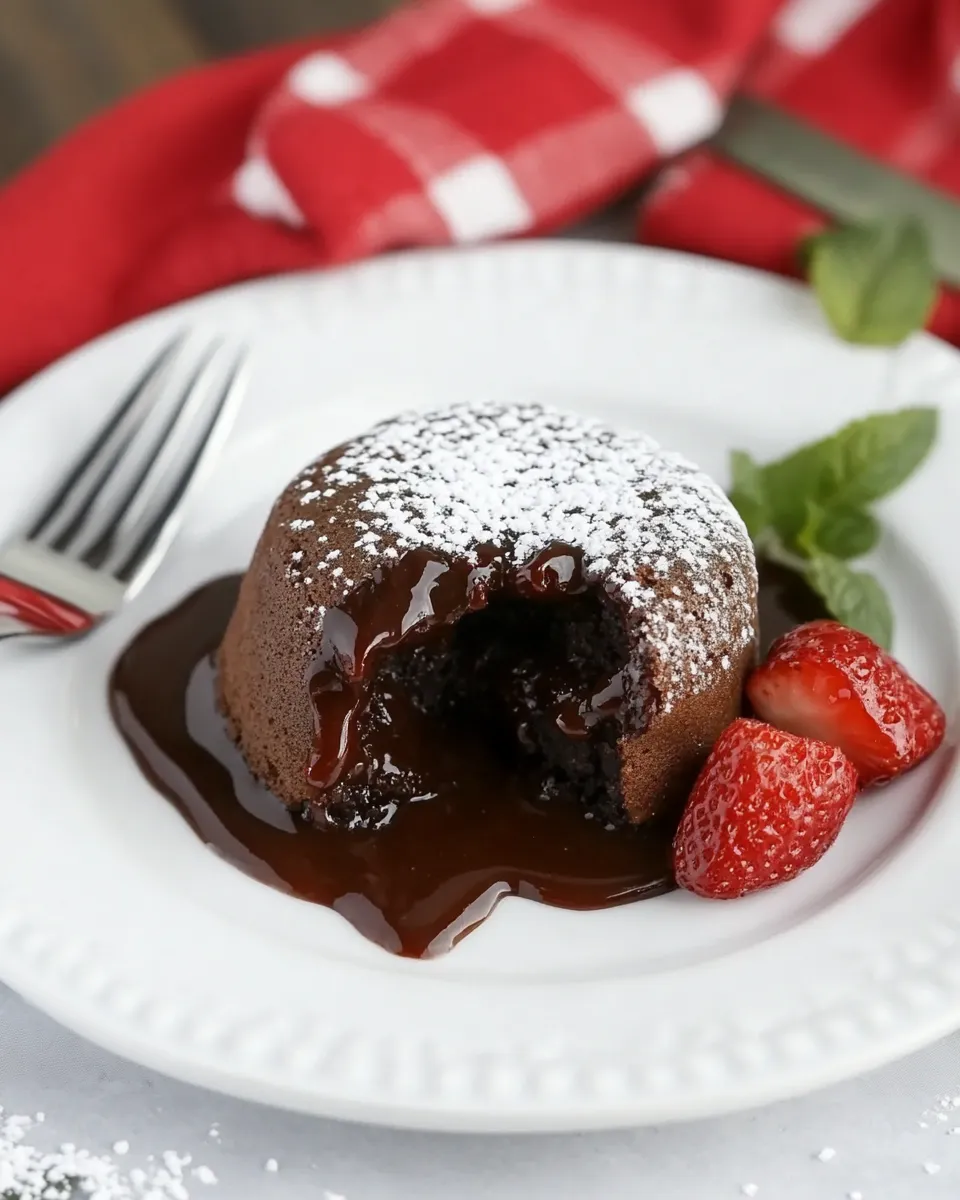
There are many molten cake approaches, but this one focuses on clarity and reliability. The ingredient list is short and intentionally restrained. No cocoa powder, no extra leavening — just chocolate, butter, eggs, sugar, and a teaspoon or two of flour. That minimalism lets the chocolate shine and gives predictable texture.
Another distinction is the tempering step. Adding a spoonful of warm chocolate to the eggs prevents scrambling and creates a homogeneous batter. Finally, using parchment rounds in the ramekins makes unmolding clean and simple, so presentation is effortless.
Vegan & Vegetarian Swaps
For vegetarians this recipe is already fine as written. For vegan adaptations, the texture and runny center are harder to recreate because eggs provide the custardy interior and structure. If you want to experiment, here are practical starting points:
- Egg replacer combo — try a mixture of aquafaba (3 tablespoons per egg) and a tablespoon of melted vegan butter per yolk to mimic richness. Results vary by brand, so test a single ramekin first.
- Vegan chocolate and plant butter — use high-quality dairy-free chocolate and a solid plant-based butter with good flavor. Melt together as in step 3.
- Tempering and baking — aquafaba behaves differently when whipped; you may need to adjust baking time and watch closely. Expect a more custardy mousse center, not identical to the original.
These swaps are experiments rather than guaranteed replacements. If you need a reliably vegan molten cake, consider recipes specifically formulated for egg-free structure.
Kitchen Gear Checklist
- Four 4-ounce ramekins — correct size yields the right bake time and center-to-edge ratio.
- Baking sheet — to carry multiple ramekins in and out of the oven safely.
- Mixing bowls — at least one for eggs and one microwave-safe for melting chocolate (or a double boiler).
- Whisk or electric mixer — to beat eggs and sugar until pale and slightly thickened.
- Paring knife or offset spatula — to loosen the cakes along the ramekin edge before inverting.
- Parchment paper — for cutting rounds to fit ramekin bottoms.
- Measuring spoons and cups — accurate measures keep the balance right.
Troubleshooting Tips
Here are direct fixes for the common lava cake problems you’ll run into.
Centers fully set
Likely overbaked. Reduce oven time by 30–60 seconds per attempt, or pull cakes at the earlier end of the 6–10 minute window. Every oven is different; aim for slightly jiggly centers when you remove them.
Centers raw or batter-heavy
If centers run too thin like raw batter, the oven may not be hot enough or the ramekins might be too large. Confirm oven reaches 450°F (230°C) and use four 4-ounce ramekins. Also, ensure chocolate and butter were fully incorporated and not overly cool when mixed with eggs.
Cake sticks to ramekin
Make sure you butter the ramekin thoroughly, press the parchment rounds in, butter those rounds, and dust with flour, tapping out the excess. If cakes still stick, let ramekin sit another 30–60 seconds after baking so the cake has time to pull away before inverting.
Cracked tops
Minor cracks are cosmetic and won’t affect the molten center. Avoid overmixing and overbaking to reduce cracking. Gentle folding when adding flour helps keep the top smooth.
Spring–Summer–Fall–Winter Ideas
Molten cakes are a great canvas for seasonal flavors and accompaniments. Here are straightforward pairings for each season:
- Spring — serve with a spoonful of lemon curd or a few fresh raspberries to cut the richness.
- Summer — pair with cold vanilla ice cream and a scattering of fresh berries for contrast of temperature and brightness.
- Fall — a dollop of salted caramel or a sprinkle of toasted pecans complements the deep chocolate notes.
- Winter — serve with warm crème anglaise or orange-infused cream for a cozy finish.
Recipe Notes & Chef’s Commentary
This recipe is intentionally compact. A few practical notes from many repeats in my kitchen:
- Chocolate quality — use the best semi-sweet or bittersweet you can afford. The chocolate is the star.
- Chop the chocolate small — it melts more evenly and helps maintain a smooth texture.
- Watch the oven — set a timer for the lower end (6–7 minutes) and check at 8–9 minutes if needed. Do not step away for long during this bake time.
- Serving — invert and serve immediately. The center will firm quickly as it cools, so plan to plate for your guests right out of the oven.
Store, Freeze & Reheat
These cakes are best enjoyed immediately. That said, you can prepare and store components strategically:
- Make-ahead batter — I don’t recommend refrigerating the finished batter for more than a few hours; eggs and melted chocolate can change texture. If you must, keep it covered and bring to room temperature before baking.
- Freeze baked cakes — fully baked lava cakes do not retain the molten center well after freezing. If you freeze, expect a more uniform, denser cake after reheating.
- Reheat — if you do reheat, use a 350°F oven for about 5–8 minutes from room temperature. Microwaving will heat unevenly and likely overcook edges before the center warms.
Helpful Q&A
Why temper the eggs?
Tempering prevents the eggs from scrambling when they meet warm chocolate. Adding a small spoonful of warm chocolate to the eggs slowly brings the temperature up and creates a smooth final batter.
Can I halve or double the recipe?
Yes. Bake times may vary slightly with volume and ramekin size. If doubling, bake the ramekins on a single sheet without crowding for even heat.
Why use parchment rounds?
Parchment rounds simplify release and minimize sticking, ensuring a clean unmold and pretty presentation.
Hungry for More?
If you enjoyed these lava cakes, try turning the batter into chocolate fondue for fruit by thinning slightly with a touch of cream and serving warm. Or use the same proportions to make individual pots of chocolate custard by baking a bit longer until set through. Either way, the technique — good chocolate, tempered eggs, fast bake — will keep delivering great results.
Bookmark this recipe and make it your go-to when you want a small, celebratory dessert that looks like effort but is simple to pull off. Use a good chocolate, watch the oven, and you’ll have molten-centered cakes that thrill every time.
Classic Lava Cakes Recipe
Equipment
- Ramekins
- Baking Sheet
- Microwave-safe Bowl
- double boiler (optional)
- mixer or whisk
- Parchment Paper
- Knife
- metal spatula
Ingredients
Ingredients
- 1 stick butter plus more for ramekins
- 4 ounces semi-sweet chocolate chopped (may substitute bittersweet if you love an intense chocolate experience)
- 2 eggs
- 2 egg yolks
- 1/4 cup sugar
- 2 teaspoons flour plus more to dust the ramekins
Instructions
Instructions
- Preheat oven to 450°F (230°C) and position a rack in the center.
- Prepare four 4-ounce ramekins: butter the insides with the extra butter, cut parchment rounds to fit the bottoms and press them into the ramekins, butter the top of each parchment round, then dust the insides of the ramekins with a little of the extra flour and tap out the excess. Set the ramekins aside.
- Place the chopped chocolate and 1 stick butter in a microwave-safe bowl and melt gently in short bursts, stirring frequently, until smooth. (Alternatively, melt together over a double boiler.) Let the chocolate mixture cool until just warm.
- In a mixing bowl, beat the 2 eggs, 2 egg yolks, and 1/4 cup sugar with a mixer or whisk until the mixture is pale and slightly thickened.
- Temper the eggs by adding one small spoonful of the warm chocolate mixture to the egg mixture and whisking to combine, then add the remaining chocolate and stir until fully incorporated.
- Sprinkle the 2 teaspoons flour over the batter and fold or mix just until the flour disappears and the batter is uniform. Do not overmix.
- Divide the batter evenly among the prepared ramekins.
- Place the filled ramekins on a baking sheet and bake until the edges are set but the centers remain soft and slightly jiggly, about 6–10 minutes (times vary by oven; many take about 9 minutes).
- Remove the baking sheet from the oven and let the ramekins sit 1–2 minutes. Run a thin knife or metal spatula around the inside edge of each ramekin to loosen the cakes.
- Invert each ramekin onto a serving plate and gently lift it off; if a cake does not release, wait another 30–60 seconds and try again. Serve immediately.