I have a soft spot for garlic bread that isn’t just buttered toast in disguise. When it’s done well, it sings: buttery, garlicky, a little cheesy, with crisp edges and a tender interior. This version is simple, honest, and uses a few reliable ingredients to deliver maximum flavor without fuss.
This post walks you through each part of the process and explains why each step matters. I’ll also share swaps, common mistakes, storage tips, and quick answers to questions I get all the time. Follow the steps closely and you’ll have a loaf that disappears fast at the table.
The Ingredient Lineup
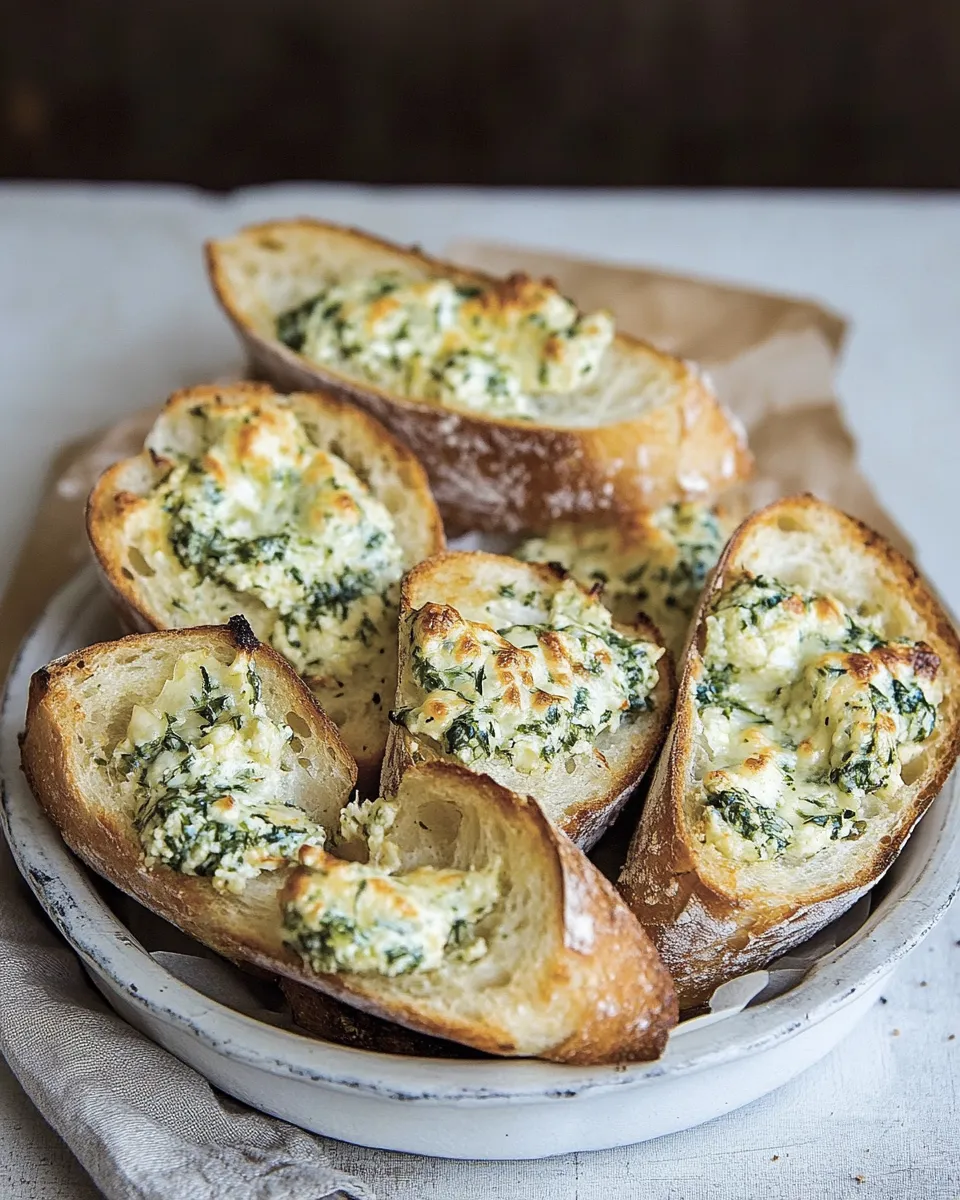
- 1 loaf of ciabatta bread or a large baguette — the vehicle for all the good stuff; choose a loaf with a sturdy crumb so it holds the filling.
- 100 grams salted butter softened to room temperature — the base of the spread; salted butter adds a straightforward savory backbone.
- a small handful of parsley finely chopped (about 2 T) — brightens the butter and cuts through the richness.
- 3 – 4 cloves of garlic crushed — the essential aromatics; crush rather than finely mince for a bolder, evenly distributed garlic note.
- 50 grams Parmesan cheese (and a bit extra to sprinkle over the loaf) — adds umami and helps the top brown; the extra sprinkle gives the crust a savory snap.
- a squeeze of lemon juice if desired — optional lift; a little acid balances the butter if you choose to use it.
- a pinch of salt optional but not necessary if you use all the Parmesan — taste the mixture before adding salt because the Parmesan and salted butter may already be enough.
Garlic Bread in Steps
- Preheat the oven to 200 °C / 400 °F.
- In a bowl, combine the 100gramssalted butter (softened to room temperature), the small handful of parsleyfinely chopped (about 2 T), 3–4clovesof garliccrushed, and the 50gramsParmesan cheeseParmesan. Add a squeeze of lemon juice if desired and a pinch of salt optional (not necessary if you use all the Parmesan). Mix thoroughly until evenly combined.
- Place the 1loaf of ciabatta bread or a large baguette on a cutting board. Make fairly thick slices through the loaf, cutting almost all the way through but leaving the base intact so the loaf holds together.
- Spread the butter-parmesan mixture generously into each cut and over the top and ends of the loaf. Sprinkle a bit extra Parmesan over the top if you like.
- Wrap the stuffed loaf tightly in foil and place it on a baking tray.
- Bake for 20 minutes in the preheated oven. Carefully open the foil and bake for a further 5 minutes to brown the top (you can skip the last step if the loaf is already sufficiently browned).
- Remove from the oven, unwrap, let sit briefly to cool slightly, then serve.
Why You’ll Keep Making It
This garlic bread hits several satisfying notes: quick prep, dramatic presentation, and crowd-pleasing flavor. It’s the sort of thing you can pull together between making a salad and finishing a pasta sauce. The butter mixture is concentrated enough that a little goes a long way, so even a simple loaf becomes special.
Guests love that it looks homemade and feels indulgent without any complicated technique. If you like crisp edges and a chewy center, this method delivers both. And because most of the work is hands-off baking, it’s an easy thing to double or adapt when you’re feeding a few extra people.
Ingredient Swaps & Substitutions
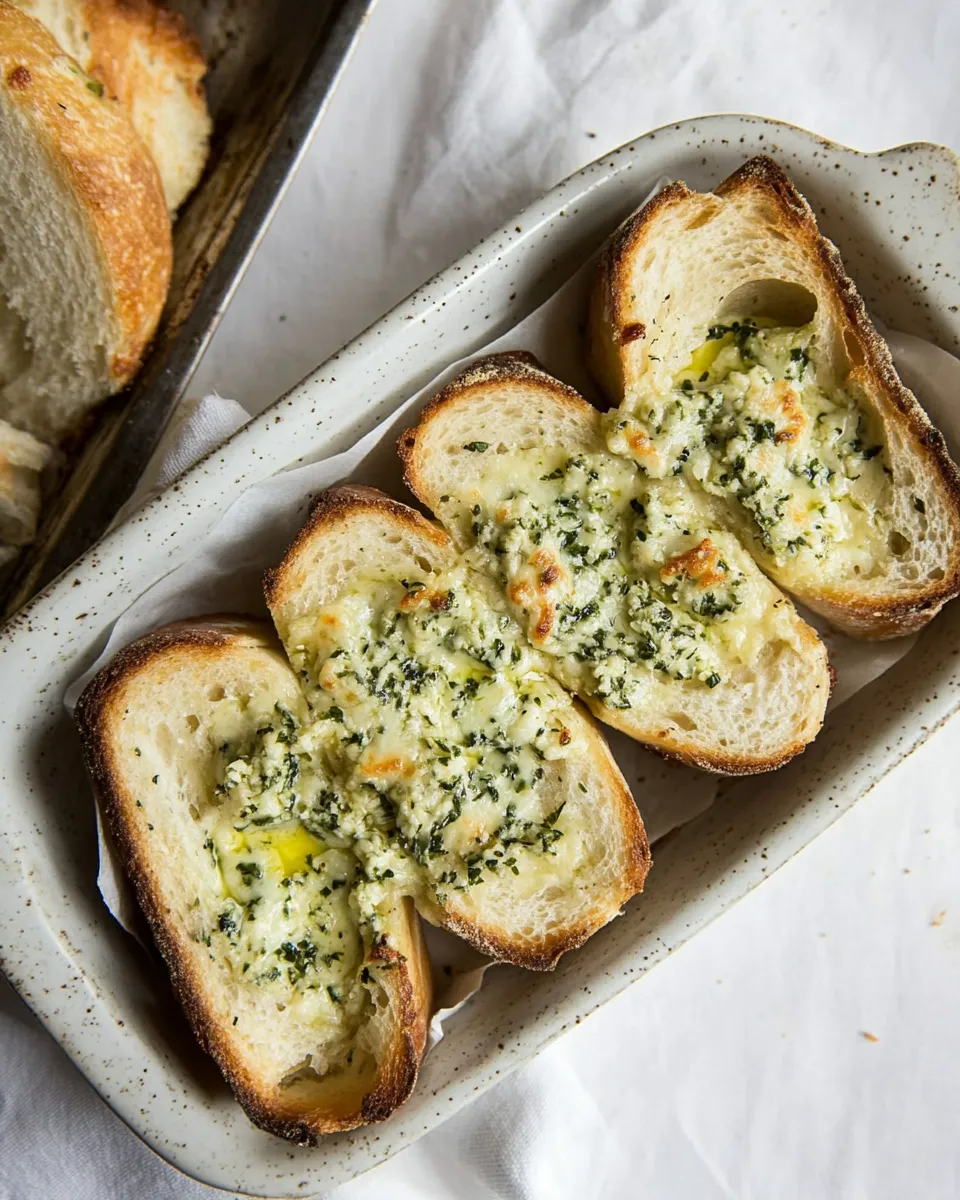
If you want to tweak the flavor or work with what you have, here are safe swaps that keep the loaf’s character intact.
- Bread — swap ciabatta for a large baguette as called out in the recipe; both hold up well. Avoid very soft or pre-sliced sandwich loaves, which will get soggy.
- Butter — if you only have unsalted butter, use it and add a small pinch of salt to the mix to taste. The recipe uses salted butter by default, so adjust accordingly.
- Cheese — Parmesan is the original choice here. If you must substitute, use a dry, hard cheese with umami (like aged Pecorino); keep the same weight but taste before adding extra salt.
- Herbs — parsley is bright and classic. If you prefer, use basil or a mix of parsley and chives for a different aromatic profile. Add fresh herbs sparingly so they don’t overwhelm the butter.
- Garlic — the recipe calls for crushed cloves. Roasted garlic can be used for a milder, sweeter result, but skip raw garlic if you want a subtler flavor.
Recommended Tools
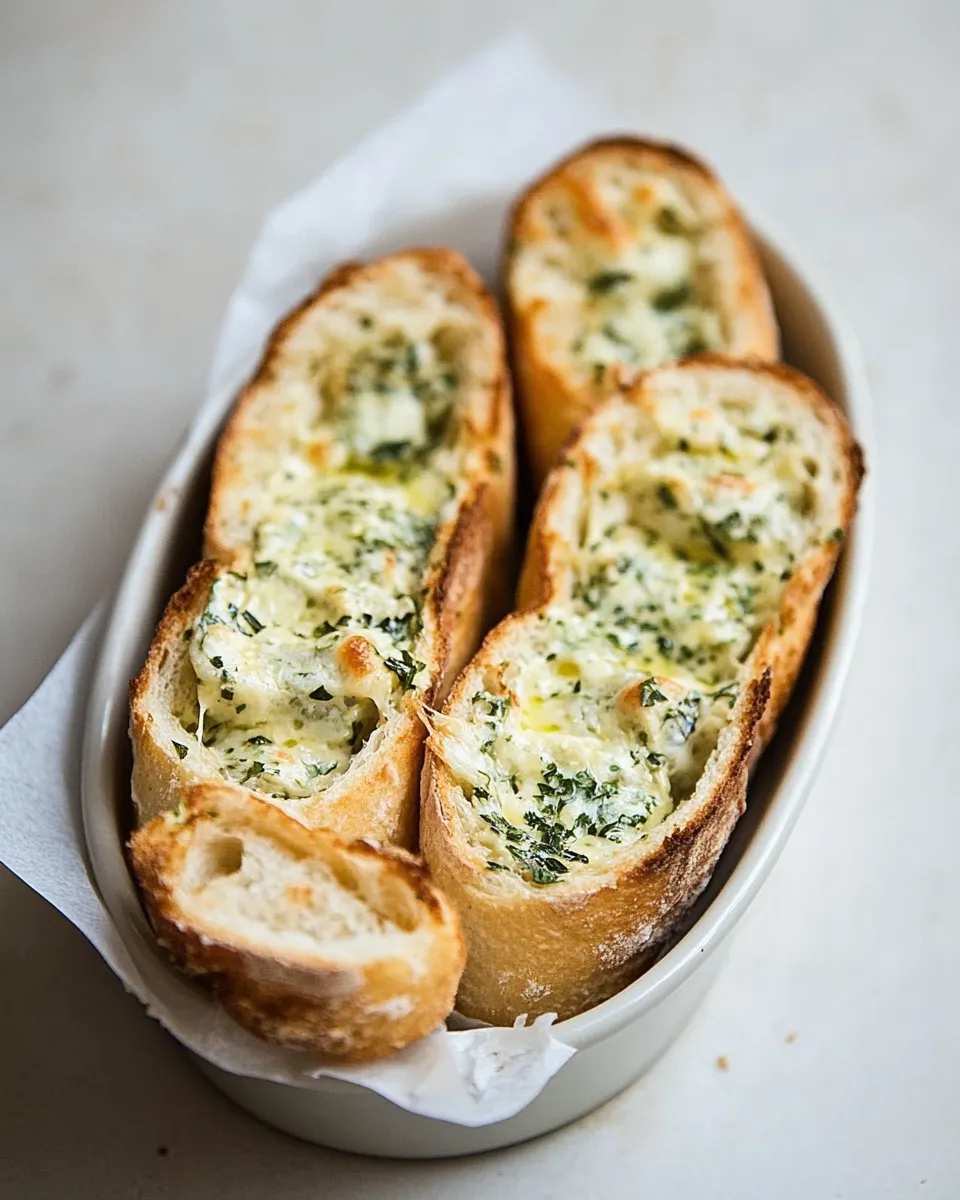
- Sharp bread knife — makes the deep, even slices needed without squashing the loaf.
- Bowl and spoon or small spatula — for mixing the butter-parmesan spread until smooth and even.
- Aluminum foil — to wrap the stuffed loaf for even heat and moisture retention while baking.
- Baking tray — to catch any drips and make it easy to handle in and out of the oven.
- Microplane or fine grater — for grating fresh Parmesan; it melts and browns better than pre-grated options.
Troubles You Can Avoid
- Soggy bread — cut the slices fairly thick and leave the base intact; wrap tightly in foil so steam keeps the crumb tender but not waterlogged.
- Burnt garlic — crushed or minced garlic mixed into the butter will roast gently in the oven; don’t add raw garlic pieces exposed on the outside where they can darken too quickly during the last browning step.
- Underwhelming flavor — taste the butter mixture before stuffing the loaf. If your Parmesan is mild or your butter unsalted, a small pinch of salt or an extra squeeze of lemon can brighten everything.
- Uneven browning — if the top isn’t browning evenly after unwrapping, move the tray closer to the oven rack’s top for those final minutes and watch it closely.
Seasonal Ingredient Swaps
Small seasonal changes can make this recipe feel fresh through the year.
- Spring — add a few chopped spring onions or ramp greens if you find them. They pair well with parsley and add a light, oniony lift.
- Summer — layer thin slices of sun-dried tomato inside the cuts for a sweet-tart contrast to the buttery filling.
- Fall — fold in a small handful of finely chopped roasted mushrooms for umami depth; press them into the butter so moisture doesn’t leak out during baking.
- Winter — include a pinch of crushed red pepper or a drizzle of honey on the top for a cozy sweet-heat balance that pairs with warm soups.
Pro Tips & Notes
Timing & temperature
Preheating the oven to 200 °C / 400 °F gets you a predictable bake: steam inside, crisp outside. The initial 20 minutes in foil steams the loaf gently so the butter melts into the crumb; the uncovered 5 minutes finish with color. If your oven runs hot, check the loaf earlier.
Mixing the butter
Make sure the butter is fully softened to room temperature. It should be pliable enough to mix with the garlic, parsley, and Parmesan into a spreadable paste. That ensures even distribution when you force it into the cuts.
Serving
Serve the loaf warm but not piping hot. Let it sit 2–3 minutes after unwrapping so the butter sets a little and the steam doesn’t scald. Tear between the slices rather than slicing through when serving to keep the presentation rustic.
Storing Tips & Timelines
- Short-term — leftover garlic bread keeps well wrapped in foil at room temperature for up to 24 hours. Reheat in a 175 °C / 350 °F oven for 8–10 minutes wrapped, then open for a final 2–3 minutes if you want to refresh the crust.
- Refrigeration — you can refrigerate leftovers for up to 3 days. Reheat as above. Avoid microwaving unless you don’t mind a softer crust.
- Freezing — freeze wrapped and placed in a sealed bag for up to 1 month. Reheat from frozen in foil at 180 °C / 350 °F for 15–20 minutes, then unwrap and crisp for a few minutes under higher heat.
Garlic Bread FAQs
Q: Can I make the butter mixture ahead of time?
A: Yes. Make the butter mix a day ahead and keep it chilled in the fridge. Bring it to room temperature before stuffing the loaf so it spreads easily into the cuts.
Q: What if I don’t have Parmesan?
A: Parmesan adds salt and umami. If you don’t have it, use a similarly dry, hard cheese if you have one. Taste the butter mixture and adjust salt carefully.
Q: Can I add cheese inside the cuts?
A: You can tuck thin slivers or a light sprinkle of shredded cheese into the cuts along with the butter mixture. Just avoid overfilling, which can make the loaf greasy or cause drips in the oven.
Q: My loaf is too soft to cut deeply without squishing. Any tips?
A: Use a very sharp serrated knife and a gentle sawing motion. Turn the loaf as you cut so pressure is distributed. If the loaf is extremely soft, slice slightly shallower and work smaller amounts of butter into each cut.
Ready, Set, Cook
This garlic bread is forgiving, fast, and reliably loved. Follow the steps, respect the amounts, and you’ll have a loaf that looks like effort but tastes effortless. Make the butter, slice the loaf, press the spread into each cut, wrap it tight, and let the oven do most of the work.
When you pull it out golden and fragrant, let it rest a minute, then tear it apart and watch it disappear. Send me a note about how you tweaked it — I love hearing variations and small victories from the kitchen.
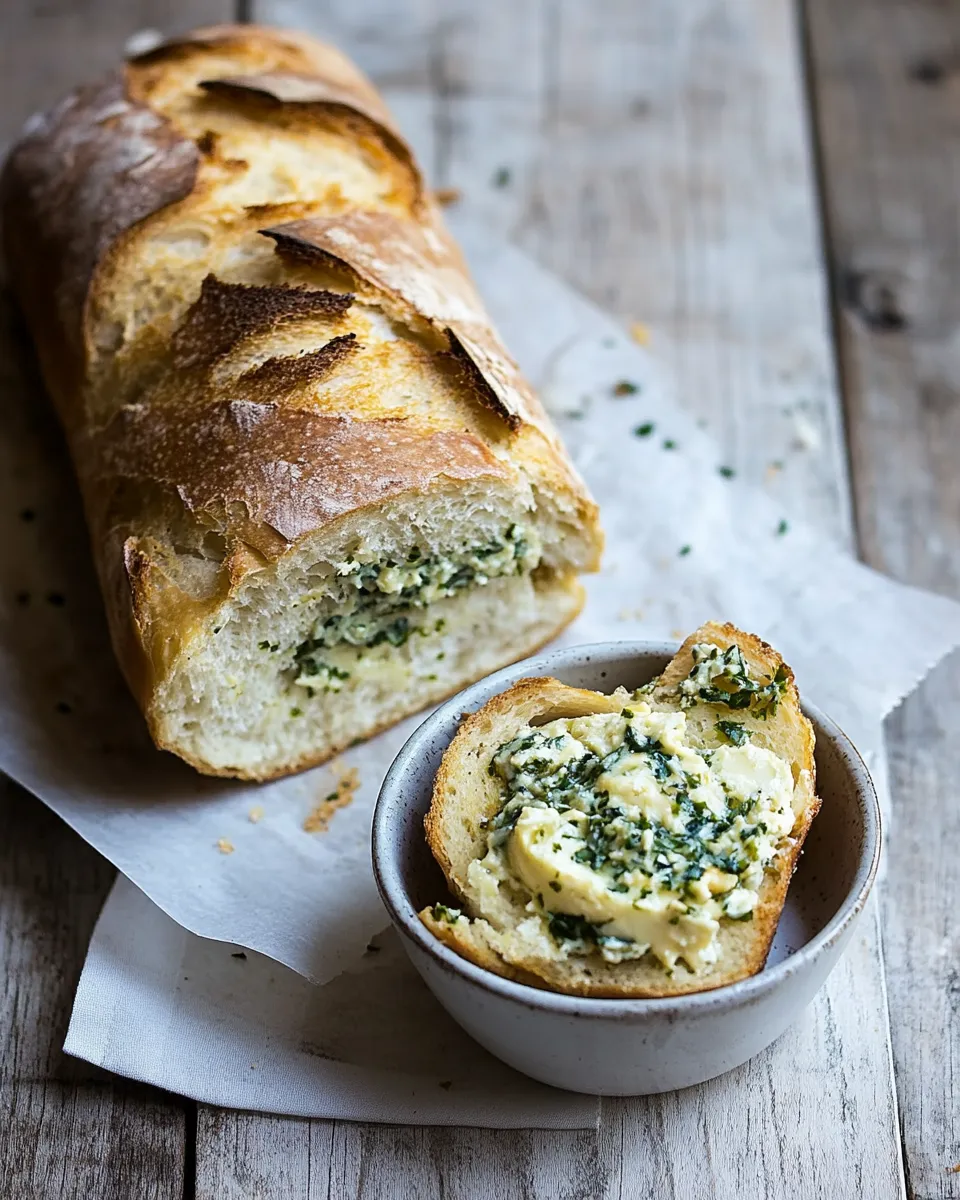
How to make the best garlic bread
Equipment
- Oven
- Mixing Bowl
- Knife
- Cutting Board
- Foil
- Baking tray
- Spoon
Ingredients
Ingredients
- 1 loaf of ciabatta bread or a large baguette
- 100 gramssalted butter softened to room temperature
- a small handful of parsleyfinely chopped about 2 T
- 3 – 4 clovesof garliccrushed
- 50 gramsParmesan cheeseParmesan an d a bit extra to sprinkle over the loaf
- a squeeze of lemon juice if desired
- a pinch of salt optional but not necessary if you use all the Parmesan
Instructions
Instructions
- Preheat the oven to 200 °C / 400 °F.
- In a bowl, combine the 100gramssalted butter (softened to room temperature), the small handful of parsleyfinely chopped (about 2 T), 3–4clovesof garliccrushed, and the 50gramsParmesan cheeseParmesan. Add a squeeze of lemon juice if desired and a pinch of salt optional (not necessary if you use all the Parmesan). Mix thoroughly until evenly combined.
- Place the 1loaf of ciabatta bread or a large baguette on a cutting board. Make fairly thick slices through the loaf, cutting almost all the way through but leaving the base intact so the loaf holds together.
- Spread the butter-parmesan mixture generously into each cut and over the top and ends of the loaf. Sprinkle a bit extra Parmesan over the top if you like.
- Wrap the stuffed loaf tightly in foil and place it on a baking tray.
- Bake for 20 minutes in the preheated oven. Carefully open the foil and bake for a further 5 minutes to brown the top (you can skip the last step if the loaf is already sufficiently browned).
- Remove from the oven, unwrap, let sit briefly to cool slightly, then serve.
Notes
This bread is best eaten on the day you make it.