These soft, frosted cookies are a crowd-pleaser — and yes, they can be reliably gluten free without sacrificing that pillowy Lofthouse texture. I developed this version to be forgiving and straightforward, leaning on a gluten free 1:1 flour blend and a few simple techniques that keep the cookies tender and easy to ice.
No fluff here: you’ll find a clear ingredient list, step-by-step instructions copied from the tested method, and practical notes to troubleshoot common issues. If you want the classic thick frosting and rainbow sprinkles, you’ll get that. If you prefer a subtler finish, you can adapt the icing or skip the sprinkles.
I bake these for parties, for busy weeknights when kids want to help, and whenever I need a soft, cake-like cookie that holds up to bright frosting. Below you’ll find everything you need to succeed, including freezer tips and simple substitutions that won’t wreck the texture.
Gather These Ingredients
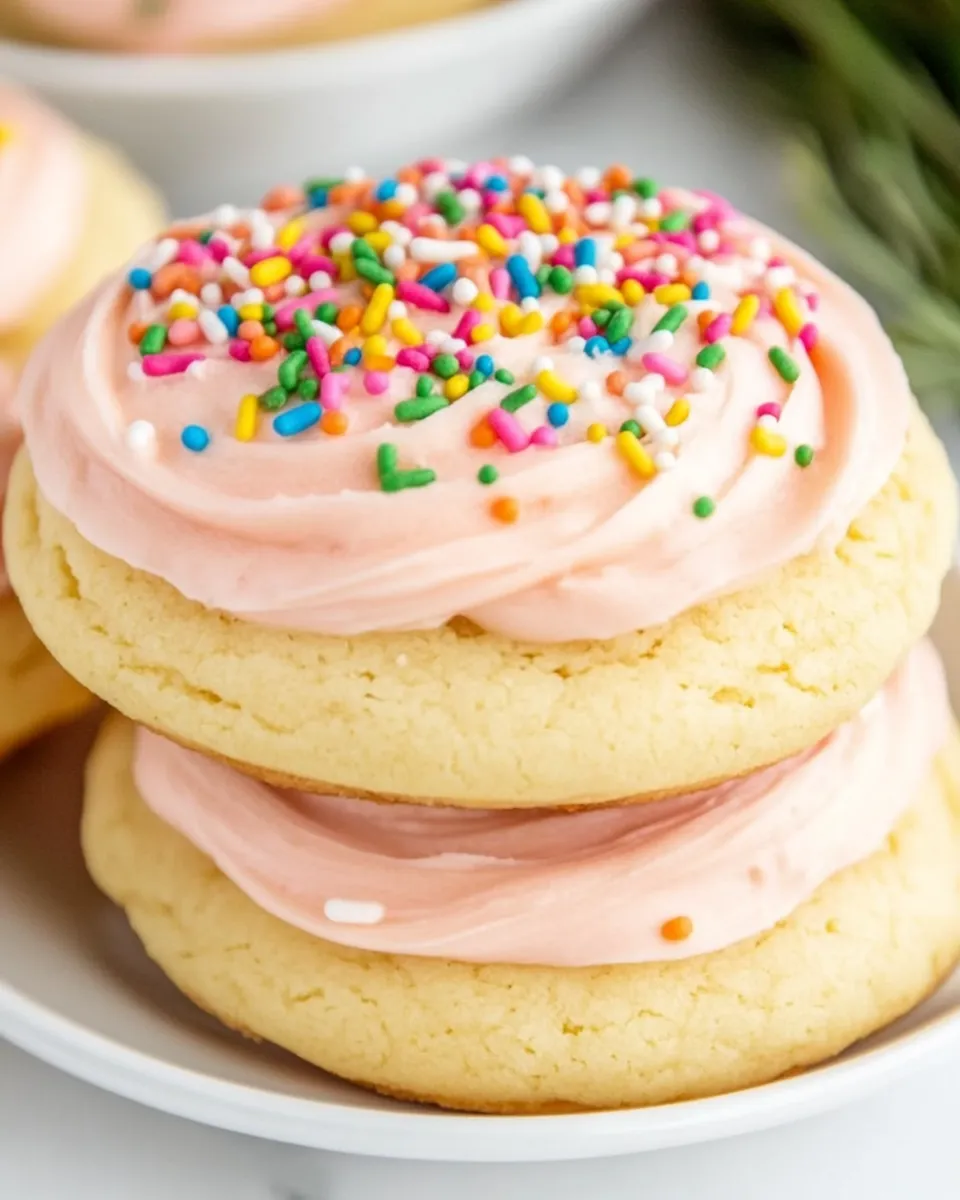
Ingredients
- 2cups(240 grams) gluten free 1:1 flour(I use King Arthur Gluten Free Measure For Measure Flour. Other brands may yield different results.) — the base; use a true 1:1 blend for best texture.
- 1Tablespooncornstarch — lightens the crumb for a softer cookie.
- ¾teaspoonbaking powder — provides gentle lift.
- ½teaspoonsalt — balances sweetness; don’t skip.
- ¼teaspoonbaking soda — helps with rise and browning control.
- ½cup(1 stick, 1/4 pound) unsalted butter,softened to room temperature — creamed with sugar to make the cookie tender and slightly cakey.
- ¾cupgranulated sugar — sweetens and helps create structure when creamed with butter.
- 1large egg — binder and adds moisture.
- 1 ½teaspoonsvanilla extract — primary flavor.
- ¼teaspoonalmond extract,optional — a small amount adds classic Lofthouse flavor; optional if anyone has an almond sensitivity.
- ¼cupsour cream — gives tenderness and a slight tang to the dough.
- ½cupsalted butter(or unsalted plus 1/4 teaspoon salt) — for the icing; salt balances the sweetness.
- 2 ½cupspowdered sugar — base for a thick, spreadable frosting.
- 1teaspoonvanilla extract — icing flavoring.
- 2Tablespoonsmilk — thins the icing to a spreadable consistency; add more sparingly if needed.
- Pink food coloring (or your preferred color),optional — for the signature Lofthouse look; a few drops suffice.
- Rainbow sprinkles,optional — pressed into the icing right away so they stick.
The Method for Gluten Free Lofthouse Cookies
- Preheat the oven to 350°F (177°C). Line a baking sheet with parchment paper.
- In a medium bowl, sift together 2 cups (240 grams) gluten free 1:1 flour, 1 Tablespoon cornstarch, 3/4 teaspoon baking powder, 1/2 teaspoon salt, and 1/4 teaspoon baking soda. Set the dry mixture aside.
- In a large bowl, with a hand mixer or stand mixer on high speed, cream 1/2 cup (1 stick) unsalted butter (softened to room temperature) and 3/4 cup granulated sugar until light and fluffy, about 2 minutes.
- Reduce the mixer speed to medium and add 1 large egg, 1 1/2 teaspoons vanilla extract, and 1/4 teaspoon almond extract (optional). Beat until combined.
- Add 1/4 cup sour cream and mix on medium-low until incorporated and the batter is smooth.
- With the mixer on low speed, gradually add the sifted dry ingredients to the wet ingredients a little at a time, mixing until just combined. Scrape down the sides and bottom of the bowl with a spatula and finish mixing so there are no streaks of flour.
- Using a 2 Tablespoon cookie scoop (or measure 2 Tablespoons), portion dough and roll each portion into a ball. Place the dough balls on the prepared baking sheet, spacing them about 2 inches apart.
- Cover one cookie with a small piece of parchment (to prevent sticking) and gently press the top of the cookie with the bottom of a glass until the cookie is about 1/4 inch thick. Repeat for remaining cookies.
- Bake in the preheated oven for 9 minutes, or until the edges are just beginning to turn slightly golden. Do not overbake.
- Remove the baking sheet from the oven and let the cookies sit on the sheet until they are cool enough to move, about 5–10 minutes. Transfer the cookies to a wire rack and cool completely before icing.
- While the cookies cool, make the icing: in a large bowl, combine 1/2 cup salted butter (or unsalted butter plus 1/4 teaspoon salt), 2 1/2 cups powdered sugar, and 1 teaspoon vanilla extract. Mix on low speed until the loose sugar is incorporated and the mixture is crumbly.
- Add 2 Tablespoons milk and continue mixing until the icing is smooth and spreadable. If using food coloring (pink or another color), add a few drops now and mix until evenly colored.
- Fit a piping bag with a round tip or use a zip-top bag with about a 1/2-inch corner cut off. Pipe the icing onto each cooled cookie in a circular motion from the outside edge toward the center to create the classic Lofthouse look. Alternatively, spread icing with a knife and smooth the tops.
- Immediately add rainbow sprinkles (optional) so they adhere to the icing. Allow the icing to set before stacking or storing the cookies.
Why This Recipe Is Reliable
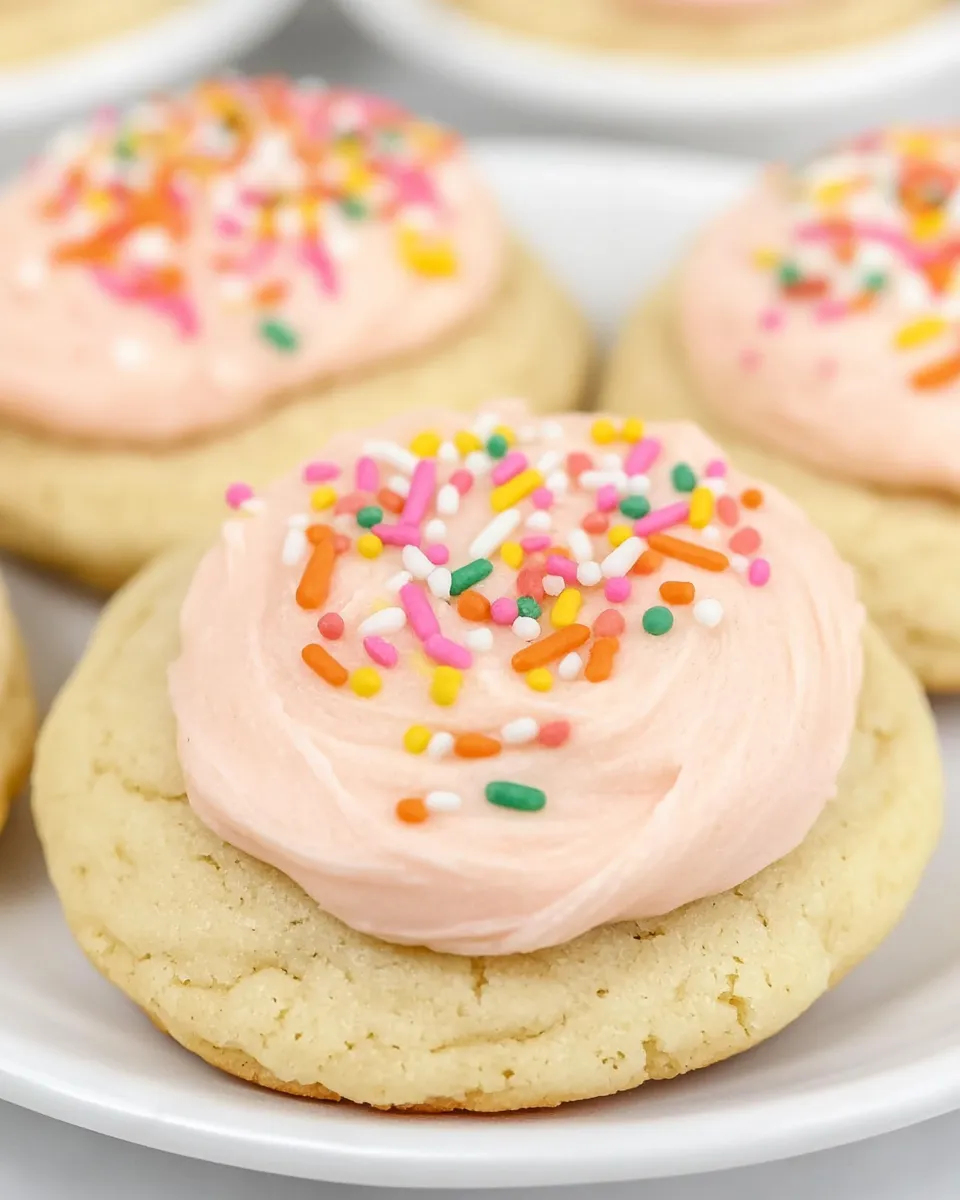
This recipe was written to be forgiving. Using a commercial gluten free 1:1 flour blend keeps the proportions identical to wheat flour, which makes the chemistry predictable. Cornstarch and sour cream together ensure a tender crumb that remains soft after cooling.
Measurements and mixing order matter here. Creaming the butter and sugar until light traps air for structure. Gradual incorporation of the dry mix prevents overworking the dough. The short 9-minute bake time and the cool-on-sheet step prevent drying and preserve that signature Lofthouse soft center.
Finally, the frosting recipe is intentionally thick. It spreads without running and sets enough to stack cookies if you wait. These predictable behaviors make the recipe reliable across different ovens and kitchens.
Substitutions by Category
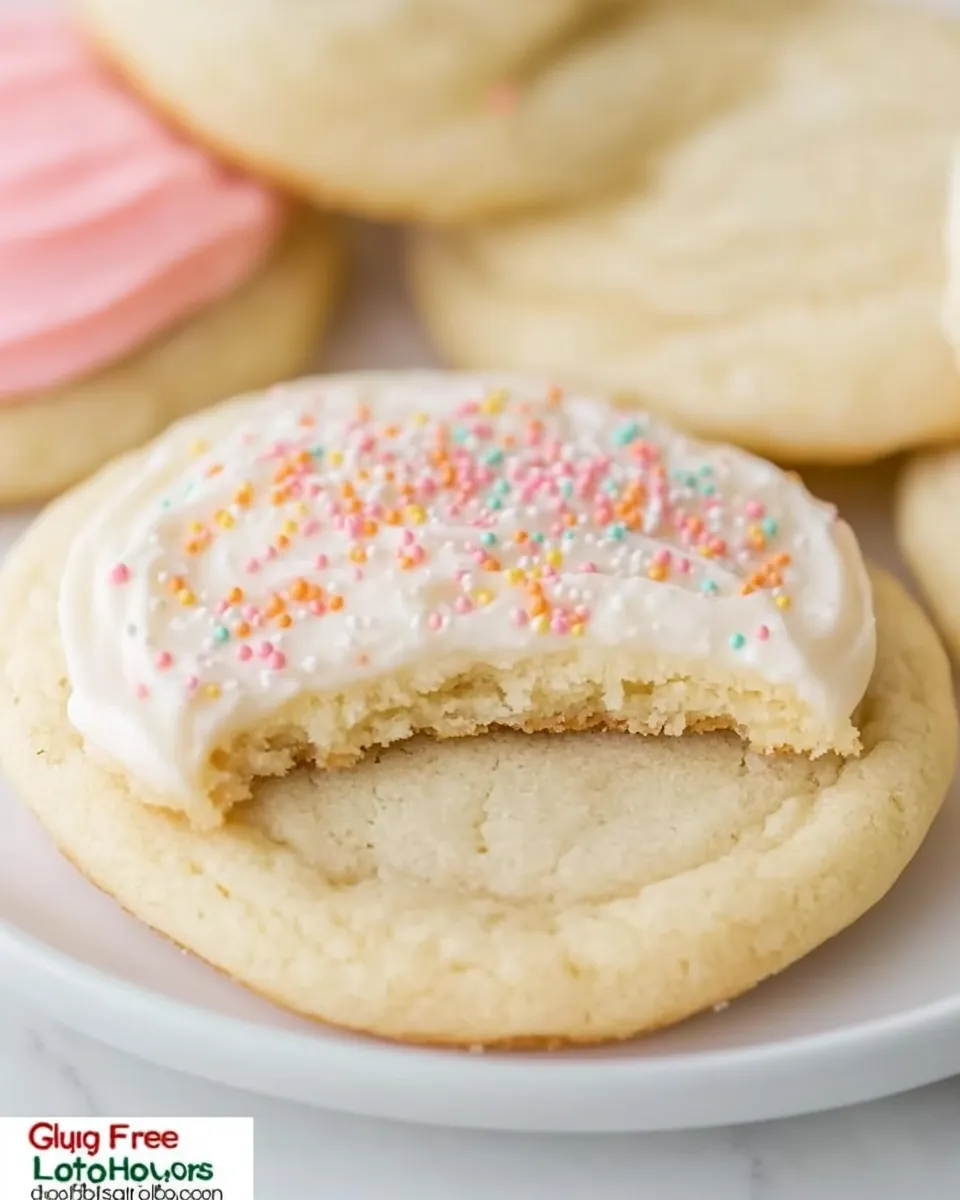
Flours & Starches
- Gluten free 1:1 flour — stick with a true 1:1 blend that includes a binder like xanthan gum when possible. Different brands vary; if you switch, expect slight texture changes.
- Cornstarch — do not omit, but you can replace with arrowroot powder for a similar tenderizing effect if needed.
Dairy & Eggs
- Unsalted butter — can be swapped for salted butter in the cookie dough if you reduce added salt elsewhere; the icing recipe already offers salted-butter or unsalted-plus-salt options.
- Sour cream — plain full-fat Greek yogurt can be used in a 1:1 swap for a similar tang and moisture.
- Egg — I don’t recommend egg substitutes for texture-sensitive cookies, but a commercial egg replacer may work if you test and adjust for moisture.
Icing Adjustments
- Powdered sugar — use sifted powdered sugar for the smoothest icing. If you need a dairy-free frosting, swap the butter for a vegan butter and add a pinch of salt to taste.
- Milk — any neutral plant milk works; add it a little at a time to reach the desired consistency.
Toolbox for This Recipe
- Stand or hand mixer — for creaming butter and sugar; a whisk will make the job harder and longer.
- 2 Tablespoon cookie scoop — gives uniform cookies that bake evenly.
- Parchment paper — prevents sticking and helps the cookies bake evenly.
- Flat-bottomed glass — for pressing cookies to the right thickness; cover with parchment to avoid sticking.
- Wire rack — essential for cooling completely before icing so the frosting doesn’t melt.
- Piping bag or zip-top bag — for the signature circular icing; a knife also works if you prefer a more rustic finish.
Pitfalls & How to Prevent Them
- Overbaking — danger: dry, crumbly cookies. Prevent it by removing at 9 minutes and letting them finish on the sheet for 5–10 minutes.
- Cracked or dense cookies — often caused by overmixing the flour. Fold dry ingredients in slowly and stop when just combined.
- Spread too thin — pressing cookies too flat will make them crisp instead of soft. Aim for about 1/4 inch thickness as instructed.
- Runny frosting — caused by too much milk. Add liquid in small increments and stop when the frosting is spreadable but not pourable.
- Soggy bottoms — can happen if the baking sheet is cold or the oven temperature is low. Make sure the oven is fully preheated and use room-temperature cookie balls when possible.
Spring–Summer–Fall–Winter Ideas
- Spring — swap pink food coloring for pastel greens and yellows; top with lemon zest in the icing for a fresh note.
- Summer — use bright multicolored or shaped sprinkles and consider a thin layer of lemon or coconut-flavored icing for a lighter finish.
- Fall — add a pinch of cinnamon to the dough (start with 1/2 teaspoon) or swap sprinkles for chopped toasted pecans after icing.
- Winter — use red and green sprinkles, or add a tiny bit of peppermint extract to the icing for holiday cookies. Reduce the quantity: peppermint can be potent.
Chef’s Rationale
I built this recipe with a few key priorities: texture, ease, and predictable results. The combination of a 1:1 gluten free flour, cornstarch, and sour cream mimics the tender, barely cake-like texture of classic Lofthouse cookies. Creaming the butter and sugar provides just enough structure to hold the cookie while keeping it soft.
The frosting is intentionally stable: a slightly thicker icing adheres well and allows the look you expect from Lofthouse cookies. I keep flavors simple — vanilla and a touch of almond — because those notes are classic and play well with bright frosting and sprinkles.
Freezer-Friendly Notes
- Unbaked dough — portion into 2 Tablespoon balls and freeze on a tray until solid. Transfer to a labeled freezer bag and bake from frozen; add 1–2 minutes to the bake time.
- Baked cookies — cool completely, then layer between sheets of parchment in an airtight container and freeze up to 3 months. Thaw at room temperature and ice after thawing for best appearance.
- Frosted cookies — can be frozen on a tray until the icing sets, then stacked with parchment between layers and kept in an airtight container for up to 1 month. Thaw gently at room temperature.
Reader Questions
Q: Can I make these dairy-free? A: You can experiment with vegan butter and a non-dairy sour cream substitute, and use plant milk in the icing. Texture will change; start with a small test batch.
Q: My gluten free cookies crumble apart. What went wrong? A: Most likely overbaking or using a flour blend without a binder. Check oven accuracy, follow the 9-minute guideline, and use a 1:1 blend that includes xanthan gum or add a small amount if your blend lacks it.
Q: Can I refrigerate the dough before baking? A: Yes. A short chill (30–60 minutes) firms the dough and can make the balls easier to press evenly. If refrigerated longer, let them warm slightly so they press without cracking.
Q: How do I get the icing perfectly smooth? A: Sift the powdered sugar, mix on low until incorporated, then increase speed briefly to smooth. Use a spatula or offset knife to finish if needed. Work while the icing is still slightly warm and pliable.
Ready to Cook?
Preheat the oven, line your sheet, and gather the ingredients. Follow the method step-by-step, watch the clock at 9 minutes, and let the cookies cool before icing. You’ll end up with soft, tender, frosted cookies that look festive and taste like the classic Lofthouse treat — without gluten.

Gluten Free Lofthouse Cookies
Equipment
- Oven
- Baking Sheet
- Parchment Paper
- Medium Bowl
- Large Bowl
- Sifter
- Hand Mixer
- Stand mixer
- Spatula
- Cookie Scoop
- Glass
- Wire Rack
Ingredients
Ingredients
- 2 cups 240 grams gluten free 1:1 flour(I use King Arthur Gluten Free Measure For Measure Flour. Other brands may yield different results.)
- 1 Tablespooncornstarch
- 3/4 teaspoonbaking powder
- 1/2 teaspoonsalt
- 1/4 teaspoonbaking soda
- 1/2 cup 1 stick, 1/4 pound unsalted butter, softened to room temperature
- 3/4 cupgranulated sugar
- 1 large egg
- 1 1/2 teaspoonsvanilla extract
- 1/4 teaspoonalmond extract optional
- 1/4 cupsour cream
- 1/2 cupsalted butter or unsalted plus 1/4 teaspoon salt
- 2 1/2 cupspowdered sugar
- 1 teaspoonvanilla extract
- 2 Tablespoonsmilk
- Pink food coloring or your preferred color, optional
- Rainbow sprinkles optional
Instructions
Instructions
- Preheat the oven to 350°F (177°C). Line a baking sheet with parchment paper.
- In a medium bowl, sift together 2 cups (240 grams) gluten free 1:1 flour, 1 Tablespoon cornstarch, 3/4 teaspoon baking powder, 1/2 teaspoon salt, and 1/4 teaspoon baking soda. Set the dry mixture aside.
- In a large bowl, with a hand mixer or stand mixer on high speed, cream 1/2 cup (1 stick) unsalted butter (softened to room temperature) and 3/4 cup granulated sugar until light and fluffy, about 2 minutes.
- Reduce the mixer speed to medium and add 1 large egg, 1 1/2 teaspoons vanilla extract, and 1/4 teaspoon almond extract (optional). Beat until combined.
- Add 1/4 cup sour cream and mix on medium-low until incorporated and the batter is smooth.
- With the mixer on low speed, gradually add the sifted dry ingredients to the wet ingredients a little at a time, mixing until just combined. Scrape down the sides and bottom of the bowl with a spatula and finish mixing so there are no streaks of flour.
- Using a 2 Tablespoon cookie scoop (or measure 2 Tablespoons), portion dough and roll each portion into a ball. Place the dough balls on the prepared baking sheet, spacing them about 2 inches apart.
- Cover one cookie with a small piece of parchment (to prevent sticking) and gently press the top of the cookie with the bottom of a glass until the cookie is about 1/4 inch thick. Repeat for remaining cookies.
- Bake in the preheated oven for 9 minutes, or until the edges are just beginning to turn slightly golden. Do not overbake.
- Remove the baking sheet from the oven and let the cookies sit on the sheet until they are cool enough to move, about 5–10 minutes. Transfer the cookies to a wire rack and cool completely before icing.
- While the cookies cool, make the icing: in a large bowl, combine 1/2 cup salted butter (or unsalted butter plus 1/4 teaspoon salt), 2 1/2 cups powdered sugar, and 1 teaspoon vanilla extract. Mix on low speed until the loose sugar is incorporated and the mixture is crumbly.
- Add 2 Tablespoons milk and continue mixing until the icing is smooth and spreadable. If using food coloring (pink or another color), add a few drops now and mix until evenly colored.
- Fit a piping bag with a round tip or use a zip-top bag with about a 1/2-inch corner cut off. Pipe the icing onto each cooled cookie in a circular motion from the outside edge toward the center to create the classic Lofthouse look. Alternatively, spread icing with a knife and smooth the tops.
- Immediately add rainbow sprinkles (optional) so they adhere to the icing. Allow the icing to set before stacking or storing the cookies.
Notes
Salted butter: If you choose to use unsalted butter, you might want to add a pinch of salt to the icing and the cookies.
Sprinkles: This is optional. You can use any kind here, but the rainbow sprinkles will give you more of the classic look.
Gluten-free all-purpose flour: I use and highly recommend King Arthur’s Gluten-Free Measure for Measure flour. Other flour blends may yield different results. If you choose to try a different flour blend, make sure it’s one that contains xanthan gum.
Almond extract: This is optional and can easily be omitted if you have a nut allergy.