I love that classic crunch-chew-chocolate trio of a Twix bar, but I also love knowing exactly what went into it. These homemade Twix bars let you control the butter, the caramel texture, and the chocolate quality. They take time, not talent: the steps are straightforward and repeatable. A little patience with the caramel yields a candy bar that’s better than store-bought.
This recipe builds a sturdy shortbread base, a thick, buttery caramel, and a glossy chocolate top. Nothing fancy: just butter, flour, sugar, condensed milk, chocolate. Stay organized, keep a bowl of ice water nearby for testing the caramel, and room to chill the pan between stages. Do those things and you’ll have neat, slicing-friendly bars.
Below I walk through ingredient behavior, exact ingredients, every step in order, troubleshooting tips, swaps, and storage. Follow the directions exactly when it comes to amounts and the order of steps; timing and the caramel test are where you’ll live or die. Ready? Let’s get to it.
Ingredient Notes
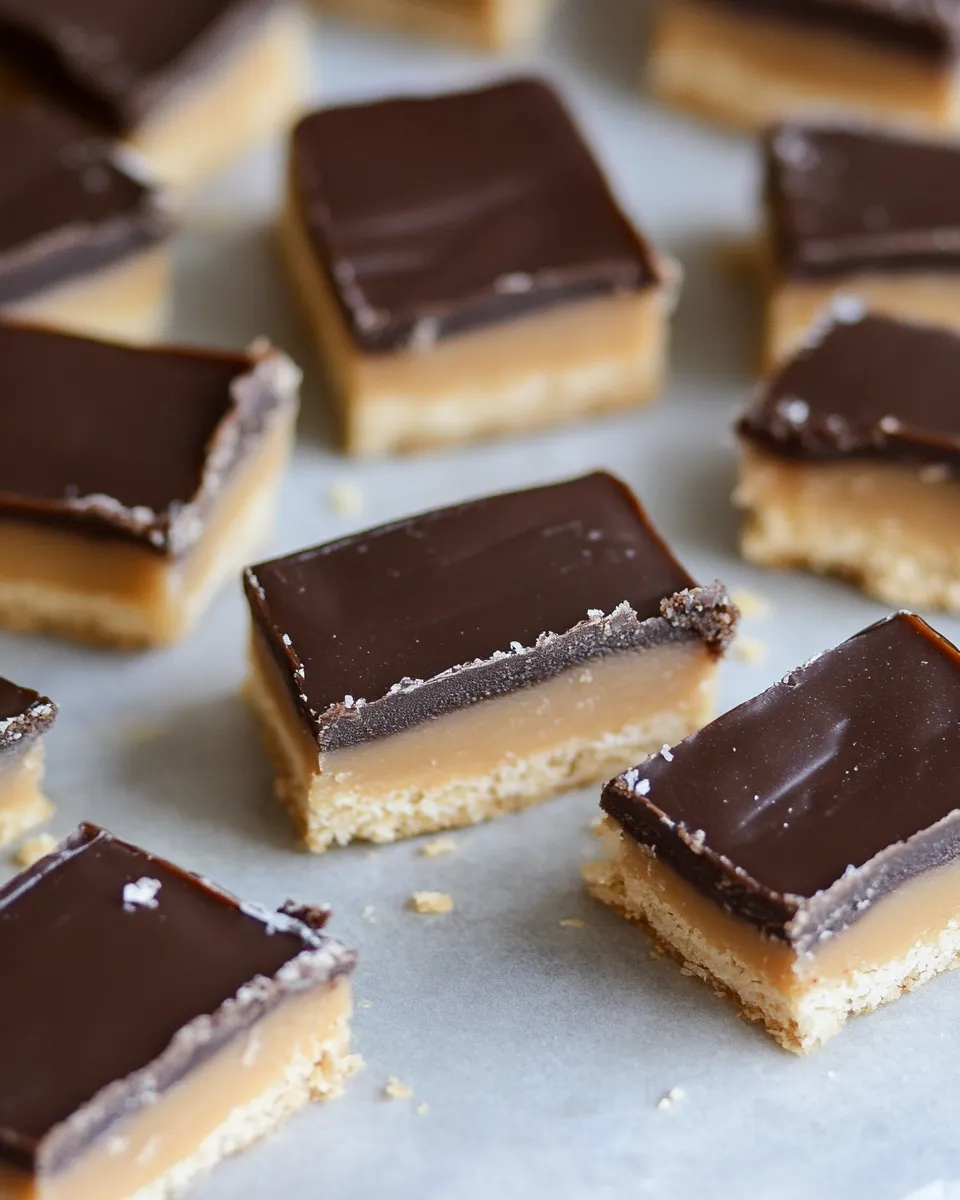
Shortbread needs cold butter and just enough handling to bring the dough together. Cold butter produces those little pockets of flake in the baked crust, leading to a tender yet firm base that holds the caramel. Powdered sugar keeps the crumb fine and soft; granulated would change the texture and sweetness balance.
The caramel is a classic combination of butter, brown sugar, corn syrup, and sweetened condensed milk. Corn syrup keeps the caramel smooth and prevents unwanted crystallization, while sweetened condensed milk contributes rich mouthfeel and predictable sweetness. Cooking to the soft-ball stage gives you a chewy, sliceable caramel that won’t run when you cut the bars.
Chocolate quality matters here because the chocolate is a thin but prominent layer. Choose milk or dark chocolate you’d happily eat off a spoon. A bit of butter in the melting step yields a glossier finish and slightly softer set, making the top less likely to shatter when you bite.
Ingredients
- 1 cup butter (cold) — for a flaky, sturdy shortbread crust; keep it cold until mixing.
- 1 cup powdered sugar — sweetens and tenderizes the shortbread; sift if lumpy.
- 2 cups all-purpose flour — the structure for the shortbread; measure by spooning into the cup and leveling.
- 1 teaspoon vanilla extract — flavoring for the shortbread; adds depth.
- 1 cup butter — for the caramel; contributes richness and a smooth mouthfeel.
- 1 cup light brown sugar — adds caramel flavor and moisture to the filling.
- 1 cup light corn syrup — prevents crystallization and keeps the caramel smooth.
- 14 ounces sweetened condensed milk — the base of the caramel; gives body and sweetness.
- 3 cups chopped milk or dark chocolate — for the chocolate topping; use good-quality chocolate for best flavor.
- 1 Tablespoon butter — added to the melted chocolate for shine and smoothness.
Cooking (Homemade Twix Bars): The Process
- Preheat oven to 300°F. Line a 9×13″ pan with parchment paper, leaving some overhang to lift the bars out later, or spray the pan well with non-stick cooking spray.
- Make the shortbread crust: in a large bowl, combine 1 cup butter (cold), 1 cup powdered sugar, 2 cups all-purpose flour, and 1 teaspoon vanilla extract. Use a pastry blender, fork, or your fingers to work the butter into the dry ingredients until the mixture comes together into a cohesive dough.
- Press the shortbread dough evenly into the prepared 9×13″ pan, making sure the surface is level and the edges are compacted.
- Bake the crust at 300°F for 28–35 minutes, or until the crust is very lightly golden. Remove from the oven and allow the crust to cool completely in the pan before adding the caramel.
- Prepare the caramel: in a medium, heavy-bottomed saucepan combine 1 cup butter, 1 cup light brown sugar, 1 cup light corn syrup, and 14 ounces sweetened condensed milk.
- Place the saucepan over medium heat and stir constantly until the mixture comes to a steady rolling boil. Be careful—the mixture will bubble vigorously.
- Maintain medium heat and continue stirring constantly. Cook the caramel until it reaches the soft-ball stage, about 15–20 minutes. To test: drop a small spoonful of the hot caramel into a cup of ice water; if you can gather it into a very soft ball with your fingers, it’s ready. Repeat the ice-water test every few minutes once the caramel begins to darken to avoid overcooking.
- When the caramel reaches the soft-ball stage, remove the saucepan from the heat and immediately pour the warm caramel evenly over the cooled shortbread crust. Let the caramel sit at room temperature a few minutes, then refrigerate the pan until the caramel is firm, at least 2 hours or overnight.
- When the caramel is set, prepare the chocolate topping: place 3 cups chopped milk or dark chocolate and 1 Tablespoon butter in a heatproof bowl.
- Melt the chocolate and butter until smooth using a double boiler (set the bowl over simmering water, stirring frequently) or in the microwave at low power in 30-second intervals, stirring between intervals until fully melted and smooth.
- Pour the melted chocolate over the chilled caramel layer and spread into an even layer. Return the pan to the refrigerator and chill until the chocolate is fully set.
- Once set, lift the bars from the pan using the parchment overhang and cut into bars or squares. Store the finished Twix bars covered in the refrigerator for up to 1 week.
Why Cooks Rave About It
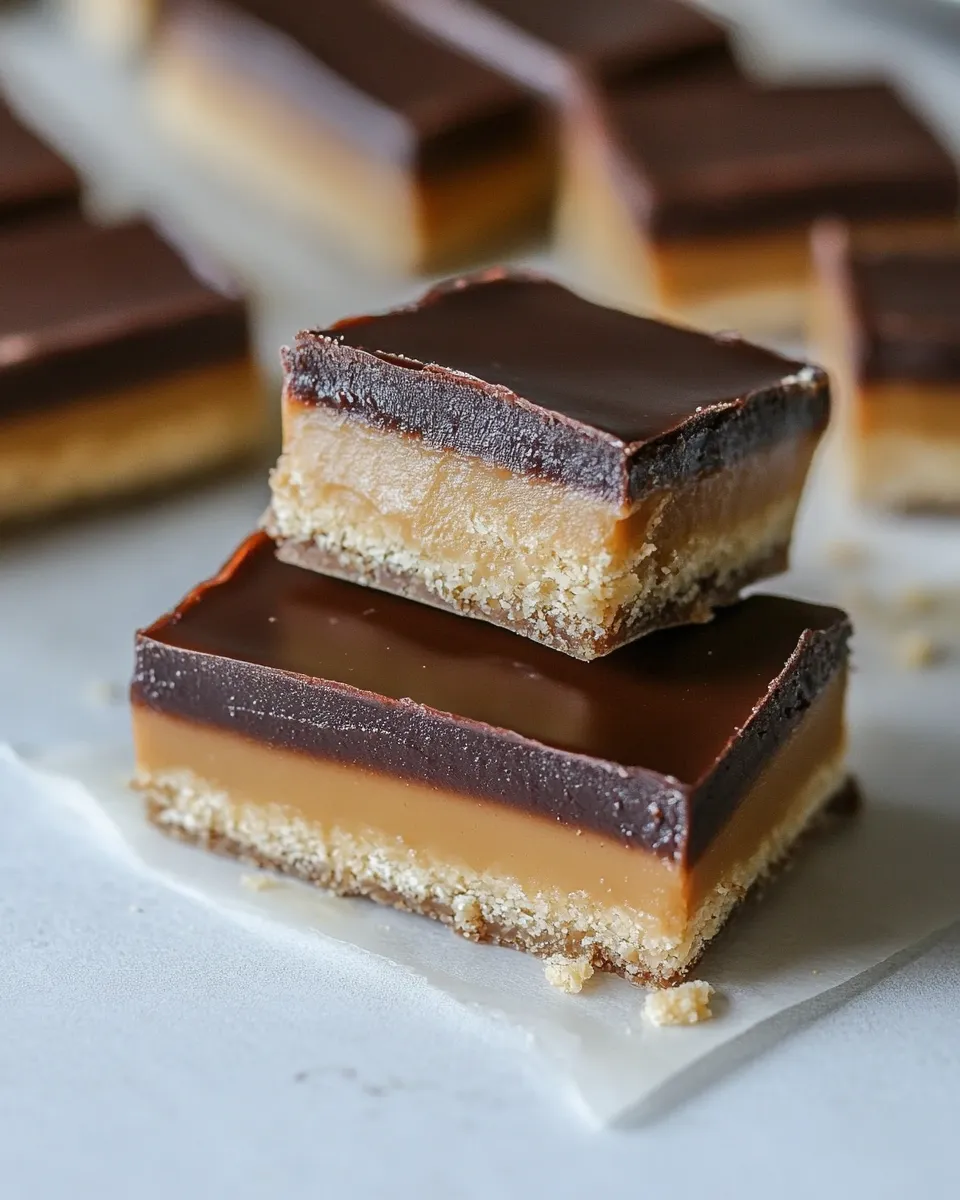
There’s something very satisfying about a homemade Twix: the shortbread gives a clean, buttery build that won’t crumble into a mess when you bite; the caramel is thick and chewy rather than gooey and runaway; the chocolate seals everything with a pleasant snap. Homemade means you can choose your chocolate and control the chew—soft-ball caramel is forgiving and reliably sliceable.
It’s also a project that rewards small, attentive tasks: measuring, testing the caramel, and chilling between stages. Those small acts produce a product that tastes like attention. Serve these at coffee, give them as gifts, or keep them in the fridge for a treat that feels fancy but is straightforward to make.
Dairy-Free/Gluten-Free Swaps
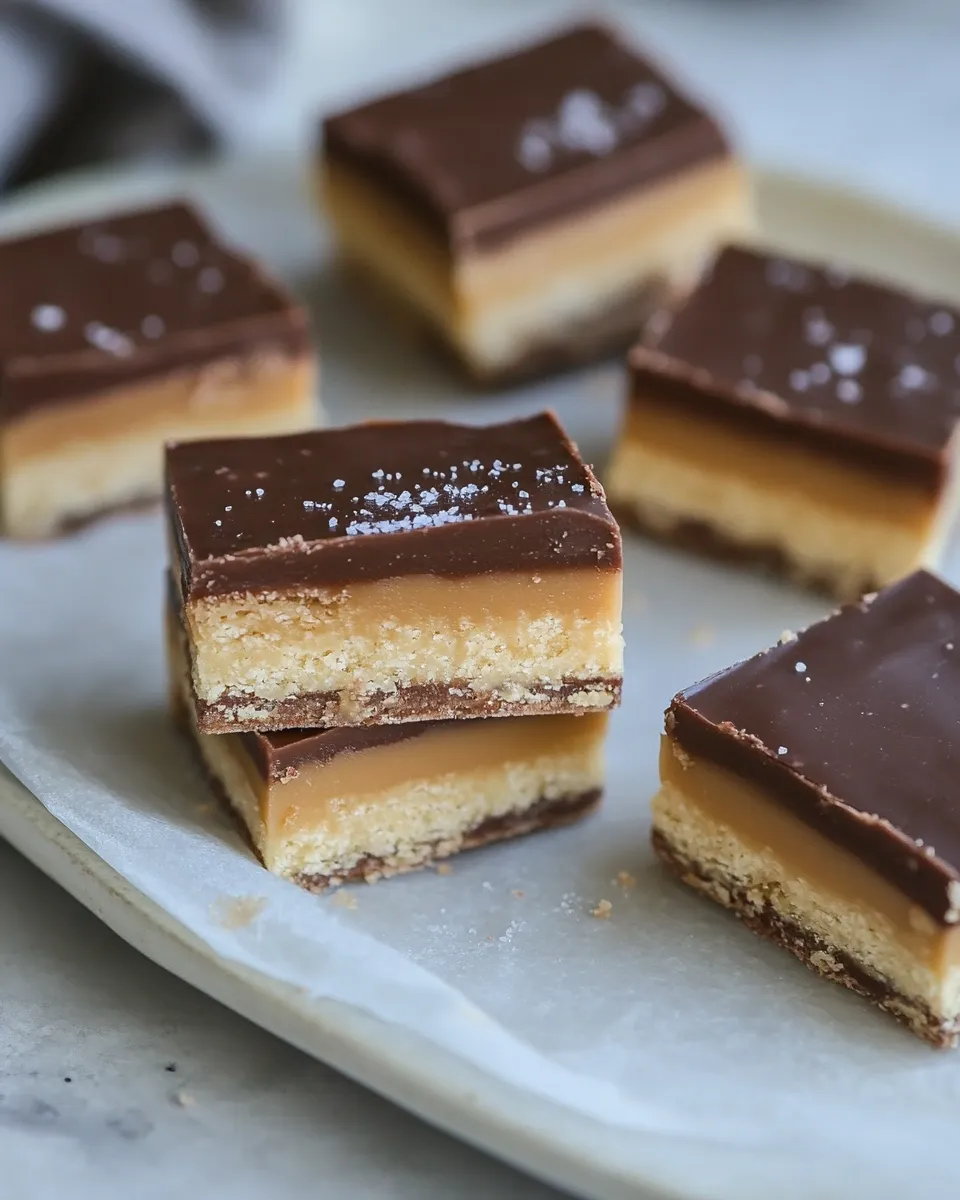
If you need dietary swaps, remember swaps change texture and behavior—be prepared to test. For a gluten-free crust, you can try a cup-for-cup gluten-free flour blend in place of the all-purpose flour; the shortbread will behave similarly but may be slightly more crumbly. For dairy-free, use plant-based butter substitutes measured 1:1 in both the crust and caramel. Note that many vegan butter substitutes contain water and can change how the dough comes together and how the caramel cooks.
For the chocolate layer choose dairy-free chocolate made from cocoa butter and sugar; it melts similarly but can set a touch differently. Sweetened condensed milk is trickier: commercially available dairy-free condensed milks exist, or you can reduce coconut milk with sugar until thick—but that approach changes flavor and may require adjusting cooking time to reach the same soft-ball stage.
Hardware & Gadgets
- 9×13″ baking pan — the recipe is scaled for this exact size for thickness and baking time.
- Parchment paper — for easy lifting and cleaner cuts.
- Heavy-bottomed saucepan — distributes heat for even caramel cooking.
- Instant-read thermometer (optional) — good for dialing in soft-ball stage if you prefer temperature over the ice-water test.
- Sturdy spatula or offset spatula — for spreading caramel and chocolate evenly.
- Pastry blender or fork — to cut cold butter into the shortbread without overworking it.
- Heatproof bowl/double boiler or microwave-safe bowl — to melt chocolate smoothly.
Easy-to-Miss Gotchas
Don’t rush the caramel stage. The soft-ball stage is forgiving, but if you undercook it the caramel will be too soft and run when cut; overcook and it turns hard and grainy. Use the ice-water test as your primary check. Once the caramel darkens, test every couple of minutes.
Cold butter for the crust is intentional. If the butter warms too much while you’re mixing, the dough becomes greasy and the crust will be dense instead of tender. Work quickly and keep the butter chilled until just before mixing.
Allow the crust to cool completely before pouring the hot caramel. If the crust is warm, the caramel can thin and sink into the shortbread, making the layers indistinct.
Spring–Summer–Fall–Winter Ideas
Spring
Add a whisper of citrus to the chocolate: a few drops of orange extract in the melted chocolate pairs well with milk chocolate. Keep flavors light and bright; refrigerate bars for a cool spring treat.
Summer
Use dark chocolate and sprinkle the set top with flaky sea salt for contrast. Because summer is warm, keep the bars chilled and serve right from the fridge to maintain structure.
Fall
Stir a pinch of ground cinnamon into the caramel as it nears the soft-ball stage. The warming spice complements brown sugar and deepens the fall dessert vibe.
Winter
Make a batch as gifts. Wrap individual bars and keep them refrigerated until gift time. Consider adding a layer of chopped toasted nuts on the caramel before chilling for a festive crunch.
Cook’s Notes
Measure ingredients precisely. Baking and candy-making are less forgiving of approximate scoops. When in doubt, weigh flour or spoon it into the cup instead of scooping directly from the bag.
Stirring constantly during caramel cooking is non-negotiable. The mixture bubbles aggressively and uneven heat can cause scorching. Use a medium heat and a long-handled spoon so you can stir comfortably until the mixture reaches the soft-ball stage.
If the chocolate becomes dull or seizes while melting, add a teaspoon of neutral oil or a small additional bit of butter and stir over very low heat. A double boiler is gentler and reduces risk of overheating the chocolate.
Shelf Life & Storage
Store the finished Twix bars covered in the refrigerator for up to 1 week. The recipe itself instructs this storage time; refrigeration keeps the caramel firm and the chocolate stable. For longer storage, wrap bars individually and freeze for up to 2 months; thaw in the refrigerator before serving to avoid condensation on the chocolate.
Questions People Ask
- Can I make the crust ahead? — Yes. You can bake the crust and keep it in the pan, well-wrapped, for a day before adding the caramel.
- What if my caramel is too soft after chilling? — Return it to the saucepan and cook a bit longer to reach a firmer soft-ball stage, then cool and pour again. Be careful not to overcook.
- Why did my chocolate bloom? — Temperature shocks or using low-quality chocolate can cause bloom. Store chilled bars in a consistent, cool environment to minimize this.
- Can I cut these into bars without refrigeration? — Cooling the chocolate and caramel in the fridge makes clean cuts easier. At room temperature, the caramel can be too soft and the chocolate may smear.
Final Thoughts
These Homemade Twix Bars are reliably impressive and surprisingly doable. The recipe asks for patience more than skill: cold butter, steady stirring, and timed chilling. Follow the steps in order, test the caramel, and choose chocolate you enjoy. In return you’ll get neat, buttery shortbread; chewy, rich caramel; and a shiny chocolate crown. Make a batch for sharing or keep them as a week-long fridge treat—the payoff is worth the attention.
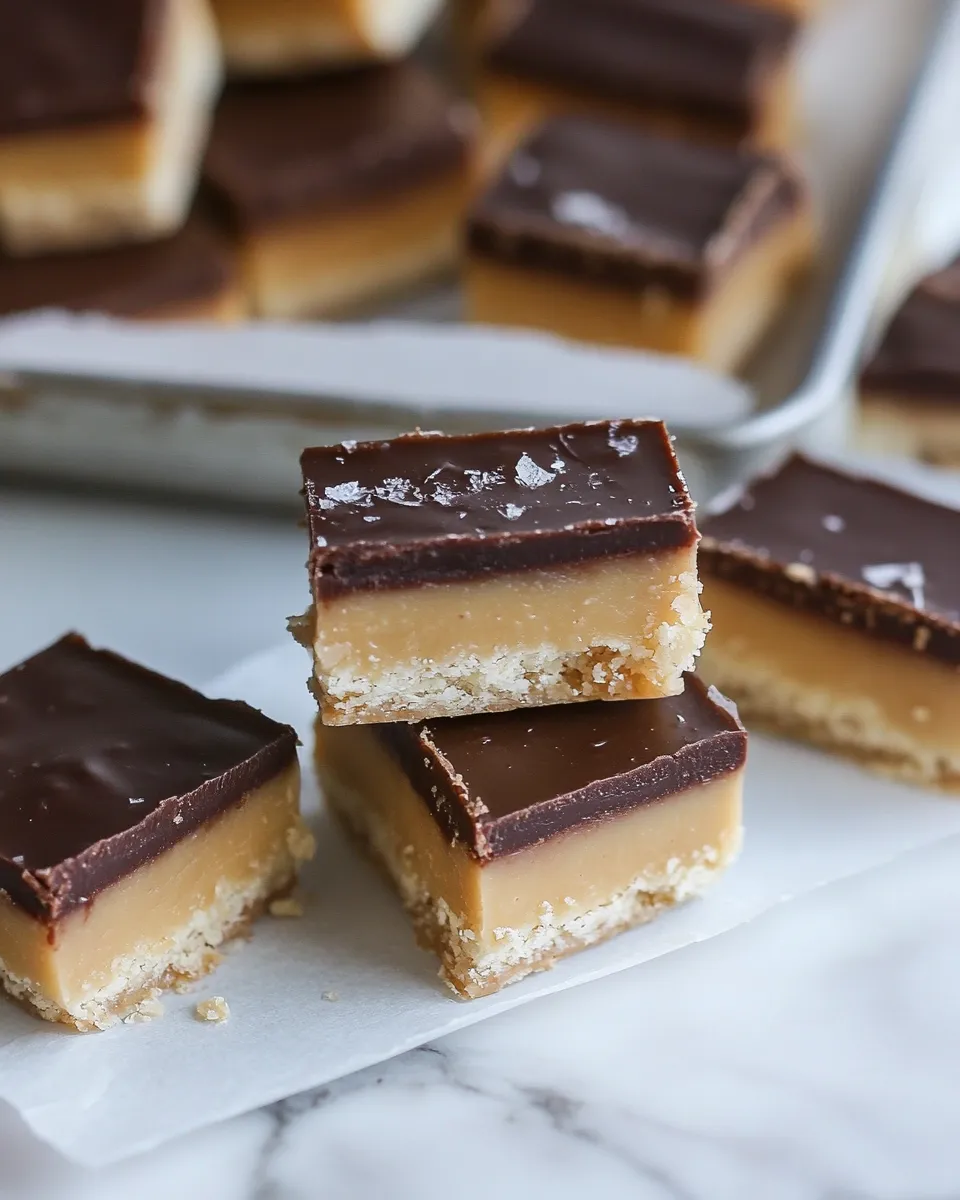
Homemade Twix Bars
Equipment
- cut and serve turner
- Pastry Blender
- Parchment Paper
Ingredients
Ingredients
- 1 cupbuttercold (*see note)
- 1 cuppowdered sugar
- 2 cupsall-purpose flour
- 1 teaspoonvanilla extract
- 1 cupbutter *see note
- 1 cuplight brown sugar
- 1 cuplight corn syrup
- 14 ouncessweetened condensed milk
- 3 cupschopped milk or dark chocolate
- 1 Tablespoonbutter
Instructions
Instructions
- Preheat oven to 300°F. Line a 9×13" pan with parchment paper, leaving some overhang to lift the bars out later, or spray the pan well with non-stick cooking spray.
- Make the shortbread crust: in a large bowl, combine 1 cup butter (cold), 1 cup powdered sugar, 2 cups all-purpose flour, and 1 teaspoon vanilla extract. Use a pastry blender, fork, or your fingers to work the butter into the dry ingredients until the mixture comes together into a cohesive dough.
- Press the shortbread dough evenly into the prepared 9×13" pan, making sure the surface is level and the edges are compacted.
- Bake the crust at 300°F for 28–35 minutes, or until the crust is very lightly golden. Remove from the oven and allow the crust to cool completely in the pan before adding the caramel.
- Prepare the caramel: in a medium, heavy-bottomed saucepan combine 1 cup butter, 1 cup light brown sugar, 1 cup light corn syrup, and 14 ounces sweetened condensed milk.
- Place the saucepan over medium heat and stir constantly until the mixture comes to a steady rolling boil. Be careful—the mixture will bubble vigorously.
- Maintain medium heat and continue stirring constantly. Cook the caramel until it reaches the soft-ball stage, about 15–20 minutes. To test: drop a small spoonful of the hot caramel into a cup of ice water; if you can gather it into a very soft ball with your fingers, it’s ready. Repeat the ice-water test every few minutes once the caramel begins to darken to avoid overcooking.
- When the caramel reaches the soft-ball stage, remove the saucepan from the heat and immediately pour the warm caramel evenly over the cooled shortbread crust. Let the caramel sit at room temperature a few minutes, then refrigerate the pan until the caramel is firm, at least 2 hours or overnight.
- When the caramel is set, prepare the chocolate topping: place 3 cups chopped milk or dark chocolate and 1 Tablespoon butter in a heatproof bowl.
- Melt the chocolate and butter until smooth using a double boiler (set the bowl over simmering water, stirring frequently) or in the microwave at low power in 30-second intervals, stirring between intervals until fully melted and smooth.
- Pour the melted chocolate over the chilled caramel layer and spread into an even layer. Return the pan to the refrigerator and chill until the chocolate is fully set.
- Once set, lift the bars from the pan using the parchment overhang and cut into bars or squares. Store the finished Twix bars covered in the refrigerator for up to 1 week.
Notes
*Salted or unsalted butter can be used. If using unsalted butter, add a pinch of salt to both the shortbread and caramel recipes.