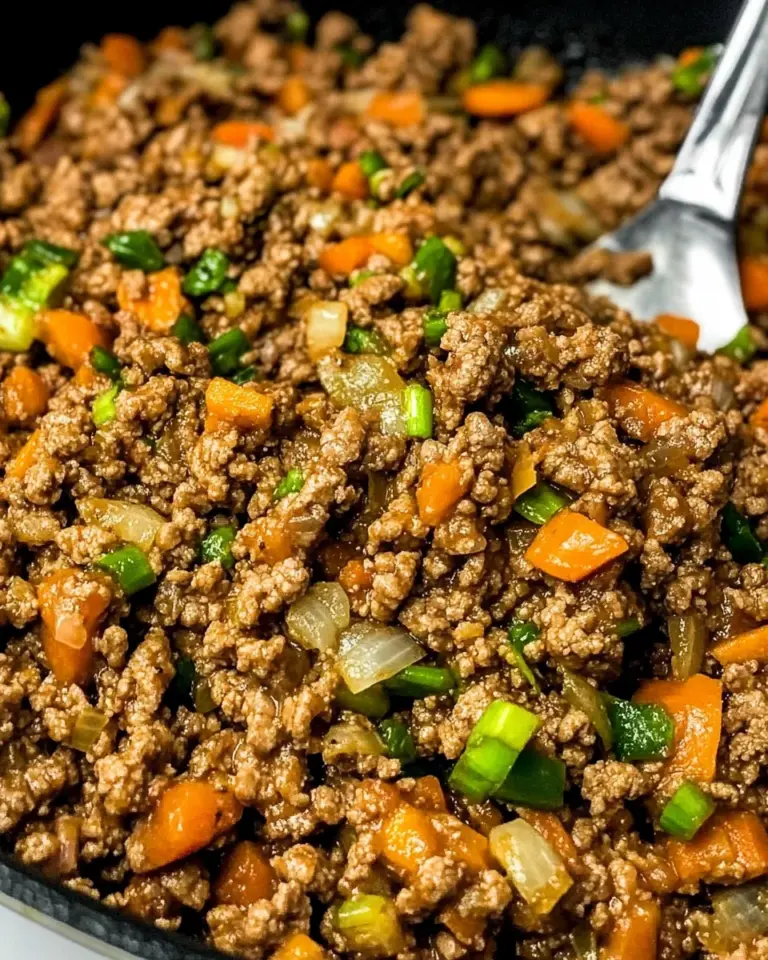
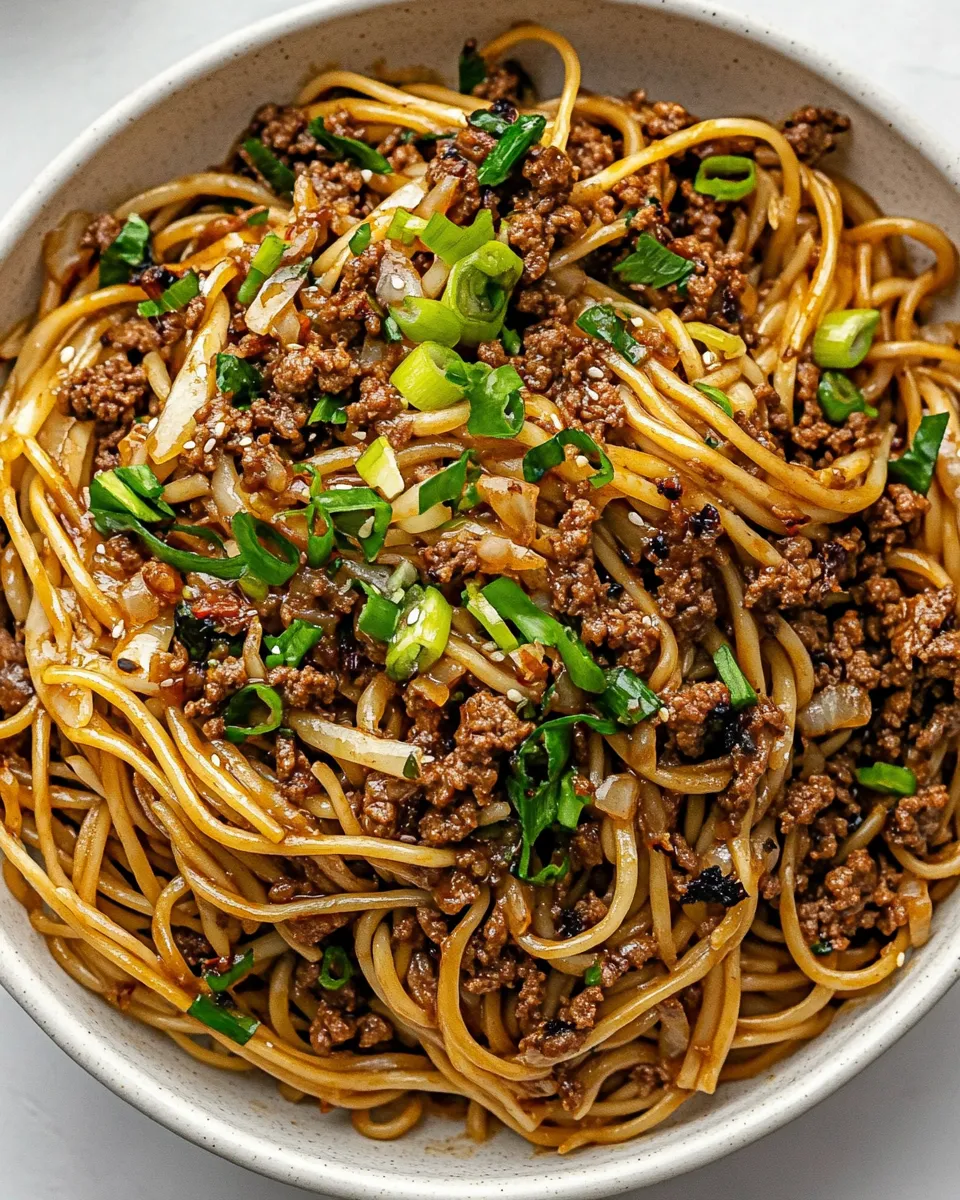
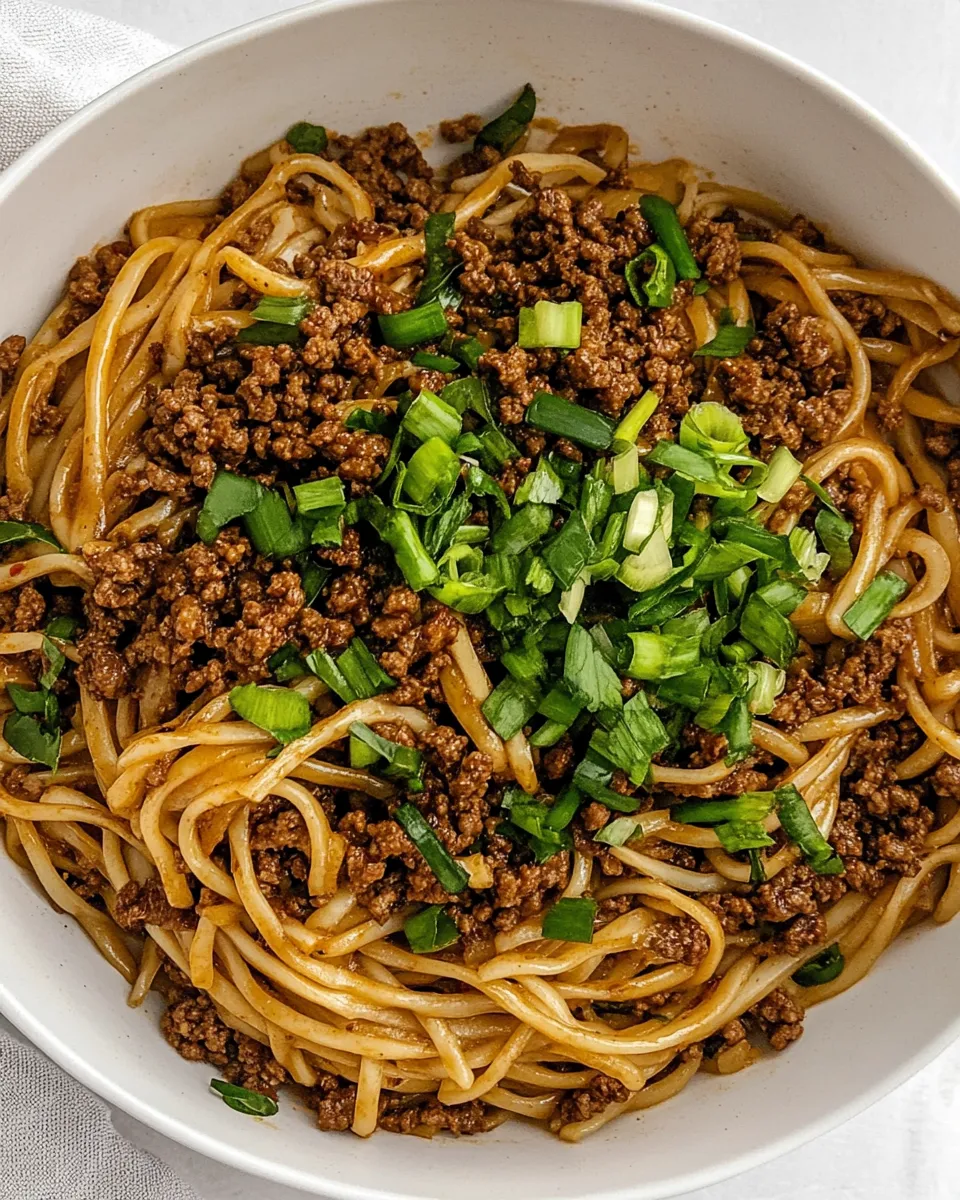
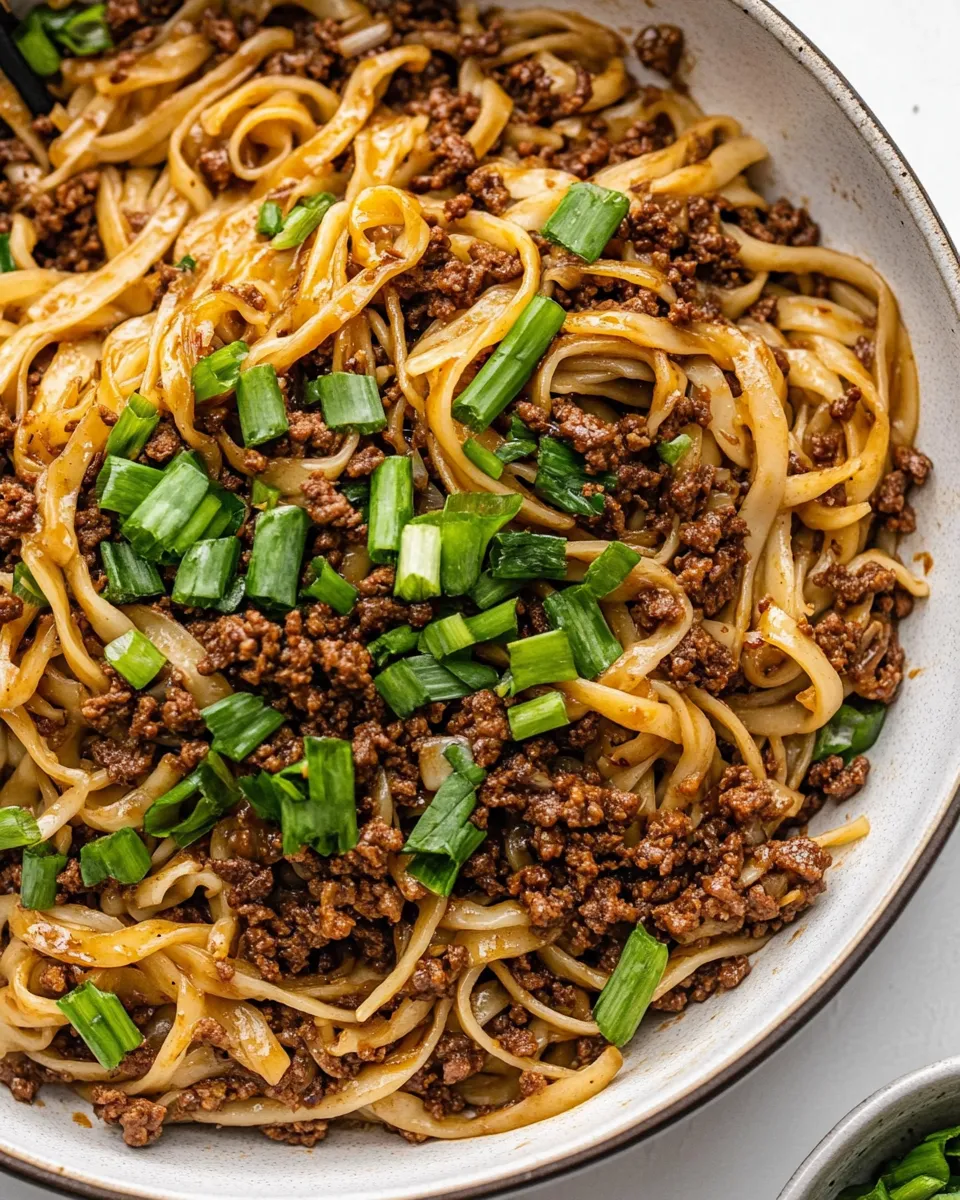
This is the kind of weeknight dinner I turn to when I want something fast, satisfying, and reliably tasty. It hits the sweet-savory notes you expect from Mongolian-style dishes, but with ground beef and udon noodles so it comes together in under 30 minutes. No fiddly prep, just straightforward cooking that still feels a little special.
I like this recipe because it’s flexible and forgiving. The sauce is bold enough to carry the dish, and the cornstarch slurry gives the whole skillet a glossy finish that clings to the noodles. It’s great on its own, or you can toss in quick vegetables for color and crunch.
Below you’ll find a clear ingredient checklist, step-by-step instructions (kept exactly as written), and practical tips to avoid common mistakes. Read the troubleshooting and storing sections if you want to make this a repeat dinner in your rotation.
Ingredient Checklist
- 1 pound lean ground beef — the savory, protein-packed base; lean reduces excess grease.
- 10 ounces udon noodles — thick, chewy noodles that hold the sauce well; cook per package.
- 4 cloves garlic, minced, about 4 teaspoons — brightens and deepens the sauce; add when beef is nearly browned.
- ½ cup soy sauce — provides the salty, umami backbone; use reduced-sodium if preferred.
- ¼ cup brown sugar — balances the soy with a molasses-sweet note; packs in the caramel flavor.
- ¼ cup beef broth — thins and rounds the sauce; use low-sodium to control salt.
- 2 tablespoons hoisin sauce — adds complexity and a touch of sweetness; it’s a small but important boost.
- 2 teaspoons ginger paste, or grated ginger — gives warmth and a fresh edge; use paste for speed.
- 1 teaspoon red pepper flakes, optional — adds heat if you like a kick; start small and adjust.
- 2 tablespoons cornstarch — thickens the sauce to a glossy consistency; mix into a slurry first.
- ¼ cup water — used with cornstarch to make the slurry; ensures smooth thickening.
Mongolian Ground Beef and Noodles: How It’s Done
- Cook the 10 ounces udon noodles according to the package directions; drain and set aside.
- In a large skillet over medium-high heat, add 1 pound lean ground beef. Break it up with a spatula and cook until mostly browned (about 5–7 minutes).
- Add 4 cloves minced garlic and cook 1 minute, until fragrant. Drain and discard excess fat from the skillet.
- While the beef is cooking, whisk together ½ cup soy sauce, ¼ cup brown sugar, ¼ cup beef broth, 2 tablespoons hoisin sauce, 2 teaspoons ginger paste (or grated ginger), and 1 teaspoon red pepper flakes (optional) in a bowl.
- Pour the sauce over the beef, stir to combine, and cook until the beef is fully cooked and the sauce begins to simmer, about 2–3 minutes.
- Add the drained udon noodles to the skillet and toss or stir gently to coat the noodles evenly with the beef and sauce.
- In a small bowl, whisk 2 tablespoons cornstarch with ¼ cup water until smooth. Pour the cornstarch slurry into the skillet and stir constantly until the sauce thickens and becomes glossy, about 1–2 minutes.
- Remove the skillet from the heat and serve immediately.
Why This Recipe is a Keeper
It’s fast. From pantry to plate in about half an hour. The ingredients are accessible and the method is straightforward. That combination makes this dish ideal for busy weeknights when you want something more exciting than takeout but can’t spend an hour cooking.
It’s also very forgiving. Ground beef cooks evenly and holds sauce well; udon noodles are forgiving of slight overcooking and still taste great. The sauce itself is balanced: salty, sweet, and aromatic from garlic and ginger. Once you’ve made it a couple of times you’ll know how to tweak the heat and sweetness to your taste.
Finally, it’s versatile. Add quick-cooking vegetables, swap the protein, or double the sauce to spoon over rice. This recipe can be the base for many weeknight meals.
Healthier Substitutions
If you want to lighten this up without losing too much on flavor, here are practical swaps that still work with the method and amounts listed above.
Protein swaps
- Ground turkey or chicken — use the same quantity and cooking time as ground beef; they’re leaner.
- Lean extra-lean ground beef (93/7) — reduces fat while keeping beef flavor.
Lower-sodium & lower-sugar
- Low-sodium soy sauce — keeps the umami while cutting salt.
- Reduce brown sugar — try 2 tablespoons instead of ¼ cup and taste; the hoisin provides some sweetness too.
Noodle swap
- Whole-wheat or brown rice noodles — slightly different texture but bulk up the fiber.
Keep in mind that changing certain ingredients (like removing sugar entirely) will alter the finishing texture and flavor. If you reduce liquid or sugar, watch the sauce as it simmers and adjust cornstarch if needed.
Must-Have Equipment
- Large skillet — wide surface so you can brown the beef evenly and toss the noodles without crowding.
- Wooden spoon or spatula — for breaking up ground beef and combining the sauce.
- Small bowl and whisk — for the sauce and the cornstarch slurry.
- Colander — to drain the udon well so the sauce isn’t diluted.
Troubles You Can Avoid
Here are the issues I see most often and how to prevent them.
Greasy or watery sauce
- Don’t skip draining excess fat. After browning the beef, drain and discard excess fat so the sauce isn’t oily.
- Drain noodles well. If the udon retains too much water, the sauce will be watered down and won’t cling properly.
Sauce won’t thicken
- Make sure cornstarch is fully dissolved. Whisk the 2 tablespoons cornstarch with ¼ cup water until smooth before adding.
- Stir constantly when adding the slurry. That prevents lumps and helps the glossy finish develop in 1–2 minutes.
Too salty
- Use low-sodium soy sauce or taste before adding red pepper flakes or other condiments that amplify saltiness.
- Adjust brown sugar slightly upward if you reduce soy sauce to keep balance.
Make It Diet-Friendly
With a few swaps, this recipe can fit many eating styles without losing its character.
- Lower-carb: Replace udon with shirataki or zucchini “noodles” and reduce the broth slightly so the sauce still clings.
- Gluten-free: Use tamari instead of soy sauce and choose gluten-free hoisin or omit it; swap udon for rice-based noodles.
- Lower-calorie: Use extra-lean ground turkey or beef, halve the brown sugar, and bulk with steamed broccoli or snap peas.
If you’re tracking macros, portion the finished dish and weigh servings. The method stays the same, only the ingredients change.
If You’re Curious
Mongolian-style sauces (in American kitchens) are typically sweet and savory with a base of soy and sugar — similar to what you find in popular restaurant versions. This skillet version leans on ground beef instead of slices of flank steak, which keeps prep fast and the result comfortingly hearty.
Hoisin is small but important here. It adds a rounded sweetness and a hint of fermented depth that brown sugar alone can’t replicate. If you don’t have hoisin, the dish will still work, but the flavor will be slightly flatter.
Storing Tips & Timelines
Store leftovers in an airtight container in the refrigerator for up to 3 days. The sauce will continue to thicken as it cools; loosen with a splash of beef broth or water when reheating.
To reheat: gently warm on the stovetop over medium-low, stirring frequently. Microwave reheating is fine for single portions; add a teaspoon of water or broth and cover to keep moisture.
For longer storage, freeze in a freezer-safe container for up to 2 months. Thaw overnight in the fridge before reheating. Note that udon texture may soften after freezing; adding a handful of fresh greens during reheating refreshes the dish.
Top Questions & Answers
Q: Can I add vegetables?
A: Yes. Quick-cooking additions like thinly sliced bell peppers, snow peas, baby bok choy, or shredded carrots work best. Add them when the sauce starts simmering so they finish tender-crisp.
Q: My sauce is too thin after adding the slurry.
A: Cook it a little longer while stirring; cornstarch needs brief heat to activate fully. If it still won’t thicken, mix another teaspoon of cornstarch with an equal amount of cold water and add slowly, stirring constantly.
Q: Can I make this ahead?
A: You can make the beef and sauce ahead and keep noodles separate. Reheat gently and combine before serving. This prevents noodles from soaking up too much sauce and getting limp.
Q: Is hoisin sauce necessary?
A: It adds depth and a slightly tangy sweetness. The recipe will work without it, but the flavor profile will be less layered. If you omit it, taste and add a touch more brown sugar or a dash of rice vinegar to round things out.
Q: Can I use dried ginger instead of fresh or paste?
A: You can, but it’s less vibrant. Use about 1/3 the amount of ground ginger if substituting because it’s more concentrated. The recipe as written calls for 2 teaspoons ginger paste or grated ginger for the best fresh flavor.
Q: How spicy will it be with the red pepper flakes?
A: At 1 teaspoon the dish gets a noticeable warm heat but isn’t fiery. Make it optional: start with 1/4–1/2 teaspoon if you’re heat-sensitive and add more to taste.
The Last Word
This Mongolian Ground Beef and Noodles recipe is exactly what I turn to when I want a quick, crowd-pleasing meal with real flavor. It’s efficient, adaptable, and forgiving—perfect for weeknights and easy to elevate when guests are coming. Follow the steps as written for a reliable outcome, and then make small swaps to suit your pantry and palate.
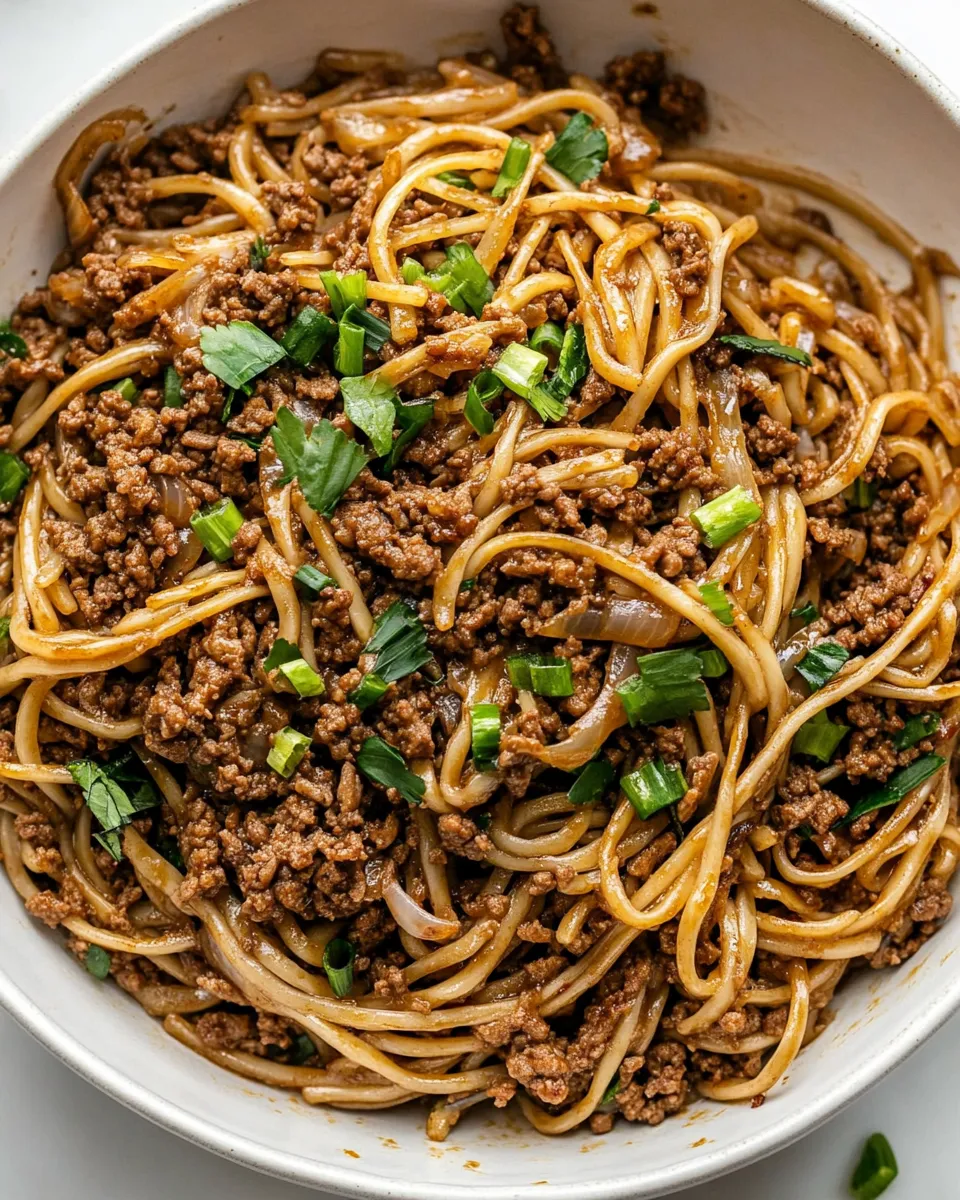
Mongolian Ground Beef and Noodles
Equipment
- Large Skillet
- Pot
- Colander
- Small Bowl
- Whisk
- Spatula
Ingredients
Ingredients
- 1 poundlean ground beef
- 10 ouncesudon noodles
- 4 clovesgarlic minced, about 4 teaspoons
- 1/2 cupsoy sauce
- 1/4 cupbrown sugar
- 1/4 cupbeef broth
- 2 tablespoonshoisin sauce
- 2 teaspoonsginger paste or grated ginger
- 1 teaspoonred pepper flakes optional
- 2 tablespoonscornstarch
- 1/4 cupwater
Instructions
Instructions
- Cook the 10 ounces udon noodles according to the package directions; drain and set aside.
- In a large skillet over medium-high heat, add 1 pound lean ground beef. Break it up with a spatula and cook until mostly browned (about 5–7 minutes).
- Add 4 cloves minced garlic and cook 1 minute, until fragrant. Drain and discard excess fat from the skillet.
- While the beef is cooking, whisk together ½ cup soy sauce, ¼ cup brown sugar, ¼ cup beef broth, 2 tablespoons hoisin sauce, 2 teaspoons ginger paste (or grated ginger), and 1 teaspoon red pepper flakes (optional) in a bowl.
- Pour the sauce over the beef, stir to combine, and cook until the beef is fully cooked and the sauce begins to simmer, about 2–3 minutes.
- Add the drained udon noodles to the skillet and toss or stir gently to coat the noodles evenly with the beef and sauce.
- In a small bowl, whisk 2 tablespoons cornstarch with ¼ cup water until smooth. Pour the cornstarch slurry into the skillet and stir constantly until the sauce thickens and becomes glossy, about 1–2 minutes.
- Remove the skillet from the heat and serve immediately.