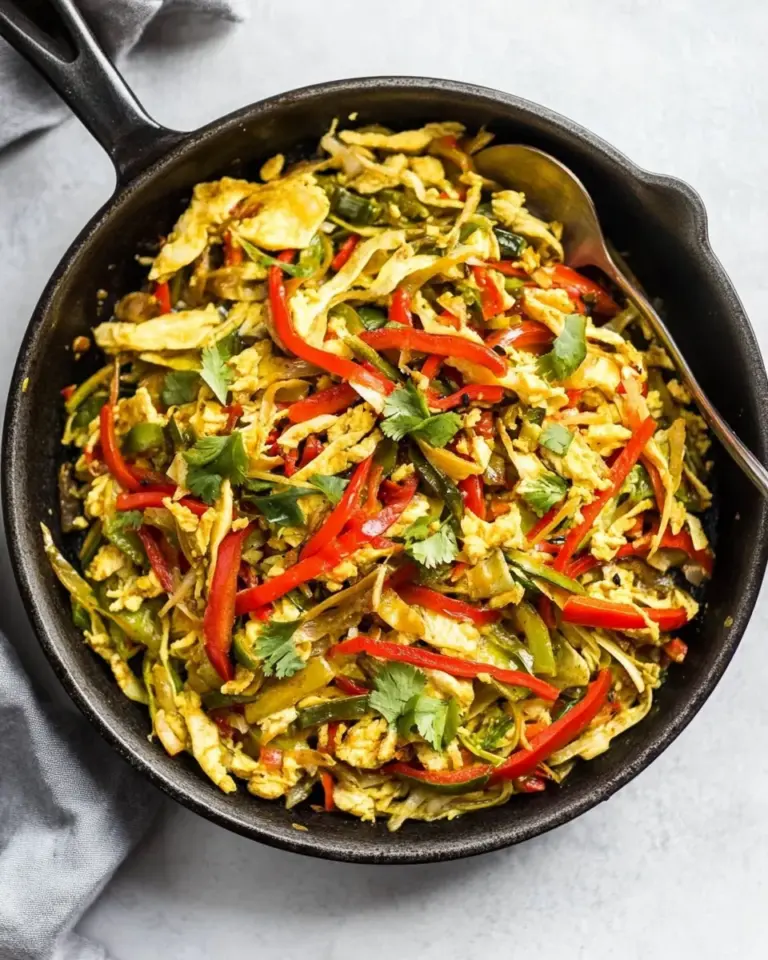
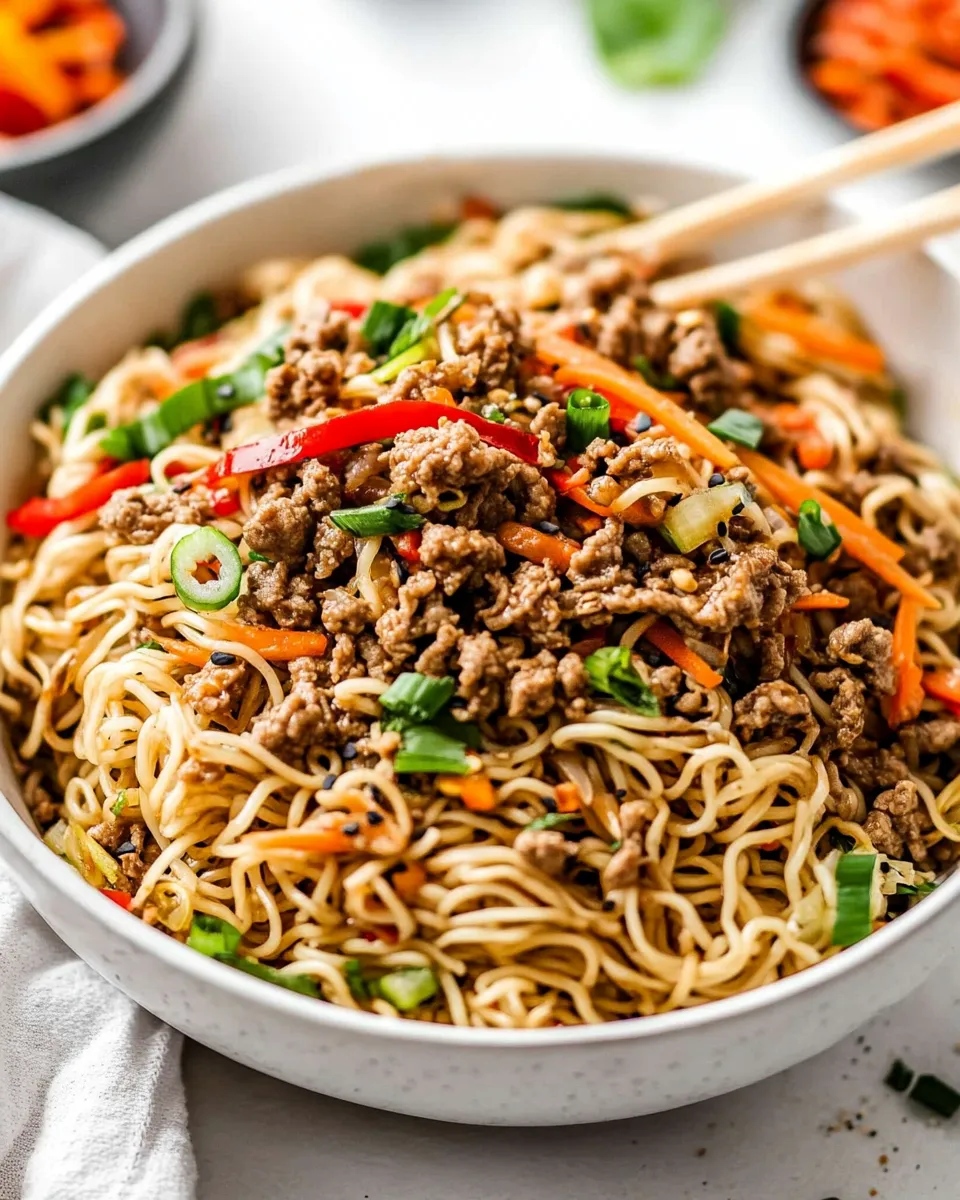
These Mongolian Noodles are one of my weeknight heroes: bold, saucy, and ready in under 30 minutes once you have everything chopped. It’s a homey stir-fry that borrows the sweet-savory intensity of Mongolian-style sauces and pairs it with chewy ramen noodles and a comforting hit of ground meat. I love how quickly the sauce comes together and how the vegetables keep the plate lively.
I’ll be honest—this is the kind of meal I make when I want something satisfying without fuss. The sauce is the star: hoisin and soy bring depth while ginger, garlic, and a touch of honey keep it bright and balanced. Once you brown the meat and get the veg crisp-tender, the whole thing comes together in a minute or two.
Below is a simple, reliable method I use every time I make Mongolian Noodles, plus practical tips for swaps, troubleshooting, storage, and small variations so you can make the dish your own. No frills—just straightforward steps to a great dinner.
What You’ll Need
Ingredients
- 16 oz ramen noodles (450g) — the quick-cooking base; they soak up the sauce beautifully.
- 2 lb ground beef, turkey or chicken (900g) — main protein; browns fast and carries the sauce.
- salt and pepper — simple seasoning to taste while cooking the meat.
- 1 medium carrot, grated — adds sweetness and texture; grating helps it cook quickly.
- 1 medium red bell pepper, diced — bright color and mild crunch.
- 1 1/2 cups snap peas, halved (147g) — crisp and green; halving them gives a nice bite-sized piece.
- 6 cloves garlic, minced — fragrant backbone; don’t skip or under-mince.
- 4 green onions, chopped, white and green separated — whites go in the pan for flavor; greens garnish for freshness.
- 1/2 cup low-sodium soy sauce (120ml) — umami and salt; low-sodium gives control over final seasoning.
- 1/2 cup hoisin sauce (120ml) — the sweet-savory base that gives the dish its signature flavor.
- 1/4 cup water (60ml) — thins the sauce just enough for even coating.
- 2 teaspoons cornstarch — thickens the sauce so it clings to noodles.
- 2 teaspoons fresh minced ginger — bright spice that lifts the sauce.
- 1 Tablespoon honey — balances soy and hoisin with a touch of sweetness.
- 2 teaspoons sesame oil — toasted aroma; a little goes a long way.
- 1/4 teaspoon crushed red pepper flakes, or more to taste — adds heat; adjust to your tolerance.
The Method for Mongolian Noodles
- Bring a large pot of salted water to a boil and cook the 16 oz ramen noodles according to package instructions. Drain well and set aside.
- While the noodles cook, whisk together 1/2 cup low-sodium soy sauce, 1/2 cup hoisin sauce, 1/4 cup water, 2 teaspoons cornstarch, 2 teaspoons fresh minced ginger, 1 tablespoon honey, 2 teaspoons sesame oil, and 1/4 teaspoon crushed red pepper flakes in a bowl until the cornstarch is dissolved. Set the sauce aside.
- Chop the 4 green onions, keeping the white parts separate from the green tops. Grate the 1 medium carrot and dice the 1 medium red bell pepper.
- Heat a large wok or skillet over medium-high heat. Add the 2 lb ground beef (or turkey or chicken), season with salt and pepper, and cook, breaking into small pieces, until browned and no longer pink, about 6–8 minutes. If there is a lot of grease, spoon off or drain excess fat, leaving the meat in the pan.
- Add the grated carrot, diced red bell pepper, 1 1/2 cups halved snap peas, and the white parts of the green onions to the cooked meat. Sauté, stirring, for 2–3 minutes until the vegetables are crisp-tender.
- Add the 6 cloves minced garlic and cook 30–60 seconds more, stirring, until fragrant.
- Add the drained noodles and the prepared sauce to the pan. Toss everything together and cook 1–2 minutes, stirring, until the sauce thickens and evenly coats the noodles and vegetables.
- Remove from heat, garnish with the green tops of the chopped green onions, and serve immediately.
Why You’ll Keep Making It
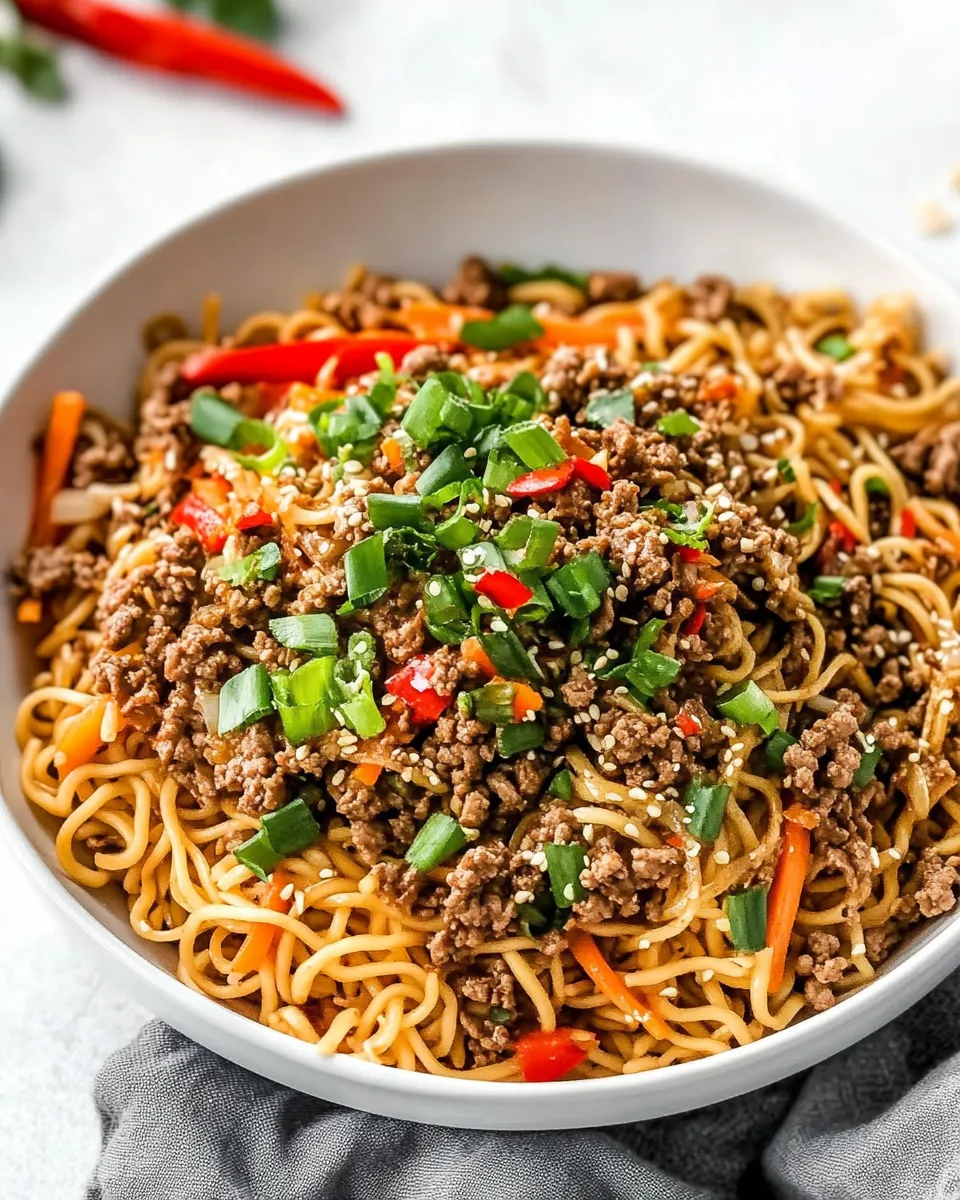
This dish hits the satisfying trifecta: fast, flexible, and flavorful. It’s fast because the noodles and sauce come together in minutes; flexible because you can use whatever ground protein you have; and flavorful because the hoisin-soy-ginger combo delivers depth without extra work. I come back to this recipe when I want something comforting but interesting—kids love the noodles, adults appreciate the ginger and heat, and it scales well if you’re feeding a crowd.
There’s also comfort in the technique: brown meat, toss veg, finish with sauce. No tricky timing or special equipment. And because the sauce thickens quickly from cornstarch, you get that glossy, clingy coating on the noodles that makes takeout-style meals so addictive.
No-Store Runs Needed
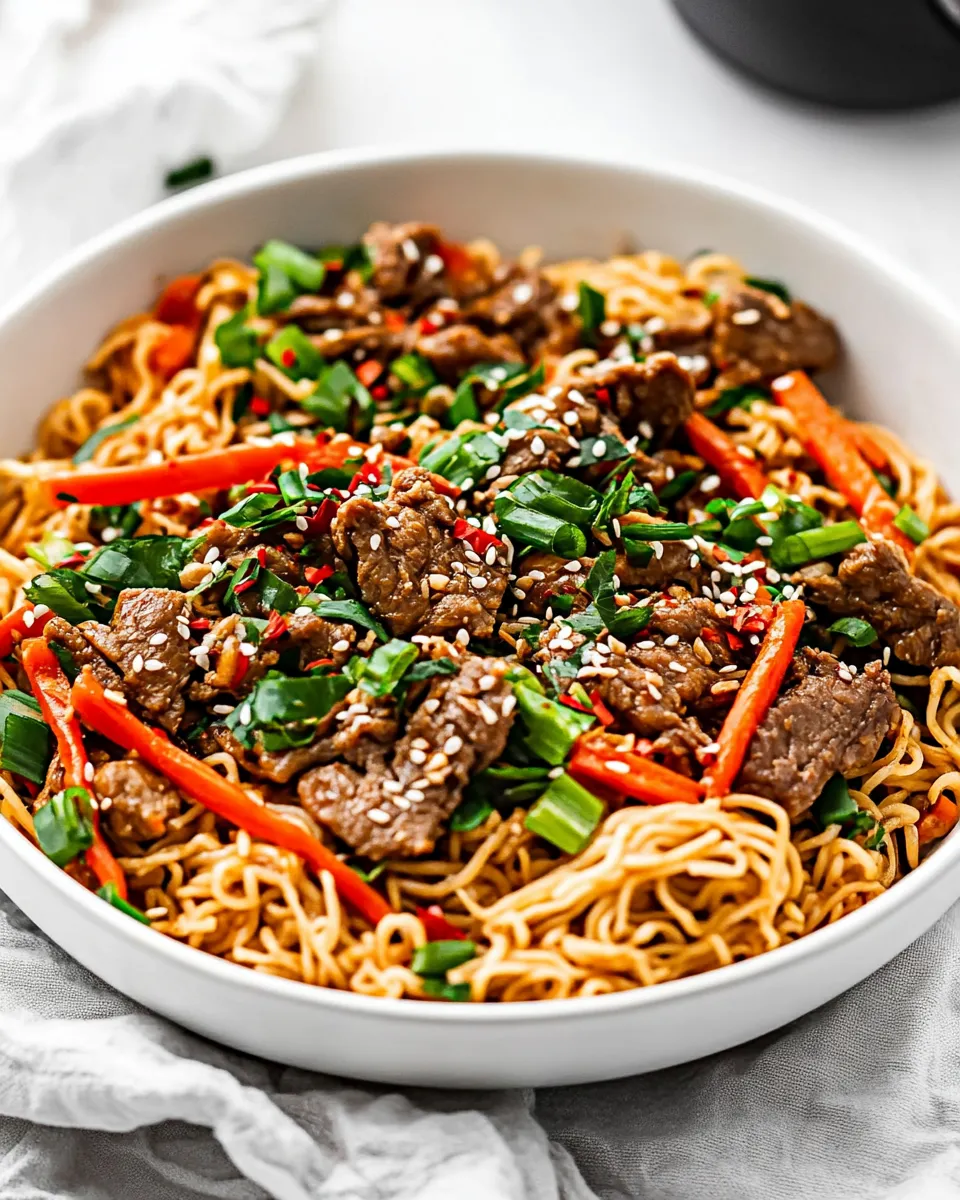
One of the reasons this is perfect for a weeknight: most pantries already have the main sauce players—soy, hoisin, honey, cornstarch, sesame oil, and red pepper flakes. Fresh items you’ll want on hand are noodles and a carrot or bell pepper, but you can substitute with onions, frozen peas, or cabbage in a pinch.
If you don’t have ramen noodles, any quick-cooking wheat noodles or even spaghetti will do. If the protein is missing, toss in extra veggies and a can of beans (though that shifts textures). The sauce keeps nicely in the fridge, so you can make it ahead and skip a step on busy evenings.
Toolbox for This Recipe
- Large pot — for boiling the noodles; big enough to avoid sticking.
- Large wok or heavy skillet — gives you the space to brown meat and toss everything together.
- Cutting board and a good knife — for quick chopping of onions, pepper, and slicing snap peas.
- Microplane or box grater — makes quick work of grating the carrot and ginger.
- Small bowl and whisk or fork — to dissolve cornstarch smoothly into the sauce.
- Spider or tongs — helpful for moving noodles straight into the pan without excess water.
Troubleshooting Tips
Sauce didn’t thicken
If the sauce stays thin, it likely needs more heat or the cornstarch wasn’t fully dissolved. Remove the noodles, whisk the reserved sauce again in a small bowl to ensure cornstarch is dissolved, then pour it into the hot pan and cook 1–2 minutes until it visibly thickens. Avoid adding cold water directly to the pan—the sudden temperature drop can prevent thickening.
Noodles are gummy or falling apart
Overcooking is the usual culprit. Cook the noodles to package directions and drain well. Tossing them briefly in a little neutral oil after draining prevents clumping. If they already got mushy, serve immediately and call it a soft-textured batch—next time reduce the noodle cook time a minute.
Too salty or too sweet
Use low-sodium soy sauce as directed; if the final dish is too salty, add a squeeze of lime or a small splash of water and a handful of extra veg to balance it. If it’s too sweet for your taste, add a teaspoon of rice vinegar or extra soy to restore balance.
Grease in the pan
With the 2 lb of ground meat, you may get excess fat. Spoon off most of it after browning so the sauce isn’t greasy; leave a tablespoon for flavor. If you’re using lean turkey or chicken, this is less of an issue.
Better Choices & Swaps
- Protein swaps: Use ground turkey or chicken as the recipe allows. If you want a lighter version, go for 93% lean beef or try crumbled firm tofu for a vegetarian twist (omit salt until tasted).
- Noodle swaps: Whole wheat spaghetti or udon will work—adjust cooking time so they stay al dente.
- Vegetable swaps: If snap peas aren’t available, use thinly sliced snow peas, broccoli florets (briefly blanched), or shredded cabbage for crunch.
- Sauce adjustments: If you prefer less sweetness, cut the honey to 1/2 tablespoon. For deeper flavor, add a teaspoon of toasted sesame seeds at the end.
If You’re Curious
Mongolian-style dishes in Western kitchens often refer to a particular sweet-savory sauce rather than a strict regional Chinese recipe. The key flavor drivers here—hoisin, soy, ginger, garlic, and sesame—create that familiar profile. This version leans into the simplicity of stir-frying with ramen noodles for comfort and speed.
If you enjoy tinkering, try adding a splash of Shaoxing wine during the meat browning stage for extra depth, or finish with a drizzle of chili oil for more complex heat. A handful of chopped cilantro or toasted peanuts at the end turns it in a slightly different direction but stays delicious.
How to Store & Reheat
Store leftovers in an airtight container in the fridge for up to 3 days. The noodles will absorb sauce over time and soften; they’re still great reheated. To reheat, warm gently in a skillet over medium heat with a teaspoon or two of water and a splash of soy if needed. Heat just until warmed through to avoid overcooking the noodles.
For longer storage, freeze in a shallow container for up to 2 months. Thaw overnight in the fridge and reheat in a skillet, adding a little water to loosen the sauce. Note that texture changes are expected after freezing—fresh is best.
Popular Questions
Can I make this gluten-free? Use tamari or a certified gluten-free soy sauce and swap regular ramen noodles for rice noodles or a gluten-free wheat noodle. Hoisin sauce often contains wheat—look for a gluten-free hoisin alternative or make a quick substitute with tamari, a touch of brown sugar, and five-spice.
Can I prep ahead? Yes. Make the sauce and store it in the fridge up to 3 days. Chop the vegetables and keep them in airtight containers. Cooked noodles are best fresh, but you can cook and toss them with a teaspoon of oil and refrigerate for the same day.
Is sesame oil necessary? It adds a toasty aroma and depth; two teaspoons as listed is enough to notice it. If you don’t have it, the dish will still be tasty, but consider adding a teaspoon of toasted sesame seeds when serving for a hint of that flavor.
How spicy is it? The recipe uses 1/4 teaspoon crushed red pepper flakes—mild to medium depending on your tolerance. Increase for more heat or omit for a kid-friendly version.
Wrap-Up
Mongolian Noodles is a dependable, fast, and crowd-pleasing dish I keep in my rotation for busy nights. It’s easy to scale, forgiving with swaps, and generous in flavor. Follow the simple steps above, and you’ll have a glossy, saucy bowl of noodles that tastes like you spent more time on it than you did. Keep the sauce handy in the fridge, and you’ve got a quick answer to “what’s for dinner?” for several nights to come.
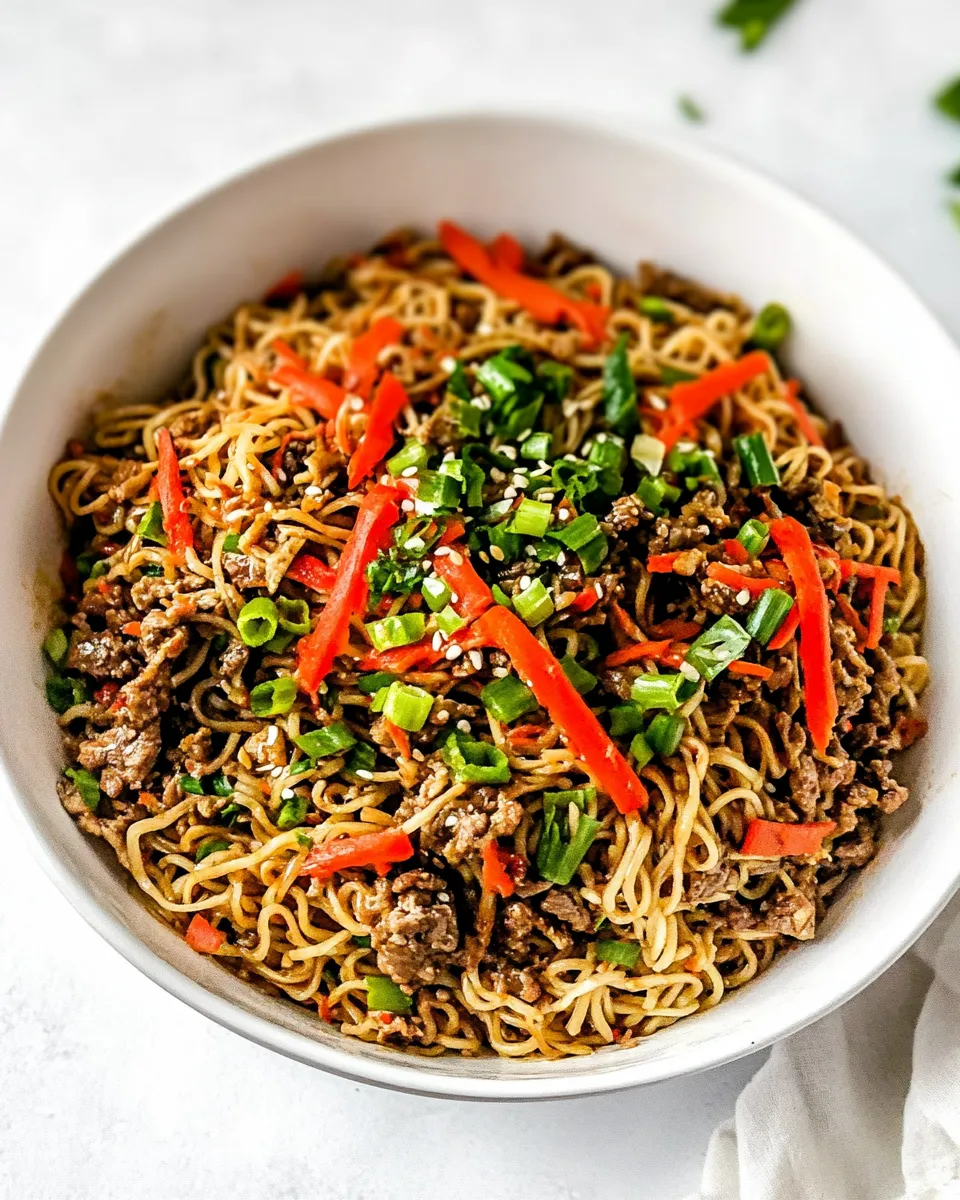
Mongolian Noodles
Equipment
- wok, optional
- 12 inch pan
Ingredients
Ingredients
- 16 ozramen noodles 450 g
- 2 lbground beef turkey or chicken (900 g)
- salt and pepper
- 1 mediumcarrot grated
- 1 mediumred bell pepper diced
- 1 1/2 cupssnap peas halved (147 g)
- 6 clovesgarlic minced
- 4 green onions chopped, white and green separated
- 1/2 cuplow sodium soy sauce 120 ml
- 1/2 cuphoisin sauce 120 ml
- 1/4 cupwater 60 ml
- 2 teaspoonscornstarch
- 2 teaspoonsfresh minced ginger
- 1 Tablespoonhoney
- 2 teaspoonssesame oil
- 1/4 teaspooncrushed red pepper flakes or more to taste
Instructions
Instructions
- Bring a large pot of salted water to a boil and cook the 16 oz ramen noodles according to package instructions. Drain well and set aside.
- While the noodles cook, whisk together 1/2 cup low-sodium soy sauce, 1/2 cup hoisin sauce, 1/4 cup water, 2 teaspoons cornstarch, 2 teaspoons fresh minced ginger, 1 tablespoon honey, 2 teaspoons sesame oil, and 1/4 teaspoon crushed red pepper flakes in a bowl until the cornstarch is dissolved. Set the sauce aside.
- Chop the 4 green onions, keeping the white parts separate from the green tops. Grate the 1 medium carrot and dice the 1 medium red bell pepper.
- Heat a large wok or skillet over medium-high heat. Add the 2 lb ground beef (or turkey or chicken), season with salt and pepper, and cook, breaking into small pieces, until browned and no longer pink, about 6–8 minutes. If there is a lot of grease, spoon off or drain excess fat, leaving the meat in the pan.
- Add the grated carrot, diced red bell pepper, 1 1/2 cups halved snap peas, and the white parts of the green onions to the cooked meat. Sauté, stirring, for 2–3 minutes until the vegetables are crisp-tender.
- Add the 6 cloves minced garlic and cook 30–60 seconds more, stirring, until fragrant.
- Add the drained noodles and the prepared sauce to the pan. Toss everything together and cook 1–2 minutes, stirring, until the sauce thickens and evenly coats the noodles and vegetables.
- Remove from heat, garnish with the green tops of the chopped green onions, and serve immediately.
Notes
Serving Size:
About 2 cups. Serves 6