This is my reliable Caesar dressing — the one I reach for when I want something bright, creamy, and deeply savory without overcomplicating dinner. It mixes pantry ingredients into a dressing that clings to greens, croutons, and roasted vegetables. The technique is simple: press aromatics into a paste, bind with mayo and cheese, and finish by slowly whisking in good olive oil to emulsify.
I make this version when I want a true Caesar flavor without dragging out a dozen steps. Anchovy paste is optional but highly recommended if you like that unmistakable umami lift. If you only have a lemon and a jar of capers, you can still pull this together in under ten minutes and serve it as the backbone of a classic salad or a quick dip for crudités.
Below you’ll find everything you need laid out clearly — ingredients with tips, the exact step-by-step method, troubleshooting, and storage notes. Use the method as written for consistent results, and lean on the adaptations if you want to tweak it to seasonal produce or dietary preferences.
What You’ll Need
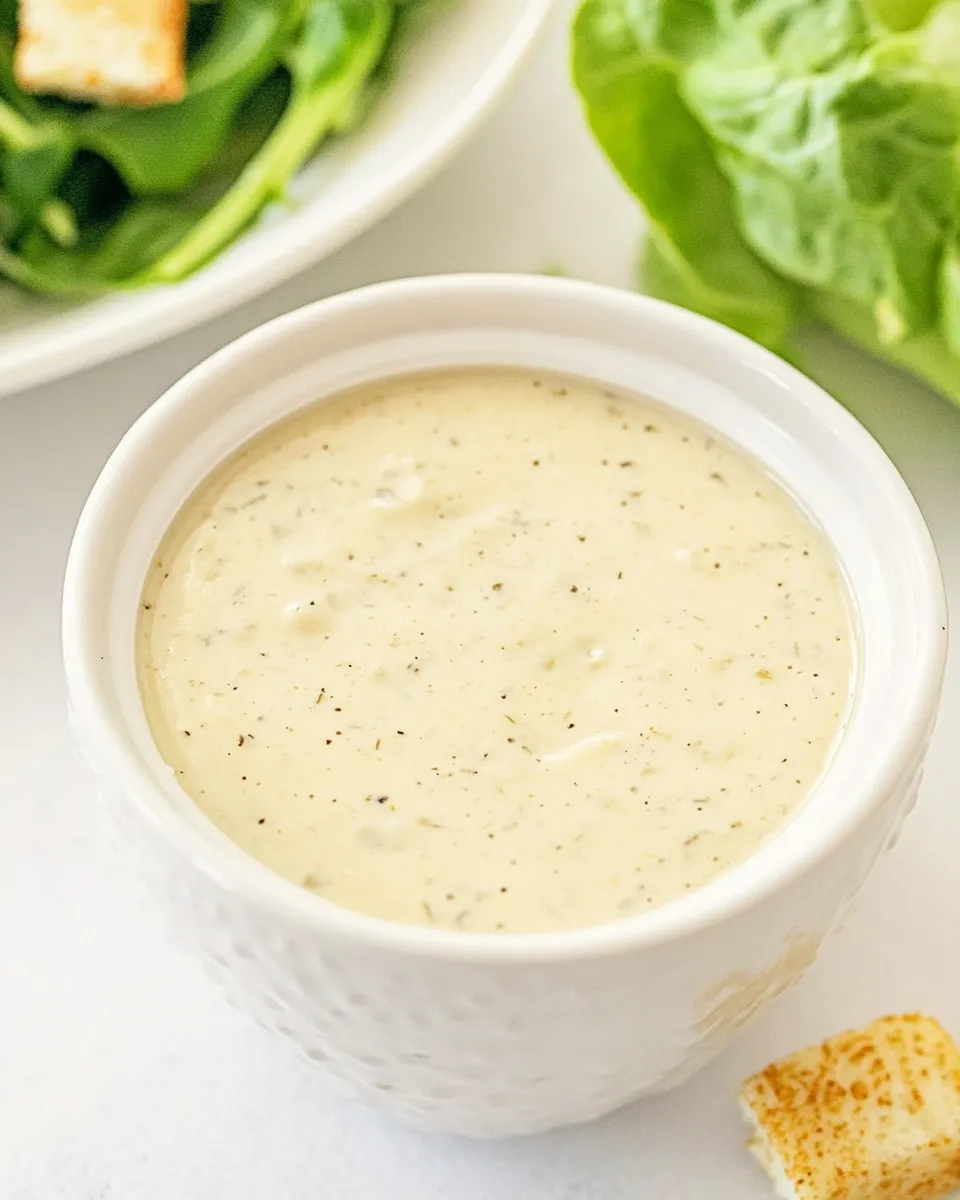
Ingredients
- 2 cloves garlic (minced) — provides sharp aromatics; mince fine so it blends into the dressing.
- ½ teaspoon anchovy paste (optional) — concentrated savory depth; leave out for a milder dressing.
- ½ teaspoon pepper (freshly cracked) — brings subtle heat and aroma; crack fresh for best flavor.
- 2 teaspoons capers (brined) — add briny brightness; drain and mash with the garlic.
- 2 tablespoons lemon juice (from one lemon) — acidity to balance fat and lift the flavors.
- 2 teaspoons Dijon mustard — helps the emulsion and adds a hint of tang.
- ½ cup mayonnaise — creates a creamy, stable base for the dressing.
- ½ cup Parmesan cheese (grated) — salty, nutty umami that defines the Caesar profile.
- ½ cup olive oil (extra virgin, good quality) — the fat that emulsifies into the dressing; choose one you enjoy by the spoon.
- ¼ teaspoon salt (or to taste) — season carefully, especially if your Parmesan is salty.
Stepwise Method: (Caesar Salad Dressing)
- In a medium mixing bowl combine the minced garlic, anchovy paste (½ teaspoon, optional), freshly cracked pepper (½ teaspoon), and capers (2 teaspoons). Drain the capers if needed and use the back of a fork to mash and press the mixture into a coarse paste.
- Add the lemon juice (2 tablespoons), Dijon mustard (2 teaspoons), mayonnaise (½ cup), and grated Parmesan (½ cup) to the bowl. Whisk until the ingredients are smoothly combined.
- With the whisking continuous, slowly pour the extra-virgin olive oil (½ cup) in a thin, steady stream into the bowl. Continue whisking until the dressing is fully emulsified and thickened (about 1–2 minutes).
- Taste the dressing and season with salt (start with the listed ¼ teaspoon, then adjust to taste) and additional pepper if desired.
Why It’s Crowd-Pleasing
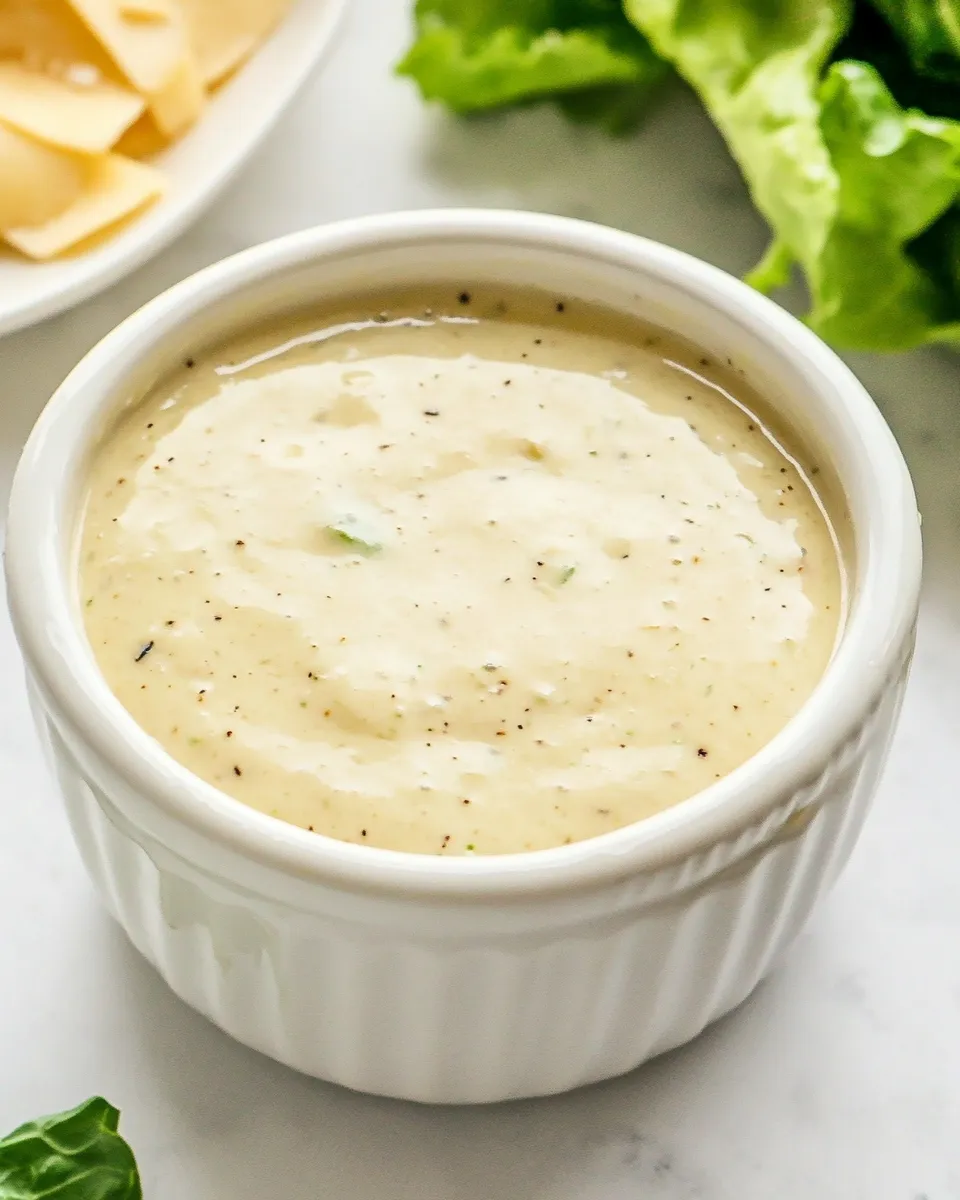
This dressing hits three essential notes: fat, acid, and umami. The mayonnaise and olive oil give it a silky mouthfeel that coats leaves and croutons; lemon juice cuts through the richness so the dressing never feels cloying; Parmesan, capers, and optional anchovy paste add layered savory flavors that create depth with every bite.
It’s familiar without being dull. Most people recognize the flavors as “Caesar,” so it reads as comfort food at first bite. Then those small briny notes from capers and the garlic anchor the dressing so it feels more interesting than a plain vinaigrette. Because it’s creamy and thick, it clings to Romaine and hearty greens, which makes every forkful satisfying.
Practically speaking, it’s quick to make, uses items many cooks already keep on hand, and is flexible enough to pair with grilled proteins, roasted vegetables, or even as a sandwich spread. Those qualities — fast, flavorful, and versatile — are why it works so well whether you’re feeding a crowd or making a weekday dinner for two.
International Equivalents
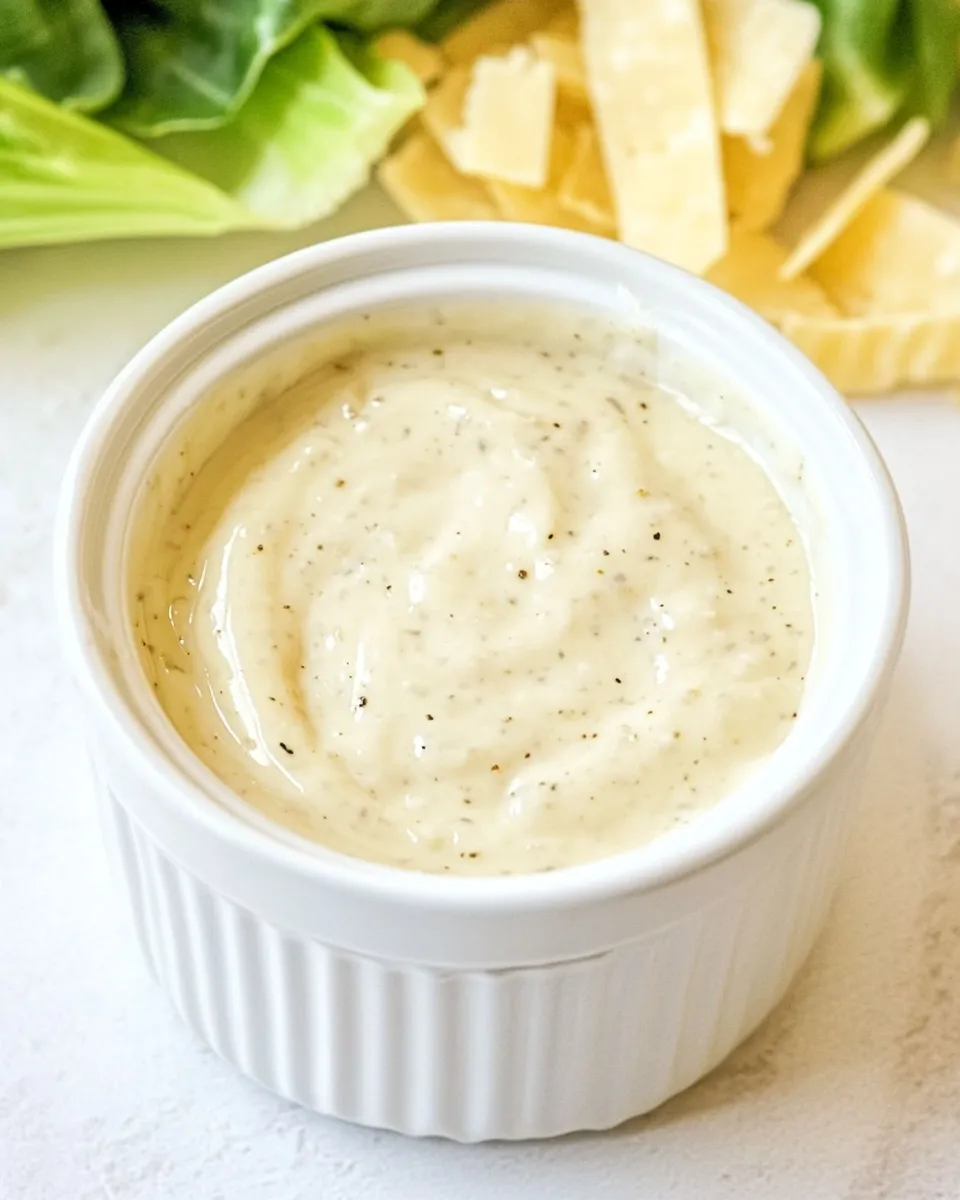
Caesar dressing’s core idea — a creamy, anchovy-forward, cheesy sauce — shows up in several culinary traditions, even if not named “Caesar.” In Italy, you’ll find sauces that pair garlic, olive oil, and Pecorino for similar umami and salt balance. In parts of France, a mustard-forward emulsified sauce leans into tang in the way Dijon does here, though it will lack the characteristic anchovy/caper brininess.
Variants across the globe often replace anchovy with Worcestershire or miso when an anchovy-free umami is desired. In Japan, creamy dressings sometimes use sesame and soy elements to achieve a different savory profile but serve the same purpose: a thick, clingy dressing to complement greens and proteins. The lesson is that the balance of fat, acid, and salt is universal — the specific ingredients change by region.
Toolbox for This Recipe
- Medium mixing bowl — room to whisk and emulsify without splashing.
- Whisk — essential for creating a stable emulsion; a small balloon whisk works best.
- Measuring spoons and cups — follow the amounts for consistent results.
- Microplane or grater — for finely grating the Parmesan so it melts into the dressing.
- Fork — useful for mashing the capers and anchovy paste into a smooth paste.
- Citrus juicer (optional) — for extracting clean, seed-free lemon juice quickly.
Common Errors (and Fixes)
Here are the mistakes I see most often and how to correct them quickly.
- Broken emulsion — If the oil separates, stop adding oil and whisk vigorously; you can rescue it by starting a fresh teaspoon of mustard or mayonnaise in a clean bowl and slowly whisking the broken dressing into it.
- Too salty — Parmesan, capers, and anchovy paste all carry salt. If the dressing is overly salty, dilute with a small splash (1–2 teaspoons) of water, add a little more lemon juice, or stir in an extra tablespoon of mayonnaise to mellow it.
- Garlic is overpowering or raw — Finely mince the garlic or let it sit crushed with a pinch of salt for 5 minutes before combining; this tames sharpness. Alternatively, use one clove instead of two.
- Grainy texture — This can happen if the cheese isn’t finely grated or the capers aren’t mashed. Use a fine grater for the Parmesan and press the capers and garlic into a paste with a fork.
Seasonal Adaptations
One of the strengths of this dressing is how well it adapts to seasonal produce. In spring and summer, toss it with crisp Romaine, halved cherry tomatoes, and thinly sliced radishes for brightness. In fall and winter, use the dressing on hearty greens like kale or warm roasted vegetables — the warmth slightly loosens the dressing so it blends with the veg.
For a lighter summer version, reduce the mayonnaise by a tablespoon and replace it with plain yogurt for tang and a lower-fat finish. In cooler months, add a teaspoon of warm Dijon or a pinch of smoked paprika to give the dressing extra depth against roasted root vegetables.
What I Learned Testing
When I tested this recipe multiple times, a few practical details made the biggest difference. First, mashing the capers with the garlic and anchovy into a paste before adding other liquids improves the distribution of flavor. If you skip that step, you’ll get bursts of caper instead of a cohesive profile.
Second, the speed of adding the oil matters. Pouring it too quickly tends to break the emulsion; a thin, steady stream while whisking produces the best texture. I found that whisking for 1–2 minutes after the last of the oil goes in gives the dressing a sheen and a mouth-coating richness that feels finished.
Finally, taste as you go. Parmesan varies in saltiness; start with the ¼ teaspoon of salt, then adjust. In one test, I omitted the anchovy paste and relied on capers for brine — the result was fine but lacked the same backbone. Anchovy paste is a small addition with an outsized effect.
Storing Tips & Timelines
Store the dressing in an airtight container in the refrigerator. Because it contains mayonnaise, raw garlic, and capers, plan to use it within 3–4 days for best quality. Keep it cold and sealed; the flavor will mellow slightly after sitting, so give it a quick whisk before serving to re-emulsify if the oil has separated.
If the dressing thickens too much in the fridge, stir in a teaspoon of warm water or extra lemon juice to loosen it. Do not freeze — the emulsion will break and the texture will be compromised after thawing.
Quick Q&A
- Can I skip the anchovy paste? Yes. The dressing will still be tasty thanks to capers and Parmesan, but anchovy paste adds a savory depth that many consider essential to a classic Caesar.
- Is mayonnaise necessary? It stabilizes the dressing and gives a creamy body. You can swap part of it with plain Greek yogurt for a tangier, lighter option, but texture will change.
- Can I make this dairy-free? Not with this exact ingredient list, since Parmesan is integral here. To make a dairy-free version, you would need to replace the Parmesan and mayonnaise with appropriate substitutes — that would be a different recipe.
- How do I prevent the garlic from overpowering the dressing? Mince very finely and press it with salt; letting it sit for a few minutes before combining softens its bite. You can also reduce to one clove if you prefer.
Final Bite
This Caesar Salad Dressing is straightforward to make, reliably flavorful, and adaptable. It’s the kind of sauce that transforms a simple bowl of lettuce into a satisfying meal and elevates sandwiches and roasted veg. Follow the method precisely for consistent emulsification and balance, then tweak small elements like lemon, salt, or anchovy to suit your palate. Keep a small jar in the fridge for up to three days, and you’ll have a versatile, savory companion to many dishes.
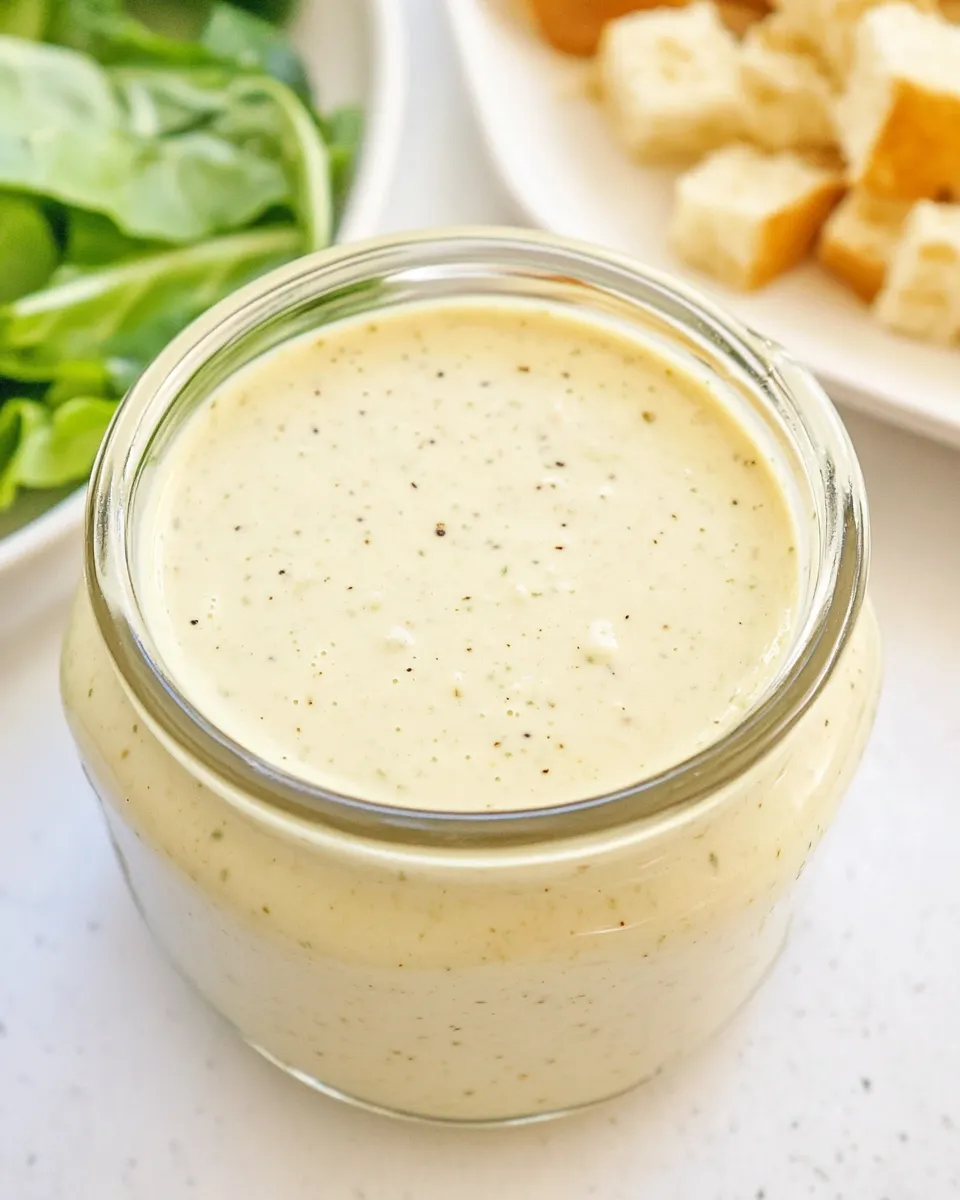
Caesar Salad Dressing
Equipment
- Medium Mixing Bowl
- Fork
- Whisk
Ingredients
Ingredients
- 2 clovesgarlic minced
- 1/2 teaspoonanchovy paste optional
- 1/2 teaspoonpepper freshly cracked
- 2 teaspoonscapers brined
- 2 tablespoonslemon juice from one lemon
- 2 teaspoondijon mustard
- 1/2 cupmayonnaise
- 1/2 cupParmesan cheese grated
- 1/2 cupolive oil extra virgin, good quality
- 1/4 teaspoonsalt or to taste
Instructions
Instructions
- In a medium mixing bowl combine the minced garlic, anchovy paste (½ teaspoon, optional), freshly cracked pepper (½ teaspoon), and capers (2 teaspoons). Drain the capers if needed and use the back of a fork to mash and press the mixture into a coarse paste.
- Add the lemon juice (2 tablespoons), Dijon mustard (2 teaspoons), mayonnaise (½ cup), and grated Parmesan (½ cup) to the bowl. Whisk until the ingredients are smoothly combined.
- With the whisking continuous, slowly pour the extra-virgin olive oil (½ cup) in a thin, steady stream into the bowl. Continue whisking until the dressing is fully emulsified and thickened (about 1–2 minutes).
- Taste the dressing and season with salt (start with the listed ¼ teaspoon, then adjust to taste) and additional pepper if desired.
Notes
Nutritional information is per¼cup of dressing.
Quality Matters:For the best tasting Caesar salad dressing, use high-quality ingredients. This is particularly true for the extra virgin olive oil and Parmesan cheese.
Adjust to Your Taste:Feel free to adjust the ingredients to suit your palate. If you prefer a zestier dressing, add a bit more lemon juice. If you like it creamier, add a touch more mayonnaise.
Emulsify Well:To create a creamy, unified dressing that doesn’t separate, be sure to slowly drizzle in the olive oil while continuously whisking.
Fresh is Best:While this dressing stores well, it’s always best when fresh. If you’re planning a dinner party, whip it up right before your guests arrive for the most impressive flavor.
Skip the Anchovy Paste:If you’re not a fan of anchovies or if you’re serving vegetarians, you can omit the anchovy paste. The dressing will still be delicious!
Transfer your dressing to a sealable jar, bottle, or container. Store in the fridge up toone week.