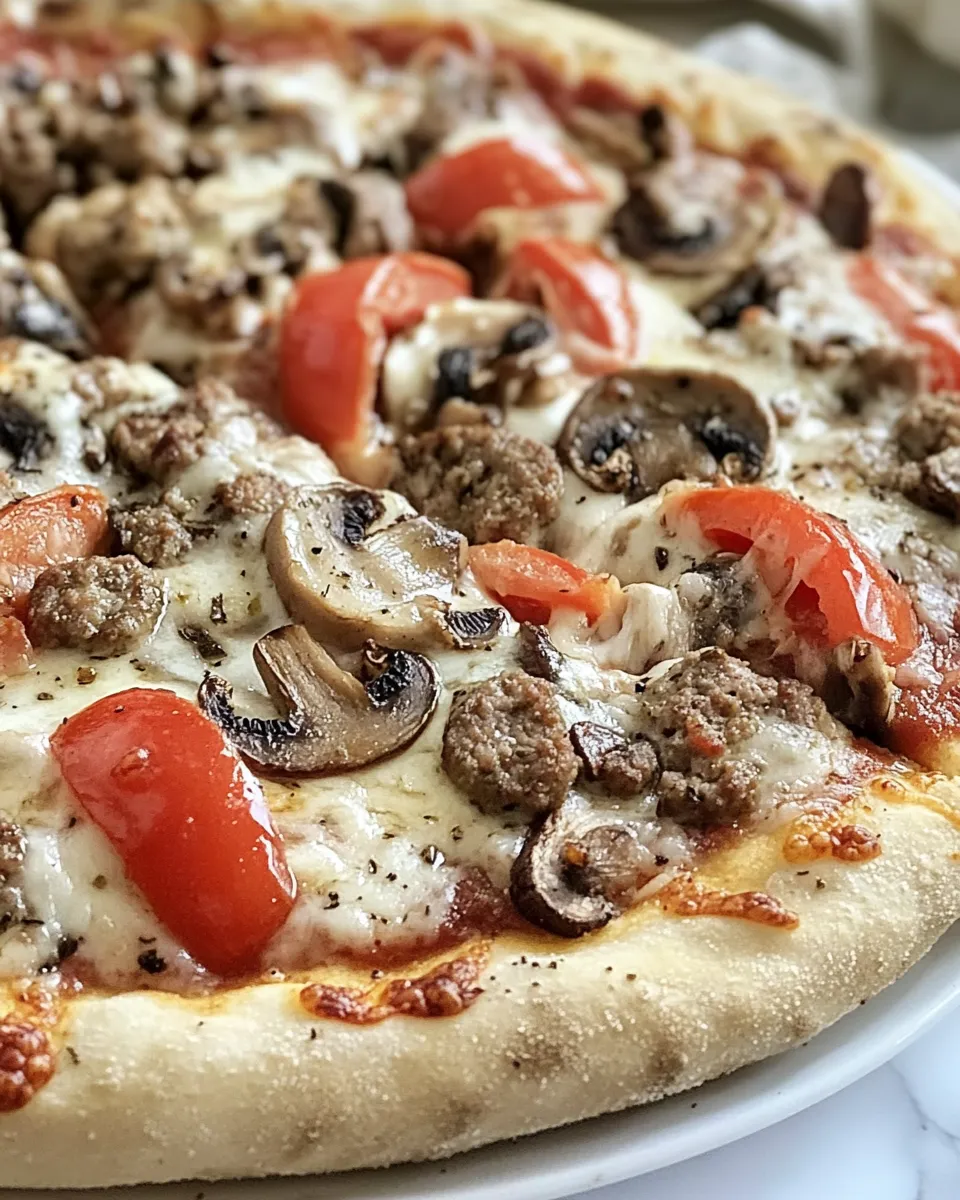
I make pizza at home more than I probably should admit. There’s something very satisfying about stretching dough, layering familiar flavors, and watching the edges puff golden in a hot oven. This version centers on a straightforward, reliable dough recipe and leaves the toppings flexible—perfect if you want to spotlight sausage and mushrooms or use what’s in your fridge.
No fancy equipment required, though there are a couple of tools that really help. The dough is resilient and forgiving: it asks for a little patience during the rise, then rewards you with a chewy, crisp crust. I’ll walk you through the method step by step and share practical tips that keep things simple and successful.
If you haven’t worked with a stand mixer or a pizza stone before, don’t worry. I’ll explain what each piece of equipment does and why it matters. Think of this as a template for making a great pizza—one you can repeat, tweak, and make comfortably on a weeknight.
What We’re Using

We’re focused on a dependable dough that produces a chewy, crisp crust. The ingredients list below is the core—you’ll notice it doesn’t list toppings. That’s intentional: the method gets you to a finished crust that welcomes sausage, mushrooms, cheese, and any sauce you choose to use.
Ingredients
- 3 ½ cups bread flour, plus more for kneading and rolling — provides strength and chew; extra for dusting so the dough won’t stick.
- 1 teaspoon sugar — feeds the yeast gently and helps with browning.
- 1 envelope instant yeast (I use Red Star Platinum Yeast) — the leavening agent; instant yeast mixes straight in and shortens rise time compared with active dry.
- 2 teaspoons kosher salt — seasons the dough and strengthens gluten for better texture.
- 1 ½ cups warm water — hydrates the flour and activates the yeast; should feel warm but not hot to the touch.
- 2 tablespoons olive oil, plus more for the bowl and drizzle — adds flavor and a bit of tenderness; oiling the bowl prevents sticking during the rise.
The Method for Homemade Sausage Mushroom Pizza
- In the bowl of a stand mixer fitted with a dough hook, combine 3 ½ cups bread flour, 1 teaspoon sugar, 1 envelope instant yeast, and 2 teaspoons kosher salt.
- With the mixer running on low, pour in 1 ½ cups warm water and 2 tablespoons olive oil. Mix until the dough comes together into a ball. If the dough seems very sticky, add 1 tablespoon of flour at a time until it is tacky but manageable.
- Turn the dough out onto a lightly floured surface and knead briefly until smooth, then form it into a tight ball.
- Lightly oil a large bowl with a little olive oil, place the dough ball in the bowl, turn to coat all sides, cover the bowl with plastic wrap, and let the dough rest in a warm spot until doubled in size, about 1 hour.
- Return the risen dough to a lightly floured surface and divide it in half. Cover each half with a clean towel or plastic wrap and let rest for 10 minutes.
- Place a pizza stone on the middle rack of the oven and preheat the oven to 450°F. Allow the stone to heat while the dough rests (preheating the stone for at least 20–30 minutes is recommended).
- Take one piece of dough and, on a sheet of parchment sprinkled with flour, pat and/or stretch it into a 14-inch crust. Use additional flour on your hands or the surface as needed to prevent sticking.
- If using toppings you have on hand, assemble them on the shaped crust now. Drizzle or brush a little extra olive oil over the surface if desired.
- Using a pizza peel, transfer the pizza on the parchment onto the preheated pizza stone. If you prefer, place the pizza (without parchment) on a pizza pan instead.
- Bake the pizza for about 20 minutes, or until the crust is golden brown and cooked through.
- Remove the pizza from the oven with a peel and transfer it to a cooling rack. Let it rest a few minutes before slicing.
- Repeat steps 7–11 with the second piece of dough.
What Sets This Recipe Apart

This dough strikes a balance: it’s not an overnight, high-hydration artisan dough that needs refrigeration for a day, and it’s not a fast, low-flavor shortcut. It gives you chew, good oven spring, and a flavorful crust in about an hour of rising time. The use of bread flour gives structure and that satisfying chewiness under the toppings.
The method is intentionally flexible. It works with a pizza stone, a pizza pan, or even a well-heated sheet. It’s forgiving with humidity and temperature differences, provided you watch the dough’s texture rather than the clock alone.
Substitutions by Category
Be cautious substituting basic components if you want similar results. Here are broad categories and what to expect if you change them:
- Flour — moving to a lower-protein flour will give a softer, less chewy crust. You can blend flours, but expect different hydration needs.
- Yeast — active dry yeast can replace instant, but it usually requires proofing in water first and may slightly change the timeline.
- Salt & Sugar — small adjustments alter flavor and rise behavior. Reduce salt slightly for lower-sodium diets, but expect a milder-tasting crust.
- Oil — different oils will shift the flavor. Use milder oils to keep the focus on toppings.
- Baking surface — if you don’t have a stone, a heavy baking sheet works; the crust will be less crisp on the bottom.
Hardware & Gadgets
These tools make the process easier and more consistent:
- Stand mixer with dough hook — speeds up mixing and handles kneading without tiring your hands.
- Pizza stone — holds heat and crisps the crust’s bottom; preheat it for at least 20–30 minutes.
- Pizza peel — transfers the pizza to and from the stone with confidence.
- Parchment paper — helpful for shaping and moving pies, especially if you don’t have a peel.
- Large bowl and plastic wrap — for rising the dough in a warm, draft-free environment.
Easy-to-Miss Gotchas
Small slips tend to be the ones that derail a good dough. Watch for these:
- Water temperature — if the water is too hot it can kill the yeast; if it’s too cold the rise slows. Aim for warm, not hot.
- Sticky dough — add flour a tablespoon at a time. Too much flour will make the crust dense.
- Under-preheated stone — placing pizza on a cold stone yields a pale, soft bottom. Give the stone time to soak up heat.
- Overbaking — 20 minutes is guideline; ovens vary. Look for golden color and a firm bottom rather than relying solely on time.
- Rushing the rise — dough doesn’t double on demand. A warm spot helps, but check volume rather than the clock if your kitchen is cool.
In-Season Flavor Ideas
This dough is a blank canvas. When mushrooms are at their best, use a mix of textures—sliced button mushrooms for body, cremini or porcini for depth. Sausage brings fat and spice; cook it off first so excess grease doesn’t make the crust soggy.
Seasonal combinations to consider: autumn mushrooms with caramelized onions, or mushrooms with fresh herbs and a light shower of cheese. If you’re using a lot of wet vegetables, sauté or roast them briefly to remove excess moisture before assembling.
Pro Tips & Notes
- Measure by feel and sight — dough should be tacky but manageable. If it clings to your fingers, add flour sparingly.
- Divide and rest — letting the dough halves relax before shaping makes stretching easier and prevents snapping back.
- Shape on parchment — it simplifies transfer and keeps the stone cleaner. You can slide the parchment onto the stone directly.
- Oil the bowl, not the dough — a light oiling of the bowl prevents sticking while keeping the dough surface dry for a better crust.
- Let pizzas rest briefly — a 3–5 minute rest on a cooling rack before slicing helps the cheese settle and prevents sauce runoff.
Store, Freeze & Reheat
Leftover pizza keeps well refrigerated for 2–3 days in an airtight container or wrapped tightly. For best texture, reheat in a hot oven or a skillet to re-crisp the crust instead of using a microwave, which often makes it soggy.
You can freeze uncooked dough after the initial rise: divide, wrap each piece tightly, and freeze up to 3 months. Thaw overnight in the fridge, then bring to room temperature before shaping. Baked pizza also freezes well; cool it completely, wrap tightly, and freeze for up to 1 month. Reheat from frozen in a hot oven until warmed through and crisp.
Homemade Sausage Mushroom Pizza FAQs
Q: Can I make this dough by hand without a mixer?
A: Yes. Mix the dry ingredients, add the water and oil, then knead on a floured surface for 8–10 minutes until smooth and elastic. The timing is longer than a mixer, but the result is the same.
Q: How do I prevent soggy pizza from toppings like mushrooms?
A: Cook wetter toppings first to release and reduce moisture. Sauté mushrooms briefly until they’ve lost excess water. Drain well on paper towels before placing on the dough.
Q: Can I scale this recipe up or down?
A: You can, but stick to the ratios and keep an eye on hydration. If you scale dramatically, rise times can change. Dividing the dough into smaller portions is the easiest way to scale the final pizza size.
Q: Why use bread flour?
A: Bread flour has higher protein, which builds more gluten and gives the crust that pleasant chew and structure under toppings. If you use a lower-protein flour, expect a softer, less chewy crust.
Make It Tonight
If you want a no-stress plan for tonight: mix the dough, let it rise, and preheat your stone while the dough relaxes. Cook off any sausage and sauté mushrooms early so assembly is quick. Shape, top, and bake. The process is straightforward and repeatable once you’ve done it once.
Quick checklist
- Measure out the bread flour, yeast, sugar, and salt.
- Warm the water and have the olive oil ready.
- Preheat your oven with the stone 20–30 minutes before baking.
- Cook sausage and mushrooms ahead to reduce moisture.
- Shape, bake, and enjoy—let the pizza rest briefly before slicing.
Make a double batch of dough and freeze one piece for next week. That way, you’ll always have a quick path to a delicious homemade pizza with the flavors you love.
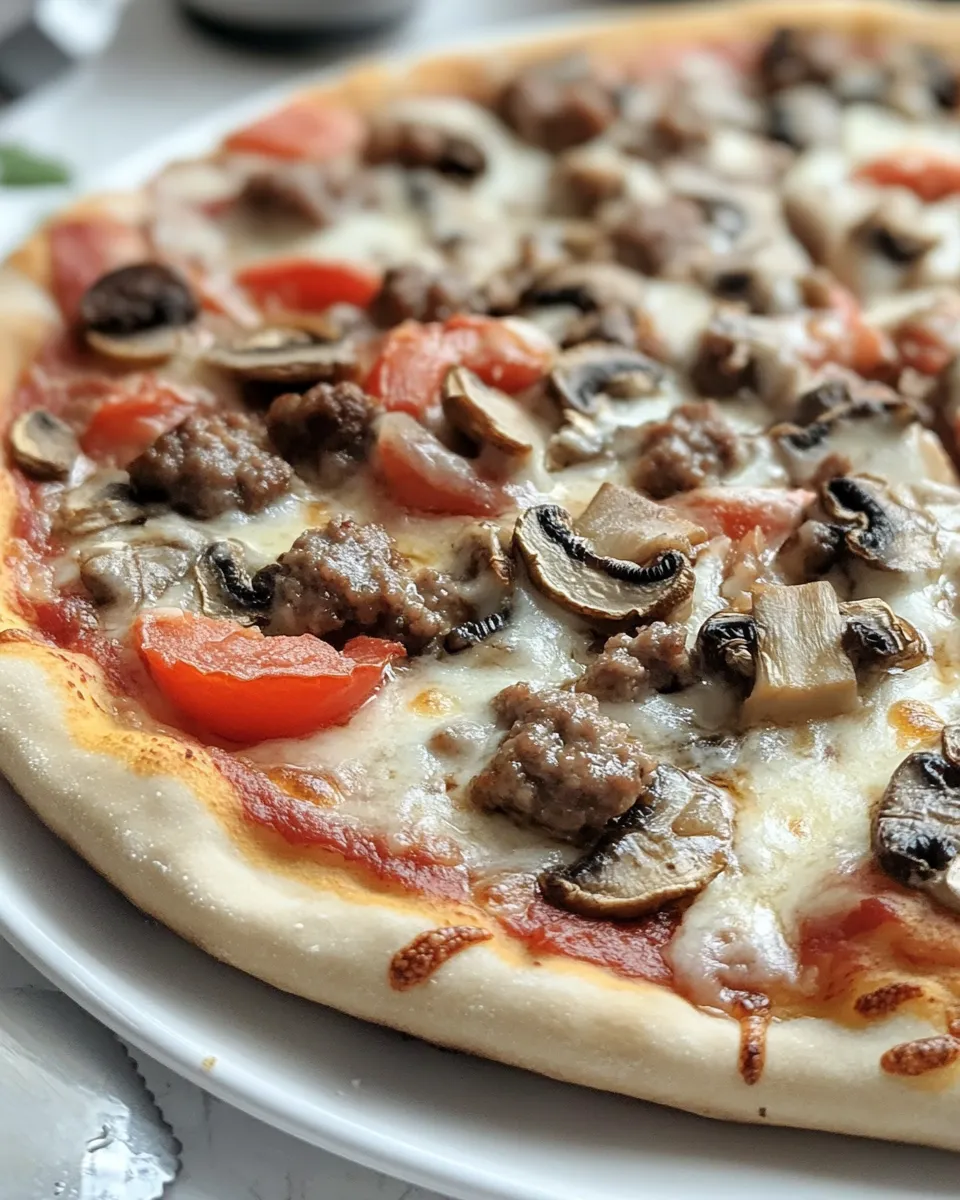
Homemade Sausage Mushroom Pizza
Equipment
- Stand mixer
- dough hook
- Large Bowl
- Plastic Wrap
- clean towel
- Pizza stone
- Pizza Peel
- Oven
- Parchment Paper
- rolling surface
Ingredients
Ingredients
- 3 1/2 cups bread flour plus more for kneading and rolling
- 1 teaspoon sugar
- 1 envelope instant yeast I use Red Star Platinum Yeast
- 2 teaspoons kosher salt
- 1 1/2 cups warm water
- 2 tablespoons olive oil plus more for the bowl and drizzle
Instructions
Instructions
- In the bowl of a stand mixer fitted with a dough hook, combine 3 ½ cups bread flour, 1 teaspoon sugar, 1 envelope instant yeast, and 2 teaspoons kosher salt.
- With the mixer running on low, pour in 1 ½ cups warm water and 2 tablespoons olive oil. Mix until the dough comes together into a ball. If the dough seems very sticky, add 1 tablespoon of flour at a time until it is tacky but manageable.
- Turn the dough out onto a lightly floured surface and knead briefly until smooth, then form it into a tight ball.
- Lightly oil a large bowl with a little olive oil, place the dough ball in the bowl, turn to coat all sides, cover the bowl with plastic wrap, and let the dough rest in a warm spot until doubled in size, about 1 hour.
- Return the risen dough to a lightly floured surface and divide it in half. Cover each half with a clean towel or plastic wrap and let rest for 10 minutes.
- Place a pizza stone on the middle rack of the oven and preheat the oven to 450°F. Allow the stone to heat while the dough rests (preheating the stone for at least 20–30 minutes is recommended).
- Take one piece of dough and, on a sheet of parchment sprinkled with flour, pat and/or stretch it into a 14-inch crust. Use additional flour on your hands or the surface as needed to prevent sticking.
- If using toppings you have on hand, assemble them on the shaped crust now. Drizzle or brush a little extra olive oil over the surface if desired.
- Using a pizza peel, transfer the pizza on the parchment onto the preheated pizza stone. If you prefer, place the pizza (without parchment) on a pizza pan instead.
- Bake the pizza for about 20 minutes, or until the crust is golden brown and cooked through.
- Remove the pizza from the oven with a peel and transfer it to a cooling rack. Let it rest a few minutes before slicing.
- Repeat steps 7–11 with the second piece of dough.