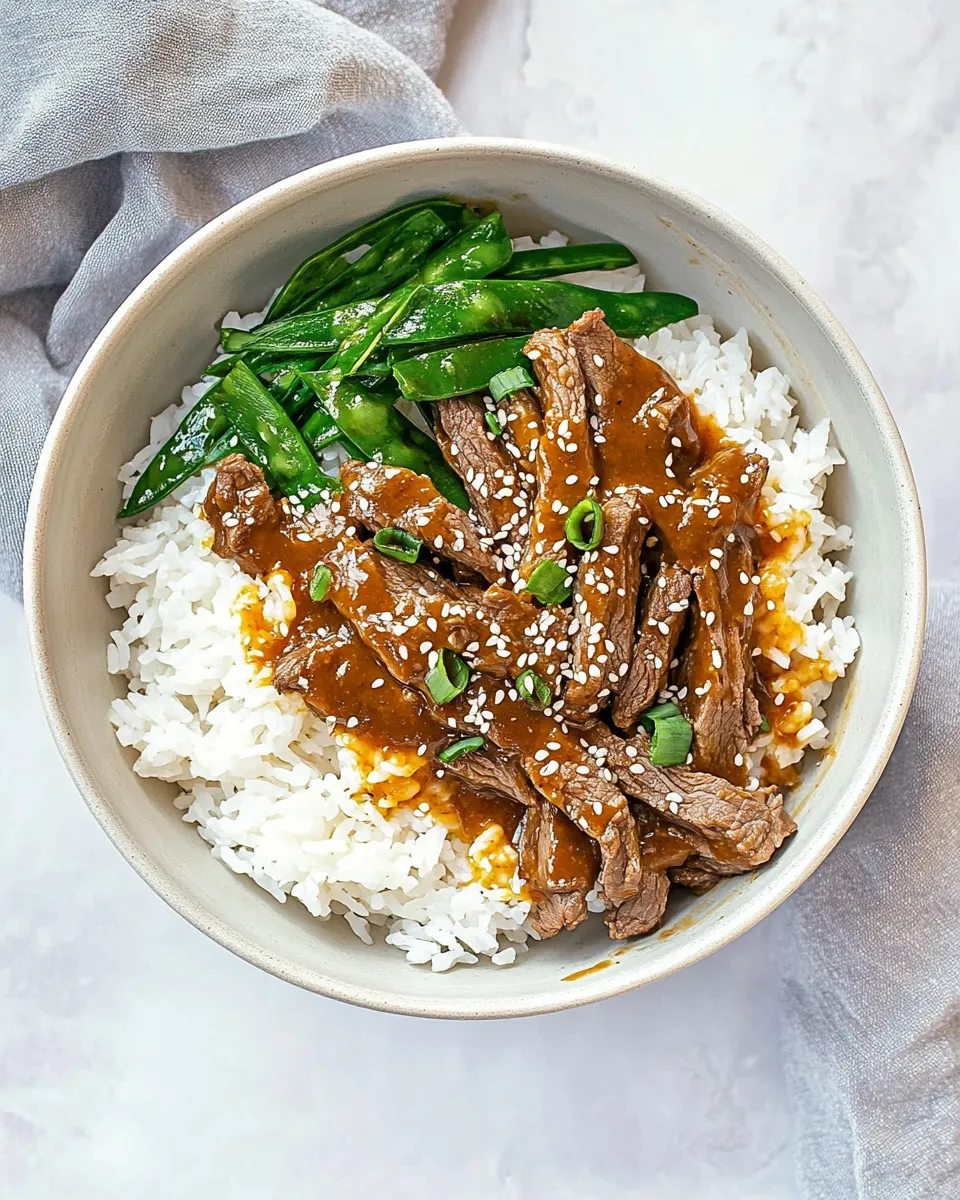
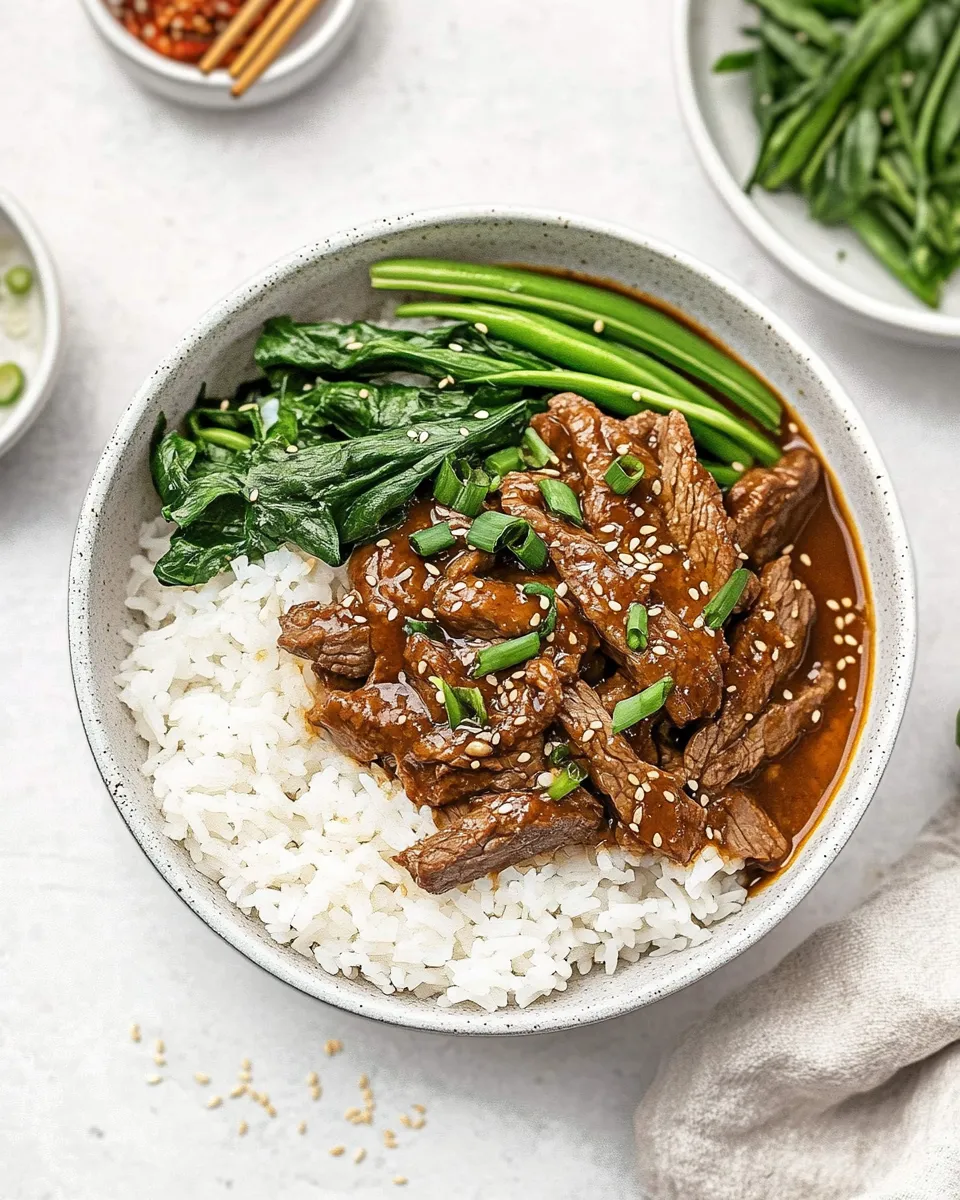
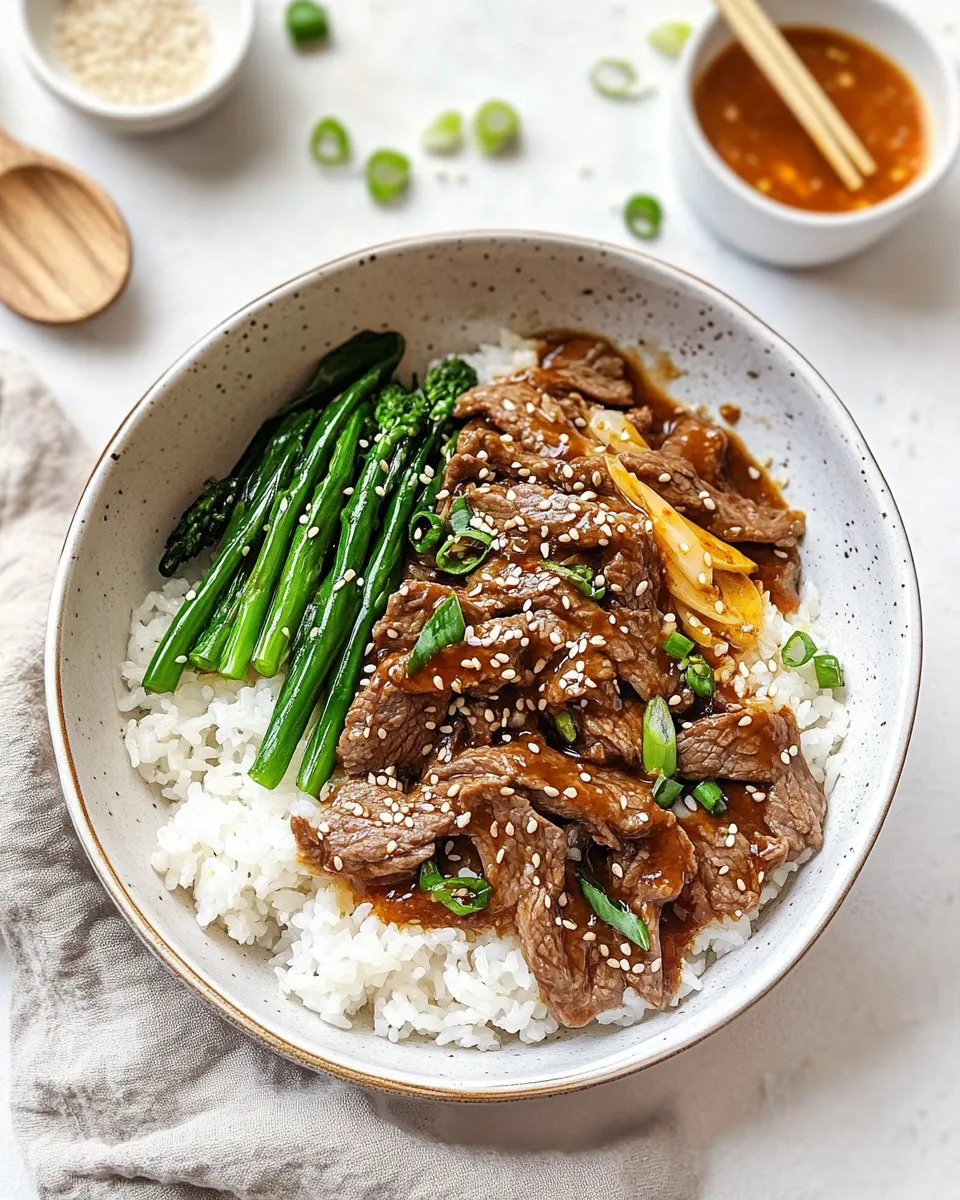
I make this bowl when I want something that feels composed but doesn’t demand a day in the kitchen. Thinly sliced beef soaks up a simple marinade, gets a quick high-heat sear, and ends up tender with browned edges. Crisp-seared baby bok choy and a creamy tahini-soy drizzle finish the bowls so every bite has a little savory, a little sweet, and a little crunchy.
Timing is straightforward: a 20-minute marinade and short cooking bursts. That makes this a weeknight-friendly recipe that still reads special when you have company. I prefer to prep the sauce and rice while the beef marinates—little parallel tasks that save time without stress.
These bowls are practical. They travel well to the table, plate up in minutes, and reheat cleanly if you insist on leftovers. Read on for exact ingredients and step-by-step directions so you can get hands-on without guessing.
Ingredients at a Glance
- 1 pound thinly sliced beef, see notes — the main protein; thin slices cook quickly and take on the marinade fully.
- ⅓ cup low sodium soy sauce — salty, savory backbone for the marinade; low-sodium keeps the dish balanced.
- 2 tablespoons rice vinegar — brightens the marinade and cuts through richness.
- 2 tablespoons light brown sugar — sweetener that helps caramelize the beef as it cooks.
- 1 teaspoon grated garlic — pungent aromatics that anchor the flavor.
- 1 teaspoon grated ginger — adds a fresh, warm lift to the marinade.
- 2 tablespoons olive oil — used for cooking the beef; oil helps the surface crisp.
- ¼ cup tahini — base of the sauce; gives body and a nutty note.
- ¼ cup soy sauce — combined with tahini for a salty, savory drizzle.
- 2 tablespoons sesame oil — toasted sesame flavor to round out the sauce.
- 1 teaspoon sriracha — a controlled hit of heat in the sauce.
- 1 teaspoon sesame seeds — texture and mild nuttiness; included in the sauce.
- 2 tablespoons olive oil — second portion for searing the bok choy; keeps veg crisp and browned.
- 1 pound baby bok choy, halved — quick-cooking, slightly sweet greens to add contrast and color.
- 2 cups cooked white rice, warm or room temperature — the bowl base; warms the other components and soaks up sauce.
- Bulgolgi, above — the cooked beef prepared in the recipe; assemble it on the rice as directed.
- Tahini-soy sauce, above — the finished sauce from the ingredients listed above; spoon over to taste.
Cook Beef Bulgogi Rice Bowls Like This
- In a large bowl combine 1 pound thinly sliced beef, 1/3 cup low sodium soy sauce, 2 tablespoons rice vinegar, 2 tablespoons light brown sugar, 1 teaspoon grated garlic, and 1 teaspoon grated ginger. Mix to coat the beef and set the bowl aside at room temperature to marinate about 20 minutes.
- While the beef marinates, whisk together 1/4 cup tahini, 1/4 cup soy sauce, 2 tablespoons sesame oil, 1 teaspoon sriracha, and 1 teaspoon sesame seeds in a small bowl. Set the tahini-soy sauce aside.
- Heat a large skillet over medium-high heat and add 2 tablespoons olive oil. When the oil shimmers, add the marinated beef and any remaining marinade to the skillet in an even layer.
- Cook the beef, stirring or turning occasionally, 5–7 minutes or until most of the liquid has evaporated and the beef is cooked through and beginning to crisp. Remove the beef from the skillet and keep warm.
- Heat a small skillet over medium heat and add the other 2 tablespoons olive oil. When the oil is hot, place the 1 pound baby bok choy, halved, cut side down in the skillet.
- Sear the bok choy cut side down 2–3 minutes until browned and crisp, then flip and cook 2–3 minutes more or until it reaches your desired doneness. Remove from the skillet.
- Divide 2 cups cooked white rice between four bowls. Top each bowl with the cooked bulgogi and seared bok choy.
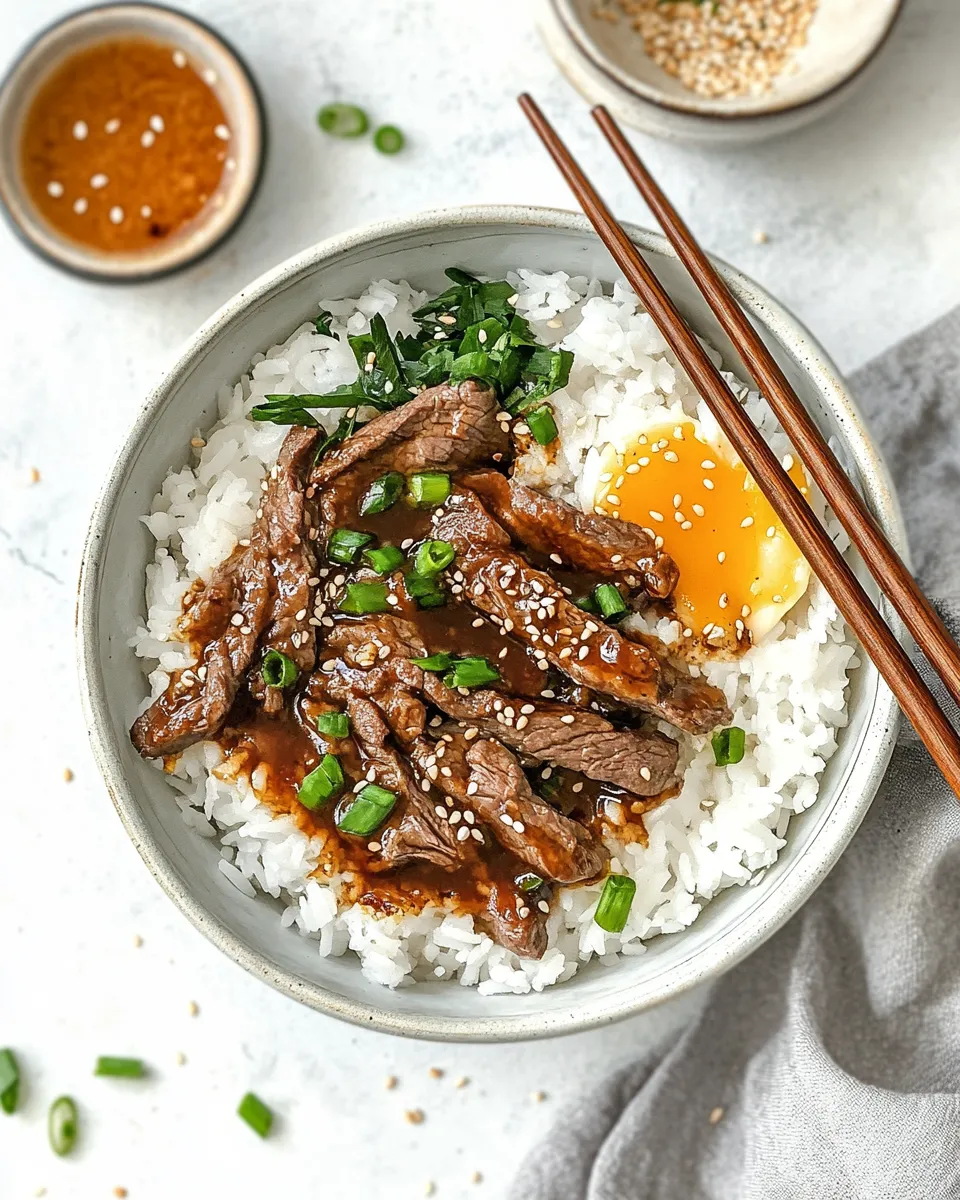
- Spoon the tahini-soy sauce over the bowls to taste (the sauce contains the sesame seeds) and serve immediately.
Why This Recipe Is Reliable
There are no tricks here—just clear cause-and-effect. Thin slices of beef equal fast cooking and even marinade penetration. The short 20-minute rest at room temperature is enough for those thin slices to carry flavor; it doesn’t require overnight marinating to be effective.
Cooking on medium-high creates two wins: the liquid in the marinade reduces quickly (concentrated flavor) and the meat develops browning without overcooking the interior. Using a separate skillet for the bok choy keeps flavor clarity: you get the beef fond without steam-softening the greens.
The tahini-soy sauce is intentionally simple. Tahini brings texture and richness that contrasts the crisped beef; soy and sesame oil provide familiar umami and toasty notes. Because the components are separate, you can adjust salt, heat, and texture at the end for each bowl—consistent results, flexible plating.
What to Use Instead
- If you don’t have thinly sliced beef: thin slices can be made from sirloin or flank by partially freezing and slicing thinly across the grain. No extra seasonings are required beyond the recipe.
- Swap rice types: brown rice will work if you prefer it; it will need a longer cook time and a different texture, but the assembled bowls remain the same.
- Sesame oil alternatives: a neutral oil plus a small sprinkle of toasted sesame seeds can mimic the toasted aroma if you’re out of sesame oil; keep quantities of other liquids the same.
- Ginger or garlic adjustments: if you only have powdered ginger or garlic, reduce quantities—powdered forms are more concentrated. Use them sparingly and taste the marinade.
Recommended Tools
Non-negotiable
- Large bowl — for marinading the beef and tossing.
- Large skillet — for quickly searing the beef and reducing the marinade.
- Small skillet — for searing the bok choy without crowding the beef pan.
- Whisk or fork — to emulsify the tahini-soy sauce smoothly.
Nice to have
- Tongs — helpful for turning the beef and the bok choy cleanly.
- Heatproof spatula — for scraping fond as the beef reduces.
- Sharp knife and cutting board — for halving bok choy and any trimming.
Avoid These Traps
Don’t crowd the skillet. That’s the fastest way to steam the beef instead of sear it. If your skillet is full, cook in two batches or use the largest pan you have so the meat can develop color.
Resist over-marinating the thin slices. Too long in soy-heavy liquid can make the texture mushy. The recipe’s 20 minutes is enough for flavor without breaking down the meat.
When searing bok choy, make sure the oil is hot before you place the cut side down. A cold pan yields limp, pale greens. Aim for quick color—2–3 minutes—then flip and finish to your preference.
In-Season Flavor Ideas
Spring: add quickly blanched sugar snap peas or thinly sliced radishes for a crisp, peppery counterpoint to the beef. Summer: a few slices of lightly pickled cucumber add brightness. Fall: roasted shiitakes or thinly sliced roasted carrots bring earthy depth. Winter: swap baby bok choy for quick-sautéed napa cabbage for more body and a mellow sweetness.
Keep the sauce the same and use whatever seasonal veg you like; the tahini-soy drizzle pairs well across textures and temperatures.
Cook’s Commentary
I keep my beef extra thin because time is my ally in weeknight cooking. If you buy a pre-sliced pack labeled for stir-fry or bulgogi, you’ll shave prep time. When I have guests, I set the sauce out so people can drizzle to taste—some like more tahini for richness, others want more soy for savory depth.
One small habit that improves results: pat the meat very lightly with paper towel if it’s excessively wet from the market. Excess water prevents quick browning. Also, taste the tahini-soy sauce before serving; a splash more soy or a pinch more sriracha will let you tailor the final bowl to your crowd.
Keep-It-Fresh Plan
Store cooked beef and bok choy separately from rice and sauce in airtight containers. In the fridge they will keep cleanly for 2–3 days. Reheat gently: warm the rice in a microwave or on the stovetop with a splash of water, and reheat the beef quickly in a hot skillet—just long enough to warm through so it doesn’t dry out.
The tahini-soy sauce will firm up in the fridge; bring it to room temperature and whisk well before serving. If it’s become too thick, thin with a teaspoon or two of warm water until you reach a spoonable consistency.
Reader Questions
- Can I make this gluten-free? — Use a gluten-free tamari or soy sauce substitute for both the marinade and the sauce; the rest of the recipe stays the same.
- Can I prep ahead? — Yes. Marinate the beef up to 2 hours in the fridge (but not much longer), and make the tahini-soy sauce up to 3 days ahead. Cook right before serving for best texture.
- Is tahini essential? — It gives the sauce its creamy body. If you must skip it, a neutral yogurt or mayo can replace the body, but the flavor profile will shift.
Next Steps
Make the bulgogi as written once, and then play. Try swapping the rice for noodles, mound the beef on steamed greens, or serve family-style with bowls of chopped fresh herbs or quick pickles on the side. The structure of this recipe—marinate, high-heat sear, separate veg—keeps it adaptable.
When you cook it again, pay attention to what you adjust: a touch more sugar, less soy, or extra sriracha. Small changes teach you what you actually like about the dish. Then you’ll have a routine that’s speedy, satisfying, and unmistakably yours.
Beef Bulgogi Rice Bowls
Equipment
- Toasted Sesame Oil
- Sriracha Sauce
- Less Sodium Soy Sauce
Ingredients
Ingredients
- 1 poundthinly sliced beef see notes
- 1/3 cuplow sodium soy sauce
- 2 tablespoonsrice vinegar
- 2 tablespoonslight brown sugar
- 1 teaspoongrated garlic
- 1 teaspoongrated ginger
- 2 tablespoonsolive oil
- 1/4 cuptahini
- 1/4 cupsoy sauce
- 2 tablespoonssesame oil
- 1 teaspoonsriracha
- 1 teaspoonsesame seeds
- 2 tablespoonsolive oil
- 1 poundbaby bok choy halved
- 2 cupscooked white rice warm or room temperature
- Bulgolgi above
- Tahini-soy sauce above
Instructions
Instructions
- In a large bowl combine 1 pound thinly sliced beef, 1/3 cup low sodium soy sauce, 2 tablespoons rice vinegar, 2 tablespoons light brown sugar, 1 teaspoon grated garlic, and 1 teaspoon grated ginger. Mix to coat the beef and set the bowl aside at room temperature to marinate about 20 minutes.
- While the beef marinates, whisk together 1/4 cup tahini, 1/4 cup soy sauce, 2 tablespoons sesame oil, 1 teaspoon sriracha, and 1 teaspoon sesame seeds in a small bowl. Set the tahini-soy sauce aside.
- Heat a large skillet over medium-high heat and add 2 tablespoons olive oil. When the oil shimmers, add the marinated beef and any remaining marinade to the skillet in an even layer.
- Cook the beef, stirring or turning occasionally, 5–7 minutes or until most of the liquid has evaporated and the beef is cooked through and beginning to crisp. Remove the beef from the skillet and keep warm.
- Heat a small skillet over medium heat and add the other 2 tablespoons olive oil. When the oil is hot, place the 1 pound baby bok choy, halved, cut side down in the skillet.
- Sear the bok choy cut side down 2–3 minutes until browned and crisp, then flip and cook 2–3 minutes more or until it reaches your desired doneness. Remove from the skillet.
- Divide 2 cups cooked white rice between four bowls. Top each bowl with the cooked bulgogi and seared bok choy.
- Spoon the tahini-soy sauce over the bowls to taste (the sauce contains the sesame seeds) and serve immediately.
Notes
I’m using thinly sliced sirloin because it is a cheap cut that is great for marinating– but feel free to use any kind of beef you like.