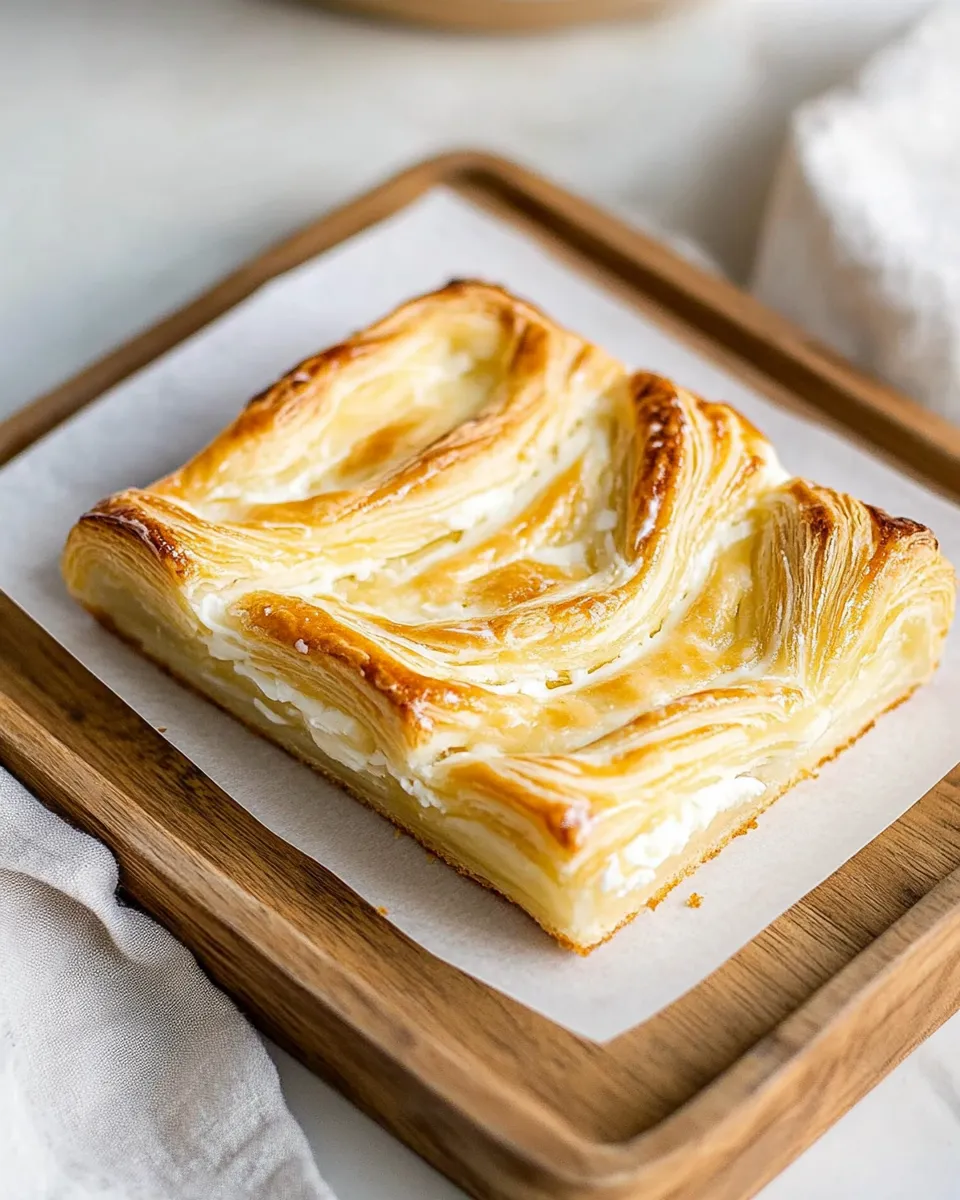
These cream cheese danishes are a small, reliable pleasure. They puff up golden, the filling stays creamy and tangy, and they come together quickly with a sheet of thawed puff pastry and a few pantry staples. I make them when I want something that feels fancy without a lot of fuss.
In the post below you’ll find a clear ingredient list, step-by-step instructions (kept exactly as the recipe requires), and practical troubleshooting notes from years of baking them for friends and for a busy morning. Read straight through if you plan to bake right now; skim the sections for troubleshooting, storage, and small upgrades.
No mysterious techniques. No complicated laminating or days of waiting. This version keeps things honest: crisp pastry, silky cream cheese, and a shiny golden border that signals they are ready to be served.
What’s in the Bowl
Ingredients
- 1 sheet puff pastry, thawed — the structure and flaky layers; keep it cold until you roll it to avoid sticky tearing.
- 1 (8-ounce) box cream cheese, softened — provides the tangy, silky filling; room temperature ensures smooth mixing.
- ⅓ cup powdered sugar — sweetens and stabilizes the cream cheese without graininess.
- 1 teaspoon vanilla extract — rounds and lifts the filling’s flavor.
- 1 egg — used for an egg wash to give the pastry that bakery sheen.
- 2 tablespoons water — mixed with the egg to thin the wash for even brushing.
Starbucks Cream Cheese Danish Cooking Guide
- Preheat the oven to 400°F (200°C) and line a baking sheet with parchment paper.
- On a lightly floured surface, gently roll the thawed sheet of puff pastry to about 9 × 10.5 inches.
- Cut the pastry into 8 equal rectangles and place them on the prepared baking sheet, leaving a little space between each.
- In a bowl, whisk together the cream cheese, powdered sugar, and vanilla extract until smooth.
- Spoon the cream cheese mixture into a zip-top bag, squeeze the mixture toward one corner, and snip off the tip of that corner to make a piping hole.
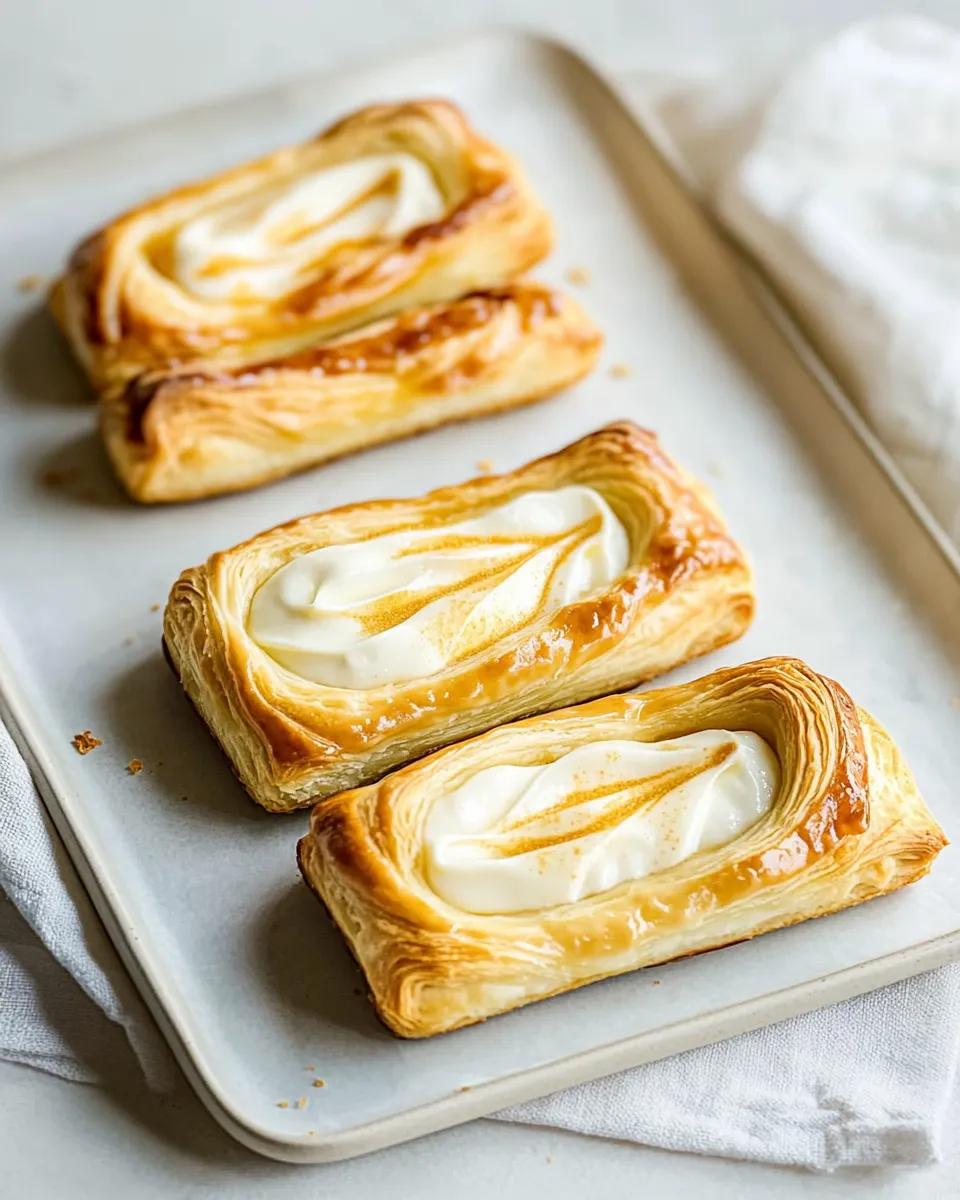
- Pipe the cream cheese mixture onto the center of each pastry rectangle, leaving a small border (about 1/4 inch) of exposed pastry around the edges.
- In a small bowl, whisk the egg and 2 tablespoons water together until combined. Brush this egg wash onto the exposed pastry borders (avoid brushing over the filling).
- Bake for 10–12 minutes, until the pastry is puffed and golden brown. Remove from the oven, let cool briefly, and serve fresh.
What Makes This Recipe Special
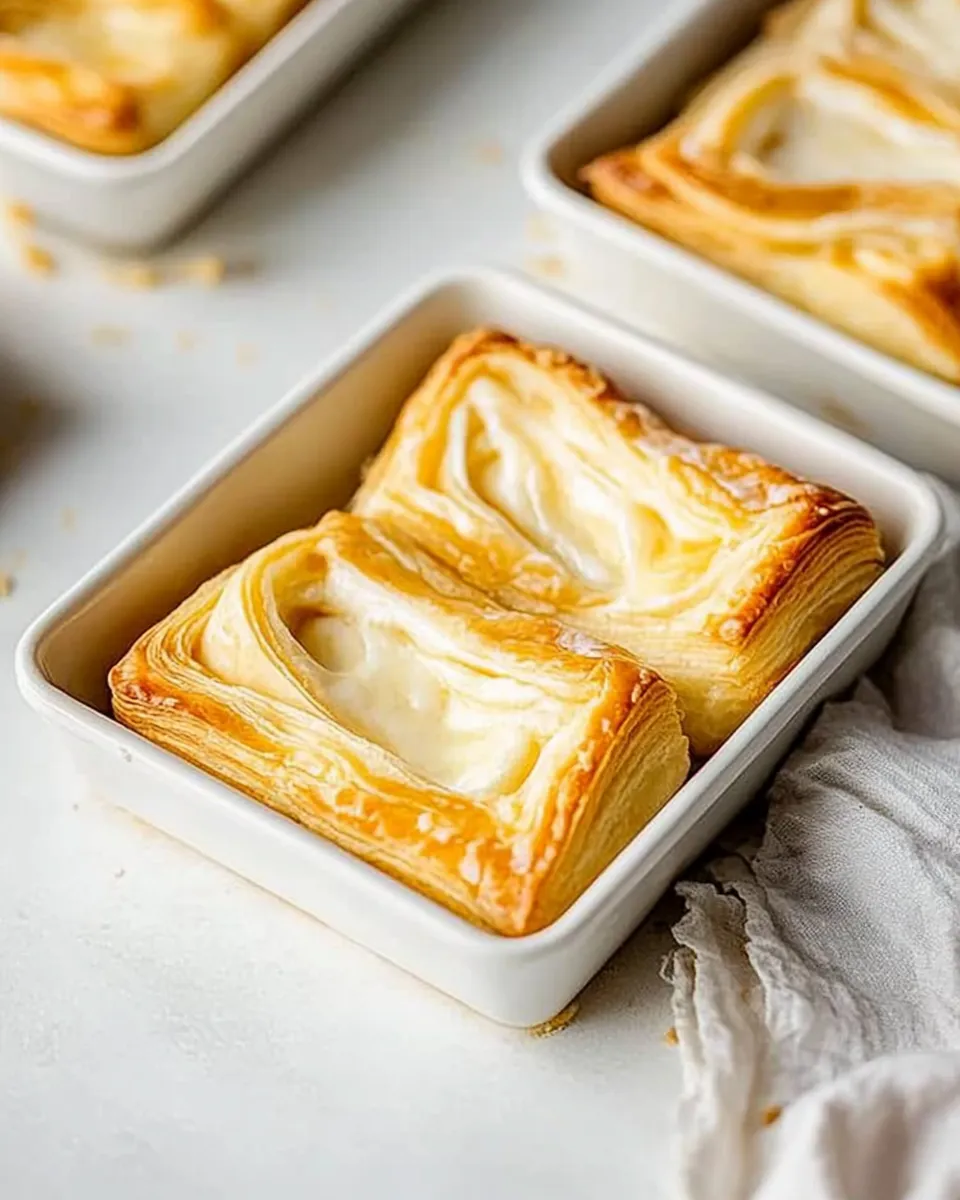
This danish feels special because it balances simplicity with results. The puff pastry does the heavy lifting: its laminated layers create that light, buttery lift without labor-intensive dough work. The cream cheese filling is uncomplicated but intentionally balanced — a touch of powdered sugar and vanilla keeps the texture smooth and the flavor bright.
Timing is crucial. The oven temperature is high so the pastry puffs quickly and sets before the filling softens too much. The egg wash is small but critical; it crisps and browns the exposed pastry, framing the creamy center and giving you that bakery look. It’s the little details — thawed but cold pastry, room-temperature cream cheese, a neat 1/4-inch border — that add up to a reliable danish.
If You’re Out Of…
If you don’t have one of the items on hand, there are practical options. If the puff pastry sheet is frozen, thaw it according to the package directions but still work with it while it’s cool. If the cream cheese is too cold to whip smoothly, microwave it for 5–10 seconds at a time until just softened; avoid melting. If you lack powdered sugar, you can run granulated sugar through a high-speed blender or food processor to make a quick dusting of superfine sugar, though the texture will be slightly different.
If an egg is an absolute no-go, skip the egg wash and use a light brushing of milk or cream instead — the color will be milder, but the danish will still finish nicely. Be cautious substituting key components: the laminated layers of puff pastry and the cream cheese filling are central to the texture and flavor here.
Tools of the Trade
There’s no need for specialized bakery equipment, but a few small tools make the process faster and cleaner:
- A rolling pin — to shape the pastry evenly to the specified 9 × 10.5 inches.
- A sharp knife or bench scraper — for cutting even rectangles without compressing the dough.
- Zip-top bag or piping bag — for cleanly placing the filling with control.
- Parchment paper — it prevents sticking and simplifies clean-up while keeping the bottoms crisp.
- A small pastry brush — for applying the egg wash cleanly to the exposed borders.
Frequent Missteps to Avoid
These are the mistakes that most often derail a batch:
- Working with pastry that’s too warm — it tears, becomes sticky, and won’t puff properly. Chill briefly if it softens while shaping.
- Overfilling the center — extra filling can leak or prevent the pastry edges from browning properly. Stick to a modest mound that leaves the 1/4-inch border visible.
- Brushing egg wash over the filling — this thins and browns the cream cheese in an unattractive way and can make it weep. Keep the wash strictly to the exposed pastry border.
- Skipping parchment or using a greasy sheet — bottoms can burn or stick without the protective layer. Parchment is cheap insurance.
- Underbaking at too low a temperature — the pastry needs a hot oven to puff and set quickly. Follow the 400°F (200°C) guideline for best results.
Fresh Seasonal Changes
Small seasonal tweaks will keep this routine recipe from feeling repetitive. A spoonful of berry jam on top of the cream cheese just before serving brightens it in summer. In fall, a scattering of finely chopped toasted nuts or a dusting of warm spices (cinnamon or cardamom) across the cream cheese can make the danish feel cozy.
For winter holidays, a drizzle of citrus glaze adds a fresh contrast to the dense cream cheese. In all cases, add these elements sparingly: the filling should remain the star and the pastry should stay crisp. Avoid adding wet toppings before baking, which can cause a soggy center.
Flavor Logic
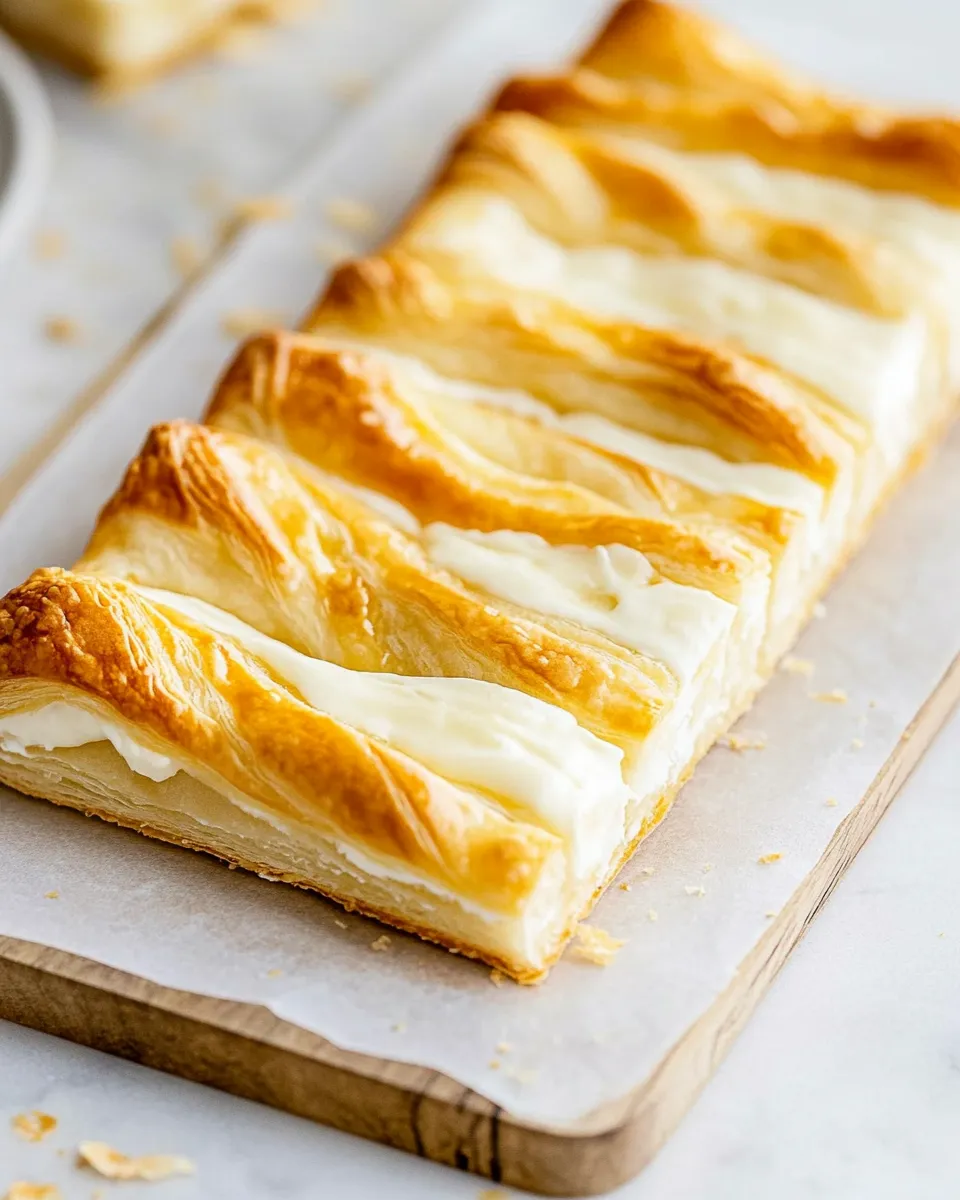
The recipe’s flavor profile is deliberately simple. The cream cheese brings acidity and silkiness; powdered sugar smooths and sweetens without grittiness; vanilla rounds and ties flavors together. The puff pastry contributes a buttery backdrop and light, flaky mouthfeel. Together, they create the characteristic danish contrast: crisp, layered pastry surrounding a creamy, slightly tangy center.
When you taste the finished danish, think in layers: the initial crunch from the edge, the buttery lift from the pastry, and finally the cool, slightly tangy finish of cream cheese. That sequence is what keeps people reaching back for a second piece.
Leftovers & Meal Prep
These danishes are best the day they are baked. The pastry loses its crispness as it absorbs moisture from the filling over time. If you need to store them, let them cool fully, then keep them in an airtight container at room temperature for up to 24 hours. Reheat gently in a 325°F (165°C) oven for 5–7 minutes to refresh the edges.
For longer storage, freeze baked danishes in a single layer on a sheet tray until firm, then transfer to a zip-top bag for up to one month. Reheat from frozen in a 350°F (175°C) oven for 10–12 minutes, checking to avoid over-browning. If you freeze unbaked filled danishes, note the filling may expand or weep; thaw in the refrigerator and bake as directed, watching closely for timing differences.
Reader Questions
Q: Can I make the filling ahead of time?
A: Yes. You can prepare the cream cheese mixture a day in advance and keep it in the refrigerator. Bring it to room temperature briefly to make piping easier. If it firms up too much, stir gently to soften rather than warming aggressively.
Q: How thin should I roll the pastry?
A: Roll to about 9 × 10.5 inches as directed. You want it even but not paper-thin. The layer thickness contributes to how it puffs; over-rolling can lead to fewer distinct layers.
Q: My pastry browned unevenly. What happened?
A: Uneven browning often comes from uneven oven temperature or an uneven egg wash. Brush evenly and rotate the pan halfway through if your oven has hot spots. Also make sure pieces are spaced evenly on the pan.
Next Steps
If you’re ready to bake now, gather your ingredients, preheat your oven, and follow the Cooking Guide above step by step. Keep an eye on the edges as they bake; the color is your best indicator of doneness. Serve warm, and try a small finishing touch like a light sift of powdered sugar or a quick spoonful of jam for contrast — but don’t overcomplicate the first time. Learn the bake and the texture, then personalize.
Whether you serve these for a weekend brunch or as a special treat during the week, they deliver that tiny, lift-me-up moment we all appreciate. Bake one sheet, share half, and keep the rest in the freezer for a quick, upscale breakfast later.
Starbucks Cream Cheese Danish
Equipment
- Oven
- Baking Sheet
- Parchment Paper
- Mixing Bowl
- Whisk
- Zip-top Bag
- Knife
- Rolling Pin
- Pastry Brush
Ingredients
Ingredients
- 1 sheet puff pastry thawed
- 1 8-ouncebox cream cheese, softened
- 1/3 cuppowdered sugar
- 1 teaspoonvanilla extract
- 1 egg
- 2 tablespoonswater
Instructions
Instructions
- Preheat the oven to 400°F (200°C) and line a baking sheet with parchment paper.
- On a lightly floured surface, gently roll the thawed sheet of puff pastry to about 9 × 10.5 inches.
- Cut the pastry into 8 equal rectangles and place them on the prepared baking sheet, leaving a little space between each.
- In a bowl, whisk together the cream cheese, powdered sugar, and vanilla extract until smooth.
- Spoon the cream cheese mixture into a zip-top bag, squeeze the mixture toward one corner, and snip off the tip of that corner to make a piping hole.
- Pipe the cream cheese mixture onto the center of each pastry rectangle, leaving a small border (about 1/4 inch) of exposed pastry around the edges.
- In a small bowl, whisk the egg and 2 tablespoons water together until combined. Brush this egg wash onto the exposed pastry borders (avoid brushing over the filling).
- Bake for 10–12 minutes, until the pastry is puffed and golden brown. Remove from the oven, let cool briefly, and serve fresh.
Notes
Serve fresh.