I make this shredded chicken all the time because it’s straightforward, forgiving, and turns one whole chicken into a week’s worth of meals. The method focuses on simple browning, a gentle simmer, and using the cooking liquid — nothing fancy, just technique that delivers tender, flavorful meat that pulls apart easily.
This recipe is practical: you get browned skin for depth, aromatics in the pot for background flavor, and a reserved stock that doubles as sauce base or soup starter. It’s a small method that scales — use it when you want pulled meat for tacos, sandwiches, salads, or to freeze for quick dinners.
Below you’ll find the ingredient list (exactly as used), the step-by-step method I follow without changing the order or amounts, and notes on gear, common mistakes, substitutions that stay within the recipe’s framework, and storage tips so nothing goes to waste.
Ingredients
- 1whole chicken,fabricated into chicken parts, about 3 pounds total — provides the meat and bones for flavor; fabricating keeps pieces manageable for browning and shredding.
- 1tablespoonsolive oil — for browning the skin and carrying flavor into the pan.
- 1peeled and roughly chopped yellow onion — adds sweetness and aromatic base to the cooking liquid.
- 4garlic cloves — brightens the stock; crush or leave whole depending on how forward you want the garlic note.
- 1bay leaf — small, but it layers subtle savory aroma into the cooking liquid.
- 3roughly chopped ribs of celery — supports the aromatics with mild savory crunch that becomes soft and flavorful when simmered.
- 3roughly chopped carrots — adds sweetness and balances the savory stock.
- 4cupschicken stock — the braising medium; it carries seasoning and becomes the strained stock you can use later.
- coarse salt and fresh cracked pepper to taste — key for seasoning at browning and after tasting the braise.
The Method for Shredded Chicken Recipe
- Pat the chicken pieces dry and season both sides with coarse salt and freshly cracked pepper.
- Add the olive oil to a large skillet, rondeau, or sauté pan and heat over medium-high until the oil is hot and shimmering.
- Place the chicken pieces skin side down in the hot pan. Reduce the heat to medium-high and cook, undisturbed, 3 to 4 minutes or until the skin is golden brown.
- Flip the chicken pieces. Add the chopped onion, garlic cloves, bay leaf, chopped celery, and chopped carrots to the pan around the chicken. Cook 3 to 4 minutes to lightly brown the vegetables and the bottom of the chicken.
- Pour in the chicken stock and taste; gently adjust seasoning with additional coarse salt and freshly cracked pepper as needed.
- Cover the pan and reduce the heat to low–medium. Simmer, covered, for 40 to 45 minutes or until the chicken is fork-tender.
- Use tongs to transfer the chicken to a plate and let it cool at room temperature for 10 minutes.
- Strain the cooking liquid through a fine-mesh strainer into a bowl or container, discarding the solids and bay leaf. Reserve the strained stock for use or storage.
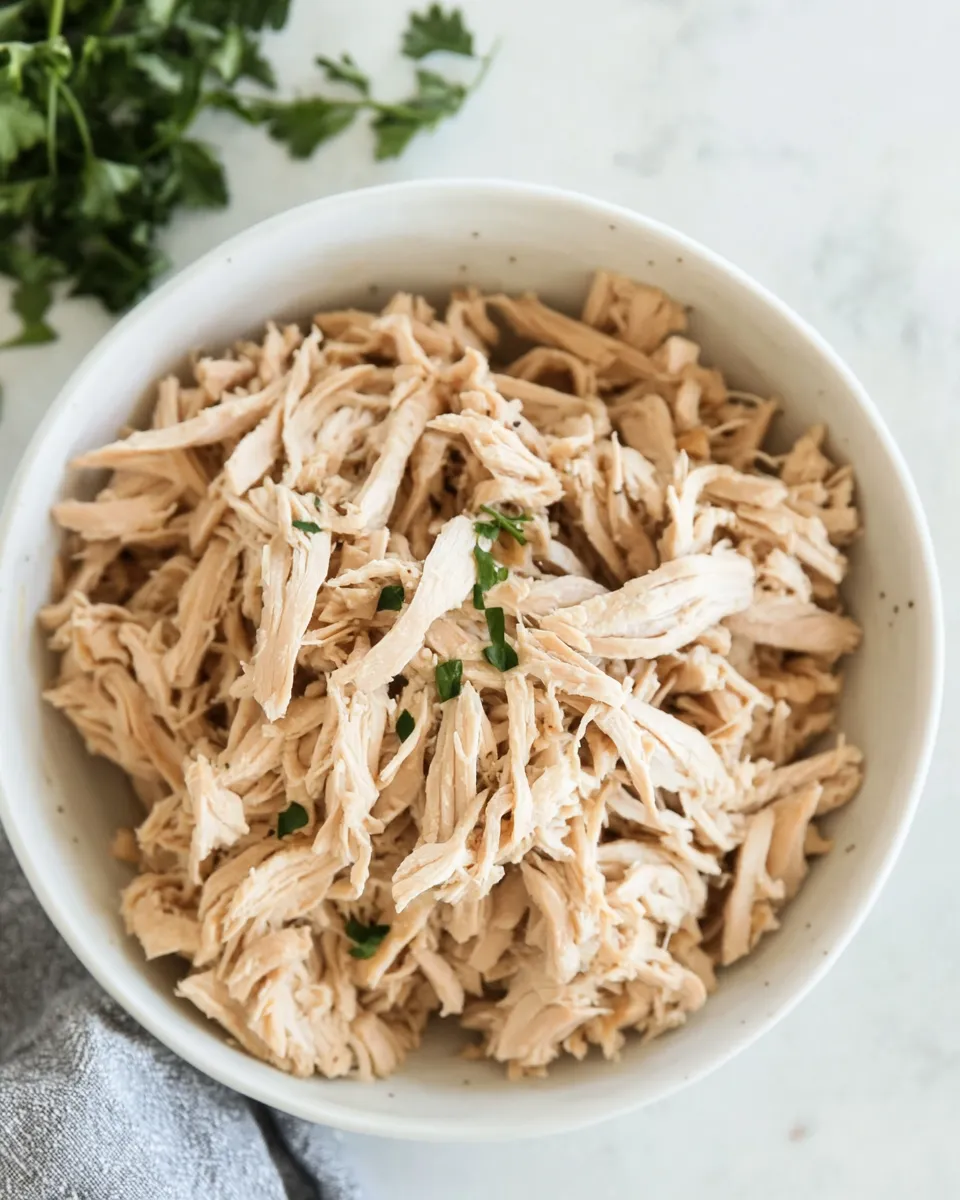
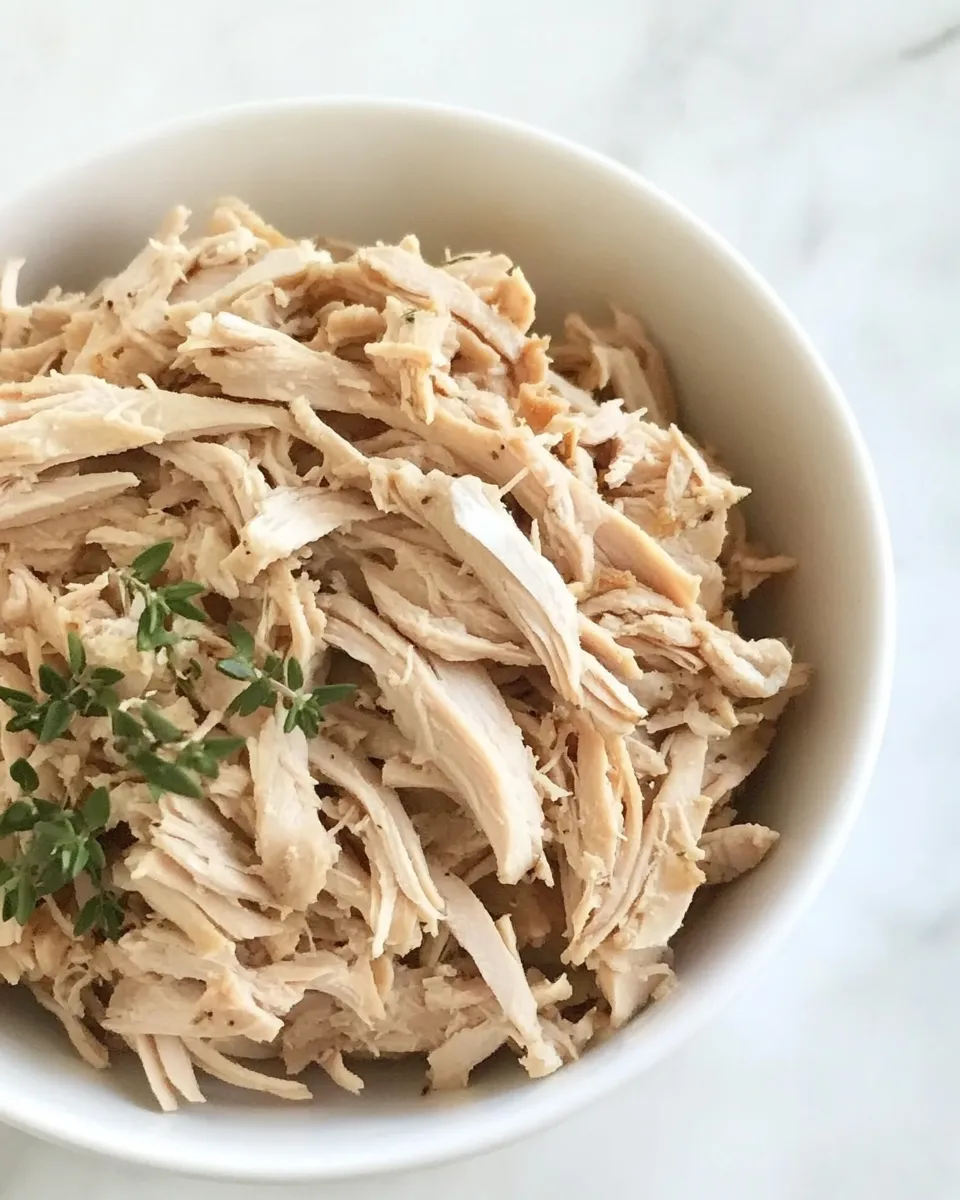
- Remove and discard the skin and bones from the cooled chicken pieces. Shred the meat by pulling it apart with your hands or two forks.
- Store or use the shredded chicken and the strained chicken stock in your recipes.
Why This Recipe is a Keeper
This approach gives you multiple wins from one pan: nicely browned chicken for flavor, soft aromatics that deepen the stock, and meat that holds moisture because it finishes in the braise. You don’t need a lot of fuss. The short browning step builds complexity quickly, and the covered simmer turns tougher connective tissue into tender, shreddable meat.
The reserved strained stock is a bonus — it’s seasoned, rich, and useful. Use it to poach rice, thin a sauce, or start a soup. The method is flexible enough to fit a busy week: cook once, use across meals, and you’ll notice the time saved during the week.
I keep the technique in my rotation because it’s reliable. It scales: more chicken and a proportionate pan and liquid yield the same result. No trial-and-error, just simple, repeatable steps that produce consistent, useful shredded chicken every time.
Substitutions by Category
I stick close to the ingredients listed, but you can adjust within the recipe’s framework to match what you have or what you prefer:
- Protein — the recipe calls for a whole chicken fabricated into parts. Use any of those parts interchangeably (breasts, thighs, or mixed pieces) depending on whether you prefer leaner or darker meat.
- Fat — the recipe specifies olive oil for browning. If needed, use a similar amount of another neutral cooking fat already in your pantry; its role is to brown the skin and transfer heat.
- Aromatics — onion, garlic, celery, and carrots are the base. You can slightly vary quantities to boost sweetness (more carrots) or savory bite (more onion), but keep the same items to preserve the intended flavor profile.
- Liquid — the recipe uses chicken stock. The strained cooking liquid from the recipe is also a perfect swap later when you need stock; they’re compatible and interchangeable in subsequent dishes.
- Seasoning — coarse salt and cracked pepper are the only seasonings listed. You can adjust amounts for taste, but stick to these primary seasonings while following this exact method.
Gear Up: What to Grab
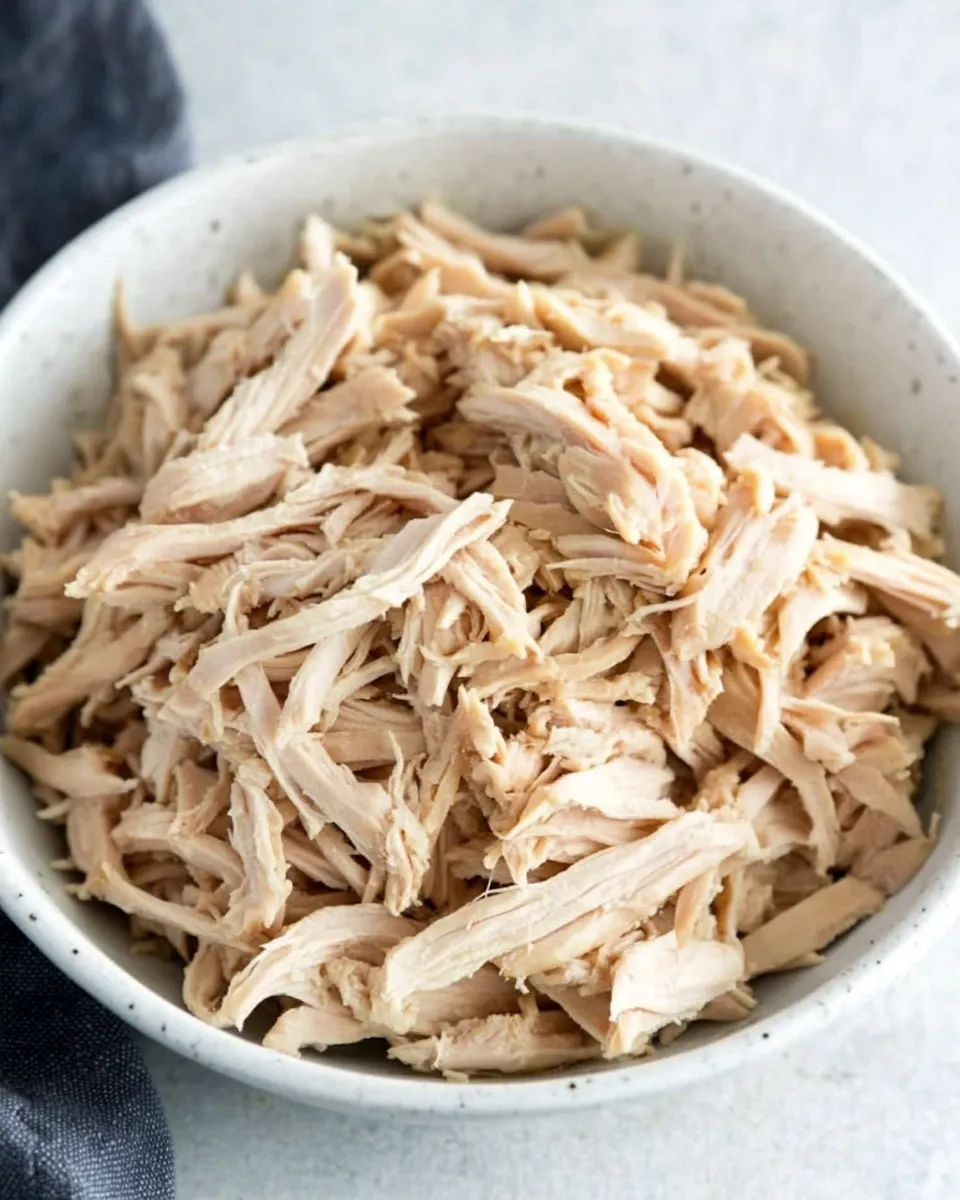
This method doesn’t require specialty tools, just a few reliable pieces you probably have:
- A large skillet, rondeau, or sauté pan with a lid — wide enough to brown pieces without crowding.
- Tongs — for flipping and transferring hot pieces safely.
- Fine-mesh strainer — to remove solids and bay leaf from the cooking liquid cleanly.
- Mixing bowl or container for reserved stock — glass or heatproof plastic works for storing.
- Two forks or your hands for shredding — choose what’s most comfortable and efficient for you.
Slip-Ups to Skip
These are the common mistakes I see that change the final result. Avoid them and the shredded chicken will turn out every time:
Not drying the chicken before seasoning: Moisture prevents proper browning. Pat the pieces dry with paper towels so the skin crisps and develops flavor.
Crowding the pan: If the pieces touch too much, they steam instead of brown. Brown in batches if needed so each piece gets direct contact with the hot surface.
Skipping the taste test after adding stock: The liquid dilutes seasoning. Taste and adjust salt and pepper before you cover the pan to simmer.
Overcooking or undercooking: Simmer until fork-tender. Under 40 minutes the meat may not shred cleanly; much longer can make texture overly soft for some uses. Stick to the 40–45 minute window and confirm tenderness with a fork.
Better Choices & Swaps
Make these pragmatic choices to improve results without changing the method:
Choose parts for purpose: If you want extra moist, richly flavored shredded chicken, favor pieces with dark meat (thighs or drumsticks). For leaner meat, use breasts, but expect a slightly drier texture unless you’re careful with timing and resting.
Keep skin on for browning: The recipe directs discarding skin after cooking. Leaving it on during browning adds flavor and contributes fat that helps the pan fond. Remove it after cooling before shredding, as instructed.
Reserve and reuse stock: Straining and saving the liquid is one of the best swaps you can do for future cooking. It’s concentrated, flavorful, and reduces waste.
Insider Tips
Small habits that make this recipe better each time:
Browning rhythm: Give the chicken an uninterrupted 3–4 minutes skin-side down and resist flipping too early. That initial contact is how you build deep flavor quickly.
Taste the braise: After you add the stock, taste it. It should be slightly seasoned; adjust before covering. The meat will soak up that seasoned liquid during the simmer.
Cool before shredding: Let the chicken rest 10 minutes; it’s easier to handle and you reduce moisture loss. Shred with two forks or with your hands for larger pieces.
Use the strained stock strategically: Thicken a small portion to make a sauce for the shredded meat, or use it instead of water when cooking grain to boost flavor.
Storage Pro Tips
Proper cooling and storing preserves texture and keeps the chicken usable across meals:
Short-term: Cool shredded chicken to room temperature (no longer than two hours after cooking), then refrigerate in an airtight container for up to 4 days.
Long-term: Freeze in portioned airtight containers or freezer bags for up to 3 months. Flatten bags for quick thawing in the refrigerator or in cold water when sealed.
Stock storage: The strained chicken stock keeps in the fridge for 3–4 days. For longer storage, freeze in portioned containers or ice cube trays for small amounts you can drop into recipes.
Reheating: Gently reheat shredded chicken in a skillet with a splash of reserved stock to keep it moist, or microwave covered with a tablespoon of stock per cup of chicken, checking and stirring to warm evenly.
Ask the Chef
Q: Can I use only breasts or only thighs?
A: Yes. The recipe accommodates either. Thighs give richer flavor and more forgiving moisture; breasts are leaner. Timing stays the same, but check tenderness at 40 minutes and adjust within the 40–45 minute window.
Q: Do I have to discard skin and bones?
A: The recipe instructs removing skin and bones after cooling. You can keep small boneless pieces if you prefer, but the instruction helps ensure the shredded meat is clean and easy to use in sandwiches and salads.
Q: What if I don’t have chicken stock?
A: Use water if necessary, but the flavor will be milder. The method still works; taste and adjust salt more carefully after adding the liquid.
Q: How do I use the strained stock?
A: Use it to thin sauces, cook grains, make soup, or re-moisten shredded chicken while reheating. It’s concentrated and versatile.
See You at the Table
This shredded chicken method is a workhorse: simple steps, reliable results, and a reserved stock that stretches your cooking further. Cook it on a Sunday and you’ve set yourself up for salads, tacos, grain bowls, and sandwiches all week. No fuss, just technique — brown, simmer, strain, shred — and you’ll have a versatile base for countless meals.
When you try it, start exactly as written, taste the braise, and remember that the reserved stock is as valuable as the meat. If you have questions or variations you want to try, leave a note — I love practical swaps that keep the method working in real kitchens.
Shredded Chicken Recipe
Equipment
- Large skillet or sauté pan
- Tongs
- Fine mesh strainer
- Bowl
Ingredients
Ingredients
- 1 whole chicken fabricated into chicken parts, about 3 pounds total
- 1 tablespoonsolive oil
- 1 peeled and roughly chopped yellow onion
- 4 garlic cloves
- 1 bay leaf
- 3 roughly chopped ribs of celery
- 3 roughly chopped carrots
- 4 cupschicken stock
- coarse salt and fresh cracked pepper to taste
Instructions
Instructions
- Pat the chicken pieces dry and season both sides with coarse salt and freshly cracked pepper.
- Add the olive oil to a large skillet, rondeau, or sauté pan and heat over medium-high until the oil is hot and shimmering.
- Place the chicken pieces skin side down in the hot pan. Reduce the heat to medium-high and cook, undisturbed, 3 to 4 minutes or until the skin is golden brown.
- Flip the chicken pieces. Add the chopped onion, garlic cloves, bay leaf, chopped celery, and chopped carrots to the pan around the chicken. Cook 3 to 4 minutes to lightly brown the vegetables and the bottom of the chicken.
- Pour in the chicken stock and taste; gently adjust seasoning with additional coarse salt and freshly cracked pepper as needed.
- Cover the pan and reduce the heat to low–medium. Simmer, covered, for 40 to 45 minutes or until the chicken is fork-tender.
- Use tongs to transfer the chicken to a plate and let it cool at room temperature for 10 minutes.
- Strain the cooking liquid through a fine-mesh strainer into a bowl or container, discarding the solids and bay leaf. Reserve the strained stock for use or storage.
- Remove and discard the skin and bones from the cooled chicken pieces. Shred the meat by pulling it apart with your hands or two forks.
- Store or use the shredded chicken and the strained chicken stock in your recipes.
Notes
Make-Ahead:
You can make this up to 2 days ahead for freshness.
How to Store:
Cover and store it in the refrigerator for 6 days. This will freeze well and be covered for up to 6 months. Thaw it in the refrigerator for 1 day before reheating.
How to Reheat:
Add the desired amount of shredded chicken to a medium-sized sauce pot with ½ cup of chicken stock or water, and heat over low heat until hot.
Strain the
braising liquid and store or use it in any chicken stock recipe.
Any frozen
vegetables you may be keeping for stock will be fine to add to this.