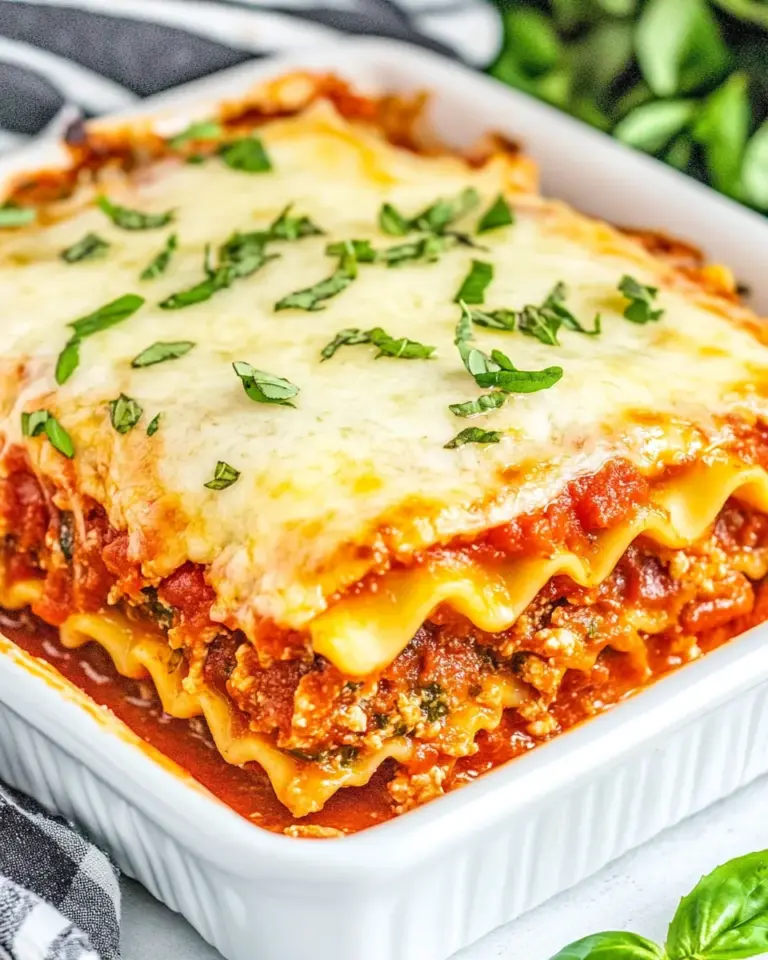
There’s a magic that happens when a few pantry staples come together: bright tomatoes, fragrant basil, and that glorious hollow pasta known as bucatini. This Bucatini Pomodoro answers the craving for a simple, elegant pasta that’s ready in under 30 minutes yet tastes like you’ve spent the afternoon coaxing flavor out of every ingredient. It’s the kind of dish you can serve on a weeknight or plate up for company without breaking a sweat. The focus is purity — ripe tomatoes, caramelized onion, good olive oil, and the unmistakable chew of bucatini. Let’s get into the why and how of this classic with clear, practical steps and tips that guarantee success.
Why this Bucatini Pomodoro works
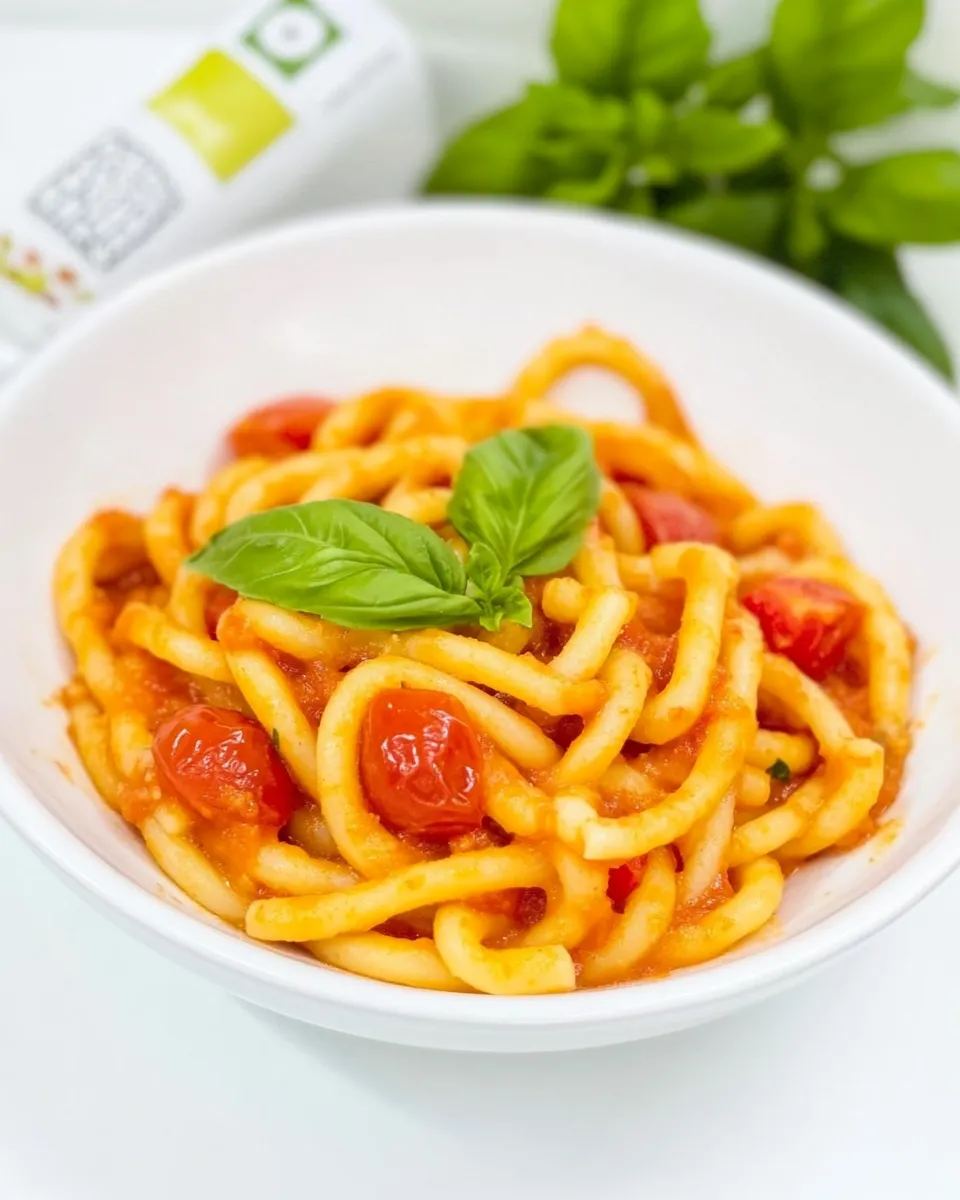
Pomodoro means “tomato” in Italian, and this sauce proves less is often more. Two cans of whole plum tomatoes provide body and concentrated tomato flavor, while a medium-large onion, finely minced, dissolves into sweetness and balances acidity. Extra-virgin olive oil carries those flavors and creates a glossy finish. Fresh basil brings lively herbaceousness at the end, and sea salt plus black pepper tune everything to taste. Bucatini, with its slightly thicker diameter and hollow center, traps sauce inside so every bite is saucy and satisfying.
Ingredients
- 1 medium-large onion, finely minced
- 2 cans organic whole plum tomatoes (15 oz / 400 g each), or canned cherry tomatoes
- 2 tablespoons extra-virgin olive oil
- 8 fresh basil leaves
- Sea salt and black pepper to taste
- 17.06 oz bucatini pasta
Equipment
- Large pot for boiling pasta
- Large sauté pan or shallow saucepan for the sauce
- Colander
- Wooden spoon or spatula
- Chef’s knife and cutting board
- Tongs or pasta fork
- Measuring spoons
Prep and timing
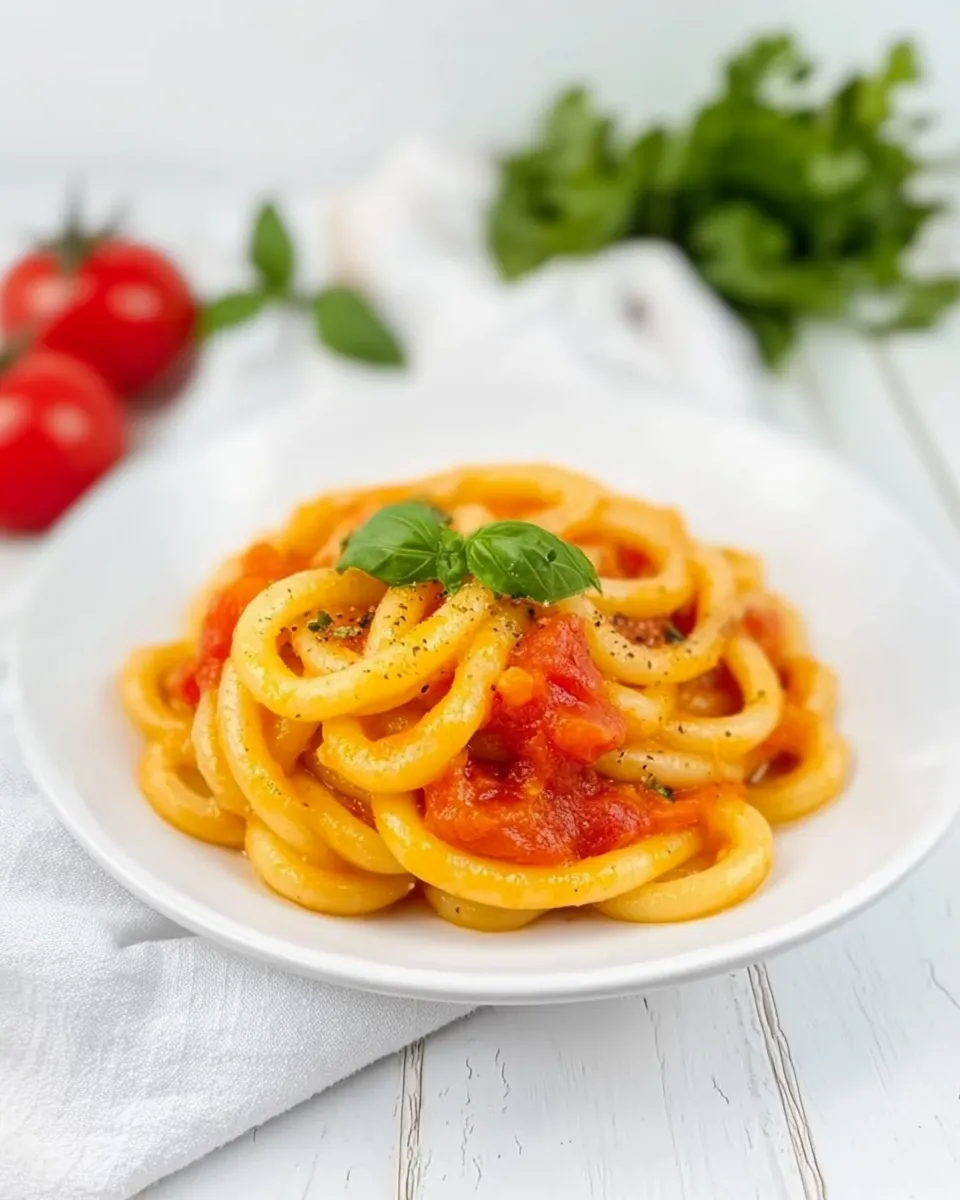
This recipe moves briskly: plan for about 25–30 minutes from start to finish. Have the onion minced, basil torn, and tomatoes at hand before heating the pan. Bring a large pot of salted water to a boil while the sauce simmers so the pasta finishes right as the sauce reaches peak flavor.
Step-by-step instructions
- Fill a large pot with water, add a generous pinch of sea salt, and bring it to a rolling boil over high heat. This will be for the bucatini.
- While the water heats, drain the canned whole plum tomatoes into a bowl, reserving the juice if you’d like a looser sauce. Roughly crush the tomatoes with your hands or a fork so they are broken up but still chunky; set aside.
- Heat 2 tablespoons of extra-virgin olive oil in a large sauté pan over medium heat. Let the oil warm until it shimmers but is not smoking.
- Add the finely minced medium-large onion to the hot oil. Sauté the onion, stirring frequently, until it’s softened and begins to turn translucent and sweet — this usually takes 6 to 8 minutes. If the onion starts to brown too quickly, lower the heat slightly and keep stirring so it cooks evenly.
- Once the onion is softened, pour in the crushed canned tomatoes. Stir to combine and bring the mixture to a gentle simmer. If you reserved tomato juice and prefer a thinner sauce, add a little of that now. Reduce the heat to medium-low so the sauce remains at a gentle simmer.
- Season the sauce with sea salt and freshly ground black pepper to taste. Let the sauce simmer uncovered for about 10 minutes, stirring occasionally, so the flavors meld and the sauce thickens slightly. Taste and adjust salt and pepper as desired.
- When the sauce is almost ready, add the bucatini to the boiling salted water. Cook the bucatini according to package directions for al dente, usually around 9 to 11 minutes, stirring occasionally so the strands don’t stick together.
- While the pasta cooks, tear the 8 fresh basil leaves into pieces with your hands to release their aroma. Add the torn basil to the sauce in the last minute of simmering, stirring it in so the leaves wilt but stay bright and fresh.
- When the bucatini is al dente, reserve about a cup of the pasta cooking water and then drain the pasta in a colander.
- Return the drained bucatini to the pot or add it directly into the sauté pan with the pomodoro sauce. Toss the pasta with the sauce over low heat, adding a splash of the reserved pasta water as needed to help the sauce coat the bucatini evenly and to reach your preferred consistency.
- Taste and make any final adjustments to seasoning with sea salt and black pepper. When the sauce clings nicely to the bucatini and the basil is fragrant, remove the pan from heat.
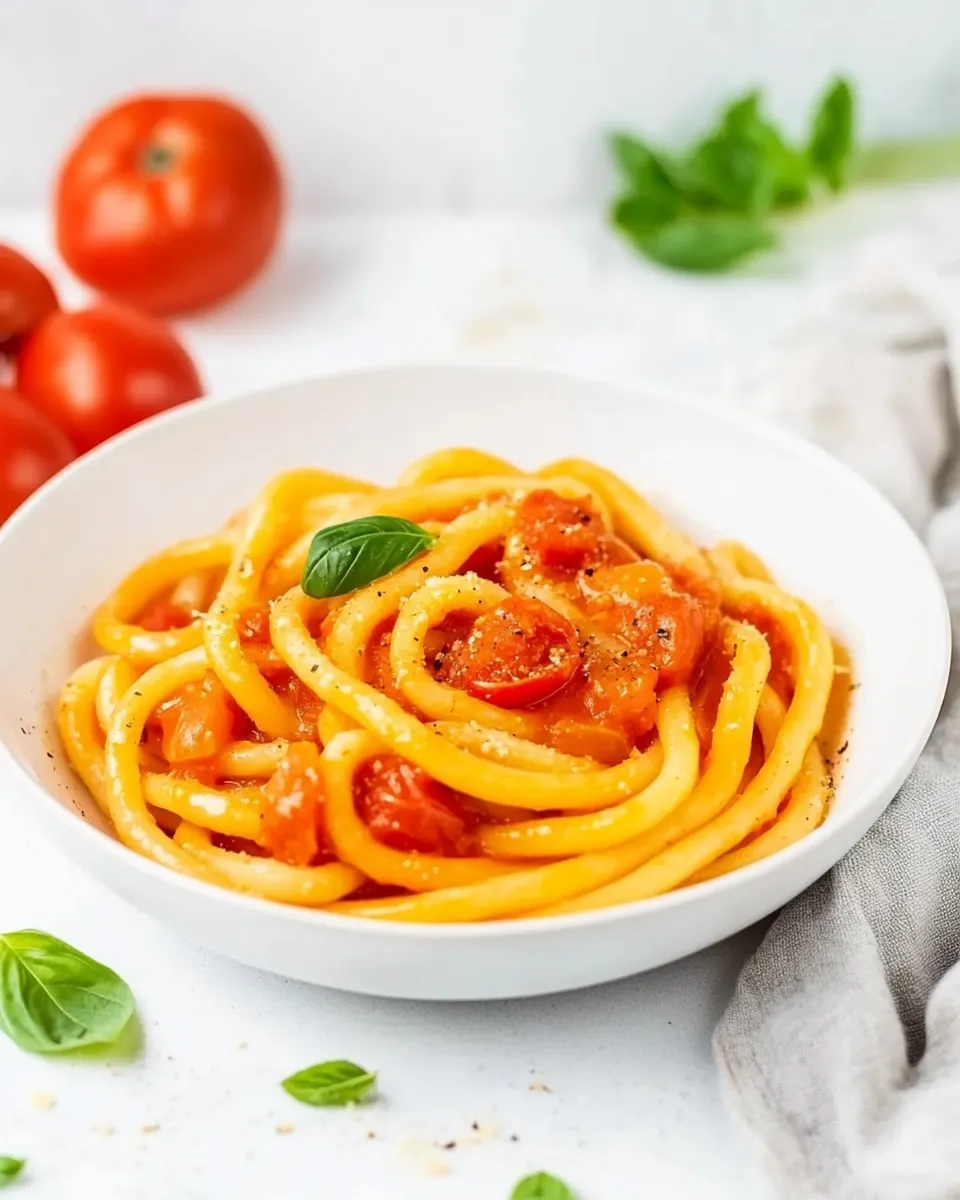
- Divide the bucatini among serving bowls and finish each portion with an extra drizzle of extra-virgin olive oil if desired and a couple more torn basil leaves for color and fragrance. Serve immediately while hot.
Tips for success
- Use good-quality canned tomatoes. Organic whole plum tomatoes give the most balanced and natural tomato flavor; canned cherry tomatoes are a fine substitute if you prefer slightly sweeter notes.
- Finely mincing the onion ensures it melts into the sauce rather than standing out as a sharp bite. Take the time to mince it well.
- Reserve some pasta water before draining. The starchy water is the secret to a silky emulsion that binds sauce and pasta together.
- Don’t overcook the bucatini. Aim for al dente so the pasta has structure and chew, which contrasts beautifully with the silky tomato sauce.
- Adjust the sauce texture with the reserved tomato juice or pasta water. Add juice for looser, more tomato-forward sauce; add pasta water for a glossy, clingy finish.
- Finish with good extra-virgin olive oil and fresh basil to elevate the final presentation and aroma.
Serving suggestions
Bucatini Pomodoro is elegant on its own, but you can round it out in a few simple ways. A crisp green salad dressed with lemon and olive oil is a bright complement. For added richness, a sprinkle of grated hard cheese can be offered at the table. A shallow bowl and a glass of crisp white wine or sparkling water make this everyday dish feel special.
Make-ahead and storage
If you need to prepare the sauce ahead of time, make it as directed and cool it completely, then refrigerate in an airtight container for up to 3 days. Reheat gently on the stovetop, adding a splash of water to loosen if it’s thickened. Cook the bucatini fresh to preserve texture; if you have leftover cooked pasta, store it separate from the sauce and reheat briefly in simmering sauce with a little pasta water to refresh it.
Flavor variations
This Bucatini Pomodoro shines in its simplicity, but small additions can steer it in different directions:
- Add a pinch of red pepper flakes with the onion for a touch of heat.
- Stir in a tablespoon of capers or a few chopped olives at the end for briny contrast.
- Toss in a handful of baby spinach when you combine pasta and sauce for extra color and nutrition.
- Finish with toasted pine nuts or a scattering of chopped fresh parsley for crunch and brightness.
Common troubleshooting
- If the sauce tastes flat: it may need more salt. Add a small pinch at a time and taste between additions. A splash of pasta water can also help lift the flavor profile.
- If the sauce is too acidic: a tiny pinch of sugar can balance acidity, or simmer a bit longer to mellow sharpness. Be conservative — you want balance, not sweetness.
- If the sauce is too thin: let it simmer a few minutes longer, uncovered, to reduce and concentrate. Alternatively, a small splash of reserved pasta water will tighten the sauce without drying it out.
- If the pasta sticks: stir often during the first minute of cooking and make sure you use ample boiling water; pasta releases starches early and benefits from movement.
Nutritional notes
This recipe highlights vegetables and quality oil and provides complex carbohydrates from the bucatini. Tomato-based sauces are naturally low in fat and calories while offering vitamin C and lycopene. Using a modest amount of extra-virgin olive oil adds healthy monounsaturated fats and enhances the mouthfeel without overwhelming the dish.
Final thoughts
Bucatini Pomodoro is comfort that tastes like care. It’s about respecting staple ingredients and treating them gently: coaxing sweetness from the onion, letting tomatoes do the heavy lifting, and finishing with basil and olive oil for fragrance and shine. Whether you’re cooking for a weeknight dinner or a casual supper with friends, this recipe delivers a restaurant-worthy plate with a modest ingredient list and straightforward technique. Enjoy the way the hollow bucatini captures sauce, and savor each bright, tomato-rich forkful.
Quick recipe recap
Ingredients: 1 medium-large onion, finely minced; 2 cans organic whole plum tomatoes (15 oz / 400 g each) or canned cherry tomatoes; 2 tablespoons extra-virgin olive oil; 8 fresh basil leaves; sea salt and black pepper to taste; 17.06 oz bucatini pasta.
Directions (short): Bring salted water to a boil. Crush tomatoes and set aside. Sauté minced onion in 2 tablespoons extra-virgin olive oil until softened (6–8 minutes). Add crushed tomatoes, season, and simmer 10 minutes. Cook bucatini to al dente in boiling water. Add torn basil to the sauce in the last minute. Reserve pasta water, drain pasta, and toss with sauce, adding pasta water to reach desired consistency. Adjust seasoning and serve immediately with extra basil and olive oil if desired.
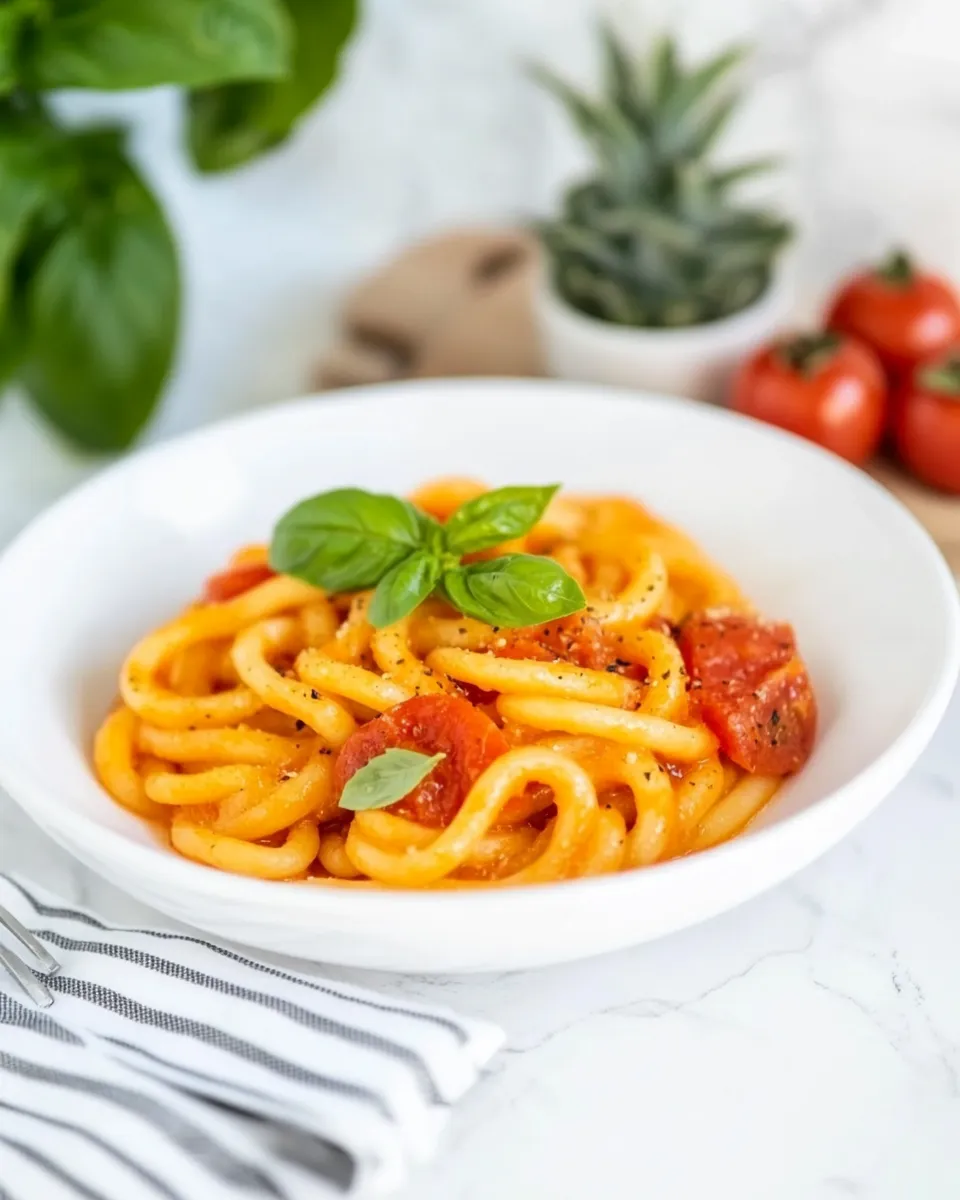
Bucatini Pomodoro
Equipment
- Large Pot
- Skillet
- Wooden Spoon
- Colander
- Knife
- Cutting Board
Ingredients
- 1 medium-large onion finely minced
- 2 cans organic whole plum tomatoes 15 oz (400 g) each, or canned cherry tomatoes
- 2 tablespoons extra-virgin olive oil
- 8 fresh basil leaves divided (use 6 while cooking and remaining for finishing)
- sea salt and black pepper to taste
- 17.06 oz bucatini pasta
Instructions
- Heat 2 tablespoons olive oil in a skillet over medium-low heat.
- Add the finely minced onion and cook, stirring occasionally, until translucent, about 4–5 minutes.
- Add the canned tomatoes with their juices to the skillet and gently crush them with a wooden spoon.
- Season with salt and pepper and add 6 basil leaves, cover, and simmer on low for 15 minutes, stirring occasionally, until the sauce is creamy but still slightly chunky.
- Meanwhile, bring a large pot of lightly salted water to a boil and cook the bucatini according to package directions; for al dente, drain 2–3 minutes before the package time if desired.
- Remove the sauce from the heat, stir in the remaining basil leaves, then add the drained bucatini to the skillet and toss to combine.
- Adjust seasoning with additional salt and black pepper to taste, drizzle with a little extra-virgin olive oil if desired, and serve.
Notes
- You can remove tomato seeds before cooking to reduce bitterness.
- If the sauce tastes too acidic, add a bay leaf while it cooks or a pinch of sugar.