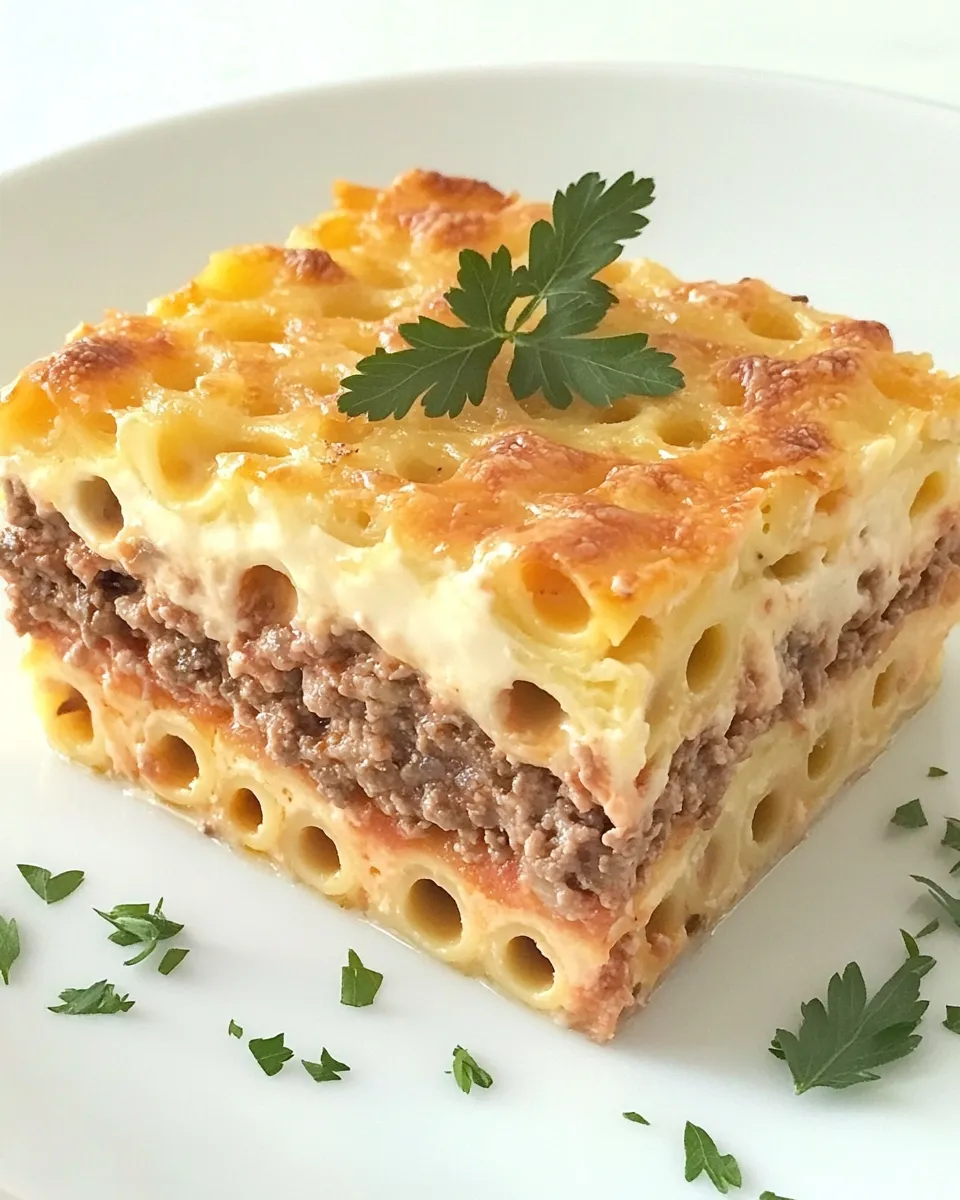
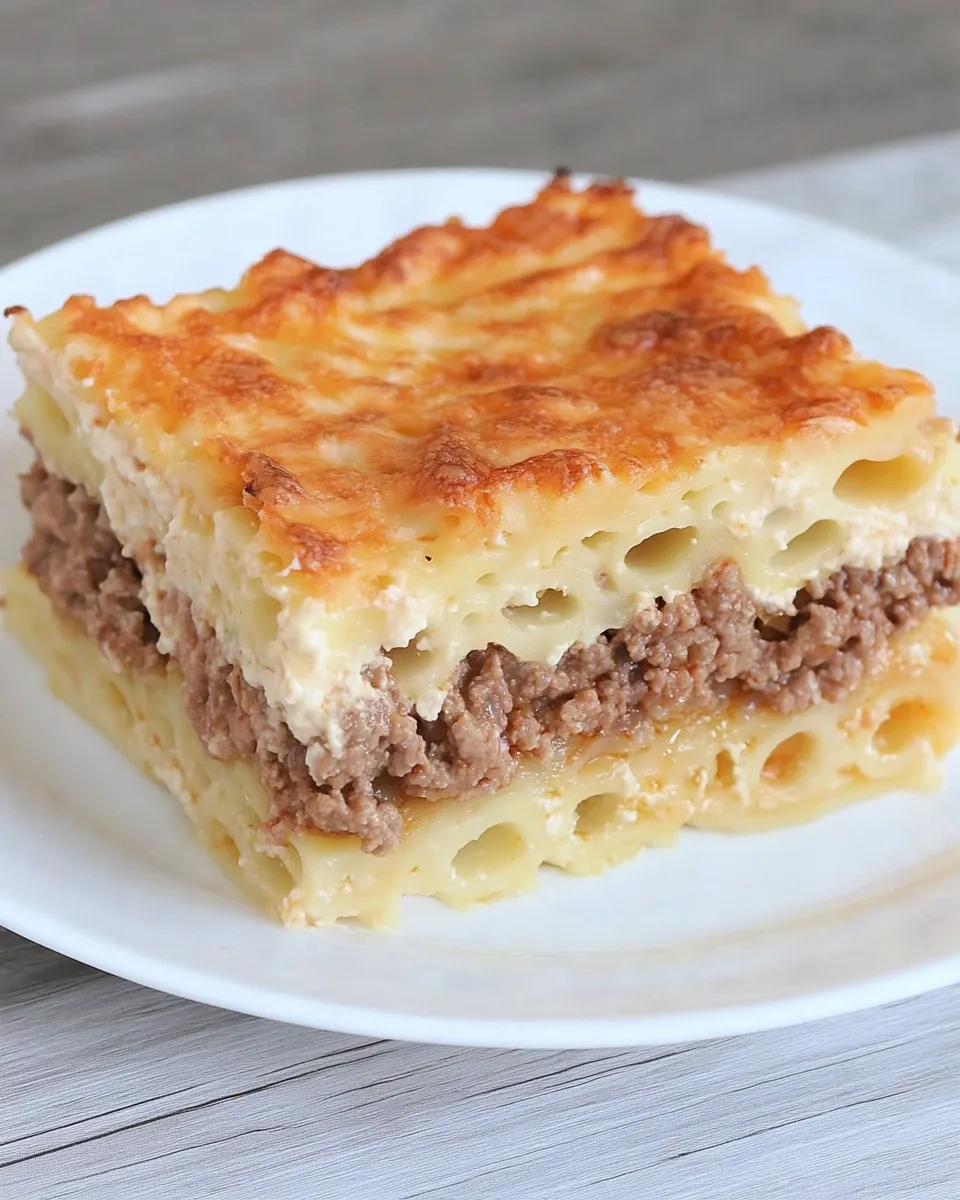
There are some dishes that feel like a warm embrace: layered, cheesy, and aromatic. Pastitsio (Greek Lasagna) is one of those classics. It’s a comforting, baked pasta casserole that layers a rich meat sauce with a smooth, custardy béchamel and bouncy pasta — all finished with a gratin of salty, melty cheese. This version follows a trusted home-kitchen approach with straightforward steps and pantry-friendly ingredients so you can make a satisfying weeknight dinner or a celebratory family meal.
Why you’ll love this Pastitsio (Greek Lasagna)
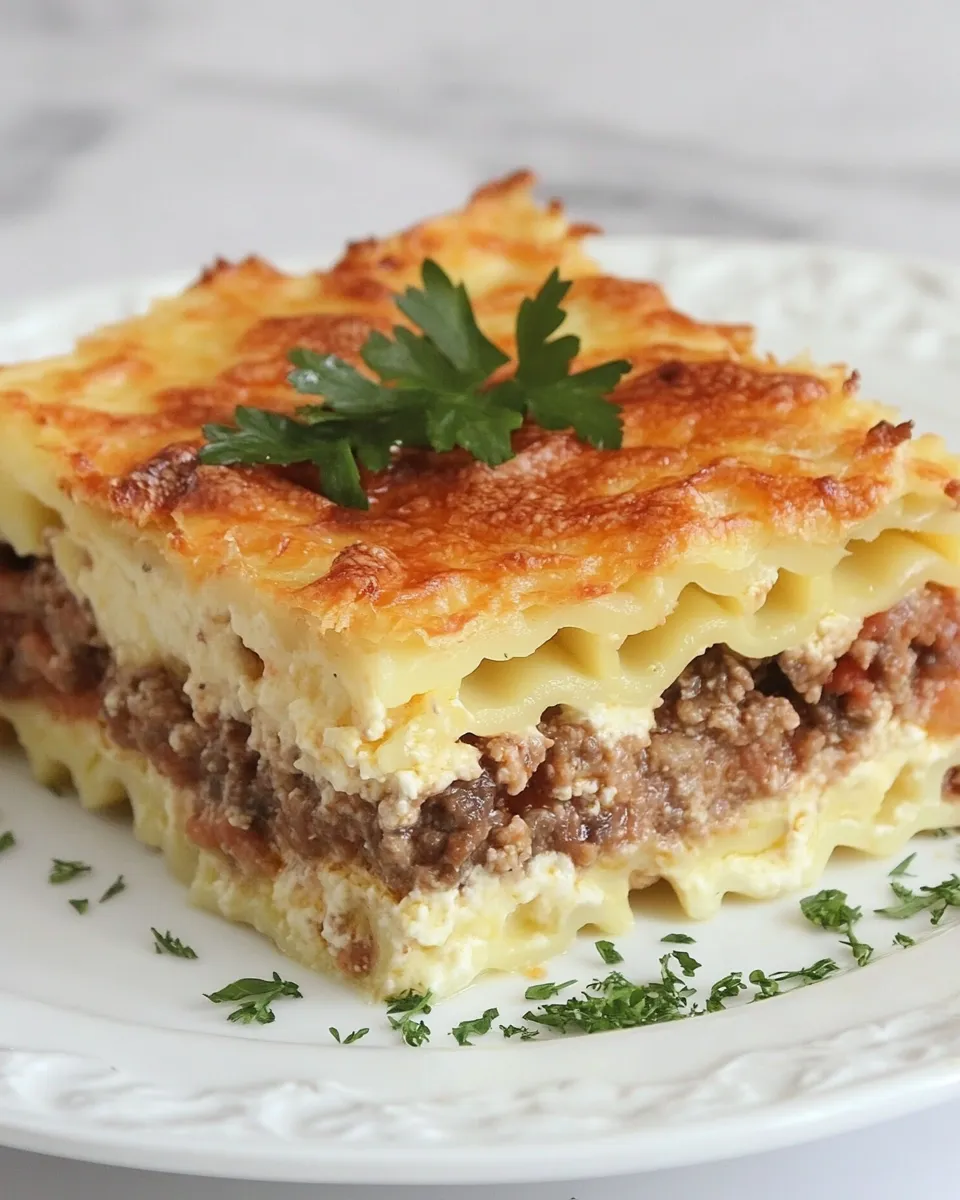
It balances textures — tender pasta, savory meat, and a silky sauce — while bold Mediterranean spices make every bite unmistakable. It’s also flexible: swap cheeses, make the meat mixture in advance, or portion and freeze slices for later. The instructions below walk you through each stage: béchamel first (so it cools slightly), then the meat sauce, cooking the pasta just right, and finally assembling and baking to golden perfection.
Ingredients
- 6 tablespoons unsalted butter
- ¾ cup all-purpose flour
- 1 quart whole milk, warmed until hot
- 1½ teaspoons salt
- 3 large eggs
- 4 tablespoons unsalted butter
- 2 medium onions, chopped
- 2 pounds 90% lean ground beef
- 1⁄8 teaspoon ground cinnamon
- salt and pepper, to taste
- ½ cup water
- 2 tablespoons tomato paste
- 1 pound ziti pasta
- 3 large eggs, beaten
- 1½ teaspoons salt
- 12 to 16 ounces Kasseri or Kefalotiri cheese, grated (see notes below)
Notes on ingredients
Kasseri and Kefalotiri are traditional Greek cheeses that melt beautifully and offer a tangy-salty profile. If you can’t find them, choose a firm, semi-salty sheep’s-milk cheese or a blend that melts well — avoid very mild cheeses that won’t provide enough character.
Equipment
- Large saucepan for béchamel
- Large skillet or sauté pan for the meat sauce
- Large pot for boiling pasta
- 9×13-inch baking dish (or similar size)
- Whisk, wooden spoon, and grater
Step-by-step Directions
Below are rewritten, clear, step-by-step directions that preserve the ingredient amounts and the original preparation order. Follow them closely for a well-structured Pastitsio (Greek Lasagna) with a creamy béchamel and robust meat layer.
- Make the béchamel sauce: In a large saucepan over medium heat, melt 6 tablespoons unsalted butter. Once the butter is foaming slightly but not browned, add ¾ cup all-purpose flour. Whisk constantly for about 1 to 2 minutes to form a blonde roux — this removes the raw flour flavor but keeps the sauce pale.
- Slowly pour in 1 quart whole milk that has been warmed until hot, whisking continuously to combine and prevent lumps. Continue to cook and whisk until the sauce thickens and is smooth.
- Remove the béchamel from the heat, then whisk in 1½ teaspoons salt. Set the pan aside to cool briefly — you want the sauce warm but not piping hot when you incorporate eggs.
- Temper the eggs: Lightly beat 3 large eggs in a small bowl. Add a few spoonfuls of the warm béchamel into the eggs while whisking constantly to raise their temperature gently. Then pour the tempered egg mixture back into the béchamel, whisking quickly to create a silky, custardy sauce. Set the béchamel aside while you prepare the meat sauce.
- Cook the meat sauce: In a large skillet over medium heat, melt 4 tablespoons unsalted butter. Add 2 medium onions, chopped, and sauté until they are soft and translucent, about 6 to 8 minutes. Stir occasionally so the onions soften evenly.
- Add 2 pounds 90% lean ground beef to the skillet with the onions. Break the meat into smaller pieces with a wooden spoon and cook until browned and no longer pink. Drain any excess fat if necessary, but with 90% lean beef you’ll likely just need to continue cooking until moisture reduces slightly.
- Season the meat with 1⁄8 teaspoon ground cinnamon and salt and pepper to taste. Cinnamon is a classic aromatic in Pastitsio that adds a subtle warm note — use it sparingly so it complements rather than dominates.
- Stir in ½ cup water and 2 tablespoons tomato paste. Mix well, then reduce the heat to low and simmer the mixture until it thickens and the flavors meld, about 10 minutes. Taste and adjust salt and pepper as needed. When the sauce is done, turn off the heat and keep it warm.
- Cook the pasta: Bring a large pot of salted water to a boil. Add 1 pound ziti pasta and cook until just al dente — it should still have a slight bite because it will finish cooking in the oven. Drain the pasta thoroughly.
- Combine the pasta with the eggs and salt for the pasta layer: In a large bowl, toss the hot, drained ziti with 3 large eggs, beaten, and 1½ teaspoons salt. The eggs will coat the pasta and help bind the pasta layer as the casserole bakes.
- Assemble the Pastitsio (Greek Lasagna): Preheat the oven to 350°F (175°C). Grease a 9×13-inch baking dish lightly with butter or oil.
- Spread half of the egg-coated ziti in an even layer across the bottom of the prepared baking dish. Spoon the entire meat sauce over the pasta layer and smooth it into an even layer.
- Add the remaining pasta on top of the meat layer and press it down gently to compact the layers slightly.
- Pour the béchamel evenly over the top pasta layer, using a spatula to smooth it into a uniform coating. The béchamel should cover the pasta completely and reach near the edges for a neat finish.
- Sprinkle 12 to 16 ounces Kasseri or Kefalotiri cheese, grated, evenly over the béchamel. This will create a golden, flavorful crust as the Pastitsio bakes.
- Bake the assembled Pastitsio (Greek Lasagna) in the preheated oven for 45 to 55 minutes, or until the top is set, bubbling at the edges, and deeply golden-brown on top. If the top browns too quickly, tent loosely with aluminum foil.
- Remove the dish from the oven and allow the Pastitsio to rest for at least 20 to 30 minutes before slicing. Resting helps the layers firm up so slices hold together beautifully.
Serving and storage
Slice Pastitsio into portions and serve warm, perhaps with a crisp green salad or steamed vegetables to balance the richness. Leftovers keep well: cover and refrigerate for up to 4 days. For longer storage, cut into portions, wrap tightly, and freeze for up to 2 months. Reheat in the oven at 350°F (175°C) until warmed through to preserve the texture.
Tips for success
- Keep the béchamel smooth: Warm the milk and whisk constantly to prevent lumps. If a few small lumps form, pass the sauce through a fine-mesh sieve or use an immersion blender to smooth it.
- Don’t overcook the pasta: Aim for just-al dente so it doesn’t become mushy after baking.
- Eggs in both the béchamel and pasta help bind the casserole so slices hold their shape. Temper the eggs as instructed to avoid scrambling.
- Adjust the cheese amount within the 12–16 ounce range depending on how much crust you like. More cheese creates a thicker, saltier top.
- Use a shallow but wide baking dish (like 9×13-inch) so layers remain even and bake through consistently.
Flavor variations
For a slightly different profile, add a splash of red wine to the meat sauce while it simmers, or stir in a handful of chopped fresh parsley at the end for brightness. You can also mix some grated cheese into the pasta layer before assembling for extra cheesiness between layers.
Final notes
Pastitsio (Greek Lasagna) is a showstopping, homey casserole that rewards a little time in the kitchen with deep, layered flavor. Follow the steps in order — béchamel first, then meat sauce, then pasta, assembly, and a careful bake — and you’ll have a satisfying centerpiece for any dinner. Let it rest before slicing, and enjoy the clean, rich tang of the cheese and the warm aromatic lift of cinnamon in the meat sauce. This dish is worth the effort, and the leftovers are just as delightful the next day.
Happy cooking — and enjoy your Pastitsio (Greek Lasagna).
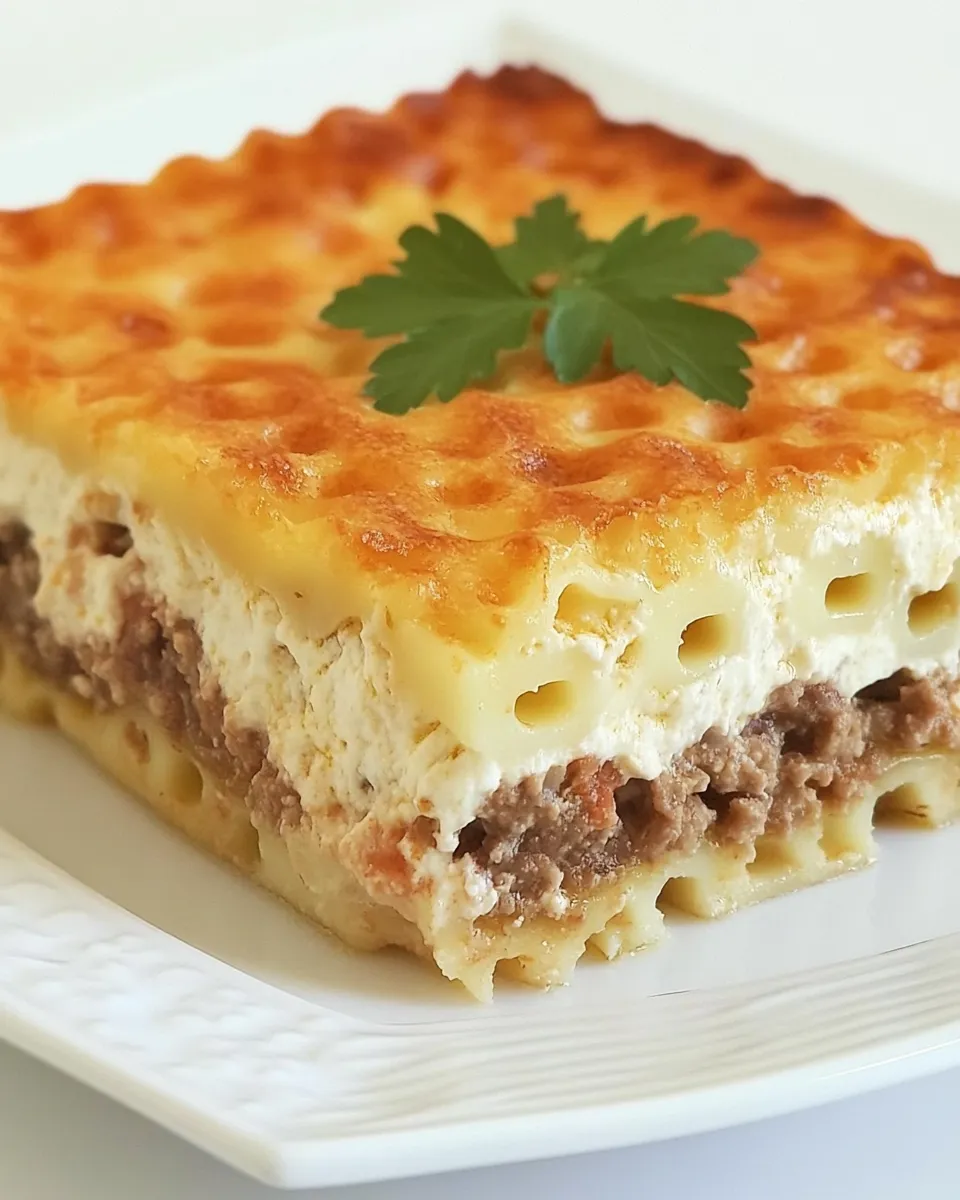
Pastitsio (Greek Lasagna)
Equipment
- Medium Saucepan
- Whisk
- Large Skillet
- Pot for pasta
- 9x13-inch deep casserole dish
- Cheese Grater
Ingredients
- 6 tablespoons unsalted butter
- 3/4 cup all-purpose flour
- 1 quart whole milk warmed until hot
- 1 1/2 teaspoons salt for béchamel
- 3 large eggs
- 4 tablespoons unsalted butter for meat sauce
- 2 medium onions chopped
- 2 pounds ground beef about 90% lean
- 1/8 teaspoon ground cinnamon
- salt and pepper to taste for meat sauce
- 1/2 cup water
- 2 tablespoons tomato paste
- 1 pound ziti pasta cooked and drained
- 3 large eggs beaten, to mix with pasta
- 1 1/2 teaspoons salt for pasta
- 12 to 16 ounces Kasseri or Kefalotiri cheese grated; or substitute Parmesan
Instructions
- Preheat the oven to 350°F (175°C) and spray a deep 9x13-inch casserole dish with nonstick spray.
- Make the béchamel: melt 6 tablespoons butter in a medium saucepan over medium heat. Whisk in 3/4 cup flour and cook briefly, then gradually whisk in the hot milk until smooth and thickened.
- Remove the béchamel from heat, stir in 1 1/2 teaspoons salt, and let it cool until lukewarm. Whisk in 3 whole eggs until combined and set aside.
- Prepare the meat sauce: melt 4 tablespoons butter in a large skillet over medium heat. Add the chopped onions and sauté until softened and golden.
- Add the ground beef to the skillet and cook, breaking up lumps, until browned. Stir in 1/8 teaspoon ground cinnamon and salt and pepper to taste.
- Stir in 1/2 cup water and 2 tablespoons tomato paste, simmer for about 5 minutes to meld flavors, then remove from heat and set aside.
- Cook the ziti according to package directions until al dente. Drain, rinse with cool water, and when cooled stir in the 3 beaten eggs and 1 1/2 teaspoons salt.
- Assemble the pastitsio: place half of the egged pasta in the bottom of the prepared dish. Sprinkle generously with about one-third of the grated cheese.
- Spoon the meat sauce in an even layer over the pasta, then sprinkle another portion of cheese over the meat.
- Add the remaining pasta on top of the meat layer and sprinkle with more cheese. Pour the béchamel sauce evenly over the top and finish by sprinkling with the remaining cheese.
- Bake for 45 minutes, or until the top is bubbly and golden. Let the pastitsio rest at room temperature for at least 20 minutes before slicing to help the layers set.
Notes
- Use a deep 9x13-inch dish to allow for the layers.
- Kasseri or Kefalotiri are traditional cheeses for the topping.
- If Greek cheeses are unavailable, substitute Parmesan as noted.