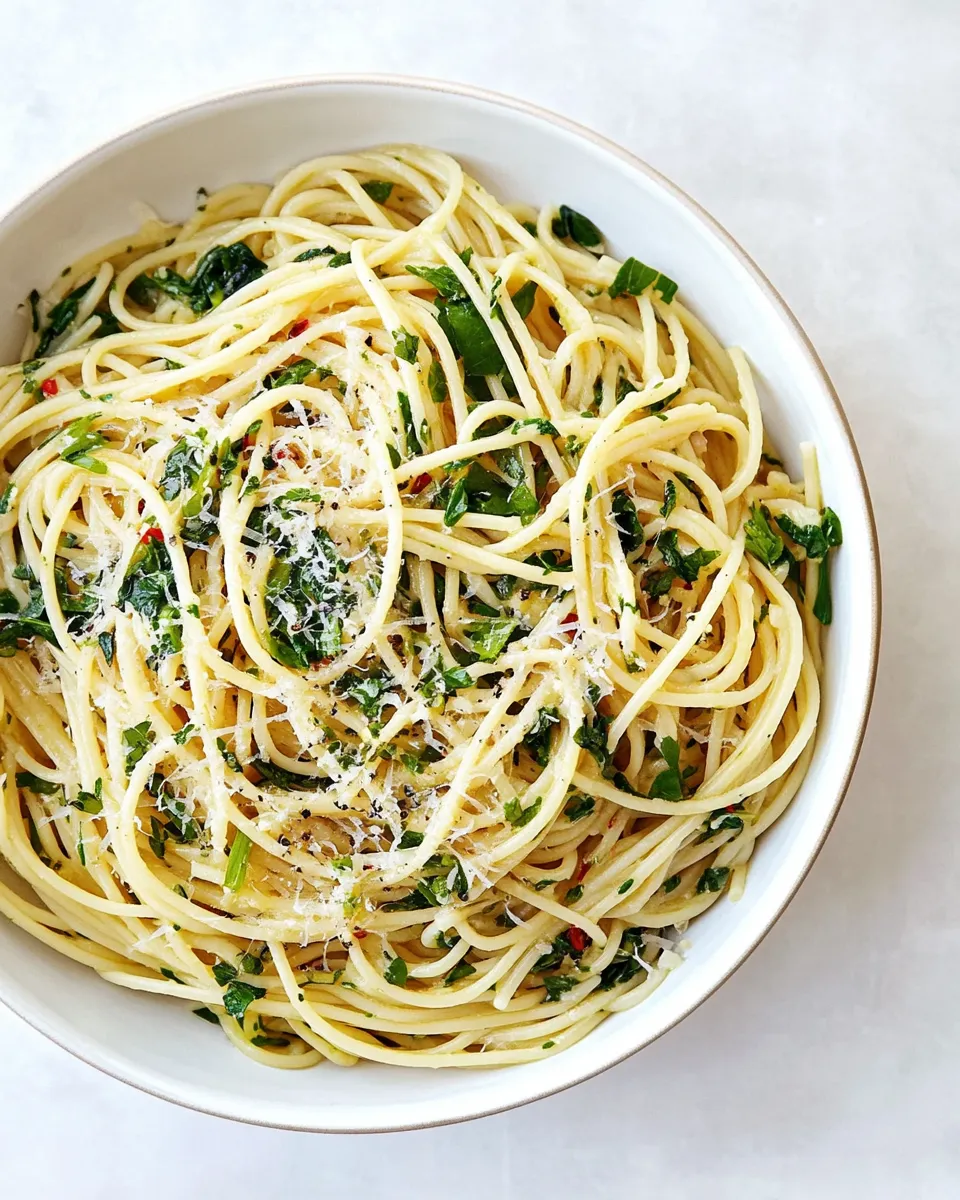
This is one of those simple, comforting dinners that sings with just a few honest ingredients. Spaghetti Aglio E Olio is a quick, rustic pasta tossed with garlic-infused olive oil, a touch of heat, and finishing brightness from parsley and salty, nutty Parmesan. It’s the kind of recipe you make when you want something impressive but effortless — the kind that tastes like care even when it takes less than 20 minutes from stove to table.
Here I’ll walk you through a dependable approach that keeps the flavors bright and balanced. The ingredient list is intentionally short, and the technique is all about timing: coaxing maximum garlic flavor into the oil without letting it burn and reserving enough starchy pasta water to marry the sauce to the spaghetti so every strand is slick and glossy.
What You’ll Need
- ▢1poundspaghetti, uncooked
- ▢6cloves garlic, thinly sliced
- ▢⅓cupextra virgin olive oil
- ▢¼teaspoonred pepper flakes
- ▢¼cupchopped parsley, optional
- ▢1cupgrated Parmesan, optional
Why This Works
The backbone of Spaghetti Aglio E Olio is simplicity. Long pasta provides surface area for the oil to coat; thinly sliced garlic releases aromatics and gentle flavor without overwhelming the dish; a little red pepper adds warmth rather than aggressive heat. The pasta water — that starchy, salty liquid — acts as the emulsifying agent that brings oil and pasta together into a silky sauce. Fresh parsley brightens and Parmesan gives savory depth and a creamy finish if you choose to add it.
Prep Tips Before You Start
- Bring a large pot of water to a rolling boil and salt it generously. The pasta water should taste like the sea; this is your primary seasoning for the noodles.
- Slice the garlic thinly and evenly so it cooks at the same rate and you avoid burnt shards.
- Measure the oil and red pepper flakes so everything is ready to go when the spaghetti is done.
- If using parsley, chop it just before serving to keep it bright and fragrant. If using Parmesan, grate it fresh for the best melting texture and flavor.
Step-by-Step Instructions
The following directions are rewritten into clear, orderly steps to make execution straightforward while keeping the original ingredient amounts and the sequence faithful to the classic preparation.
- Fill a large pot with water and bring it to a boil over high heat. Add a generous pinch of salt once it reaches a rolling boil. Add ▢1poundspaghetti, uncooked and cook according to the package instructions until just shy of al dente — usually a minute or two less than the package time — because the pasta will finish cooking in the pan with the sauce.
- While the pasta cooks, prepare the garlic and oil. Measure ▢⅓cupextra virgin olive oil into a skillet or wide sauté pan set over medium-low heat. Add ▢6cloves garlic, thinly sliced, and ▢¼teaspoonred pepper flakes to the oil. Gently warm the oil and garlic together. Maintain a low simmer: the goal is to gently infuse the oil with garlic and a hint of heat from the red pepper flakes without letting the garlic brown. Stir occasionally to keep slices separated. This will take several minutes; when the garlic turns a pale golden and smells fragrant, remove the pan from the heat. Do not let the garlic become deeply browned or crispy in the oil, as that will create bitterness.
- Reserve pasta water. Before draining the spaghetti, ladle out and save about 1 to 1 1/2 cups of the starchy cooking water. Then drain the spaghetti in a colander, shaking gently to remove excess water. Do not rinse the pasta; you want the surface starch to remain so the oil can cling.
- Return the drained pasta to the pot or place it directly into the skillet with the warm garlic oil. If your skillet is cool, slip it back onto a low burner and pour in the pasta. Add a splash (start with 1/2 cup) of the reserved pasta water to the pan with the oil and pasta. Toss or gently stir with tongs so the oil emulsifies with the starchy water and coats each strand. Continue to add more reserved pasta water a little at a time until you reach a silky sauce that clings to the spaghetti. You may not need all the reserved water; use only what’s necessary.
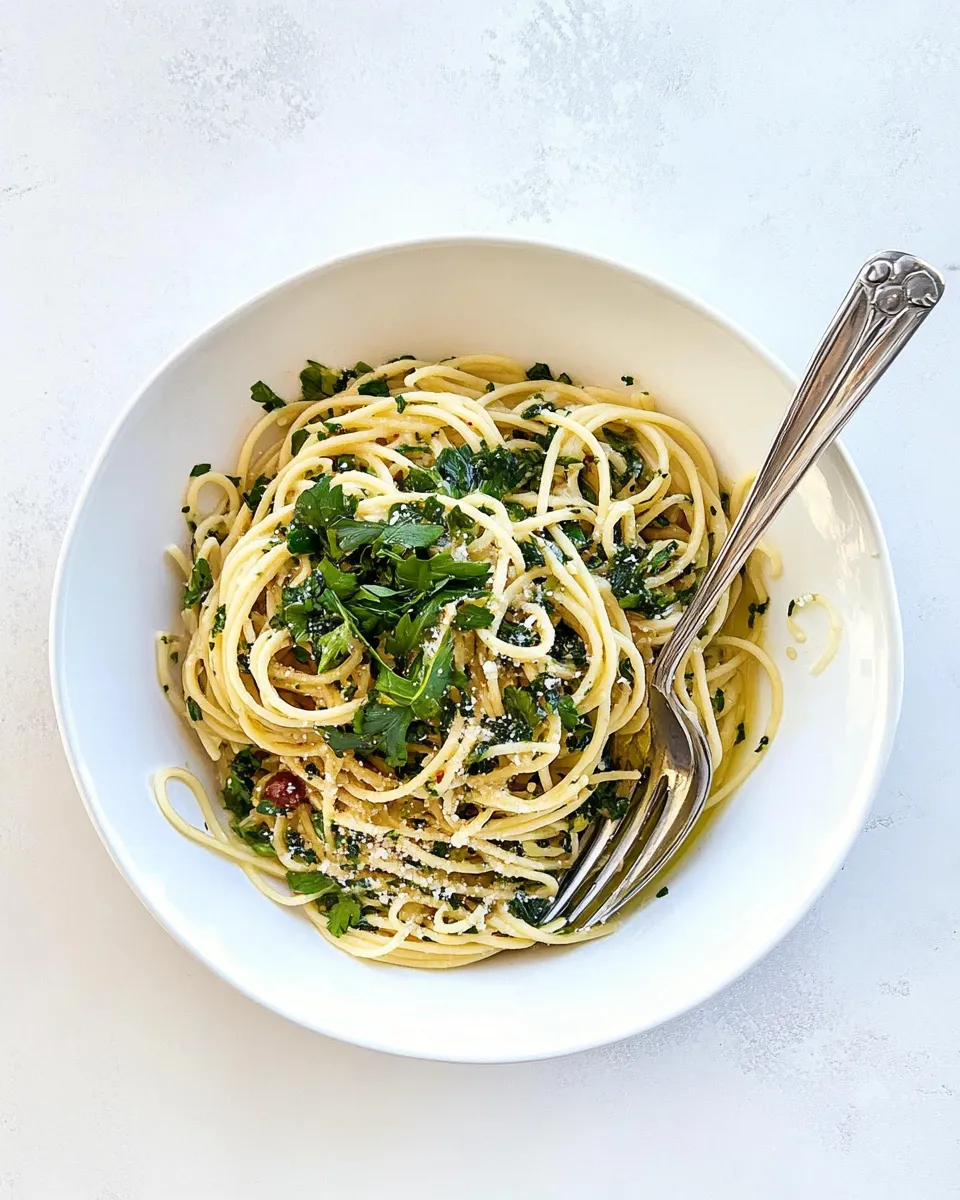
- Taste and finish. Season the pasta with a small pinch of salt if needed — remember the pasta was cooked in salted water and additional seasoning may not be necessary. If using ▢¼cupchopped parsley, stir it in now for a bright, herbaceous lift. If using ▢1cupgrated Parmesan, remove the skillet from direct heat and sprinkle the cheese over the pasta, then toss or stir so the cheese melts into the sauce, adding richness and a creamy texture. Serve immediately while warm and glossy.
Serving Suggestions
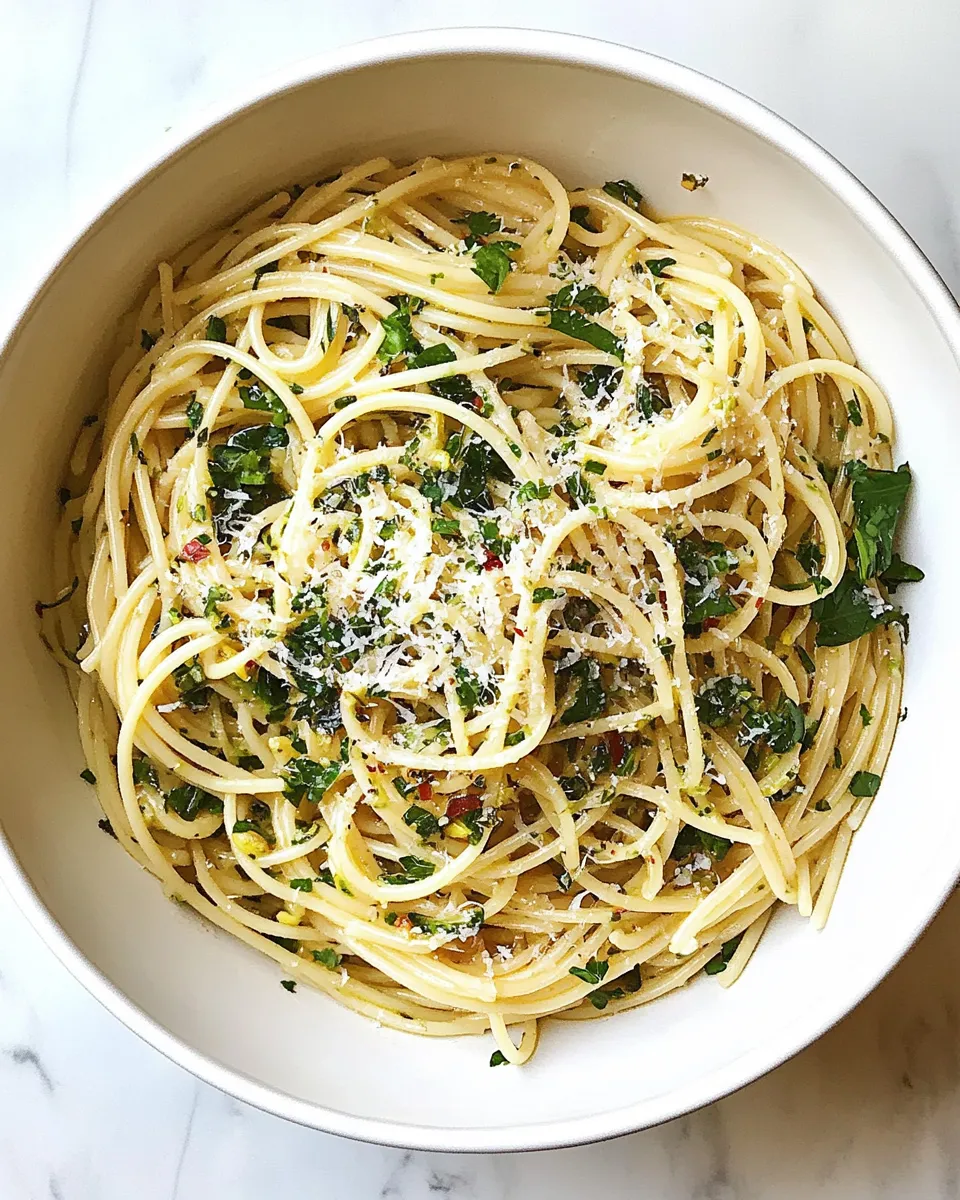
Spaghetti Aglio E Olio is served best straight from the pan while the sauce is warm and clings to the strands. Offer extra Parmesan at the table for people who want more, and a small dish of red pepper flakes for anyone who likes an added kick. A wedge of lemon on the side is a nice option if you want a bright citrus finish — squeeze sparingly so it enhances rather than overwhelms the simplicity.
Flavor Variations
- Bright citrus: Add a teaspoon of lemon zest or a light squeeze of lemon juice just before serving to lift the flavors.
- Nutty crunch: Toast a handful of pine nuts or slivered almonds and sprinkle them on top for texture contrast.
- Green boost: Stir in a cup of baby arugula or blanched spinach at the end to wilt gently into the pasta.
- Umami depth: For a deeper savory taste, add a teaspoon of finely chopped preserved lemon or a splash of white wine to the garlic oil while it warms — let the alcohol reduce briefly.
Common Mistakes and How to Avoid Them
- Burning the garlic: Keep the heat low when cooking garlic in oil. Garlic goes from golden and fragrant to bitter quickly. Remove from heat as soon as it becomes pale gold.
- Too dry a sauce: Don’t throw away all the pasta water. That starchy liquid is the key to a silky sauce that clings to the spaghetti. Add it gradually until you reach the right consistency.
- Underseasoned noodles: Salt the pasta cooking water generously so the noodles themselves carry seasoning, rather than relying solely on the sauce.
- Overcooking the spaghetti: Finish it al dente in the pan with the sauce. This keeps the noodles with a satisfying bite and prevents mushiness.
Make-Ahead and Leftovers
This dish is best enjoyed immediately, but if you have leftovers, store them in an airtight container in the refrigerator for up to 2 days. When reheating, add a splash of water or olive oil and warm gently in a skillet so the sauce loosens and the pasta regains its glossy texture. Avoid microwaving without moisture, which can dry out the noodles and stiffen the oil.
Why It Feels Homemade
There’s a reason Spaghetti Aglio E Olio is a pantry favorite: it’s honest food. The flavors come from basic ingredients treated with care, not from complex techniques. Slicing garlic thinly rather than mincing produces little ribbons that bloom in hot oil and then soften around the noodles. A modest amount of oil, properly emulsified with pasta water, coats every strand and carries the seasoning. These small details are what make a simple plate feel intentional and homey.
Quick Recap
In short: cook ▢1poundspaghetti, uncooked until almost al dente; warm ▢⅓cupextra virgin olive oil with ▢6cloves garlic, thinly sliced and ▢¼teaspoonred pepper flakes over low heat until fragrant and pale golden; reserve pasta water; combine pasta and oil, adding reserved water as needed to create a silky sauce; finish with ▢¼cupchopped parsley and/or ▢1cupgrated Parmesan if you like. Toss and serve immediately.
Notes on Ingredients
- Spaghetti: Use your favorite brand. Thinner spaghetti will cook faster, so adjust timing accordingly.
- Garlic: Fresh cloves are essential for the brightest flavor. Pre-minced jar garlic has a different flavor profile and lacks the texture of thin slices.
- Extra virgin olive oil: Choose a good-quality oil you enjoy for dipping bread; its flavor will come through.
- Red pepper flakes: Adjust to taste. The quarter-teaspoon in the recipe gives a gentle warmth; increase if you like more heat.
- Parsley and Parmesan: Both are optional but recommended for a finishing lift and savory depth.
Final Thoughts
Spaghetti Aglio E Olio is the kind of recipe that proves great food doesn’t require fuss. It’s flexible, reliable, and rewarding. With a little attention to timing and an emphasis on quality ingredients, you’ll have a dish that tastes like something you’d order at a restaurant but with the comfort of homemade cooking. Keep the recipe in your repertoire for busy weeknights, last-minute guests, or any time you want a satisfying meal that comes together in minutes.
Enjoy the simple luxury of garlic, oil, and perfectly cooked pasta — the sort of meal that warms you without making a fuss.
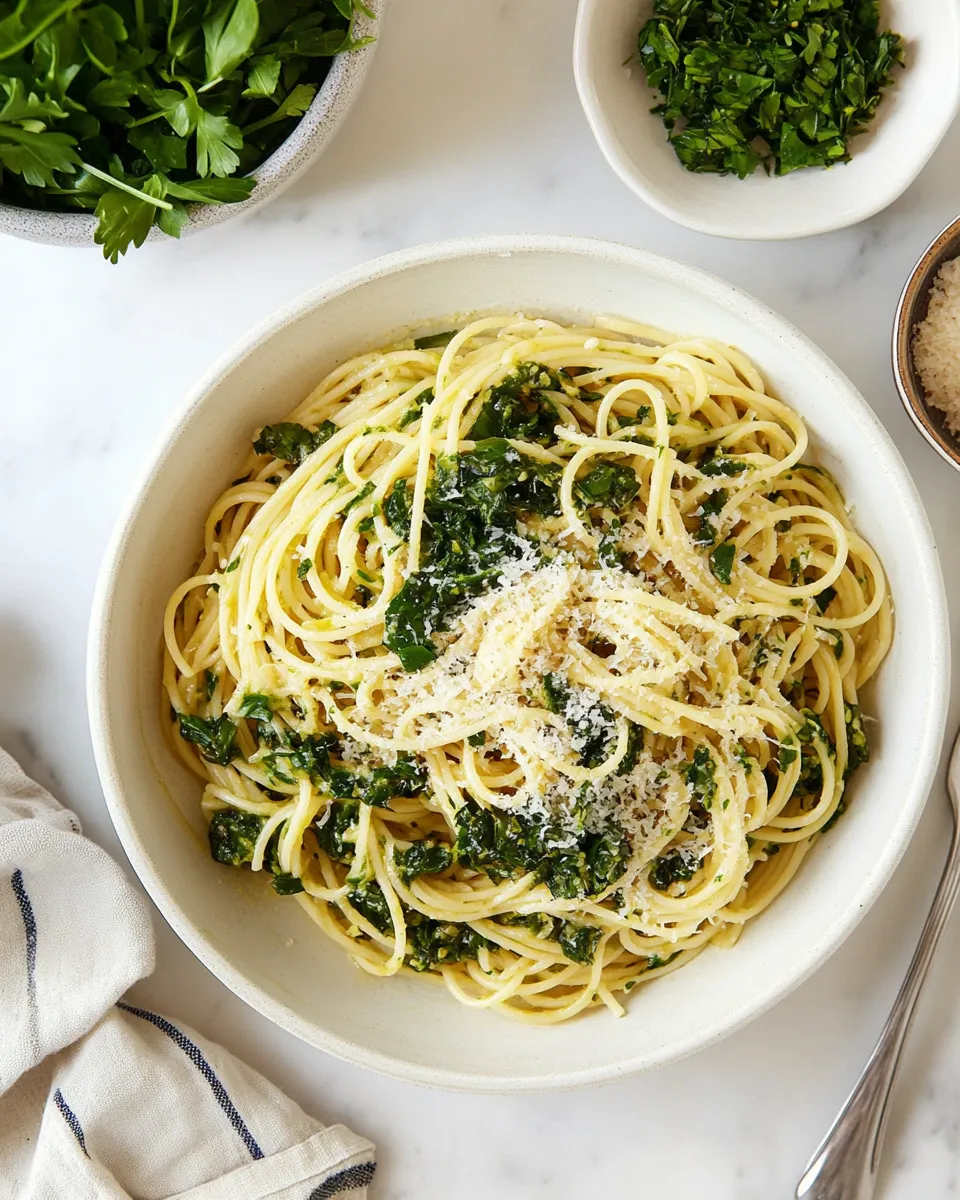
Spaghetti Aglio E Olio
Equipment
- Large Pot
- Large Skillet
- Tongs or pasta fork
- Knife
- Cutting Board
Ingredients
- 1 pound spaghetti uncooked
- 6 cloves garlic thinly sliced
- 1/3 cup extra virgin olive oil
- 1/4 teaspoon red pepper flakes
- 1/4 cup parsley chopped, optional
- 1 cup Parmesan grated, optional
Instructions
- Bring a large pot of water to a rolling boil and add a generous amount of salt, then add the spaghetti and cook until al dente according to package directions.
- While the pasta cooks, heat the olive oil in a large skillet over medium to medium-low heat.
- Add the thinly sliced garlic to the oil and stir constantly until the garlic is just golden and fragrant, being careful not to burn it.
- Stir in the red pepper flakes, then remove the skillet from the heat.
- When the pasta is done, reserve at least 1/2 cup of the cooking water and drain the spaghetti.
- Transfer the hot pasta to the skillet with the garlic oil, add at least 1/2 cup of the reserved pasta water, and toss thoroughly to coat; add more pasta water as needed to create a silky sauce.
- If using, add the chopped parsley and grated Parmesan and toss lightly to combine.
- Serve immediately.
Notes
- Nutrition is calculated using the parsley and parmesan cheese.