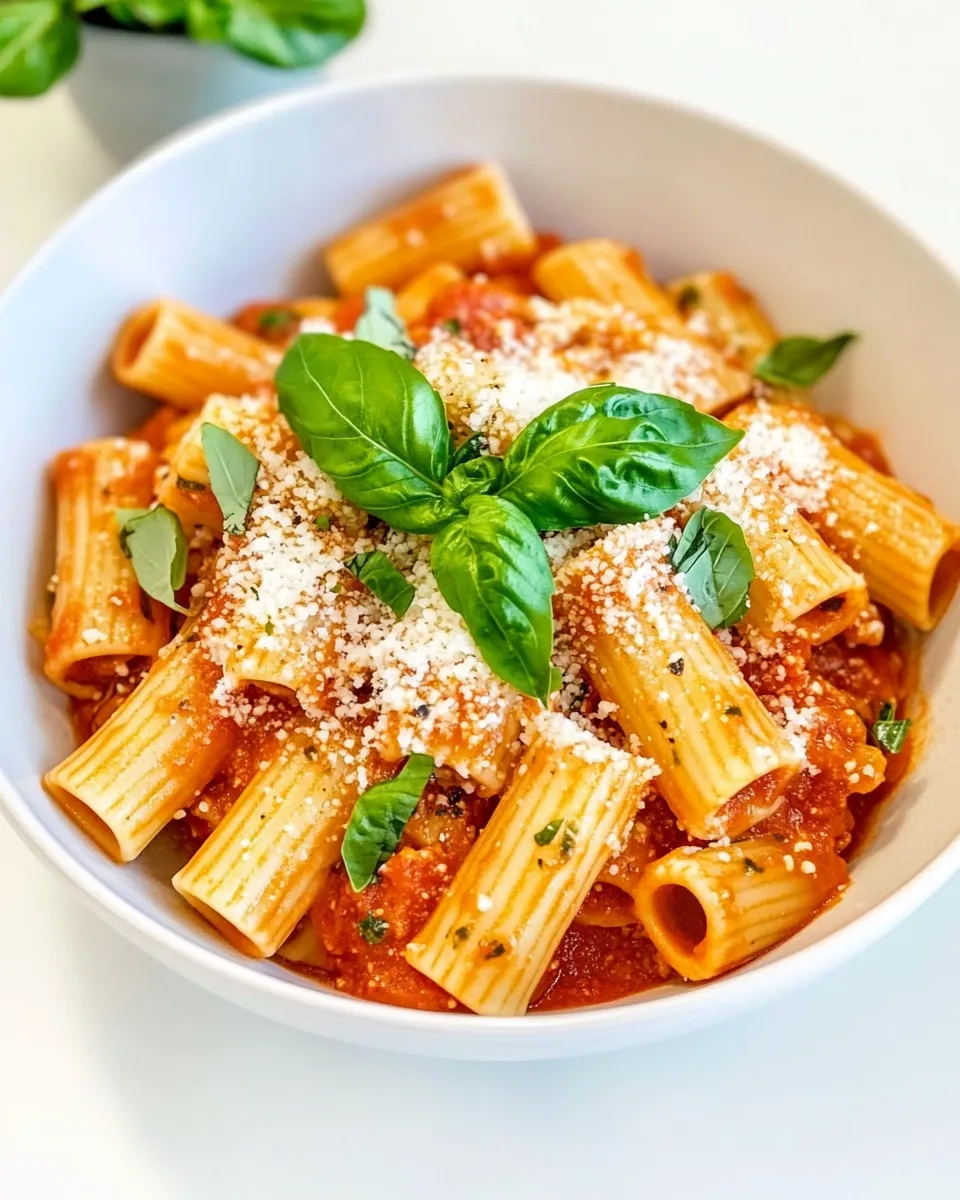
There’s something irresistibly comforting about a simple tomato sauce clinging to ridged tubes of rigatoni. This Rigatoni Pomodoro recipe celebrates bright, sun-ripened tomatoes, fragrant garlic, and fresh basil — made with just a handful of pantry staples and a short time on the stove. It’s the kind of meal that feels like home: unfussy, flavorful, and perfect for both weeknight dinners and casual gatherings.
Throughout this article I’ll walk you through why each ingredient matters, share helpful tips for getting silky tomato sauce, and give you clear, step-by-step directions so you can make this dish with confidence. The recipe uses 6 cloves garlic crushed/minced, ¼ cup extra virgin olive oil, one 28 oz (800 g) can of whole peeled Italian tomatoes, 8 fresh basil leaves, salt and pepper, a pinch of sugar, 1 tablespoon salt for the pasta water, and 10 oz rigatoni. Finish with extra fresh basil, grated parmesan, and a drizzle of extra virgin olive oil.
Why this Rigatoni Pomodoro works
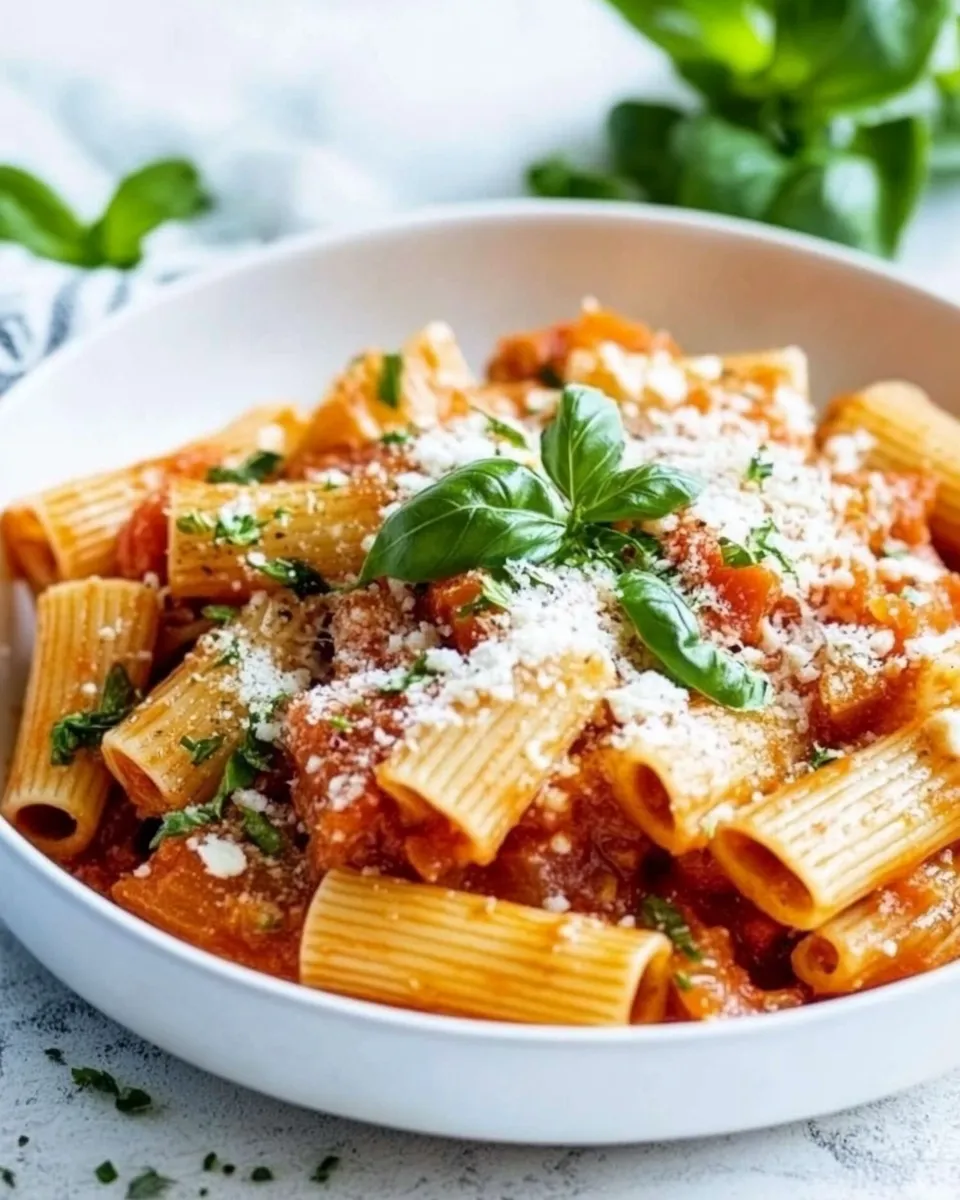
This dish is a study in balance. The crushed garlic infused into warm olive oil creates an aromatic base that mellows and sweetens as it cooks. Canned whole peeled Italian tomatoes bring consistent, ripe tomato flavor and become luxuriously silky when broken down by hand or with a spoon. A small pinch of sugar counteracts acidity and helps round out the flavors without making the sauce noticeably sweet. Fresh basil added near the end lifts the sauce with herbaceous fragrance, while the ridges and tubes of rigatoni catch pockets of the sauce so every bite feels satisfying.
Ingredients
- 6 cloves garlic, crushed/minced
- ¼ cup extra virgin olive oil
- 1 can whole peeled Italian tomatoes (28 oz / 800 g)
- 8 fresh basil leaves
- salt and pepper (to taste)
- sugar (Note 1)
- 1 tablespoon salt
- 10 oz rigatoni (Note 2)
- salt and pepper (for seasoning pasta and finished dish)
- fresh basil for garnish
- grated parmesan for garnish
- extra virgin olive oil for garnish
Notes
- Note 1: Use a small pinch of sugar — just enough to balance the tomato acidity. Start with about 1/8 to 1/4 teaspoon and adjust to taste.
- Note 2: Ten ounces rigatoni is roughly 280 grams and serves about 2 to 3 people depending on appetite and sides.
Equipment
- Large pot for boiling pasta
- Large sauté pan or skillet with a lid
- Wooden spoon or spatula
- Colander
- Can opener
- Cutting board and knife
Prep
- Crush or finely mince the 6 cloves of garlic and set aside.
- Open the 28 oz can of whole peeled Italian tomatoes and pour into a bowl. Reserve the juices.
- Pick and stack the 8 fresh basil leaves, roll them gently, and thinly slice into ribbons (chiffonade). Keep a few whole leaves for garnish.
- Measure the olive oil, salt, sugar, and rigatoni so everything is ready to go.
Instructions
- Bring a large pot of water to a rolling boil. Add 1 tablespoon salt to the water. This seasons the pasta from the inside out and enhances the sauce when mixed together.
- While the water heats, warm a large sauté pan over medium heat. Pour in ¼ cup extra virgin olive oil and let it gently warm for 30 seconds to a minute — the oil should shimmer but not smoke.
- Add the 6 cloves garlic, crushed/minced, to the warm oil. Sauté for about 45 seconds to 1 minute, stirring constantly, until the garlic is fragrant and just beginning to color. Be careful not to let it brown or burn; burnt garlic will taste bitter.
- Turn the heat down to medium-low. Carefully add the whole peeled Italian tomatoes (including their juices) to the pan. Use a wooden spoon or spatula to break the tomatoes up into smaller pieces as they heat. Continue to crush and stir until the tomatoes are roughly broken down but still have some texture.
- Increase the heat to bring the sauce to a gentle simmer, then reduce to maintain a low simmer. Add a small pinch of sugar (see Note 1) to balance acidity, and season with salt and pepper to taste. Simmer the sauce, uncovered, for 10–12 minutes, stirring occasionally so it doesn’t stick to the pan. The sauce should thicken slightly and develop a bright, concentrated tomato flavor.
- When the pasta water returns to a boil, add the 10 oz rigatoni and cook according to the package directions until al dente. Stir occasionally to prevent sticking. Reserve about ½ cup of the starchy pasta water just before draining — this will help marry the sauce and pasta.
- Once the sauce has simmered and tastes balanced, stir in the sliced ribbons of 8 fresh basil leaves. Let the basil wilt into the sauce for about 1 minute so the aroma infuses the tomatoes.
- Drain the rigatoni in a colander, then transfer it directly into the pan with the tomato sauce. Toss the pasta and sauce together over low heat for 1–2 minutes, adding a splash of the reserved pasta water if the sauce needs loosening. The starch in the pasta water helps the sauce cling to the rigatoni for a silky finish.
- Taste and adjust seasoning with salt and pepper as needed. If you want a little brighter basil flavor, tear in a few additional small basil leaves before finishing.
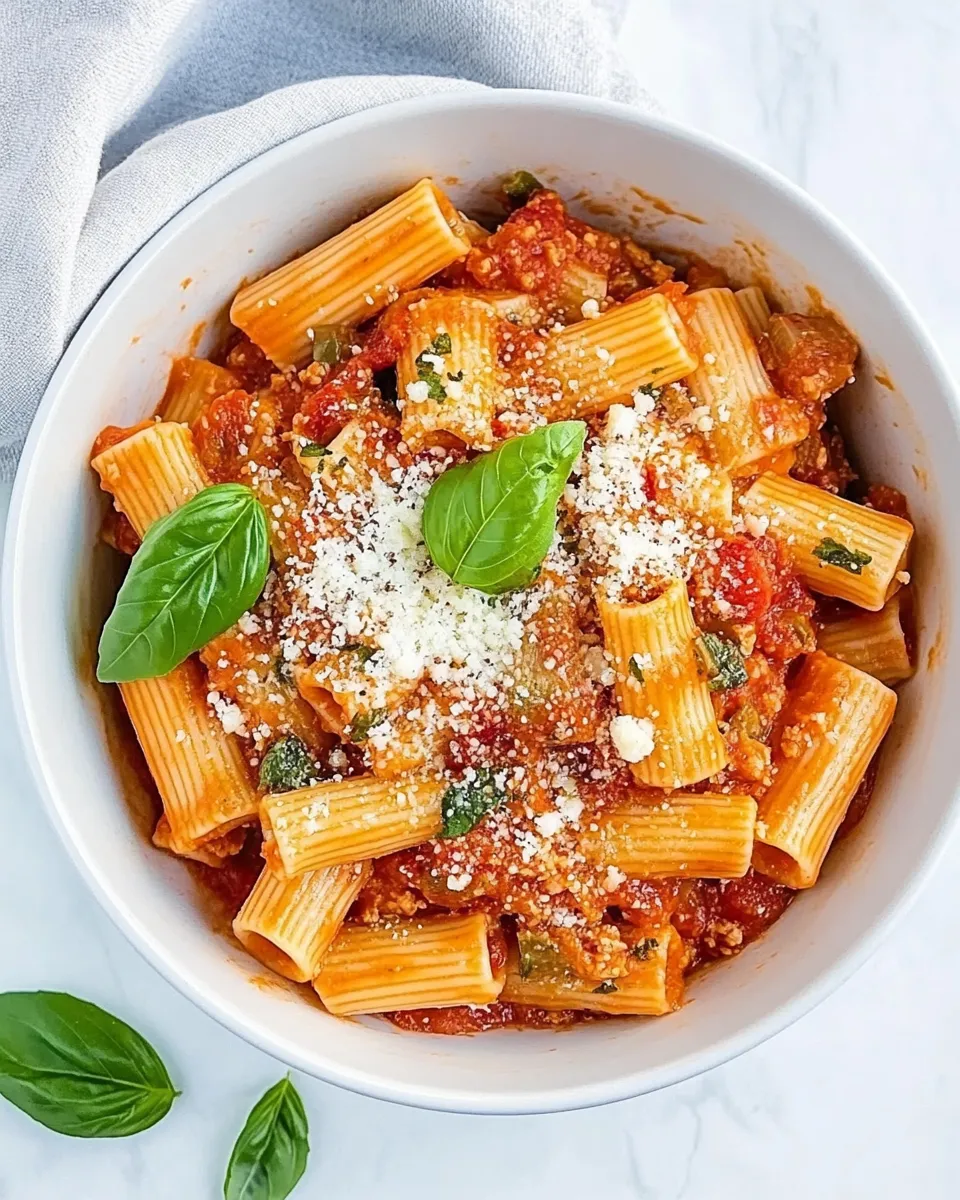
- Divide the pasta among warmed bowls. Garnish each serving with grated parmesan, a drizzle of extra virgin olive oil, and a few fresh basil leaves. Serve immediately and enjoy.
Troubleshooting and tips
- If the garlic starts to brown too quickly, reduce the heat immediately and continue cooking gently — the flavor should be sweet and aromatic, not bitter.
- If the sauce tastes flat, a tiny squeeze of lemon or an extra pinch of salt can lift it. Add sparingly and taste as you go.
- Reserve pasta water every time you cook pasta. It’s an inexpensive, effective way to make a cohesive sauce that clings to noodles.
- For a smoother sauce, use an immersion blender for a few quick pulses after the tomatoes have simmered. For a rustic texture, simply crush the tomatoes by hand while they cook.
- Use good-quality canned whole peeled Italian tomatoes for the best flavor. They’re harvested at peak ripeness and yield a more balanced sauce than many fresh tomatoes out of season.
Make-ahead and storage
Tomato sauce can be made in advance and stored in an airtight container in the refrigerator for up to 4 days. Reheat gently on the stove with a splash of water or olive oil to loosen it. Cooked rigatoni is best eaten the same day, but you can toss leftover pasta with a little oil before refrigerating to keep noodles from sticking. Reheat gently on the stove or briefly in the microwave with a sprinkle of water and a cover to trap steam.
Serving suggestions
Rigatoni Pomodoro is lovely on its own with a simple green salad and crusty bread to mop up the sauce. For a heartier meal, add a bowl of roasted vegetables or a plate of sautéed greens. A sprinkling of red pepper flakes at the table adds a pleasant kick for those who like a touch of heat.
A final note
At its core, Rigatoni Pomodoro is about letting quality ingredients shine. With minimal hands-on time and a few thoughtful steps, you’ll have a sauce that is bright, balanced, and satisfying. The aroma of garlic and basil mingling with simmered tomatoes is comfort in a bowl — simple, honest, and utterly delicious.
Happy cooking, and enjoy every bite of your Rigatoni Pomodoro.
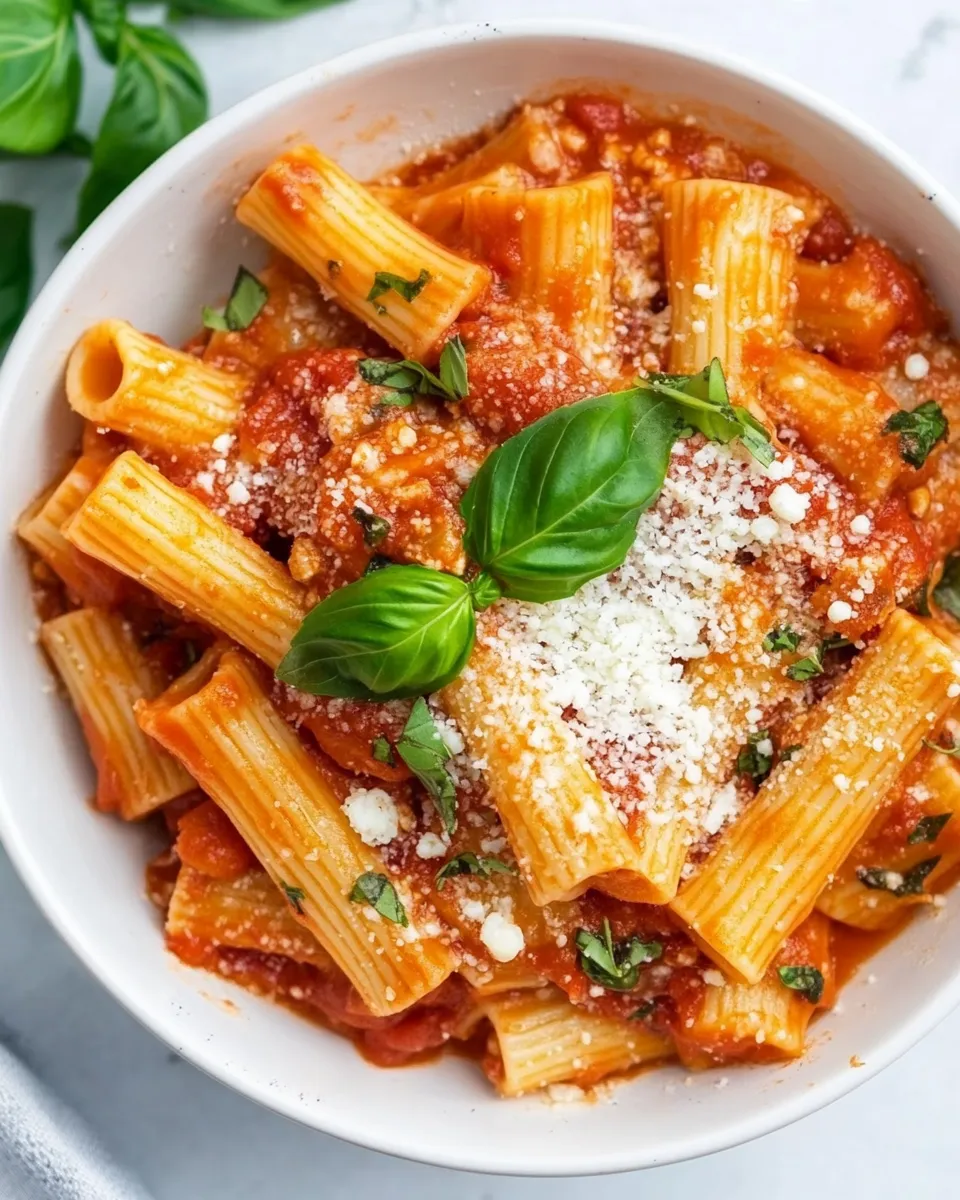
Rigatoni Pomodoro
Equipment
- large sauté pan or skillet
- saucepan or large pot for pasta
- Wooden Spoon or Spatula
- Blender or immersion blender
- Colander
- Tongs
Ingredients
- 6 cloves garlic crushed or minced
- 1/4 cup extra virgin olive oil
- 1 can (28 oz / 800 g) whole peeled Italian tomatoes with their juice
- 8 fresh basil leaves
- salt and pepper to taste; plus 1 tablespoon salt for pasta water
- 1 tablespoon salt for pasta water
- 1 tablespoon sugar optional, see notes
- 10 oz rigatoni
- fresh basil for garnish
- grated Parmesan for garnish
- extra virgin olive oil for garnish (optional drizzle)
Instructions
- Heat 1/4 cup extra virgin olive oil in a large sauté pan over low heat. Add the crushed garlic and cook gently for 2–3 minutes until fragrant and soft, taking care not to brown it.
- Add the whole peeled tomatoes (including their juice) and 8 basil leaves to the pan. Break the tomatoes up with the back of a spoon or spatula.
- Simmer the tomatoes over low heat for about 20 minutes, stirring occasionally and breaking down the tomatoes until saucy.
- Carefully puree the sauce until smooth using a blender or immersion blender, then return the sauce to the pan and simmer over low heat for an additional 10 minutes. Season with salt, pepper, and sugar to taste.
- Bring a large pot of salted water to a boil (use about 1 tablespoon salt). Add the rigatoni and cook for 1 minute less than the package instructions, reserving 1 cup of the pasta cooking water before draining.
- Add the drained rigatoni to the sauce and toss with tongs over low heat until the pasta is fully coated, adding reserved pasta water a little at a time if the sauce seems dry. Cook for about 1 minute to let the flavors marry.
- Taste and adjust seasoning. Serve topped with extra basil leaves, grated Parmesan, and a drizzle of extra virgin olive oil.
Notes
- If using non-Italian canned tomatoes, add a pinch of sugar to balance acidity.
- Swap rigatoni for penne or spirals if preferred.
- Alternatively use long pasta such as spaghetti or linguine.