Sheet Pan Dijon Salmon and Panko Potatoes is the kind of weeknight winner that feels a little fancy without demanding hours in the kitchen. Picture flaky, wild-caught salmon fillets brushed with a bright mustard-lemon glaze, next to crisp-tender panko potatoes with sesame crunch, and a peppery bed of greens to finish. It’s simple, flavorful, and all baked on one sheet pan for easy cleanup. The combination of grainy and smooth Dijon, fresh herbs, and a hint of cayenne brings layers of flavor that keep every bite interesting.
Why you’ll love this dish
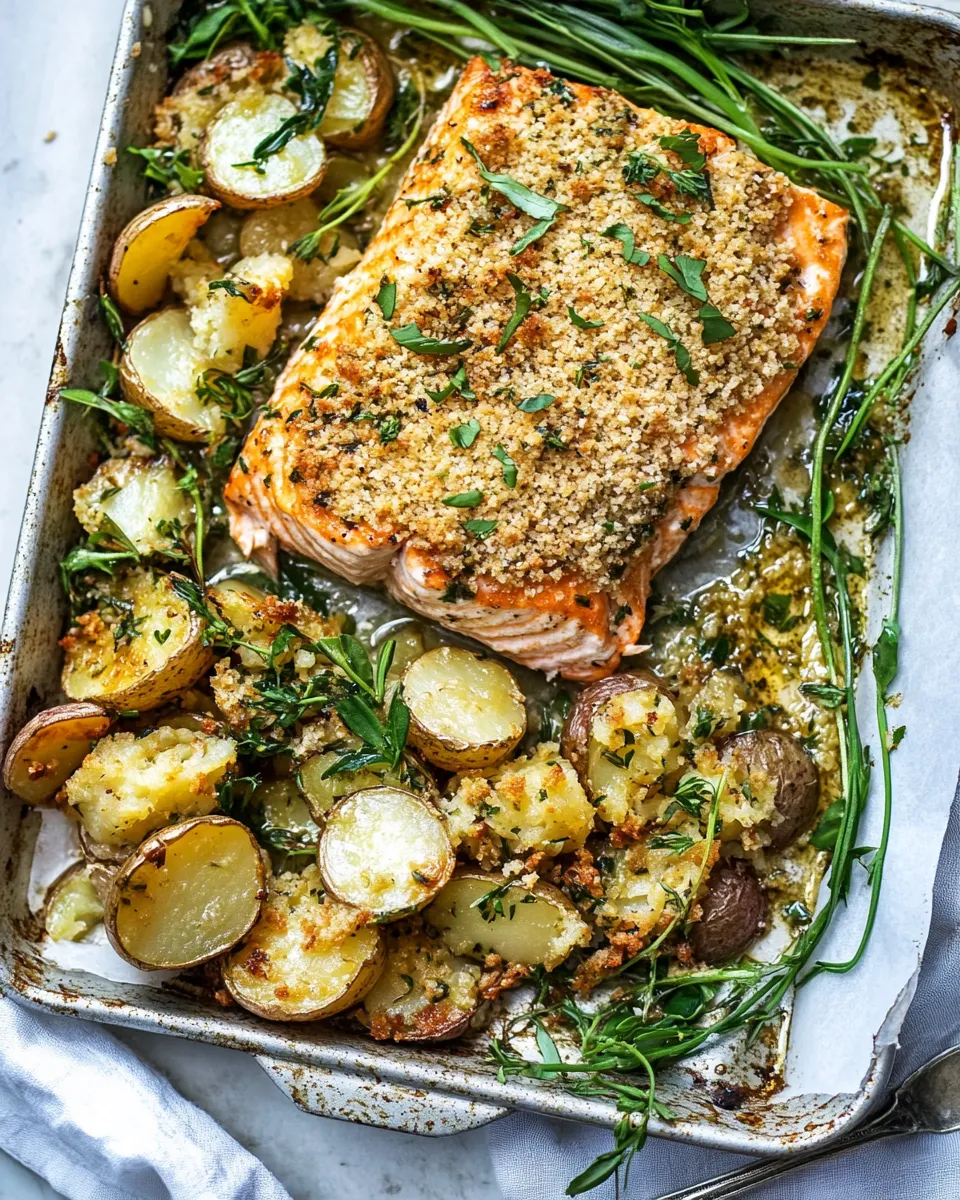
This recipe delivers a complete meal from a single pan: protein, starch, and greens. The potatoes get a golden, crunchy exterior thanks to panko and sesame seeds, while the salmon stays moist beneath a tangy mustard coating. Fresh thyme and dill brighten things up, and a quick lemon-shallot dressing ties everything together. It’s perfect for busy nights, casual dinner parties, or any evening when you want something nourishing and delicious with minimal fuss.
Ingredients
- ▢1poundpotatoes, cut into 1/2 inch chunks
- ▢6tablespoonssalted butter
- ▢salt and black pepper
- ▢2tablespoonsgrainy dijon mustard
- ▢1tablespoonsdijon mustard
- ▢2tablespoonslemon juice
- ▢1small shallot, chopped
- ▢2tablespoonsfresh chopped thyme
- ▢1/2teasponcayenne pepper
- ▢2pounds (or 4 fillets)wild-caught salmon
- ▢1/2cuppanko breadcrumbs
- ▢3tablespoonssesame seeds
- ▢1clovegarlic, chopped
- ▢2-3cupsarugula or shaved asparagus
- ▢1/4cupfresh chopped dill
Notes on ingredients and swaps
If you want to swap the greens, arugula gives a peppery lift while shaved asparagus provides a tender-crisp contrast; both work beautifully. The recipe calls for wild-caught salmon, which gives a firmer texture and pronounced flavor; feel free to use the freshest fillets you can find. The combination of grainy Dijon and smooth Dijon gives texture and depth—don’t skip either. Butter keeps the potatoes rich and golden; if you prefer a dairy-free option, use a neutral oil in the same quantity and follow the same method.
Equipment
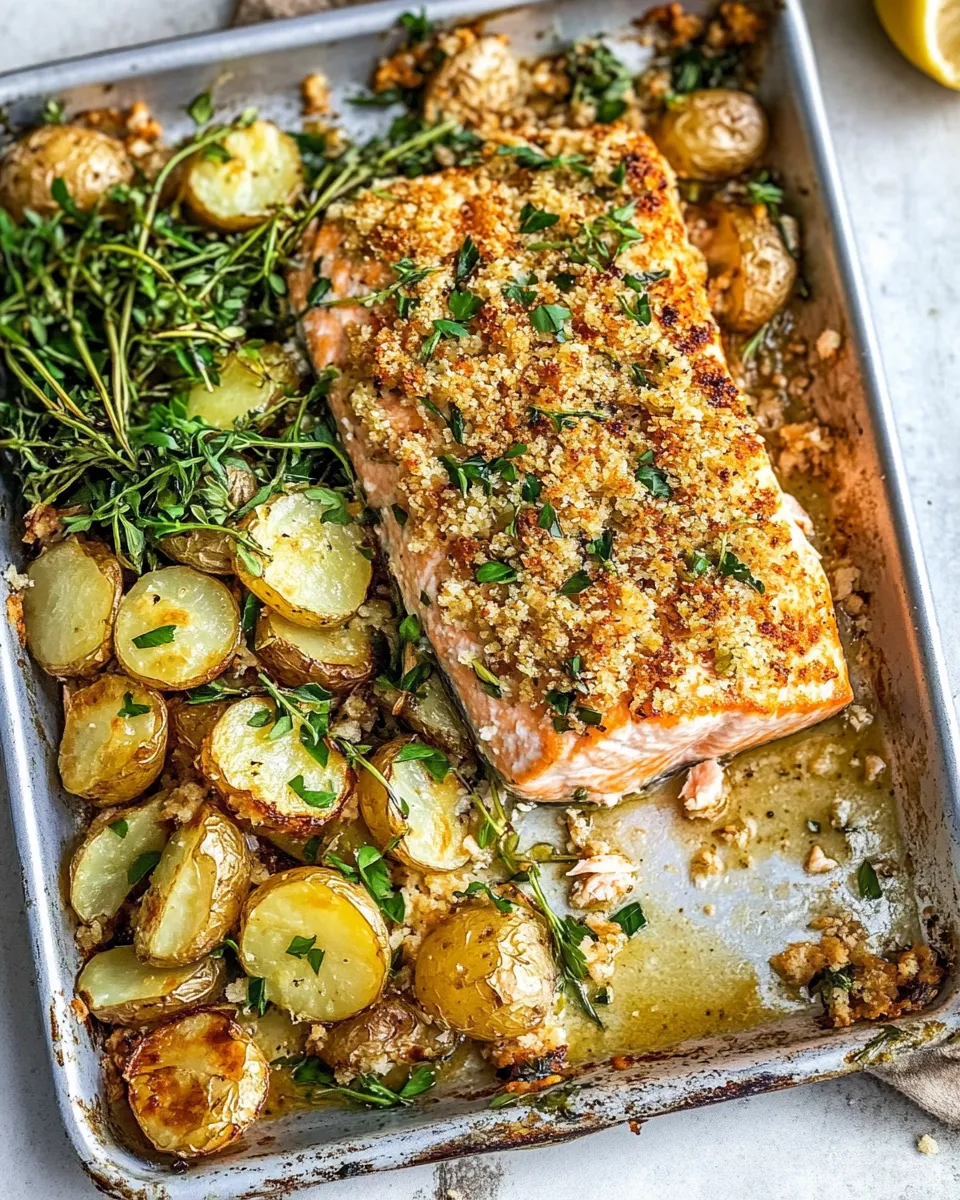
- Large rimmed baking sheet (sheet pan)
- Mixing bowls
- Small saucepan or skillet
- Sharp knife and cutting board
- Tongs or spatula
- Measuring spoons and cups
Prep and timing
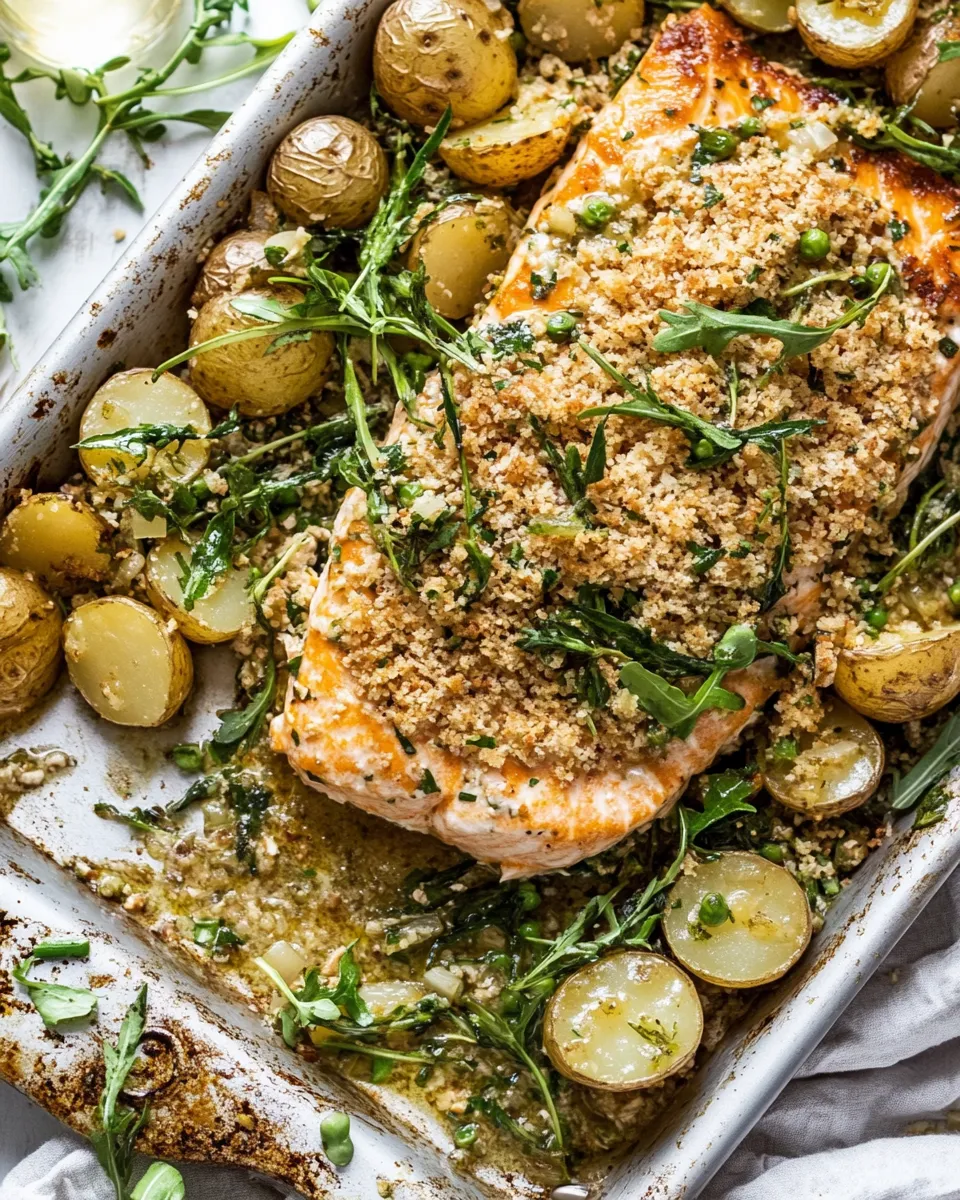
Total active time is about 20–30 minutes with roughly 25–35 minutes in the oven, depending on your oven and potato size. Most of the work is basic chopping and mixing, and the sheet pan handles the rest.
Step-by-step directions
Follow these clear, ordered steps that match the ingredient list and keep the workflow efficient. The directions are rewritten for clarity while preserving the amounts given.
- Preheat the oven to 425°F (220°C). Line a large rimmed baking sheet with parchment paper or lightly grease it so nothing sticks.
- Place 1 pound potatoes, cut into 1/2 inch chunks, into a large bowl. Melt 6 tablespoons salted butter in the microwave or in a small saucepan until fully liquid. Pour half of the melted butter over the potatoes and toss to coat. Season generously with salt and black pepper. Spread the potatoes in an even layer on one half of the prepared baking sheet so they have room to roast without overcrowding.
- Place the baking sheet with the potatoes in the preheated oven and roast for about 10 minutes to start the cooking. This head start helps them get golden and tender while you prepare the salmon and crumb mixture.
- While the potatoes begin roasting, combine the mustard and glaze components in a small bowl: add 2 tablespoons grainy Dijon mustard and 1 tablespoon Dijon mustard, then stir in 2 tablespoons lemon juice, 1 small shallot chopped, and 2 tablespoons fresh chopped thyme. Add 1/2 teaspoon cayenne pepper and a pinch of salt and black pepper. Mix until smooth and set aside—this will be the flavorful coating for the salmon.
- In another small bowl, mix the panko topping: combine 1/2 cup panko breadcrumbs, 3 tablespoons sesame seeds, and 1 clove garlic, chopped. Add the remaining melted butter (reserve about half if you used half earlier; if you used it all on potatoes, melt the rest now) and stir the crumbs until they are evenly moistened. The crumbs should clump lightly when pressed but not be soggy.
- Remove the sheet pan from the oven after the potatoes have roasted for about 10 minutes. Push the potatoes to one side of the pan to make space for the salmon. Pat the 2 pounds (or 4 fillets) wild-caught salmon dry with paper towels and place the fillets skin-side down on the empty half of the sheet pan. Season the salmon lightly with salt and black pepper.
- Brush the salmon fillets evenly with the prepared Dijon-lemon-shallot-thyme glaze, making sure each fillet gets a generous coating.
- Divide the panko-sesame mixture evenly across the tops of the glazed salmon fillets, pressing gently so the crumbs adhere to the mustard coating.
- Return the baking sheet to the oven. Roast everything together for 12–15 minutes, or until the salmon flakes easily with a fork and reaches your preferred doneness. The exact time depends on the thickness of the fillets; start checking at 12 minutes to avoid overcooking. The potatoes should be golden and crisp on the outside and tender inside by the time the salmon finishes.
- While the salmon and potatoes finish cooking, toss 2–3 cups arugula or shaved asparagus with the remaining lemon juice (if any) or a quick splash of olive oil, and season lightly with salt and black pepper. Stir in 1/4 cup fresh chopped dill for brightness. This simple salad or vegetable base will sit beneath the salmon and potatoes for contrast in temperature and texture.
- When the sheet pan comes out of the oven, transfer the roasted potatoes and salmon fillets to a serving platter or serve straight from the pan. Spoon any pan juices over the salmon and potatoes for extra flavor. Scatter the dressed arugula or shaved asparagus around or beneath the fillets, and finish with an extra sprinkle of fresh dill, a squeeze of lemon if desired, and a final crack of black pepper.
- Serve immediately. Leftovers keep well in an airtight container in the refrigerator for up to 2 days; reheat gently in a low oven so the salmon doesn’t dry out and the potatoes regain some crispness.
Tips for success
- Use even-sized potato chunks so they roast uniformly. Cut larger pieces down to the same 1/2 inch size called for in the ingredient list.
- Pat the salmon dry before glazing to help the mustard mixture and panko adhere.
- If you prefer a crispier topping, broil the salmon for 1–2 minutes at the end of cooking—watch carefully so the crumbs don’t burn.
- Adjust cayenne pepper to taste. The 1/2 teaspoon adds a pleasant warmth without overwhelming the Dijon flavors.
- Fresh herbs make a big difference: the thyme in the glaze and the dill in the finishing salad lift the whole dish.
Serving suggestions
Serve this sheet-pan meal with a wedge of lemon for extra brightness and a light green salad if you want more greens. A dollop of plain yogurt or a lemony yogurt sauce pairs nicely if you like a cooling element alongside the mustard and spice. Crusty bread or a small grain like quinoa works too if you want to stretch the meal.
Flavor variations
Swap the panko for crushed cornflakes or gluten-free breadcrumbs for a gluten-free option. Replace sesame seeds with sunflower seeds if you prefer a nuttier texture. For a herb-forward twist, mix some chopped parsley into the panko mixture before topping the salmon. A splash of soy sauce in the glaze can introduce an umami edge; reduce added salt slightly if you do.
Final thoughts
This Sheet Pan Dijon Salmon and Panko Potatoes recipe brings bold mustard flavor, crunchy panko texture, and the ease of one-pan cooking together in a reliably delicious way. It’s a weeknight shortcut that feels thoughtful and nourishing, and the straightforward directions make it easy to repeat again and again. Keep the base recipe handy and experiment with the herbs and greens you love most—this template works beautifully with seasonal twists.
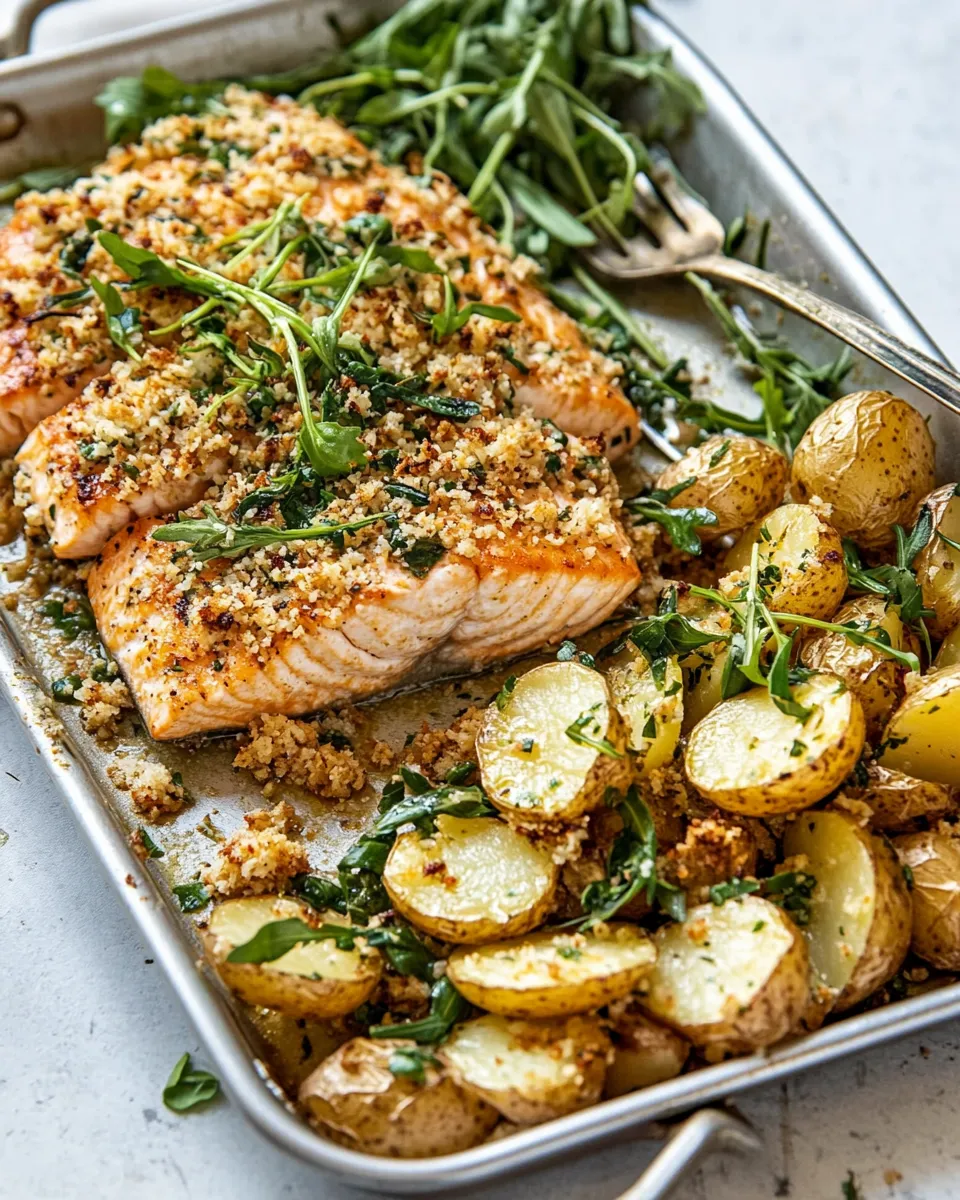
Sheet Pan Dijon Salmon and Panko Potatoes.
Equipment
- Baking Sheet
- Mixing Bowl
- Measuring Spoons
- Measuring Cups
- Spatula or tongs
- Knife
- Cutting Board
Ingredients
- 1 pound potatoes cut into 1/2-inch chunks
- 6 tablespoons salted butter divided (2 Tbsp for roasting potatoes, 4 Tbsp for dressing)
- salt to taste
- black pepper to taste
- 2 tablespoons grainy Dijon mustard
- 1 tablespoon Dijon mustard
- 2 tablespoons lemon juice
- 1 small shallot chopped
- 2 tablespoons fresh thyme chopped
- 1/2 teaspoon cayenne pepper
- 2 pounds wild-caught salmon about 4 fillets
- 1/2 cup panko breadcrumbs
- 3 tablespoons sesame seeds
- 1 clove garlic chopped
- 2-3 cups arugula or shaved asparagus
- 1/4 cup fresh dill chopped
Instructions
- Preheat the oven to 450°F (230°C). Line a baking sheet with foil or parchment if desired.
- Toss the potato chunks with 2 tablespoons melted butter and a generous pinch of salt and pepper on the prepared baking sheet so they are in a single layer.
- Roast the potatoes for 15 minutes, until they begin to soften and brown.
- While the potatoes roast, make the Dijon dressing: whisk together the grainy Dijon, smooth Dijon, lemon juice, chopped shallot, chopped thyme, cayenne, salt, pepper, and the remaining 4 tablespoons melted butter until combined.
- Remove the baking sheet from the oven. Toss the partially roasted potatoes with the panko, sesame seeds, and chopped garlic to coat evenly.
- Place the salmon fillets on the baking sheet among the potatoes. Spoon half of the Dijon dressing over the salmon fillets.
- Bake for about 10 minutes, until the salmon reaches your desired doneness (cook time may vary by thickness).
- In the last 1 minute, switch the oven to broil and broil briefly until the tops are lightly charred; watch closely to avoid burning.
- Meanwhile, toss the arugula or shaved asparagus with the chopped dill and 1–2 tablespoons of the remaining Dijon dressing; season with salt and pepper to taste.
- Remove the salmon and potatoes from the oven. Spoon the remaining dressing over the salmon, then serve the salmon and potatoes topped with the dressed greens.
Notes
- Watch closely while broiling to prevent burning.
- Adjust cayenne to control heat level.
- Use fresh herbs for best flavor.
- Shallot can be finely minced if small.