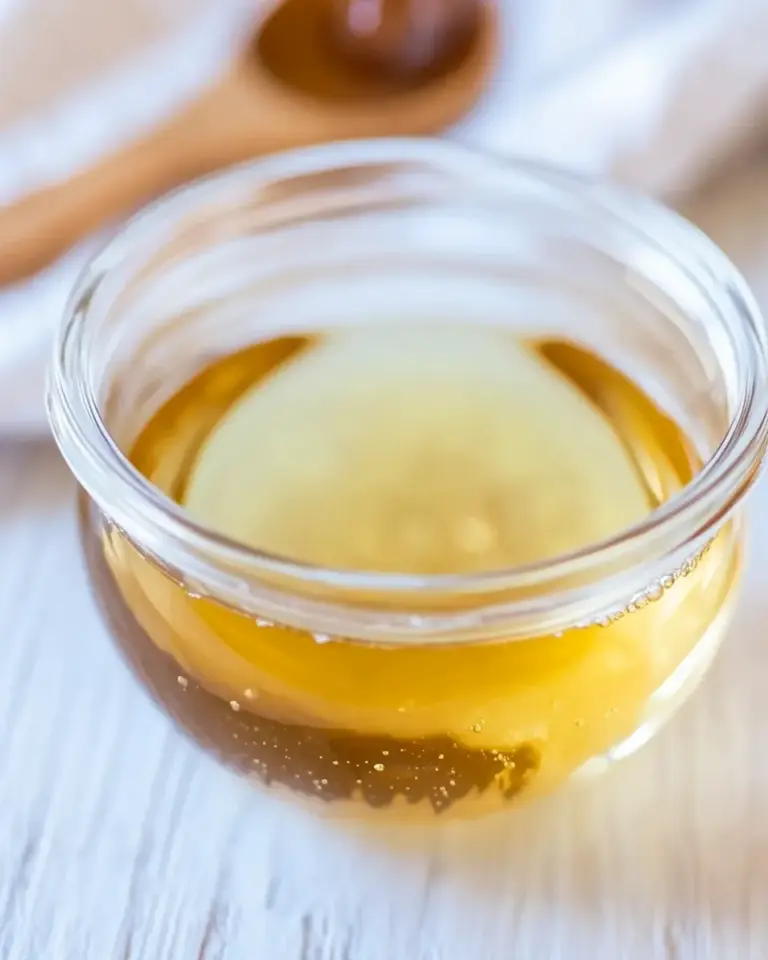
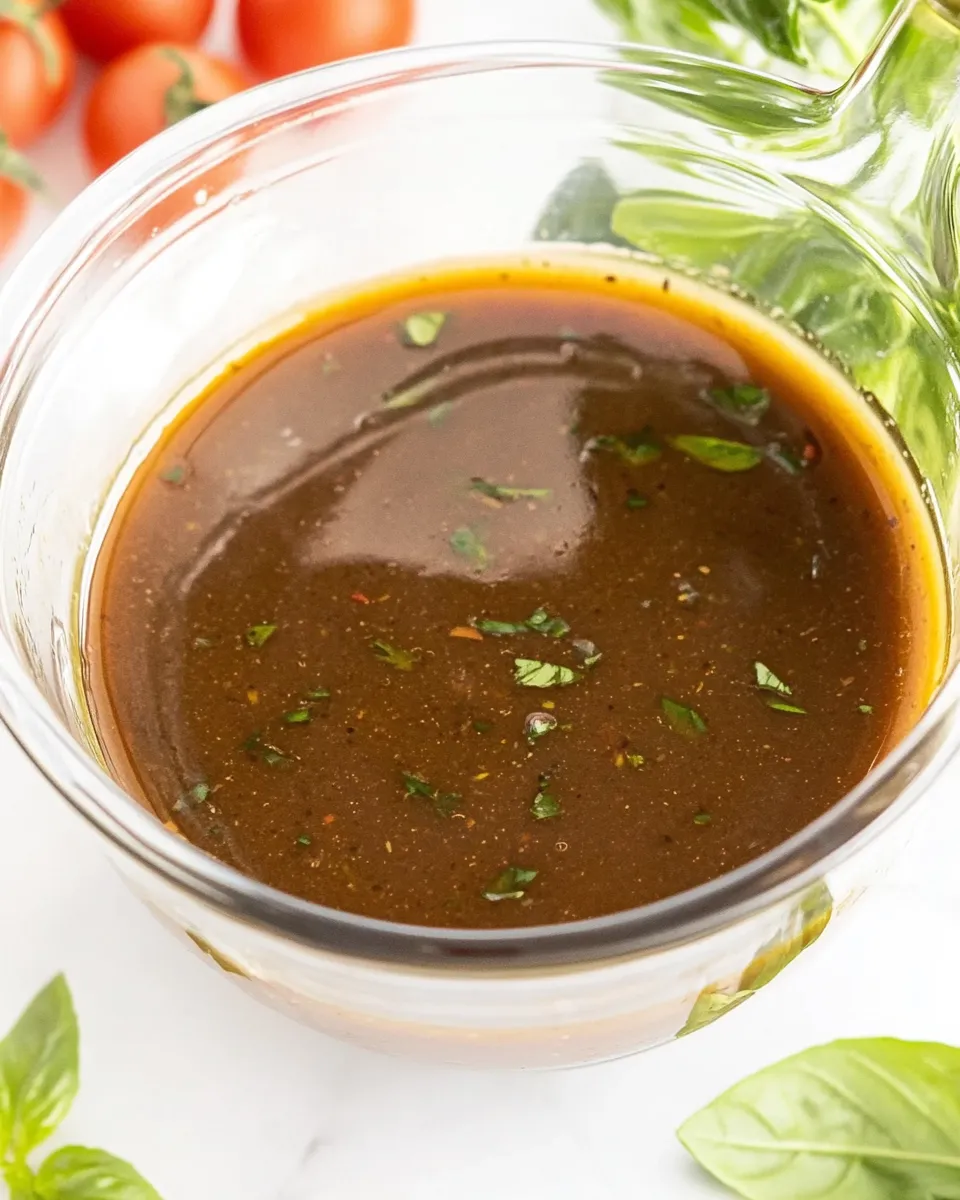
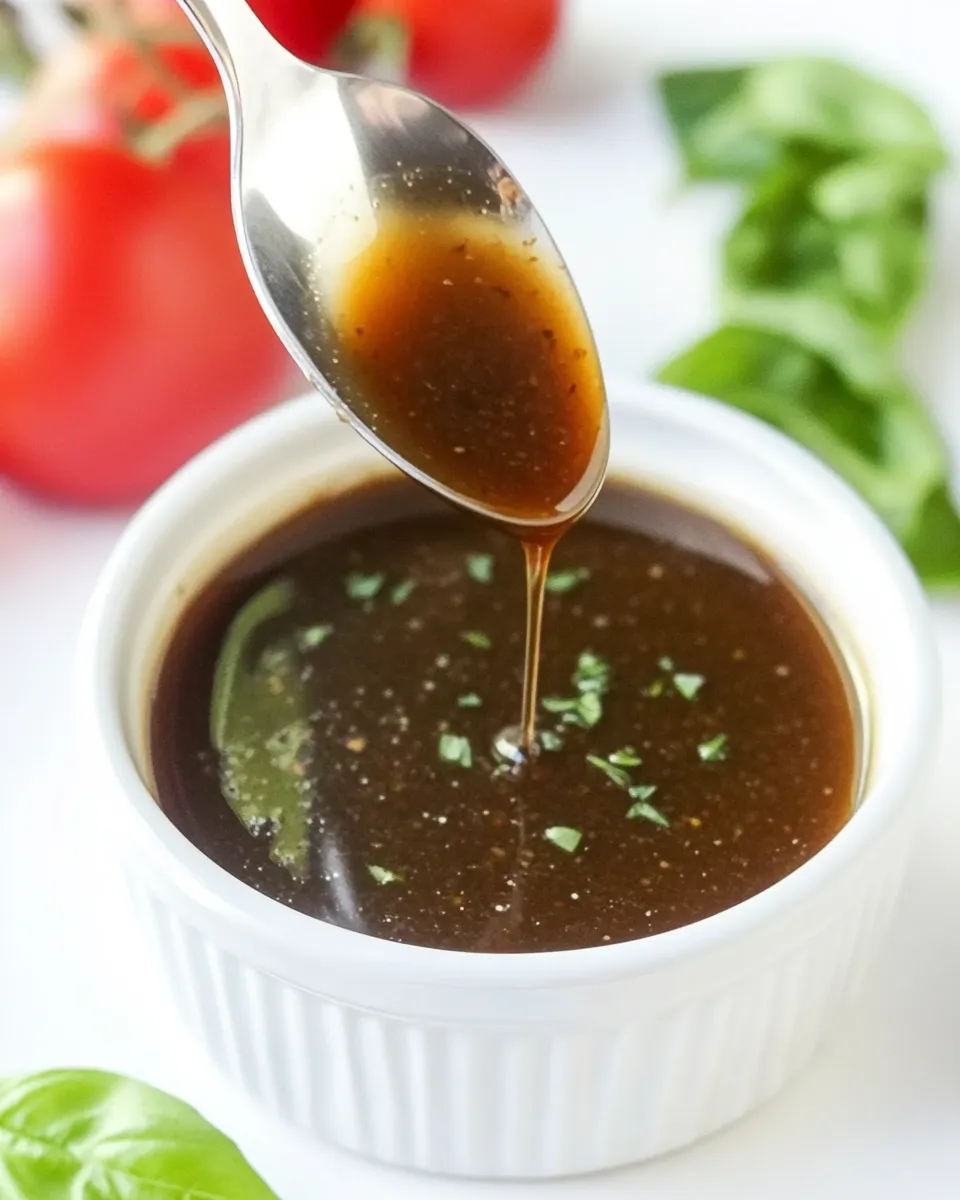
This is a no-nonsense, oil-free dressing that brightens salads and doubles as a finishing drizzle for roasted vegetables. It leans on balsamic for tang and maple for a touch of sweetness, while miso and Dijon give the mouthfeel and savory depth you’d usually expect from oil-based vinaigrettes. Basil provides the fresh herb note without overpowering the mix.
I keep this in rotation because it’s fast to make and forgiving. The technique is simple: blend the liquid ingredients until smooth, then pulse the basil in so it’s present but not pulverized. That quick pulse keeps the dressing from turning an unappetizing green while still spreading fresh basil flavor through every bite.
Below you’ll find a quick ingredient breakdown, the exact step-by-step build, substitutions, storage tips, and answers to the questions I get most often. No gimmicks — just practical guidance so your dressing comes out great every time.
Ingredient Breakdown
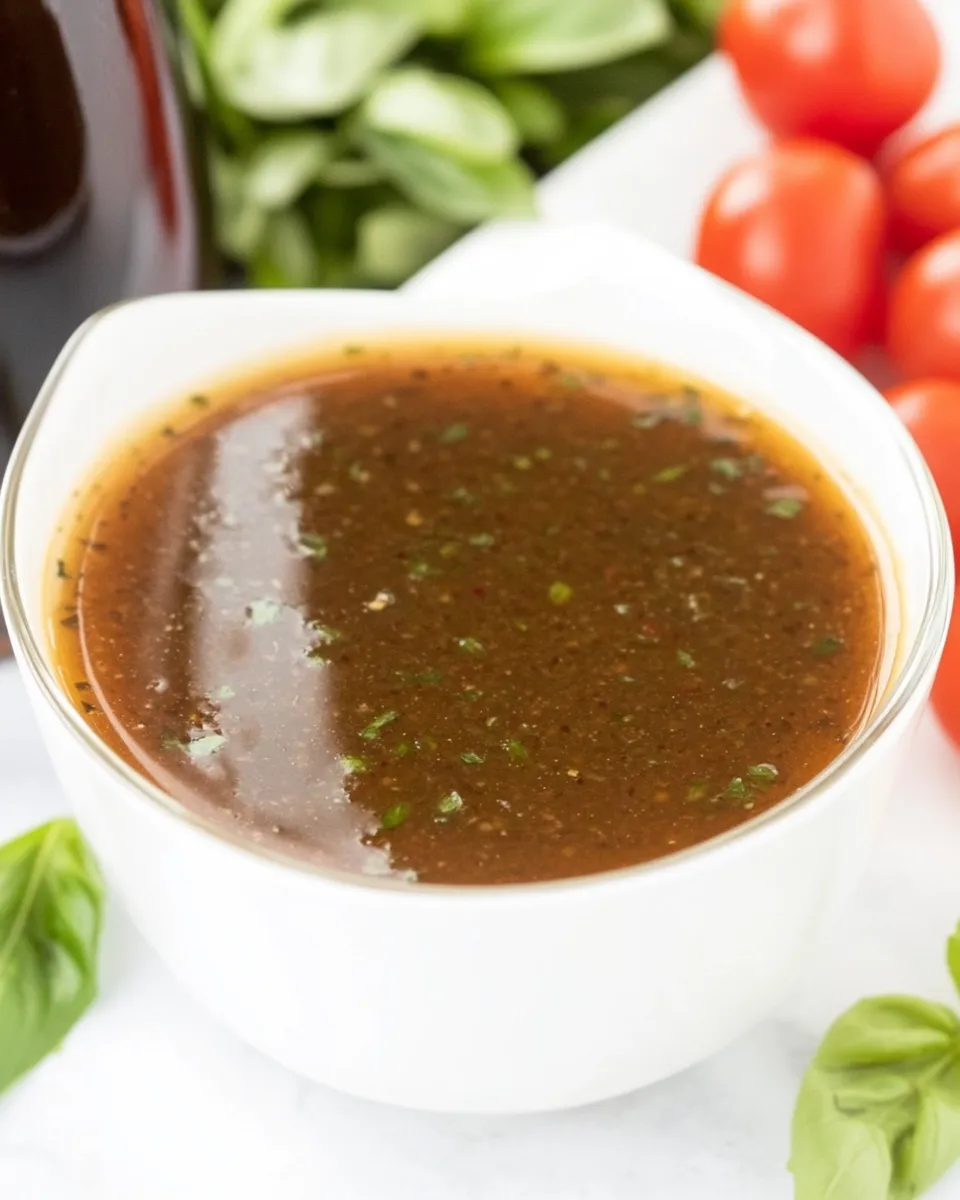
Every component in this dressing plays a clear role. Balsamic gives acidity and body, maple syrup balances with sweetness, Dijon and miso lend emulsifying and savory elements, garlic offers bite, and basil finishes with bright herb flavor. Because there’s no oil to carry the flavors, small adjustments to balance acidity, salt, and sweetness make a big difference.
When you make it, taste as you go — a little tweak to the maple or basil will shift the profile from sharper to sweeter or more herbal. The method keeps things consistent: blend the base first, then introduce the basil in short pulses for texture and color control.
Ingredients
- 1/4cupbalsamic vinegar — acidity and body; the base flavor for the dressing.
- 1Tbsp.pure maple syrup — balances the vinegar with sweetness and keeps it oil-free.
- 1Tbsp.water — tames intensity and adjusts pourability.
- 2tsp.Dijon mustard — emulsifies and adds a subtle bite.
- 1tsp.white miso — brings savory depth and umami that compensates for the lack of oil.
- 1clovegarlic, minced — provides a fresh, pungent note; mince finely so it blends smoothly.
- 1Tbsp.fresh basil, chopped(or more) — fresh herb lift; add more if you want stronger basil presence.
Build Basil Balsamic Dressing (Oil-Free!) Step by Step
- Add 1/4 cup balsamic vinegar, 1 Tbsp pure maple syrup, 1 Tbsp water, 2 tsp Dijon mustard, 1 tsp white miso, and 1 minced garlic clove to a small high‑speed blender (e.g., NutriBullet).
- Blend for 15–20 seconds, until the mixture is smooth.
- Add 1 Tbsp fresh chopped basil. Pulse the blender a few times (about 3–5 short pulses) to break down and incorporate the basil—avoid over‑blending, which will turn the dressing a greenish hue.
- Taste and adjust: add more basil for herbiness or more maple syrup for sweetness if desired.
- Transfer to a jar or container and use immediately, or refrigerate to allow the flavors to combine further.
Why This Recipe Is Reliable
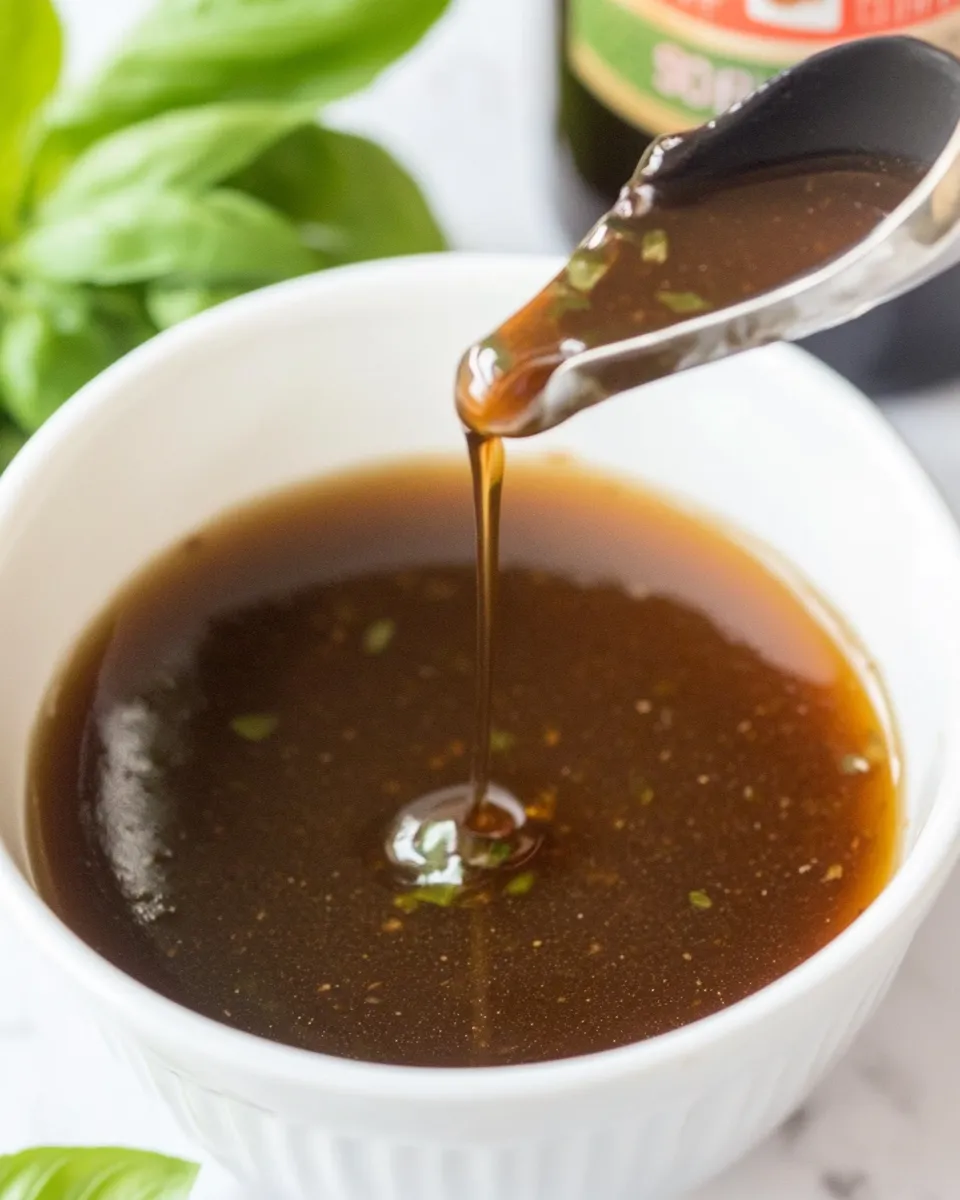
This dressing is reliable because it follows a simple formula and a controlled process: blend the emulsifying and flavor-building ingredients first, then add delicate fresh herbs in short pulses. That sequence avoids over-processing the basil and ensures a smooth, cohesive dressing each time.
Measurements are modest, so small adjustments won’t break the balance. The Dijon and miso are key stabilizers — they mimic the mouthfeel that oil provides and keep flavors rounded. Finally, the short processing time prevents heat build-up from the blender blade, which can dull fresh flavors.
Substitutions by Category
Vinegar
- If you prefer a lighter acidity, you can try a milder vinegar in place of balsamic — reduce the amount slightly and taste as you go.
Sweetener
- Maple syrup gives a specific flavor; a neutral liquid sweetener can be used if you want less maple character.
Umami & Savory Boost
- White miso adds salt and body. If you don’t have miso, a small splash of a savory liquid can help, but keep it light and adjust to taste.
Herbs & Aromatics
- Basil is central here. If you’re out, other tender herbs will change the profile — add them in the same way and pulse briefly to avoid over-blending.
Note: Substitutions will change the dressing’s character. Make small swaps and taste before committing to a larger batch.
Prep & Cook Tools
- Small high‑speed blender (e.g., NutriBullet) — the recipe is written for this size; a regular blender works, but watch blending time.
- Measuring spoons and a 1/4-cup measure — accurate amounts keep the balance steady.
- Sharp knife and cutting board — for mincing the garlic and chopping the basil.
- Jar or airtight container — for storing or serving the dressing.
Steer Clear of These
Common pitfalls are easy to avoid:
- Over-blending the basil — this turns the dressing an unappetizing green and can make it bitter. Use short pulses (about 3–5) to incorporate.
- Skipping the miso or mustard without adjustment — both add structure; omit one and increase the other slightly or accept a thinner mouthfeel.
- Adding too much sweetener at first — maple syrup is easy to overdo. Start with the listed amount and increase incrementally.
- Using a low-quality balsamic — it will dominate the profile. A balanced balsamic is best for this oil-free approach.
Tailor It to Your Diet
Vegan: This dressing as written is vegan if your white miso and maple syrup are verified vegan-friendly.
Gluten concerns: Most white miso is gluten-free, but some varieties contain barley or wheat. Check the label if you need it to be gluten-free.
Low-sodium: Miso adds salt; to reduce sodium, use a low-sodium miso or reduce the miso slightly and taste before adding salt separately.
Low-sugar: Reduce the maple syrup incrementally and compensate with a touch more mustard or a splash more balsamic if needed; taste as you go.
Little Things that Matter
Freshness is everything with this dressing. Use basil that’s bright and fragrant, and mince the garlic finely so it blends without leaving harsh bits. If your blender makes the dressing warm, let it cool in the fridge — cooler flavors taste brighter.
Pulsing the basil instead of continuous blending preserves a better texture and prevents that flat, cooked-herb flavor. Also, store the dressing upright in a sealed jar so flavors meld and the emulsion stays consistent.
Save It for Later
Refrigerate leftovers. In my experience, the dressing keeps well for several days refrigerated; the flavors mellow and often taste better after sitting a few hours. Before using, give it a shake or stir — separation can occur since this is oil-free.
If the dressing thickens slightly when cold, let it sit at room temperature for a few minutes or add a teaspoon of water and whisk to loosen.
Your Top Questions
Can I make this without a blender?
You can whisk the ingredients together vigorously, but the miso and garlic may not fully integrate as smoothly. A small blender is recommended for the best texture.
Can I double or halve the recipe?
Yes. The recipe scales, but taste after scaling to make small balance adjustments, especially with miso and maple syrup.
Will this work as a marinade?
It can function as a light marinade for vegetables or tofu. Because it’s oil-free, it won’t provide the same searing or basting benefits as oil-based marinades, but it will add flavor.
Why use white miso instead of another type?
White miso is milder and less salty than darker misos, offering sweetness and umami without overpowering. Dark miso can work but will change the dressing’s color and intensity; reduce the amount if using something stronger.
Hungry for More?
If you like this dressing, try it on mixed greens with toasted nuts and shaved fennel, or use it to finish a warm bowl of roasted vegetables and grains. For more oil-free dressings and simple, everyday sauces, look for recipes that emphasize an acid + sweet + emulsifier model — it’s the quickest way to reliable, flavorful dressings without oil.
Make it tonight and taste as you go — a small tweak to the maple or basil will personalize it to your preferences, and once you find that balance it becomes a go-to.
Basil Balsamic Dressing (Oil-Free!)
Equipment
- High-speed blender
- Jar or container
Ingredients
Ingredients
- 1/4 cupbalsamic vinegar
- 1 Tbsp.pure maple syrup
- 1 Tbsp.water
- 2 tsp.Dijon mustard
- 1 tsp.white miso
- 1 clovegarlic minced
- 1 Tbsp.fresh basil chopped(or more)
Instructions
Instructions
- Add 1/4 cup balsamic vinegar, 1 Tbsp pure maple syrup, 1 Tbsp water, 2 tsp Dijon mustard, 1 tsp white miso, and 1 minced garlic clove to a small high‑speed blender (e.g., NutriBullet).
- Blend for 15–20 seconds, until the mixture is smooth.
- Add 1 Tbsp fresh chopped basil. Pulse the blender a few times (about 3–5 short pulses) to break down and incorporate the basil—avoid over‑blending, which will turn the dressing a greenish hue.
- Taste and adjust: add more basil for herbiness or more maple syrup for sweetness if desired.
- Transfer to a jar or container and use immediately, or refrigerate to allow the flavors to combine further.
Notes
Thickness:
This dressing is very thin as written. For a thicker consistency, add 1-2 tsp. chia seeds before blending. It will gradually thicken as it sits.
Make it creamy:
Add up to 1/4 cup
hummus
before blending.
Make it sweeter:
Add more maple syrup for sweetness and to reduce the tanginess.
Yield:
Recipe makes about 1/2 cup dressing.