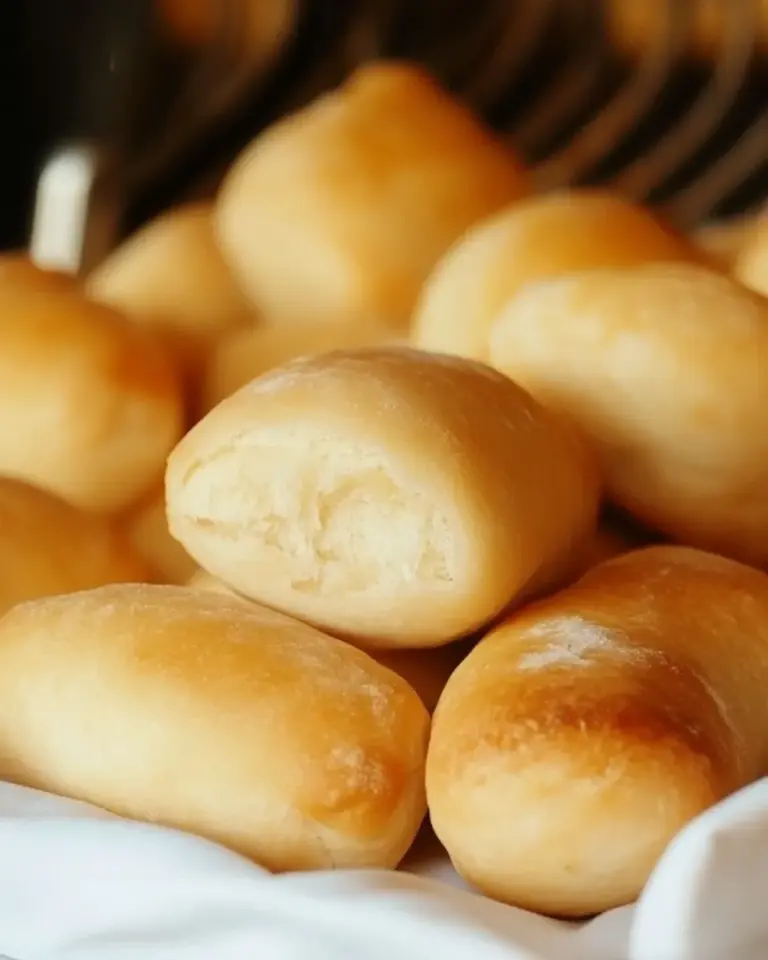
There’s something about a warm beignet dusted in powdered sugar that feels like a tiny celebration. It’s simple baking and frying that rewards patience with crisp edges, pillowy centers, and that dusting that settles like snow. I make these when I want to brighten a weekend morning or impress friends without a complicated show.
This version is straightforward and reliable. The dough is enriched with eggs, milk, and butter; the yeast provides lift; and frying at the right temperature gives that classic puff. I’ll walk you through every step I use in the kitchen so you don’t miss the small details that matter: proofing the yeast, rolling the dough to the right thickness, and monitoring oil temperature.
Read the ingredients and the method before you begin. Gather your gear, set a thermometer by the pot, and keep the powdered sugar close at hand. These beignets come together predictably when you follow the measured steps and a few practiced tips I’ve learned from testing and teaching.
What Goes In
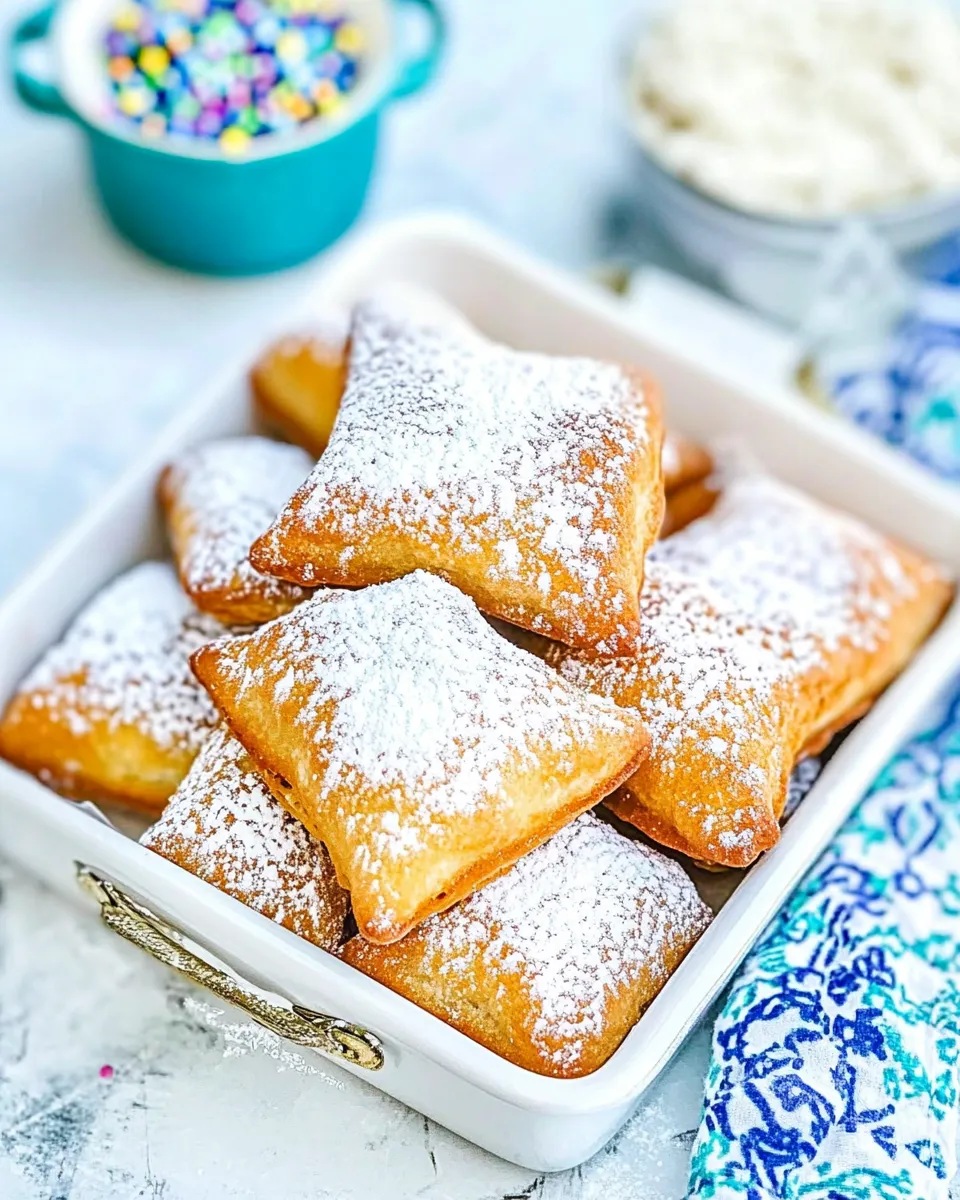
Ingredients
- 3/4 cup warm water (105–110 degrees F) — the warm water activates the yeast; check temperature with a thermometer so it’s warm, not hot.
- 2 1/4 teaspoons active dry yeast — this is one standard-size yeast packet; fresh yeast gives the best rise.
- 1/3 cup granulated sugar — feeds the yeast and gives a hint of sweetness to the dough.
- 2 eggs — room temperature; they enrich the dough and help structure the crumb.
- 1/2 cup whole milk — room temperature; adds tenderness and helps the dough hydrate evenly.
- 1/2 teaspoon vanilla — a touch of flavor that brightens the dough without overpowering the beignet.
- 4 cups all-purpose flour — have some extra for rolling if needed; provides structure for the dough.
- 3 tablespoons salted butter, melted — enriches the dough and keeps the crumb soft; salted butter is specified here.
- 4–8 cups vegetable oil — for frying; use a neutral oil with a high smoke point and enough depth to submerge beignets at least 2 inches.
- 2 cups powdered sugar — for generous dusting; be ready with a fine sieve or shaker.
Beignet — Do This Next
- Pour 3/4 cup warm water (105–110°F) into a large bowl. Sprinkle 2 1/4 teaspoons active dry yeast and 1/3 cup granulated sugar over the water and whisk to combine. Cover loosely with a light towel or wrap (do not seal) and let sit 5–10 minutes until slightly foamy. If it does not foam, the yeast may be inactive or the water was too hot.
- Add 2 room-temperature eggs, 1/2 cup room-temperature whole milk, and 1/2 teaspoon vanilla to the yeast mixture and whisk until combined.
- Stir in half of the 4 cups all-purpose flour until incorporated.
- Add 3 tablespoons melted salted butter and stir to combine.
- Add the remaining flour and mix until a shaggy dough forms.
- Turn the dough onto a lightly floured surface and knead with your hands until the dough is smooth and elastic. If it is too sticky, add additional flour a tablespoon at a time as needed.
- Lightly oil a bowl, place the kneaded dough inside, and cover with plastic wrap or a warm, damp towel. Set the bowl in a warm, draft-free place and allow the dough to rise until doubled in size (about 1–2 hours).
- After the dough has doubled, punch it down gently to release the air. Turn it out onto a lightly floured surface.
- Roll the dough to 1/4-inch thickness, using extra flour as needed to prevent sticking.
- Cut the dough into 2 1/2-inch squares (a pizza cutter works well). Keep cut pieces loosely covered while you heat the oil.
- Pour 4–8 cups vegetable oil into a large, heavy pot to a depth of at least 2 inches. Heat the oil to 370°F, using a thermometer to monitor the temperature.
- Working in batches (do not crowd the pot), carefully add a few beignets to the hot oil. They should rise and puff; if they do not, the oil is not hot enough.
- Fry the beignets, spooning hot oil over the tops as the bottoms cook, and turn them so both sides become golden (not brown). Fry about 1–2 minutes per side.
- Remove the beignets with a slotted spoon or spider and drain on a plate lined with paper towels.
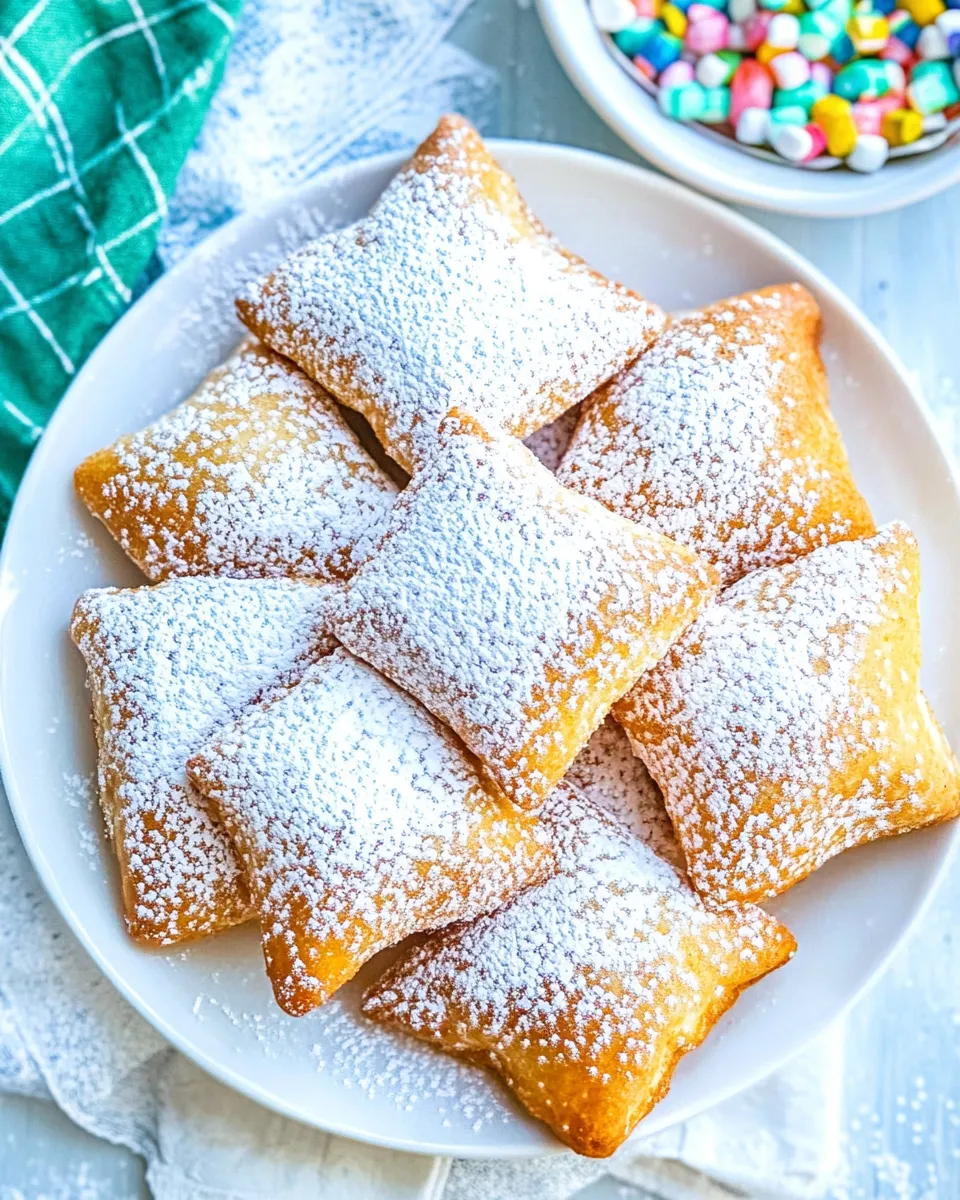
- Generously dust the warm beignets with 2 cups powdered sugar and serve immediately.
Reasons to Love Beignet
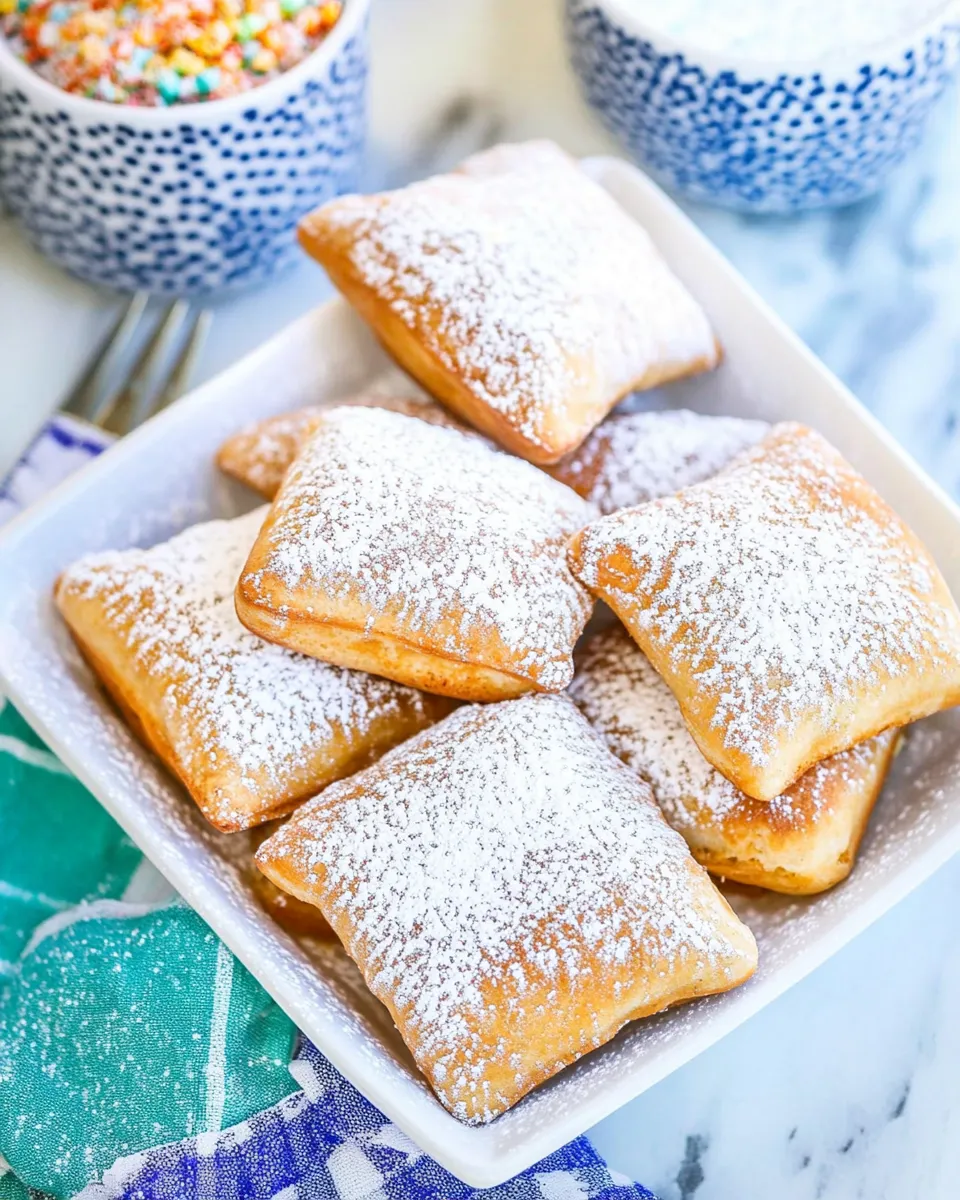
Beignets are quick to uplift a meal or a weekend. The dough is forgiving, the method is straightforward, and the payoff is dramatic: hot, airy squares that crackle on the outside and yield a soft interior. They’re also versatile — served plain with powdered sugar, alongside coffee, or filled with preserves when desired.
They’re a total crowd-pleaser. Kids love the ritual of dusting and diving in, and adults appreciate the nostalgic comfort. If you’re feeding a group, the frying step scales easily: batch by batch you’ll have warm rounds stacked on a tray, ready for a dusting.
Finally, there’s satisfaction in the process. Proofing the yeast, kneading until the dough is smooth, and watching pieces puff in hot oil are small, tangible wins. That predictability is why I return to this recipe again and again.
Budget & Availability Swaps
Everything in this recipe is pantry-friendly. Here are safe swaps if you need them:
- Milk — whole milk gives the richest result, but 2% or a little milk plus a tablespoon of butter will work in a pinch.
- Vegetable oil — any neutral oil with a high smoke point is fine. Canola or peanut oil are common alternatives if you prefer them.
- Butter — the recipe specifies salted butter. If you only have unsalted, add a pinch of salt to the dough.
- Yeast — use active dry yeast as listed. If you only have instant yeast, reduce the proofing time slightly and skip the initial proofing step; dissolve it directly into the flour mix, but keep the same quantity.
What’s in the Gear List
Gathering these tools makes the process smoother and safer:
- Large bowl — for proofing and mixing the dough.
- Whisk — to combine the yeast and wet ingredients quickly.
- Rolling pin — for rolling the dough to 1/4-inch thickness.
- Pizza cutter or sharp knife — for cutting uniform 2 1/2-inch squares.
- Heavy pot — a Dutch oven or deep, heavy-bottomed pot holds oil temperature more steadily.
- Deep-fry thermometer — critical. The recipe specifies 370°F and the oil temperature changes quickly once you start frying.
- Slotted spoon or spider — for safe removal of beignets from the oil.
- Paper towels or cooling rack — to drain excess oil before dusting with powdered sugar.
Mistakes That Ruin Beignet
There are a few missteps that make or break the result. Watch for these common ones:
- Oil too cool — you’ll get greasy, under-puffed beignets. They should rise fast when submerged.
- Oil too hot — beignets will brown too quickly on the outside and remain raw inside. Aim for 370°F and adjust the heat between batches.
- Skipping the rise — don’t rush the 1–2 hour rise. Under-proofed dough won’t develop the structure to puff properly.
- Over-flouring while rolling — add flour sparingly. Too much flour makes dense beignets; the dough should still feel slightly soft.
- Crowding the pot — dropping in too many at once lowers the oil temperature and causes uneven cooking.
Nutrition-Minded Tweaks
Beignets are an indulgence, but small adjustments can shift the profile without changing the core method.
- Reduce sugar — you can cut the 1/3 cup granulated sugar slightly if you prefer a less-sweet dough; keep the powdered sugar dusting to control surface sweetness.
- Oil control — drain well and blot with paper towels to remove excess surface oil.
- Portion size — roll and cut slightly smaller squares to reduce per-piece calories, but keep frying time similar (watch temperature).
Notes from the Test Kitchen

I test this beignet method multiple times before I set it down in writing. A few practical notes that saved frustrating batches:
- Proof your yeast in the correct temperature water — 105–110°F consistently worked best. If your kitchen is cold, use the oven with the light on as a draft-free spot for rising.
- Let the dough rest if it resists rolling — after punching down, if it springs back too much, let it rest 10–15 minutes covered and then roll; the gluten will relax.
- Maintain oil temperature — use a thermometer and allow a minute or two between batches for the temperature to recover. Adjust the burner to keep it steady.
- Dust just before serving — powdered sugar melts into warm beignets. Dust generously at the last moment for the best visual and textural effect.
Storage & Reheat Guide
Beignets are best eaten the day they’re fried. Still, you can store leftovers and revive them later.
- Short-term — keep leftover beignets in a single layer in a shallow container at room temperature up to a day. Cover loosely so they don’t steam and get soggy.
- Reheating — refresh in a 350°F oven for about 5–7 minutes; this crisps the exterior without drying the interior. Re-dust with powdered sugar after reheating.
- Freezing — you can freeze beignets after cooling. Wrap tightly and freeze up to 1 month. Reheat from frozen in a 325–350°F oven until warmed through; expect a slightly different texture than freshly fried.
Top Questions & Answers
- Can I make the dough ahead? — Yes. After the first rise, punch down and refrigerate the dough in an oiled bowl, tightly covered, for up to 24 hours. Bring back to room temperature and let it complete a second rise before rolling and cutting.
- Why didn’t my beignets puff? — Check the oil temperature and the yeast proofing. If the yeast didn’t foam during initial proof, it may be inactive. If the oil is too cool, pieces won’t rise properly.
- Can I use instant yeast? — Yes; if substituting instant, you can mix it directly with the dry ingredients. Use the same quantity and expect slightly quicker action.
- How do I know when oil is ready? — A reliable deep-fry thermometer is the best indicator. If you don’t have one, drop a small piece of dough in; it should rise and sizzle immediately and become golden in about a minute per side.
- What’s the best way to dust powdered sugar? — Use a fine sieve or a sugar shaker for an even dusting. Dust just before serving so the sugar sits on the surface.
- Are these New Orleans-style beignets? — These are classic fried beignets in square form, similar to those served in New Orleans cafes, made from a lightly enriched yeast dough and generously dusted with powdered sugar.
Time to Try It
Ready to make them? Read through the steps once, assemble the ingredients and the thermometer, and commit about 2.5–3 hours including rise time (most of that is hands-off). Start by proofing the yeast and keep the dough covered and warm while it rises. Follow the frying steps carefully and you’ll have fresh, warm beignets to share.
Take a breath, enjoy the process, and expect a few imperfect ones at first—that’s part of the joy. Serve hot, dusted with powdered sugar, and listen for the small gasps of delight around the table. Then start the next batch.
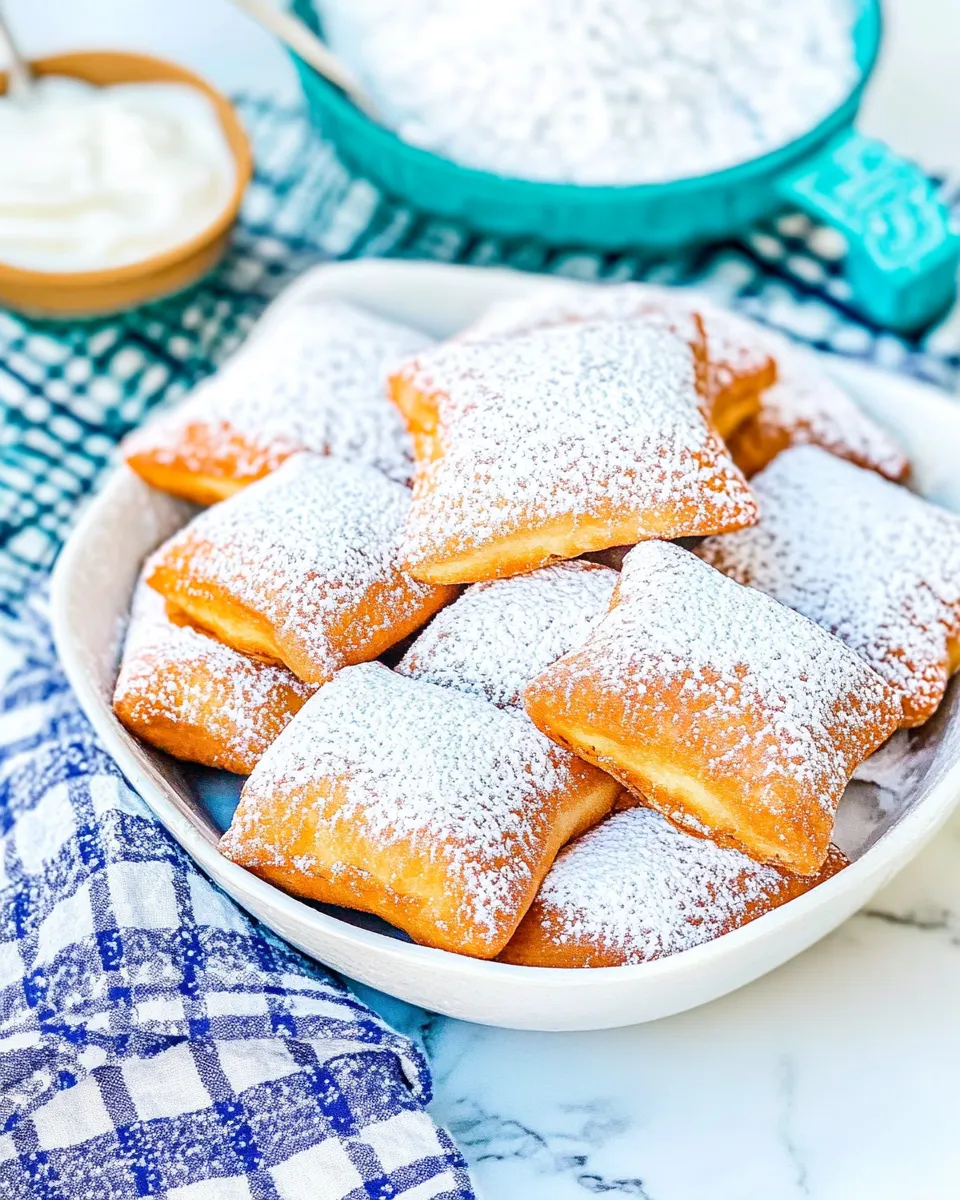
Beignet Recipe
Equipment
- Large Bowl
- Whisk
- light towel or plastic wrap
- rolling surface
- Rolling Pin
- Pizza cutter or knife
- large heavy pot
- deep-fry thermometer
- Slotted spoon or spider
- Plate
- Paper Towels
Ingredients
Ingredients
- 3/4 cupwarm water105-110 degrees F
- 2 1/4 teaspoonsactive dry yeastthis is one standard size yeast packet
- 1/3 cupgranulated sugar
- 2 eggsroom temperature
- 1/2 cupwhole milkroom temperature
- 1/2 teaspoonvanilla
- 4 cupsall-purpose flourhave some extra for rolling if needed
- 3 tablespoonssalted buttermelted
- 4-8 cupsvegetable oilfor frying
- 2 cupspowdered sugar
Instructions
Instructions
- Pour 3/4 cup warm water (105–110°F) into a large bowl. Sprinkle 2 1/4 teaspoons active dry yeast and 1/3 cup granulated sugar over the water and whisk to combine. Cover loosely with a light towel or wrap (do not seal) and let sit 5–10 minutes until slightly foamy. If it does not foam, the yeast may be inactive or the water was too hot.
- Add 2 room-temperature eggs, 1/2 cup room-temperature whole milk, and 1/2 teaspoon vanilla to the yeast mixture and whisk until combined.
- Stir in half of the 4 cups all-purpose flour until incorporated.
- Add 3 tablespoons melted salted butter and stir to combine.
- Add the remaining flour and mix until a shaggy dough forms.
- Turn the dough onto a lightly floured surface and knead with your hands until the dough is smooth and elastic. If it is too sticky, add additional flour a tablespoon at a time as needed.
- Lightly oil a bowl, place the kneaded dough inside, and cover with plastic wrap or a warm, damp towel. Set the bowl in a warm, draft-free place and allow the dough to rise until doubled in size (about 1–2 hours).
- After the dough has doubled, punch it down gently to release the air. Turn it out onto a lightly floured surface.
- Roll the dough to 1/4-inch thickness, using extra flour as needed to prevent sticking.
- Cut the dough into 2 1/2-inch squares (a pizza cutter works well). Keep cut pieces loosely covered while you heat the oil.
- Pour 4–8 cups vegetable oil into a large, heavy pot to a depth of at least 2 inches. Heat the oil to 370°F, using a thermometer to monitor the temperature.
- Working in batches (do not crowd the pot), carefully add a few beignets to the hot oil. They should rise and puff; if they do not, the oil is not hot enough.
- Fry the beignets, spooning hot oil over the tops as the bottoms cook, and turn them so both sides become golden (not brown). Fry about 1–2 minutes per side.
- Remove the beignets with a slotted spoon or spider and drain on a plate lined with paper towels.
- Generously dust the warm beignets with 2 cups powdered sugar and serve immediately.
Notes
Temperature– I highly recommend acandy thermometer. It will help both in getting the temperature where you need it for the water, to activate the yeast, and for the oil. You can pick them up online or find them at your grocery or big box stores. They are inexpensive and extremely helpful.