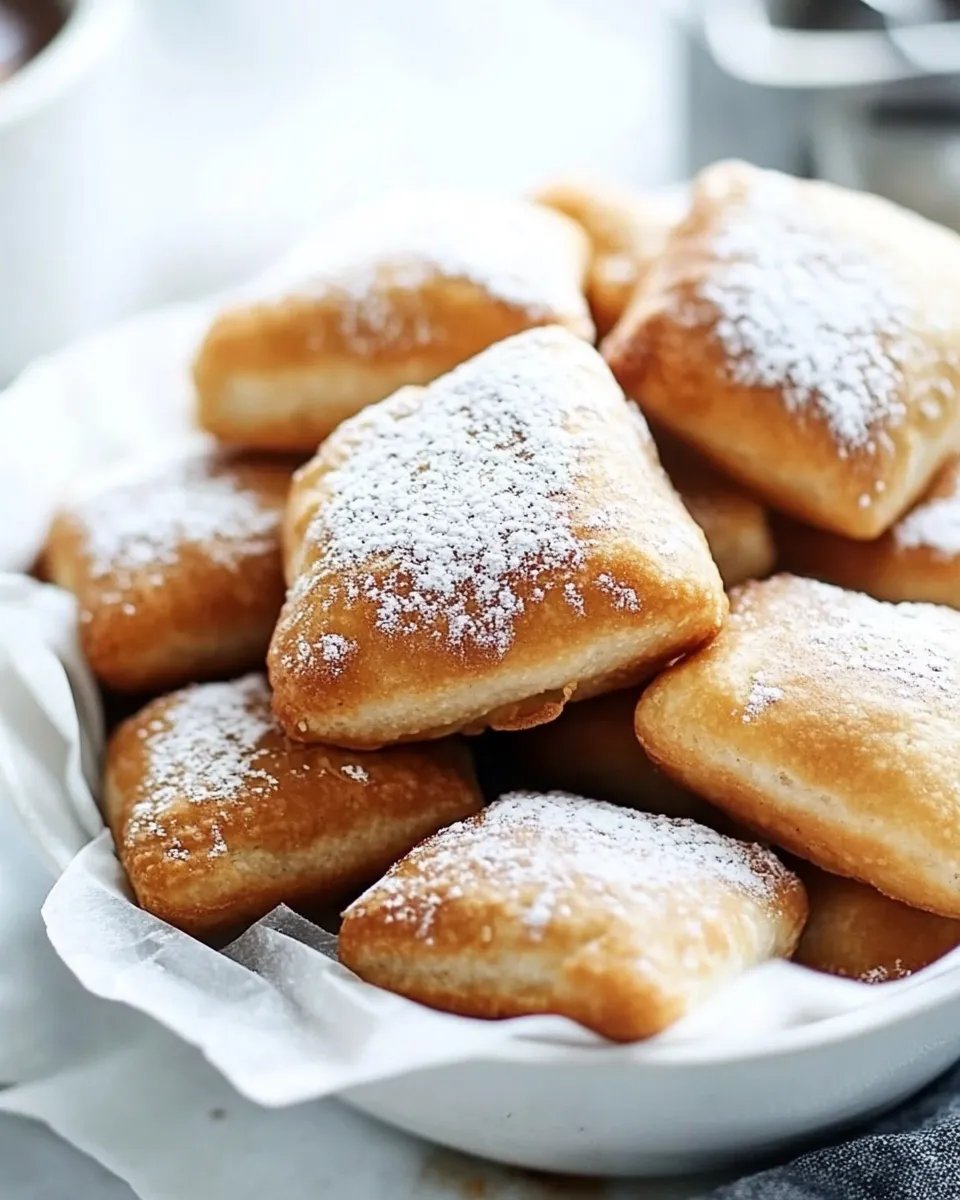
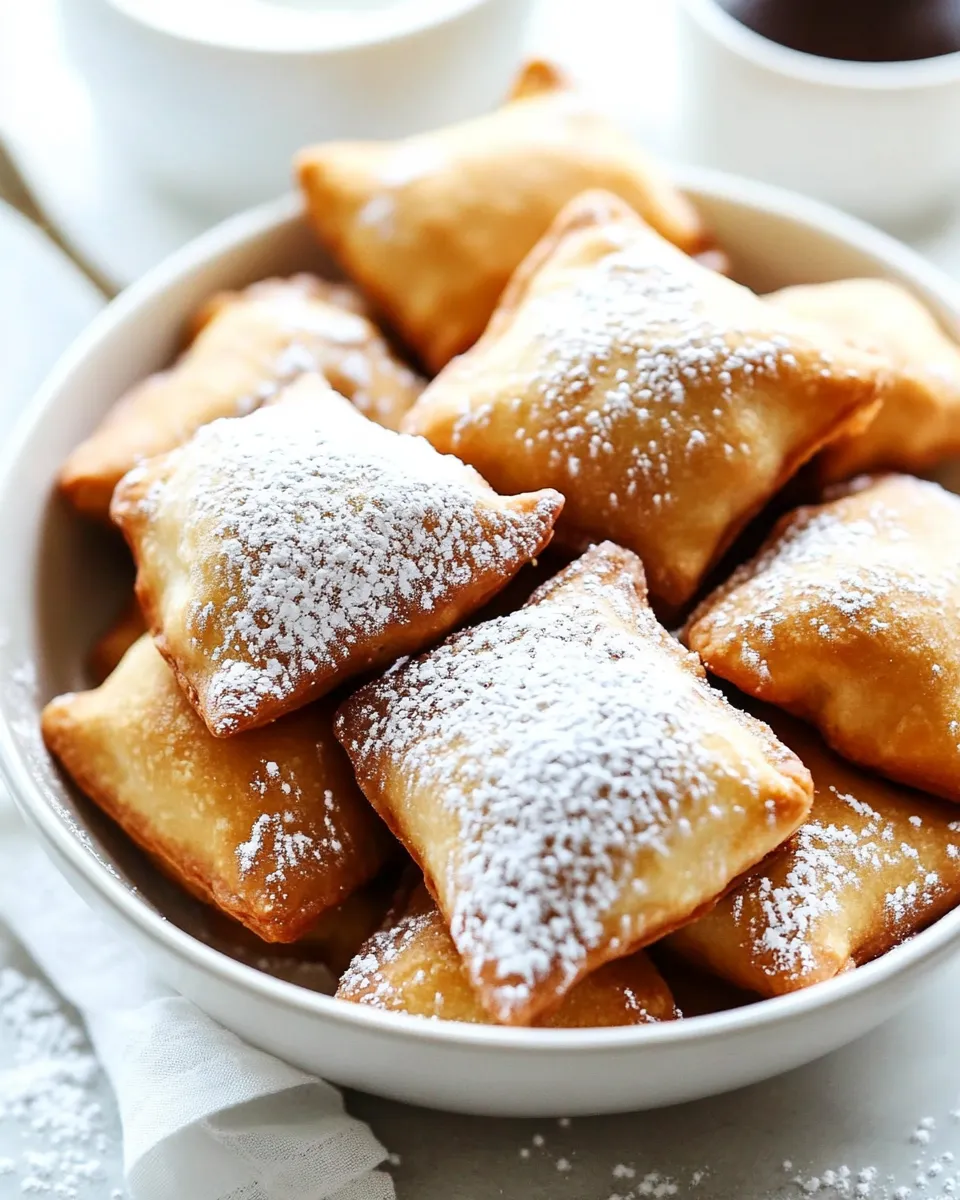
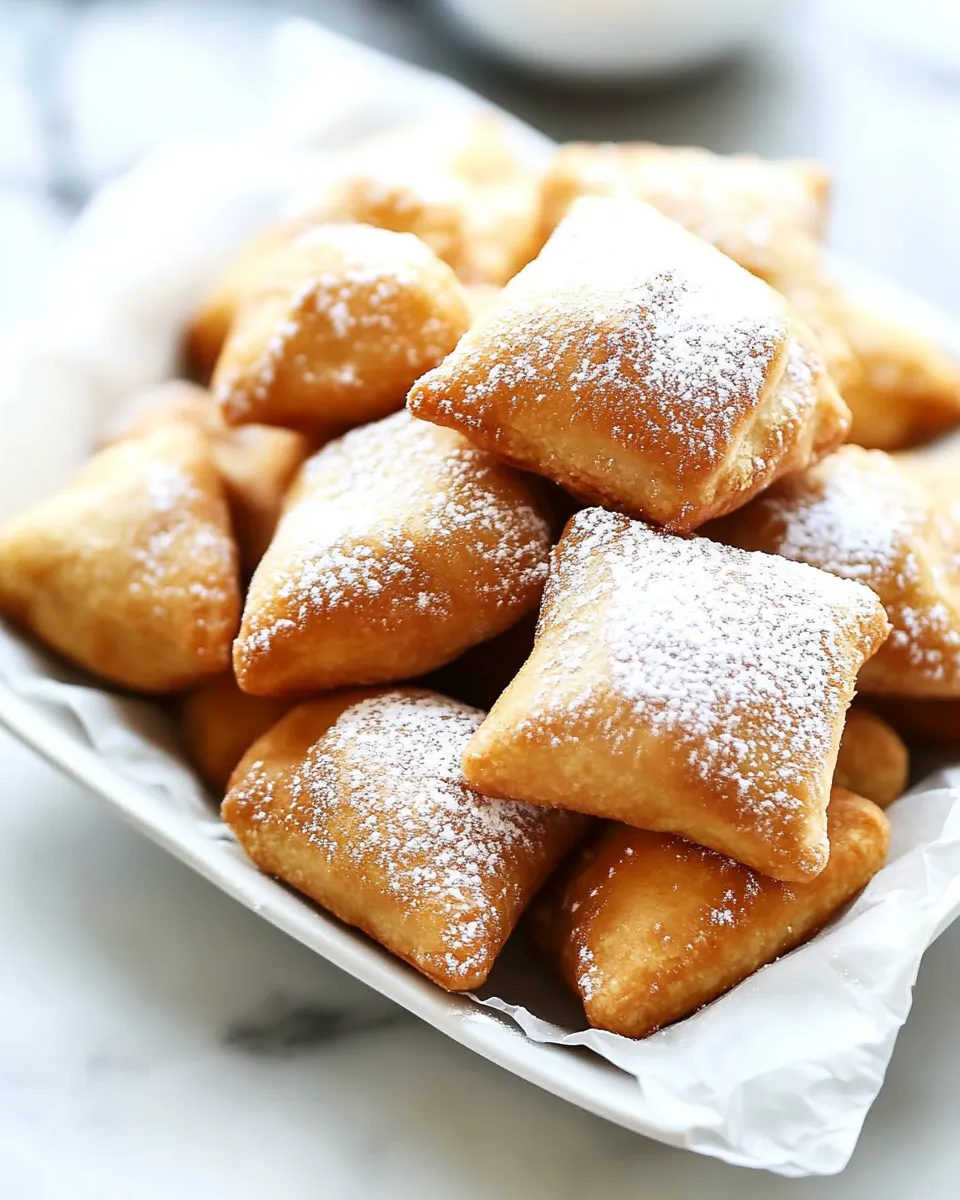
I love a beignet that arrives puffed, golden, and still warm enough to fog a window. These are not delicate pastries that need fuss — they’re straightforward, forgiving, and infinitely comforting. The recipe that follows is the version I reach for when I want the real thing: pillowy interior, crisp edges, and that generous dusting of powdered sugar.
You don’t need advanced technique to get there, but attention to a few simple moments matters: getting the yeast frothy, kneading until the dough feels elastic, and keeping an eye on oil temperature while frying. Read through the steps first, gather your mise en place, and you’ll be rewarded with classic beignets in a couple of hours.
I keep notes under each section to make the process practical. If you want them light and airy, follow the rising and frying cues. If you’re after a chewier version, there are easy swaps below. Let’s get started.
Ingredient Checklist
- ¾ cup lukewarm water — activates the yeast; water should feel like warm bath water, not hot.
- 1 teaspoon active dry yeast — the leavener that makes the beignets rise and get airy.
- ¼ cup granulated sugar — sweetens the dough and feeds the yeast.
- 1 large beaten egg — adds structure and richness.
- ½ cup evaporated milk — gives body and a slightly caramelized milk flavor; important for texture.
- 3 ½ cups bread flour — higher protein flour yields the characteristic chew and structure.
- 1 teaspoon salt — balances the sweetness and strengthens the gluten.
- Vegetable oil for frying — about 2 quarts — a neutral oil with a high smoke point; enough oil to deep-fry in a pot.
- 1 ½ cup powdered sugar — for tossing; add more as needed for a generous coating.
- Chocolate or caramel syrup for dipping — optional, but lovely for serving.
Beignets Recipe Made Stepwise
- In a large mixing bowl whisk together ¾ cup lukewarm water and 1 teaspoon active dry yeast. Set aside about 10 minutes, until the mixture is frothy.
- In a medium bowl whisk together ¼ cup granulated sugar, 1 large beaten egg, and ½ cup evaporated milk. Pour this sugar-egg-milk mixture into the frothy yeast mixture and whisk to combine.
- In a separate medium bowl whisk together 3 ½ cups bread flour and 1 teaspoon salt. Add the flour mixture to the wet mixture in roughly 1-cup increments, stirring after each addition until the dough begins to come together and no dry streaks remain.
- Lightly flour a clean work surface and turn the dough out onto it. Knead the dough by hand until smooth and elastic, about 10 minutes.
- Shape the kneaded dough into a ball and place it back into the mixing bowl. Cover with a clean kitchen towel and set the bowl in a warm, draft-free place. Let the dough rise until doubled in size, about 1½ to 2 hours.
- When the dough has doubled, pour about 2 quarts of vegetable oil into a large, deep pot or prepare your deep fryer. Heat the oil over medium-high heat until it reaches 350°F.
- While the oil heats, turn the risen dough onto a lightly floured surface and roll it into a large rectangle about ¼–½ inch thick. Cut the dough into approximately 2-inch squares.
- Working in batches of 3–4 pieces (do not overcrowd the oil), carefully drop the dough squares into the hot oil. Fry until golden brown on the first side, about 2 minutes, then flip and fry the second side about 2 minutes more. Maintain the oil temperature near 350°F.
- Use a spider strainer or slotted spoon to remove the beignets from the oil and transfer them to a paper towel–lined baking sheet or plate to drain.
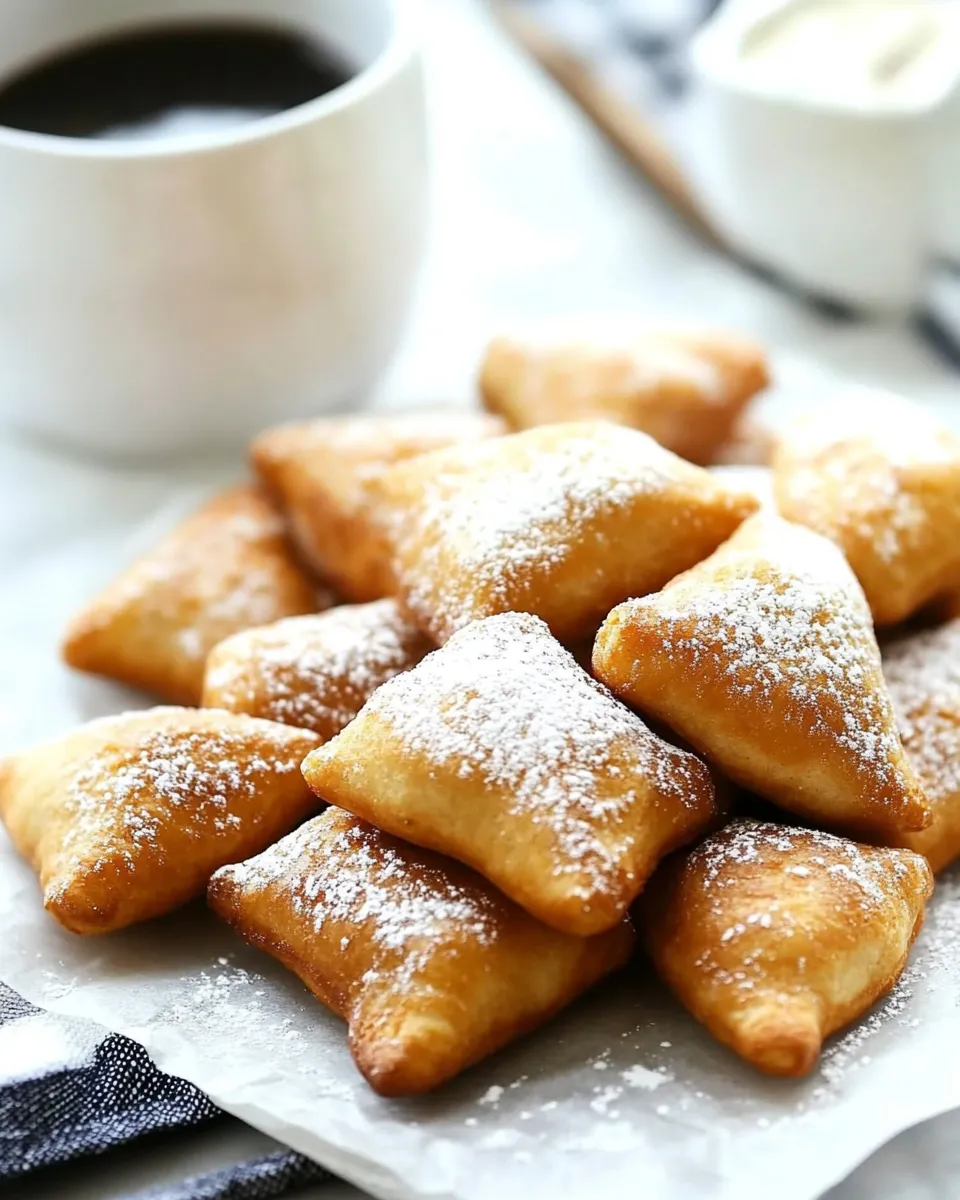
- Let the beignets cool about 1 minute, then toss them in 1 ½ cup powdered sugar until coated (use more powdered sugar as needed). Serve warm with chocolate or caramel syrup for dipping, if desired.
Why It Works Every Time
There are a few reliable reasons this method produces consistent results. First, the initial yeast bloom in the warm water ensures active yeast; if the mix doesn’t foam you’ll know the yeast needs replacing before you waste other ingredients. The combination of granulated sugar and evaporated milk feeds and flavors the dough without weighing it down.
Using bread flour rather than all-purpose builds more gluten, which gives beignets their signature chew and helps them puff without collapsing. The hand knead develops that gluten over about ten minutes — enough to make the dough smooth and elastic, but not so long it becomes tough.
Temperature control during frying is critical. Keeping the oil around 350°F lets the exterior crisp and color deeply while the interior cooks through. Frying in small batches prevents the oil temperature from dropping too much, which would make the beignets absorb more oil and become greasy.
Dairy-Free/Gluten-Free Swaps
– Dairy-free: Replace evaporated milk with a similarly thick non-dairy canned milk (for example, a full-fat canned coconut milk) or choose a concentrated plant-based creamer to approximate the body of evaporated milk. Expect a subtle change in flavor when you do this.
– Gluten-free: Use a high-quality cup-for-cup gluten-free flour blend formulated for yeast breads; look for one that contains xanthan gum or add it according to the blend’s directions. Gluten-free doughs will behave differently — they may be stickier and need gentler handling.
– Egg alternatives: If you need an egg-free option, use a commercial egg replacer or a tested vegan egg substitute recommended for baking. Texture will vary from the original, but these options will still fry up nicely.
Keep in mind swaps change texture and handling. If you try a swap, treat the dough as you would a wetter, gentler mixture and adjust handling rather than the listed measurements.
Equipment at a Glance
- Large mixing bowl — for proofing the yeast and rising the dough.
- Medium mixing bowls — one for the wet mix and one for dry ingredients.
- Rolling pin — to roll the dough to the correct thickness.
- Sharp knife or pizza cutter — to cut the dough into roughly 2-inch squares.
- Large, deep pot or a deep fryer — deep enough for about 2 quarts of oil and safe for deep-frying.
- Candy or deep-fry thermometer — to monitor oil temperature accurately around 350°F.
- Spider strainer or slotted spoon — for safe removal of beignets from the oil.
- Baking sheet lined with paper towels — for draining fried beignets.
Errors to Dodge
– Skipping the yeast check: If the yeast doesn’t froth after 10 minutes, don’t proceed — the dough won’t rise properly.
– Over- or under-kneading: Ten minutes of hand kneading is the rule here. Under-kneaded dough won’t develop enough structure; over-kneading can make the texture tough. You want a smooth, slightly tacky but not sticky ball.
– Rolling too thin or too thick: Thinner than ¼ inch yields dense, less pillowy beignets; thicker than ½ inch takes longer to cook inside and may brown too much on the outside.
– Overcrowding the oil: That drops the temperature and leads to greasy beignets. Fry in small batches of 3–4 pieces as directed.
– Not monitoring oil temperature: The color may look right, but if the temperature is off you risk undercooked centers or burned exteriors. Keep a thermometer handy.
Dietary Swaps & Alternatives
– Lower-sugar option: You can reduce the dough sugar slightly, but powdered sugar topping is traditional — dust lightly for aesthetics without altering the dough much.
– Flavor variations: Add a small amount of vanilla or citrus zest to the dough if you’d like a flavor twist; add sparingly so you don’t affect dough hydration.
– Serving alternatives: Beyond chocolate or caramel syrup, fruit compote or a simple jam can be pleasant. For a savory take, skip the powdered sugar and serve warm with a honey butter dip.
Behind the Recipe
Beignets trace their current fame to New Orleans, where French and Creole culinary traditions made them a city staple. The approach here favors a simple, enriched dough that yields the classic pillowy interior paired with a crisp exterior. Using bread flour and a slightly enriched dough (egg and evaporated milk) balances chew and tenderness.
The quick 1½–2 hour rise is practical: it gives yeast plenty of time to create air pockets without requiring an overnight retard. The frying method honors the traditional deep-fry identity of beignets and keeps the interiors airy while achieving that irresistible crust.
Keep It Fresh: Storage Guide
Beignets are best served the day they’re made — warm and dusted with powdered sugar. If you have leftovers, store them at room temperature in an airtight container for up to 24 hours. They’ll lose some crispness but can be refreshed.
To reheat: briefly warm in a 350°F oven for a few minutes until heated through and slightly crisp on the edges. A quick flash in a fryer for 20–30 seconds also restores texture if you have oil already at temperature. Avoid microwaving, which makes them gummy.
Freezing isn’t ideal once dusted with powdered sugar. If you must freeze, freeze plain, undusted beignets in a single layer on a tray until solid, then transfer to a freezer bag. Reheat from frozen in a hot oven or briefly refry, then dust with powdered sugar.
Your Questions, Answered
Q: My dough didn’t rise — what went wrong?
A: Most likely the yeast was inactive or the rising environment too cool. Always check for froth after mixing yeast with warm water. If it doesn’t froth within 10 minutes, start over with fresh yeast.
Q: Why bread flour instead of all-purpose?
A: Bread flour has more protein, which builds stronger gluten structure and yields a chewier interior that holds up to frying. All-purpose will work in a pinch but expect a slightly different texture.
Q: Can I make the dough ahead?
A: You can prepare the dough and refrigerate it covered for a slowed, cold rise; bring it back to room temperature and allow it to complete rising before rolling and frying. This can develop flavor but requires more planning.
Q: How do I keep oil temperature steady?
A: Use a thermometer and adjust the burner as needed between batches. Wait for the oil to return to near 350°F before adding the next batch.
The Takeaway
This beignets recipe is practical and dependable. Follow the yeast check, knead until elastic, roll to the proper thickness, and fry at a steady 350°F in small batches. The rewards are immediate: warm, puffy beignets coated in powdered sugar and perfect for sharing. Keep the essentials on hand, give the dough its time, and enjoy the simple pleasure of fresh-fried dough done right.
Best Beignets Recipe
Ingredients
Ingredients
- 3/4 cuplukewarm water
- 1 teaspoonactive dry yeast
- 1/4 cupgranulated sugar
- 1 largebeaten egg
- 1/2 cupevaporated milk
- 3 1/2 cupsbread flour
- 1 teaspoonsalt
- vegetable oil for fryingabout 2 quarts
- 1 1/2 cuppowdered sugarmore as needed
- chocolate or caramel syrup for dippingoptional
Instructions
Instructions
- In a large mixing bowl whisk together ¾ cup lukewarm water and 1 teaspoon active dry yeast. Set aside about 10 minutes, until the mixture is frothy.
- In a medium bowl whisk together ¼ cup granulated sugar, 1 large beaten egg, and ½ cup evaporated milk. Pour this sugar-egg-milk mixture into the frothy yeast mixture and whisk to combine.
- In a separate medium bowl whisk together 3 ½ cups bread flour and 1 teaspoon salt. Add the flour mixture to the wet mixture in roughly 1-cup increments, stirring after each addition until the dough begins to come together and no dry streaks remain.
- Lightly flour a clean work surface and turn the dough out onto it. Knead the dough by hand until smooth and elastic, about 10 minutes.
- Shape the kneaded dough into a ball and place it back into the mixing bowl. Cover with a clean kitchen towel and set the bowl in a warm, draft-free place. Let the dough rise until doubled in size, about 1½ to 2 hours.
- When the dough has doubled, pour about 2 quarts of vegetable oil into a large, deep pot or prepare your deep fryer. Heat the oil over medium-high heat until it reaches 350°F.
- While the oil heats, turn the risen dough onto a lightly floured surface and roll it into a large rectangle about ¼–½ inch thick. Cut the dough into approximately 2-inch squares.
- Working in batches of 3–4 pieces (do not overcrowd the oil), carefully drop the dough squares into the hot oil. Fry until golden brown on the first side, about 2 minutes, then flip and fry the second side about 2 minutes more. Maintain the oil temperature near 350°F.
- Use a spider strainer or slotted spoon to remove the beignets from the oil and transfer them to a paper towel–lined baking sheet or plate to drain.
- Let the beignets cool about 1 minute, then toss them in 1 ½ cup powdered sugar until coated (use more powdered sugar as needed). Serve warm with chocolate or caramel syrup for dipping, if desired.