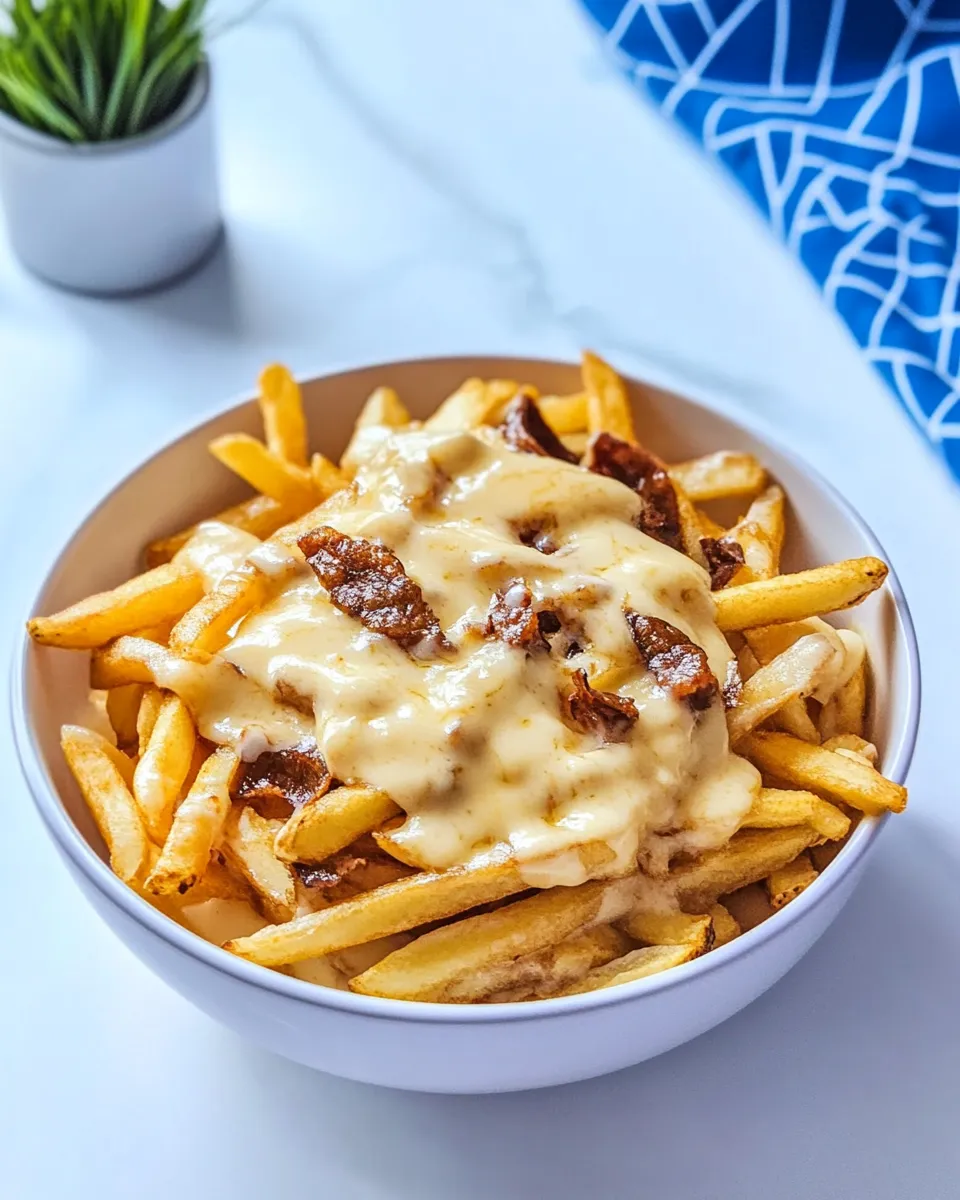
Poutine is one of those comfort foods that feels effortless to eat and, with the right technique, surprisingly straightforward to make at home. Crispy fries, squeaky cheese curds, and a hot, glossy gravy—each component matters, and when they come together the result is deeply satisfying. I keep this version simple and true to the classic while walking you through the small details that make the difference.
There’s a rhythm to poutine: soak, dry, par-fry, finish, and dress. I’ll guide you through those steps, explain why they matter, and share tips for a reliably crispy fry and a gravy that clings to curds and potatoes without getting gummy. No fancy equipment required—just a thermometer, a deep pot, and patience.
If you love a late-night snack or want a show-stopping side for a casual dinner, this post covers shopping, timing, and troubleshooting so your poutine comes out right every time. Let’s get into it.
What to Buy
Buy ingredients that will hold up to frying and a gravy that can carry flavor without over-salting. For the fries, russet potatoes are ideal; they have the starch and texture needed for a crispy exterior and tender inside. Cheese curds should be fresh and at room temperature so they soften properly under hot gravy. For the gravy, low-sodium broths give you control over the final seasoning.
Here’s a quick shopping checklist to bring to the store: good frying oil (vegetable), russet potatoes, white cheddar cheese curds, low-sodium beef and chicken broths, cornstarch, and basic pantry seasonings like onion and garlic powders plus Worcestershire sauce. Nothing exotic—just quality basics.
Canadian Poutine Recipe, Made Easy
This section contains the exact cooking steps. Follow them in order for the best result. Read them once through before starting so your mise en place is ready.
- Place the potato slices in a bowl of cold water and soak for 45 minutes to remove excess starch.
- Drain the potatoes and pat them very dry with paper towels or a clean kitchen towel (remove as much surface moisture as possible).
- Pour vegetable oil into a deep pot or Dutch oven to a depth of about 2 inches and heat to 325°F (use a thermometer).
- Working in small batches (do not overcrowd the pot), fry the potatoes at 325°F for 5–7 minutes, until the fries are soft through but not browned. Remove each batch with a slotted spoon or spider and drain on paper towels.
- When all batches have been par-fried, increase the oil temperature to 360°F.
- Fry the potatoes again in small batches at 360°F for 2–3 minutes, until they are golden and crispy. Drain on paper towels and season lightly with salt while hot.
- Meanwhile, make the gravy: in a medium saucepan combine 1 cup low-sodium beef broth, 1 cup low-sodium chicken broth, 1/2 teaspoon onion powder, 3/4 teaspoon garlic powder, and 2 teaspoons Worcestershire sauce. Bring the mixture to a gentle simmer over medium heat.
- In a small bowl, whisk together 3 tablespoons cornstarch and 5 tablespoons cold water until completely smooth to make a slurry.
- With the broth simmering, slowly whisk in the cornstarch slurry a little at a time until the gravy reaches your desired thickness (you may not need to add it all at once). Continue to cook and whisk for about 2–3 minutes more until the gravy is glossy and thickened.
- Taste the gravy and season with salt and pepper to taste; remove from heat.
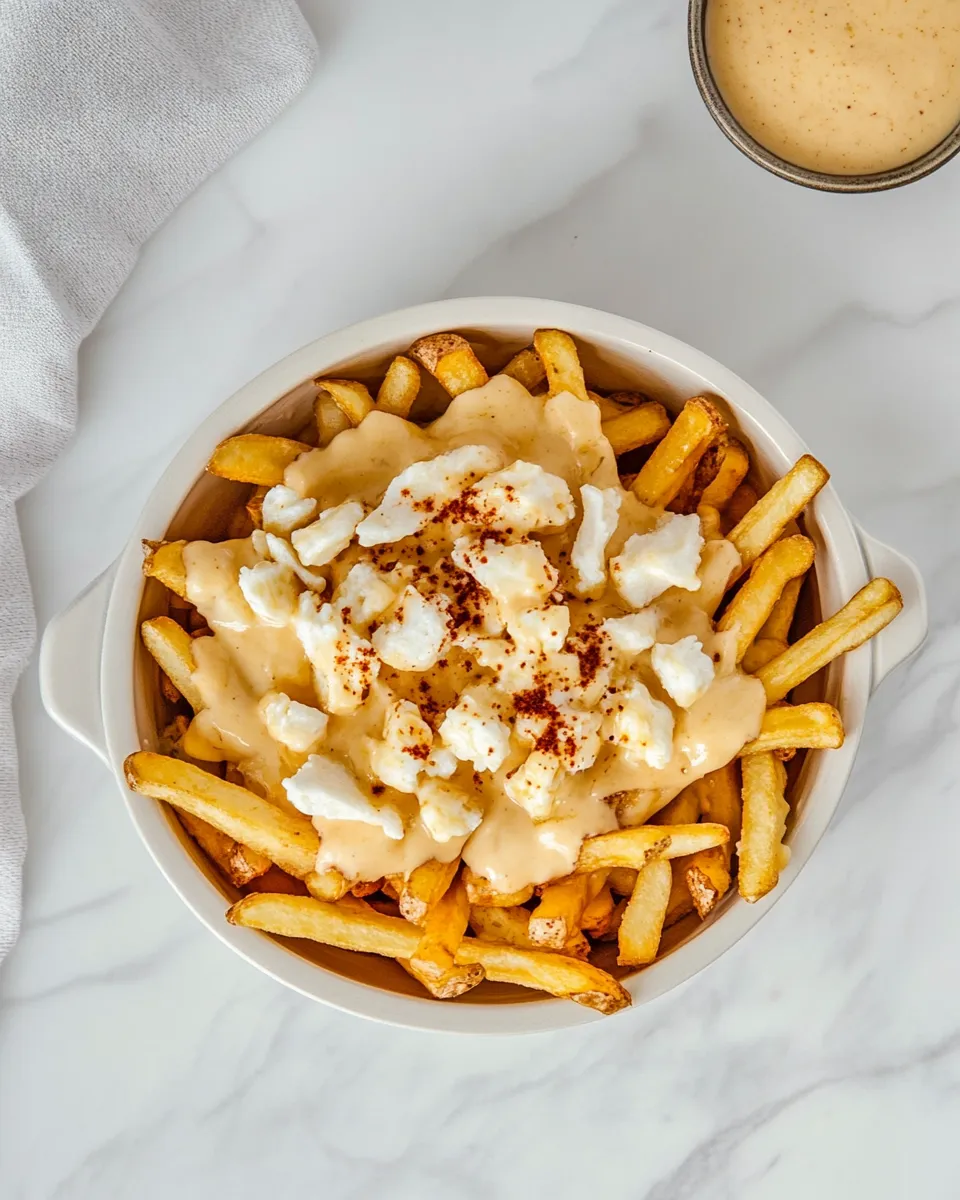
- To serve, arrange the hot fries on a plate or shallow dish, scatter 8 ounces room-temperature white cheddar cheese curds evenly over the fries, then pour the hot gravy over the top so the curds begin to soften and melt.
Ingredients
- 4 medium russet potatoes — washed and cut into 1/4-inch thick fries; pick russets for their starchy texture that crisps well.
- Vegetable oil — for frying (enough to fill a deep pot about 2 inches); use a neutral oil with a high smoke point.
- 1 cup low-sodium beef broth — builds savory depth in the gravy without over-salting.
- 1 cup low-sodium chicken broth — balances the beef broth and adds body.
- 1/2 teaspoon onion powder — background flavor for the gravy.
- 3/4 teaspoon garlic powder — adds warmth and umami without fresh garlic’s texture.
- 2 teaspoons Worcestershire sauce — gives umami and a slight tang that rounds the gravy.
- 3 tablespoons cornstarch — thickening agent for a glossy, clingy gravy.
- 5 tablespoons cold water — used to make the cornstarch slurry so the gravy thickens smoothly.
- Salt and pepper — to taste; seasoning is adjusted at the end so you control the salt level.
- 8 ounces white cheddar cheese curds — at room temperature; they should be squeaky and fresh to soften but not fully melt.
What You’ll Love About This Recipe
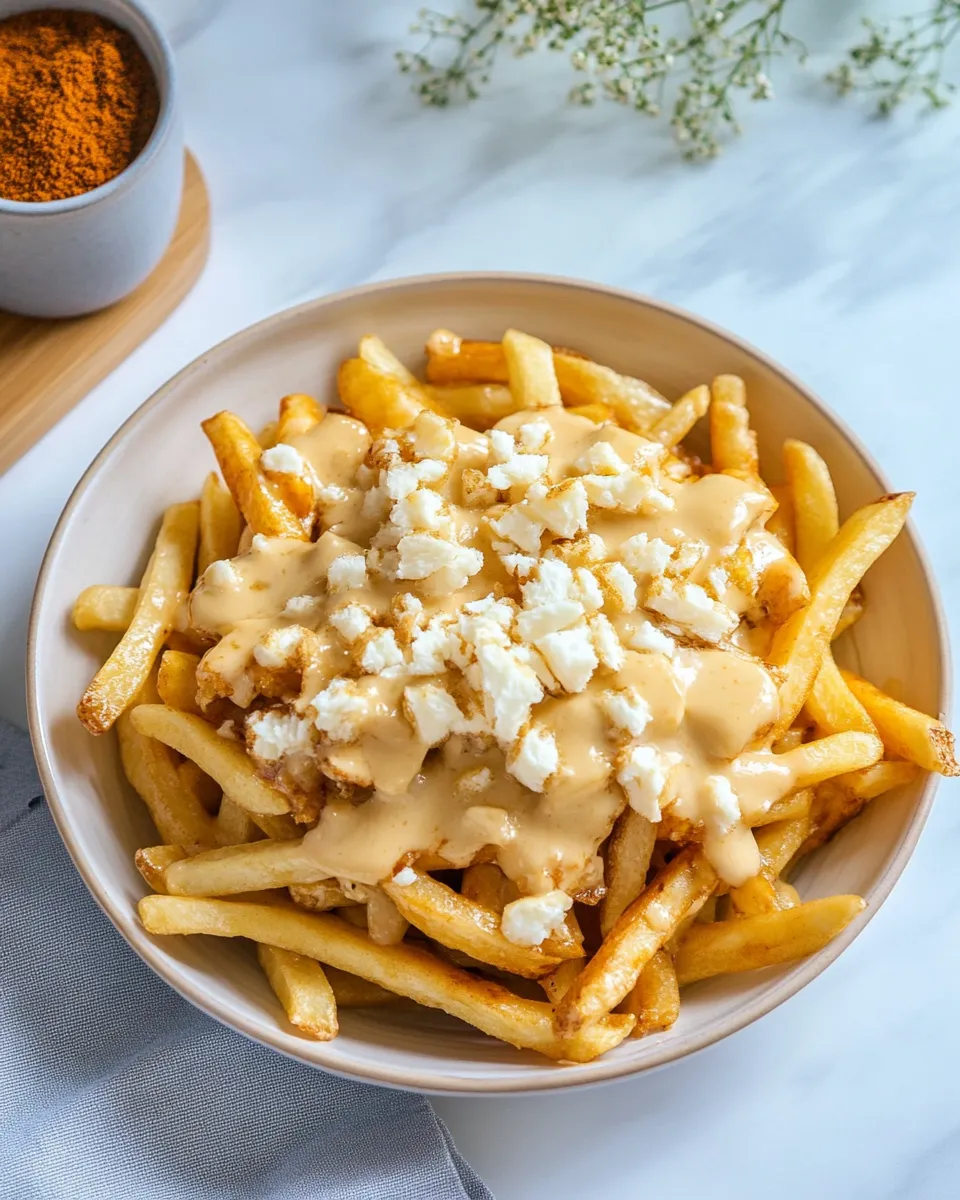
This poutine nails the contrast: crunchy fries, soft interior, melty-but-not-completely-melted curds, and gravy that clings. The two-step frying method—par-frying at a lower temperature, then finishing hotter—creates a crisp exterior while keeping the center tender. The gravy is straightforward, made from pantry broths and thickened with cornstarch for a glossy finish that won’t congeal too quickly.
It’s also flexible—this is a recipe built on technique rather than bells and whistles. Once you master the fry and the gravy, you can scale up, adapt seasonings, or add toppings without losing the core experience. It’s a dependable crowd-pleaser for casual dinners and game nights alike.
Ingredient Flex Options
Want to tweak the profile? You can swap one broth for a stronger stock if you want more depth, but keep the low-sodium base if you plan to salt the fries. Use a high-quality beef broth for a richer gravy, or a mix of beef and chicken (as written) for a balanced, layered taste.
Cheese curds are essential to authentic texture—if you can’t find curds, small chunks of young white cheddar will work, but they won’t have the same “squeak.” For oil, any neutral, high-smoke-point oil is fine. Don’t skip soaking and drying the potatoes; they’re crucial for crispness regardless of the variety you use.
Must-Have Equipment
Simple tools make this much easier:
- Deep pot or Dutch oven — for frying with a stable oil depth of about 2 inches.
- Thermometer — essential for steady frying temperatures (325°F and 360°F). Don’t guess.
- Slotted spoon or spider — removes fries cleanly and lets oil drain.
- Paper towels or a clean kitchen towel — for drying potatoes and draining fries.
- Medium saucepan and small bowl — one for the gravy, one for making the cornstarch slurry.
Avoid These Mistakes
Overcrowding the pot. Fry in small batches so the oil temperature doesn’t plunge and the fries cook evenly. Crowd the pot and you get soggy, greasy fries.
Skipping the soak or not drying the potatoes. The 45-minute cold-water soak removes excess surface starch, which prevents fries from bonding into a gummy mess. Dry completely—surface moisture equals oil sputter and soft fries.
Rushing the fry stages. The two-temperature method matters. Par-frying at 325°F cooks the interior; the final 360°F blast gives color and crunch. If you skip the first stage, you risk burnt outsides and undercooked middles.
Thickening the gravy too aggressively. Add the cornstarch slurry slowly and stop when you reach the desired thickness. Over-thickened gravy can turn pasty as it cools.
Make It Year-Round
Poutine works in every season. In summer, keep it casual with a lighter protein or charred vegetable toppings. In colder months, crown the fries with braised beef, pulled pork, or roasted mushrooms for extra warmth and depth. The gravy’s base is neutral enough to accept seasonal tweaks—add a splash of beer or a little tomato paste for a winter stew-like profile.
For outdoor gatherings, make the fries and gravy on a propane burner to keep them hot and crisp. Assemble close to serving time so the curds stay distinct and the gravy softens them just right.
What Could Go Wrong

If your fries are limp, oil temperature was likely too low or the potatoes retained moisture. Recheck your thermometer calibration and blot the potatoes very dry. If the gravy is grainy after adding the slurry, it may not have been whisked smooth; always mix cornstarch with cold water first and add it slowly while whisking.
If the curds don’t soften, they may be too cold. Bring them to room temperature before serving. If they melt completely into the gravy, the gravy was too hot or the curds were too small—use larger curds or reduce the gravy temperature slightly before pouring.
Cooling, Storing & Rewarming
Leftover fries will soften as they sit; store fries and gravy separately if you expect leftovers. Cool both to room temperature, then refrigerate in airtight containers for up to 3 days. Cheese curds can be stored in their original packaging or an airtight container but are best used within a day or two.
To rewarm fries, spread them on a baking sheet and bake at 425°F for 8–12 minutes until crisp. Reheat gravy gently on the stove over low heat, adding a splash of water or broth if it thickened too much. Assemble just before serving; reheated poutine won’t match freshly made, but separating components helps preserve texture.
Popular Questions
Can I make the gravy ahead? Yes. Make the gravy and refrigerate for up to 3 days. Reheat slowly and whisk to restore gloss and smoothness. If it thickened too much, loosen with a small amount of warm broth or water.
What if I don’t have cheese curds? Small chunks of young cheddar can substitute, but they won’t have the characteristic squeak. Use larger pieces so they soften rather than melt completely.
Is there a baked or air-fryer method? You can bake or air-fry the potatoes for a lower-fat option, but the texture will differ from deep-fried fries. If using an air fryer, par-cook in batches and finish at a higher temperature for crispness.
That’s a Wrap
Poutine is honest food—few ingredients, but each one must be handled with care. Soak and dry the potatoes, respect the two-stage fry, keep your broths low-sodium, and let the curds live at room temperature. With those details handled, you’ll have a plate of poutine that’s crunchy, rich, and deeply comforting.
Make it for a casual dinner, a late-night snack, or to warm friends on a cold evening. The steps are simple, the technique reliable, and the payoff is a plate that invites seconds. Enjoy.
Canadian Poutine Recipe
Equipment
- deep pot or Dutch oven
- Thermometer
- Slotted spoon or spider
- paper towels or clean kitchen towel
- Medium Saucepan
- Small Bowl
- Whisk
Ingredients
Ingredients
- 4 medium russet potatoeswashed and cut into 1/4-inch thick fries
- Vegetable oilfor frying enough to fill a deep pot about 2 inches
- 1 cuplow-sodium beef broth
- 1 cuplow-sodium chicken broth
- 1/2 teaspoononion powder
- 3/4 teaspoongarlic powder
- 2 teaspoonsWorcestershire sauce
- 3 tablespoonscornstarch
- 5 tablespoonscold water
- Salt and pepperto taste
- 8 ounceswhite cheddar cheese curdsat room temperature
Instructions
Instructions
- Place the potato slices in a bowl of cold water and soak for 45 minutes to remove excess starch.
- Drain the potatoes and pat them very dry with paper towels or a clean kitchen towel (remove as much surface moisture as possible).
- Pour vegetable oil into a deep pot or Dutch oven to a depth of about 2 inches and heat to 325°F (use a thermometer).
- Working in small batches (do not overcrowd the pot), fry the potatoes at 325°F for 5–7 minutes, until the fries are soft through but not browned. Remove each batch with a slotted spoon or spider and drain on paper towels.
- When all batches have been par-fried, increase the oil temperature to 360°F.
- Fry the potatoes again in small batches at 360°F for 2–3 minutes, until they are golden and crispy. Drain on paper towels and season lightly with salt while hot.
- Meanwhile, make the gravy: in a medium saucepan combine 1 cup low-sodium beef broth, 1 cup low-sodium chicken broth, 1/2 teaspoon onion powder, 3/4 teaspoon garlic powder, and 2 teaspoons Worcestershire sauce. Bring the mixture to a gentle simmer over medium heat.
- In a small bowl, whisk together 3 tablespoons cornstarch and 5 tablespoons cold water until completely smooth to make a slurry.
- With the broth simmering, slowly whisk in the cornstarch slurry a little at a time until the gravy reaches your desired thickness (you may not need to add it all at once). Continue to cook and whisk for about 2–3 minutes more until the gravy is glossy and thickened.
- Taste the gravy and season with salt and pepper to taste; remove from heat.
- To serve, arrange the hot fries on a plate or shallow dish, scatter 8 ounces room-temperature white cheddar cheese curds evenly over the fries, then pour the hot gravy over the top so the curds begin to soften and melt.