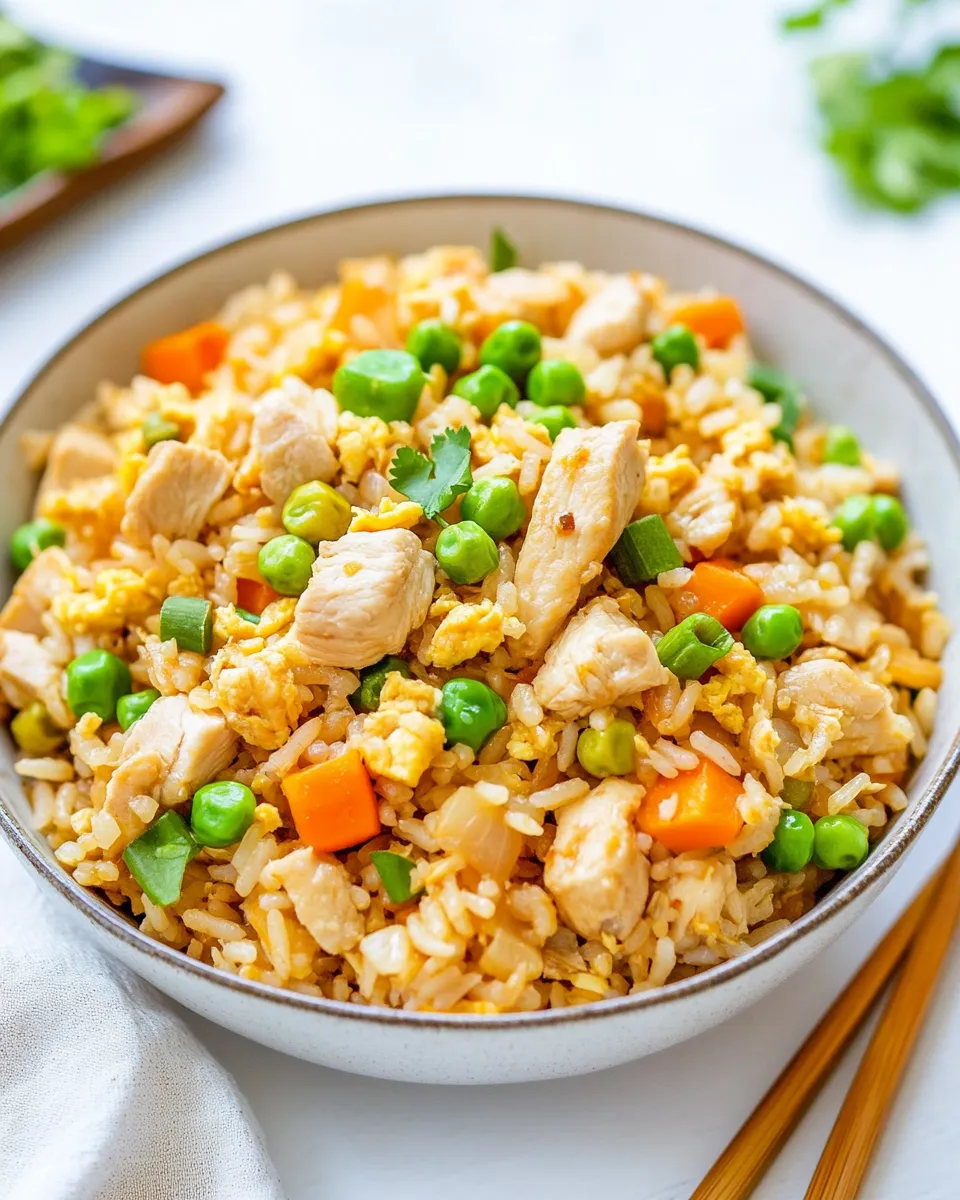
This is the fried rice I turn to when I want fast, satisfying comfort that actually tastes better than anything I pick up. It’s straightforward, uses pantry-friendly ingredients, and comes together in one hot skillet so the flavors caramelize in those little browned bits that make fried rice sing. The technique is simple, and once you’ve done it a couple times you’ll have a go-to weeknight dinner that impresses without fuss.
The recipe is forgiving: you can swap oils, rice types, and even sneak in extra veg without losing the core flavor. The real trick is in sequencing—get the chicken cooked first, move it out, let the veggies and eggs do their thing, then bring everything back together with soy sauce. That order keeps textures right and prevents soggy rice or rubbery chicken.
Below you’ll find the ingredients listed with quick notes, step-by-step instructions exactly as written, and short practical sections on equipment, common mistakes, storage, and smart swaps. Read once, then follow the ordered steps in the skillet—this one’s fast and worth making often.
Ingredients
- 2 tablespoons sesame oil — Adds toasty, nutty flavor; use toasted sesame oil for the classic note.
- 2 tablespoons canola or vegetable oil (I’ve used olive oil too) — Neutral oil helps raise the smoke point so the sesame oil’s flavor remains intact.
- 1 pound boneless skinless chicken breasts, diced into 1/2-inch pieces — Bite-sized pieces cook quickly and give even distribution through the rice.
- 1 ½ cups frozen peas and diced carrots blend (I don’t thaw and use straight from the freezer; optionally add 1/2 cup frozen corn as well) — Frozen mix is convenient and holds up well in the hot pan.
- 3 green onions, trimmed and sliced into thin rounds — Adds fresh sharpness; save a few rings for garnish if you like.
- 2 to 3 garlic cloves, finely minced — Garlic gives quick aromatic lift; mince finely so it distributes without burning.
- 3 large eggs, lightly beaten — Scrambled into the rice for richness and that classic fried-rice texture.
- 4 cups cooked rice (I use white long-grain rice, brown may be substituted. To save time use two 8.8-ounce pouches cooked and ready-to-serve rice) — Day-old or refrigerated rice works best; pouches are fine in a hurry.
- 3 to 4 tablespoons low-sodium soy sauce — Start with less, then add more to taste; low-sodium keeps it from getting too salty.
- salt and pepper, optional and to taste — Use sparingly; soy sauce supplies most of the seasoning.
What You’ll Gather
Gather a large nonstick skillet or wok, a wooden spoon or spatula, a slotted spoon for removing the cooked chicken, and a small bowl for the eggs. Prep your chicken into uniform 1/2-inch cubes, mince the garlic, and slice the green onions. If your rice is clumped from refrigeration, break it up with your hands or a fork before starting so it heats evenly and fries rather than steams.
Measure the oils and soy sauce so they’re within reach. Frozen veg can go straight from the bag into the pan, which saves time. Having everything staged before you heat the pan is the single best time-saver here: fried rice moves fast once the oil is shimmering.
The Method for Better-Than-Takeout Chicken Fried Rice
- Preheat a large nonstick skillet or wok over medium-high heat until hot. Add 2 tablespoons sesame oil and 2 tablespoons canola (or vegetable) oil and heat until the oils shimmer, about 30 seconds.
- Add 1 pound diced boneless skinless chicken breasts (1/2-inch pieces) in a single layer. Cook, stirring or flipping intermittently, for about 3 to 5 minutes, until the chicken is cooked through and no longer pink. Cooking time will vary with piece size and thickness.
- Use a slotted spoon to transfer the cooked chicken to a plate, leaving the oils and any browned bits in the skillet.
- Add 1 1/2 cups frozen peas and diced carrots blend (and the optional 1/2 cup frozen corn if using) plus 3 sliced green onions to the skillet. Cook, stirring occasionally, for about 2 minutes, until the vegetables begin to soften.
- Add 2 to 3 cloves minced garlic and cook, stirring, for 30 to 60 seconds until fragrant.
- Push the vegetables to one side of the skillet. Pour in 3 lightly beaten eggs on the empty side and scramble them, stirring as needed, until they are mostly set (about 1 minute). Then stir the scrambled eggs together with the vegetables.
- Return the cooked chicken to the skillet. Add 4 cups cooked rice, breaking up any clumps, and distribute everything evenly.
- Evenly drizzle 3 to 4 tablespoons low-sodium soy sauce over the rice and stir/toss continually so the rice and chicken absorb the soy sauce. Cook for about 2 to 3 minutes, until everything is heated through.
- Taste and, if desired, adjust seasoning with salt and pepper to taste. Serve immediately.
- Tip: If your rice is very dry, add additional soy sauce a little at a time until the rice is coated and flavored to your liking.
Why Cooks Rave About It
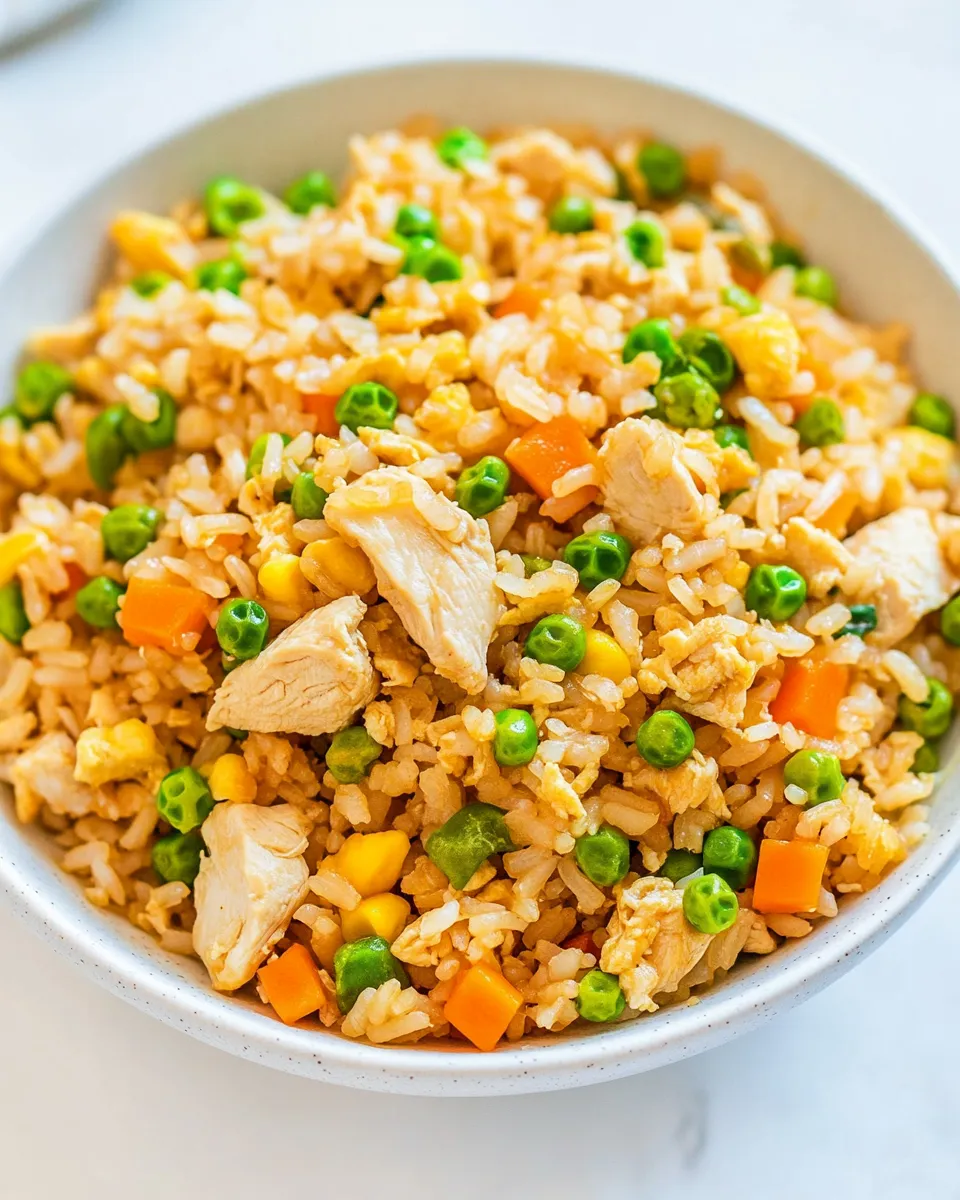
This recipe hits the sweet spot of flavor, speed, and texture. The sesame oil gives a depth you don’t usually get from plain takeout, while the quick sear of the chicken and the high heat of the skillet create browned bits that boost flavor. Scrambling the eggs in the pan rather than adding them raw to the rice produces pockets of soft, silky egg without turning the dish into mush.
It’s equally appealing because it’s scalable and forgiving. If your rice was a touch dry, the soy sauce rehydrates and seasons it. If you like more veg, add it. If you’re in a hurry, pre-cooked rice pouches and frozen veg make this one of the fastest complete mains you can make at home with restaurant-quality results.
Budget & Availability Swaps
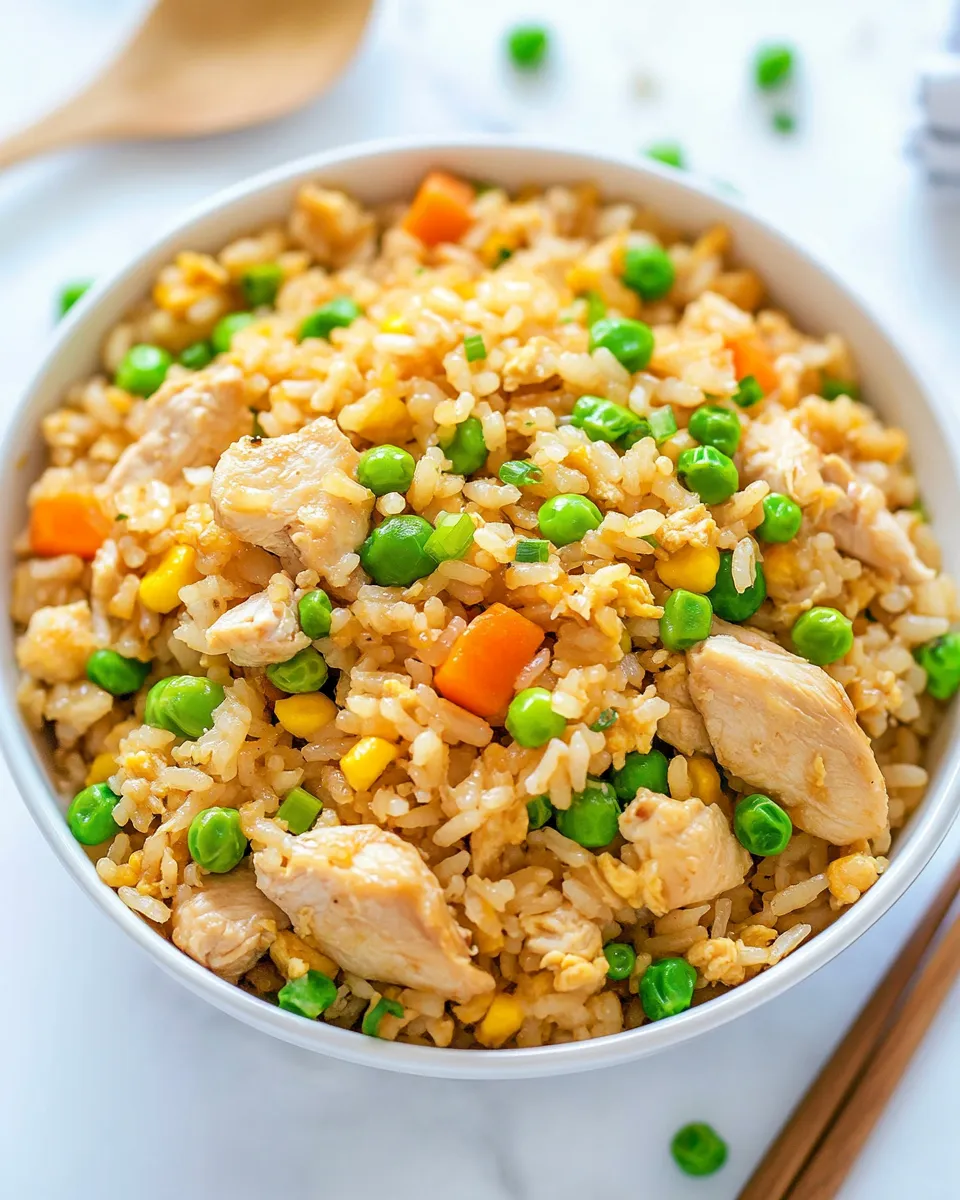
Chicken breast is versatile and usually easy to find, but you can swap for thighs if they’re cheaper; trim and cut to similar-sized pieces and increase cooking time slightly if needed. If sesame oil is expensive or you don’t have it, use a splash for finishing and more neutral oil for frying—sesame has the aroma that finishes the dish, so a little goes far.
If you don’t have fresh green onions, use the white part of a regular onion finely chopped, or stir in a few frozen shallots or chives at the end. For rice, day-old cooked rice is ideal and inexpensive; two ready-to-heat pouches are slightly pricier but save time. Frozen veg blends are cheaper than fresh and require no chopping.
Hardware & Gadgets
A wok is great, but a large nonstick skillet works perfectly and is easier to manage for most home cooks. Use a high-sided skillet if you want more room for tossing. A slotted spoon is useful to lift the chicken out and leave the fond (browned bits) in the pan. A sturdy spatula or wooden spoon helps break up rice clumps and toss everything together without scratching your cookware.
Optional but nice: a kitchen towel under the skillet for stability, tongs for quick flipping, and a rice paddle or fork to separate chilled rice before adding it to the pan. You don’t need fancy gear—just good heat and room to move the food.
Mistakes Even Pros Make
Overcrowding the pan is the most common error. If you pile everything in, the chicken will steam instead of caramelize and the rice will become soggy. Cook in a single layer when searing the chicken, and make sure the pan is hot so you get those flavor-building browned bits.
Another frequent misstep is adding too much soy sauce at once. It’s better to start with the lower range (3 tablespoons), taste, and add up to 4 tablespoons or beyond as needed. Finally, adding eggs too late or too early can ruin texture: scramble them separately in the hot pan and then fold them in so they stay soft and integrated rather than turning rubbery.
Dietary Customizations
To make this gluten-free, substitute tamari or a certified gluten-free soy sauce. For a lower-sodium option, use a reduced-sodium or diluted soy sauce and taste as you go. If you want a vegetarian version, swap the chicken for firm tofu pressed and cubed (pan-fry until browned first). Use vegetable oil and add a splash of toasted sesame oil at the end for the same flavor profile.
If you prefer whole grains, substitute cooked brown rice—expect a slightly firmer texture and a longer initial cooking time if you’re starting from raw grains. For keto or low-carb, swap rice for cauliflower rice and shorten the cook time so it doesn’t turn mushy.
Method to the Madness
Why does this sequence work? High heat and initial searing concentrate flavor in the chicken. Removing it preserves the concentrated fond in the pan so the vegetables and garlic can pick up that flavor. Scrambling eggs separately ensures they set quickly and distribute without overcooking. Bringing everything back together at the end and finishing with soy sauce lets the rice absorb flavor without sitting in liquid and steaming. The whole point is to maintain texture—crisp-tender veg, juicy chicken, and distinct grains of rice.
Storage & Reheat Guide
Store leftovers in an airtight container in the refrigerator for up to 3 days. To reheat, use a skillet over medium heat with a splash of oil and a teaspoon or two of water to help steam and loosen the rice. Stir frequently until heated through. Microwaving works in a pinch: cover loosely and heat in 30- to 45-second intervals, stirring between, to avoid cold spots and dried-out rice.
Freeze only if necessary: the texture of the rice and veggies changes after freezing and thawing, but it’s acceptable for soups or casseroles later. If freezing, cool completely, portion into freezer bags, and use within 1–2 months.
Ask & Learn
If you’re unsure about rice types or timing, start with what you have and take notes: what oil you used, whether you used day-old rice, and how many tablespoons of soy sauce tasted right to you. Those notes turn a good recipe into your signature version. Ask yourself after the first try: was the chicken juicy? Did the rice clump? Adjust heat, time, or rice handling next time.
Got a leftover question or a swap you want to try? Try it, then tweak. Fried rice is forgiving, and the best way to learn is by making it and refining one element at a time—rice texture, oil balance, or soy sauce level.
Save & Share
If this recipe becomes a regular, save it where you keep favorites and note your preferred soy sauce amount and protein swap. It makes a weeknight dinner faster and a weekend crowd-pleaser when doubled. Share the recipe with friends who love quick, bold flavors—this one’s an easy way to show that homemade often beats takeout.
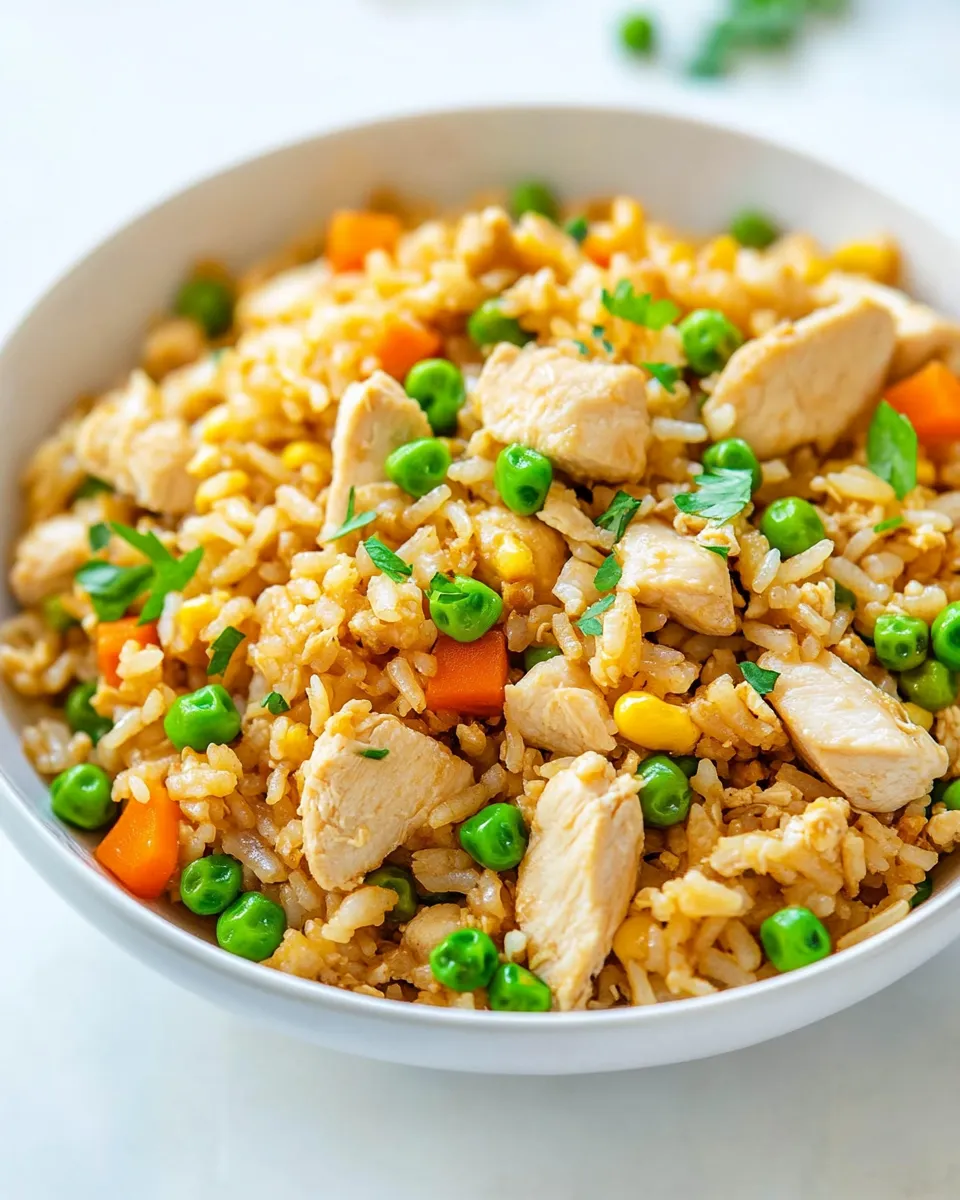
Easy Better-Than-Takeout Chicken Fried Rice
Equipment
- large nonstick skillet
Ingredients
Ingredients
- 2 tablespoonssesame oil
- 2 tablespoonscanola or vegetable oil (I've used olive oil too)
- 1 poundboneless skinless chicken breasts diced into 1/2-inch pieces
- 1 1/2 cupsfrozen peas and diced carrots blend (I don’t thaw and use straight from the freezer; optionally add 1/2 cup frozen corn as well)
- 3 green onions trimmed and sliced into thin rounds
- 2 to 3 garlic cloves finely minced
- 3 large eggs lightly beaten
- 4 cupscooked rice (I use white long-grain rice, brown may be substituted. To save time use two 8.8-ounce pouches cooked and ready-to-serve rice)
- 3 to 4 tablespoonslow-sodium soy sauce
- salt and pepper optional and to taste
Instructions
Instructions
- Preheat a large nonstick skillet or wok over medium-high heat until hot. Add 2 tablespoons sesame oil and 2 tablespoons canola (or vegetable) oil and heat until the oils shimmer, about 30 seconds.
- Add 1 pound diced boneless skinless chicken breasts (1/2-inch pieces) in a single layer. Cook, stirring or flipping intermittently, for about 3 to 5 minutes, until the chicken is cooked through and no longer pink. Cooking time will vary with piece size and thickness.
- Use a slotted spoon to transfer the cooked chicken to a plate, leaving the oils and any browned bits in the skillet.
- Add 1 1/2 cups frozen peas and diced carrots blend (and the optional 1/2 cup frozen corn if using) plus 3 sliced green onions to the skillet. Cook, stirring occasionally, for about 2 minutes, until the vegetables begin to soften.
- Add 2 to 3 cloves minced garlic and cook, stirring, for 30 to 60 seconds until fragrant.
- Push the vegetables to one side of the skillet. Pour in 3 lightly beaten eggs on the empty side and scramble them, stirring as needed, until they are mostly set (about 1 minute). Then stir the scrambled eggs together with the vegetables.
- Return the cooked chicken to the skillet. Add 4 cups cooked rice, breaking up any clumps, and distribute everything evenly.
- Evenly drizzle 3 to 4 tablespoons low-sodium soy sauce over the rice and stir/toss continually so the rice and chicken absorb the soy sauce. Cook for about 2 to 3 minutes, until everything is heated through.
- Taste and, if desired, adjust seasoning with salt and pepper to taste. Serve immediately.
- Tip: If your rice is very dry, add additional soy sauce a little at a time until the rice is coated and flavored to your liking.
Notes
Storage:
Recipe is best warm and fresh but will keep airtight in the fridge for up to 5 days or in the freezer for up to 4 months. Reheat gently as desired.