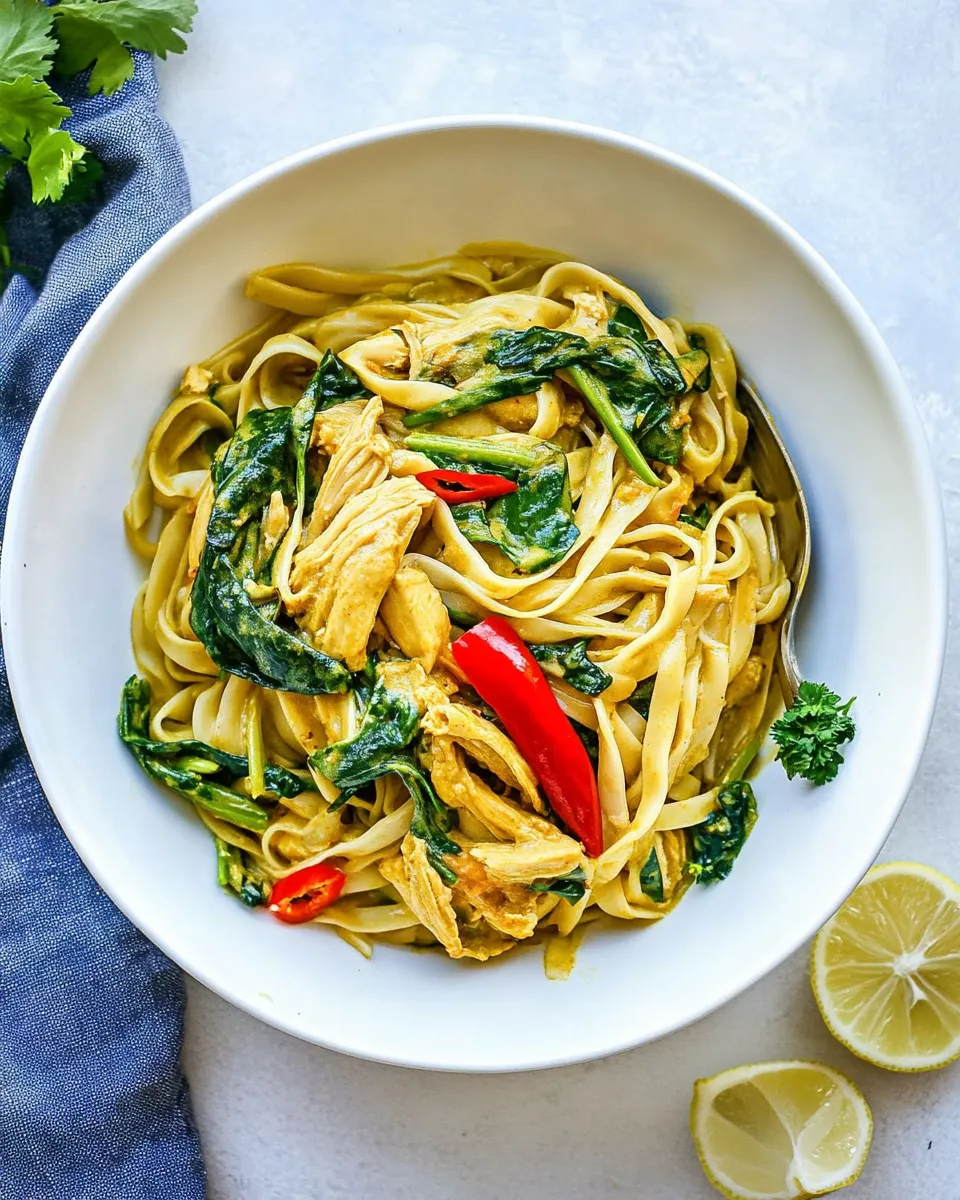
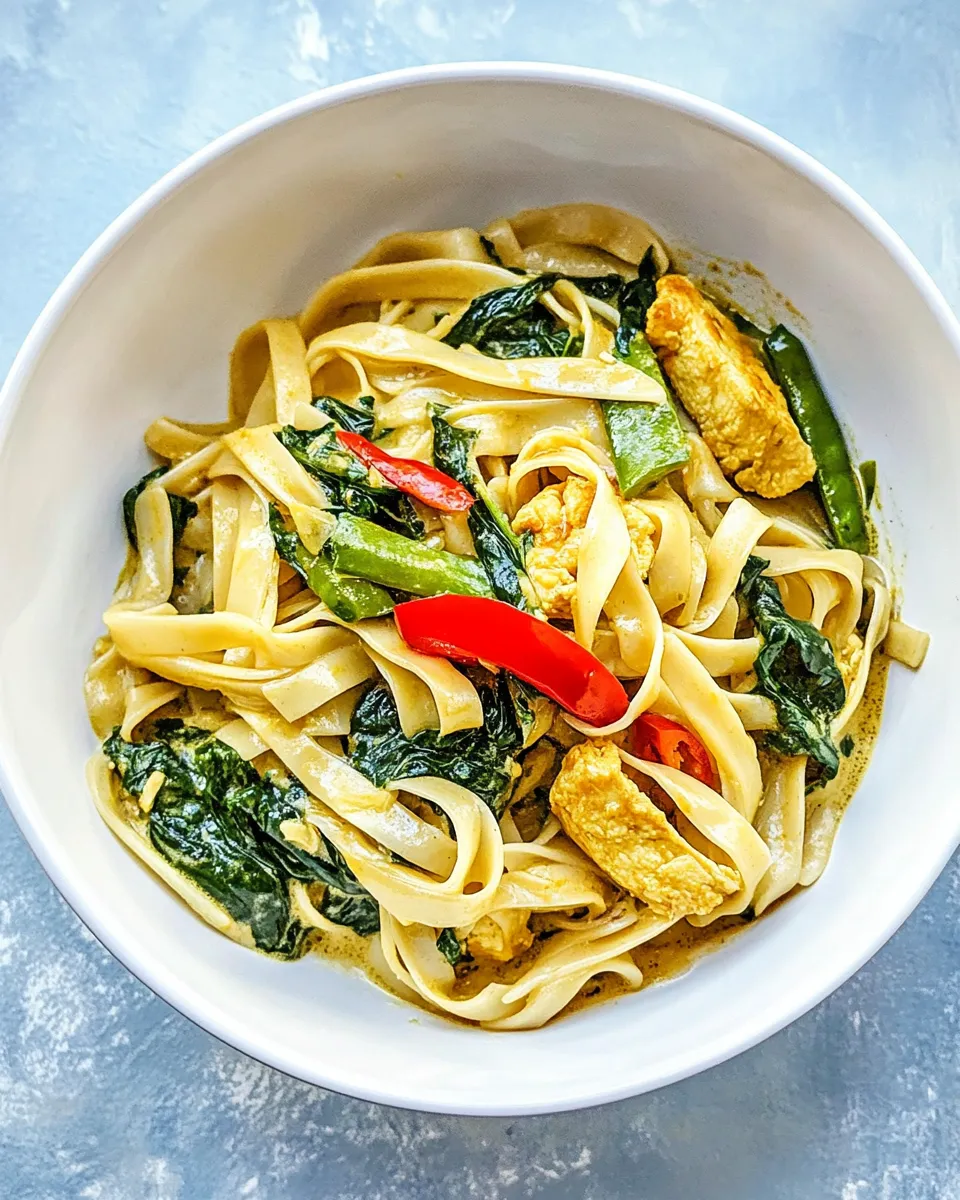
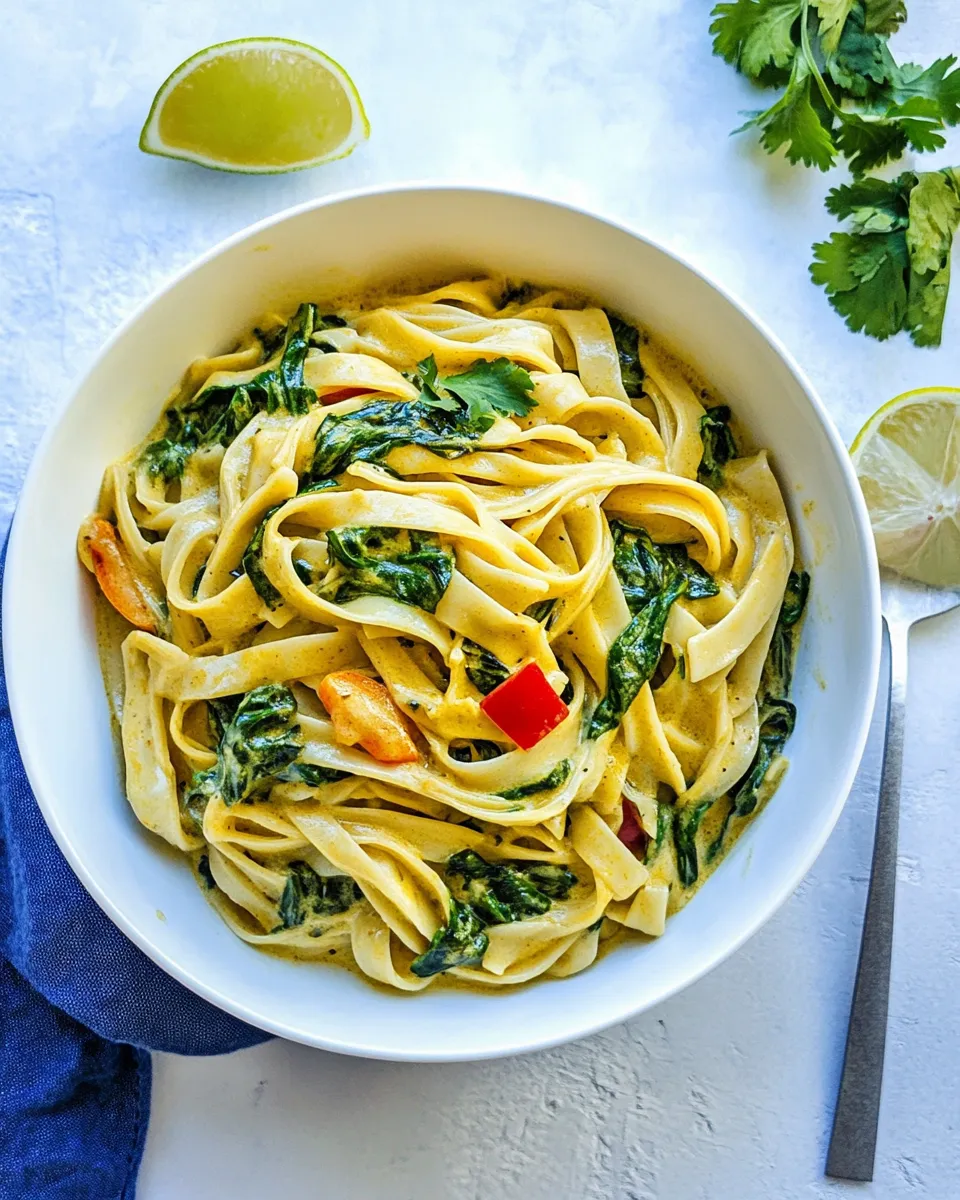
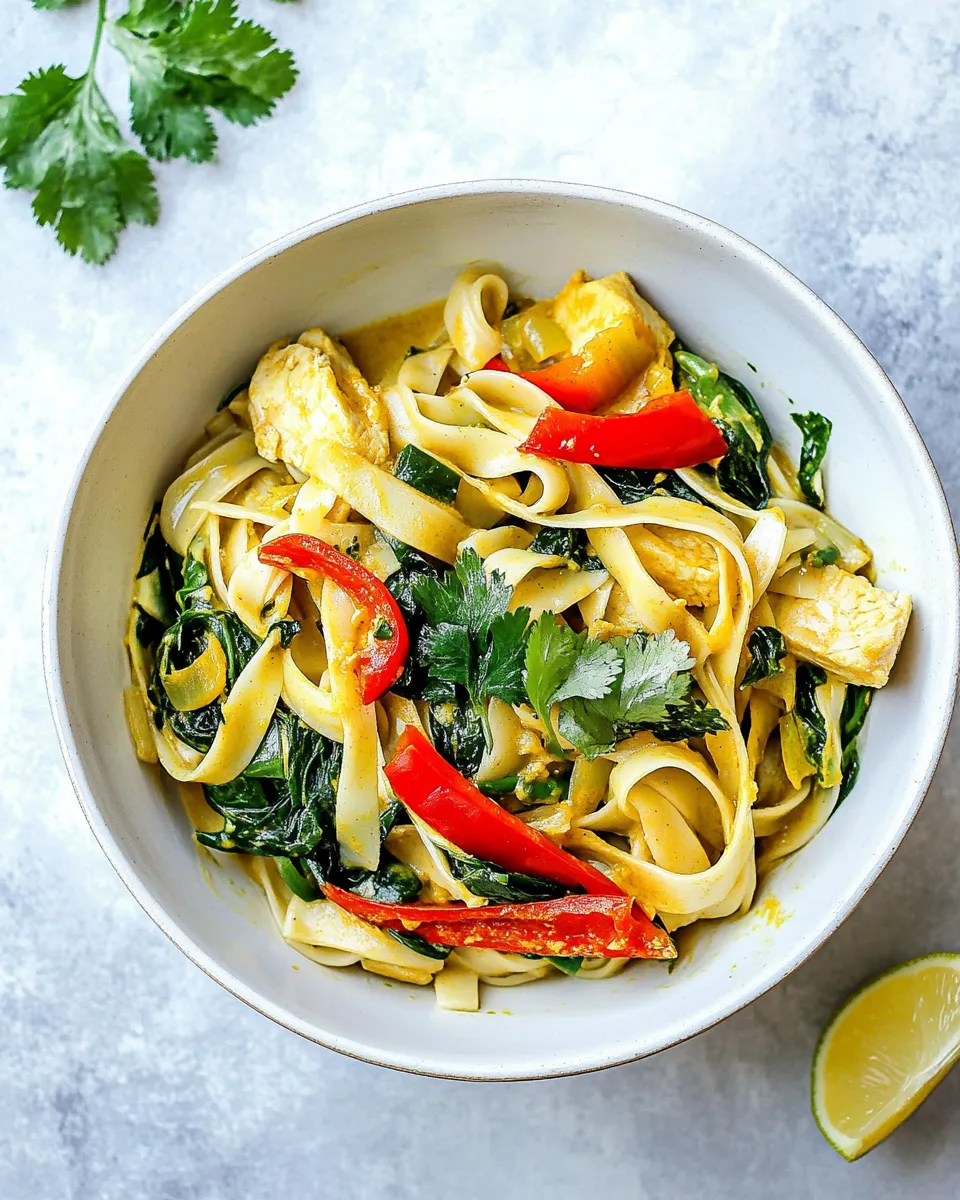
I love meals that feel like a small, comforting adventure: bright, aromatic curry folded into slippery rice noodles with crisp vegetables and golden tofu. This Green Curry Noodles recipe is exactly that kind of dinner—fast to pull together, forgiving if you juggle a few things, and deeply flavorful without fuss. It’s the kind of dish I turn to when I want something a little special on a weeknight but don’t want to spend an hour at the stove.
There’s a balance here between bold Thai green curry paste, creamy light coconut milk, and the brightness of lime and basil. The rice noodles soak, the tofu gets a little sear, and everything finishes in one skillet so the sauce clings to the noodles. It’s a one-pan meal that still feels polished.
Below I’ll walk you through the ingredients and the exact steps, explain why this method works every time, and share the small troubleshooting notes I learned through testing. If you want a quick, reliable, and satisfying weeknight dinner with bright, herbaceous flavors, this is it.
Ingredient Rundown
Ingredients
- 6 ounces flat rice noodles, such as A Taste of Thai linguini — soak first so they finish perfectly in the skillet and don’t overcook.
- 16 ounces firm tofu — gives structure and soaks up curry flavors; pressing and drying helps it brown.
- 1 red bell pepper — adds sweetness and a crisp-tender bite; slice thin for quick cooking.
- 12 ounces baby bok choy — stems add crunch, leaves wilt into the sauce for color and texture.
- 1 teaspoon neutral vegetable oil — a high-smoke oil for searing the tofu without interfering with the curry aromatics.
- Kosher salt and fresh black pepper — the simplest way to lift flavors; add in stages and taste.
- 3 tablespoons Thai green curry paste, such as Thai Kitchen — the flavor backbone; fry briefly to bloom the aromatics.
- 1 1/4 cups canned light coconut milk — creates the sauce base without being overly heavy.
- Juice of 1 lime, 2 to 3 tablespoons, plus more lime wedges for serving — brightens and balances the richness; lime wedges let diners add acidity to taste.
- 1 1/2 tablespoons fish sauce, check labels for vegan and vegetarian, I recommend Halo brand — deep umami and salt; adjust to preference.
- 1 tablespoon light brown sugar — handles a bit of sweet to mellow the heat from the curry paste.
- 1/2 cup fresh basil leaves — add at the end to preserve fresh herbal perfume and color.
Make Green Curry Noodles: A Simple Method
- Put the rice noodles in a large bowl, cover with very hot tap water, stir to separate them, and let soak for 25 minutes. Drain and set aside.
- While the noodles soak, cut the tofu into 1/2-inch cubes. Lay the cubes on a layer of paper towels, cover with another layer of paper towels, and let drain for 10 to 15 minutes while you prepare the vegetables. After draining, gently pat the tofu dry with paper towels.
- Core the red bell pepper and thinly slice it. Trim the ends from the baby bok choy, slice the stems, and leave the leaves whole.
- Heat a large nonstick skillet over medium heat and add 1 teaspoon neutral vegetable oil. Warm until the oil shimmers.
- Add the tofu to the skillet, season with kosher salt and fresh black pepper, and cook, tossing occasionally, until the cubes are golden on most sides, about 5 minutes.
- Push the tofu toward the edges of the skillet to make a well in the center. Add 3 tablespoons Thai green curry paste to the well and fry, stirring constantly, for just a few seconds until fragrant (the paste may spit).
- Pour in 1 1/4 cups canned light coconut milk. Add the juice of 1 lime (about 2 to 3 tablespoons), 1 1/2 tablespoons fish sauce, and 1 tablespoon light brown sugar. Stir to combine.
- Bring the mixture to a simmer.
- Add the sliced red pepper and cook, stirring occasionally, until the pepper is crisp-tender, about 4 to 5 minutes.
- Add the drained rice noodles and the bok choy to the skillet. Cook, stirring and tossing often to prevent clumping and to ensure even cooking, until the noodles are tender and the bok choy stems are softened, about 5 minutes.
- Remove the skillet from the heat and stir in 1/2 cup fresh basil leaves until wilted. Taste and adjust seasoning with salt and pepper if desired.
- Serve immediately, with lime wedges for squeezing if you like.
Why This Recipe Is Reliable
This recipe is built around a small set of reliable techniques: pre-soak the noodles, dry and sear the tofu, bloom the curry paste, and finish everything in one pan. Soaking rice noodles first prevents them from turning gluey while they cook in the sauce. Drying the tofu lets it brown instead of steam. Frying the curry paste briefly in the hot oil brings out essential aromatics that raw paste can’t show.
The order of operations matters but isn’t fragile. You can prep your vegetables while the noodles and tofu drain. The skillet finish—where noodles absorb the saucy coconut-lime mix—ensures flavor clings to the noodles, not just pools in the pan. Because everything comes together quickly at the end, timing is forgiving within a few minutes.
Budget & Availability Swaps
- Rice noodles — if you can’t find the recommended brand, other flat rice noodles with similar width work fine; any change in thickness will alter soaking times, so keep an eye on tenderness.
- Tofu — firm is specified because it holds up in the skillet. Silken or extra-firm will behave differently; press and dry whichever tofu you choose.
- Thai green curry paste — brands vary in heat and herb intensity. Taste and adjust the amount if you prefer milder or hotter; the recipe amount aims for a balanced medium.
- Fish sauce — look for labeled vegan/vegetarian alternatives if you avoid anchovy; the salty-umami role is what matters most.
What’s in the Gear List
- Large bowl for soaking noodles — a wide bowl helps the noodles separate when you stir them.
- Large nonstick skillet — the nonstick surface helps when cooking tofu and tossing noodles without a lot of oil.
- Paper towels — for pressing and patting the tofu dry.
- Tongs or a wide spatula — for tossing noodles and stirring without breaking them.
What Not to Do
Don’t skip drying the tofu. If it’s wet, it will steam rather than brown and won’t get that pleasant crust. Don’t dump noodles straight into boiling liquid without soaking; they’ll clump and cook unevenly. Avoid frying the curry paste for too long—just a few seconds in the hot oil is enough to release aromatics; overcooking can make it bitter.
Also, don’t add the basil early. It’s fragile. Add it off the heat so it wilts gently and keeps its fresh scent. And don’t overdo the fish sauce at the start; it’s easier to add saltiness at the end than to fix something that’s already too salty.
Fresh Seasonal Changes
This is a versatile framework for seasonal produce. In spring and summer, add thinly sliced snap peas or tender baby corn for crunch. In cooler months, swap bok choy for tender-stem broccoli or choy sum, sliced thin so it softens during the five-minute finish. Keep the cooking times similar: the goal is crisp-tender stems and wilted leaves.
Remember to stick to vegetables that will cook quickly when added at the sauce stage. Thick root vegetables will need to be precooked or blanched before adding to the skillet.
What I Learned Testing
Small timing points that made the biggest difference
Soaking time for the rice noodles is easy to get wrong. I tested shorter soaks and longer soaks. Twenty-five minutes gave the best texture for this specific linguini-style rice noodle—pliable enough to finish in the pan without falling apart. If your noodles are wider or thinner, adjust slightly and test by biting a strand before draining.
Patience with the tofu pays off. Thirty minutes of pressing gives a firmer exterior. When I rushed this step, the tofu stayed pale and soggy. Also, the little well in the center of the skillet for frying the curry paste is a tiny theatrical move but it concentrates heat so the paste blooms fast and evenly.
Leftovers & Meal Prep
Leftovers keep well for 2 to 3 days in the fridge in an airtight container. The noodles will soak up more sauce over time, so if you plan to reheat, add a splash of water or a tablespoon of coconut milk and reheat gently in a skillet to loosen the sauce. Reheat quickly over medium-low heat, stirring to separate noodles and revive the basil flavor—though fresh basil is best added just before serving, so add a few fresh leaves when reheating if you have them.
For meal prep: store the components separately when possible. Keep the tofu and noodle-sauce mixture apart, if you can, to preserve texture. Bring to room temperature briefly before reheating, then warm in a skillet so the noodles and tofu pick up heat evenly.
Your Questions, Answered
How spicy is this?
That depends mostly on the curry paste brand. The amount here lands at a moderate level for most Thai green curry pastes; if you want milder heat, start with 2 tablespoons and adjust up after tasting at the simmer stage.
Can I make this gluten-free?
Yes—rice noodles and coconut milk are gluten-free, but check labels on curry paste and fish sauce if you need strict gluten-free certification. The suggested ingredients are typically gluten-free, but brands change formulations.
Can I use a different protein?
Yes, but keep cook times in mind. Thinly sliced shrimp or pre-cooked shredded chicken could be stirred in at the noodle stage; raw chicken would need to be cooked through before adding noodles. The tofu method in this recipe is designed for a quick pan-sear; other proteins will change timing and technique.
Hungry for More?
If you liked this Green Curry Noodles, try using the same skillet-finish idea with peanut satay sauce or a quick red curry twist—swap the paste and adjust lime and sugar to taste. Keep a jar of good Thai curry paste and light coconut milk in your pantry and you can build a weeknight wok or skillet dinner in under 30 minutes.
Thanks for cooking along. I hope this becomes one of your reliable weeknight staples—bright, quick, and satisfying when you need a little comfort with a kick.
Green Curry Noodles
Equipment
- wokor large skillet
Ingredients
Ingredients
- 6 ouncesflat rice noodles such as A Taste of Thai linguini
- 16 ouncesfirm tofu
- 1 red bell pepper
- 12 ouncesbaby bok choy
- 1 teaspoonneutral vegetable oil
- Kosher salt and fresh black pepper
- 3 tablespoonsThai green curry paste such as Thai Kitchen
- 1 1/4 cupscanned light coconut milk
- Juice of 1 lime 2 to 3 tablespoons, plus more lime wedges for serving
- 1 1/2 tablespoonsfish sauce check labels for vegan and vegetarian, I recommend Halo brand
- 1 tablespoonlight brown sugar
- 1/2 cupfresh basil leaves
Instructions
Instructions
- Put the rice noodles in a large bowl, cover with very hot tap water, stir to separate them, and let soak for 25 minutes. Drain and set aside.
- While the noodles soak, cut the tofu into 1/2-inch cubes. Lay the cubes on a layer of paper towels, cover with another layer of paper towels, and let drain for 10 to 15 minutes while you prepare the vegetables. After draining, gently pat the tofu dry with paper towels.
- Core the red bell pepper and thinly slice it. Trim the ends from the baby bok choy, slice the stems, and leave the leaves whole.
- Heat a large nonstick skillet over medium heat and add 1 teaspoon neutral vegetable oil. Warm until the oil shimmers.
- Add the tofu to the skillet, season with kosher salt and fresh black pepper, and cook, tossing occasionally, until the cubes are golden on most sides, about 5 minutes.
- Push the tofu toward the edges of the skillet to make a well in the center. Add 3 tablespoons Thai green curry paste to the well and fry, stirring constantly, for just a few seconds until fragrant (the paste may spit).
- Pour in 1 1/4 cups canned light coconut milk. Add the juice of 1 lime (about 2 to 3 tablespoons), 1 1/2 tablespoons fish sauce, and 1 tablespoon light brown sugar. Stir to combine.
- Bring the mixture to a simmer.
- Add the sliced red pepper and cook, stirring occasionally, until the pepper is crisp-tender, about 4 to 5 minutes.
- Add the drained rice noodles and the bok choy to the skillet. Cook, stirring and tossing often to prevent clumping and to ensure even cooking, until the noodles are tender and the bok choy stems are softened, about 5 minutes.
- Remove the skillet from the heat and stir in 1/2 cup fresh basil leaves until wilted. Taste and adjust seasoning with salt and pepper if desired.
- Serve immediately, with lime wedges for squeezing if you like.