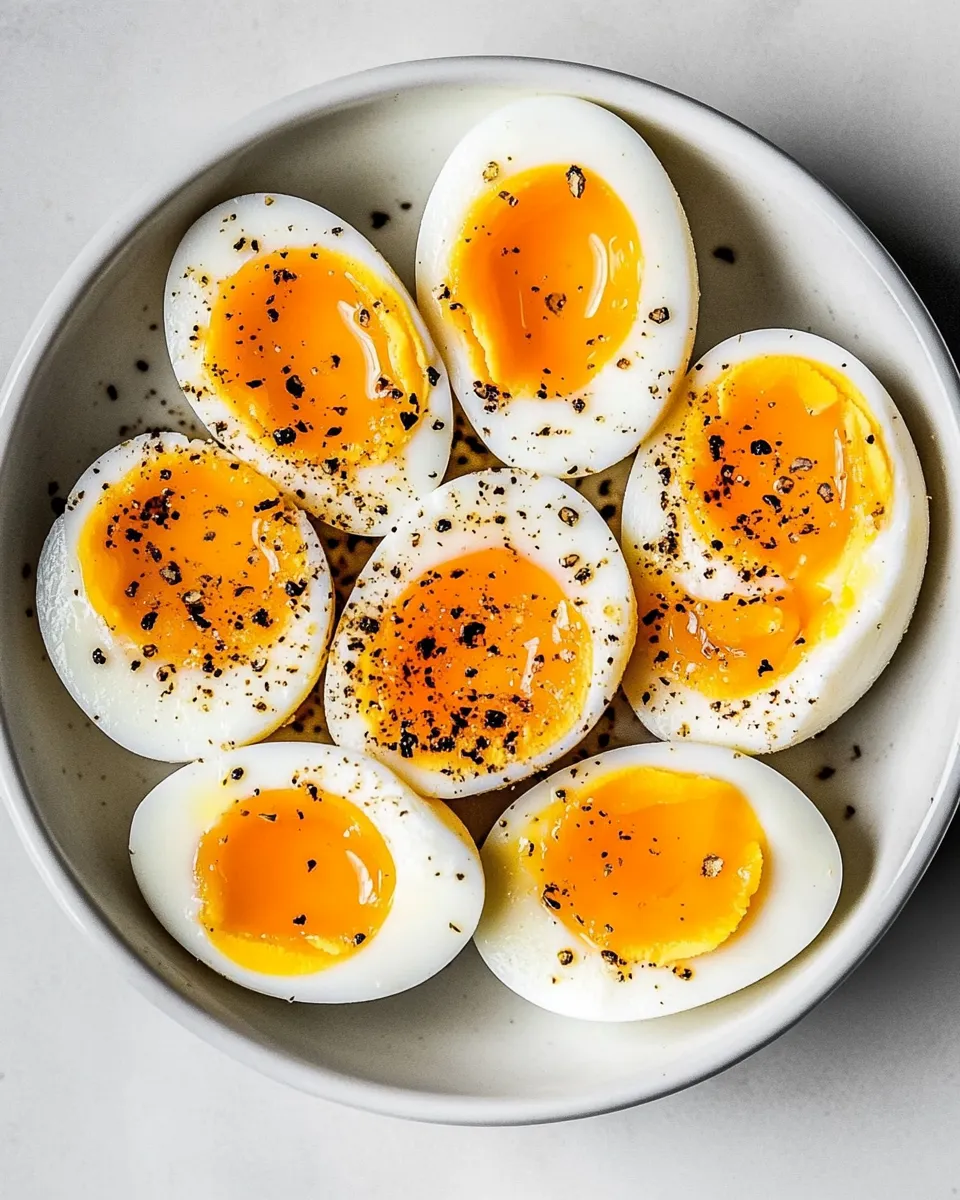
I make soft boiled eggs almost every week. They are fast, comforting, and so forgiving when you follow a few simple rules. This recipe is my go-to when I want a tender white and a creamy, glossy yolk to top a salad, a bowl of ramen, or a slice of buttered toast.
No special tools are required. You need a medium pot, a slotted spoon, an ice bath, and a reliable timer. The goal is a gentle simmer, careful timing, and an immediate chill — those three things control the final texture.
I’ll walk you through exactly what to do, why each step matters, and how to tweak the timing if you want runnier or firmer yolks. Practical tips, common mistakes to avoid, and storage notes are included so you can repeat this with confidence.
Gather These Ingredients
- 2 to 4 large eggs* — the main player; large eggs are what the timing in this recipe is calibrated to.
- Sea salt — finishing salt to enhance the yolk’s richness; use coarse or flaky for texture if you like.
- Freshly ground black pepper — brightens the flavor; grind just before serving for the best aroma.
The Method for Soft Boiled Eggs
- Fill a medium pot with cold water so it will cover 2 to 4 large eggs by about 1 inch.
- Bring the water to a gentle simmer (small, steady bubbles around the edges; not a rolling boil).
- Meanwhile, prepare a bowl of ice water large enough to hold the eggs.
- Using a slotted spoon, carefully lower the eggs one at a time into the simmering water. Start timing once the eggs are in the water and the simmer is steady.
- Cook at a gentle simmer for 7 minutes for a soft but set yolk, or 6 minutes for a runnier yolk. Keep the water at a gentle simmer the whole time.
- When the time is up, immediately transfer the eggs to the ice water and chill for about 1–2 minutes, until cool enough to handle.
- Tap the bottom of each egg to crack a small piece of shell, then use a small spoon to slide between shell and egg and carefully remove the shell.
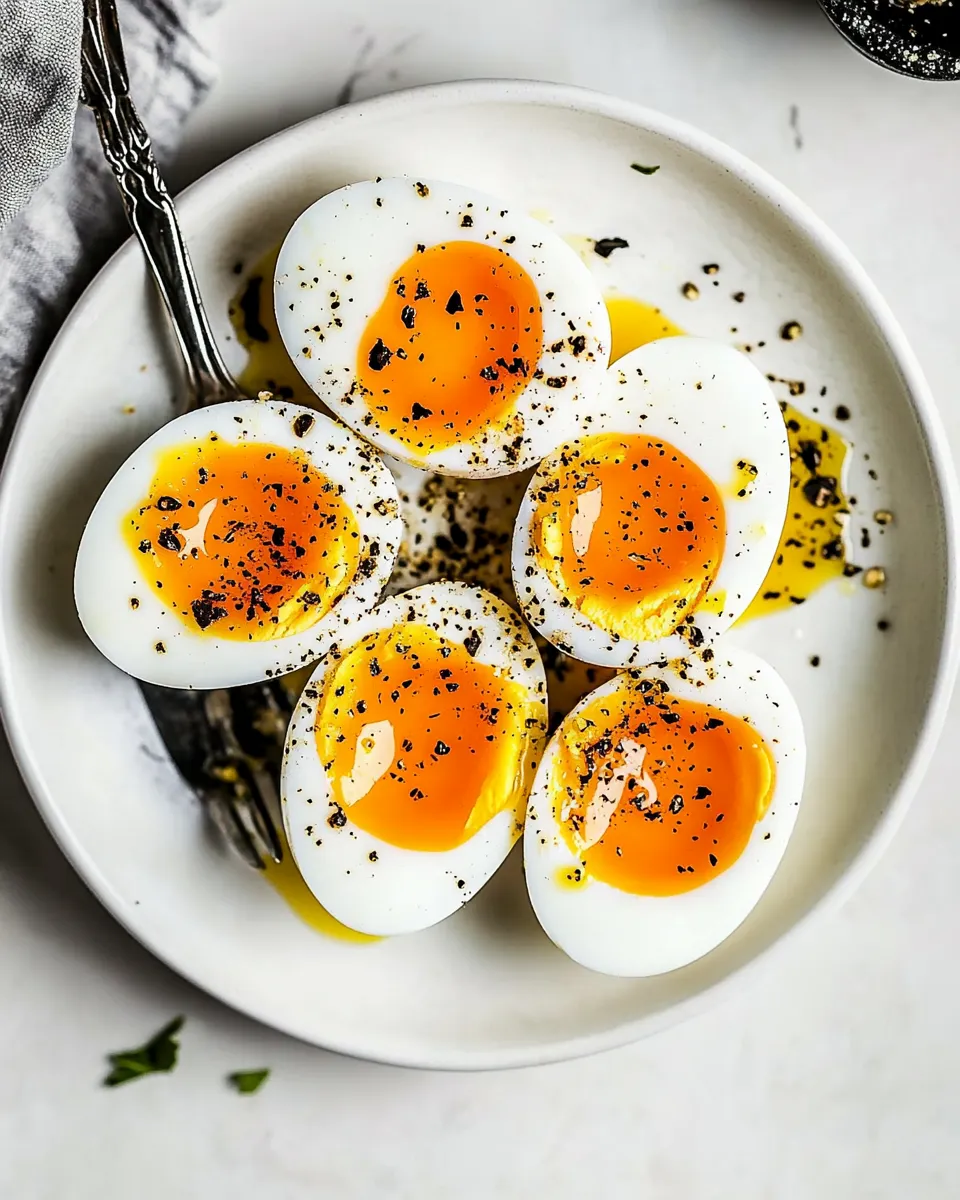
- Season the peeled eggs with sea salt and freshly ground black pepper to taste and serve.
Why This Recipe Works
Soft boiled eggs depend on controlled heat and timing. A gentle simmer is key because vigorous boiling tosses eggs around and causes uneven cooking and cracks. Small, steady bubbles transfer heat consistently and minimize agitation.
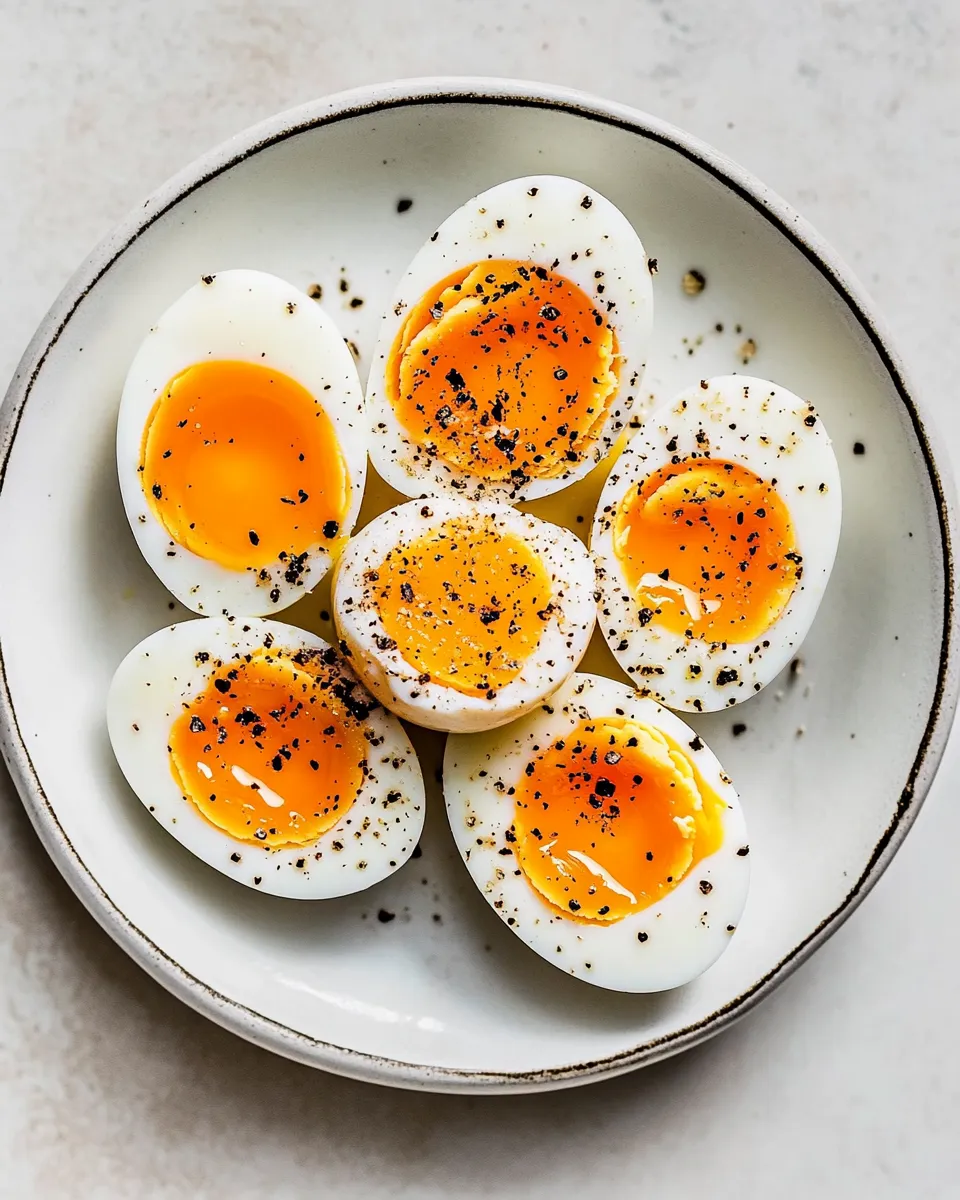
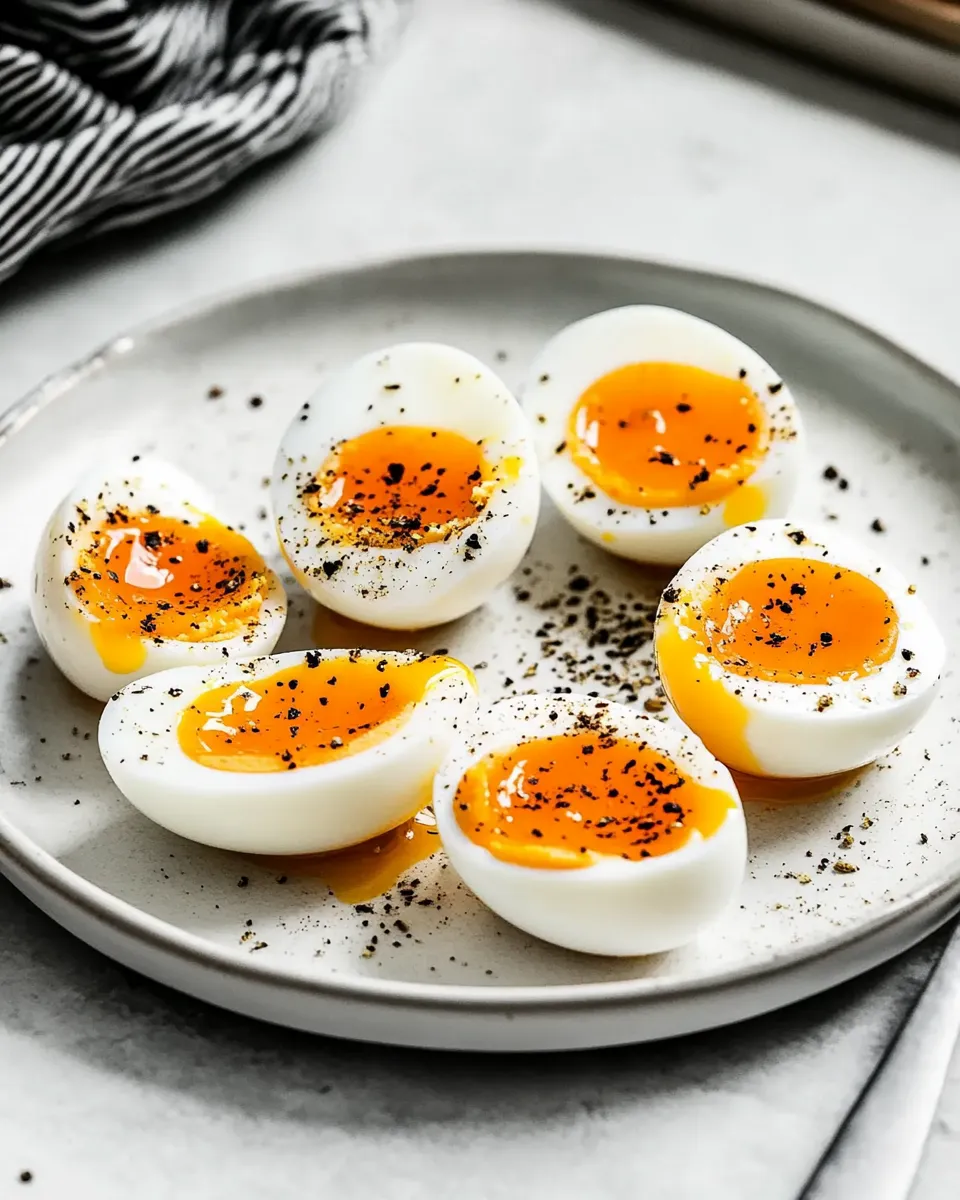
Timing determines yolk texture. At 6 minutes you get a glossy, very runny yolk; at 7 minutes the edges of the yolk set while the center remains creamy. The difference between runny and jammy is small, but it’s noticeable — that’s why the recipe gives both options.
The ice bath is not optional. It stops carryover cooking immediately. Eggs continue to cook from residual heat unless you cool them quickly, so a brief chill ensures the yolk stays at the texture you intended.
Swap Guide
Egg size and starting temperature
If you use eggs that are larger or smaller than “large,” expect the texture to vary slightly. Larger eggs may need roughly 10–15 seconds more; smaller eggs a little less. If your eggs are straight from a very cold fridge, you can still use the times as written, but monitor one egg the first time you try a new batch.
Alternative seasonings
Sea salt and black pepper are classic and simple. If you want to change it up, try a sprinkle of smoked paprika, a few flakes of chili, or a drop of soy sauce and sesame oil for an Asian twist. These are additions to the finished egg and won’t affect cooking.
Setup & Equipment
- Medium pot — big enough that 2–4 eggs are covered by about an inch of water; too small and the water temperature will drop too much when eggs are added.
- Slotted spoon — for lowering eggs gently and retrieving them without splashing.
- Large bowl — for the ice water bath to stop cooking quickly.
- Timer — a kitchen timer or phone timer you can trust; accuracy matters here.
- Small spoon — helpful for easing the shell away after cracking and for scooping out the egg if serving in an egg cup.
Steer Clear of These
- Rolling boils — they jostle eggs, increasing the chance of cracks and uneven whites.
- Skipping the ice bath — this lets residual heat keep cooking the yolk past your intended doneness.
- Starting the timer too early — start timing only after the eggs are in the simmering water and the simmer is steady, otherwise you’ll misjudge texture.
- Overcrowding the pot — too many eggs in a small pot lowers the water temperature and results in inconsistent results.
- Peeling immediately without cracking first — tapping and loosening the membrane with a spoon makes peeling smoother and cleaner.
Make It Fit Your Plan
Meal prep: soft boiled eggs are excellent in breakfast meal-prep bowls. Cook them the morning you plan to eat them for best texture, or prepare and refrigerate (see storage further down) for up to a couple of days.
On a budget: eggs are an economical protein. Use them as the finishing touch on soups, rice bowls, noodle bowls, or salads to add richness and satiety without much extra cost.
Family meals: soft boiled eggs are quick to scale. Increase water and pot size as needed and keep the eggs from touching too closely to keep results consistent. For kids, a 6-minute egg can be very runny; consider 7 minutes for a slightly firmer yolk that still feels luxurious.
Behind the Recipe
Egg whites and yolks coagulate at different temperatures. Whites set around 140–150°F (60–65°C) and yolks set higher, which is why you can get a firm white with a soft yolk. Gently introducing heat and removing the eggs at a precise time lets you capture that contrast.
Starting the eggs in cold or hot water is a debated topic. This method starts eggs in cold water but relies on bringing the pot to a gentle simmer before timing — the key is that the eggs are exposed to steady, controlled heat rather than sudden high heat.
Carryover cooking — the idea that food continues to cook after heat is removed — matters here. The ice bath halts that process, so you get the exact yolk texture intended by the timing.
Save It for Later
Leftover soft boiled eggs can be refrigerated. If they are peeled, place them in a sealed container and keep them for up to 48 hours. Unpeeled eggs keep a bit longer and are less likely to dry out; store them in their shells in the refrigerator for up to 3–4 days.
Reheating soft boiled eggs is tricky because the yolk texture changes easily. If you must reheat, warm them gently by placing them in warm (not boiling) water for a minute to take the chill off — avoid high heat which will further cook the yolk.
Reader Questions
Q: Can I use older eggs? A: Yes. Slightly older eggs peel more easily than very fresh eggs because the membrane separates a bit from the shell. Texture won’t be affected as long as you follow the timing.
Q: My eggs cracked while cooking. What happened? A: Cracks are usually caused by temperature shock or a boil that’s too vigorous. A gentle simmer and lowering eggs in with a slotted spoon reduce that risk. Cracked eggs are still safe to eat; the white may look a little frilly.
Q: How do I get a perfectly centered yolk? A: Centering a yolk depends on how the egg sits in the shell as it forms inside the chicken — not something you can control in the kitchen. More movement during chilling or cooking can shift the yolk, so gentle handling helps preserve position.
Q: Can I salt the water? A: Salt in the cooking water won’t affect the yolk’s texture much. It may help if a cracked egg leaks a little white, as salted water causes proteins to coagulate slightly faster, but it’s not necessary.
The Last Word
Soft boiled eggs are one of those small techniques that make a big difference in everyday cooking. Gentle heat, accurate timing, and a quick ice bath are all it takes to get the soft white and creamy yolk you want. Once you practice this method a couple of times, you’ll know exactly where 6 and 7 minutes sit on your stove and what your preferred yolk looks like. Simple, quick, reliable — and endlessly useful.
How to Make Soft Boiled Eggs
Equipment
- Medium pot
Ingredients
Ingredients
- 2 to 4 large eggs*
- Sea salt
- Freshly ground black pepper
Instructions
Instructions
- Fill a medium pot with cold water so it will cover 2 to 4 large eggs by about 1 inch.
- Bring the water to a gentle simmer (small, steady bubbles around the edges; not a rolling boil).
- Meanwhile, prepare a bowl of ice water large enough to hold the eggs.
- Using a slotted spoon, carefully lower the eggs one at a time into the simmering water. Start timing once the eggs are in the water and the simmer is steady.
- Cook at a gentle simmer for 7 minutes for a soft but set yolk, or 6 minutes for a runnier yolk. Keep the water at a gentle simmer the whole time.
- When the time is up, immediately transfer the eggs to the ice water and chill for about 1–2 minutes, until cool enough to handle.
- Tap the bottom of each egg to crack a small piece of shell, then use a small spoon to slide between shell and egg and carefully remove the shell.
- Season the peeled eggs with sea salt and freshly ground black pepper to taste and serve.
Notes
*or as many or few eggs as you desire
Eggs may vary based on size, type, and freshness.