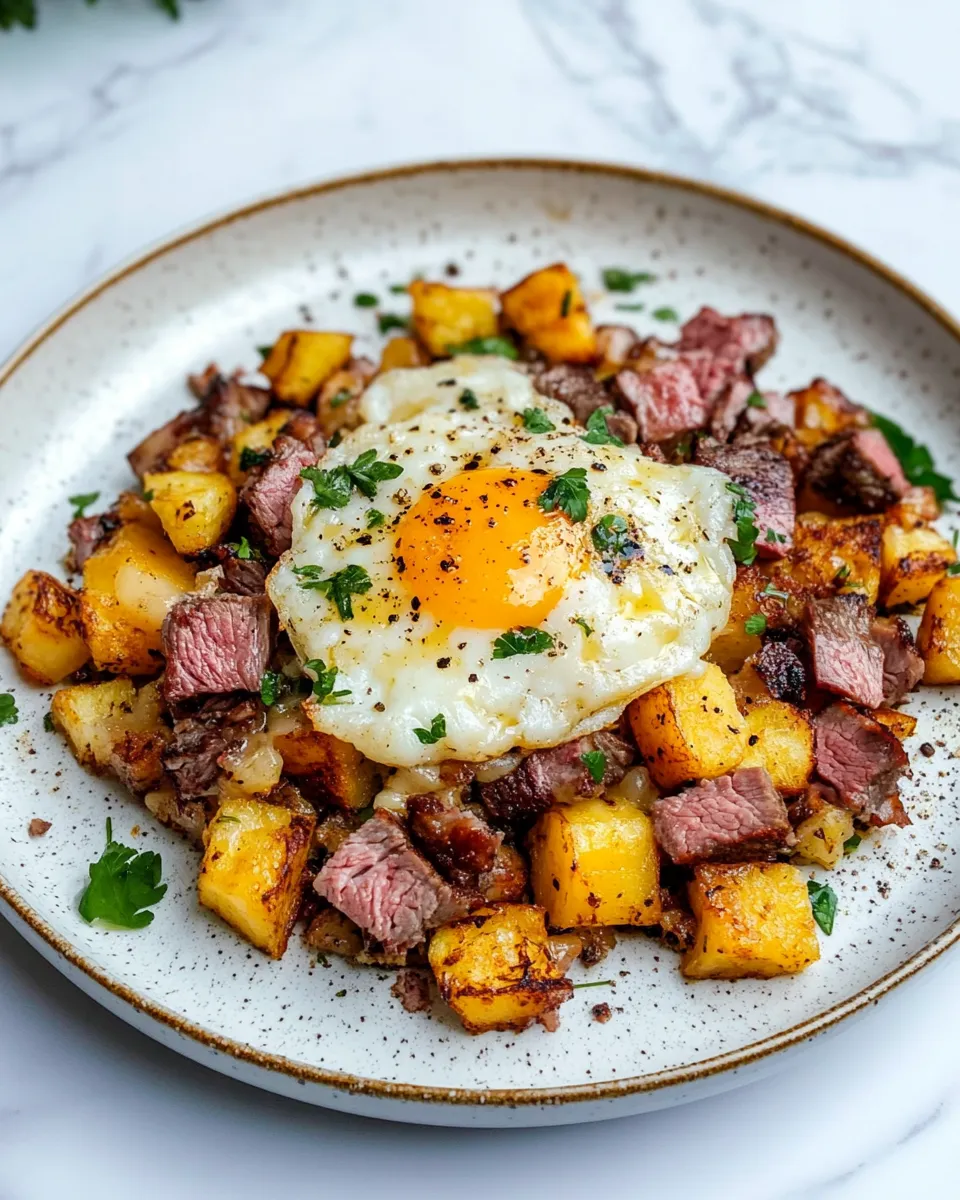
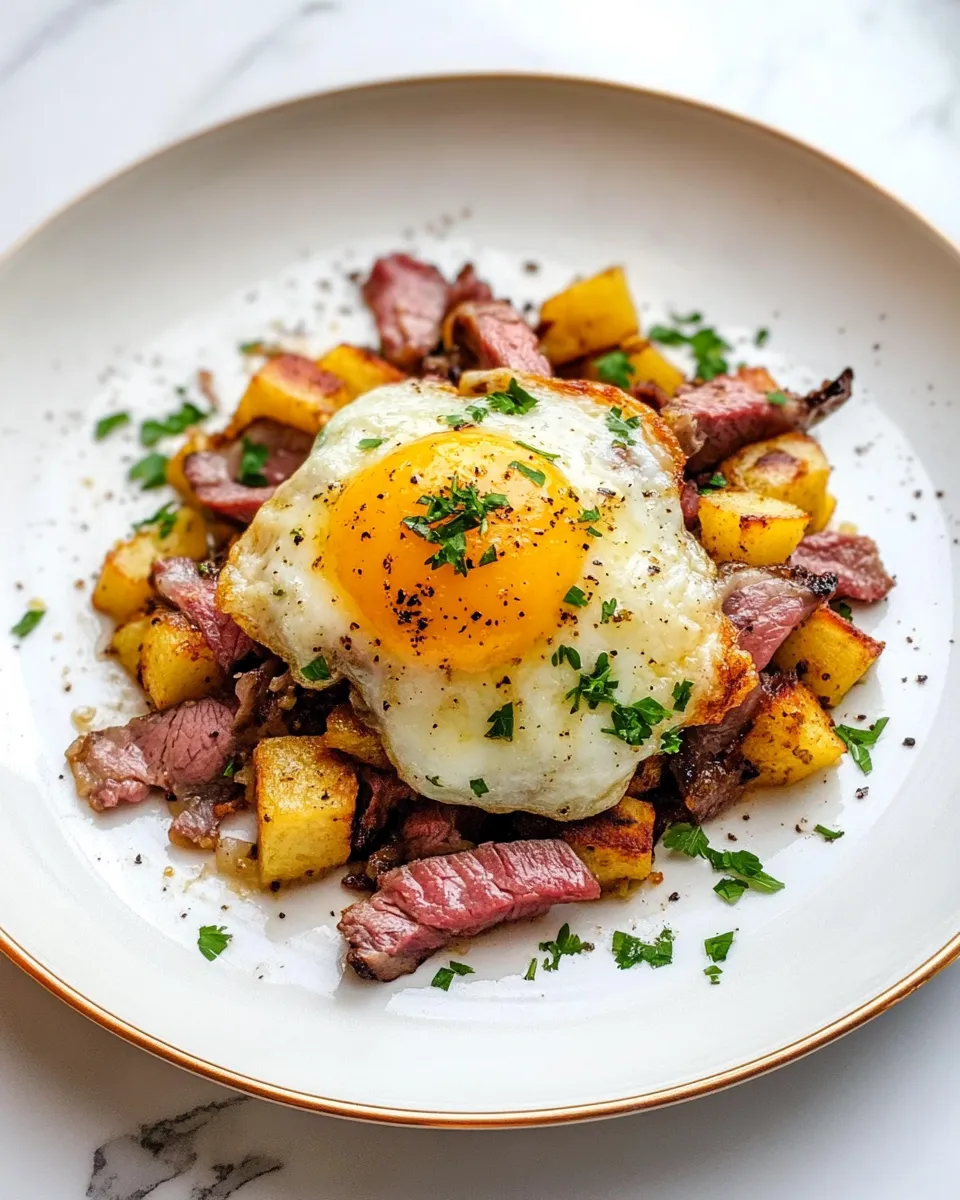
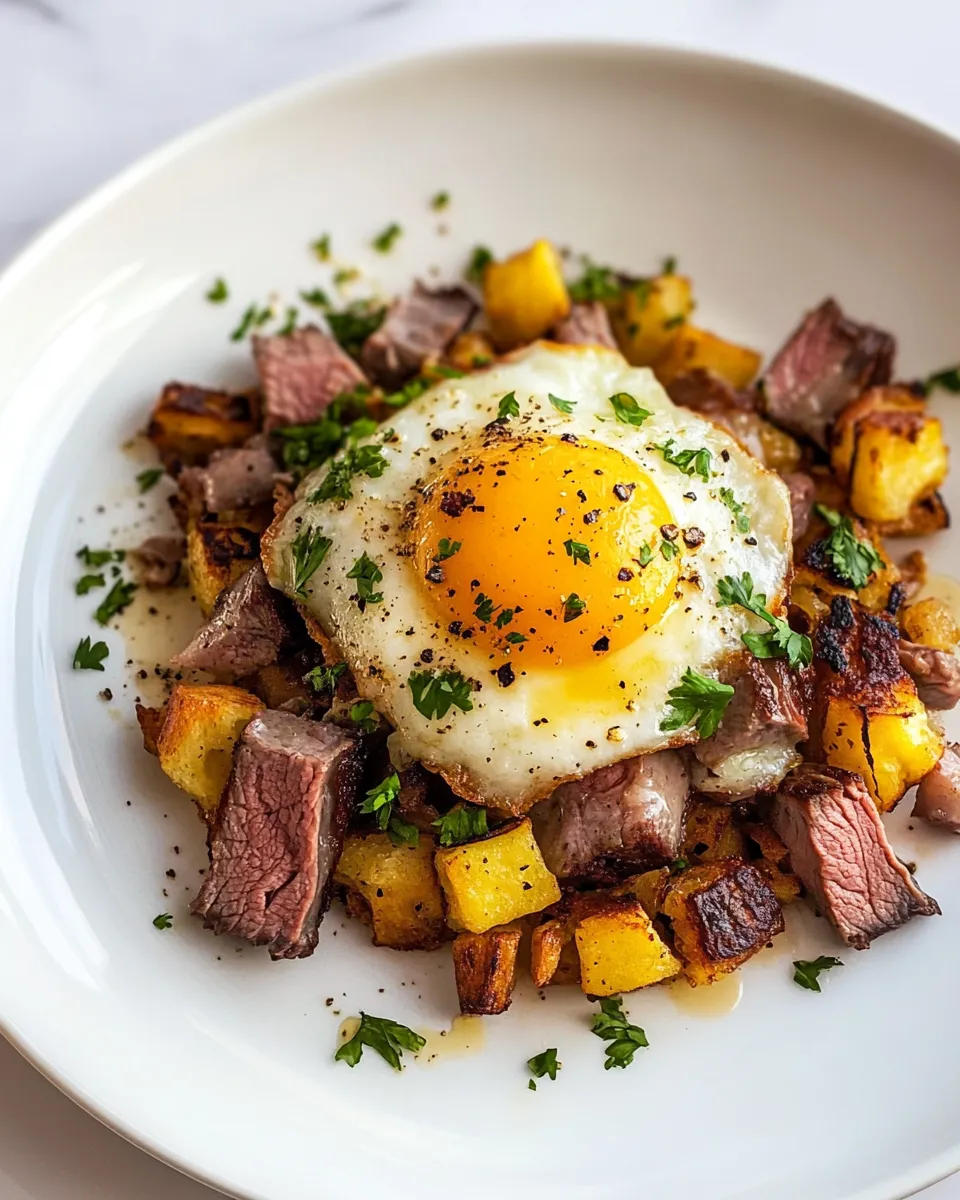
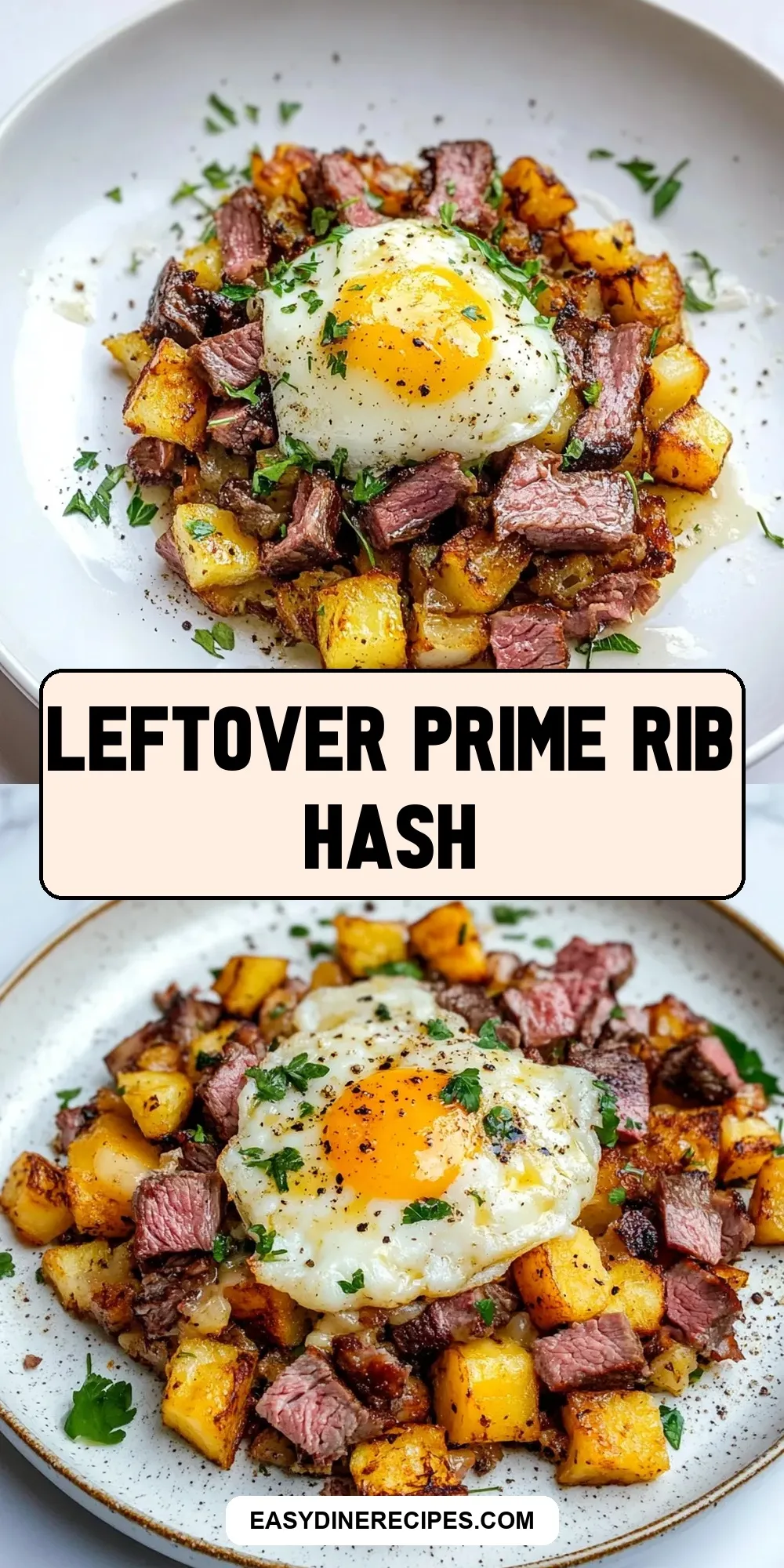
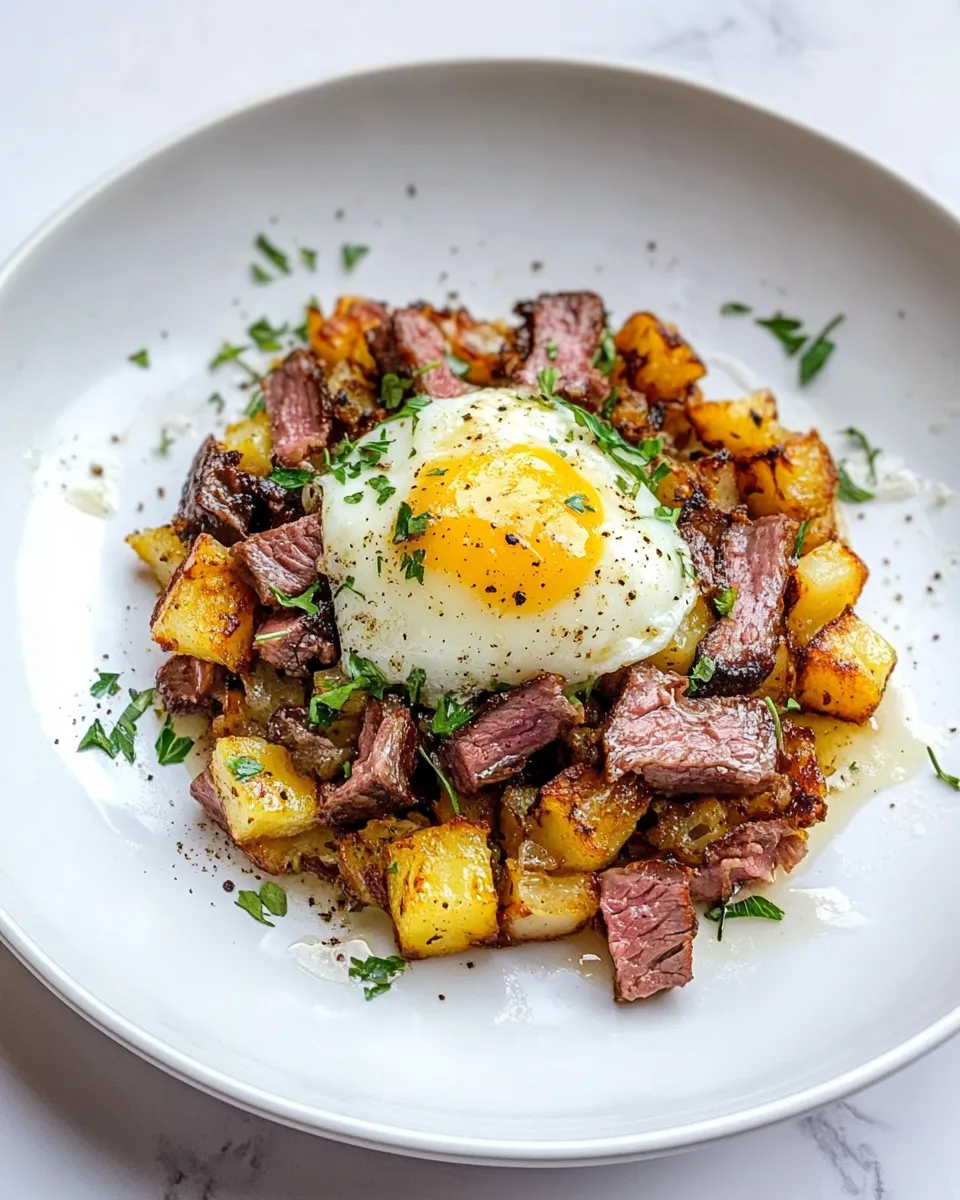
Leftover Prime Rib Hash is the kind of dish that turns last night’s centerpiece into something new and undeniably comforting. It uses simple ingredients you already have — potatoes, onions, a little butter and oil — and lets the prime rib shine without any fuss. The result is a savory, slightly crisp hash topped with a runny egg. It’s straightforward, forgiving, and utterly satisfying.
I love making this when there’s a bowl of thinly sliced prime rib in the fridge. The meat only needs a minute or two in the pan to warm, so the potatoes and onions get the proper time to caramelize and develop flavor. Serve it for brunch, a no-fuss weeknight supper, or a special leftover breakfast the next morning.
Ingredient List
- 2 cups potatoes, diced — parboiled so they crisp without overcooking; size should be roughly uniform for even cooking.
- 1 tablespoon olive oil — lowers the smoke point of butter and helps with browning; use a neutral extra-virgin for flavor or a lighter oil if you prefer.
- 2 tablespoons butter — adds rich flavor and helps with caramelization; watch the heat so it doesn’t burn.
- 1 medium onion, finely diced — gives sweetness and foundation; cook slowly to coax out caramelized flavor.
- salt to taste — essential for seasoning; add incrementally and taste as you go.
- black pepper to taste — freshly ground if possible; it brightens the whole dish.
- 2 cups prime rib, cooked (leftover), thinly sliced — the star ingredient; thin slices warm quickly without drying out.
- parsley, fresh, chopped, for garnish — a fresh herb contrast to the rich meat; chop finely and add right before serving.
- 4 large eggs, cooked, sunny side up, fried or poached — runny yolks are traditional and meld with the hash; cook the style you prefer.
Stepwise Method: Leftover Prime Rib Hash
- Put 2 cups diced potatoes in a medium pot and cover with cold water. Bring to a boil over high heat, then boil about 10 minutes or until the potatoes are just fork-tender.
- Drain the potatoes thoroughly and set them aside to drain/dry for a few minutes.
- Heat a large cast-iron (or heavy) skillet over medium heat. Add 1 tablespoon olive oil and 2 tablespoons butter and allow the butter to melt.
- Add 1 medium onion, finely diced, to the skillet. Cook, stirring occasionally, until the onions soften and begin to caramelize, about 10 minutes.
- Add the drained potatoes to the skillet. Spread them into an even layer and cook, stirring and flipping occasionally, until the potatoes begin to brown, about 8–10 minutes. Season with salt and black pepper to taste.
- Stir in 2 cups thinly sliced cooked prime rib and cook just until the meat is warmed through, about 1–3 minutes. Remove the skillet from the heat.
- While the hash finishes, cook 4 large eggs sunny-side up, fried, or poached according to your preference.
- Divide the hash among plates, top each portion with one cooked egg, garnish with fresh chopped parsley, and serve immediately.
Why This Recipe Works
This hash is built on contrasts: tender interior potatoes with crisped edges, sweet caramelized onion, and savory, beefy prime rib. Parboiling the potatoes first shortens the skillet time and ensures a tender center. Draining and letting them dry before they hit the hot pan encourages a golden crust rather than a mushy texture.
Combining olive oil and butter gives you flavor and a higher effective smoke point. The butter contributes nutty, rich notes while the oil helps prevent burning. Slicing the prime rib thinly means the meat barely needs time in the pan — just a quick warm-through so it stays juicy.
Finally, the runny egg is not decorative — its yolk acts like a silky sauce that binds the components, adding richness and moisture where the roasted meat and potatoes meet.
Allergy-Friendly Substitutes
- Dairy (butter) — use an equal amount of olive oil or a neutral high-heat oil if you need to avoid dairy; for a buttery flavor without dairy, use a plant-based spread labeled for cooking.
- Eggs — top with mashed avocado or a warmed silken tofu slab for a protein alternative if eggs are a problem; note texture will differ from a runny yolk.
- Onion — if allium is an issue, try finely diced fennel or the white part of leek for a milder aromatic; cook slowly to develop sweetness similar to onion.
- Beef — if prime rib isn’t available or beef is restricted, substitute with leftover roasted turkey, pork loin, or seared mushrooms for a vegetarian option (omit or replace with an egg substitute if also avoiding eggs).
Before You Start: Equipment
- Medium pot with lid — to parboil the potatoes.
- Large cast-iron or heavy skillet — for even heat and good browning.
- Colander — to drain the potatoes well.
- Sharp knife and cutting board — for dicing potatoes and chopping onion and parsley.
- Spatula or sturdy turner — for flipping and stirring the potatoes in the skillet.
- Spoon or tongs — to gently mix in the thinly sliced prime rib.
Steer Clear of These
- Overcrowding the skillet — too many potatoes in the pan lowers the temperature and prevents browning. Work in a single layer when possible.
- Skipping the drying step — wet potatoes steam instead of crisp. Let them sit in the colander or on a towel for a few minutes.
- Using very thick slices of prime rib — thick slices take longer to warm and can overcook the hash while you wait for the meat to heat through.
- Turning up the heat too high — butter burns quickly; medium heat is the sweet spot for color and flavor without a bitter finish.
- Salting too early or too little — salt the potatoes during the pan-cooking stage and taste before serving. Under-seasoned hash will taste flat, and over-sodded meat can’t be rescued easily.
Seasonal Spins
Adjust this hash throughout the year with small seasonal swaps. In spring, add chopped asparagus tips for a bright pop and brief sauté toward the end. Summer welcomes diced sweet bell peppers or a handful of chopped tomatoes stirred in and warmed at the end of cooking. Fall and winter are perfect for adding roasted root vegetables — diced parsnips or rutabaga — alongside the potatoes. Sprinkle in a handful of chopped fresh herbs at the end: tarragon or chives in spring, parsley and thyme in cooler months.
Little Things that Matter
Dry the potatoes thoroughly after boiling — that single step makes crisping much easier. Let the onions slowly caramelize until they just start to brown; they add sweetness and depth that lifts the whole dish. When you add the prime rib, keep the slices thin and move quickly: the goal is to warm, not to overcook. Finish with fresh parsley for brightness; without it the hash can feel heavy.
When cooking eggs, consider the serving method. Sunny-side up keeps the yolk exposed and runny; frying gives a slightly crisper edge; poaching is gentler and pairs nicely if you want a smoother finish. Whatever you choose, time the eggs so they’re ready the instant the hash comes off the heat.
Shelf Life & Storage
Store leftover hash (potatoes, onions, and prime rib together) in an airtight container in the refrigerator for up to 3–4 days. Reheat in a skillet over medium heat, adding a splash of oil if needed to help revive the crust. Avoid microwaving if you want to retain any crispness — the skillet will give a much better texture.
Cooked eggs are best eaten immediately. If you must store cooked eggs, keep them separate from the hash and refrigerate for up to 24 hours, but expect changes in texture. If you plan to freeze portions, freeze the hash (without eggs) in a freezer-safe container for up to 2 months; thaw overnight in the refrigerator and re-crisp in a skillet before serving.
Popular Questions
- Can I skip the parboil step? You can, but parboiling shortens skillet time and ensures a tender interior with a crispy exterior. Skipping it risks undercooked centers or giving them a long time in the pan where they may fall apart.
- What if my prime rib is medium-rare and I don’t want to cook it more? Keep slices thin and add them at the very end; warm them just enough to take the chill off. Remove the skillet from heat immediately after you stir the meat in.
- How do I get the potatoes extra crispy? Let them sit undisturbed long enough to form a crust before flipping; use a hotter pan for short bursts and make sure the potatoes are dry and not overcrowded.
- Can I make this vegetarian? Yes — replace the prime rib with roasted mushrooms, marinated tempeh, or smoked tofu, and finish with a poached egg or plant-based alternative if desired.
- Is cast iron necessary? It’s preferred for even heat and achieving a good crust, but a heavy stainless steel skillet will work if you don’t have cast iron.
The Last Word
This Leftover Prime Rib Hash is about smart use of leftovers and simple technique. A little patience with the potatoes and onions rewards you with deep flavor and contrast, and the thin slices of prime rib keep the dish feeling special without extra effort. It’s honest cooking — fast, flexible, and soulful. Try it the next morning after a roast; you’ll find it transforms leftovers into one of my favorite quick, comforting meals.
Leftover Prime Rib Hash
Equipment
- Medium pot
- large cast-iron or heavy skillet
Ingredients
Ingredients
- 2 cupspotatoesdiced
- 1 tablespoonolive oil
- 2 tablespoonsbutter
- 1 mediumonionfinely diced
- saltto taste
- black pepperto taste
- 2 cupsprime ribcooked leftover, thinly sliced
- parsleyfresh chopped, for garnish
- 4 largeeggscooked sunny side up, fried or poached
Instructions
Instructions
- Put 2 cups diced potatoes in a medium pot and cover with cold water. Bring to a boil over high heat, then boil about 10 minutes or until the potatoes are just fork-tender.
- Drain the potatoes thoroughly and set them aside to drain/dry for a few minutes.
- Heat a large cast-iron (or heavy) skillet over medium heat. Add 1 tablespoon olive oil and 2 tablespoons butter and allow the butter to melt.
- Add 1 medium onion, finely diced, to the skillet. Cook, stirring occasionally, until the onions soften and begin to caramelize, about 10 minutes.
- Add the drained potatoes to the skillet. Spread them into an even layer and cook, stirring and flipping occasionally, until the potatoes begin to brown, about 8–10 minutes. Season with salt and black pepper to taste.
- Stir in 2 cups thinly sliced cooked prime rib and cook just until the meat is warmed through, about 1–3 minutes. Remove the skillet from the heat.
- While the hash finishes, cook 4 large eggs sunny-side up, fried, or poached according to your preference.
- Divide the hash among plates, top each portion with one cooked egg, garnish with fresh chopped parsley, and serve immediately.