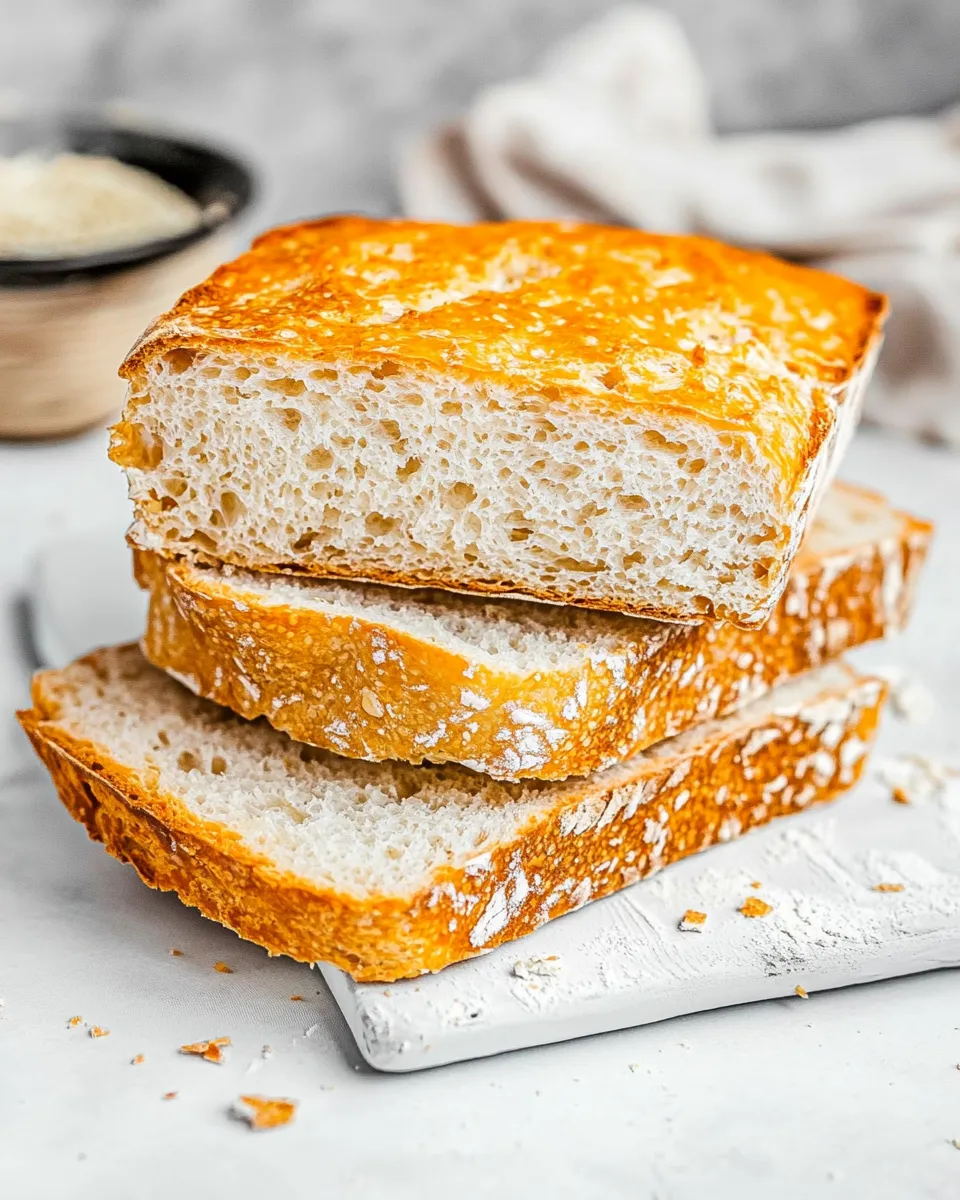
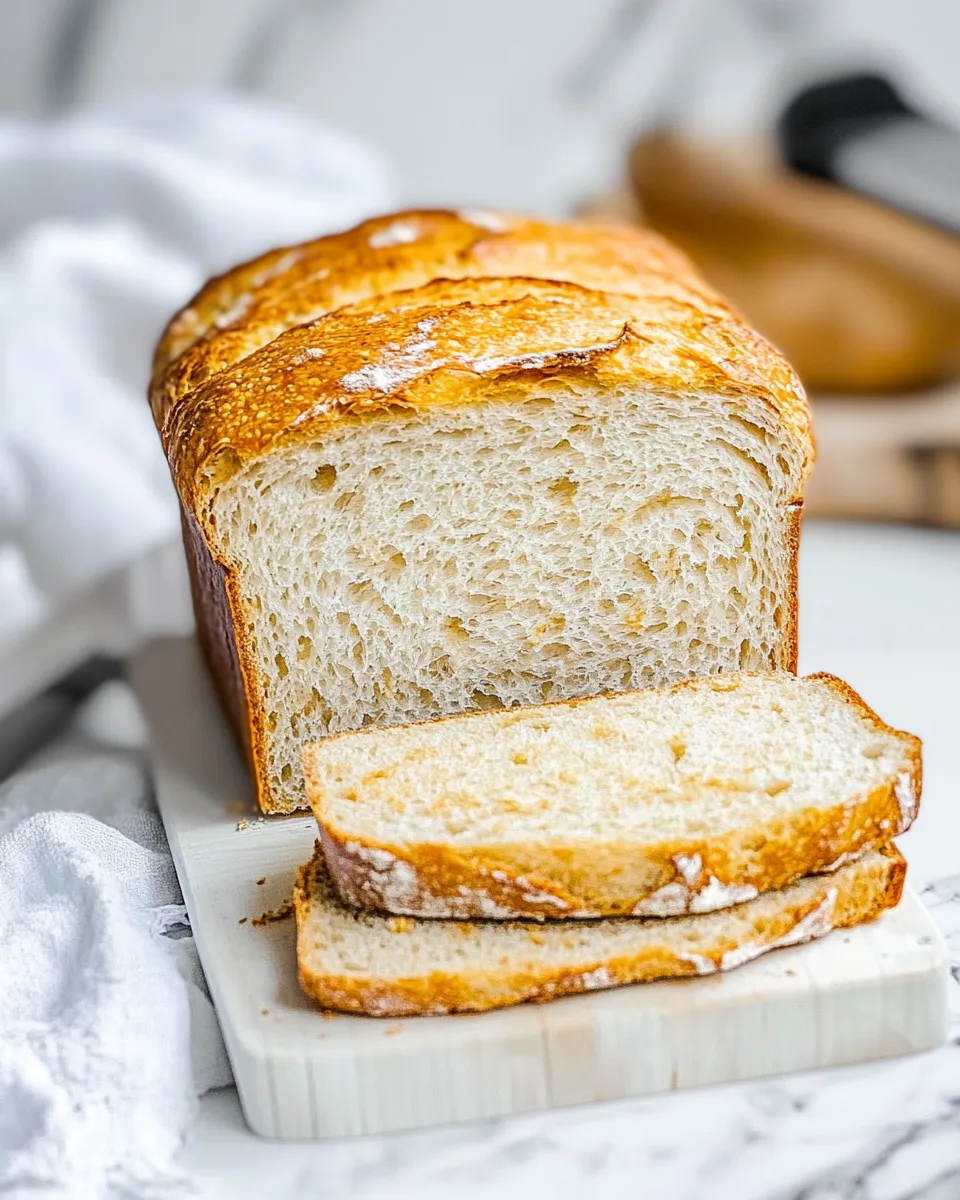
This loaf is the kind of bread I reach for when I want great texture and minimal fuss. It gives you tender crumb, a neat square shape perfect for sandwiches, and a hands-off process that still feels deliberate. You don’t need to knead for ages—just a bit of mixing, a short rise, and the oven does the rest.
The recipe uses a stand mixer to handle the wet, sticky batter and keeps the timeline compact: a quick first rise, a short rest in the loaf pan, and then a flavorful bake finished with butter. If you want a dependable sandwich loaf without pulling out every tool in the kitchen, this is it.
I’ll walk you through the exact steps, explain why each move matters, give troubleshooting tips, and offer practical make-ahead and storage notes. No fluff—just what works, when to watch the dough, and how to get even slices every time.
Ingredient List
- 2 cups bread flour — Provides structure and chew; higher protein helps form a sturdy crumb for sandwich slices.
- 6 tablespoons whole-wheat flour — Adds flavor, a touch of nuttiness, and better browning; keeps the loaf from being too light.
- 2¼ teaspoons instant or rapid-rise yeast — The rising agent; instant yeast mixes directly with dry ingredients and gives a predictable, quick rise.
- 1⅜ cups water (312 g), warm (110°F) — Hydrates the dough and activates the yeast; temperature matters for consistent proofing.
- 4 tablespoons unsalted butter (57 g), melted and divided (½ stick) — Fat for tenderness and flavor; some goes into the dough and the rest is used to grease equipment and brush the loaf after baking.
- 4 teaspoons honey (88 grams) — Sweetens and feeds the yeast slightly; contributes to browning.
- 1 teaspoon kosher salt (3 grams) — Enhances flavor and strengthens the gluten network; it’s dissolved into reserved warm water before adding.
- 1 large egg (50 grams), lightly beaten with 1 teaspoon water and pinch of salt — Egg wash for a glossy, golden crust.
Make No Knead Sandwich Bread: A Simple Method
- Measure and melt 4 tablespoons unsalted butter. Reserve 3 tablespoons for the dough and keep the remaining 1 tablespoon available to lightly grease equipment now and to brush the loaf after baking. Lightly grease a large mixing bowl and a 9×5-inch loaf pan with a thin coating of the reserved butter. Lightly grease a rubber spatula or set it aside for scraping.
- Attach the paddle to a stand mixer. In the mixer bowl whisk together 2 cups bread flour, 6 tablespoons whole-wheat flour, and 2¼ teaspoons instant (or rapid-rise) yeast until evenly combined.
- Measure 1⅜ cups (312 g) warm water (about 110°F). Remove and set aside 2 tablespoons of this warm water in a small bowl for dissolving the salt later. Use the remaining warm water for the dough.
- Add to the mixer bowl: the remaining warm water, the reserved 3 tablespoons melted butter, and 4 teaspoons honey. Mix on low speed for 1 minute to combine.
- Increase mixer speed to medium and mix 2 minutes. Scrape the dough down from the bowl and paddle with the greased spatula, then mix 2 more minutes on medium until uniform. The dough will be a wet, sticky batter.
- Transfer the dough to the greased large mixing bowl and rotate the bowl so the dough is lightly coated with butter. Cover the bowl with plastic wrap and place in a warm draft-free spot to rise until roughly doubled in size, about 20–30 minutes.
- While the dough is rising, position an oven rack in the lower-middle position and preheat the oven to 375°F. In the small bowl with the reserved 2 tablespoons warm water, dissolve 1 teaspoon kosher salt and set this salt-water aside. In a separate small bowl, lightly beat 1 large egg with 1 teaspoon water and a pinch of salt; set the egg wash aside for brushing later.
- When the dough has doubled, return it to the mixer bowl with the paddle attached. Add the salt-water mixture and mix on low just until the liquid is incorporated (about 45 seconds).
- Increase the speed to medium and mix 1 minute more, scraping down the sides of the bowl and paddle as needed so everything is evenly combined.
- Transfer the batter to the prepared 9×5-inch loaf pan and smooth the surface with the greased spatula.
- Cover the pan with a damp lightweight kitchen towel and let the batter rise in a warm place until it reaches about ½ inch below the edge of the pan, about 15 minutes. Uncover and allow it to rise another 5–10 minutes, or until the center of the batter is even with the rim of the pan.
- Gently brush the top of the risen loaf with the beaten egg mixture.
- Bake on the lower-middle rack at 375°F for 35–45 minutes, until the crust is golden brown and an instant-read thermometer inserted into the center registers 208–210°F.
- Remove the loaf from the oven, invert the pan carefully to release the bread onto a wire cooling rack, then turn the loaf upright. Brush the top and sides with any remaining reserved melted butter.
- Cool completely on the wire rack before slicing.
Top Reasons to Make No Knead Sandwich Bread
This recipe hits several sweet spots: it’s quick, reliable, and produces sandwich-ready slices without extensive hands-on time. The dough is forgiving; you mix, let the mixer do the work, and then rely on short, controlled rises. That makes it great for weekdays, packed lunches, or when you want a fresh loaf without committing a full morning.
The flavor balance is simple and familiar—bread flour for structure, a touch of whole-wheat for depth, honey for mild sweetness, and butter for richness. The egg wash delivers an attractive, golden top that looks home-baked. And because the loaf is baked in a standard 9×5 pan, it slices uniformly for sandwiches, toast, and grilled cheese.
Quick Replacement Ideas
- Swap the 6 tablespoons whole-wheat flour for 6 tablespoons additional bread flour — for a milder, more uniform crumb if you prefer less whole-grain flavor.
- Use all 4 tablespoons of melted butter in the dough (instead of reserving 1) if you want richer crumb; still reserve a light coating for the pan from that amount.
- Reduce or omit the 4 teaspoons honey for a less sweet loaf; the yeast will still perform because of the warm water and yeast quantities.
Equipment Breakdown
Stand mixer with paddle — The mixer saves you effort with this wet, sticky batter. The paddle attachment gives even distribution without overworking dough.
9×5-inch loaf pan — A standard pan produces that sandwich-friendly shape and even slices.
Large mixing bowl, small bowls — For proofing and dissolving the salt.
Greased rubber spatula — Essential for scraping sticky batter and smoothing the top in the pan.
Instant-read thermometer — The recipe targets 208–210°F internal temperature; this gives a consistent done-ness and avoids gummy centers.
Wire cooling rack — Cooling upright ensures the loaf doesn’t sweat on the bottom and keeps the crust crisp.
Watch Outs & How to Fix
Underproofed or flat loaf
Problem: The dough doesn’t reach the height in the pan or the loaf feels heavy. Fix: Let the first rise go the full 30 minutes and ensure the dough roughly doubles. Check that your water is warm (about 110°F) so the yeast engages. If your kitchen is cool, move the covered bowl to a slightly warmer spot—near a warm oven (turned off) or a sunny window.
Overproofed batter
Problem: The batter collapses or seems slack after the second rise. Fix: Reduce the second pan rise time slightly and watch the center—when it’s even with the rim you should bake. Overproofing is often a result of too-warm proofing temperatures or leaving the dough too long.
Gummy or underbaked center
Problem: The loaf feels set on the outside but is dense inside. Fix: Use an instant-read thermometer and bake until 208–210°F in the center. If you don’t have a thermometer, add a few minutes to the bake time and check that the crust is a deep golden brown. Let the loaf cool fully before slicing; cutting early traps steam and makes the crumb gummy.
Too-dark crust
Problem: The crust browns fast before the interior is done. Fix: Tent the loaf with foil for the last 10–15 minutes and continue baking until the internal temperature reaches the target.
Seasonal Adaptations
Summer: Your kitchen will likely be warmer, so proof times may shorten. Check the dough earlier than the recipe times—keep a close eye on visual cues: doubled for the first rise, and the batter level in the pan for the second.
Winter: Your kitchen can slow everything down. Use the oven with just the light on (off) or set the pan on top of a warm but switched-off appliance. Keep water at the recommended 110°F so the yeast wakes up effectively.
Humidity: On very humid days, the dough may feel wetter; you’ll still follow the same process. If needed, scrape and fold rather than adding flour—this batter is meant to be sticky.
Method to the Madness
Why this works: The recipe leans on instant yeast and a stand mixer to create a wet batter that develops enough gluten during mixing. The short initial rise allows the yeast to activate and create lightness quickly. Adding the salt dissolved in reserved warm water later gives the yeast an early head start without slowing it down prematurely.
Butter in the dough softens the crumb and enhances flavor while the egg wash gives the crust an attractive sheen. Baking to 208–210°F ensures the center is fully set. Inverting the pan onto a rack immediately releases the loaf cleanly and lets residual butter coat the loaf’s exterior for a softer finish.
Make Ahead Like a Pro
Make the loaf a day ahead and store it at room temperature, wrapped tightly in plastic after it has completely cooled. For sandwiches the next day, slice and keep the slices in a sealed container. The bread is best within 2–3 days.
To freeze: wrap the cooled, whole loaf tightly in plastic wrap, then foil. Thaw overnight in the refrigerator or at room temperature and refresh the crust in a 350°F oven for 5–8 minutes if you like a crisper exterior.
Quick Q&A
Q: Can I mix this by hand instead of a stand mixer? A: The method relies on efficient mixing to develop the wet batter. If you must, mix vigorously by hand with a sturdy spoon, but expect more effort and longer mixing times to get the same uniformity.
Q: Do I have to use the egg wash? A: It’s not mandatory, but the egg wash gives a glossy golden top that looks professional. You can skip it and still have a fine loaf, though the color will be paler.
Q: What if I don’t have instant yeast? A: Use instant or rapid-rise yeast as called for. If substituting active dry yeast, you would normally proof it in warm water first—this recipe is designed around instant yeast’s ability to be mixed directly with dry ingredients.
Wrap-Up
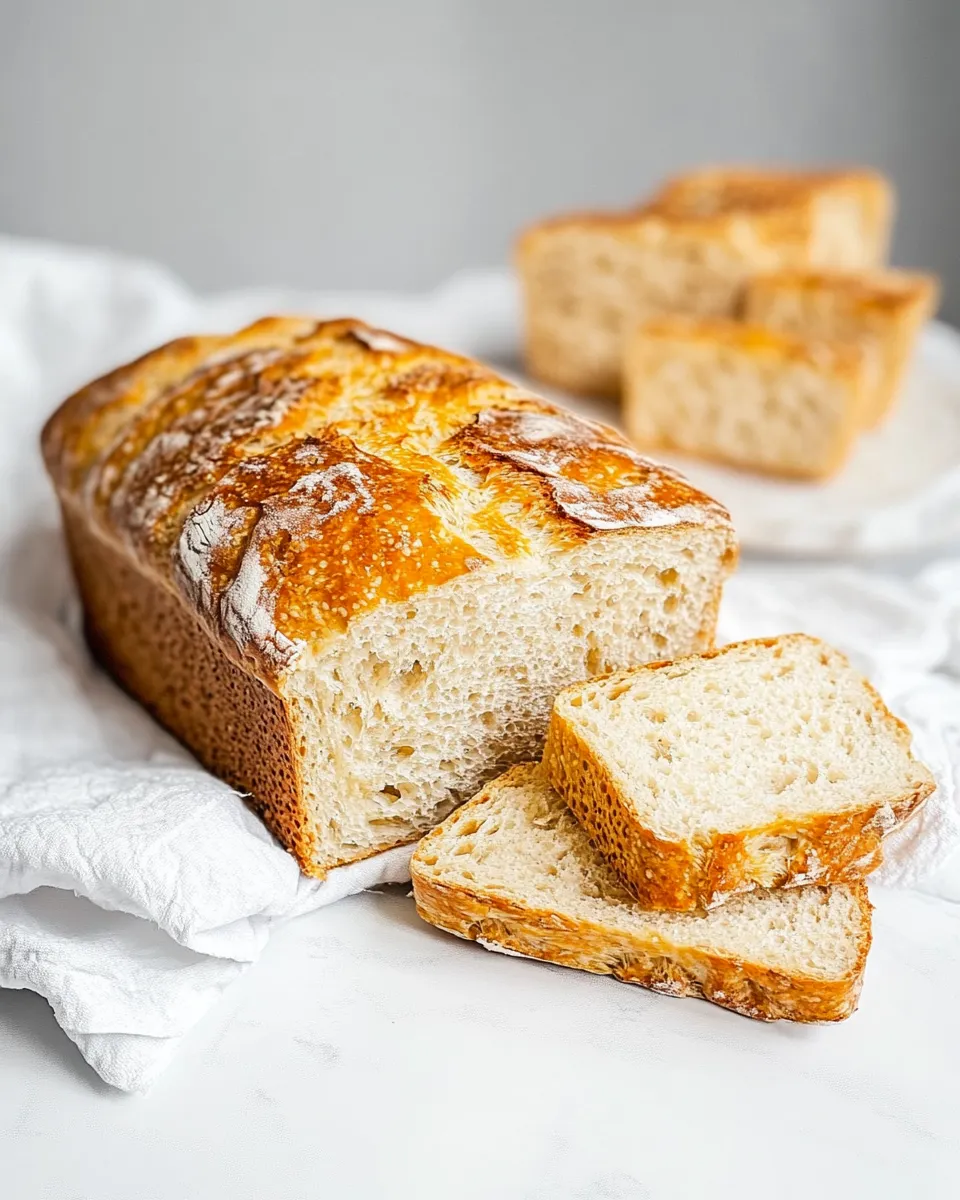
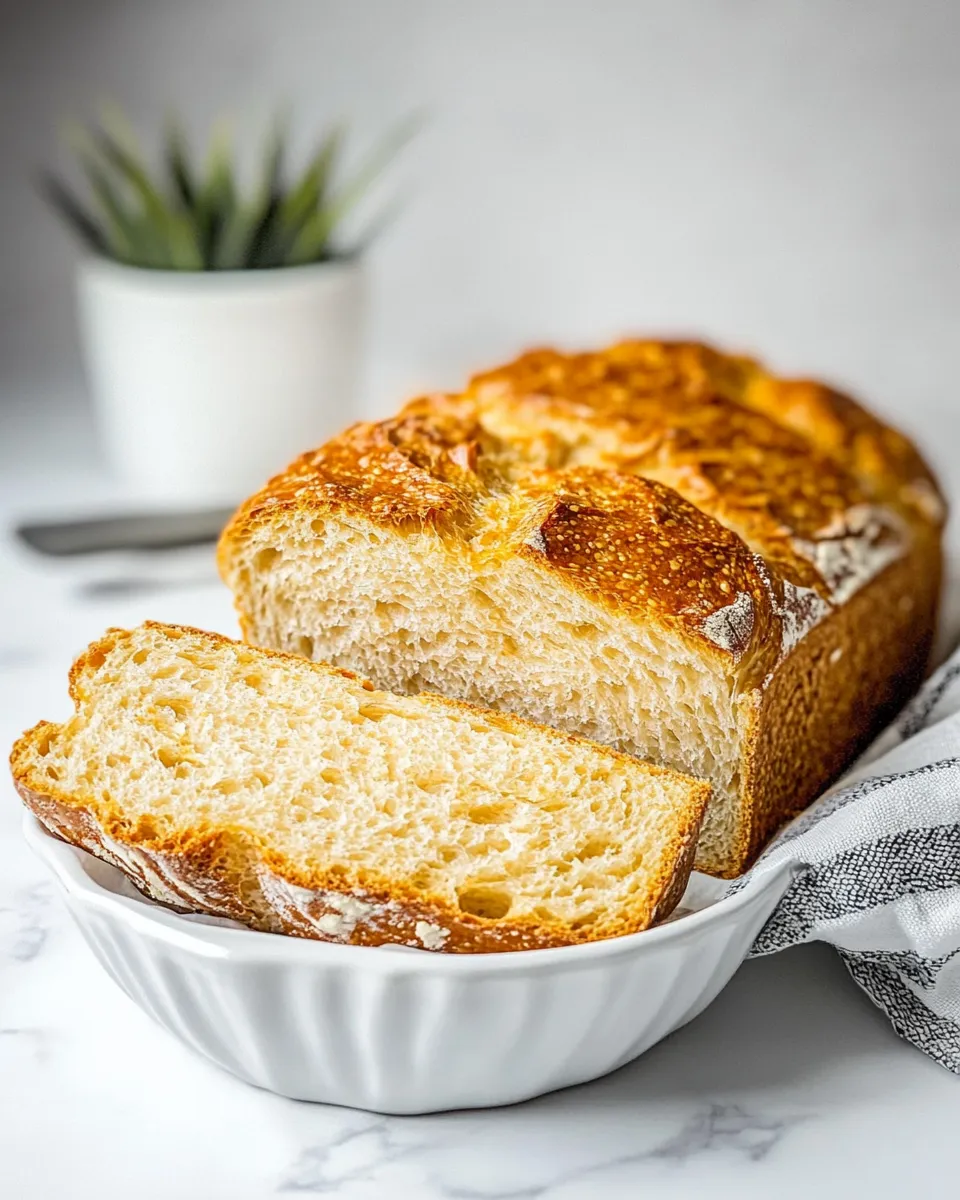
No Knead Sandwich Bread gives you a fast, reliable loaf with a tender crumb and a clean, straight shape for uniform slices. Follow the measured steps, trust the visual cues during rising, and rely on the internal temperature to know when it’s truly done. With a little practice you’ll have fresh sandwich bread by midmorning or afternoon with minimal hands-on time. Make one, slice it thick, and enjoy the difference that a simple, well-made loaf brings to any sandwich.
No Knead Sandwich Bread
Equipment
- Kitchen Scale(optional)
- 9x5 inch loaf pan
- Instant Read Meat Thermometer
Ingredients
Ingredients
- 2 cupsbread flour312 grams 11 ounces
- 6 tablespoonswhole-wheat flour57 grams 2 ounces
- 2 1/4 teaspoonsinstant or rapid-rise yeast7 grams
- 1 3/8 cupswater312 grams 11 ounces, warm (110°F)
- 4 tablespoonsunsalted butter57 grams melted and divided (1/2 stick)
- 4 teaspoonshoney88 grams
- 1 teaspoonkosher salt3 grams
- 1 largeegg50 grams lightly beaten with 1 teaspoon water and pinch of salt
Instructions
Instructions
- Measure and melt 4 tablespoons unsalted butter. Reserve 3 tablespoons for the dough and keep the remaining 1 tablespoon available to lightly grease equipment now and to brush the loaf after baking. Lightly grease a large mixing bowl and a 9×5-inch loaf pan with a thin coating of the reserved butter. Lightly grease a rubber spatula or set it aside for scraping.
- Attach the paddle to a stand mixer. In the mixer bowl whisk together 2 cups bread flour, 6 tablespoons whole-wheat flour, and 2¼ teaspoons instant (or rapid-rise) yeast until evenly combined.
- Measure 1⅜ cups (312 g) warm water (about 110°F). Remove and set aside 2 tablespoons of this warm water in a small bowl for dissolving the salt later. Use the remaining warm water for the dough.
- Add to the mixer bowl: the remaining warm water, the reserved 3 tablespoons melted butter, and 4 teaspoons honey. Mix on low speed for 1 minute to combine.
- Increase mixer speed to medium and mix 2 minutes. Scrape the dough down from the bowl and paddle with the greased spatula, then mix 2 more minutes on medium until uniform. The dough will be a wet, sticky batter.
- Transfer the dough to the greased large mixing bowl and rotate the bowl so the dough is lightly coated with butter. Cover the bowl with plastic wrap and place in a warm draft-free spot to rise until roughly doubled in size, about 20–30 minutes.
- While the dough is rising, position an oven rack in the lower-middle position and preheat the oven to 375°F. In the small bowl with the reserved 2 tablespoons warm water, dissolve 1 teaspoon kosher salt and set this salt-water aside. In a separate small bowl, lightly beat 1 large egg with 1 teaspoon water and a pinch of salt; set the egg wash aside for brushing later.
- When the dough has doubled, return it to the mixer bowl with the paddle attached. Add the salt-water mixture and mix on low just until the liquid is incorporated (about 45 seconds).
- Increase the speed to medium and mix 1 minute more, scraping down the sides of the bowl and paddle as needed so everything is evenly combined.
- Transfer the batter to the prepared 9×5-inch loaf pan and smooth the surface with the greased spatula.
- Cover the pan with a damp lightweight kitchen towel and let the batter rise in a warm place until it reaches about ½ inch below the edge of the pan, about 15 minutes. Uncover and allow it to rise another 5–10 minutes, or until the center of the batter is even with the rim of the pan.
- Gently brush the top of the risen loaf with the beaten egg mixture.
- Bake on the lower-middle rack at 375°F for 35–45 minutes, until the crust is golden brown and an instant-read thermometer inserted into the center registers 208–210°F.
- Remove the loaf from the oven, invert the pan carefully to release the bread onto a wire cooling rack, then turn the loaf upright. Brush the top and sides with any remaining reserved melted butter.
- Cool completely on the wire rack before slicing.
Notes
If using a glass pan, reduce heat to 350°F.
Bread is best eaten the day of baking.