This pistachio crusted salmon is a weeknight hero that looks like a dinner-party dish. The crunch of pistachios and panko, the salty tang of Parmesan, and the sweet-tart lift from honey and lemon sit on top of tender, flaky salmon. It’s one of those recipes that rewards a small bit of prep with big flavor.
I keep this in my regular rotation because it’s fast, reliable, and forgiving. You don’t need fancy techniques—just a hot oven, a few measured ingredients, and a light hand pressing the crust onto the fish. There’s a predictable rhythm to it, and it’s easy to scale or adapt.
Below you’ll find the exact ingredient list and a step-by-step guide that follows the recipe as written, plus practical notes for variations, troubleshooting, storing, and reheating. If you want a citrusier finish, a low-carb swap, or a make-ahead plan, you’ll find options further down.
What You’ll Gather
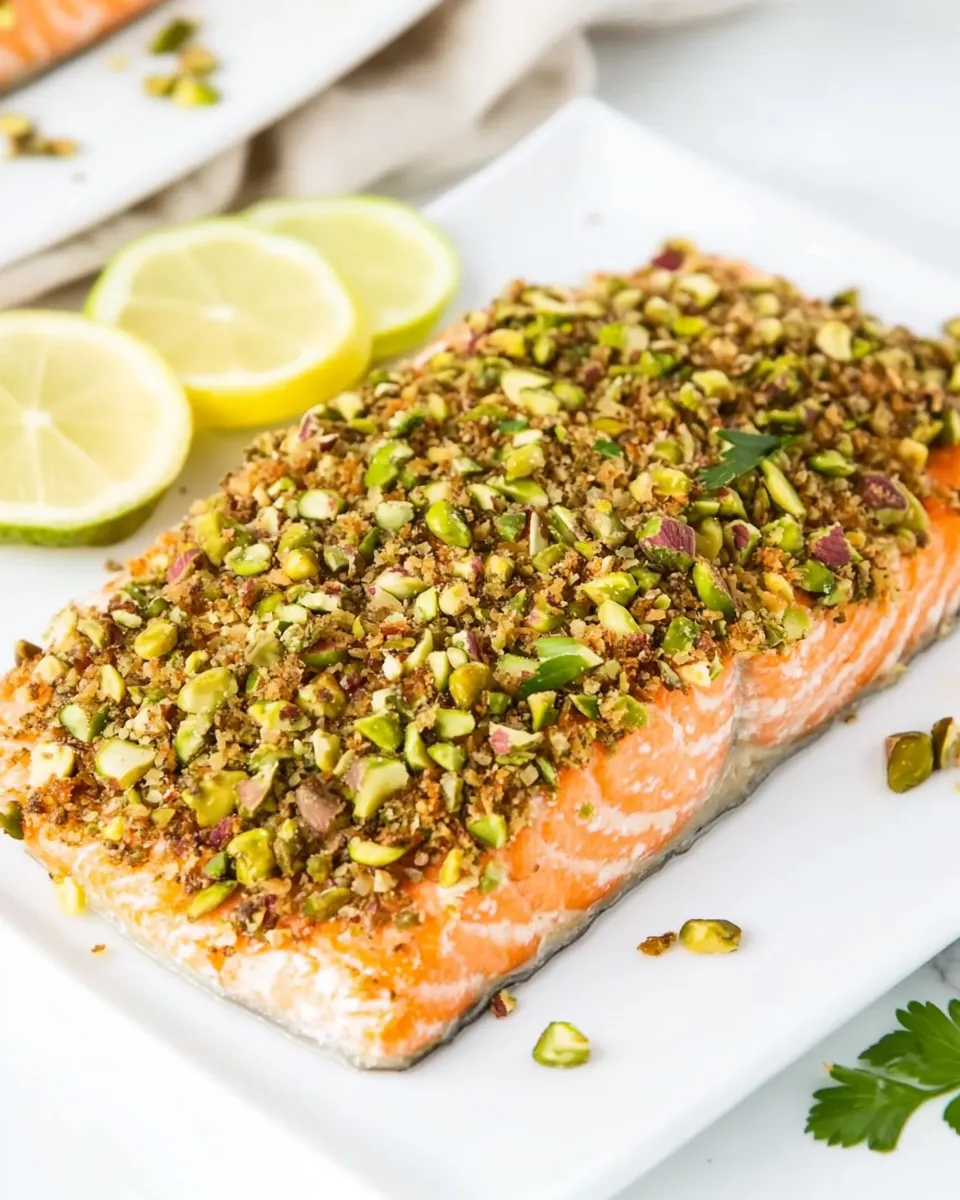
Gather the ingredients listed below and a baking sheet. The recipe is written for 12 ounces of salmon fillets, which is a comfortable amount for two people or one very hungry person. Read through the Cooking Guide once before you begin so the timing is smooth—this one comes together quickly once the oven’s hot.
Ingredients
- 12 ounces salmon fillets — the star of the dish; choose evenly sized fillets for consistent cooking.
- 2 teaspoons Dijon mustard — helps the crust adhere and adds a bright, tangy layer.
- 1/8 cup pistachios, chopped, unsalted — provides crunch and a buttery nutty flavor; chop roughly unless pre-chopped.
- 2 tablespoons panko bread crumbs — light crunchy binder for the crust.
- 1 tablespoon Parmesan cheese, grated — umami and salt to deepen the topping.
- 1 tablespoon butter, melted — adds richness and helps the crust crisp in the oven.
- 1 tablespoon lemon juice — brightens the topping and balances the richness.
- 1 tablespoon honey — a touch of sweetness to marry the flavors and help caramelize the crust.
- 1/4 teaspoon paprika — color and a gentle smoky warmth.
- 1/8 teaspoon salt — seasons the topping; the salmon itself may need little or no additional salt depending on its brine.
- 1/8 teaspoon black pepper — a touch of heat and bridge for flavors.
- 1 clove garlic, minced (1 clove = 1/2 teaspoon minced garlic) — fresh garlic adds savory lift to the crust.
Pistachio Crusted Salmon Cooking Guide
- Preheat the oven to 375°F. Line a baking sheet with parchment paper or aluminum foil; if using foil, lightly spray it with cooking spray (optional).
- Pat the 12 ounces salmon fillets dry with paper towels. Place the fillets on the prepared baking sheet, skin side down if the fillets have skin.
- Using a silicone brush or the back of a spoon, spread 2 teaspoons Dijon mustard evenly over the top of each salmon fillet.
- Prepare the pistachio topping: roughly chop 1/8 cup pistachios if they are not already chopped. Grate 1 tablespoon Parmesan cheese. Mince 1 clove garlic (about 1/2 teaspoon minced).
- Melt 1 tablespoon butter (microwave briefly or melt in a small pan). In a small bowl combine the chopped pistachios (1/8 cup), 2 tablespoons panko bread crumbs, 1 tablespoon grated Parmesan, the melted 1 tablespoon butter, 1 tablespoon lemon juice, 1 tablespoon honey, 1/4 teaspoon paprika, 1/8 teaspoon salt, 1/8 teaspoon black pepper, and the minced garlic. Mix until evenly combined.
- Divide the pistachio mixture evenly among the fillets and gently press it onto the mustard-coated top of each fillet to form a compact crust.
- Bake in the preheated oven 10–12 minutes, or until the salmon flakes easily with a fork. The internal temperature should reach about 145°F when done.
- Remove from the oven and let rest briefly (a minute or two), then serve.
Why This Recipe is a Keeper
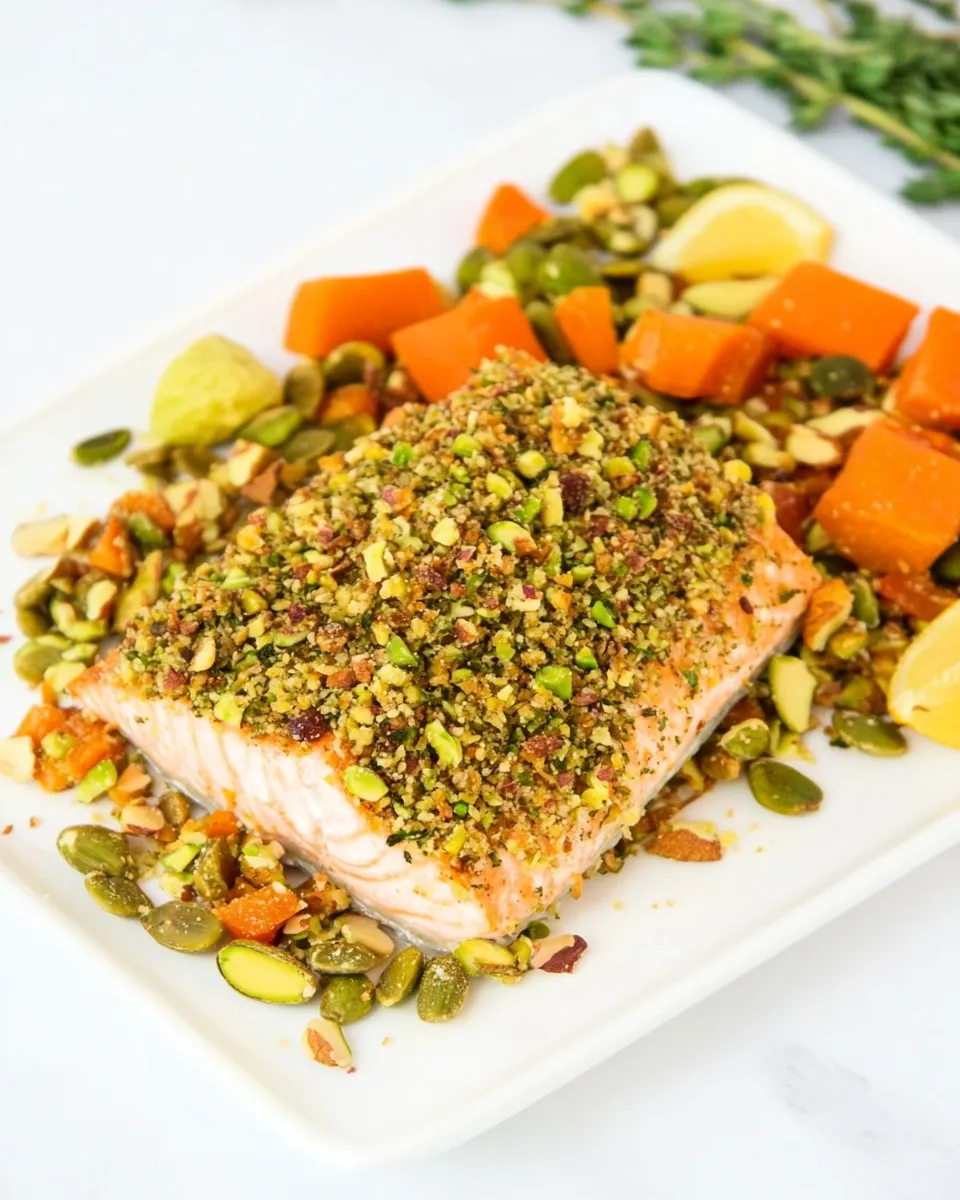
It balances textures and flavors without demanding technique. The pistachios and panko create a crunchy top while the Dijon beneath helps the crust cling and adds a savory note. Honey and lemon together pull the flavors into a cohesive whole—sweet, tart, salty, and nutty on a single bite.
Timing is short: from oven to table in under 20 minutes once the oven is hot. That makes it perfect for an elevated weeknight meal or a last-minute guest. The ingredients are pantry-friendly and easy to shop for, and the result looks special without complicated plating.
Low-Carb/Keto Alternatives
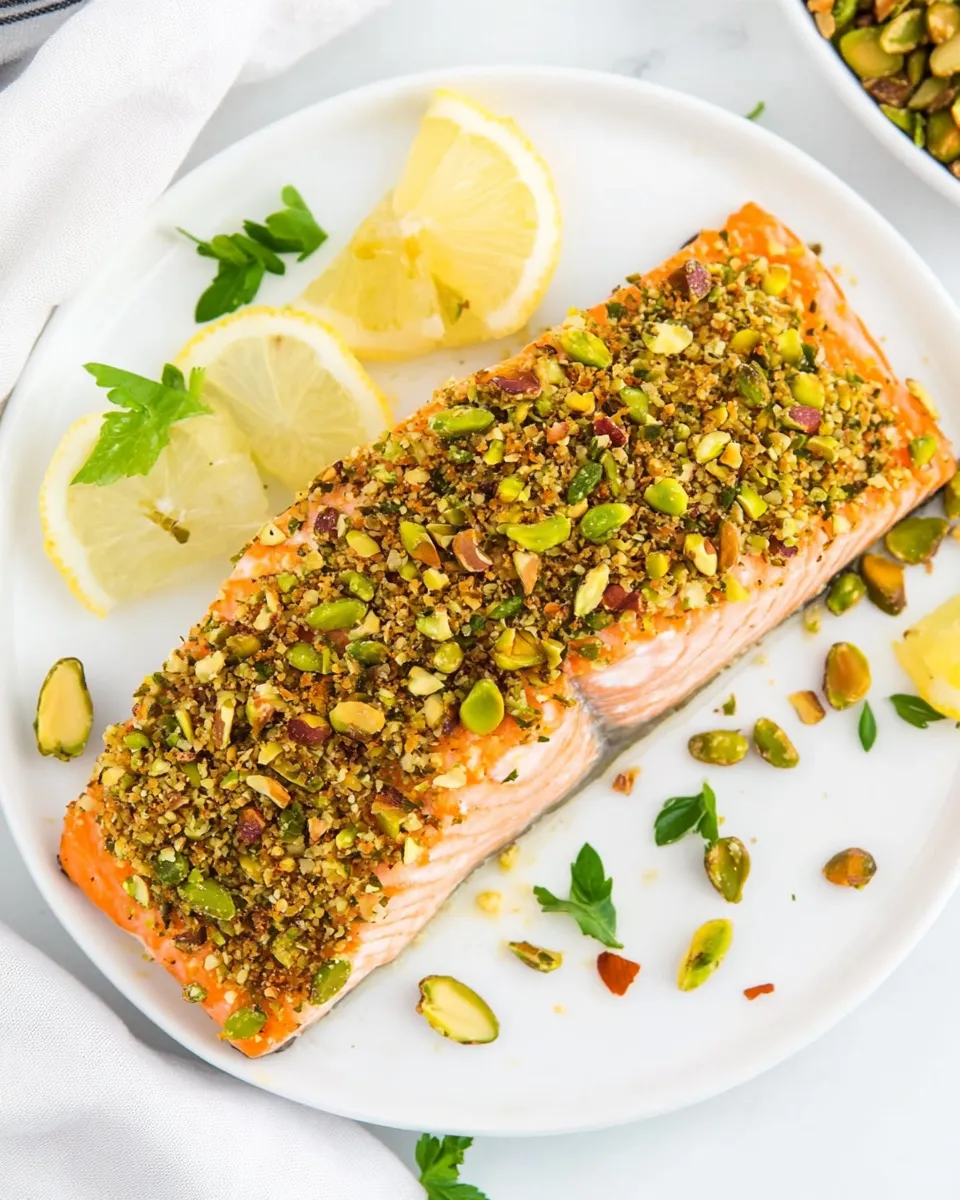
- Replace the 2 tablespoons panko bread crumbs with 2 tablespoons finely ground almond flour or crushed pork rinds to keep the crunch but cut carbs.
- Substitute the 1 tablespoon honey with 1 tablespoon of a keto-friendly syrup or skip it entirely and add an extra 1/2 teaspoon lemon juice to balance sweetness.
- Keep the pistachios and Parmesan—both are keto-friendly and provide fat and texture.
Cook’s Kit
- Baking sheet (rimmed) — for catching juices and keeping the crust intact.
- Parchment paper or aluminum foil — for easier cleanup and to prevent sticking.
- Silicone brush or spoon — to spread the Dijon mustard.
- Small bowl and spoon — to mix the pistachio topping.
- Sharp knife and cutting board — to chop pistachios if needed and prep garlic.
- Instant-read thermometer — helpful to confirm the salmon reaches about 145°F without overcooking.
Problems & Prevention
Dry, Overcooked Salmon
Problem: Salmon can dry out quickly if left too long.
Prevention: Follow the recipe’s bake time of 10–12 minutes and check at 10. Use an instant-read thermometer—remove when the internal temperature is about 145°F. The fillet should flake easily but still be moist. Remember residual heat will continue to cook the fish slightly while it rests.
Soggy or Soft Crust
Problem: Moisture from the Dijon or wet toppings can make the crust soft instead of crisp.
Prevention: Pat the salmon very dry before applying mustard. Press the pistachio mixture firmly onto the mustard so it forms a compact crust. Using melted butter helps the topping toast; the panko contributes lightness. If your oven runs cool, finish with 1–2 minutes under a hot broiler—watch it closely to prevent burning.
Uneven Cooking
Problem: Fillets of different thickness cook at different rates.
Prevention: Choose fillets of similar thickness or start thinner pieces in a slightly lower rack and check early. If one fillet is much thicker, it may need an extra 2–3 minutes in the oven.
Seasonal Twists
Spring: Add finely chopped fresh dill or chives to the pistachio mixture for bright herbal notes. Serve with a simple salad or peas and lemon vinaigrette.
Summer: Add a tablespoon of finely grated lemon zest to the crust for extra citrus fragrance. Pair with grilled corn and a tomato-cucumber salad.
Fall/Winter: Swap the lemon juice for 1 tablespoon of orange juice and add a pinch of ground coriander to the topping for a warmer, slightly spiced profile. Serve with roasted root vegetables.
Chef’s Notes
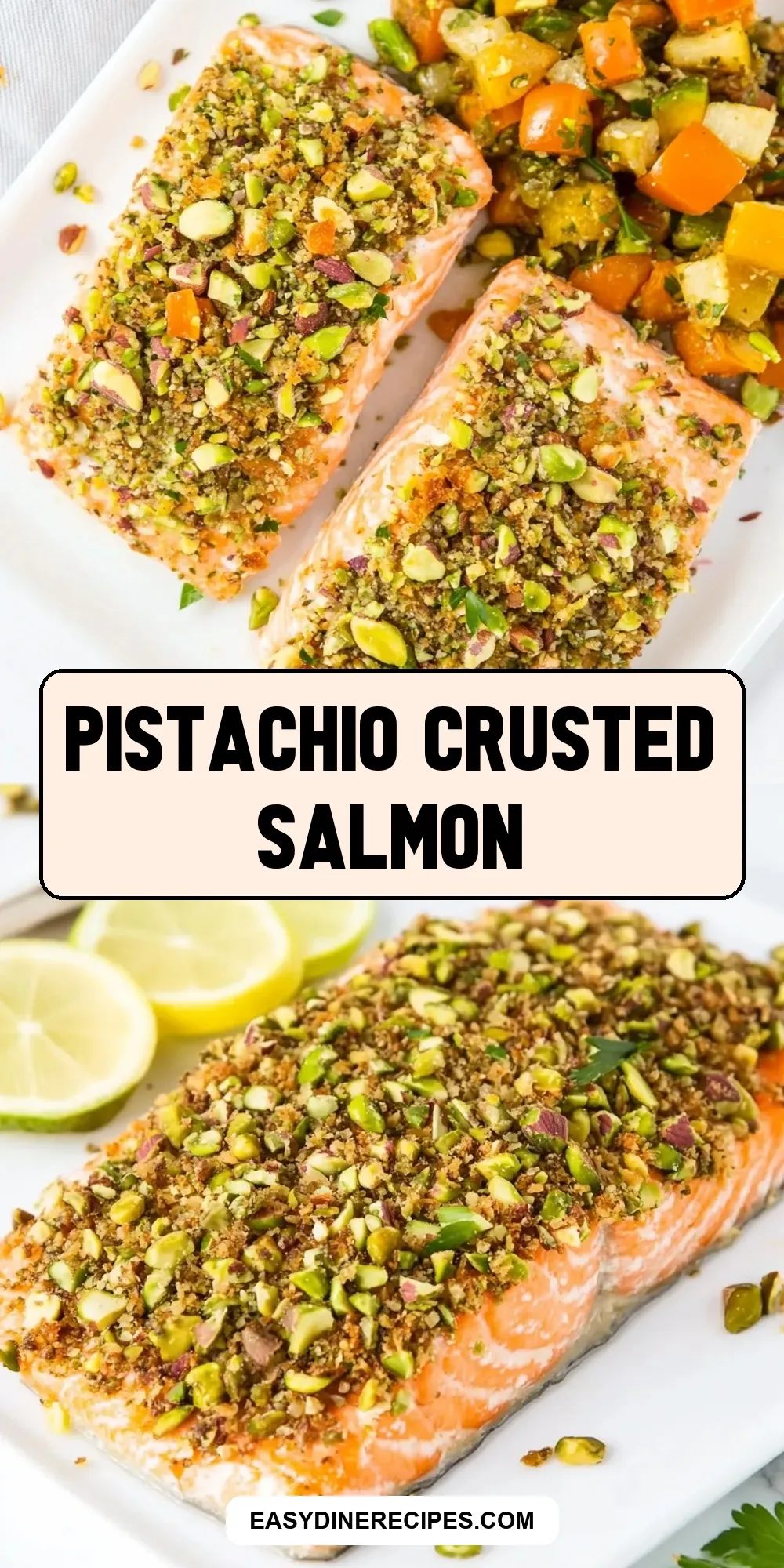
Press the pistachio topping firmly onto the mustard so the crust adheres during baking. The mustard acts as both flavor and glue—use the full 2 teaspoons as stated. Measure the pistachios and panko carefully; the recipe is balanced to give both crunch and cohesion without overwhelming the fish.
If you prefer a nuttier browning, you can toast the pistachios briefly in a dry skillet before chopping, but this step is optional. Be mindful not to add extra salt if your pistachios are salted or if the salmon is brined.
Store, Freeze & Reheat
Storing
Refrigerate leftover cooked salmon in an airtight container for up to 3 days. Keep the crust side up to preserve texture.
Freezing
Cooked salmon with the crust can be frozen for up to 1 month. Wrap each piece tightly in plastic wrap and place in a freezer bag, removing as much air as possible. Thaw in the refrigerator overnight before reheating.
Reheating
For best texture, reheat in a 300°F oven on a baking sheet until warmed through, about 8–12 minutes depending on thickness. To help maintain crust crispness, place the fillet on a wire rack set over the sheet pan. Microwaving will warm quickly but will soften the crust; if you must use a microwave, finish briefly under a broiler for a minute to refresh the crust—watch carefully.
Helpful Q&A
Q: Can I use skin-on salmon?
A: Yes. Place the fillets skin side down as directed. The skin helps keep the fillet intact and adds flavor; the crust goes on the flesh side.
Q: Can I make the pistachio mixture ahead?
A: You can mix the topping a few hours ahead and refrigerate covered. Bring it back to room temperature before spreading so the butter doesn’t solidify and resist spreading.
Q: Are pistachios essential?
A: They’re central to the recipe’s flavor and texture, but you can substitute other nuts like almonds or walnuts in equal measure if needed—expect a different flavor profile.
Q: How do I know the salmon is done?
A: The recipe calls for baking 10–12 minutes and specifies the internal temperature reach about 145°F. Look for flesh that flakes easily but remains moist.
In Closing
This Pistachio Crusted Salmon is dependable, quick, and rewarding. It’s one of those recipes that elevates an ordinary night without adding stress. With straightforward ingredients and a short bake time, it’s ideal for those who want something more than pan-seared salmon without extra fuss. Try the seasonal tweaks, keep a thermometer handy, and press the crust firmly—small details that make a noticeable difference.
If you make it, take note of what you changed and the timing in your oven—personal tweaks turn a good recipe into your go-to. Enjoy the crunch, the brightness, and how effortlessly it comes together.
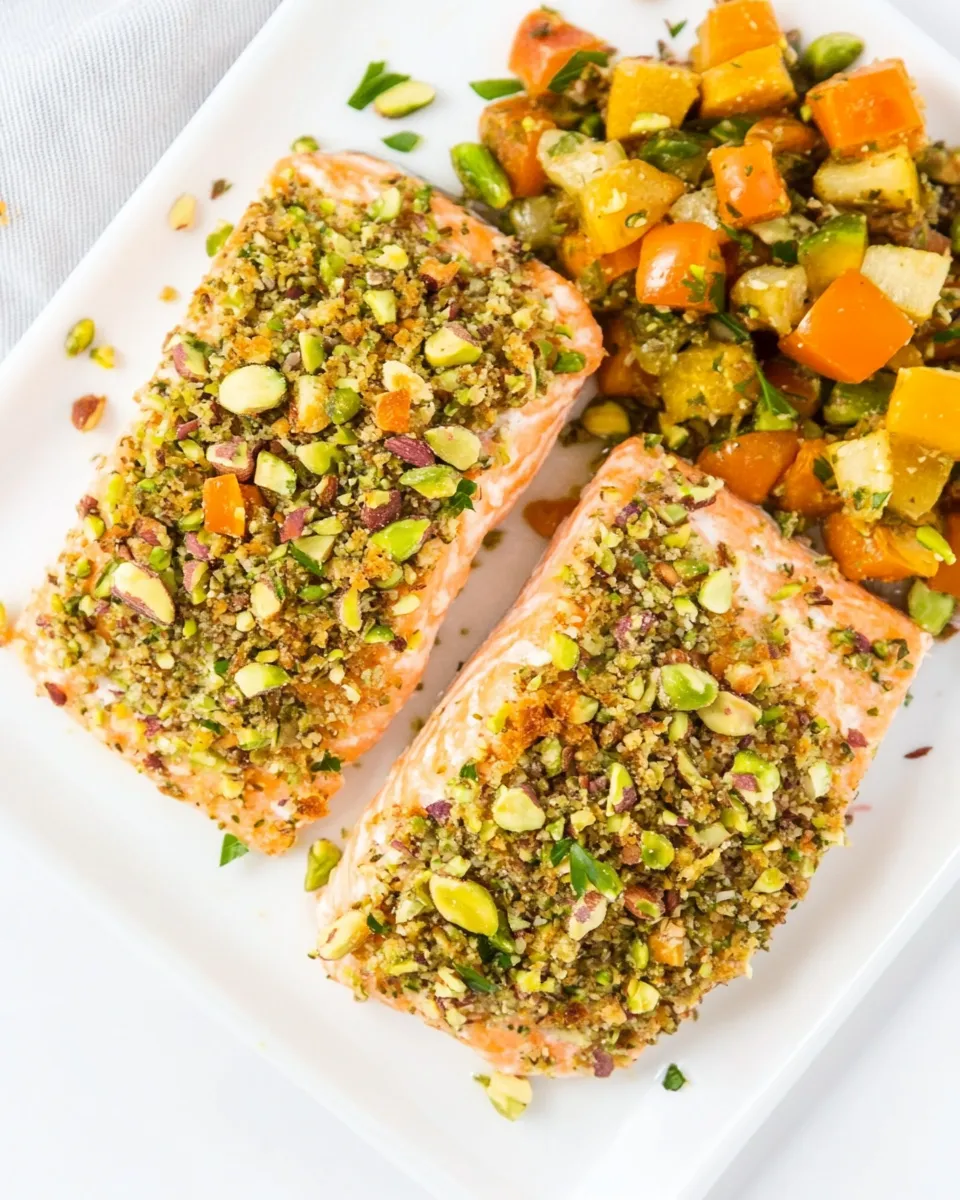
Pistachio Crusted Salmon
Equipment
- Baking Sheet
- Parchment Paper
- Aluminum Foil
- silicone brush
- Small Bowl
- Measuring Spoons
Ingredients
Ingredients
- 12 ouncessalmon fillets
- 2 teaspoonsDijon mustard
- 1/8 cuppistachioschopped unsalted
- 2 tablespoonspanko bread crumbs
- 1 tablespoonparmesan cheesegrated
- 1 tablespoonbuttermelted
- 1 tablespoonlemon juice
- 1 tablespoonhoney
- 1/4 teaspoonpaprika
- 1/8 teaspoonsalt
- 1/8 teaspoonblack pepper
- 1 clovegarlicminced 1 clove equals 1/2 teaspoon minced garlic
Instructions
Instructions
- Preheat the oven to 375°F. Line a baking sheet with parchment paper or aluminum foil; if using foil, lightly spray it with cooking spray (optional).
- Pat the 12 ounces salmon fillets dry with paper towels. Place the fillets on the prepared baking sheet, skin side down if the fillets have skin.
- Using a silicone brush or the back of a spoon, spread 2 teaspoons Dijon mustard evenly over the top of each salmon fillet.
- Prepare the pistachio topping: roughly chop 1/8 cup pistachios if they are not already chopped. Grate 1 tablespoon Parmesan cheese. Mince 1 clove garlic (about 1/2 teaspoon minced).
- Melt 1 tablespoon butter (microwave briefly or melt in a small pan). In a small bowl combine the chopped pistachios (1/8 cup), 2 tablespoons panko bread crumbs, 1 tablespoon grated Parmesan, the melted 1 tablespoon butter, 1 tablespoon lemon juice, 1 tablespoon honey, 1/4 teaspoon paprika, 1/8 teaspoon salt, 1/8 teaspoon black pepper, and the minced garlic. Mix until evenly combined.
- Divide the pistachio mixture evenly among the fillets and gently press it onto the mustard-coated top of each fillet to form a compact crust.
- Bake in the preheated oven 10–12 minutes, or until the salmon flakes easily with a fork. The internal temperature should reach about 145°F when done.
- Remove from the oven and let rest briefly (a minute or two), then serve.
Notes
I have found two 6 ounces filets feeds our small family of three well. This recipe is really easy to double or triple.
If the salmon has pin bones (small white bones along the filet) you can learn how to
remove pin bones from salmon here
. Many salmon filets come prepared from the store or market without pin bones. It’s important to remove these small bones if your salmon has them. Pin bones should not be eaten and can quickly become a choking hazard for children if not removed before serving.