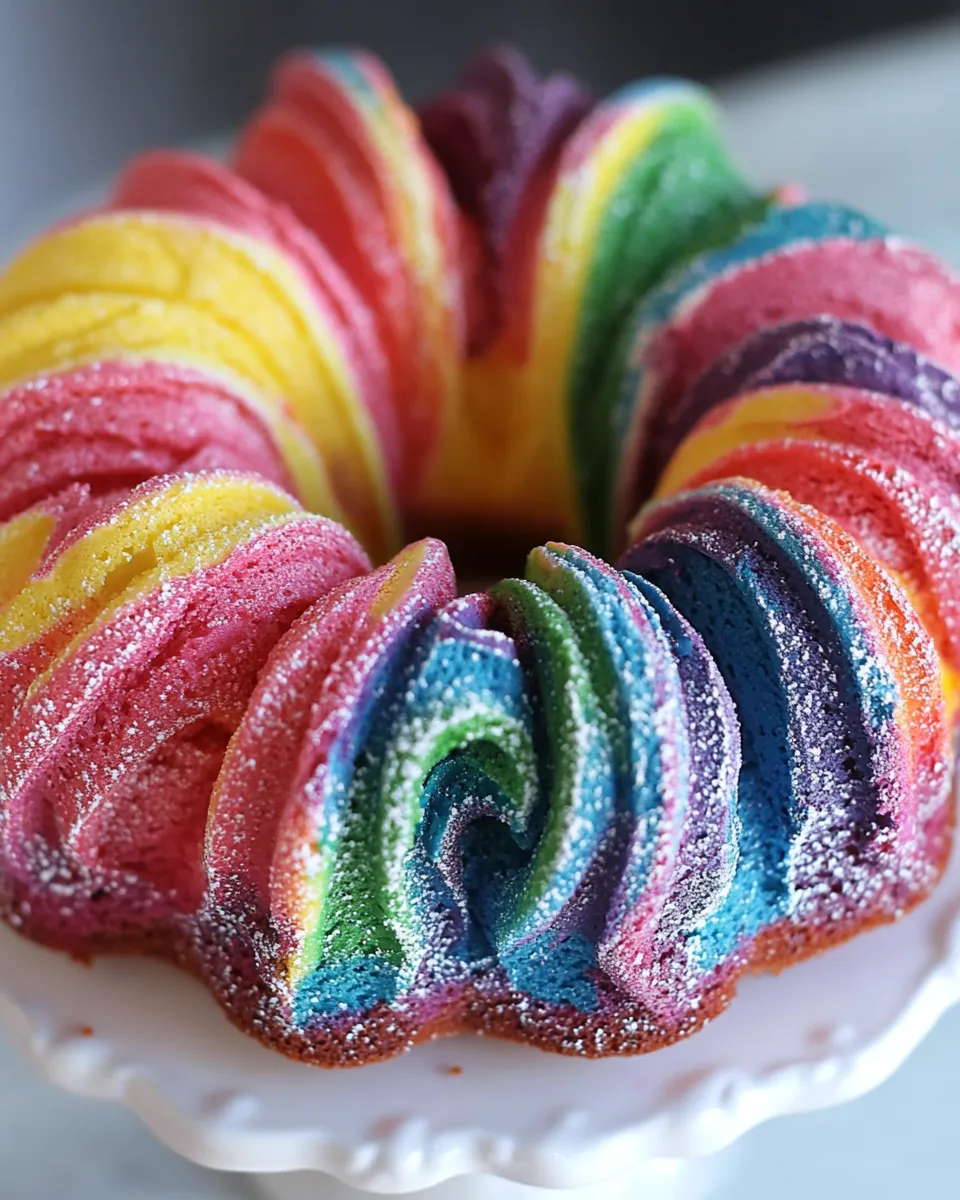
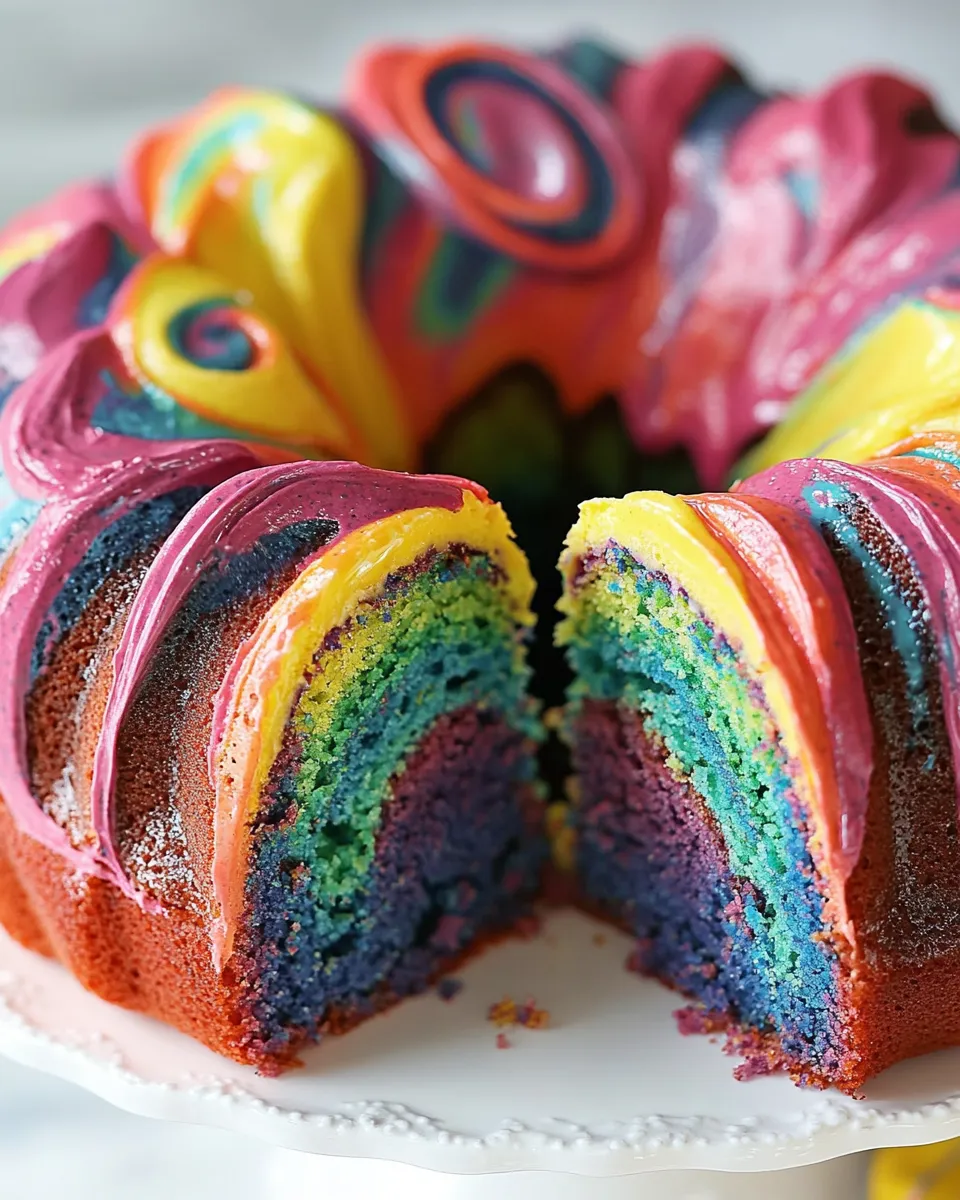
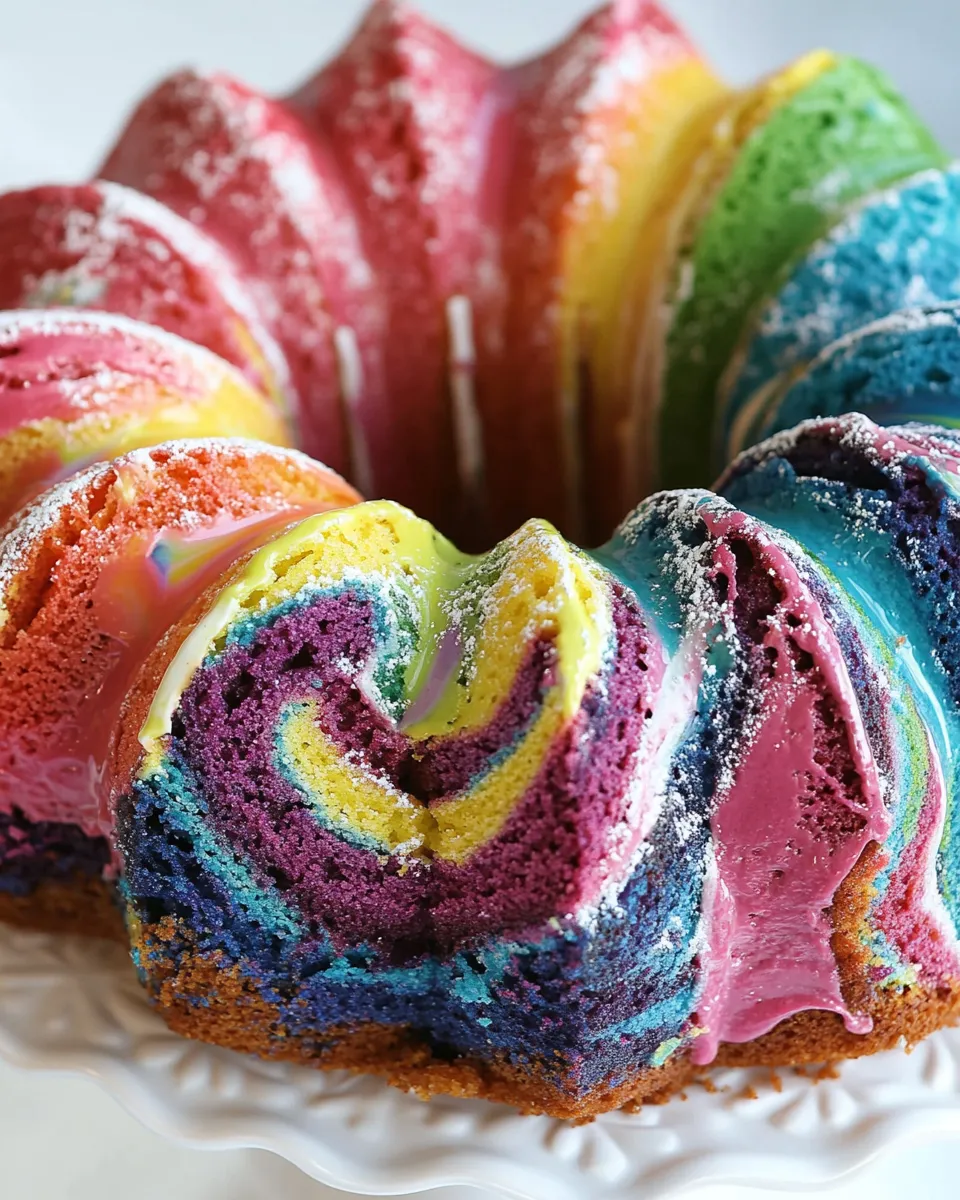
I make this Rainbow Bundt Cake whenever I want a showstopper that’s still easy to execute. The layered colors feel festive, but the technique is straightforward: a simple butter-based cake batter, split and tinted, then baked in a 12-cup bundt pan. The lemon glaze on top brightens the whole thing and adds just the right tang.
This recipe is forgiving. The batter is sturdy enough to hold distinct layers without collapsing into a tie-dye mess, and the glaze is flexible — thin it with lemon juice until pourable. I’ll walk you through the exact steps, ingredient roles, swaps, and common pitfalls so your cake looks as good as it tastes.
Whether you’re baking for a birthday, a potluck, or a weekend treat, these instructions keep the process calm and predictable. Read through the tips before you start, have your colors ready, and give yourself time to let the cake cool before glazing.
Ingredient List
- 3 cups all-purpose flour — Provides the structure for the cake; measure by spooning into the cup and leveling for accuracy.
- 2 teaspoons baking powder — Leavening agent; ensures rise and lightness.
- 1 teaspoon salt — Enhances flavor balance and strengthens the crumb.
- 1/2 teaspoon baking soda — Works with buttermilk to tenderize and add lift.
- 2 1/4 cups granulated white sugar — Sweetness and aids in creaming for aeration.
- 1 cup (2 sticks) unsalted butter, at room temperature — Fat for flavor and a tender crumb; room temp ensures proper creaming.
- 1/4 cup vegetable oil — Adds moisture and helps the cake stay tender after baking.
- 4 large eggs, at room temperature — Emulsify the batter and add structure; room temp gives better volume.
- 1 tablespoon vanilla extract — Background flavor; don’t skip it.
- 1 1/3 cups buttermilk — Adds acidity and tenderness; reacts with baking soda for lift.
- red, orange, yellow, green, blue and purple food coloring (gel paste works best- see notes below) — For the rainbow layers; gel delivers bright color without thinning the batter.
- 3 cups powdered sugar — Base for the lemon glaze; smooths out for a glossy finish.
- 1 teaspoon finely grated lemon zest — Adds bright citrus aroma to the glaze.
- 4 to 5 tablespoons freshly squeezed lemon juice — Liquefies the glaze and gives tang; adjust for thickness.
Build Rainbow Bundt Cake Step by Step
- Preheat the oven to 350°F (175°C). Spray a 12-cup bundt pan with nonstick spray and set aside.
- In a medium bowl, whisk together the 3 cups all-purpose flour, 2 teaspoons baking powder, 1 teaspoon salt, and 1/2 teaspoon baking soda. Set aside.
- In a large bowl, use a hand mixer on medium speed to beat 2 1/4 cups granulated sugar, 1 cup (2 sticks) unsalted butter (room temperature), and 1/4 cup vegetable oil for 4 minutes, until the mixture is light and fluffy.
- Beat in the 4 large eggs one at a time, mixing until each egg is incorporated before adding the next. Add 1 tablespoon vanilla extract and beat for 2 more minutes.
- Reduce the mixer speed to low. Alternately add the flour mixture and 1 1/3 cups buttermilk to the butter mixture, making three additions of the flour mixture and two additions of the buttermilk, beginning and ending with the flour mixture. Beat only until each addition is incorporated; do not overmix.
- Divide the batter equally among six small bowls (about 1 1/3 cups per bowl). You may leave one portion in the mixing bowl.
- Color each portion: stir red food coloring into one bowl, orange into the next, then yellow, green, blue, and purple. If using liquid food coloring start with about 4 to 8 drops per bowl; if using gel or paste, use a small amount of gel. Stir each bowl until the color is even.
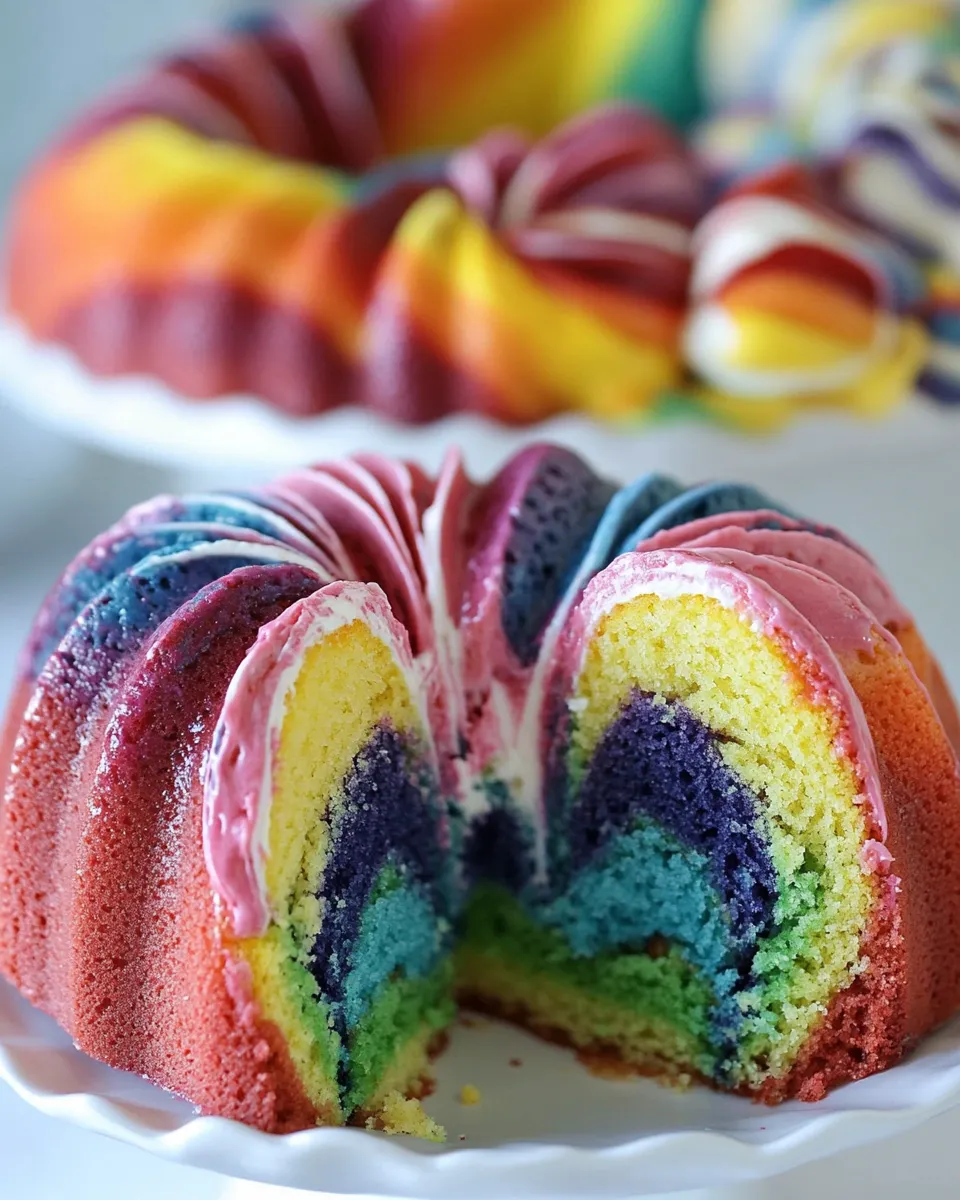
- Transfer the batters to the prepared bundt pan in this order: red, then orange, then yellow, then green, then blue, then purple. Spoon each color into the pan and spread lightly with a spoon or offset spatula to make even layers. Try not to swirl the colors together.
- Gently tap the pan once or twice on the counter to help level the layers and release any large air pockets.
- Bake for 55 to 65 minutes, until the cake is puffed, golden brown, and a tester inserted into the center comes out clean.
- Let the cake cool in the pan on a wire rack for 10 minutes. Carefully invert the cake onto the wire rack and let it cool completely.
- To make the glaze, in a medium bowl whisk together 3 cups powdered sugar, 1 teaspoon finely grated lemon zest, and 4 tablespoons freshly squeezed lemon juice until smooth. If the glaze is too thick, whisk in additional lemon juice 1 teaspoon at a time (up to a total of 5 tablespoons) until the glaze is thick but pourable.
- Pour the glaze over the cooled cake, allowing it to drip down the sides. Let the glaze set for at least 15 minutes before serving.
Why This Recipe Works
The combination of butter and a small amount of vegetable oil gives you the best of both worlds: butter for flavor and oil for lasting moisture. Creaming the butter and sugar for four minutes incorporates air, which helps the cake rise and yields a lighter crumb.
The alternation of dry ingredients and buttermilk keeps the batter emulsified and prevents overworking gluten. Buttermilk contributes acidity, which reacts with the baking soda for a gentle lift and tender texture. Coloring separate portions preserves vibrant, distinct layers rather than blending them into muddy tones.
The lemon glaze is simple but purposeful. Powdered sugar gives the glaze body and sheen, while lemon zest and juice add brightness that cuts through the cake’s richness. Adjusting the lemon juice lets you control the glaze’s flow so it accents the bundt’s ridges instead of plastering them.
Ingredient Swaps & Substitutions
- Buttermilk — If you don’t have buttermilk, you can use plain yogurt or a milk + acid mix (milk stirred with a splash of vinegar or lemon juice) as a substitute; use a similar volume.
- Unsalted butter — If you only have salted butter, omit or reduce extra salt in the recipe to balance the flavor.
- Vegetable oil — Any neutral oil (like canola) will work in its place; it contributes moisture and keeps the crumb tender.
- Food coloring — Gel or paste colors give the brightest hues with the least impact on batter consistency; liquid colors work but may need more drops.
- Glaze options — If you prefer, skip the lemon glaze and dust the cooled cake with additional powdered sugar for a lighter finish.
Prep & Cook Tools
- 12-cup bundt pan — The right size ensures even baking and the intended layer thickness.
- Nonstick spray — For greasing the pan so the cake releases cleanly.
- Hand mixer (or stand mixer) — Necessary for creaming the butter and sugar and for evenly mixing the batter.
- Mixing bowls — One medium bowl for dry ingredients and six small bowls for dividing and coloring batter.
- Measuring cups and spoons — Accurate measurements are important for consistent texture.
- Offset spatula or spoon — For spreading each color layer evenly in the pan.
- Wire rack — For cooling the cake completely before glazing.
- Zester and small whisk or fork — For preparing the glaze and zesting the lemon.
Steer Clear of These
- Skipping room temperature ingredients — Cold butter or eggs won’t incorporate properly and can reduce volume.
- Overmixing after adding flour — Beat only until combined to avoid a dense cake.
- Adding too much liquid coloring — Use gel colors when possible; liquid dyes may require many drops and can thin the batter.
- Removing the cake from the pan too soon — Let it rest for the recommended 10 minutes before inverting to avoid tearing.
- Glazing a warm cake — The glaze will melt and run off; let the cake cool completely for the best finish.
How to Make It Lighter
If you want a lighter-feeling dessert without changing the structure too much, focus on presentation and serving rather than major ingredient changes. Use a thinner glaze or a dusting of powdered sugar instead of the full lemon glaze. Serve smaller slices with a side of fresh fruit to balance richness.
Technique also helps: cream the butter and sugar thoroughly to incorporate more air, which gives a lighter crumb. Baking just until a tester comes out clean prevents drying, which keeps slices feeling less heavy.
Pro Tips & Notes
Coloring
Gel or paste food coloring is my go-to for vivid, saturated layers without changing batter consistency. If you only have liquid color, start with 4 to 8 drops and add slowly — you can always deepen the shade, but you can’t remove excess.
Layering
Spoon each color gently into the pan and spread lightly. Try to keep the spoon vertical and avoid dragging across layers. A light tap on the counter removes big air pockets; don’t overdo it or you’ll smear the layers together.
Baking & Testing
Ovens vary. Start checking at 55 minutes but be prepared for up to 65 minutes. A clean cake tester or skewer indicates doneness; a few moist crumbs are okay, but raw batter is not.
Glaze
Whisk the powdered sugar, lemon zest, and 4 tablespoons lemon juice until smooth. If it’s too thick, add lemon juice 1 teaspoon at a time up to 5 tablespoons total — the recipe allows for that flexibility. Pour over a fully cooled cake so the glaze sets neatly.
Refrigerate, Freeze, Reheat
Storage depends on whether the cake is glazed. A glazed cake keeps better in the refrigerator; cover and refrigerate for up to 4–5 days. For room-temperature storage, keep the cake in an airtight container or covered with a cake dome for up to 2–3 days.
To freeze, wrap the cooled, unglazed cake tightly in plastic wrap and foil, or slice and freeze portions. Frozen cake will keep for up to 3 months. Thaw overnight in the refrigerator or at room temperature, then bring to room temp before serving. If frozen glazed cake is used, thaw in the fridge to protect the glaze.
Rainbow Bundt Cake Q&A
Q: My colors bled into each other. How do I get clean layers?
A: Spoon gently and spread lightly. Don’t swirl the batter, and avoid over-tapping the pan. Using a firmer batter and gel colors also helps keep the layers distinct.
Q: The cake stuck to my pan. What went wrong?
A: Make sure you spray the pan thoroughly, getting into all the ridges. Let the cake cool for the full 10 minutes in the pan before inverting. For stubborn cases, run a thin knife around the pan edge before flipping.
Q: Can I make this in two loaf pans instead of a bundt?
A: The recipe is formulated for a 12-cup bundt, so baking in different pans will change bake time and the layered look. If you use loaf pans, expect shorter bake times and a different presentation.
Q: Is gel food coloring necessary?
A: Not necessary, but recommended. Gel/paste yields brighter colors with less liquid, preserving batter consistency.
Final Bite
This Rainbow Bundt Cake is a practical celebration cake: bold without being fussy. Follow the steps in order, pay attention to ingredient temperatures, and give the cake time to cool before glazing. The result is a tender, colorful cake with a tangy lemon finish that’s great for sharing.
Make it for a party, slice it for afternoon coffee, and store leftovers smartly. With a little care during the layer and glazing steps, you’ll have a cake that looks like you spent hours on it — even when you didn’t.
Rainbow Bundt Cake
Equipment
- 12-cup bundt pan
- nonstick spray
- Mixing Bowls
- Hand Mixer
- Measuring cups and spoons
- Spoon or Offset Spatula
- Wire Rack
- Oven
Ingredients
Ingredients
- 3 cupsall purpose flour
- 2 teaspoonsbaking powder
- 1 teaspoonsalt
- 1/2 teaspoonbaking soda
- 2 1/4 cupsgranulated white sugar
- 1 cup 2 sticksunsalted butter, at room temperature
- 1/4 cupvegetable oil
- 4 largeeggs at room temperature
- 1 tablespoonvanilla extract
- 1 1/3 cupsbuttermilk
- red orange, yellow, green, blue and purple food coloring(gel paste works best- see notes below)
- 3 cupspowdered sugar
- 1 teaspoonfinely grated lemon zest
- 4 to 5 tablespoonsfreshly squeezed lemon juice
Instructions
Instructions
- Preheat the oven to 350°F (175°C). Spray a 12-cup bundt pan with nonstick spray and set aside.
- In a medium bowl, whisk together the 3 cups all-purpose flour, 2 teaspoons baking powder, 1 teaspoon salt, and 1/2 teaspoon baking soda. Set aside.
- In a large bowl, use a hand mixer on medium speed to beat 2 1/4 cups granulated sugar, 1 cup (2 sticks) unsalted butter (room temperature), and 1/4 cup vegetable oil for 4 minutes, until the mixture is light and fluffy.
- Beat in the 4 large eggs one at a time, mixing until each egg is incorporated before adding the next. Add 1 tablespoon vanilla extract and beat for 2 more minutes.
- Reduce the mixer speed to low. Alternately add the flour mixture and 1 1/3 cups buttermilk to the butter mixture, making three additions of the flour mixture and two additions of the buttermilk, beginning and ending with the flour mixture. Beat only until each addition is incorporated; do not overmix.
- Divide the batter equally among six small bowls (about 1 1/3 cups per bowl). You may leave one portion in the mixing bowl.
- Color each portion: stir red food coloring into one bowl, orange into the next, then yellow, green, blue, and purple. If using liquid food coloring start with about 4 to 8 drops per bowl; if using gel or paste, use a small amount of gel. Stir each bowl until the color is even.
- Transfer the batters to the prepared bundt pan in this order: red, then orange, then yellow, then green, then blue, then purple. Spoon each color into the pan and spread lightly with a spoon or offset spatula to make even layers. Try not to swirl the colors together.
- Gently tap the pan once or twice on the counter to help level the layers and release any large air pockets.
- Bake for 55 to 65 minutes, until the cake is puffed, golden brown, and a tester inserted into the center comes out clean.
- Let the cake cool in the pan on a wire rack for 10 minutes. Carefully invert the cake onto the wire rack and let it cool completely.
- To make the glaze, in a medium bowl whisk together 3 cups powdered sugar, 1 teaspoon finely grated lemon zest, and 4 tablespoons freshly squeezed lemon juice until smooth. If the glaze is too thick, whisk in additional lemon juice 1 teaspoon at a time (up to a total of 5 tablespoons) until the glaze is thick but pourable.
- Pour the glaze over the cooled cake, allowing it to drip down the sides. Let the glaze set for at least 15 minutes before serving.
Notes
Make-ahead tip:You can prepare this cake up to 3 days in advance. Store the cooled glazed cake in a cake container at room temperature or in the refrigerator.