I fell in love with this dish the first time I tasted it on a sticky Bangkok night — simple, bold, and impossibly satisfying. It’s a weeknight miracle: quick to pull together, forgiving when you’re multitasking, and loud on flavor without needing a long ingredient list. You’ll get tender pieces of chicken, punchy garlic and chilies, and that bright, slightly sweet aroma of Thai basil wilting into the sauce.
What I love most is how reliably it turns out. A hot skillet, a few good techniques, and you’ll have dinner on the table in under 20 minutes. Serve it over jasmine rice and let the sauce soak in. Leftovers reheat beautifully, too.
This recipe is practical and precise. Read through the ingredients and steps once, then go cook — you’ll be surprised how quickly it becomes a staple in your rotation.
What Goes Into Thai Basil Chicken
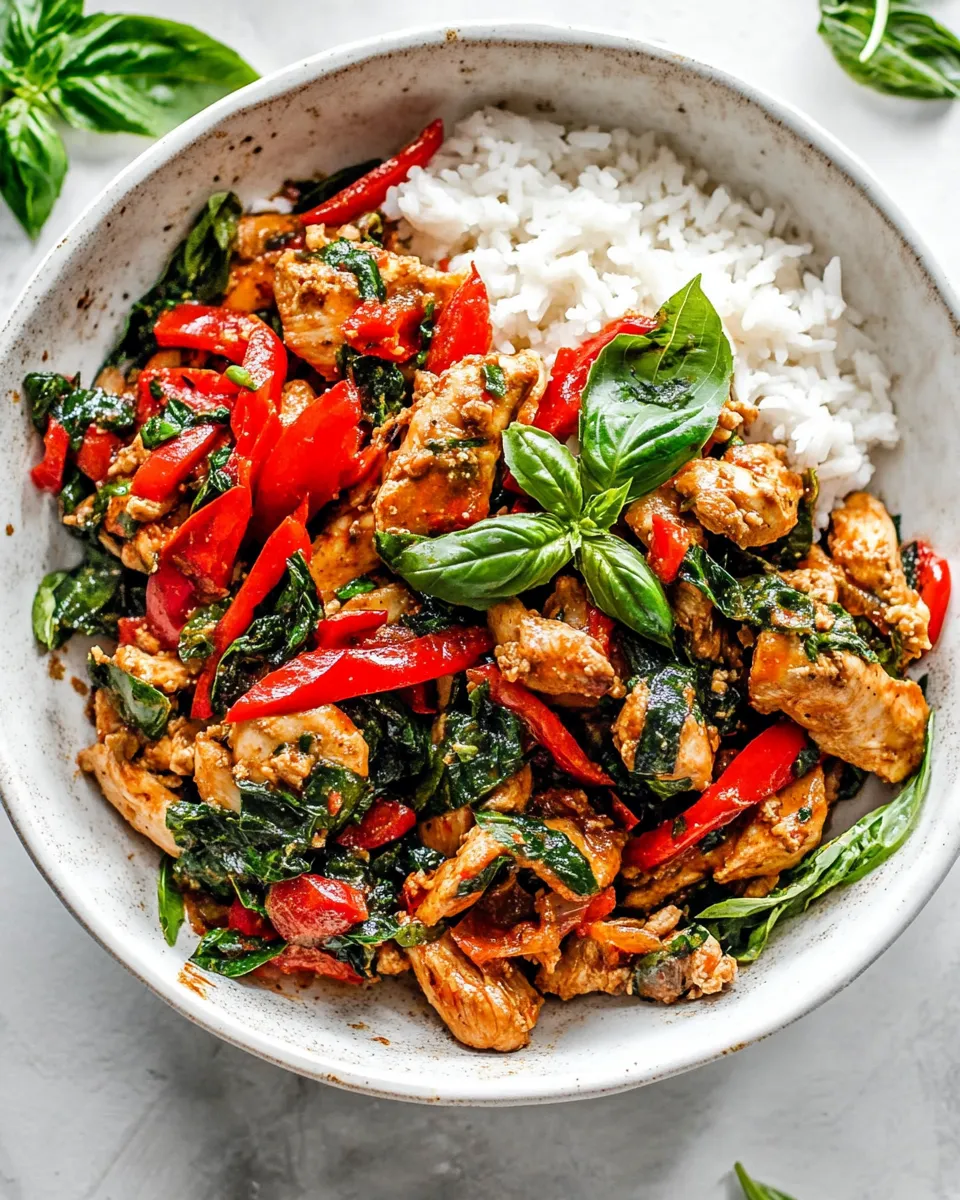
Ingredients
- 2 tablespoons (30 ml) vegetable oil — for high-heat stir-frying; a neutral oil that won’t overpower the flavors.
- 2 shallots — thinly sliced; they add a sweet, mild onion flavor and soften quickly.
- 3–4 cloves garlic — minced; the aromatics base that gives the dish its savory backbone.
- 1–2 Thai chili peppers — deseeded and minced (adjust to spice preference); fresh heat and floral chili flavor.
- 1 ½ pounds (675 g) boneless skinless chicken thighs — diced into bite-sized pieces; thighs stay juicy at high heat.
- 1 tablespoon (15 ml) soy sauce — salty umami; balances the fish sauce and adds color.
- 2 teaspoons (30 ml) fish sauce — essential Southeast Asian savory depth; use as written for authentic flavor.
- 1 teaspoon granulated sugar — rounds out the salty elements and helps the sauce glaze the chicken.
- ¾ cup (15 g) Thai basil leaves — loosely packed; added at the end to wilt and release its signature sweet-anise aroma.
Directions: Thai Basil Chicken
- Heat 2 tablespoons (30 ml) vegetable oil in a large skillet or wok over medium-high heat until the oil is shimmering.
- Add the 2 thinly sliced shallots, 3–4 cloves minced garlic, and 1–2 deseeded minced Thai chili peppers. Stir-fry 1–2 minutes, stirring constantly, until fragrant and the shallots begin to soften but are not browned.
- Add the 1 ½ pounds (675 g) diced boneless skinless chicken thighs to the pan. Stir-fry 4–5 minutes, stirring frequently, until the chicken is cooked through and no longer pink in the center.
- Stir in 1 tablespoon (15 ml) soy sauce, 2 teaspoons fish sauce, and 1 teaspoon granulated sugar. Toss or stir to coat the chicken evenly and cook 1–2 more minutes so the flavors meld.
- Remove the pan from heat. Add the ¾ cup (15 g) loosely packed Thai basil leaves and stir until the basil is wilted and evenly distributed, about 30 seconds.
- Transfer to a serving plate and enjoy immediately (commonly served over cooked jasmine rice).
Why You’ll Keep Making It
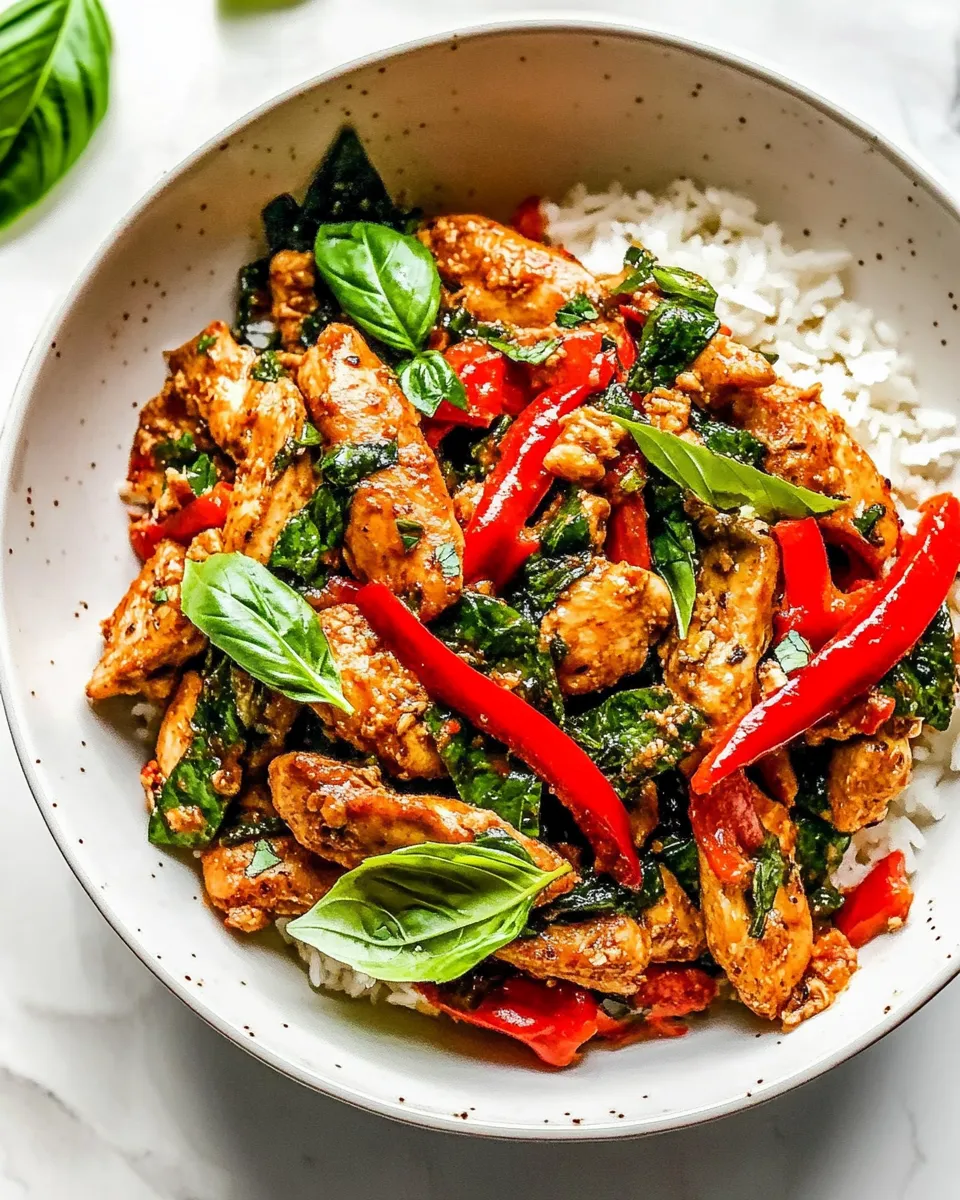
This dish hits every practical note: speed, versatility, and boldness. It’s fast — from chopping board to bowl in under 20 minutes when your mise en place is ready. It’s forgiving — thigh meat tolerates high heat and short cooking times without drying out. And it’s flexible — a few pantry staples give you an authentically flavored meal without a long shopping list.
More than that, it’s reliable comfort. The contrast of savory, salty, slightly sweet, and herby is exactly what you want on a busy evening. Guests ask for seconds. Family members who normally avoid spice will usually take one bite and want to try it again.
Quick Replacement Ideas
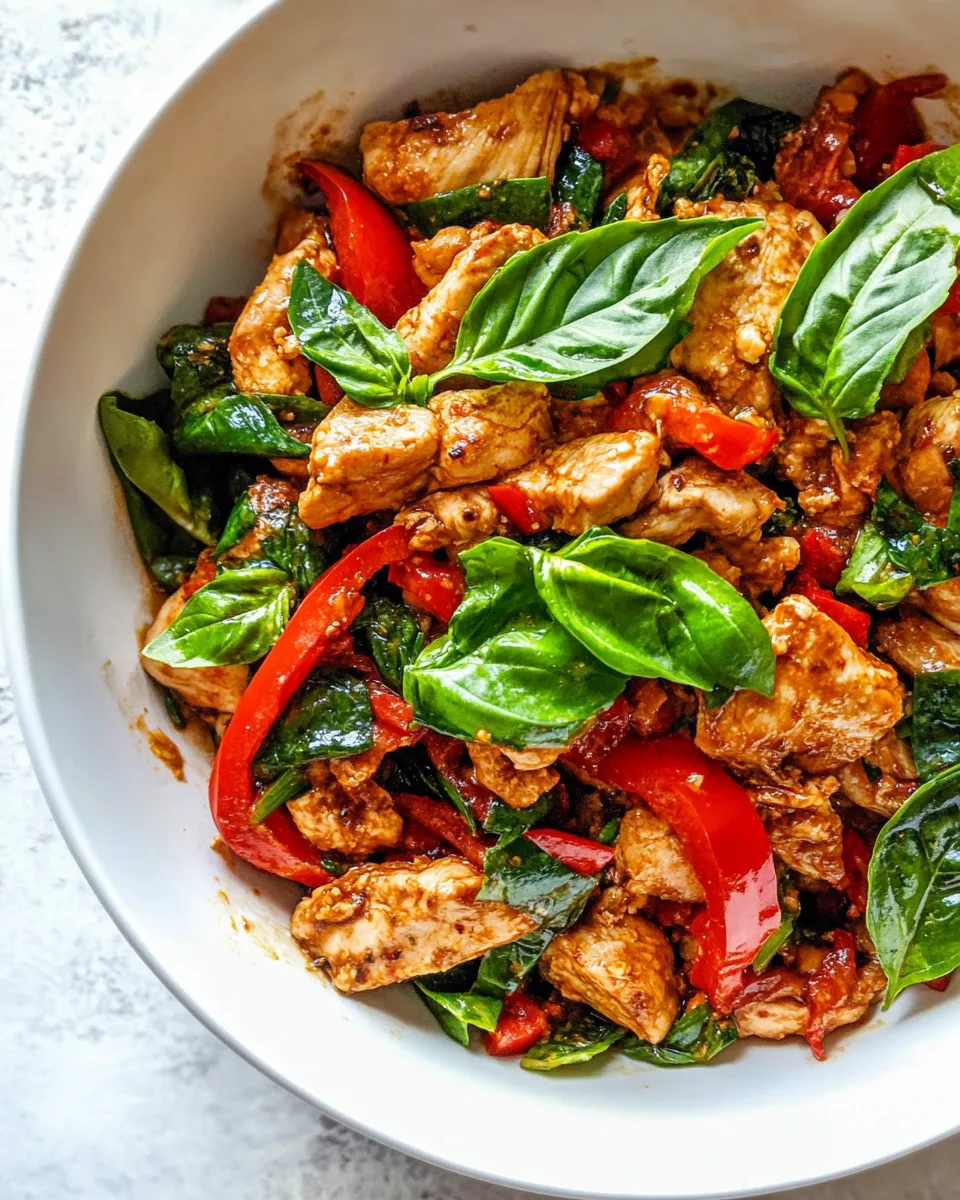
- Chicken thighs → chicken breast — use the same amount but watch the cook time; breasts can dry out if overcooked.
- Thai basil → sweet basil — not identical, but sweet basil provides a similar fresh, sweet note if Thai basil is unavailable.
- Vegetable oil → avocado or peanut oil — both have high smoke points; peanut adds a faint nutty aroma.
- Fish sauce → reduced soy + a pinch of salt — if avoiding fish flavors, combine soy sauce with a tiny extra pinch of salt for depth (flavor will differ).
- Thai chili → red pepper flakes — use sparingly; dried heat is less floral than fresh chilies.
Equipment & Tools
- Large skillet or wok — a roomy pan ensures quick evaporation and good sear; a heavy-bottomed skillet works too.
- Sharp knife — for quick, even dicing of chicken and thin slicing of shallots.
- Cutting board — keep proteins and aromatics separated for safety and workflow.
- Spatula or wooden spoon — for frequent stirring and tossing while stir-frying.
- Measuring spoons/cups — to keep seasoning balanced; this dish benefits from accurate sauce ratios.
Missteps & Fixes
Too oily or greasy
If your pan ends up oily, it likely needed more heat so the oil could shimmer and evaporate flavors properly. Turn the heat up slightly next time and make sure your pan is hot before adding aromatics. Drain excess oil with a paper towel after cooking if needed.
Shallots or garlic browned too fast
That happens when the pan is too hot. Reduce the heat to medium-high and stir constantly for 1–2 minutes. You want softened aromatics, not charred ones. If they do scorch, remove them quickly and start that step again to avoid bitterness.
Chicken dry or overcooked
Thinly diced thighs cook fast. Cut uniform pieces and keep a close eye during the 4–5 minute stir-fry. If using breast, reduce cook time slightly and check often. Resting the chicken in the pan off heat for 30 seconds with basil helps redistribute juices.
Not saucy enough
The recipe is designed to be lightly sauced. If you prefer more sauce, add 1–2 tablespoons of chicken stock or water before adding the basil and simmer 30–60 seconds to loosen the pan juices.
Tailor It to Your Diet
- Lower sodium — use low-sodium soy sauce and reduce fish sauce slightly; taste before serving and adjust with a pinch of salt.
- Gluten-free — swap soy sauce for tamari or a gluten-free soy alternative at the same amount.
- Pescatarian/vegetarian — replace chicken with firm tofu or mushrooms; skip fish sauce or use a vegetarian umami condiment.
- Less heat — remove the seeds from the chilies entirely or use only one small chili.
Little Things that Matter
Use fresh Thai basil if you can. The final 30 seconds off the heat is where the aroma blossoms; add it last and don’t overcook. Dice your chicken into similar-sized pieces so everything finishes at the same time. When stir-frying, keep the pan moving — that steady agitation keeps the chicken tender and prevents sticking.
Also: measure the fish sauce. It’s potent and skews salty quickly. Add it, taste, and let the flavors meld for a minute before deciding if it needs more.
Store, Freeze & Reheat
- Store — Cool to room temperature and refrigerate in an airtight container for up to 3 days.
- Freeze — I don’t recommend freezing after basil is added; freeze the cooked chicken (without basil) in a freezer-safe container for up to 2 months. Thaw overnight in the fridge before reheating.
- Reheat — Reheat gently in a skillet over medium heat with a splash of water or stock to loosen the pan juices. Add fresh basil at the end to revive that herbaceous note.
Common Questions
Can I make this spicier?
Yes. Use 2 Thai chilies with seeds, or add a small spoon of chili paste during step 4. Taste as you go; a little goes a long way.
Why use chicken thighs instead of breasts?
Thighs tolerate high heat better and stay juicy. Breasts can work but require careful timing to avoid drying out.
What if I can’t find Thai basil?
Sweet basil is an acceptable substitute and will still provide a fresh, sweet finish. The flavor won’t be identical but will be pleasing.
Can I double the recipe?
Yes, but use a very large skillet or cook in batches. Overcrowding the pan releases steam and prevents good searing.
Ready, Set, Cook
Gather your ingredients, heat the pan, and move quickly through the steps. The technique matters more than perfection: keep the heat up, stir often, and add the basil right at the end. Serve with jasmine rice and a lime wedge if you like a bright squeeze.
Make it once and you’ll see why it becomes a go-to. Enjoy the pop of basil and the quick, savory comfort this dish brings to the table. Happy cooking.
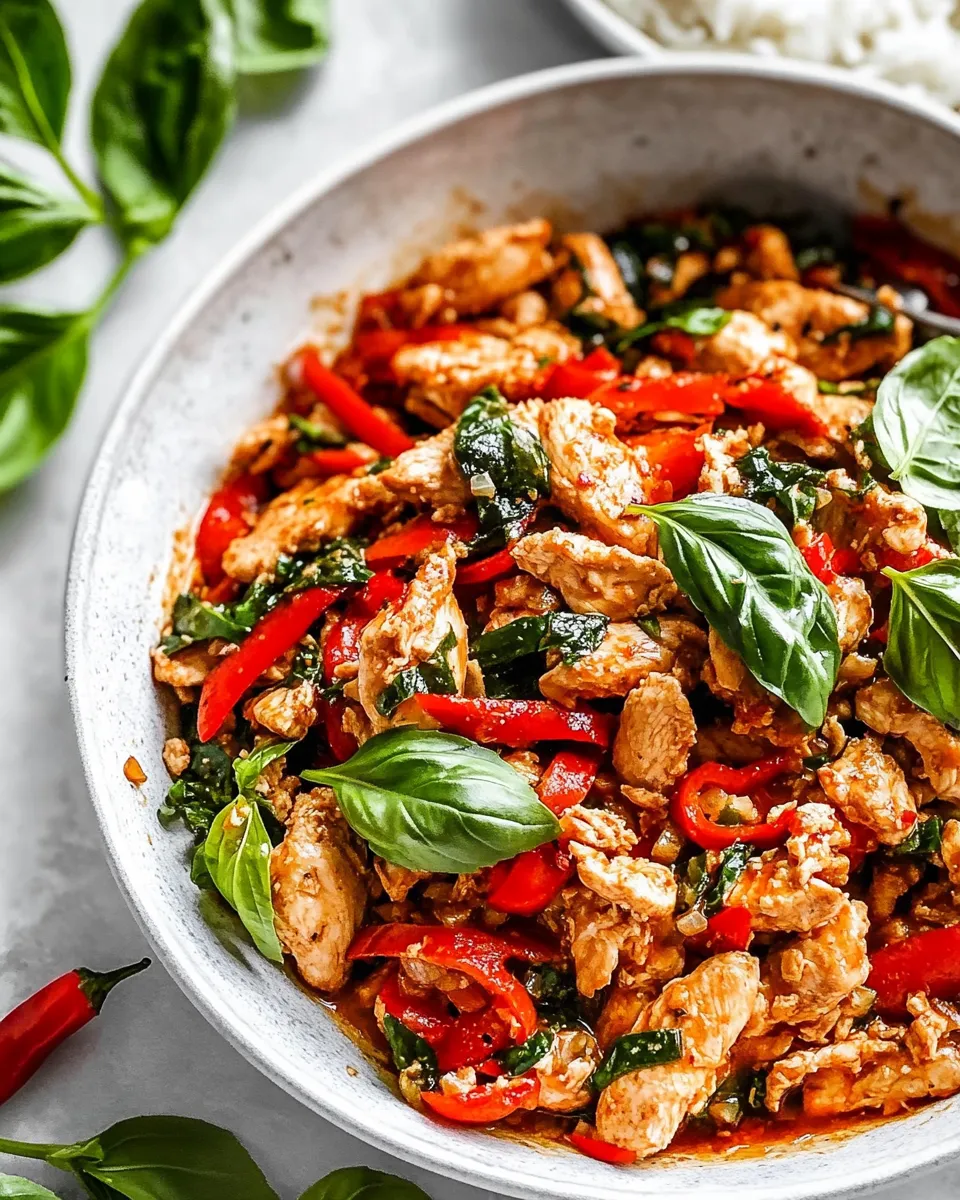
Thai Basil Chicken
Equipment
- Large Skillet or Wok
Ingredients
Ingredients
- ?2 tablespoons 30 mlvegetable oilor other neutral-tasting oil, such as avocado
- ?2 shallotsthinly sliced
- ?3-4 clovesgarlicminced
- ?1-2 Thai chili peppersdeseeded and minced adjust to spice preference
- ?1 1/2 pounds 675 gboneless skinless chicken thighsdiced into bite-sized pieces
- ?1 tablespoon 15 mlsoy sauce
- ?2 teaspoons 30 mlfish sauce
- ?1 teaspoongranulated sugar
- ?3/4 cup 15 gThai basil leavesloosely packed
Instructions
Instructions
- Heat 2 tablespoons (30 ml) vegetable oil in a large skillet or wok over medium-high heat until the oil is shimmering.
- Add the 2 thinly sliced shallots, 3–4 cloves minced garlic, and 1–2 deseeded minced Thai chili peppers. Stir-fry 1–2 minutes, stirring constantly, until fragrant and the shallots begin to soften but are not browned.
- Add the 1 ½ pounds (675 g) diced boneless skinless chicken thighs to the pan. Stir-fry 4–5 minutes, stirring frequently, until the chicken is cooked through and no longer pink in the center.
- Stir in 1 tablespoon (15 ml) soy sauce, 2 teaspoons fish sauce, and 1 teaspoon granulated sugar. Toss or stir to coat the chicken evenly and cook 1–2 more minutes so the flavors meld.
- Remove the pan from heat. Add the ¾ cup (15 g) loosely packed Thai basil leaves and stir until the basil is wilted and evenly distributed, about 30 seconds.
- Transfer to a serving plate and enjoy immediately (commonly served over cooked jasmine rice).
Notes
To ensure that this recipe is gluten free,use gluten free soy sauce or tamari.
Add Veggies:You can stir fry vegetables in the pan after you’ve cooked the chicken if you’d like. Choose quick cooking veggies such as diced bell peppers, green beans, or snow peas.
To Store:Keep leftovers in an airtight container in the fridge for up to 4 days.