This recipe is my go-to when I want the bright flavors of a Thai salad but with a lighter, grain-free base. It balances a coconut-ginger dressing with crisp vegetables, juicy mango, fresh mint and crunchy cashews. The result feels like a restaurant side that you can finish in under half an hour.
I like recipes that travel properly—meaning they work whether you’re feeding a family, packing lunches for the week, or throwing together a quick weeknight dinner. This one scales cleanly and keeps its texture if you follow a couple of simple timing rules.
Below you’ll find exactly what to buy, the ingredient list, the step-by-step method (kept true to the original directions), smart gear notes, common mistakes to avoid, and sensible make-ahead tips. No filler—just practical guidance so your Thai Cauliflower Rice turns out every time.
What to Buy
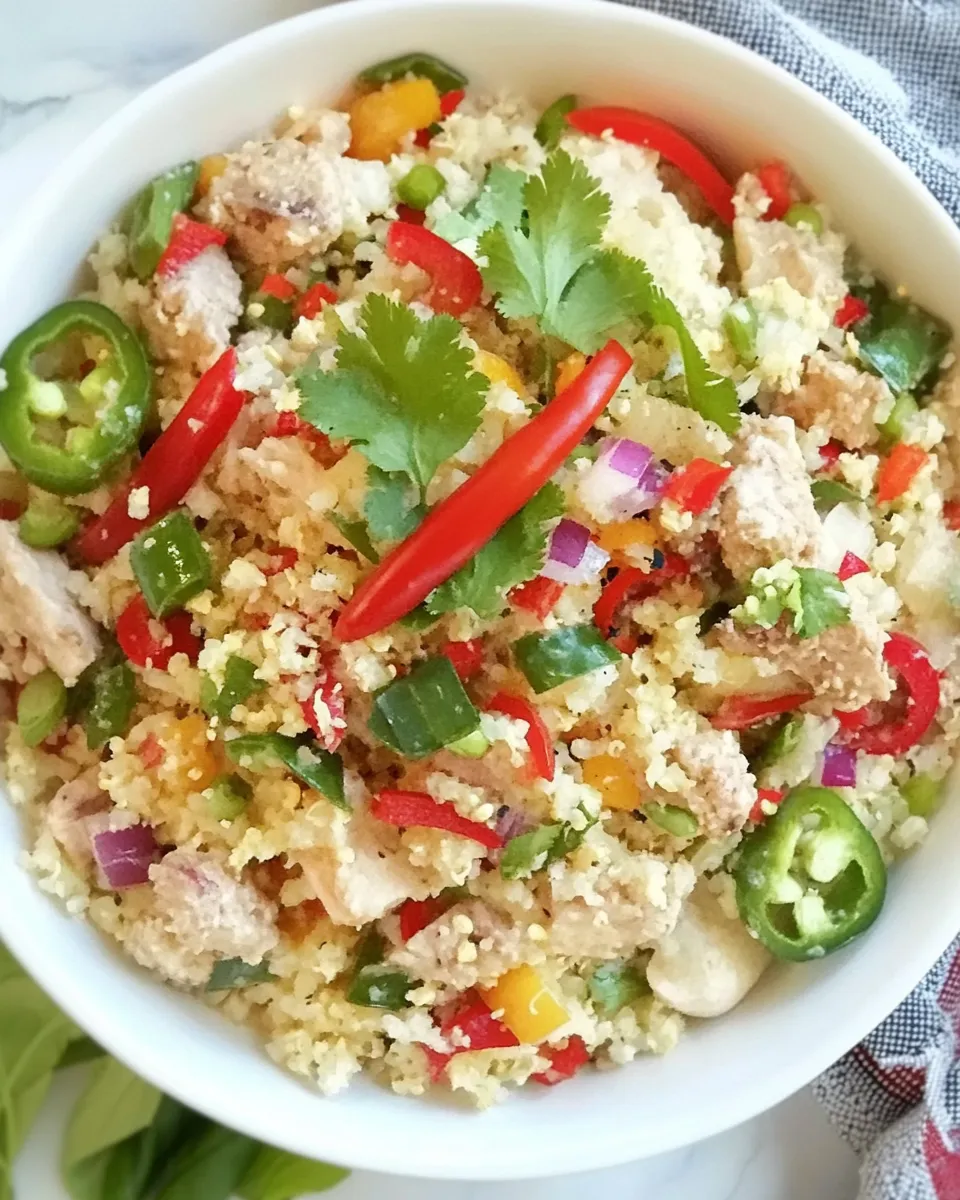
Shop for fresh produce first: a large head of cauliflower, a ripe mango, a red bell pepper, green onions, red onion, fresh mint and garlic. Pick a head of cauliflower that feels heavy and tight; that gives you better texture after ricing.
From the pantry, get coconut oil, light coconut milk, creamy almond butter and raw cashews. Check your spice drawer for sea salt and have fresh limes on hand for juice.
Ingredients
- 1 large head cauliflower — the base of the dish; you’ll rice it to mimic grain-like texture.
- 2 tablespoons coconut oil — for sautéing; gives a mild coconut flavor and helps with browning.
- ½ teaspoon sea salt — seasons the cauliflower; adjust to taste.
- 2 cloves garlic — minced and added near the end for fresh aromatics.
- 1 bunch green onions, chopped — adds sharpness and color; fold in at the end.
- 1 large red bell pepper, chopped — crunchy, sweet texture and color contrast.
- 1 large ripe mango, peeled and chopped — brings juicy sweetness and balances the dressing.
- ½ cup red onion, sliced — sharp bite; thin slices distribute better through the salad.
- 1/3 cup fresh mint leaves, chopped — a bright herb that lifts the whole dish.
- ½ cup raw cashews — for crunch; add at the end so they stay crisp.
- ¼ cup light coconut milk — part of the dressing; gives creaminess without heaviness.
- 1 1/2 tablespoons fresh ginger, peeled and grated — zesty backbone of the dressing.
- 2 tablespoons lime juice — acid to brighten flavors; taste and adjust.
- 2 tablespoons creamy almond butter — adds richness and helps emulsify the dressing.
Thai Cauliflower Rice: From Prep to Plate
- In a small bowl whisk together the dressing: 1/4 cup light coconut milk, 1 1/2 tablespoons grated fresh ginger, 2 tablespoons lime juice, 2 tablespoons creamy almond butter and 1/2 teaspoon sea salt (or to taste). Set the dressing aside.
- Remove the green stems from the cauliflower and cut the head into chunks.
- Pulse the cauliflower chunks in a food processor until the pieces are the size and texture of rice. (If you don’t have a food processor, cut the cauliflower in half and grate it on a box grater.)
- Heat 2 tablespoons coconut oil in a large skillet or wok over medium heat until shimmering.
- Add the riced cauliflower to the skillet and sauté, stirring occasionally, until the cauliflower softens and cooks down, about 10–15 minutes.
- Add 2 cloves garlic (minced) to the skillet and sauté for about 3 more minutes. Remove the pan from heat.
- Transfer the cooked cauliflower rice to a large serving bowl. Add 1 bunch chopped green onions, 1 large chopped red bell pepper, 1 large peeled and chopped ripe mango, 1/2 cup sliced red onion, 1/3 cup chopped fresh mint leaves, and 1/2 cup raw cashews.
- Pour the Ginger Almond Butter Dressing over the cauliflower mixture and toss everything together until well combined. Taste and adjust seasoning if needed, then serve.
Why This Recipe Is Reliable
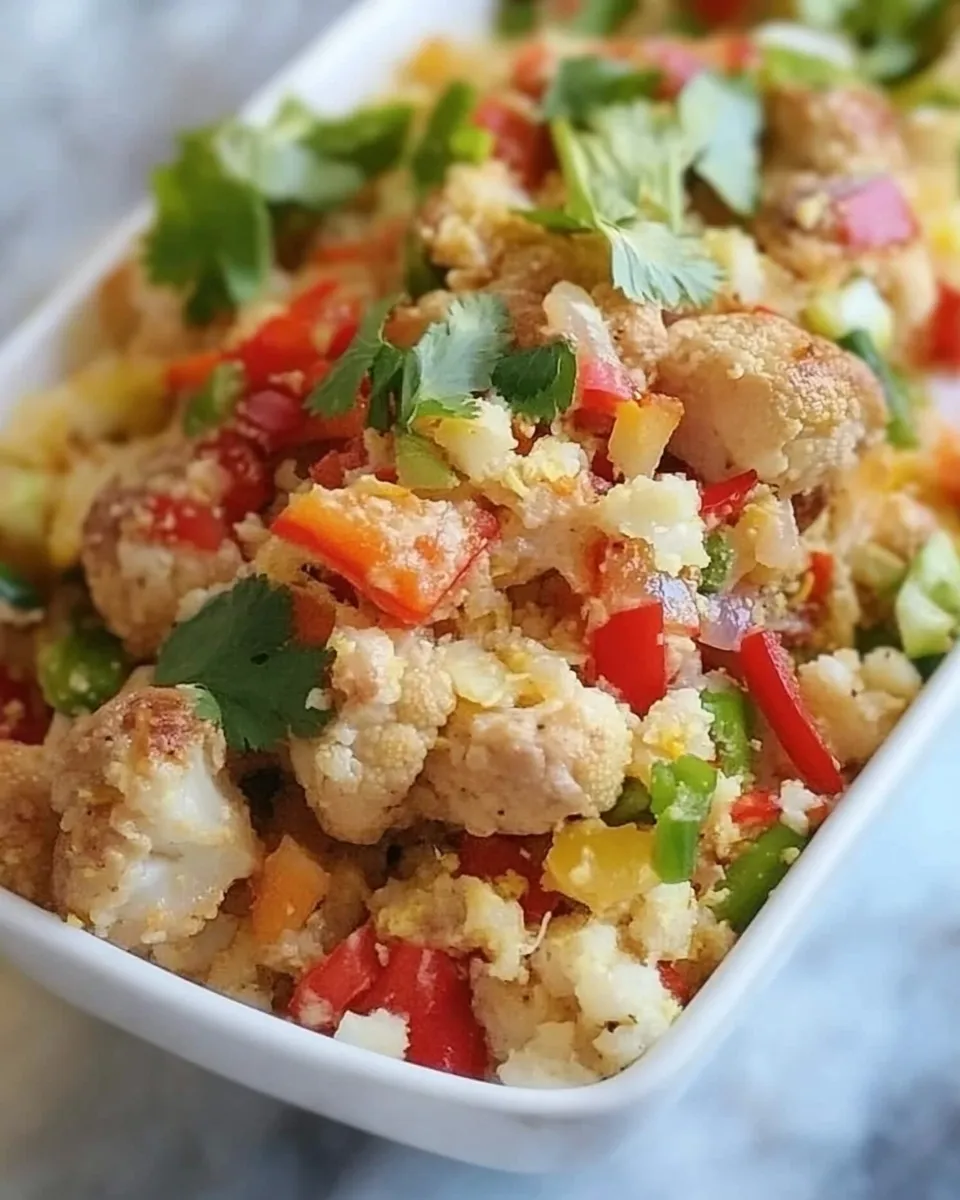
It uses straightforward techniques and a short ingredient list, which makes it consistent. Ricing the cauliflower in a food processor gives an even texture; sautéing it for 10–15 minutes ensures the cauliflower softens without turning mushy. The dressing is a simple emulsion—almond butter plus coconut milk and lime—so it coats the salad evenly and delivers predictable flavor every time.
There are no long marination steps or precise temperatures to hit. Follow the steps in order and keep an eye on the cauliflower while it cooks. That attention prevents the most common texture problems.
Ingredient Flex Options
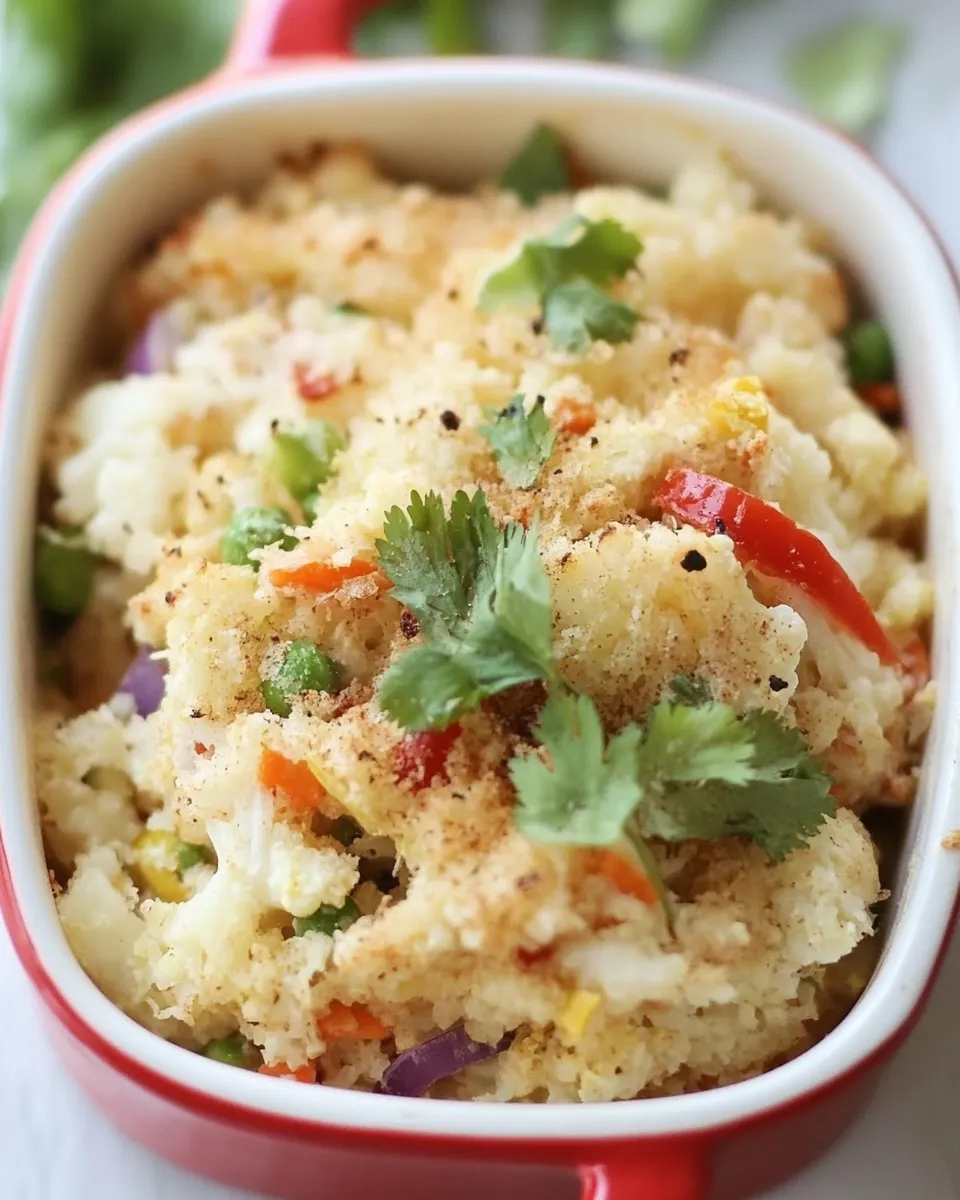
We won’t invent new ingredients, but you can swap quantities or omit items from the provided list depending on dietary needs and availability:
- Omit the cashews — if you need the dish nut-free, leave the cashews out. The salad is still texturally satisfying thanks to the bell pepper and onion.
- Skip the mango — if mango isn’t available, use a slightly larger amount of red bell pepper and red onion for sweetness and crunch.
- Reduce the almond butter — if you prefer a lighter dressing, cut the almond butter to 1 tablespoon and increase lime juice slightly to maintain brightness.
- Adjust the salt — the recipe lists ½ teaspoon sea salt for the dressing; taste and add more if your palate or the ripeness of the mango calls for it.
What You’ll Need (Gear)
- Food processor — for ricing the cauliflower quickly and evenly. If you don’t have one, a box grater works too (see the directions).
- Large skillet or wok — roomy surface area prevents steaming and helps the cauliflower cook down properly.
- Small bowl and whisk — to make and emulsify the dressing.
- Cutting board and sharp knife — for chopping the mango, bell pepper, onions and mint.
- Large serving bowl — for tossing the warm cauliflower with the rest of the ingredients without spilling.
Mistakes That Ruin Thai Cauliflower Rice
- Cooking the cauliflower too long — if you overcook it, you’ll end up with mush instead of rice-like grains. Aim for tender, not falling apart.
- Adding garlic too early — garlic added at the start can burn and taste bitter. This recipe adds garlic near the end to preserve its freshness.
- Overcrowding the pan — too much cauliflower in the skillet will steam rather than sauté. Work in batches if needed.
- Not tasting the dressing — the lime, salt and almond butter balance can vary with ingredient freshness. Taste and tweak before tossing.
- Mixing while the cauliflower is hot for too long — prolonged heat can soften the mango and wilt the mint. Toss promptly so textures stay distinct.
Seasonal Spins
This dish shines in warm months because of the mango and fresh mint. In season, choose the ripest mango you can find—its sweetness is central to the contrast with the tangy dressing. Late in the year, when mangoes are less available, increase the red bell pepper and red onion, and consider extra mint for freshness.
For a winter version, use more cooked cauliflower (a little longer in the pan) and serve warm as a side. The dressing still brightens the dish, even when you prefer a warm salad.
What Could Go Wrong
Here are problem spots I see most often and how to fix or avoid them.
- Soggy mixture — cause: too much moisture or overcooking. Fix: cook cauliflower until just tender; drain any excess liquid from the pan and allow it to cool slightly before tossing with the dressing.
- Dressing separates — cause: not whisked well or ingredients at different temperatures. Fix: whisk the coconut milk and almond butter vigorously until smooth; add lime last and taste.
- Flat flavor — cause: under-seasoned dressing. Fix: add a bit more lime juice or sea salt, a pinch at a time, until the flavors pop.
- Mango browning or breaking down — cause: tossing while cauliflower is piping hot. Fix: let the cauliflower cool for a few minutes off the heat before combining with mango and mint.
Leftovers & Meal Prep
This keeps well for lunches and light dinners. Store in an airtight container in the fridge for up to 3 days. Keep in mind the cashews will soften over time and the mango may release juice; both change texture but not flavor.
For meal prep: cook and cool the cauliflower rice and keep it separate from the diced mango and cashews. Pack dressing in a small jar. Combine at mealtime to preserve crunch and freshness. If you must reheat the cauliflower, do it briefly in a skillet with a splash of coconut oil, then cool slightly before adding the rest.
Quick Questions
Can I make this nut-free? Yes—omit the cashews and skip or reduce the almond butter. The dish will be less rich but still flavorful; you might add an extra squeeze of lime to compensate.
How long should the cauliflower cook? About 10–15 minutes over medium heat until it softens and cooks down but still holds a slight bite. Sauté rather than steam for the best texture.
Can I use frozen cauliflower rice? You can, but thaw and drain it well and reduce cooking time so it doesn’t become mushy.
Final Thoughts
Thai Cauliflower Rice is a bright, adaptable dish that feels special without demanding extra time. The coconut-ginger dressing is the linchpin: it ties together the sweet mango, fresh mint and crunchy cashews. Follow the simple timing rules—rice the cauliflower evenly, sauté to tender but not mushy, and fold in the fruit and herbs off the heat—and you’ll get a vibrant, reliable result.
Make it for a weeknight dinner, bring it to a potluck, or pack it for lunches. The flavors hold up, and the method is forgiving. If you have any questions while cooking, tell me where you’re stuck and I’ll help troubleshoot.
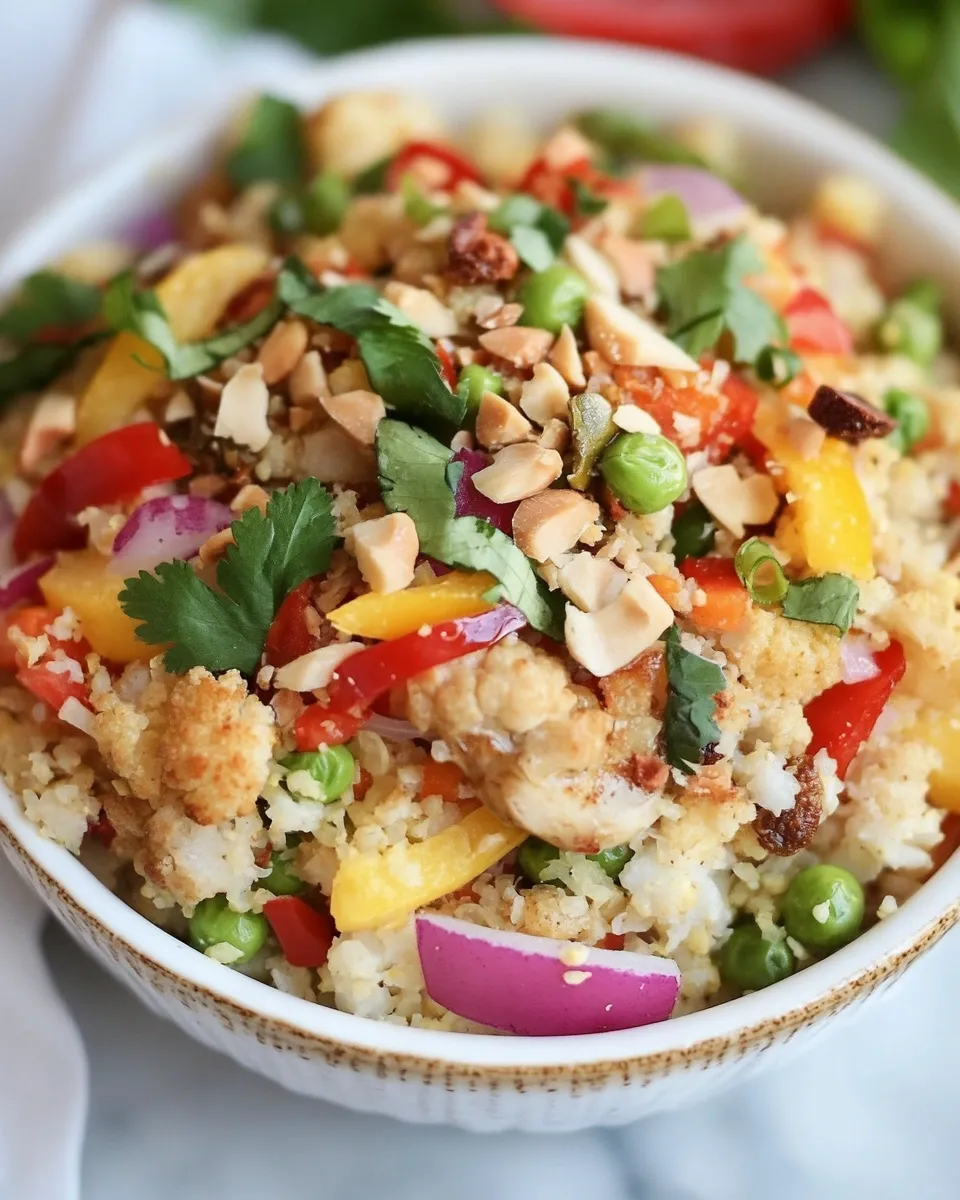
Thai Cauliflower Rice
Equipment
- Food Processor
- box grater (optional)
- Large Skillet or Wok
- Small Bowl
- large serving bowl
Ingredients
Ingredients
- 1 large head cauliflower
- 2 tablespoonscoconut oil
- 1/2 teaspoonsea saltor to taste
- 2 clovesgarlic
- 1 bunch green onionschopped
- 1 large red bell pepperchopped
- 1 large ripe mangopeeled and chopped
- 1/2 cupred onionsliced
- 1/3 cupfresh mint leaveschopped
- 1/2 cupraw cashews
- 1/4 cuplight coconut milk
- 1 1/2 tablespoonsfresh gingerpeeled and grated
- 2 tablespoonslime juice
- 2 tablespoonscreamy almond butter*
Instructions
Instructions
- In a small bowl whisk together the dressing: 1/4 cup light coconut milk, 1 1/2 tablespoons grated fresh ginger, 2 tablespoons lime juice, 2 tablespoons creamy almond butter and 1/2 teaspoon sea salt (or to taste). Set the dressing aside.
- Remove the green stems from the cauliflower and cut the head into chunks.
- Pulse the cauliflower chunks in a food processor until the pieces are the size and texture of rice. (If you don't have a food processor, cut the cauliflower in half and grate it on a box grater.)
- Heat 2 tablespoons coconut oil in a large skillet or wok over medium heat until shimmering.
- Add the riced cauliflower to the skillet and sauté, stirring occasionally, until the cauliflower softens and cooks down, about 10–15 minutes.
- Add 2 cloves garlic (minced) to the skillet and sauté for about 3 more minutes. Remove the pan from heat.
- Transfer the cooked cauliflower rice to a large serving bowl. Add 1 bunch chopped green onions, 1 large chopped red bell pepper, 1 large peeled and chopped ripe mango, 1/2 cup sliced red onion, 1/3 cup chopped fresh mint leaves, and 1/2 cup raw cashews.
- Pour the Ginger Almond Butter Dressing over the cauliflower mixture and toss everything together until well combined. Taste and adjust seasoning if needed, then serve.
Notes
*You can replace the almond butter with peanut butter or cashew butter