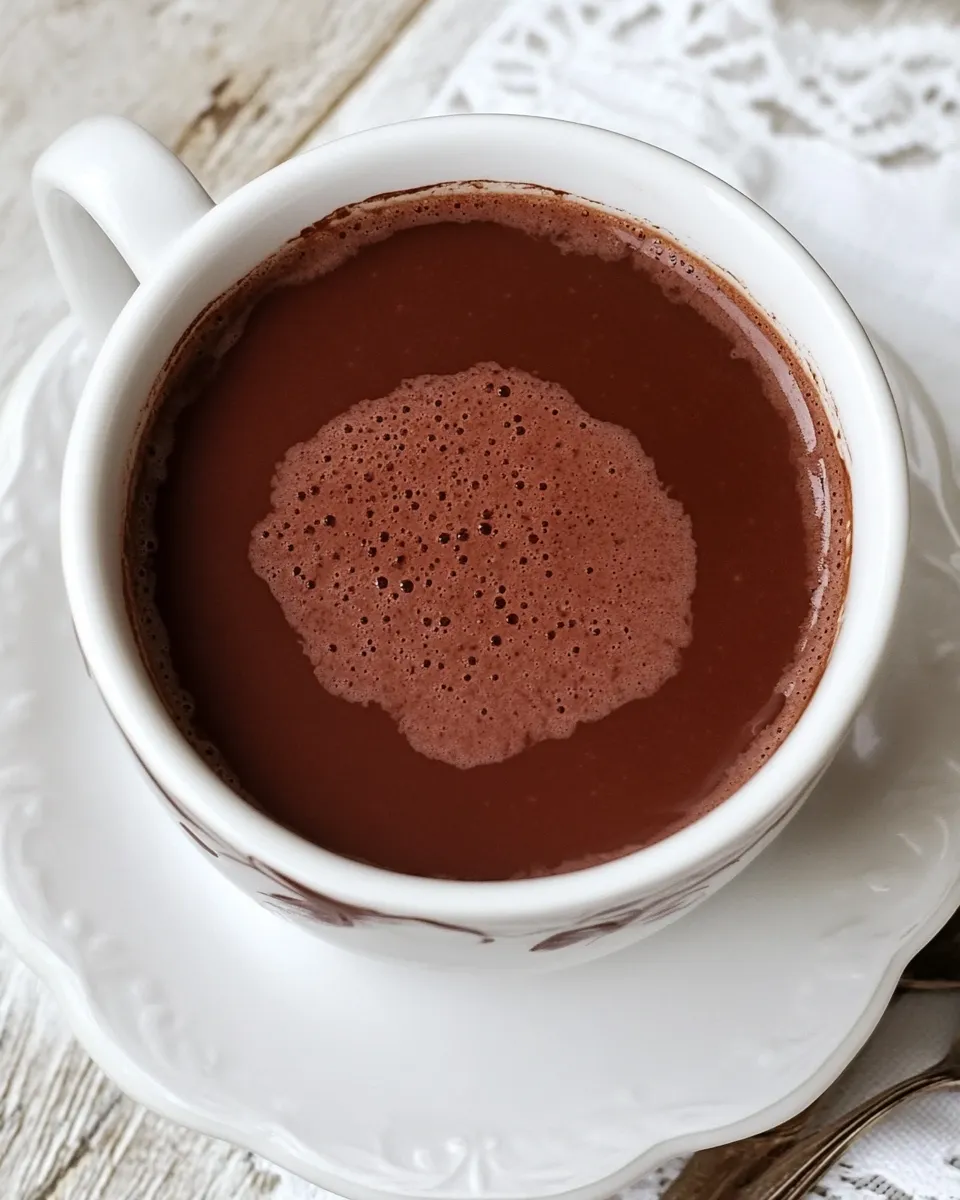
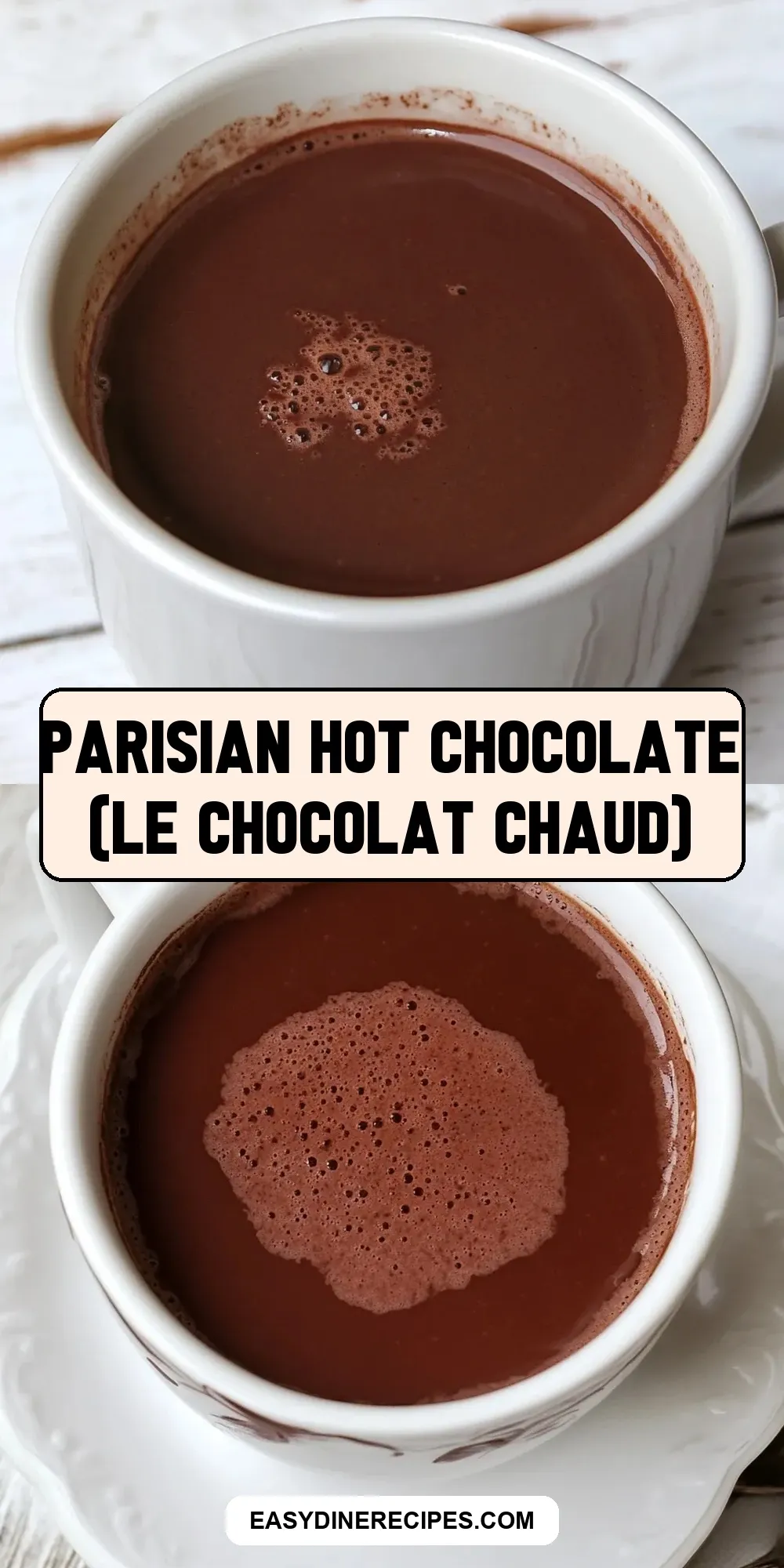
I fell in love with Parisian hot chocolate the first chilly morning I ordered one at a tiny corner café. It’s not the American cocoa powder drink. This is thick, dark, and quietly luxurious—more of a chocolate moment than a quick sip. It warms you from the inside out and rewards a little patience at the stove.
In this recipe I keep things honest and straightforward. Use high-quality chocolate, heat the milk carefully, and whisk like you mean it. The result is a glossy, velvety cup that deserves a tiny spoon, a moment, and perhaps a dollop of whipped cream.
Ingredient List
Ingredients
- 2 cups whole milk — provides the rich, creamy base; use cold milk and heat gently to avoid scalding.
- 6 ounces top-quality dark or bittersweet chocolate (at least 70%), chopped finely — the star ingredient; chop finely so it melts quickly and evenly.
- tiny pinch of sea salt — brightens the chocolate and balances sweetness.
- 1–2 tablespoons brown sugar (optional and according to taste) — adds a caramel note; adjust to your preference, or omit if your chocolate is sweet enough.
- whipped cream for serving (optional) — adds lightness and a classic café finish; serve on the side if guests prefer less richness.
Parisian Hot Chocolate (Le Chocolat Chaud) Cooking Guide
- Gather ingredients: 2 cups whole milk; 6 ounces top-quality dark or bittersweet chocolate (at least 70%), chopped finely; a tiny pinch of sea salt; 1–2 tablespoons brown sugar (optional); whipped cream for serving (optional).
- Pour the 2 cups whole milk into a medium saucepan and place it over medium-low heat.
- Heat the milk until it is hot and steam rises and small bubbles appear around the edges—do not let it boil.
- Add the tiny pinch of sea salt and the finely chopped chocolate to the hot milk. Whisk immediately and continuously until the chocolate is fully melted and the mixture is smooth.
- Return the pan to a very low simmer. Whisk continuously and simmer gently for about 3 minutes to thicken the hot chocolate.
- If using, stir in 1–2 tablespoons brown sugar and whisk until fully dissolved and smooth. Remove from heat.
- Pour the hot chocolate into cups and serve with a dollop of whipped cream if desired.
- (Optional) For an even thicker result, make the hot chocolate ahead of time, let it cool, then reheat gently before serving.
Why It Deserves a Spot
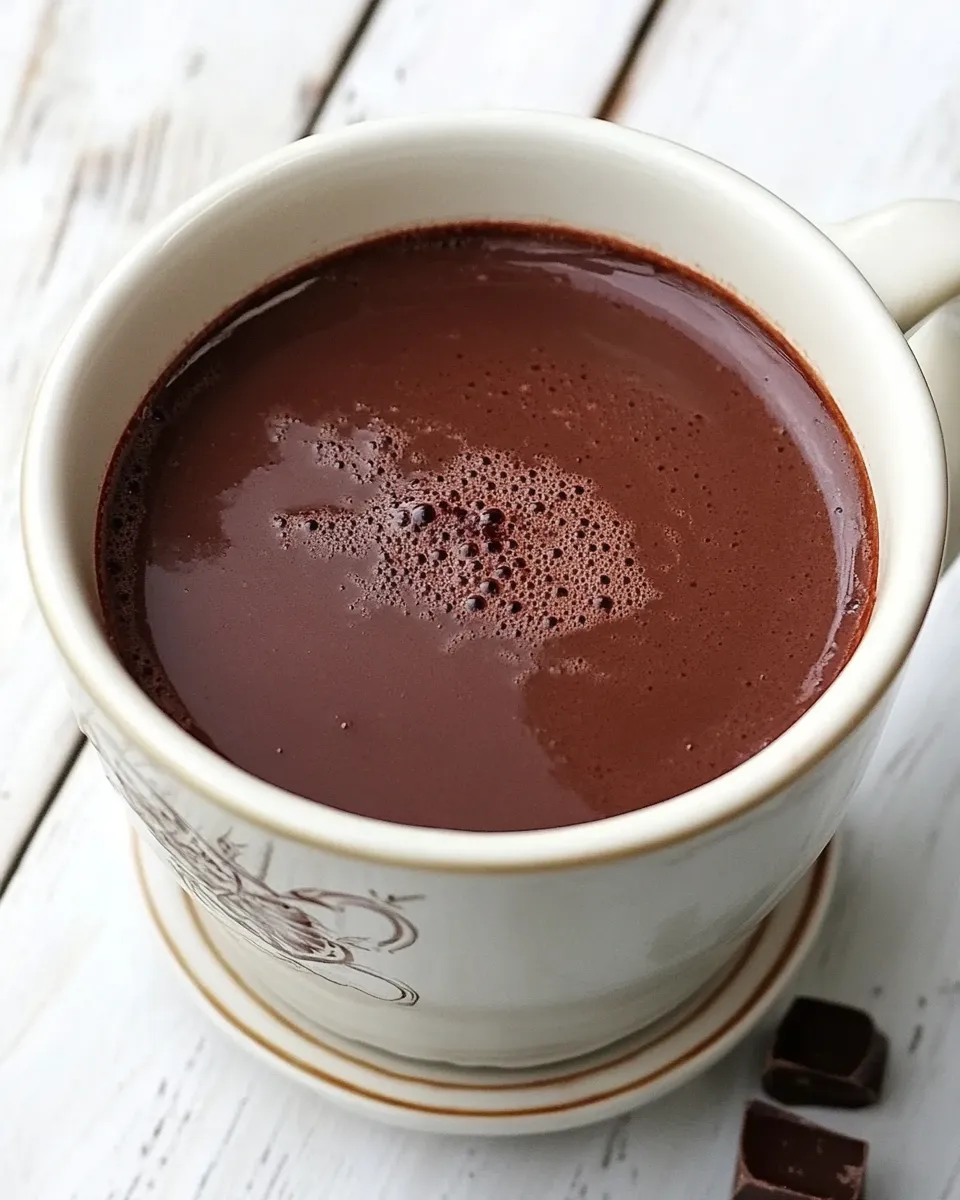
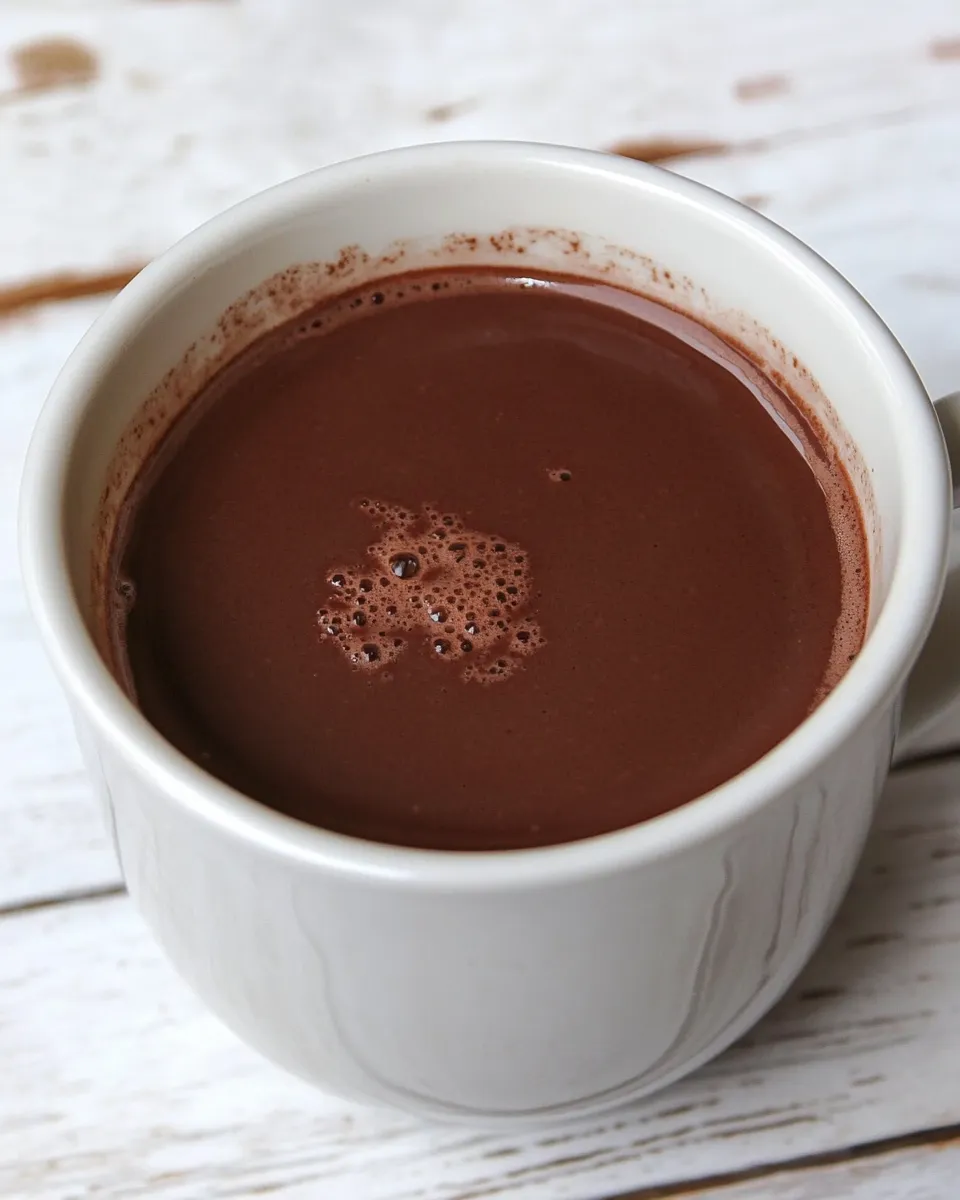
This is not a busy, throw-it-together drink. It asks for attention at the stovetop and rewards you. The texture is the real difference: glossy, thick, and clinging to the spoon. It reads like dessert but serves as a warming ritual—perfect for slow mornings, rainy afternoons, or a simple after-dinner treat.
Using top-quality chocolate means the flavor is layered and complex. You get bitter cocoa notes, a hint of roasted depth, and the warmth that whole milk brings. Even without whipped cream, it feels indulgent. With whipped cream, it becomes downright celebratory.
Substitutions by Category
Milk
- Whole milk — the recommended choice for richness and mouthfeel. If needed, substitute with 2% for a lighter finish, but the drink will be less luxurious.
- Plant milks — use unsweetened versions and expect a different texture. Oat milk gives the closest creaminess; almond milk will be lighter and less decadent.
Chocolate
- Top-quality dark or bittersweet chocolate (at least 70%) — the backbone of flavor. For a milder cup, choose 60–65% chocolate. For more intensity, use 70–85% but reduce added sugar.
- Chocolate chips — you can use them in a pinch, but couverture or a good bar chopped finely melts more smoothly.
Sweeteners
- Brown sugar — adds caramel notes. White sugar will sweeten but lack that toasty depth. Honey or maple syrup will change flavor character; add sparingly and taste as you go.
Before You Start: Equipment
Use a medium, heavy-bottomed saucepan to heat the milk evenly—thin pans lead to hotspots and scalded milk. A small whisk is essential; a balloon whisk helps incorporate chocolate quickly. A sharp knife and sturdy cutting board for finely chopping the chocolate make melting faster and less fussy.
Optional but helpful: a heatproof spatula to scrape the bowl, a thermometer if you like precision (target hot but below simmering vigorously), and warmed cups so your hot chocolate stays hotter longer.
Learn from These Mistakes
- Boiling the milk — when milk boils, it scalds and alters flavor; watch for steam and small bubbles near the edge instead of a rolling boil.
- Adding large chocolate chunks — they take longer to melt and can lead to uneven texture. Chop finely and add them only once the milk is hot.
- Walking away during whisking — chocolate can seize or stick. Whisk continuously after adding the chocolate until fully smooth.
- Over-sweetening before tasting — high-percentage chocolate can be bitter; taste first and add brown sugar incrementally.
- Reheating aggressively — if you reheat, do it gently. High heat breaks down texture and can scorch the milk.
Smart Substitutions
When you need to adapt this recipe, do it intentionally. If you only have a lower-percentage chocolate, reduce the brown sugar or skip it. If you want a thicker finish without pre-making and reheating, swap 1/4 cup of the milk for a splash of heavy cream, but only if you accept higher richness.
For a fuss-free pantry fix, you can melt chocolate into hot brewed coffee for a mocha-like drink—this changes the character but keeps the chocolate focus. Keep notes the first time you substitute so you replicate what you liked the second time.
Flavor Logic
Why 70% chocolate? It provides balance—enough cocoa solids to give chocolate depth without becoming unbearably bitter. Whole milk smooths the chocolate’s edges and adds a natural sweetness and body that lower-fat milks can’t match. The tiny pinch of sea salt is a classic trick: it lifts the chocolate and brings out subtle flavors that would otherwise remain muted.
Brown sugar isn’t mandatory. It adds a molasses edge that pairs wonderfully with dark chocolate. If your chocolate already leans sweet or has caramelized notes, taste first. This recipe favors chocolate-forward flavor rather than sugary sweetness.
Keep-It-Fresh Plan
If you’re making a batch for later, cool it to room temperature, then refrigerate in an airtight container for up to 48 hours. It will thicken as it cools because of the chocolate’s cocoa butter. Reheat gently on low heat, whisking to restore gloss and texture. If the mixture seems too thick, add a tablespoon or two of warm milk while reheating and whisk to loosen it.
Do not freeze. Freezing alters the texture and separates the milk and cocoa fats. If leftovers sit for more than two days, they’ll still be safe but less silky.
Quick Q&A
Q: Can I use cocoa powder instead of chopped chocolate?
A: This recipe is built around melted chocolate, not cocoa powder. Cocoa powder requires a different method (usually a cornstarch slurry or more elaborate emulsification) to reach similar thickness and gloss.
Q: How can I make it extra thick like a true Parisian experience?
A: For extra thickness, make it ahead and chill, then reheat gently, as noted in step 8. You can also replace up to 1/4 cup of the milk with heavy cream for a richer mouthfeel.
Q: Is whipped cream necessary?
A: No. Whipped cream is optional and adds a creamy contrast. The drink stands on its own without it.
Q: Can I flavor it with spices or liqueur?
A: Yes. A dash of cinnamon, a sliver of vanilla bean, or a splash of orange liqueur can work well. Add spices during heating and liqueur after removing from heat to preserve alcohol aroma.
The Takeaway
Parisian hot chocolate is a small ceremony: good chocolate, warm milk, a steady whisk, and patience. It rewards care with a cup that feels deliberate and indulgent, and it scales easily for one or a few. Keep the chocolate quality high, watch your heat, and let the simple ingredients do the work.
Make it for a Saturday morning, a quiet evening, or to impress someone who thinks hot cocoa is only for kids. Serve it in small cups, offer whipped cream if you like, and prepare to savor something that tastes as thoughtful as it feels.
Parisian Hot Chocolate (Le Chocolat Chaud)
Equipment
- Medium Saucepan
- Whisk
- cups
Ingredients
Ingredients
- 2 cupswhole milk
- 6 ouncestop quality dark or bittersweet chocolate at least 70%), chopped finely
- 1-2 tablespoonsbrown sugar optional and according to taste
- tiny pinch of sea salt
- whipped cream for serving optional
Instructions
Instructions
- Gather ingredients: 2 cups whole milk; 6 ounces top-quality dark or bittersweet chocolate (at least 70%), chopped finely; a tiny pinch of sea salt; 1–2 tablespoons brown sugar (optional); whipped cream for serving (optional).
- Pour the 2 cups whole milk into a medium saucepan and place it over medium-low heat.
- Heat the milk until it is hot and steam rises and small bubbles appear around the edges—do not let it boil.
- Add the tiny pinch of sea salt and the finely chopped chocolate to the hot milk. Whisk immediately and continuously until the chocolate is fully melted and the mixture is smooth.
- Return the pan to a very low simmer. Whisk continuously and simmer gently for about 3 minutes to thicken the hot chocolate.
- If using, stir in 1–2 tablespoons brown sugar and whisk until fully dissolved and smooth. Remove from heat.
- Pour the hot chocolate into cups and serve with a dollop of whipped cream if desired.
- (Optional) For an even thicker result, make the hot chocolate ahead of time, let it cool, then reheat gently before serving.