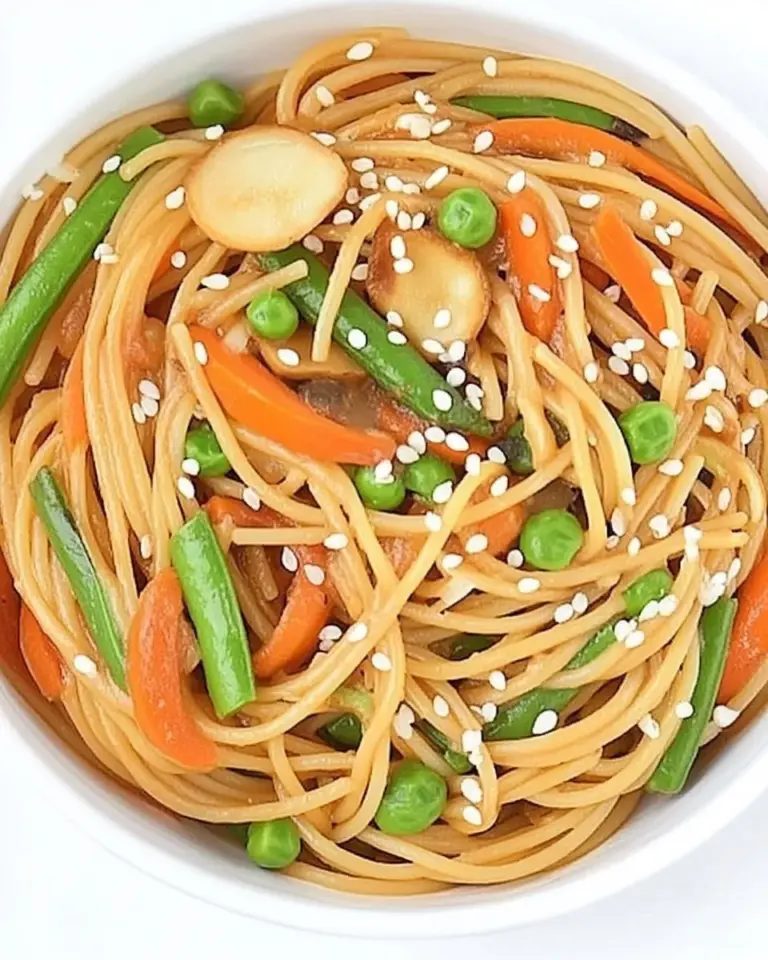
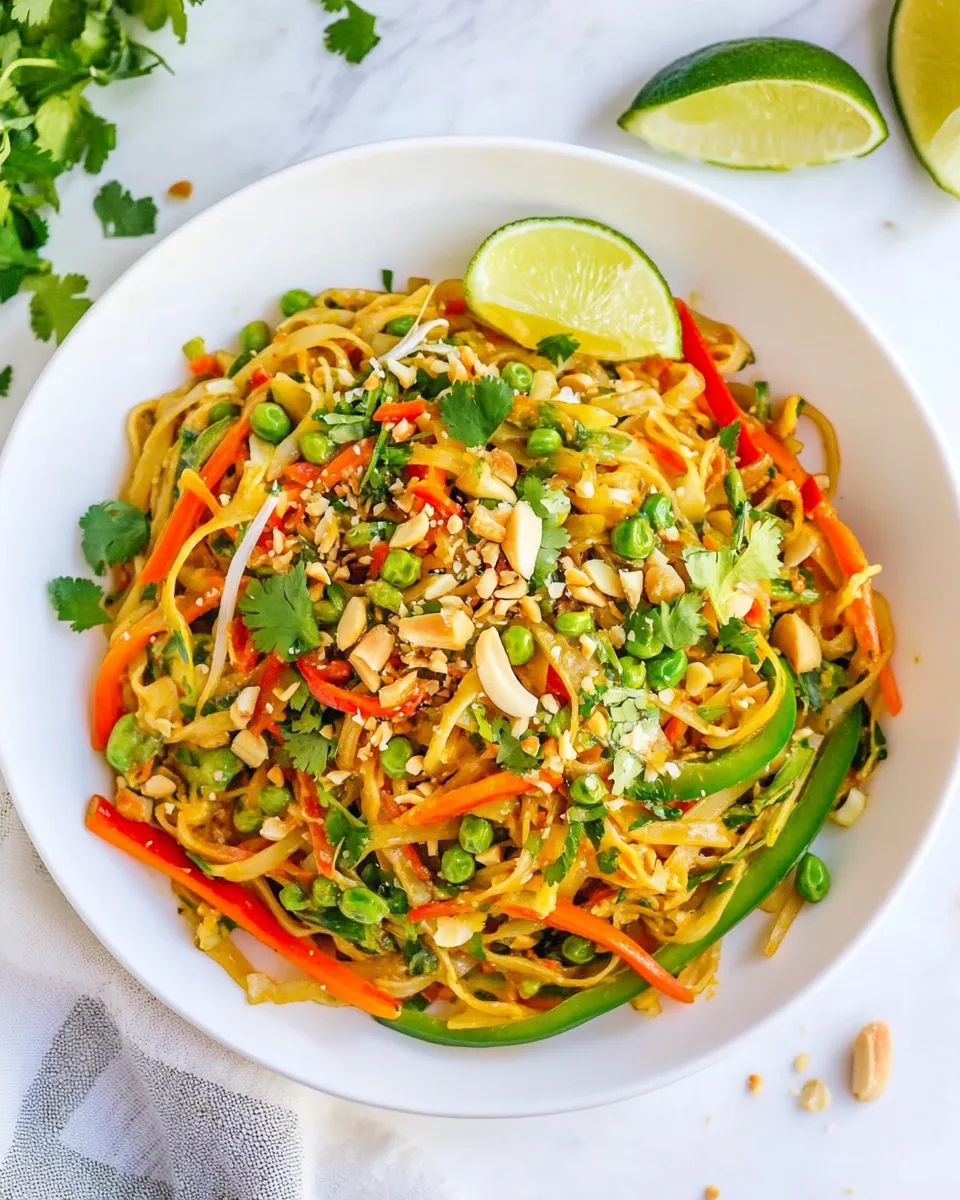
Bright, fast, and completely satisfying — this Vegetarian Pad Thai swaps rice noodles for zucchini zoodles and leans into fresh textures: crisp bean sprouts, sweet carrots, and a little crunch from peanuts. It’s the kind of weeknight dinner that feels like a treat but takes under 20 minutes from pan to plate.
I cook this when I want something that tastes restaurant-worthy without a long shopping list or complicated steps. The sauce is simple and balanced: salty from soy, bright from rice vinegar, sweet from honey, and a touch of heat from chili garlic sauce or Sriracha. The zoodles keep things light while the eggs, edamame, and peanuts give it body and protein.
This recipe is practical, forgiving, and easy to adapt for what you have on hand. I’ll walk you through the ingredients and the exact steps, then share troubleshooting tips, gear recommendations, and a few seasonal twists so you can make this again and again.
Ingredients
- 3 tablespoons low sodium soy sauce or tamari — the salty, savory backbone of the sauce; tamari if you need gluten-free.
- 1 ½ tablespoons rice vinegar — adds brightness and lifts the sauce.
- 1 tablespoon honey — balances the vinegar and soy with gentle sweetness.
- 1-3 teaspoons chili garlic sauce or Sriracha, or hot sauce of choice — gives the heat; start low and increase to taste.
- 2 medium zucchini — spiralized into zoodles or turned into ribbons to replace noodles and keep the dish light.
- 1 teaspoon extra-virgin olive oil, divided — for cooking; split as the recipe directs to prevent sticking and burning.
- 2 cloves garlic, minced — aromatic foundation; don’t brown it or it turns bitter.
- 2 large eggs — add silkiness and a little protein when gently scrambled into the pan.
- 1 cup bean sprouts — bring crunch and freshness; add them at the end so they stay crisp-tender.
- 1 cup grated carrots — sweetness and color; grated so they meld quickly with the zoodles.
- ½ cup shelled edamame — extra protein and a pleasant chew; make sure they’re heated through.
- 2 large green onions, finely chopped — sharp, oniony finish; use both whites and greens.
- ¼ cup finely chopped peanuts — crunch and nuttiness; sprinkle at the end for texture contrast.
- ¼ cup chopped fresh cilantro — bright, herbaceous finish; fold in off the heat.
- Lime wedges for serving — acidity to brighten the whole plate.
- Additional hot sauce for serving — optional for diners who want more kick.
What Goes Into Vegetarian Pad Thai
This section is a quick walkthrough of how the components come together. The sauce is mixed first so it’s ready when the zoodles hit the pan. Garlic and eggs are cooked briefly to build flavor and texture, then the zoodles go in with the sauce to soften slightly but not become mushy. Finish with sprouts, carrots, edamame, scallions, peanuts, and cilantro for a balance of textures and flavors.
Think of it in layers: sauce (salt + acid + sweet + heat), aromatics and eggs (garlic and scrambled eggs for richness), vegetable body (zoodles + carrots + edamame), and final crunch/freshness (sprouts, peanuts, cilantro, lime).
Vegetarian Pad Thai: From Prep to Plate
- In a small bowl, whisk together 3 tablespoons low‑sodium soy sauce or tamari, 1 ½ tablespoons rice vinegar, 1 tablespoon honey, and 1–3 teaspoons chili garlic sauce or Sriracha (use the amount you prefer for spiciness). Taste and adjust honey or chili sauce if desired.
- Using a spiralizer, cut the 2 medium zucchini into zoodles. If you don’t have a spiralizer, use a Y‑shaped vegetable peeler to make ribbons. Place the zoodles/ribbons in a colander or on paper towels and set aside to drain any excess moisture.
- Heat a large nonstick skillet or wok over medium‑high heat. Divide the 1 teaspoon extra‑virgin olive oil in the pan (use half now and reserve the other half for the zoodles/eggs).
- Add the 2 cloves minced garlic to the hot oil and cook, stirring, about 15–30 seconds until fragrant but not browned.
- Crack the 2 large eggs into the skillet with the garlic. Break the yolks with a spatula and gently scramble until just beginning to set, about 30 seconds.
- Add the reserved oil if needed, then add the zucchini zoodles and the prepared sauce to the skillet. Toss or stir to coat the zoodles evenly with the sauce and cook until the zoodles are just tender, about 1–2 minutes.
- Add 1 cup bean sprouts, 1 cup grated carrots, ½ cup shelled edamame, and the 2 large finely chopped green onions. Stir and cook until the bean sprouts are crisp‑tender and the edamame is heated through, about 1 minute.
- Remove the skillet from the heat. Sprinkle on ¼ cup finely chopped peanuts and ¼ cup chopped fresh cilantro, and gently toss to combine.
- Serve immediately with lime wedges and additional hot sauce on the side.
Why It Deserves a Spot
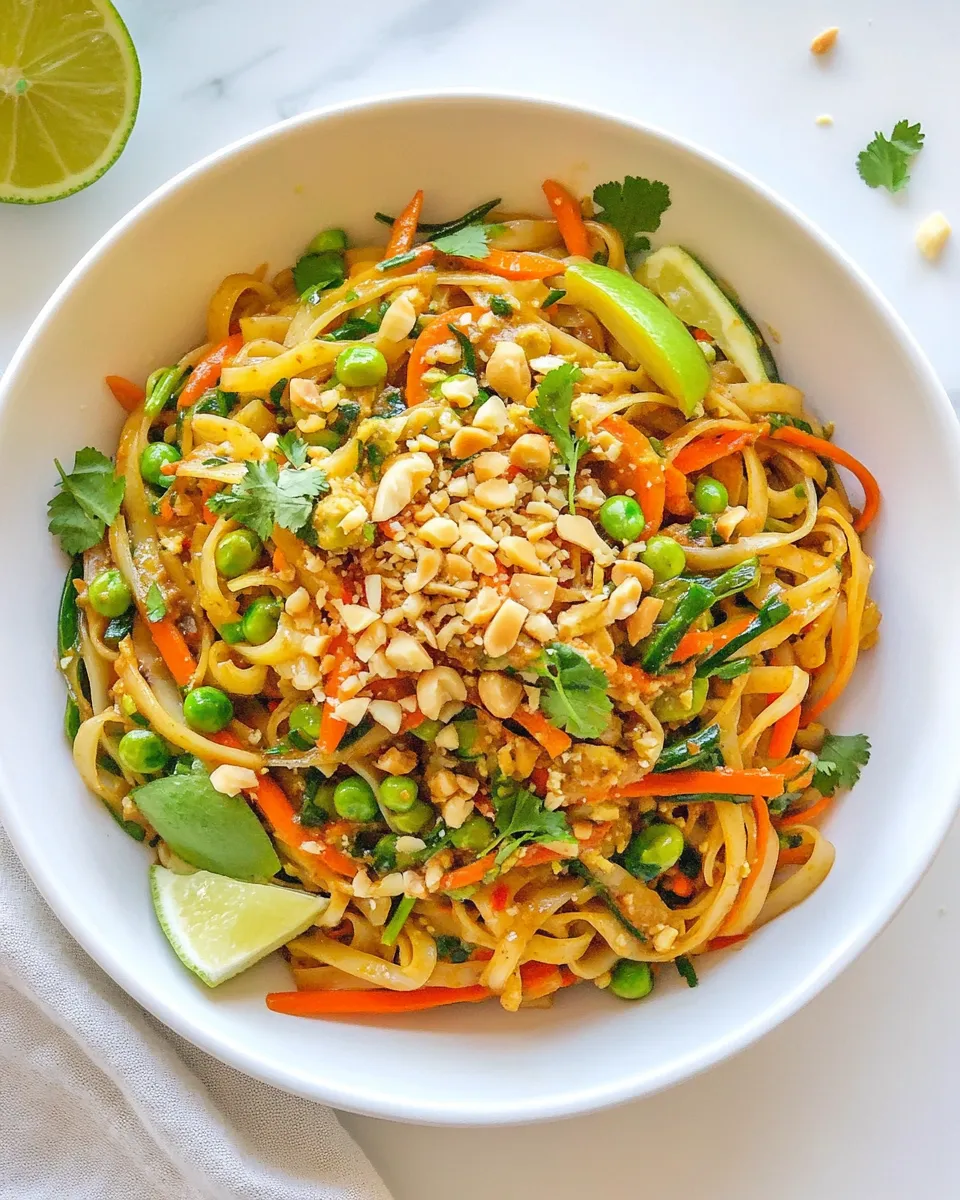
This Vegetarian Pad Thai earns a regular place in the rotation because it’s fast, healthy, and layered with texture. It’s adaptable — the zoodles make it lighter than the classic, but you still get the satisfying mix of savory sauce, fluffy egg, and crunchy peanuts. It’s also easy to scale up for a crowd and simple enough to throw together on busy nights.
Moreover, it’s a great gateway dish for people who think vegetarian meals are bland. The sauce is deeply flavored, and with lime and cilantro at the end, it sings. If you want something that feels both comforting and fresh, this is it.
If You’re Out Of…
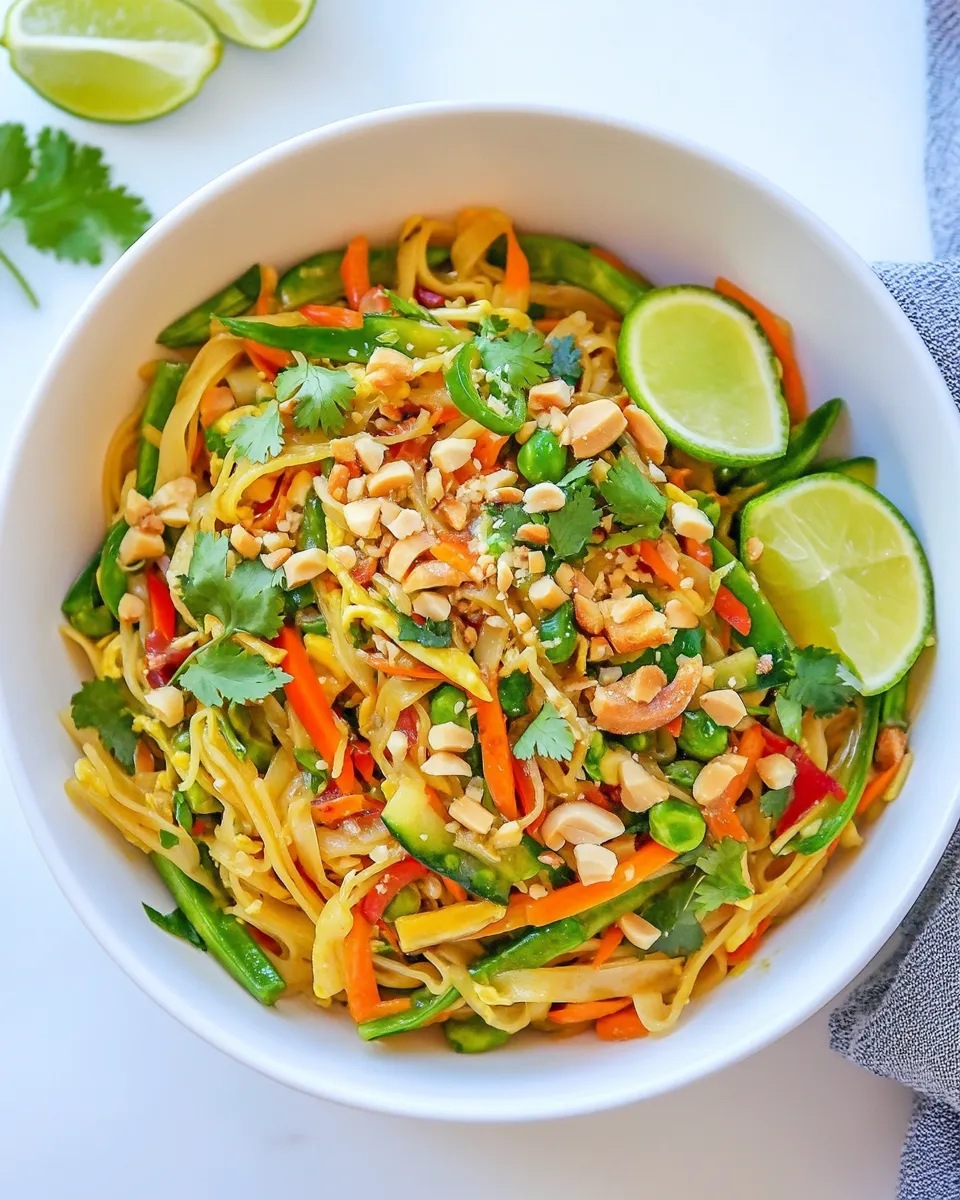
If you don’t have exactly one item, here are safe swaps using items from the recipe or pantry-friendly options:
- No chili garlic sauce? Use Sriracha (already listed) or add a pinch of red pepper flakes to taste.
- No zucchini? Use thin carrot ribbons (you already have grated carrots — press lightly and use) or another firm squash if available.
- No edamame? Leave it out or replace with cooked chickpeas for a different texture (note: this is a pantry swap, so check cook time).
- No peanuts? Use another nut you have on hand, but I recommend keeping some crunch — or just omit and add extra cilantro and lime.
What You’ll Need (Gear)
Minimal gear keeps this simple. You’ll want:
- A sharp knife and cutting board for garlic, green onions, and cilantro.
- A spiralizer or Y‑peeler to make zoodles/ribbons.
- A large nonstick skillet or a wok for quick, even cooking.
- A small bowl for whisking the sauce.
- A spatula for scrambling the eggs and tossing everything together.
Pitfalls & How to Prevent Them
Two things can derail this dish: watery zoodles and overcooked garlic or eggs. Zucchini holds a lot of water, so spiralize and let it drain on paper towels or in a colander. Cook zoodles briefly — you want them tender but still structured.
Garlic can turn bitter if it browns. Keep the heat medium‑high but watch the garlic closely and add the eggs right after it becomes fragrant. Eggs should be gently scrambled and pulled out of high heat quickly so they stay tender rather than rubbery.
Holiday & Seasonal Touches
For winter dinners, fold in a handful of roasted sweet potato cubes or use roasted butternut squash in place of some zoodles for warmth and sweetness. In summer, double down on fresh herbs — basil and extra cilantro add a bright finish.
If you’re entertaining, serve this family-style with extra lime wedges, a bowl of chopped peanuts, and hot sauce so guests can customize. It looks colorful and festive on a large platter.
Flavor Logic
The sauce balances the four pillars: salty (soy/tamari), sour (rice vinegar), sweet (honey), and heat (chili garlic sauce or Sriracha). The zoodles act as a neutral, slightly sweet vehicle. Eggs and edamame add savory umami and protein, while peanuts provide a necessary crunchy counterpoint. Lime and cilantro at the end refresh the palate and lift the entire plate.
Understanding that balance helps when you tweak the recipe. Want it tangier? Add a splash more rice vinegar. Want it sweeter? A touch more honey. Spicier? Increase the chili sauce a teaspoon at a time.
Prep Ahead & Store
You can make the sauce ahead and store it in the fridge for up to a week. Spiralize the zucchini and keep it in a colander or on paper towels in the fridge to drain; use within a day for best texture. Cooked Vegetarian Pad Thai is best served immediately, but leftovers keep well for 24–48 hours in an airtight container. Reheat gently in a skillet — add a splash of water or soy sauce if it seems dry, and finish with fresh cilantro and peanuts after reheating.
Your Questions, Answered
Q: Can I make this vegan? A: Yes — omit the eggs or replace them with a soft tofu scramble (not in the original ingredient list), or simply increase the edamame and keep the protein plant-forward.
Q: Will the zoodles get soggy? A: They will soften, but if you drain them well and cook only 1–2 minutes in the hot pan, they’ll stay pleasantly tender rather than mushy.
Q: Can I use regular soy sauce? A: You can, but low‑sodium soy sauce or tamari is recommended so the dish doesn’t become overly salty. If you use regular soy sauce, taste the sauce before adding and adjust the vinegar/honey to balance.
Wrap-Up
Vegetarian Pad Thai is a quick, flavorful meal that’s perfect for busy nights and light enough for warm weather. The recipe is straightforward: whisk the sauce, spiralize the zucchini, flash-cook garlic and eggs, toss everything together, and finish with peanuts, cilantro, and lime. Little attention to draining the zoodles and watching the garlic will keep textures bright and flavors clean.
Make the sauce ahead when you want to speed things up, and keep the fresh garnishes ready to brighten the plate. Whether you’re keeping it light or feeding a crowd, this version of Pad Thai delivers satisfying texture and balanced flavor without fuss.
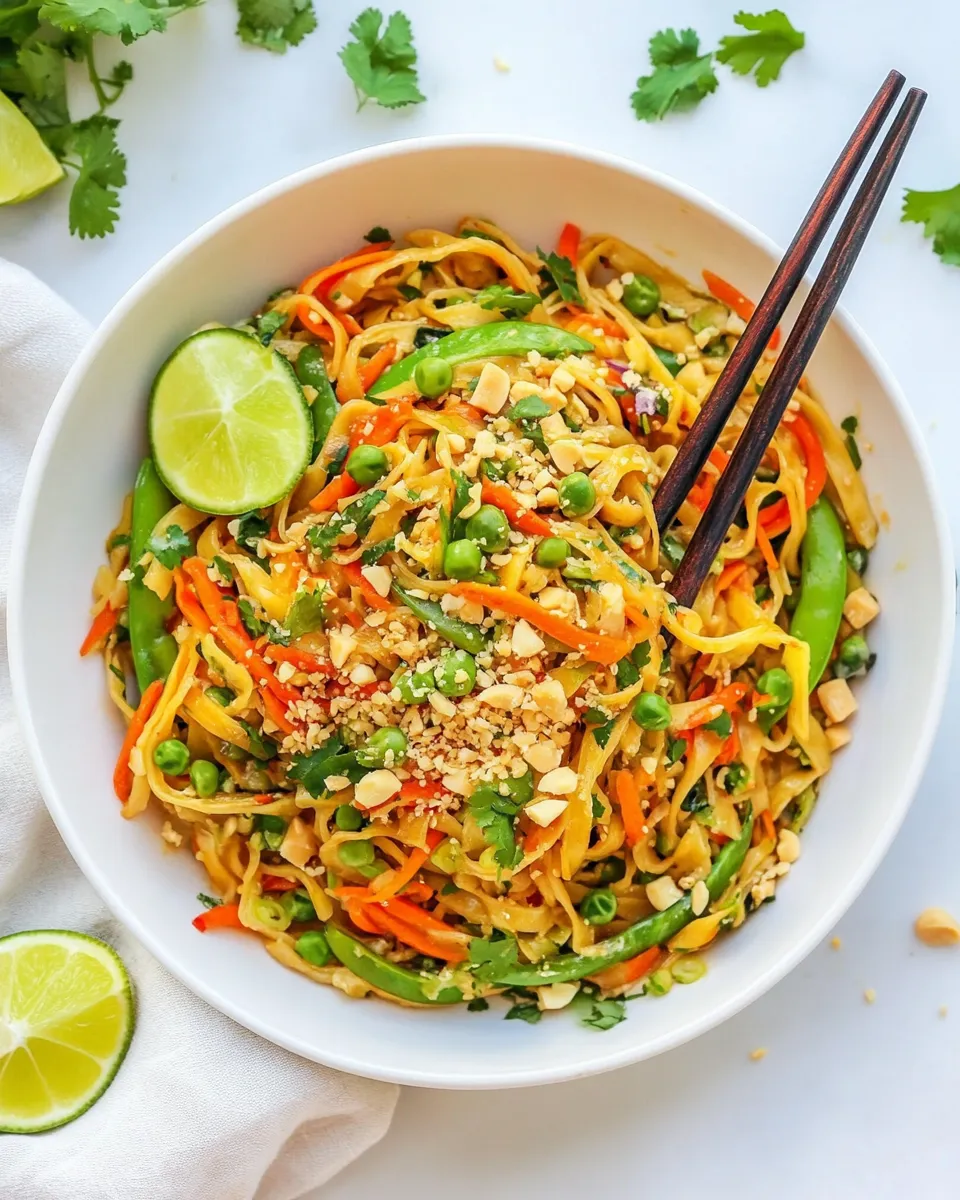
Vegetarian Pad Thai
Equipment
- Small Bowl
- spiralizer or Y-shaped vegetable peeler
- colander or paper towels
- large nonstick skillet or wok
- Spatula
Ingredients
Ingredients
- 3 tablespoonslow sodium soy sauceor tamari
- 1 1/2 tablespoonsrice vinegar
- 1 tablespoonhoney
- 1-3 teaspoonschili garlic sauceor Sriracha or hot sauce of choice
- 2 medium zucchini
- 1 teaspoonextra-virgin olive oildivided
- 2 clovesgarlicminced
- 2 large eggs
- 1 cupbean sprouts
- 1 cupgrated carrots
- 1/2 cupshelled edamame
- 2 large green onionsfinely chopped
- 1/4 cupfinely chopped peanuts
- 1/4 cupchopped fresh cilantro
- Lime wedgesfor serving
- Additional hot saucefor serving
Instructions
Instructions
- In a small bowl, whisk together 3 tablespoons low‑sodium soy sauce or tamari, 1 ½ tablespoons rice vinegar, 1 tablespoon honey, and 1–3 teaspoons chili garlic sauce or Sriracha (use the amount you prefer for spiciness). Taste and adjust honey or chili sauce if desired.
- Using a spiralizer, cut the 2 medium zucchini into zoodles. If you don’t have a spiralizer, use a Y‑shaped vegetable peeler to make ribbons. Place the zoodles/ribbons in a colander or on paper towels and set aside to drain any excess moisture.
- Heat a large nonstick skillet or wok over medium‑high heat. Divide the 1 teaspoon extra‑virgin olive oil in the pan (use half now and reserve the other half for the zoodles/eggs).
- Add the 2 cloves minced garlic to the hot oil and cook, stirring, about 15–30 seconds until fragrant but not browned.
- Crack the 2 large eggs into the skillet with the garlic. Break the yolks with a spatula and gently scramble until just beginning to set, about 30 seconds.
- Add the reserved oil if needed, then add the zucchini zoodles and the prepared sauce to the skillet. Toss or stir to coat the zoodles evenly with the sauce and cook until the zoodles are just tender, about 1–2 minutes.
- Add 1 cup bean sprouts, 1 cup grated carrots, ½ cup shelled edamame, and the 2 large finely chopped green onions. Stir and cook until the bean sprouts are crisp‑tender and the edamame is heated through, about 1 minute.
- Remove the skillet from the heat. Sprinkle on ¼ cup finely chopped peanuts and ¼ cup chopped fresh cilantro, and gently toss to combine.
- Serve immediately with lime wedges and additional hot sauce on the side.
Notes
TO REHEAT: For best results, quickly warm the pad Thai, uncovered, in a skillet over medium-high heat until heated through.
TO FREEZE: Freezing is not recommended.
To Make Vegan Pad Thai: Use maple syrup or light agave in place of the honey (for vegan), and omit the eggs or substitute them for extra edamame orAir Fryer Tofu.