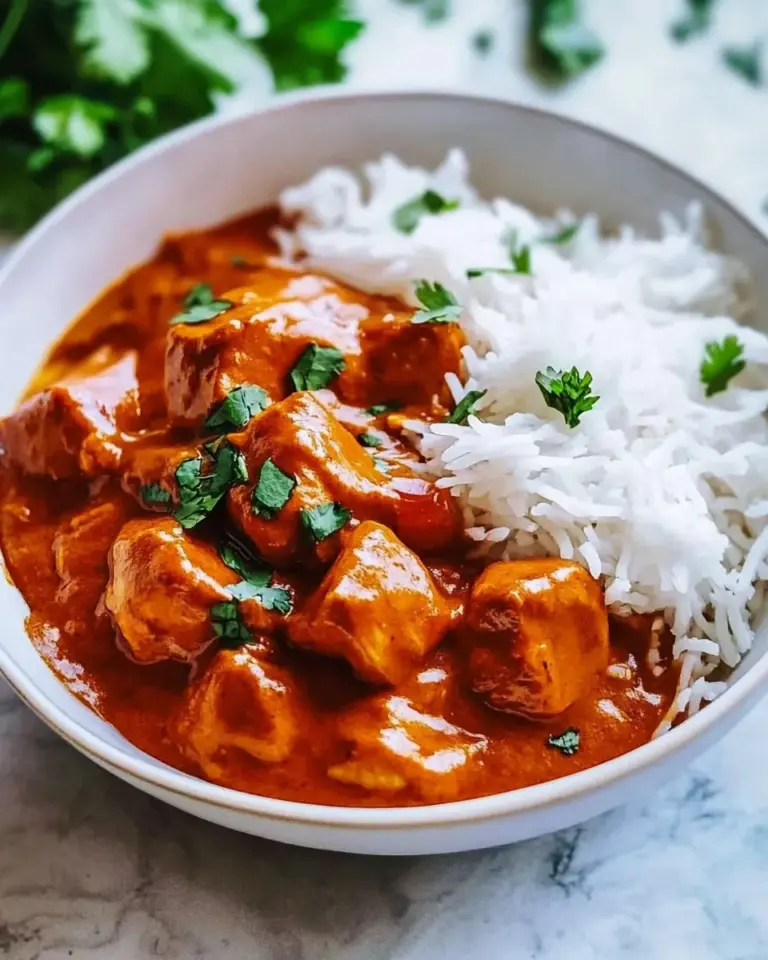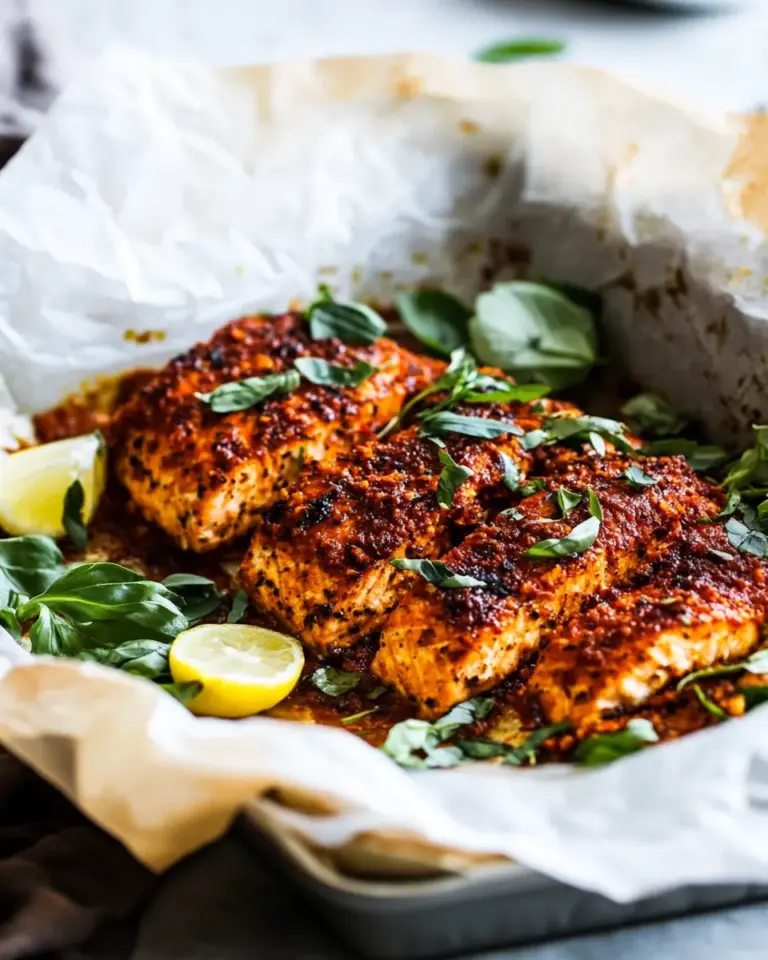
I fell for this dish the first time I made it on a chilly weeknight. The salmon stays tender and takes on the warm, aromatic spices effortlessly while the saffron rice offers a buttery, floral counterpoint. It’s the sort of meal that looks and tastes like you put in more effort than you actually did.
This recipe balances straightforward technique with bold flavors: tempering whole seeds, browning shallots, and finishing salmon gently in a spiced sauce. The saffron rice cooks alongside the curry with minimal babysitting, so you can focus on plating and a simple salad or steamed greens.
Below you’ll find the exact ingredients and step-by-step method I used, plus practical tips for substitutions, equipment, and storage. Follow the directions as written for dependable results, and read the sections after the recipe for variations and troubleshooting.
What Goes In
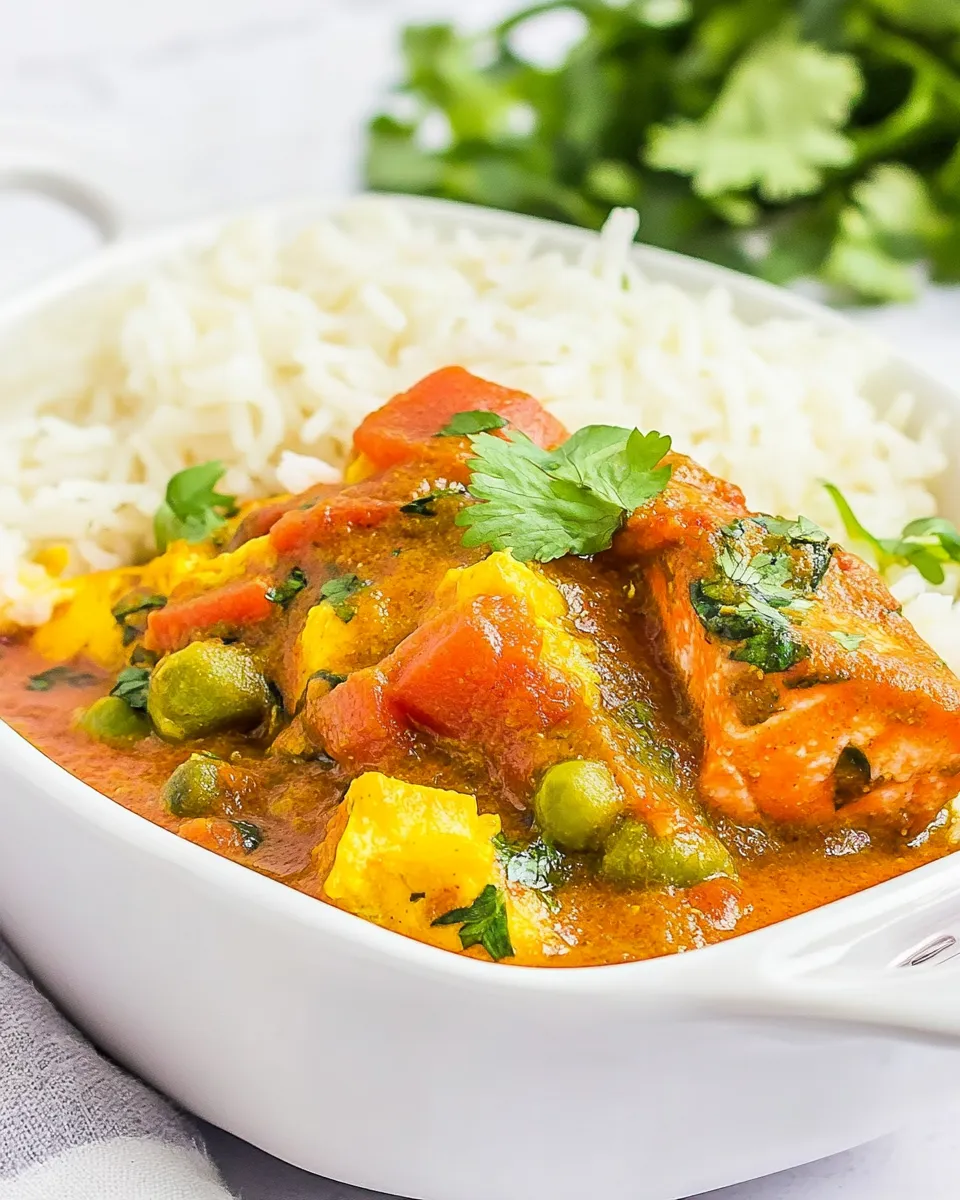
- 4 salmon steaks — the star protein; choose evenly sized steaks for even cooking.
- ¼ teaspoon mustard seeds — for the initial tempering; they add a nutty, popping note.
- ¼ teaspoon fenugreek seeds — supports the curry backbone with a mild, maple-like aroma.
- 2 sprigs curry leaves — aromatic leaves that brighten the sauce; add early in the sauté.
- 5 shallots (chopped) — sweetness and body for the sauce when browned.
- 2 teaspoons shredded ginger — fresh heat and a bright, zesty edge.
- 3 garlic cloves (minced) — savory depth; add with shallots and ginger.
- 1 tablespoon chili powder (add more or less depending on how spicy you want it) — primary heat and red color.
- ½ tablespoon coriander powder — earthy, citrusy middle note for the curry.
- ½ teaspoon turmeric powder — color and warm, slightly bitter earthiness.
- ¼ teaspoon fenugreek powder — concentrated fenugreek flavor to complement the seeds.
- 1 cup water — forms the base of the simmering sauce.
- salt to taste — for the curry; season during cooking and adjust at the end.
- 2 tablespoon vegetable oil — for tempering and sautéing; high smoke point and neutral flavor.
- 1 cup rice (I used jasmine) — for the saffron rice; rinse well before cooking.
- 2 cups vegetable broth — liquid for the rice; gives extra flavor versus plain water.
- 2 tablespoon butter — enriched fat for the rice; adds silkiness.
- 1 teaspoon saffron threads — floral, aromatic color for the rice; steep in hot broth.
- squeeze of lemon or lime juice — brightens the saffron broth; add to taste.
- salt to taste — for the rice; season the cooking liquid so the rice is seasoned through.
Make Indian Salmon Curry with Saffron Rice: A Simple Method
- Prep: Chop the 5 shallots, shred the 2 teaspoons ginger and mince the 3 garlic cloves. Measure out the spices (1/4 teaspoon mustard seeds, 1/4 teaspoon fenugreek seeds, 1 tablespoon chili powder, 1/2 tablespoon coriander powder, 1/2 teaspoon turmeric powder, 1/4 teaspoon fenugreek powder) and set the 2 sprigs curry leaves and 4 salmon steaks nearby. Rinse the 1 cup rice under cold water until the rinse water runs clear and drain.
- Heat 2 tablespoons vegetable oil in a large skillet over medium heat. When the oil is hot, add the 1/4 teaspoon mustard seeds and let them splutter (about 20–30 seconds).
- Add the 1/4 teaspoon fenugreek seeds to the skillet and sauté for a few seconds, then add the 2 sprigs curry leaves, chopped shallots, shredded ginger and minced garlic. Sauté over medium heat until the shallots turn golden brown, about 6–8 minutes.
- Reduce heat to low and add the chili powder (1 tablespoon), coriander powder (1/2 tablespoon), turmeric powder (1/2 teaspoon) and fenugreek powder (1/4 teaspoon). Stir to combine and sauté for about 5 minutes, stirring frequently, until the mixture deepens to a brownish-red color.
- Add 1 cup water to the skillet and increase heat to bring it to a gentle boil. Taste and add salt to taste. Carefully add the 4 salmon steaks to the sauce, cover, and cook over medium heat until the salmon is opaque and flakes easily with a fork and the sauce has thickened, about 8–12 minutes depending on steak thickness. Remove from heat and keep covered for about 10 minutes to let the flavors settle.
- While the salmon is simmering (or immediately after, if you prefer), make the saffron rice: pour 2 cups vegetable broth into a medium pot, add 2 tablespoons butter, and place the pot over high heat. When the broth comes to a boil, add 1 teaspoon saffron threads and a squeeze of lemon or lime juice, and stir to combine.
- Add the drained 1 cup rice and salt to taste to the boiling broth mixture. Stir once, bring back to a boil, then reduce heat to low (just above minimum), cover tightly with a lid, and cook for 12–15 minutes, or until the liquid is absorbed.
- When most of the liquid is absorbed, turn off the heat, keep the lid on tightly, and let the rice steam in the closed pot for another 5–10 minutes. Fluff the rice with a fork and serve alongside the salmon curry.
Why Indian Salmon Curry with Saffron Rice is Worth Your Time
This meal delivers restaurant-level complexity without a long ingredient list or arcane technique. The tempering of mustard and fenugreek seeds at the start unlocks toasted aromas that a simple powdered curry can’t match. Browning the shallots slowly brings out a caramelized sweetness that balances the chili powder and fenugreek.
Salmon is forgiving when cooked gently in a simmering sauce. It absorbs spice and remains moist, so you get a deeply flavored fish without overcooking. The saffron rice adds a delicate lift—a few threads do a lot, translating to a fragrant, golden bed for the curry.
Finally, the recipe is efficient. The curry simmers while the rice cooks, making this an excellent weeknight dinner or an elegant weekend meal when you want something impressive without fuss.
Substitutions by Category
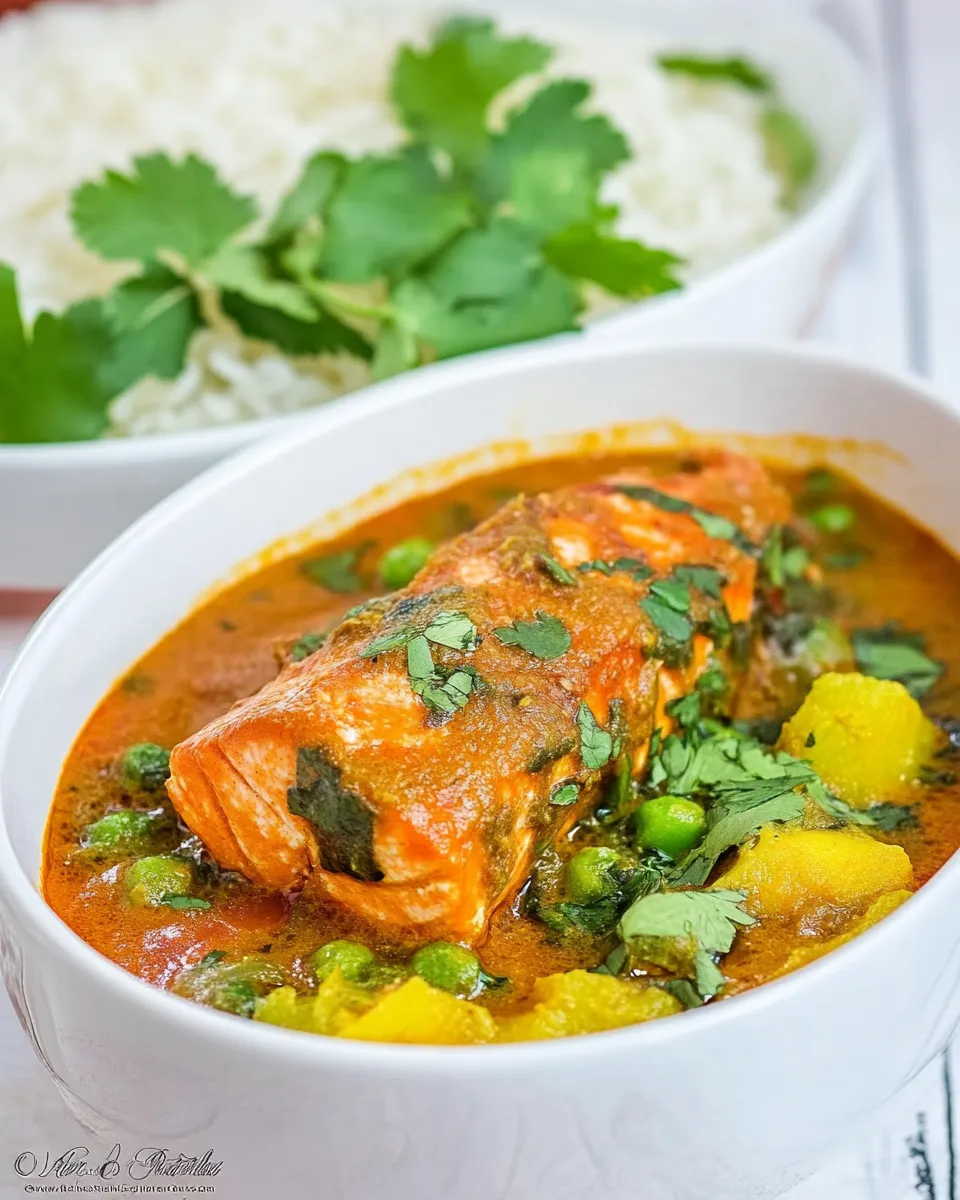
- Protein — Swap the salmon steaks for firm white fish fillets if you prefer a milder flavor. Cook time may be slightly shorter.
- Oil & Fats — Use ghee or a neutral oil in place of vegetable oil for a richer base flavor in the curry. For the rice, olive oil can replace butter if you need dairy-free.
- Broth & Liquid — Chicken broth can replace vegetable broth in the rice if that’s what you have on hand; it adds savory depth.
- Saffron — If you don’t have saffron, a pinch of turmeric will provide color but not the same floral aroma—use sparingly.
- Heat — Reduce the chili powder to 1/2 tablespoon if you prefer mild curry; add a pinch of cayenne only if you want sharper heat.
Must-Have Equipment
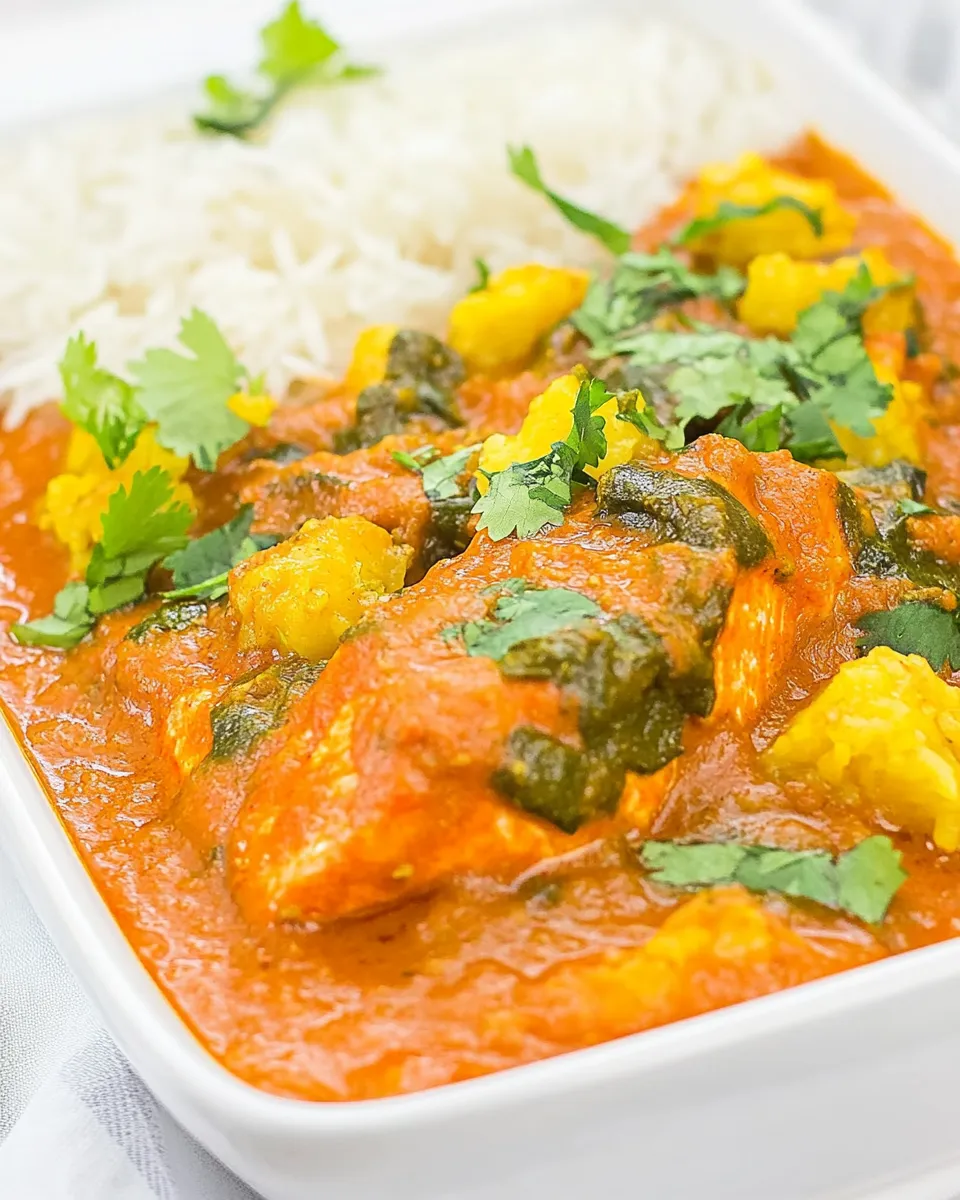
- Large skillet with a lid — big enough to hold 4 salmon steaks in a single layer.
- Medium saucepan with a tight-fitting lid — for the saffron rice to steam properly.
- Sharp knife and cutting board — for shallots, ginger, and garlic.
- Measuring spoons and cups — precise spice amounts matter here.
- Fork or fish spatula — to test the salmon’s doneness without shredding it.
Easy-to-Miss Gotchas
Tempering seeds works best in hot oil. If your oil isn’t hot enough, mustard seeds won’t pop and you’ll miss the toasty flavor. Heat until the seeds splutter, then proceed quickly.
When you add ground spices on low heat, keep stirring. Ground chili, turmeric, and fenugreek can scorch on the pan’s surface if left unattended. Move them around in the fat so they bloom rather than burn.
Salmon thickness affects cooking time dramatically. A thin steak will be done much faster than a thick cut—start checking at 8 minutes and rely on flaking with a fork rather than the clock alone.
For the rice, rinsing until the water runs clear is important. It removes excess starch so the grains cook separate and fluffy instead of sticky.
Better Choices & Swaps
Choose salmon steaks of similar thickness so they cook evenly. Wild-caught varieties have a firmer texture and a pronounced flavor; farmed salmon is milder and more buttery. Both work—pick according to your taste and budget.
Use low-sodium vegetable broth if you’re watching salt. Season the curry and rice gradually; you can always add salt at the end, but you can’t remove it.
If you want a brighter sauce, finish the curry with a squeeze of lemon or lime right before serving. It lifts the spices and adds a fresh contrast to the oil and butter.
Method to the Madness
The Flavor Timeline
- Seed Tempering — immediate aromatic foundation from mustard and fenugreek seeds.
- Sauté & Caramelize — shallots, ginger, garlic build savory-sweet complexity.
- Spice Bloom — powdered spices develop depth when fried briefly in oil and shallot juices.
- Gentle Simmer — water plus the spices creates a sauce that infuses the salmon without drying it out.
- Saffron Finish — butter and saffron thread the rice with fragrance and sheen.
Timing Notes
Start the curry first: the spice base and sauce take the longest to reach their full flavor. Add the rice to the pot once the salmon is simmering or right after you’ve begun the 8–12 minute cook on the fish. Both should finish around the same time if you follow the cook times provided.
Refrigerate, Freeze, Reheat
Refrigerate leftover curry in an airtight container for up to 3 days. The salmon will continue to absorb sauce flavors, so the texture will be firmer on reheating. Reheat gently over low heat on the stovetop to avoid overcooking; add a splash of water if the sauce has thickened too much.
Rice keeps well refrigerated for 3–4 days. Reheat with a sprinkle of water and cover while microwaving, or steam on the stove to restore moisture.
I don’t recommend freezing the cooked salmon steaks: freezing changes the texture, and reheating often makes the fish mealy. If you want to preserve meals, cook the sauce separately, freeze that, and add freshly cooked salmon when reheating the sauce.
Frequently Asked Questions
- Can I substitute salmon fillets? — Yes. Fillets work fine; just adjust cooking time and watch for flaking.
- What if I don’t have curry leaves? — The curry will still be good without them; curry leaves add a unique fragrance but aren’t mandatory.
- How can I make this dairy-free? — Replace the butter in the rice with a neutral oil or vegan butter alternative.
- My sauce is too thin — how do I thicken it? — Uncover the pan and simmer a few minutes longer to reduce and concentrate the sauce. Alternatively, stir in a small slurry of cornstarch and water, but reduce heat first.
Before You Go
Indian Salmon Curry with Saffron Rice is one of those dishes that rewards attention to a few small steps: tempering seeds, slowly caramelizing shallots, and a gentle finish for the salmon. The saffron rice is elegant and simple—just a little saffron and butter lift it into something special.
If you try this, serve it with a simple cucumber salad or blanched greens to cut through the richness. And if you tweak the heat or swap the protein, drop a note in the comments so I can hear what worked for you—happy cooking.
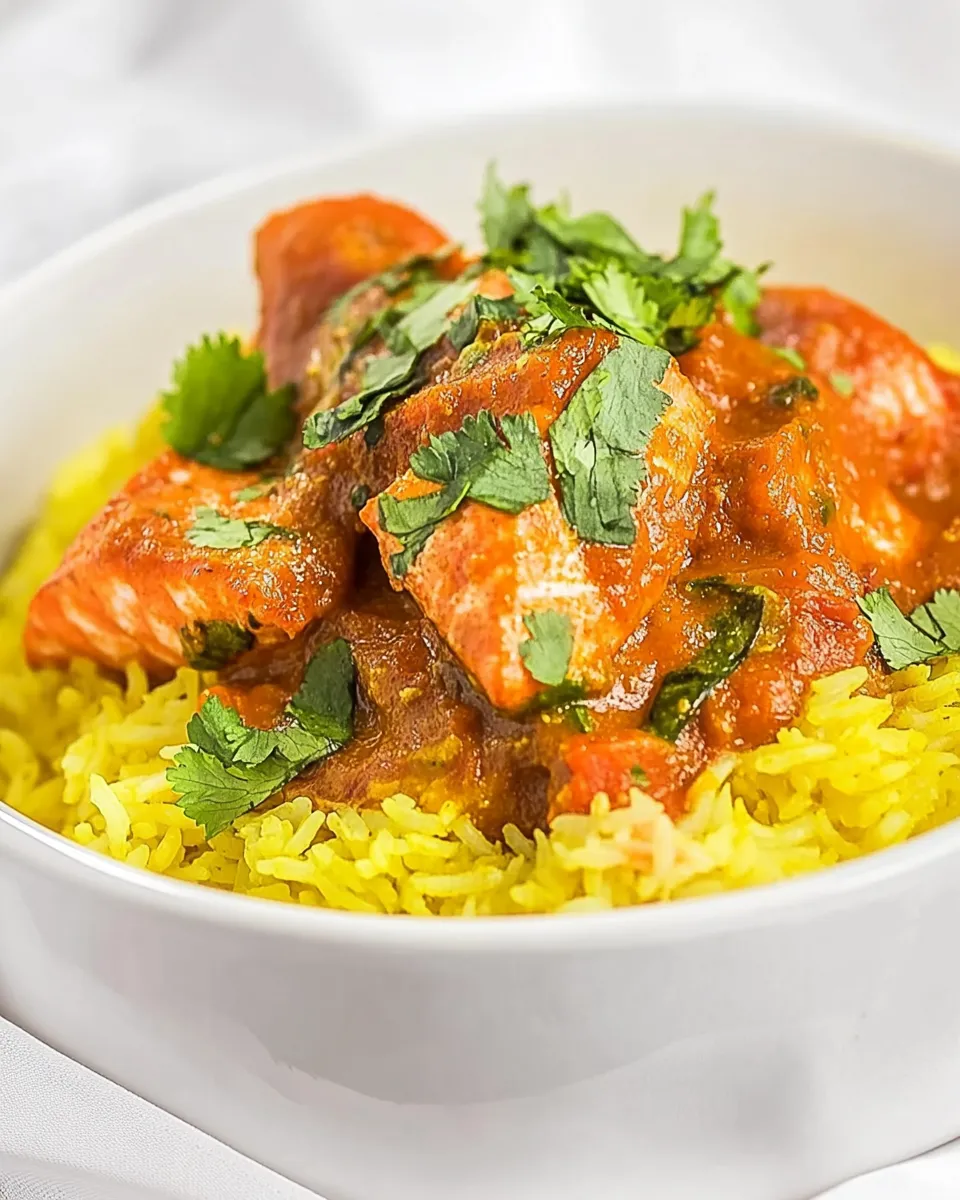
Indian Salmon Curry with Saffron Rice
Equipment
- Large Skillet
- Medium pot
- Knife
- Cutting Board
- Measuring Spoons
- Fork
Ingredients
Ingredients
- 4 salmon steaks
- 1/4 teaspoonmustard seeds
- 1/4 teaspoonfenugreek seeds
- 2 sprigs curry leaves
- 5 shallots chopped
- 2 teaspoonshredded ginger
- 3 garlic cloves minced
- 1 tablespoonchili powder add more or less depending on how spicy you want it
- 1/2 tablespooncoriander powder
- 1/2 teaspoonturmeric powder
- 1/4 teaspoonfenugreek powder
- 1 cupwater
- salt to taste
- 2 tablespoonvegetable oil
- 1 cuprice I used jasmine
- 2 cupsvegetable broth
- 2 tablespoonbutter
- 1 teaspoonsaffron threads
- squeeze of lemon or lime juice
- salt to taste
Instructions
Instructions
- Prep: Chop the 5 shallots, shred the 2 teaspoons ginger and mince the 3 garlic cloves. Measure out the spices (1/4 teaspoon mustard seeds, 1/4 teaspoon fenugreek seeds, 1 tablespoon chili powder, 1/2 tablespoon coriander powder, 1/2 teaspoon turmeric powder, 1/4 teaspoon fenugreek powder) and set the 2 sprigs curry leaves and 4 salmon steaks nearby. Rinse the 1 cup rice under cold water until the rinse water runs clear and drain.
- Heat 2 tablespoons vegetable oil in a large skillet over medium heat. When the oil is hot, add the 1/4 teaspoon mustard seeds and let them splutter (about 20–30 seconds).
- Add the 1/4 teaspoon fenugreek seeds to the skillet and sauté for a few seconds, then add the 2 sprigs curry leaves, chopped shallots, shredded ginger and minced garlic. Sauté over medium heat until the shallots turn golden brown, about 6–8 minutes.
- Reduce heat to low and add the chili powder (1 tablespoon), coriander powder (1/2 tablespoon), turmeric powder (1/2 teaspoon) and fenugreek powder (1/4 teaspoon). Stir to combine and sauté for about 5 minutes, stirring frequently, until the mixture deepens to a brownish-red color.
- Add 1 cup water to the skillet and increase heat to bring it to a gentle boil. Taste and add salt to taste. Carefully add the 4 salmon steaks to the sauce, cover, and cook over medium heat until the salmon is opaque and flakes easily with a fork and the sauce has thickened, about 8–12 minutes depending on steak thickness. Remove from heat and keep covered for about 10 minutes to let the flavors settle.
- While the salmon is simmering (or immediately after, if you prefer), make the saffron rice: pour 2 cups vegetable broth into a medium pot, add 2 tablespoons butter, and place the pot over high heat. When the broth comes to a boil, add 1 teaspoon saffron threads and a squeeze of lemon or lime juice, and stir to combine.
- Add the drained 1 cup rice and salt to taste to the boiling broth mixture. Stir once, bring back to a boil, then reduce heat to low (just above minimum), cover tightly with a lid, and cook for 12–15 minutes, or until the liquid is absorbed.
- When most of the liquid is absorbed, turn off the heat, keep the lid on tightly, and let the rice steam in the closed pot for another 5–10 minutes. Fluff the rice with a fork and serve alongside the salmon curry.
Notes
Let the rice steam 5–10 minutes with the lid on for best texture.