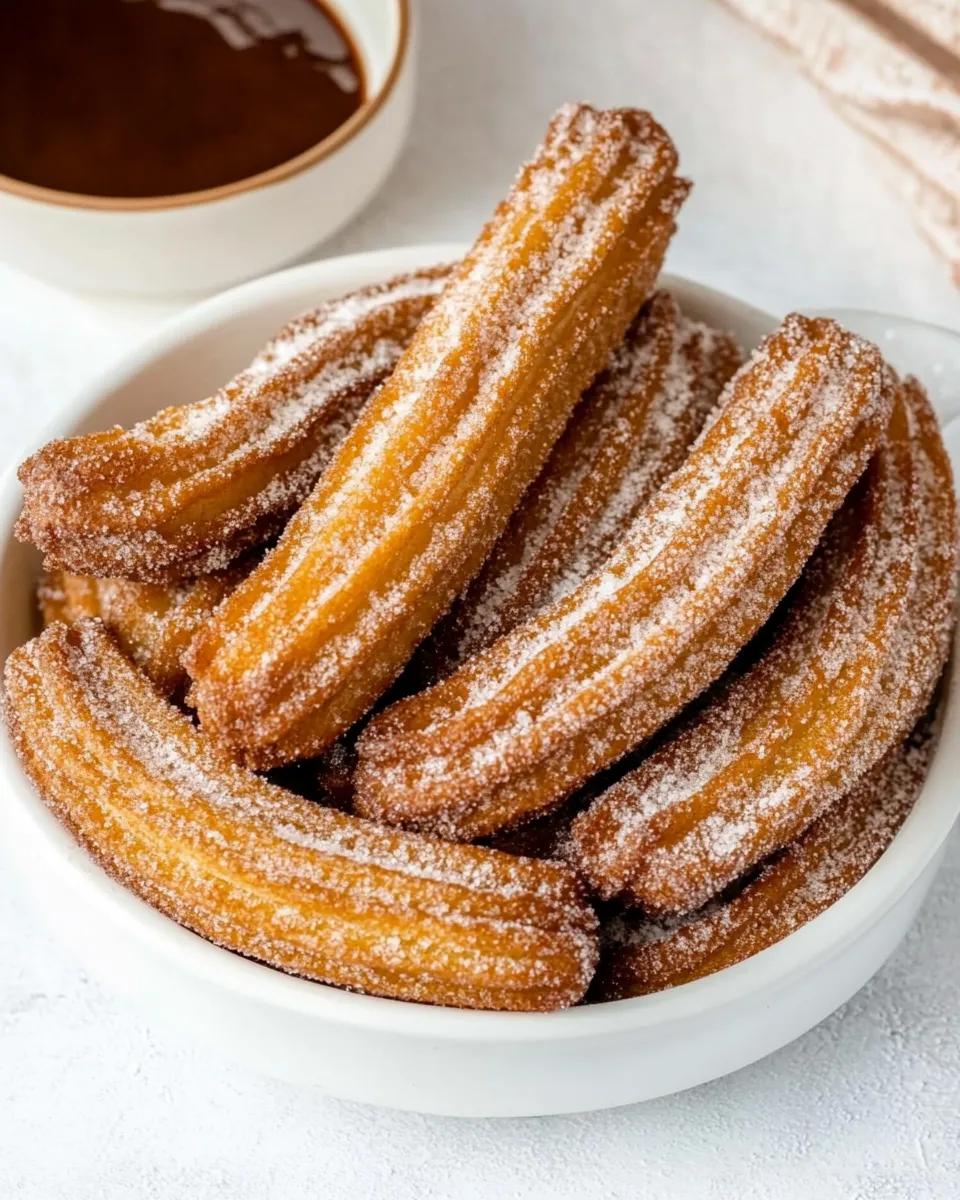
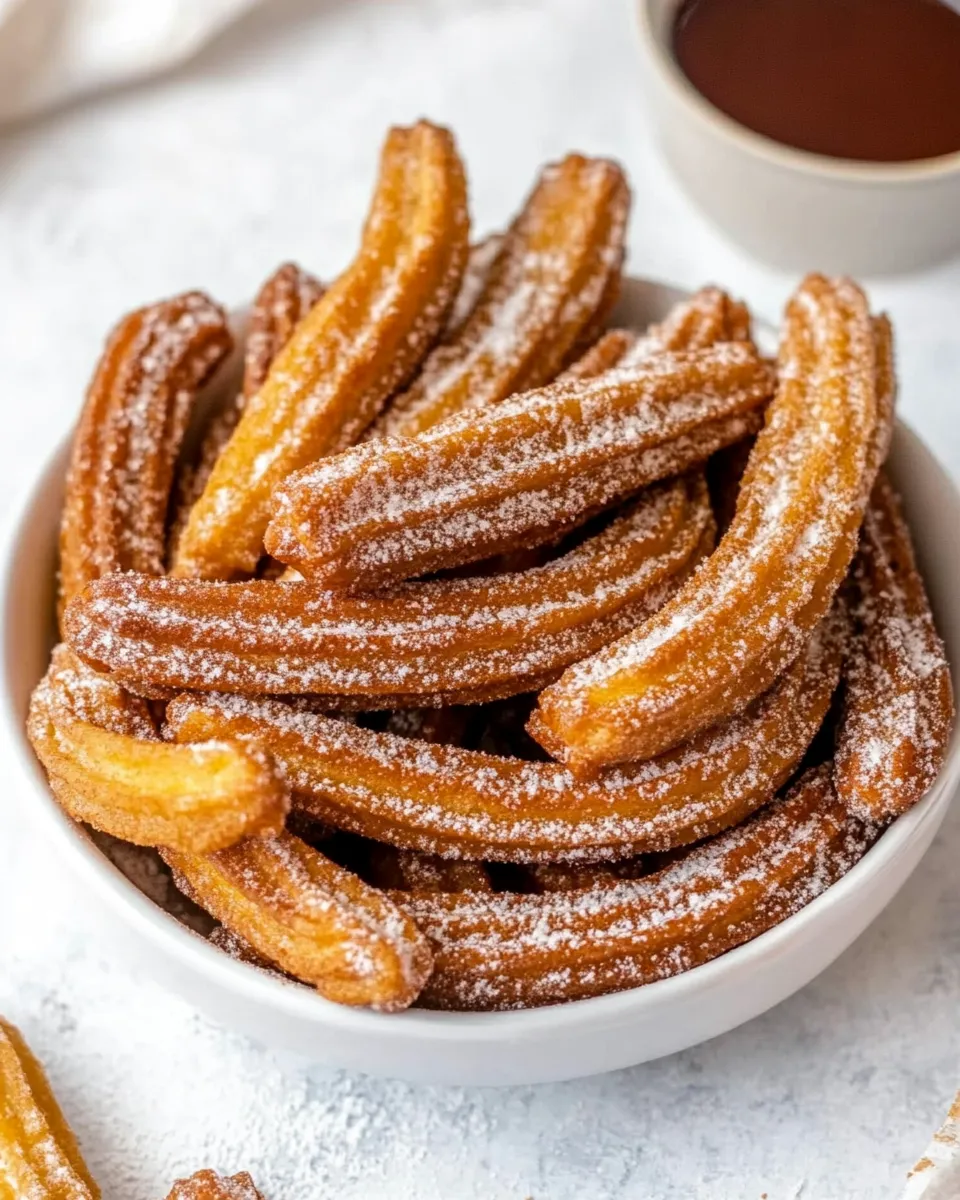
These baked churros are the version I reach for when I want the syrupy-cinnamon comfort of a fairground churro without the faff of deep-frying. They brown up nicely, have a tender interior, and the cinnamon-sugar finish still gives you that classic crackle and sweetness. I make a double batch on weekends and my kitchen smells like a bakery.
They’re straightforward: a cooked-dough choux-style base, eggs beaten in for lift, piped through a star tip, baked, then rolled in butter and cinnamon sugar. The recipe scales well, holds a forgiving window for baking times based on length, and is a great project to do with kids—piping is the fun part.
Below I walk through everything you need: exact ingredients, the step-by-step bake directions, tools, swaps, common mistakes to avoid, storage tips, and a short Q&A so you can get these out of the oven with confidence.
Ingredients at a Glance
- 2 cups (474 ml) water — the liquid base that cooks the flour into a paste.
- 2 tablespoons (28 g) unsalted butter, softened — enriches the dough; unsalted lets you control seasoning.
- 2 tablespoons (25 g) granulated sugar — a touch of sweetness in the dough.
- 1 teaspoon vanilla extract — flavor lift; adds warmth to the dough.
- ½ teaspoon salt — balances and enhances flavor.
- 2 cups (248 g) all-purpose flour — the structure of the churros; measure by weight for consistency.
- 2 large eggs — give the dough its shine and structure; add them one at a time.
- ½ cup (113 g) unsalted butter, melted — for coating the baked churros so the cinnamon-sugar sticks.
- 2 cups granulated sugar and 2 tablespoons cinnamon — combined as the classic cinnamon-sugar coating.
Baked Churros in Steps
- Preheat oven to 350°F (175°C). Line three baking sheets with parchment paper or silicone baking mats.
- In a medium saucepan combine 2 cups (474 ml) water, 2 tablespoons (28 g) softened unsalted butter, 2 tablespoons (25 g) granulated sugar, 1 teaspoon vanilla extract, and ½ teaspoon salt. Heat over medium, stirring occasionally, until the butter melts and the mixture comes to a boil.
- Remove the pan from the heat. Add 2 cups (248 g) all-purpose flour all at once and stir vigorously with a wooden spoon until a thick, smooth paste forms. Do this off the heat so the dough can cool slightly.
- Transfer the dough to the bowl of a stand mixer and let it sit 1 minute to cool. Fit the paddle attachment.
- With the mixer running, add 2 large eggs one at a time, beating well after each addition until the dough is smooth and shiny. Work quickly so the heat from the dough does not cook the eggs. (If using a hand mixer in a large bowl, work just as quickly.)
- Fit a large pastry bag with a large star tip (or a 1M tip). Spoon or scrape the churro dough into the bag.
- Pipe churros directly onto the prepared baking sheets in your desired lengths and shapes, spacing them at least 1 inch apart. This recipe makes about sixty 3-inch churros or about twenty-five 7-inch churros. If dough sticks to the tip, cut it off with a knife or kitchen scissors.
- Lightly spray the piped churros with nonstick cooking spray to encourage browning.
- Bake for 20–30 minutes, depending on churro size, rotating the pans between racks or turning pans halfway through baking. Bake until the churros are puffed and lightly golden and feel set and dry to the touch.
- Remove the baking sheets from the oven and let the churros cool just until you can handle them safely.
- While churros cool, melt ½ cup (113 g) unsalted butter in a medium bowl (microwave or stovetop). In a separate shallow bowl combine 2 cups granulated sugar and 2 tablespoons cinnamon.
- Working in batches, dip each warm churro briefly into the melted butter, then roll it in the cinnamon-sugar until evenly coated. Transfer to a clean plate or rack and serve immediately.
Why Baked Churros is Worth Your Time
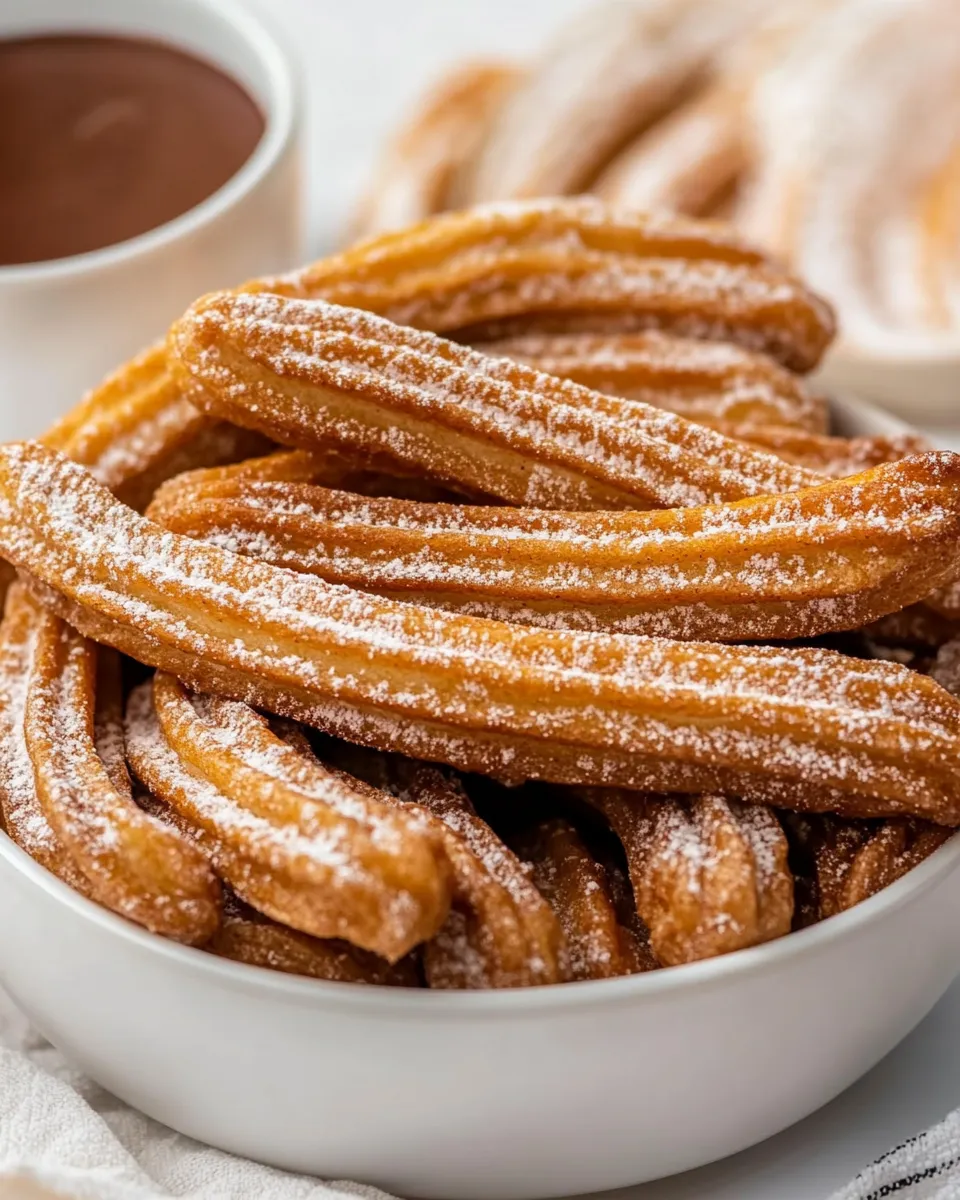
Baked churros capture the crisp exterior and cinnamon-sugar charm of fried churros with far less oil, less cleanup, and fewer safety concerns. They’re ideal when you want the treat without committing to a fryer full of hot oil. The method uses a cooked dough, so you still get a tender, hollow-ish interior and a ridged exterior when piped through a star tip.
The recipe is efficient: it makes a lot, and baking multiple sheets at once sets them free to brown at the same time. They keep well for a short window, which makes them useful for parties or for preparing in stages. If you’re feeding a crowd or want a reliable, repeatable dessert, these are a great option.
Budget & Availability Swaps
- If you don’t have vanilla extract, skip it rather than substituting a flavored extract; the dough will still be good.
- Unsalted butter is called for twice: softened for the dough and melted for coating. If you only have salted butter, reduce added salt in the dough slightly or accept a slightly saltier finish.
- All-purpose flour is standard here. If you must, a 1:1 gluten-free flour blend can work but expect differences in texture and possibly a denser result.
- Granulated sugar is used in both dough and coating. Brown sugar in the dough will change moisture and flavor—only swap if you’re prepared for a deeper, molasses note.
Tools of the Trade
- Medium saucepan — for cooking the water/butter/sugar mixture.
- Wooden spoon — to vigorously stir the flour in and form the paste.
- Stand mixer with paddle attachment (or hand mixer) — makes adding eggs quick and even.
- Large pastry bag and large star tip (or 1M) — for the classic ridged churro shape.
- Baking sheets and parchment paper or silicone mats — three sheets are ideal for spacing.
- Spinning racks or plates — for cooling and rolling the churros.
- Nonstick spray — a light mist helps exterior browning.
Steer Clear of These
- Don’t add the eggs too slowly or let the dough cool completely before adding them. If the dough is too hot it will cook the eggs; too cool and they’ll be harder to incorporate.
- Don’t crowd the baking sheets. Churros need space to puff and brown; stay at least 1 inch apart as directed.
- Avoid skipping the butter dip before the sugar roll. The melted butter helps the cinnamon-sugar adhere and gives a richer finish.
- Don’t underbake because you want quick results. Churros should feel set and dry to the touch before removing—this keeps them from collapsing when handled.
Season-by-Season Upgrades
Small seasonal additions keep this simple recipe feeling fresh through the year.
- Spring: Add a light lemon or orange zest to the cinnamon-sugar for brightness.
- Summer: Serve with a quick berry compote or a chocolate-mint dipping sauce for contrast.
- Fall: Mix a pinch of nutmeg or ground cardamom into the coating for warmer spice notes.
- Winter: Pair with warm salted caramel or a hot chocolate ganache for a cozy finish.
Pro Tips & Notes
Before piping
Let the cooked dough cool for the brief period called out—about a minute in the bowl—so the eggs won’t scramble on contact. With the mixer running, add eggs one at a time and watch the dough become glossy and smooth. If you’re using a hand mixer, work quickly and in a large bowl to prevent splatter.
Piping and shaping
Use a large star tip for the classic ridges. If the dough sticks to the tip, trimming it with scissors is the fastest fix. Pipe about 3-inch pieces for snacks or 7-inch for shareable pastries. The bake time varies accordingly; shorter for small bits, longer for longer churros.
Baking and texture
Rotate pans between racks and turn them halfway through baking for even color. You’re aiming for puffed, lightly golden, and dry-to-the-touch. If they feel soft inside, give them a few more minutes; they’ll firm up as they cool but shouldn’t be underbaked when removed.
Save for Later: Storage Tips
Churros are best eaten fresh within a few hours of baking for optimal crispness. If you must store them:
- Short-term (same day): Keep in a loosely covered container at room temperature for a few hours. Re-crisp in a 350°F (175°C) oven for 3–5 minutes.
- Make-ahead: After baking and before coating, freeze on a baking sheet until solid, then transfer to a freezer bag. When ready, bake from frozen a few minutes longer, then dip in butter and sugar.
- Do not refrigerate coated churros; the sugar coating and butter will make them soggy.
Baked Churros Q&A
Q: Can I fry these instead?
A: This dough is similar to choux-based fried churro dough, but the recipe and instructions are designed for baking. If you fry, expect differences in texture and safety considerations for hot oil.
Q: My churros didn’t brown—what happened?
A: Oven temperature and spacing matter. Make sure pans aren’t crowded and rotate them during the bake. A light spray of nonstick cooking spray helps encourage browning.
Q: Can I make the dough ahead?
A: You can make the dough and refrigerate briefly, but it will firm up and be harder to pipe. For best results, mix, cool briefly, then pipe and bake on the same day. If you refrigerate, bring the dough to room temperature and beat it briefly before piping.
Q: Why do some churros collapse?
A: Collapsing usually means underbaked or over-moist dough. Ensure the churros are set and dry to the touch before removing from the oven, and don’t open the oven too often during baking.
Next Steps
If you decide to try a batch, start with 3-inch churros to get the timing down. Once you’re comfortable, scale up or make longer pieces for sharing. Save this page so you have the exact ingredient list and steps handy. And if you like experimenting, try one of the seasonal upgrades next time—lemon zest in the coating is my quick favorite when berries are in season.
Happy baking. If you try these, snap a photo and make a note of what you changed—small adjustments are how you make the recipe your own.
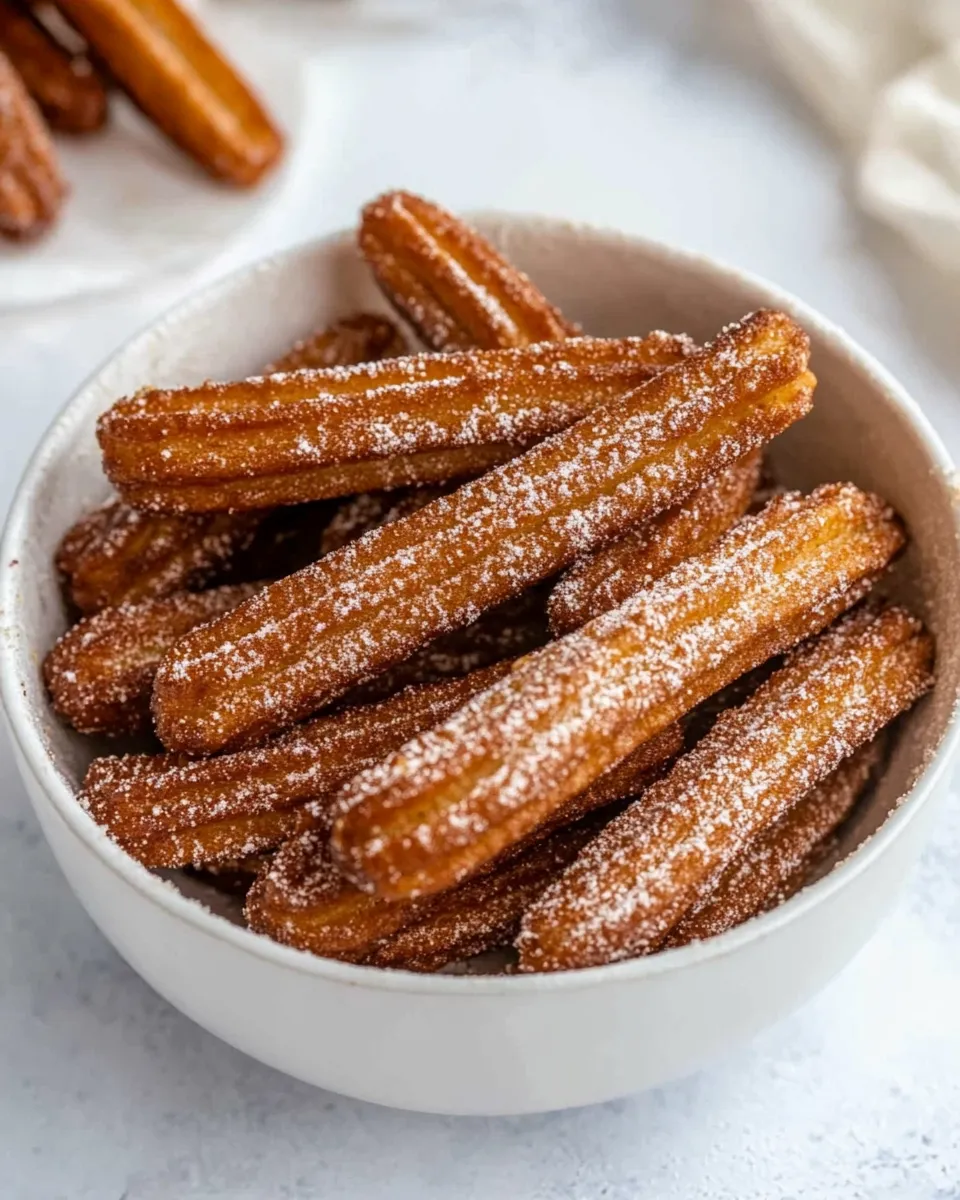
Easy Baked Churros
Equipment
- Baking Sheets
- Parchment Paper
- silicone baking mats
- Medium Saucepan
- Wooden Spoon
- Stand mixer
- paddle attachment
- hand mixer (optional)
- Pastry bag
- large star tip (or 1M tip)
- Nonstick cooking spray
- microwave- or stovetop-safe bowl
Ingredients
Ingredients
- 2 cups 474 ml water
- 2 tablespoons 28 g unsalted butter, softened
- 2 tablespoons 25 g granulated sugar
- 1 teaspoonvanilla extract
- 1/2 teaspoonsalt
- 2 cups 248 g all-purpose flour
- 2 largeeggs
- 1/2 cup 113 g unsalted butter, melted
- 2 cupsgranulated sugar
- 2 tablespoonscinnamon
Instructions
Instructions
- Preheat oven to 350°F (175°C). Line three baking sheets with parchment paper or silicone baking mats.
- In a medium saucepan combine 2 cups (474 ml) water, 2 tablespoons (28 g) softened unsalted butter, 2 tablespoons (25 g) granulated sugar, 1 teaspoon vanilla extract, and ½ teaspoon salt. Heat over medium, stirring occasionally, until the butter melts and the mixture comes to a boil.
- Remove the pan from the heat. Add 2 cups (248 g) all-purpose flour all at once and stir vigorously with a wooden spoon until a thick, smooth paste forms. Do this off the heat so the dough can cool slightly.
- Transfer the dough to the bowl of a stand mixer and let it sit 1 minute to cool. Fit the paddle attachment.
- With the mixer running, add 2 large eggs one at a time, beating well after each addition until the dough is smooth and shiny. Work quickly so the heat from the dough does not cook the eggs. (If using a hand mixer in a large bowl, work just as quickly.)
- Fit a large pastry bag with a large star tip (or a 1M tip). Spoon or scrape the churro dough into the bag.
- Pipe churros directly onto the prepared baking sheets in your desired lengths and shapes, spacing them at least 1 inch apart. This recipe makes about sixty 3-inch churros or about twenty-five 7-inch churros. If dough sticks to the tip, cut it off with a knife or kitchen scissors.
- Lightly spray the piped churros with nonstick cooking spray to encourage browning.
- Bake for 20–30 minutes, depending on churro size, rotating the pans between racks or turning pans halfway through baking. Bake until the churros are puffed and lightly golden and feel set and dry to the touch.
- Remove the baking sheets from the oven and let the churros cool just until you can handle them safely.
- While churros cool, melt ½ cup (113 g) unsalted butter in a medium bowl (microwave or stovetop). In a separate shallow bowl combine 2 cups granulated sugar and 2 tablespoons cinnamon.
- Working in batches, dip each warm churro briefly into the melted butter, then roll it in the cinnamon-sugar until evenly coated. Transfer to a clean plate or rack and serve immediately.
Notes
Butter is not required; if you want a crunchier churro just roll them in cinnamon sugar, but the cinnamon sugar needs to be applied as soon as they come out of the oven and won’t stick as much as it would to a fried churro.
Baking time will depend on the thickness and size of your churros. It’s more of a “drying out” – they won’t get super golden brown.
Storing and making ahead: Churro dough can be made a day ahead and stored in the refrigerator, but dough needs to come to room temperature to pipe easily. These are best served immediately while hot – they will soften as they cool. If you want to make them ahead of time, don’t coat them. Air fry to crisp them up and coat with cinnamon sugar right before serving.
Make sure to remove your pan from the heat before mixing in flour. This will cool off the dough enough that you will avoid cooking the eggs.
Transfer to mixing bowl and allow to sit for 1 minute.
Mix in the eggs quickly, so that they do not cook.