This simple roasted cauliflower is my go-to weeknight side: quick, hands-on, and reliably golden-brown. It leans on turmeric for color and warmth, liquid aminos for umami, and a touch of sriracha to wake everything up. The result is crisp-edged, tender-floreted cauliflower that holds up beside anything from a green salad to a hearty protein.
I like recipes that are practical and repeatable, and this one fits that category. You don’t need fancy tools or obscure ingredients — just a head of cauliflower and a few pantry staples. Roast it until the edges caramelize and you’ll have a dish that’s more exciting than boiled or steamed cauliflower.
Below you’ll find exact ingredients and step-by-step instructions from the test kitchen, plus setup notes, common traps to avoid, and storage tips so leftovers stay excellent. If you want a quick win that’s vegan, paleo, and keto-friendly, this is it.
Ingredient List
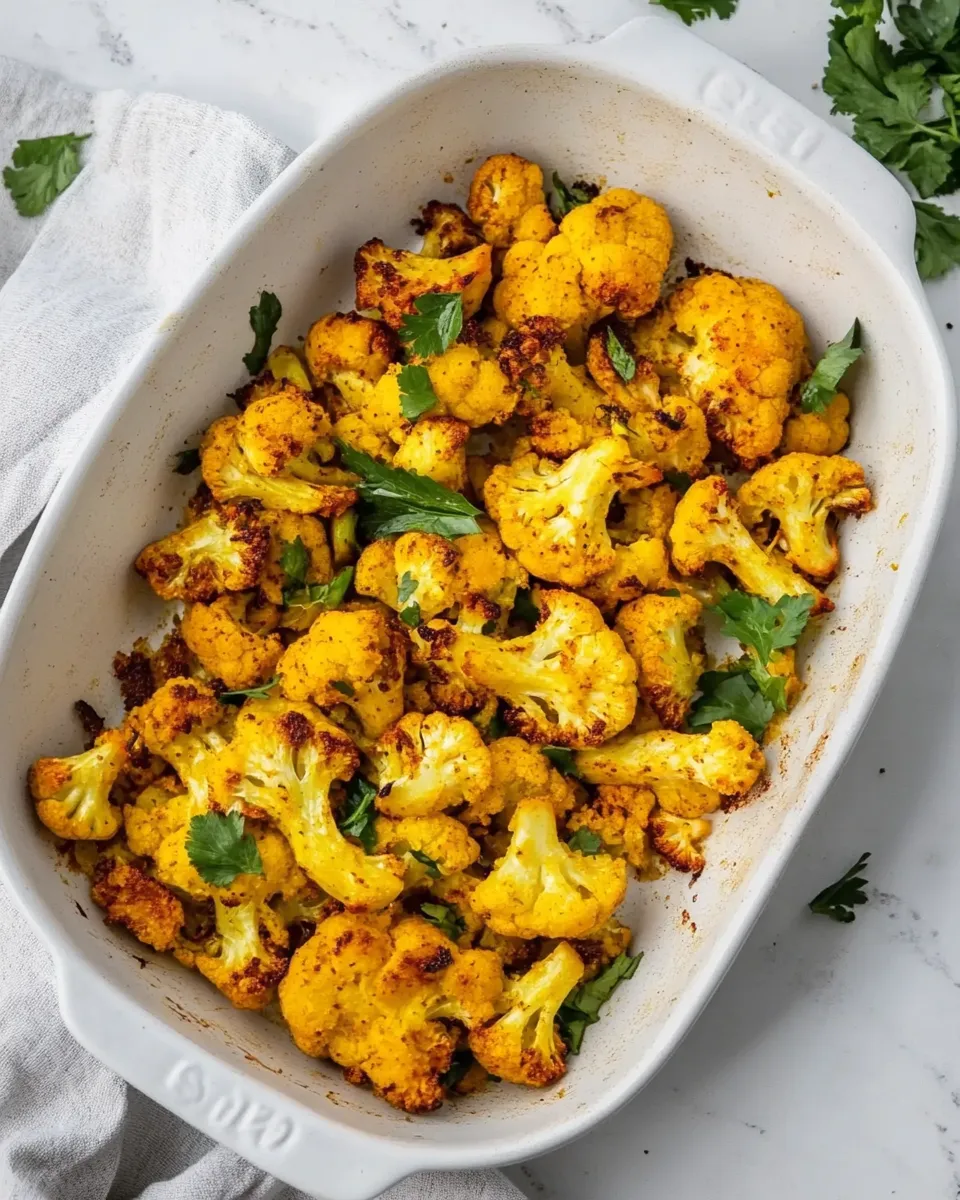
- 1 large head cauliflower, chopped into florets — the base of the recipe; cut into similarly sized florets for even cooking.
- 3 Tbsp avocado oil — provides a high smoke point and helps the turmeric and spices adhere and brown.
- 2 Tbsp liquid aminos or coconut aminos — adds savory umami and a salty backbone without granulated salt flavor.
- 2 tsp sriracha or more to taste — gives heat and a touch of vinegar-sweetness; adjust to your tolerance.
- 1 tsp garlic powder — concentrated garlic flavor that disperses evenly over the florets.
- 1 tsp ground turmeric or less, to taste — main flavor/color component; start with the listed amount and reduce if you prefer a subtler turmeric note.
- 1/4 tsp sea salt to taste — enhances all the flavors; start with this amount and adjust after roasting if needed.
How to Prepare Turmeric Roasted Cauliflower
- Preheat your oven to 425°F (220°C) and position a rack in the center.
- Remove the hard inner core from 1 large head cauliflower and cut the cauliflower into florets.
- Put the cauliflower florets into a large mixing bowl.
- Add 3 Tbsp avocado oil, 2 Tbsp liquid aminos (or coconut aminos), 2 tsp sriracha (or more to taste), 1 tsp garlic powder, 1 tsp ground turmeric (or less, to taste), and 1/4 tsp sea salt (to taste) to the bowl.
- Use your hands to toss the cauliflower and seasonings until the florets are evenly and well coated.
- Spread the coated cauliflower in a single layer on a baking sheet or in a casserole dish.
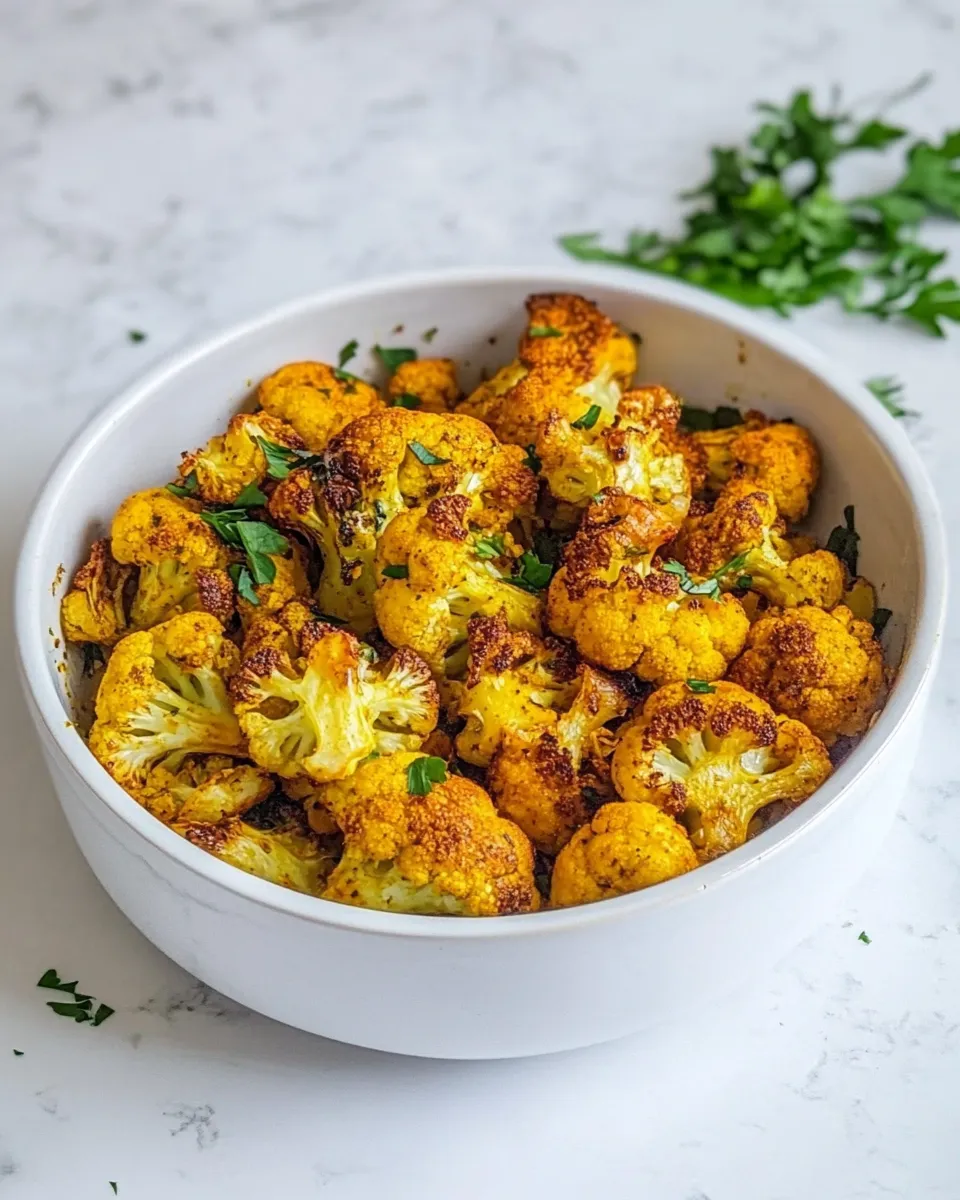
- Roast on the center rack of the preheated oven for 20 to 25 minutes, tossing or turning the florets once halfway through, until the cauliflower is golden-brown and tender when pierced with a fork.
- Remove from the oven and serve.
Why You’ll Keep Making It
- Fast and reliable: from prep to oven in under 10 minutes for hands-on time, then set-and-forget roasting.
- Bold, layered flavor with minimal effort: turmeric gives warmth and color while liquid aminos deliver umami without relying on traditional salt alone.
- Versatile as a side or a main component: goes with salads, bowls, grain-free bases, or alongside roasted proteins; doubles as a flavorful cold salad component the next day.
- Diet-friendly: naturally vegan, paleo-friendly if you use coconut aminos, and keto-friendly with modest use of sriracha and the low-carb base of cauliflower.
Substitutions by Category
Sauces & Umami
- Liquid aminos or coconut aminos — these are already the two options listed; use coconut aminos to keep it soy-free and paleo-friendly.
Heat & Brightness
- Sriracha — listed as optional to taste; use less or omit if you want no heat, or add more for pronounced spice.
Spices
- Ground turmeric — the recipe notes you can use less if you want a subtler color and flavor profile; follow the listed amount to start.
- Garlic powder — this gives even coverage; keep the amount for a consistent garlic background without fresh garlic intensity.
Setup & Equipment
- Large cutting board and a sharp chef’s knife — to remove the core and make uniform florets.
- Large mixing bowl — for tossing the cauliflower with oil and seasonings.
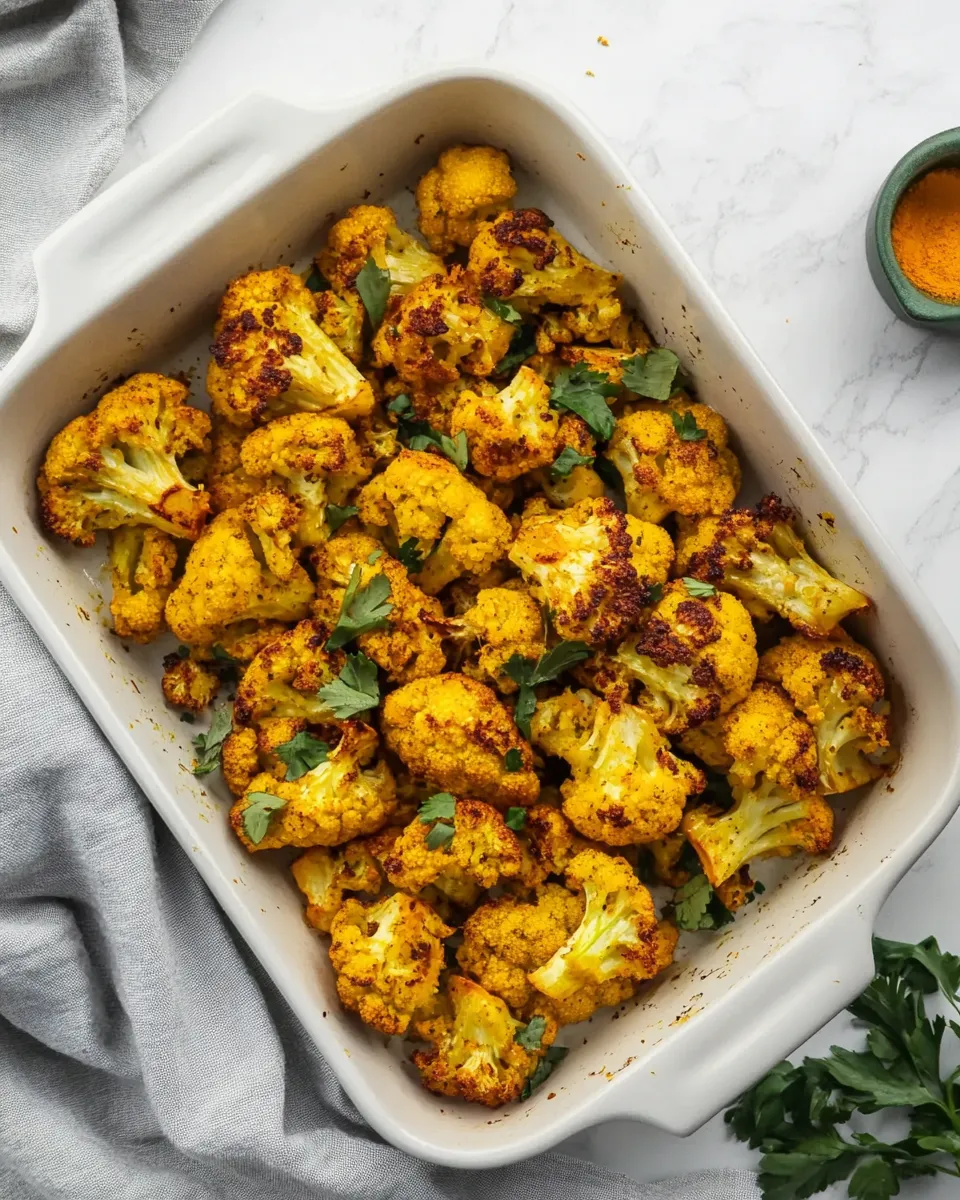
- Baking sheet or casserole dish — a rimmed baking sheet works best for single-layer roasting to encourage browning.
- Oven preheated to 425°F (220°C) — this temperature promotes caramelization without over-drying the florets.
- Oven mitts and a spatula or tongs — for safely turning the florets halfway through roasting.
Common Errors (and Fixes)
- Crowding the pan — when florets are piled up they steam instead of roast. Fix: spread them in a single layer with space around each piece; use two sheets if necessary.
- Unevenly sized florets — small pieces will burn while large ones remain undercooked. Fix: cut florets to similar sizes for uniform roasting.
- Not preheating the oven — placing cauliflower into a cold oven lengthens cook time and limits browning. Fix: always wait for a fully preheated oven at 425°F (220°C).
- Skipping the toss halfway through — the underside can stay pale. Fix: turn or toss once halfway through the 20–25 minute roast.
- Over-salting before roasting — concentrated salt can make the final dish too salty after reduction. Fix: follow the 1/4 tsp guideline and adjust at the end if needed.
Substitutions by Diet
- Vegan — the recipe as written is vegan. Use the listed ingredients and keep the sriracha if desired.
- Paleo — choose coconut aminos in place of liquid aminos (this option is already provided in the ingredient list) to keep it paleo-compliant.
- Keto — cauliflower and the listed amounts of oil and seasonings are keto-friendly. If you’re strict about carbs, reduce or omit the sriracha to minimize any added sugars the condiment may contain.
Notes from the Test Kitchen
I roast this version at 425°F (220°C) because it gives that sweet, nutty caramelization without drying the florets. Twenty minutes will brown the edges and keep a little bite; 25 minutes gives deeper color and a softer interior. Tossing once halfway through keeps all sides evenly browned.
Using your hands to toss the cauliflower with the oil and seasonings makes a big difference. You get more even coating and you can feel if the florets are adequately saturated. If the coating seems thin, a touch more oil helps, but stick close to the listed 3 Tbsp as a baseline so the florets crisp instead of swim.
If you prefer a smokier profile, you can roast a minute or two longer, but watch closely — small florets can go from charred to burnt quickly. If you want a fresher finish, scatter something bright over it right before serving (not listed in the ingredients), but I’ll often serve it as-is to let the turmeric and aminos shine.
Storing Tips & Timelines
- Refrigerator: Cool to room temperature, then store in an airtight container for up to 4 days. The texture will soften a bit but reheats well.
- Reheating: Reheat in a 400°F (200°C) oven for 8–10 minutes to refresh the edges, or pan-sear briefly on medium-high to revive crispness.
- Freezing: Roasted cauliflower can be frozen, but texture will change. Freeze in single layers on a sheet, then transfer to a sealed bag for up to 2 months; best used in blended soups or casseroles after thawing.
Helpful Q&A
- Q: Can I use pre-cut cauliflower florets? A: Yes. Just make sure the pieces are similar in size so they roast evenly; you may need to shorten roasting time slightly if pieces are smaller.
- Q: My cauliflower isn’t browning — what went wrong? A: Often it’s crowding, too low heat, or too much moisture. Spread the florets in a single layer, ensure the oven is fully preheated to 425°F (220°C), and pat florets dry if they’re wet before tossing with oil.
- Q: Is turmeric safe to use every day? A: Turmeric is a common culinary spice; the recipe uses a small amount. If you have specific health concerns or are on medication, check with a healthcare provider.
- Q: Can I add fresh garlic instead of garlic powder? A: Fresh garlic isn’t listed in the source ingredients. Garlic powder gives even coverage without burning; if you choose to experiment with fresh garlic, add it near the end of roasting or sauté separately.
Wrap-Up
This Turmeric Roasted Cauliflower is a dependable recipe that delivers color, golden edges, and a balanced savory profile with minimal effort. Follow the ingredient list and the step-by-step instructions for consistent results, and use the notes and storage tips to adapt it to your weeknight routine. It’s one of those easy dishes that feels special on the plate but is simple to make — perfect for meal prep or a last-minute side.
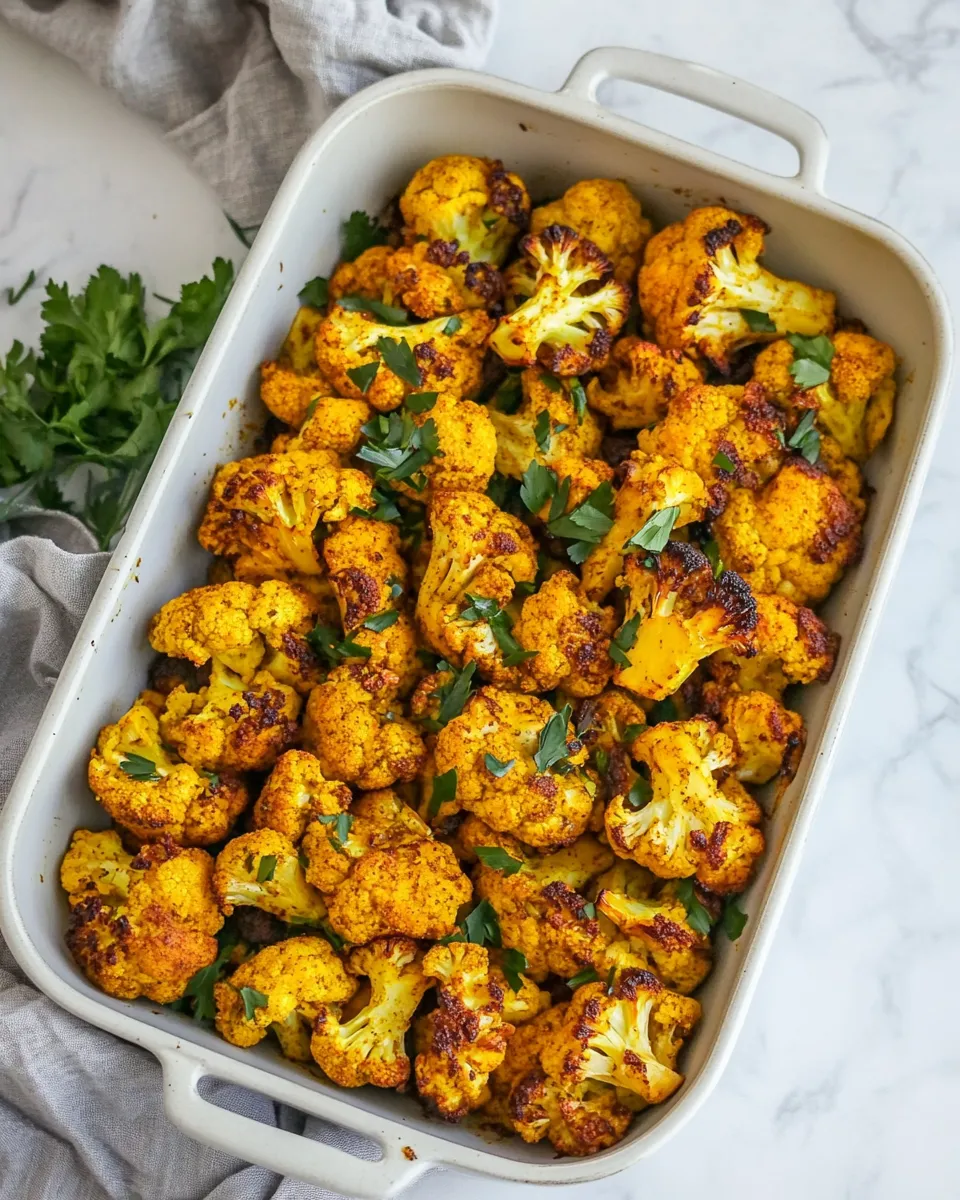
Turmeric Roasted Cauliflower (Vegan, Paleo, Keto)
Equipment
- Oven
- Large Mixing Bowl
- Baking Sheet
- Casserole Dish
Ingredients
Ingredients
- 1 large head cauliflowerchopped into florets
- 3 Tbspavocado oil
- 2 Tbspliquid aminosor coconut aminos
- 2 tspsrirachaor more to taste
- 1 tspgarlic powder
- 1 tspground turmericor less to taste
- 1/4 tspsea saltto taste
Instructions
Instructions
- Preheat your oven to 425°F (220°C) and position a rack in the center.
- Remove the hard inner core from 1 large head cauliflower and cut the cauliflower into florets.
- Put the cauliflower florets into a large mixing bowl.
- Add 3 Tbsp avocado oil, 2 Tbsp liquid aminos (or coconut aminos), 2 tsp sriracha (or more to taste), 1 tsp garlic powder, 1 tsp ground turmeric (or less, to taste), and 1/4 tsp sea salt (to taste) to the bowl.
- Use your hands to toss the cauliflower and seasonings until the florets are evenly and well coated.
- Spread the coated cauliflower in a single layer on a baking sheet or in a casserole dish.
- Roast on the center rack of the preheated oven for 20 to 25 minutes, tossing or turning the florets once halfway through, until the cauliflower is golden-brown and tender when pierced with a fork.
- Remove from the oven and serve.