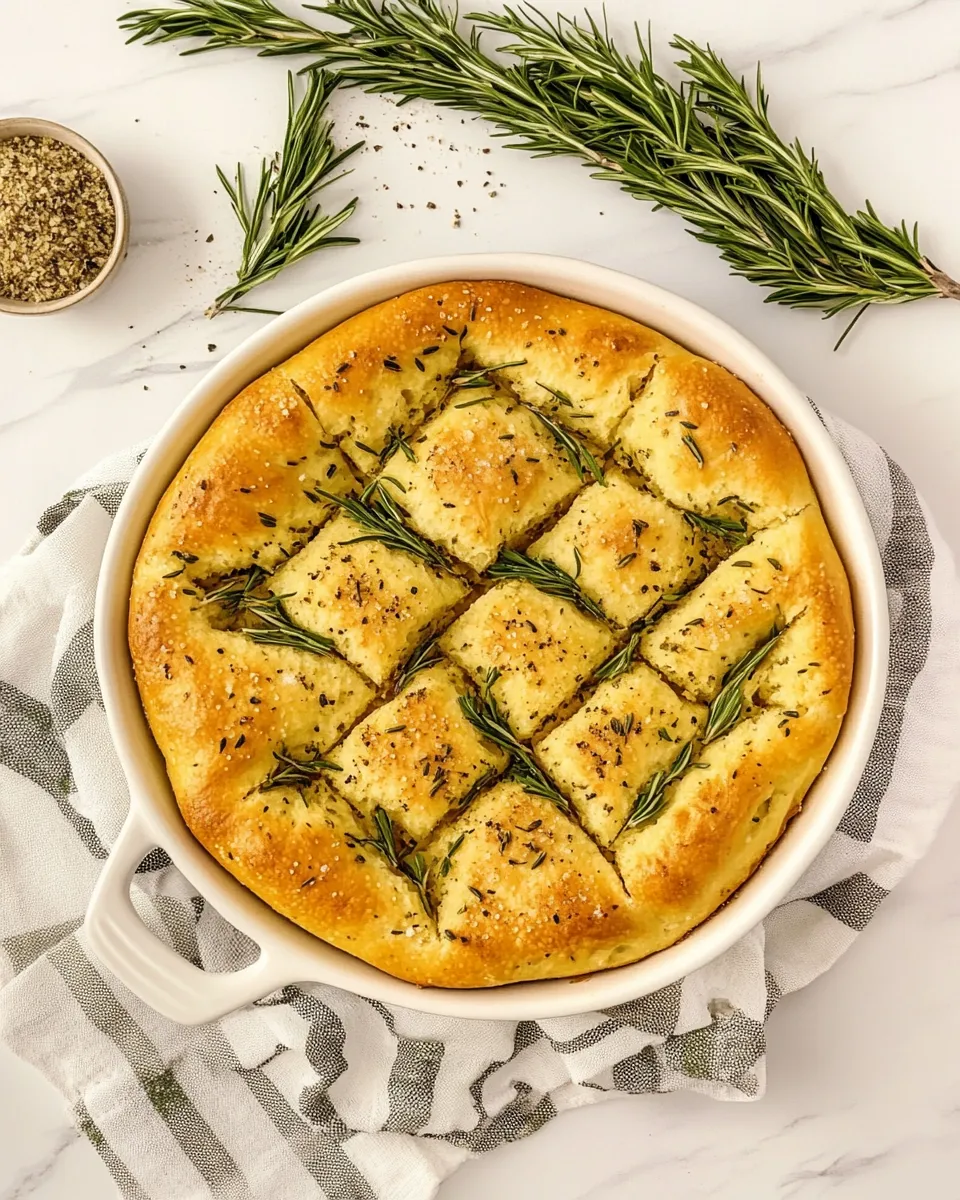
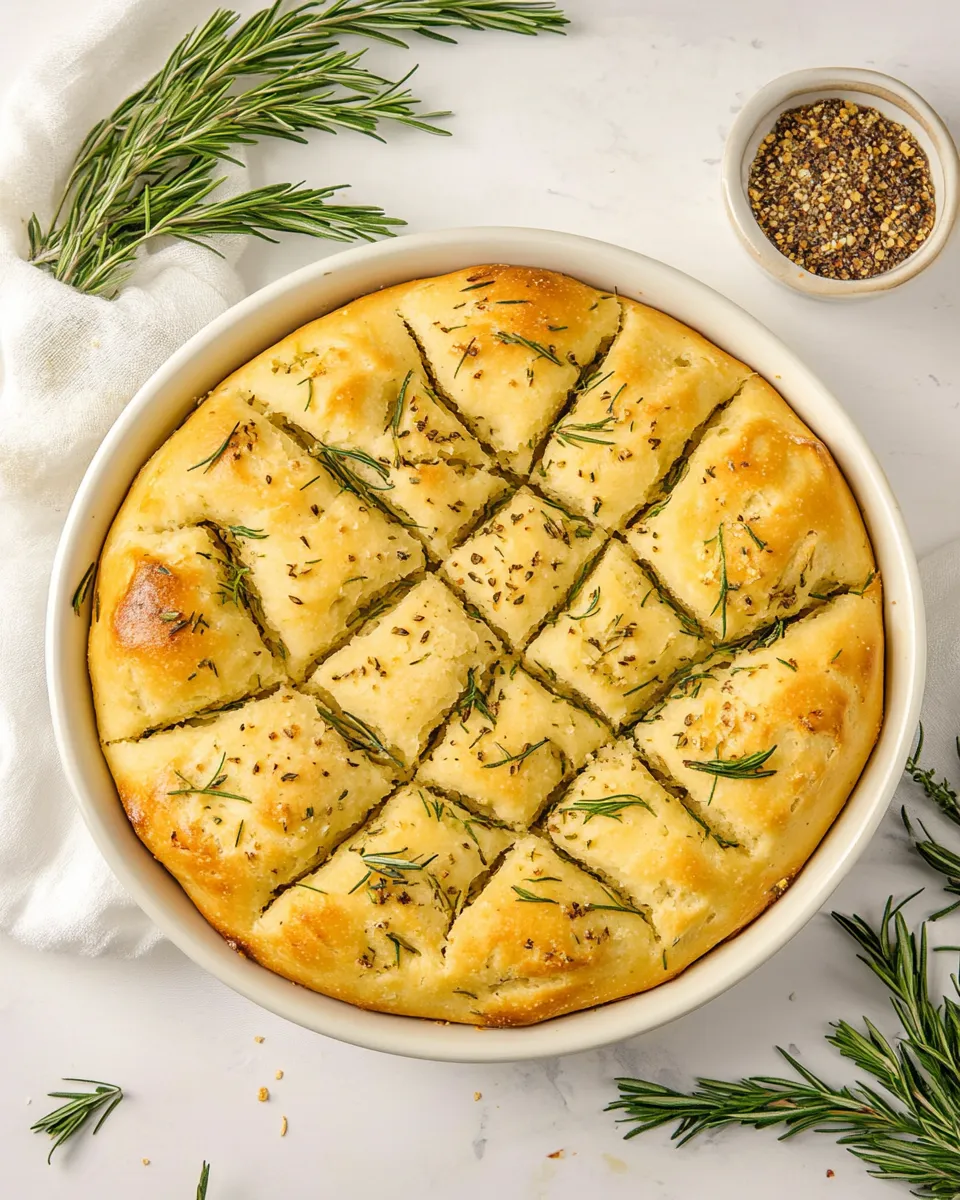
I love a pan of warm focaccia—that crackly top, the olive oil that pools in its dimples, and the rosemary scent that fills the kitchen. This version is gluten-free, forgiving, and focused on texture: a tender crumb with a light chew, not a dense brick. I’ll walk you through the exact steps and small decisions that make that possible, without jargon or magic tricks.
This recipe is straightforward and reliable: a yeast start to build flavor, a gluten-free flour blend that includes xanthan gum for structure, and a short bake so the top gets golden while the inside stays soft. It’s perfect for a weeknight dinner, a picnic, or to slice and toast for sandwiches. Follow the timings and the tactile cues and you’ll get consistent results.
Below you’ll find the ingredient list, the precise steps (copied from the tested method), tool suggestions, substitutions that keep texture intact, and answers to common questions. I keep notes practical—how to oil your pan, how to know the dough has doubled, and how to reheat leftovers so they taste fresh. Let’s get into it.
Ingredients
- 1 1/2 cups warm water (110°F to 115°F) — activates the yeast; temperature matters for a reliable rise.
- 1 tablespoon sugar — feeds the yeast and adds a touch of browning.
- 2 1/4 teaspoons instant yeast — the leavening workhorse; instant yeast can be mixed directly with the wet ingredients.
- 2 1/2 cups gluten-free all-purpose flour blend (with xanthan gum) — provides structure; xanthan gum helps mimic gluten’s elasticity.
- 1 1/2 teaspoons baking powder — gives an extra lift and helps the crumb stay tender.
- 1 teaspoon salt, divided — necessary for flavor; some is used in the dough, the rest on top.
- 3 tablespoons olive oil, divided — oils the dough and pan; it keeps the crust crisp and the crumb moist.
- 2 teaspoons chopped fresh rosemary — aromatic topping; chop fine so it distributes evenly.
- 2 cloves garlic, optional, minced — fresh garlic adds a bright punch when used sparingly on top.
What We’re Using
These ingredients are chosen to keep the method simple and the texture balanced. The warm water and sugar wake up the yeast. The gluten-free blend plus xanthan gum gives structure that would otherwise come from gluten. Baking powder acts as a secondary lift, which is helpful in gluten-free bakes where the dough can be heavier. Olive oil is essential here: it flavors, keeps the focaccia moist, and creates the characteristic crisp, oily surface once baked.
The toppings are minimal on purpose. Fresh rosemary and a bit of garlic complement the olive oil and highlight the focaccia’s texture rather than covering it up. The salt is split so you get seasoning throughout the dough and a finished surface salt that gives a satisfying bite with each piece.
How to Prepare Gluten-Free Focaccia
- In a small bowl, combine 1 1/2 cups warm water (110°F–115°F), 1 tablespoon sugar, and 2 1/4 teaspoons instant yeast. Stir lightly and let sit 5–10 minutes until the mixture is slightly foamy.
- In a large bowl, whisk together 2 1/2 cups gluten-free all-purpose flour blend (with xanthan gum), 1 1/2 teaspoons baking powder, and 1/2 teaspoon of the salt.
- Add the yeast mixture and 2 tablespoons of the olive oil to the dry ingredients. Stir with a spatula until a sticky batter forms, scraping the bowl sides as needed.
- Cover the bowl with a clean towel and let the dough rise in a warm, draft-free spot until it has roughly doubled in size, about 30–60 minutes.
- Reserve the remaining 1 tablespoon olive oil (for oiling the pan and topping). Lightly oil an 8-inch or 9-inch square baking pan with some of the reserved oil.
- Transfer the risen dough into the prepared pan. Using an oiled spatula or oiled fingertips, gently spread the dough into an even layer. Press oiled fingertips into the dough to create small dimples across the surface.
- Drizzle any remaining reserved olive oil over the dough. Sprinkle with 2 teaspoons chopped fresh rosemary, the remaining 1/2 teaspoon salt, and 2 minced garlic cloves if using.
- Let the dough rest for 15 minutes while you preheat the oven to 400°F.
- Place the pan in the preheated oven and bake the focaccia about 25 minutes, or until the top is lightly golden.
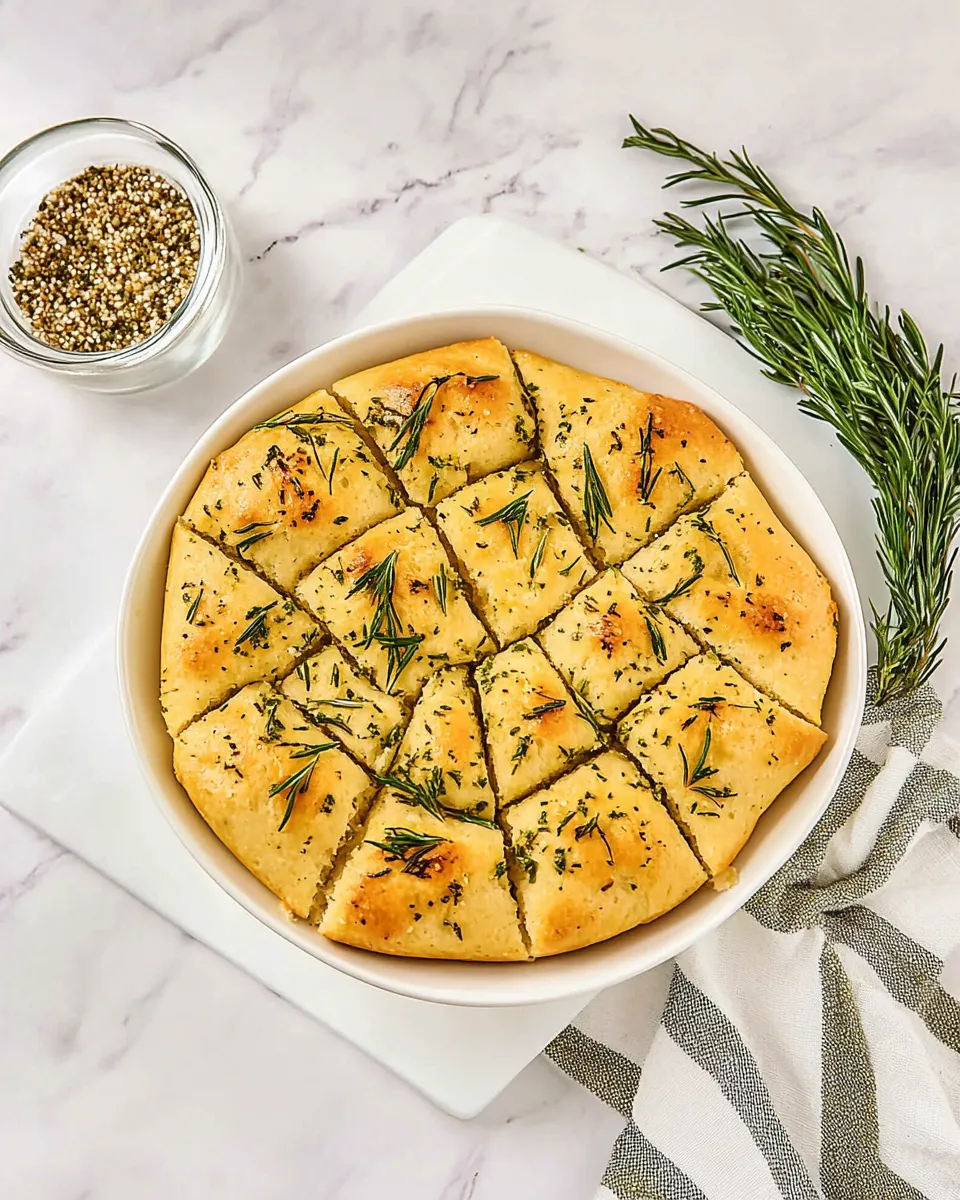
- Remove the focaccia from the oven, let it cool for a few minutes in the pan, then slice into squares and serve warm.
What Makes This Recipe Special
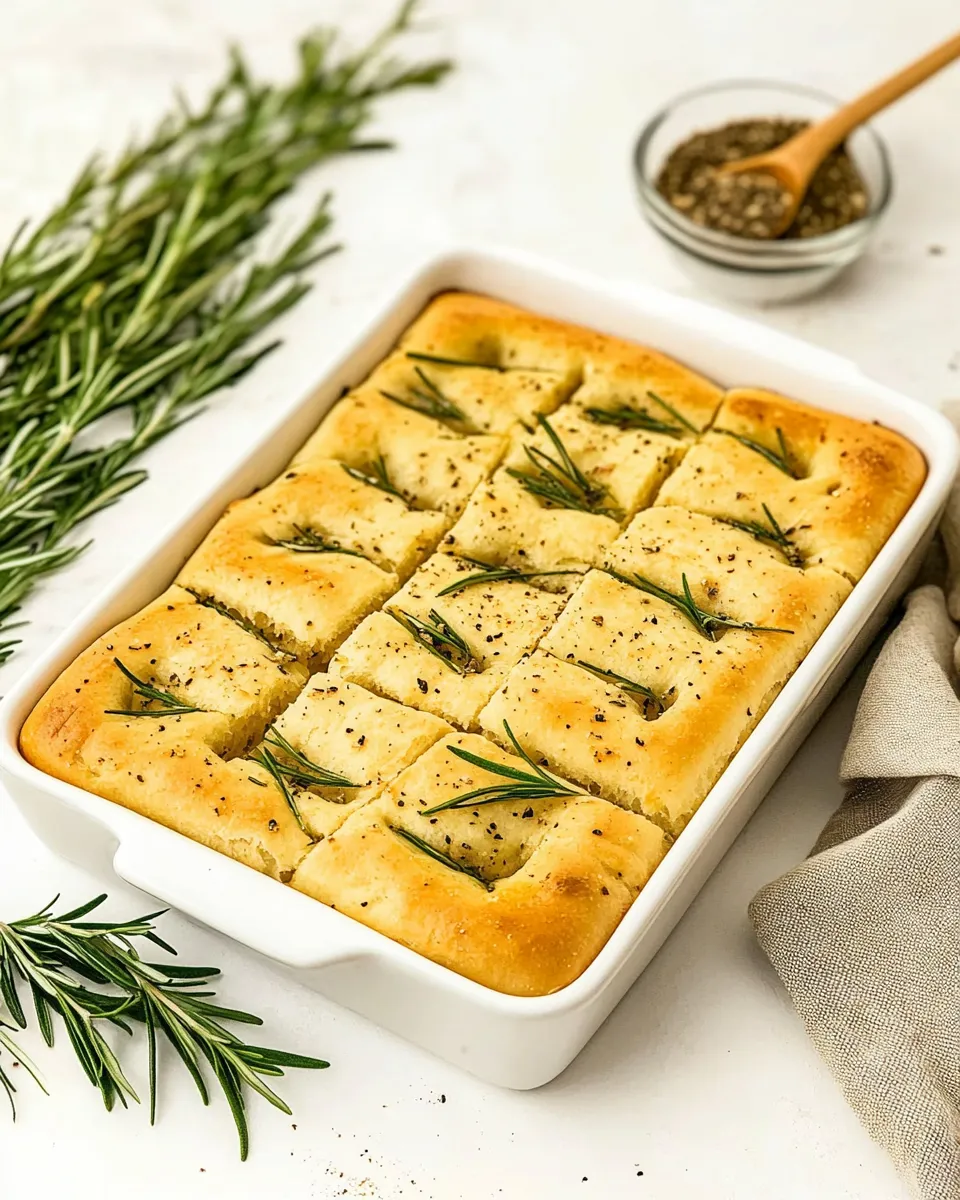
This focaccia balances ease with a focus on texture. Many gluten-free breads rely on long ingredient lists or unusual flours. Here, a standard gluten-free all-purpose blend (with xanthan gum) and a short yeast rise produce a light crumb without excess fiddling. The baking powder addition is the quiet trick: it gives a gentle lift during baking so the loaf doesn’t feel clumped or gummy.
Another reason it’s special is the handling. The dough is a sticky batter rather than a kneaded ball, which is more forgiving for home bakers. You spread it with an oiled spatula or fingers—no skillful kneading required. The oiling and the fingertip dimples are small, repeatable steps that give you the classic focaccia surface every time.
Texture-Safe Substitutions
Substitutions are fine as long as they preserve the dough’s hydration and structure.
- Flour blend — use another 1-to-1 gluten-free all-purpose blend that contains xanthan gum. If your blend does not include xanthan gum, do not swap without recalculating — the texture will suffer.
- Olive oil — you can use light-flavored avocado oil in the same amount for a neutral taste, but keep the quantity the same to maintain moisture and crust formation.
- Fresh rosemary — dried rosemary can be used at 1 teaspoon if fresh isn’t available; it won’t be as vibrant but still aromatic.
- Garlic — garlic powder is an option (use sparingly, about 1/4 teaspoon), but fresh minced garlic gives the best, bright finish.
Toolbox for This Recipe
- Small bowl — to proof the yeast.
- Large mixing bowl — for combining dry and wet ingredients.
- Whisk and spatula — whisk for dry ingredients; a sturdy spatula for folding the sticky batter.
- 8-inch or 9-inch square baking pan — the recipe is sized for this pan to get the right thickness and bake time.
- Measuring cups and spoons — accurate measuring matters in gluten-free baking.
- Oven — preheated to 400°F for the correct rise and browning.
Steer Clear of These
- Too-cool water — if the water is under 100°F the yeast may be sluggish and the rise will be weak. Don’t exceed 115°F or you risk killing the yeast.
- Swapping flour without xanthan gum — omitting xanthan gum changes the structure. If your blend lacks it, add a binding agent or use a blend that already includes it.
- Overworking the batter — this is not a kneaded dough. Mix until combined and stop; overmixing won’t help and can break down the batter’s ability to trap air.
- Skipping the oil on the pan — this causes sticking and a less crisp bottom crust. Use the reserved olive oil.
- Baking much longer — extended baking can dry out the crumb. Watch for a light golden top and remove close to the suggested time.
Seasonal Serving Ideas
Focaccia is a year-round canvas. In spring and summer, slice and serve with a bowl of chilled tomato soup, or top with shaved summer tomatoes and basil after baking for a fresh twist. In autumn, pair warm focaccia with roasted root vegetable salads or use it for hearty sandwiches with roast turkey and cranberry. In winter, serve it alongside a creamy stew or use thick slices to sop up braises.
For gatherings, cut the focaccia into small squares and offer an olive oil and balsamic dipping station with flaky sea salt and different herb toppings—rosemary, thyme, or a scattering of chili flakes for heat.
Chef’s Rationale
I keep this recipe straightforward because the goal is dependable texture. Yeast gives depth and that yeasty aroma we love in focaccia. Baking powder compensates where gluten is absent, giving a lightness that prevents a dense crumb. Olive oil serves three roles: it enriches flavor, crisps the exterior, and moisturizes the crumb. Using a sticky batter approach avoids the trap of overworking a gluten-free dough and makes the process accessible to cooks of all levels.
The rest is restraint—simple toppings that respect the bread. Fresh rosemary and garlic are classical because they cut through the oil and complement the dough’s simple flavors. Salt finishing is intentional: a final sprinkle gives each bite a lift.
Store, Freeze & Reheat
Store: Wrap cooled focaccia tightly in plastic wrap or place in an airtight container. It will keep at room temperature for 2 days; after that the crumb starts to dry.
Refrigerate: You can refrigerate for up to 4 days, but bring slices back to room temperature before reheating for best texture.
Freeze: Wrap individual squares or the whole slab tightly in plastic wrap, then in foil, and freeze up to 2 months. Thaw at room temperature while still wrapped so condensation doesn’t make the crust soggy.
Reheat: For a fresh-from-the-oven texture, reheat slices in a 375°F oven for 6–10 minutes until warm and the edges crisp. For a quicker method, toast slices in a toaster oven or a skillet with a tiny drizzle of olive oil to revive the crust.
Popular Questions
Q: Can I make this dairy-free?
A: Yes. The recipe is already dairy-free—no butter or milk needed.
Q: My focaccia is gummy in the middle. What happened?
A: Common causes are underbaking, too much moisture in your flour blend, or not allowing the dough to rise enough before baking. Make sure your oven is fully preheated and the top reaches a light golden color; follow the rise time cues, and measure ingredients accurately.
Q: Can I use active dry yeast instead of instant?
A: Yes—proof active dry yeast in the warm water and sugar for 5–10 minutes until foamy before adding it to the dry ingredients. Use the same total yeast weight (2 1/4 teaspoons).
Q: Do I have to use fresh rosemary?
A: Fresh rosemary is best for aroma and texture. If you only have dried, use about one-third to one-half the amount and expect a subtler, earthier flavor.
Time to Try It
This recipe rewards straightforward care. Measure your ingredients, use warm water at the right temperature, let the dough double, oil your pan well, and don’t overbake. The steps are short, the tools are basic, and the result is a warm, tender focaccia that’s perfect for feeding family or sharing with friends. If you try it, take note of your flour blend’s behavior—gluten-free blends can vary—and adjust hydration slightly next time if needed. Enjoy the simple ritual of dimpling the dough and the small victory when you slice into a fragrant, golden piece of focaccia.
Gluten-Free Focaccia Recipe
Equipment
- Small Bowl
- Large Bowl
- Spatula
- clean towel
- 8- or 9-inch square baking pan
- Oven
Ingredients
Ingredients
- 1 1/2 cupswarm water110°F to 115°F
- 1 tablespoonsugar
- 2 1/4 teaspoonsinstant yeast
- 2 1/2 cupsgluten-free all-purpose flour blendwith xanthan gum
- 1 1/2 teaspoonsbaking powder
- 1 teaspoonsaltdivided
- 3 tablespoonsolive oildivided
- 2 teaspoonschopped fresh rosemary
- 2 cloves garlicoptional minced
Instructions
Instructions
- In a small bowl, combine 1 1/2 cups warm water (110°F–115°F), 1 tablespoon sugar, and 2 1/4 teaspoons instant yeast. Stir lightly and let sit 5–10 minutes until the mixture is slightly foamy.
- In a large bowl, whisk together 2 1/2 cups gluten-free all-purpose flour blend (with xanthan gum), 1 1/2 teaspoons baking powder, and 1/2 teaspoon of the salt.
- Add the yeast mixture and 2 tablespoons of the olive oil to the dry ingredients. Stir with a spatula until a sticky batter forms, scraping the bowl sides as needed.
- Cover the bowl with a clean towel and let the dough rise in a warm, draft-free spot until it has roughly doubled in size, about 30–60 minutes.
- Reserve the remaining 1 tablespoon olive oil (for oiling the pan and topping). Lightly oil an 8-inch or 9-inch square baking pan with some of the reserved oil.
- Transfer the risen dough into the prepared pan. Using an oiled spatula or oiled fingertips, gently spread the dough into an even layer. Press oiled fingertips into the dough to create small dimples across the surface.
- Drizzle any remaining reserved olive oil over the dough. Sprinkle with 2 teaspoons chopped fresh rosemary, the remaining 1/2 teaspoon salt, and 2 minced garlic cloves if using.
- Let the dough rest for 15 minutes while you preheat the oven to 400°F.
- Place the pan in the preheated oven and bake the focaccia about 25 minutes, or until the top is lightly golden.
- Remove the focaccia from the oven, let it cool for a few minutes in the pan, then slice into squares and serve warm.