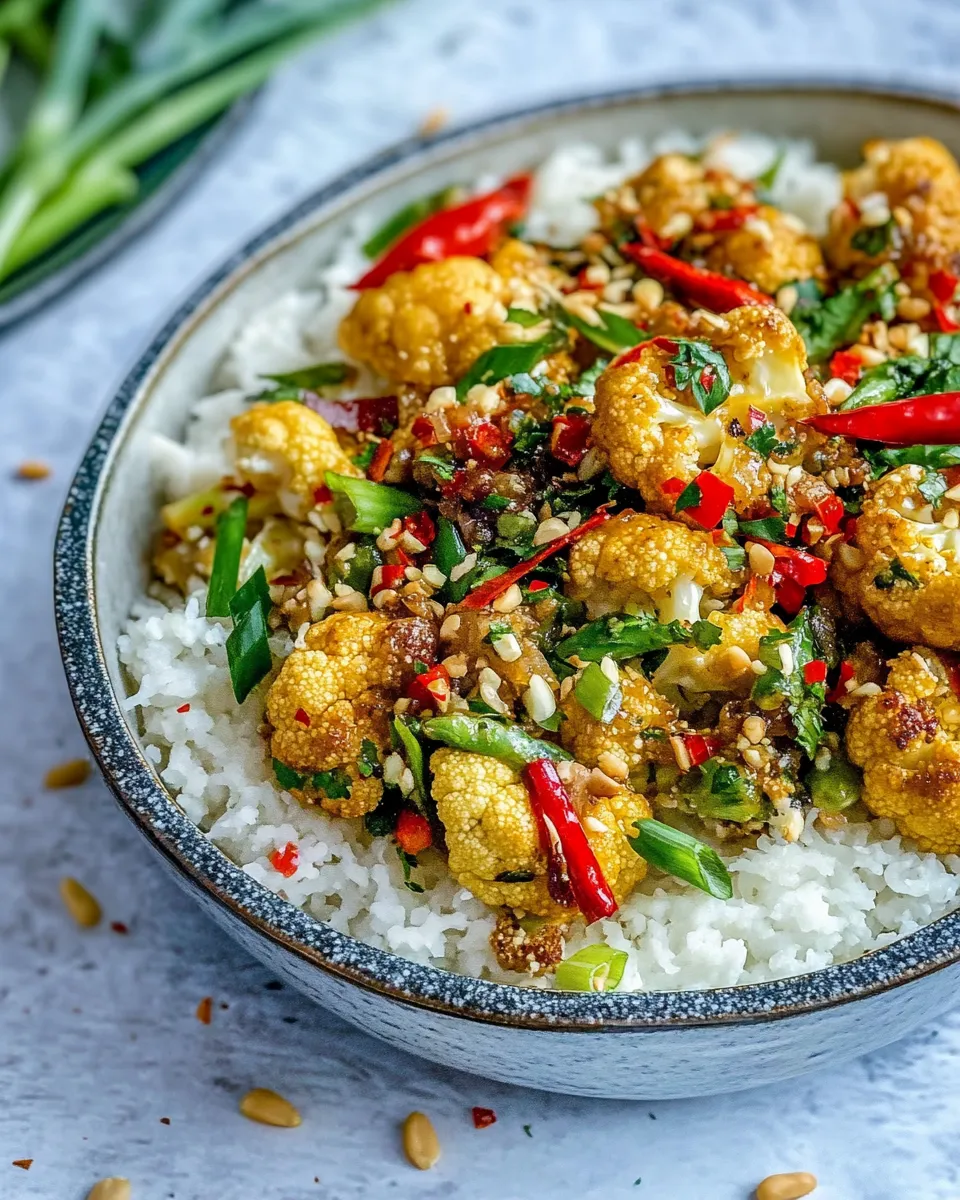
Are you ready to take your taste buds on a flavor-packed adventure? If you’re a fan of dishes that balance savory, spicy, and a little bit of sweetness, then Kung Pao Cauliflower is the dish for you. This vibrant and nutritious meal is a fantastic twist on the traditional Kung Pao chicken, offering a delightful plant-based alternative that doesn’t skimp on flavor. With crispy cauliflower, hearty chickpeas, and crunchy peanuts, this dish is as satisfying as it is delicious. Let’s dive into the world of Kung Pao Cauliflower and discover how to whip up this culinary delight!
The Upside of Kung Pao Cauliflower
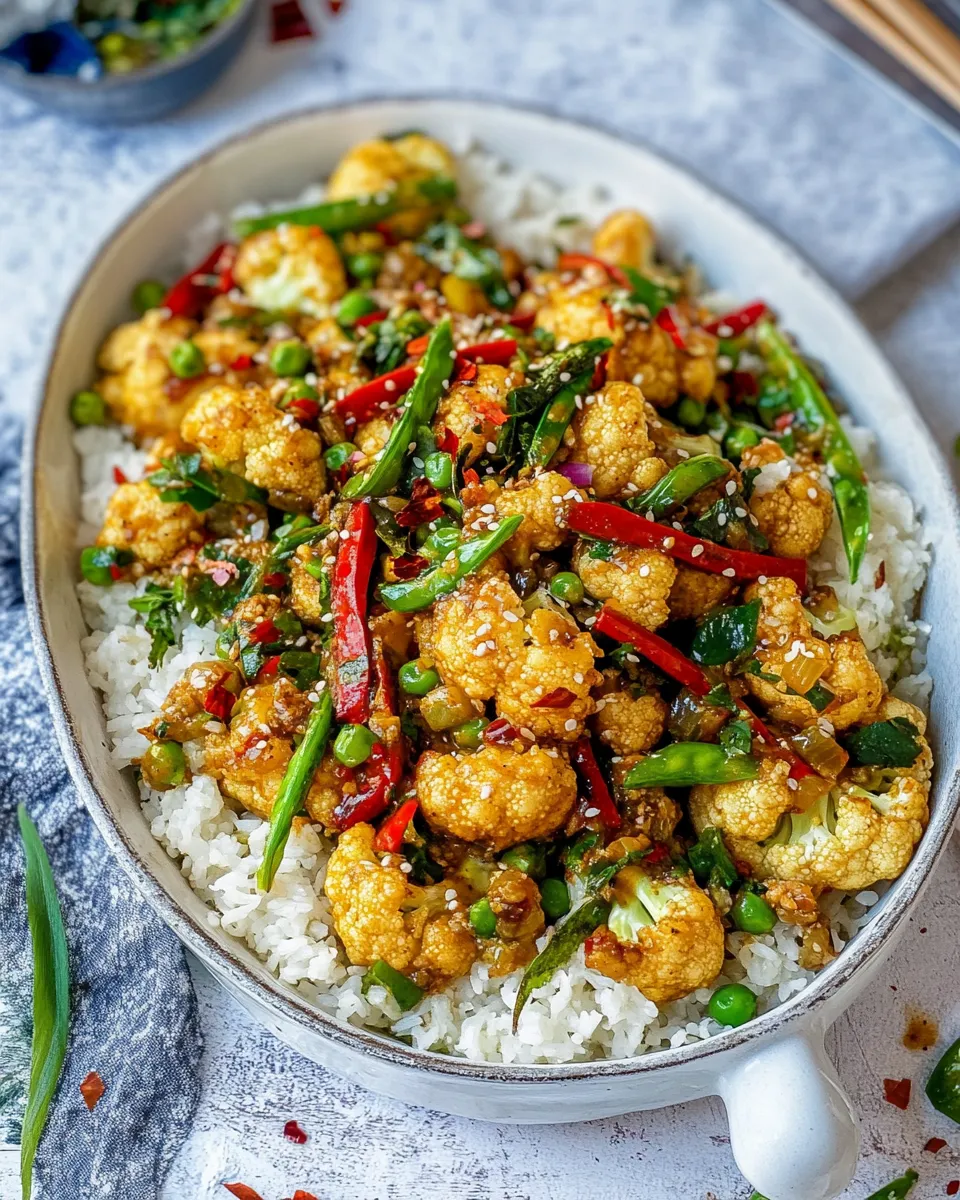
Kung Pao Cauliflower is not just a treat for your taste buds; it’s also loaded with health benefits. This dish is a fantastic source of plant-based protein, fiber, and essential vitamins. Cauliflower, the star of the show, is low in calories and rich in antioxidants, making it a great choice for those looking to maintain a healthy lifestyle. By incorporating chickpeas and green beans, you’re adding even more nutrition, ensuring that each bite is as wholesome as it is flavorful. Plus, it’s a one-pan wonder, which means less cleanup for you!
What’s in the Bowl
To create this scrumptious Kung Pao Cauliflower, you’ll need the following ingredients:
- 21 oz Cauliflower – cut into bite-sized florets
- 5 oz Green beans – trimmed and cut into 1-inch pieces
- 1 cup Chickpeas (canned) – drained and rinsed
- 1 Onion – diced
- 2 cloves Garlic – minced
- 2 Tbsp Vegetable oil – for sautéing
- 4 Tbsp Soy sauce – use tamari to make it gluten-free
- 2 Tbsp Cane sugar – or vegan honey for sweetness
- 1 cup Vegetable broth – to enhance flavor
- 1 Tbsp Rice vinegar – for a tangy kick
- 2 Tbsp Corn starch – to thicken the sauce
- 1 tsp Ginger powder – for warmth
- 1 cup Dry roasted peanuts – for crunch
- 1 tsp Hot chili powder or flakes – adjust to taste
- Salt and Pepper – to taste
Toolbox for This Recipe
Before we get cooking, let’s gather our essential tools:
- Large skillet or wok – for sautéing the ingredients
- Cutting board and knife – for chopping vegetables
- Measuring cups and spoons – for accuracy in ingredients
- Spatula or wooden spoon – for stirring
- Mixing bowl – for combining the sauce ingredients
Stepwise Method: Kung Pao Cauliflower
Step 1: Prepare the Sauce
In a mixing bowl, combine the soy sauce, cane sugar, vegetable broth, rice vinegar, corn starch, ginger powder, and hot chili powder. Stir well until the sugar and corn starch dissolve completely. Set this aside to let the flavors meld.
Step 2: Sauté the Aromatics
Heat the vegetable oil in a large skillet or wok over medium-high heat. Add the diced onion and minced garlic, stirring frequently until the onion becomes translucent and fragrant, about 3-4 minutes.
Step 3: Add the Cauliflower and Green Beans
Add the cauliflower florets and green beans to the skillet. Sauté for about 5-7 minutes, or until the cauliflower is tender and slightly golden.
Step 4: Incorporate Chickpeas
Add the drained chickpeas to the skillet, stirring to combine all the ingredients. Cook for another 2-3 minutes until the chickpeas are heated through.
Step 5: Pour in the Sauce
Pour the prepared sauce over the sautéed vegetables and chickpeas. Stir well to coat everything in the sauce. Allow it to simmer for about 5 minutes, or until the sauce thickens.
Step 6: Add Peanuts and Season
Stir in the dry roasted peanuts and season with salt and pepper to taste. Cook for an additional minute, allowing the peanuts to warm up.
Step 7: Serve and Enjoy!
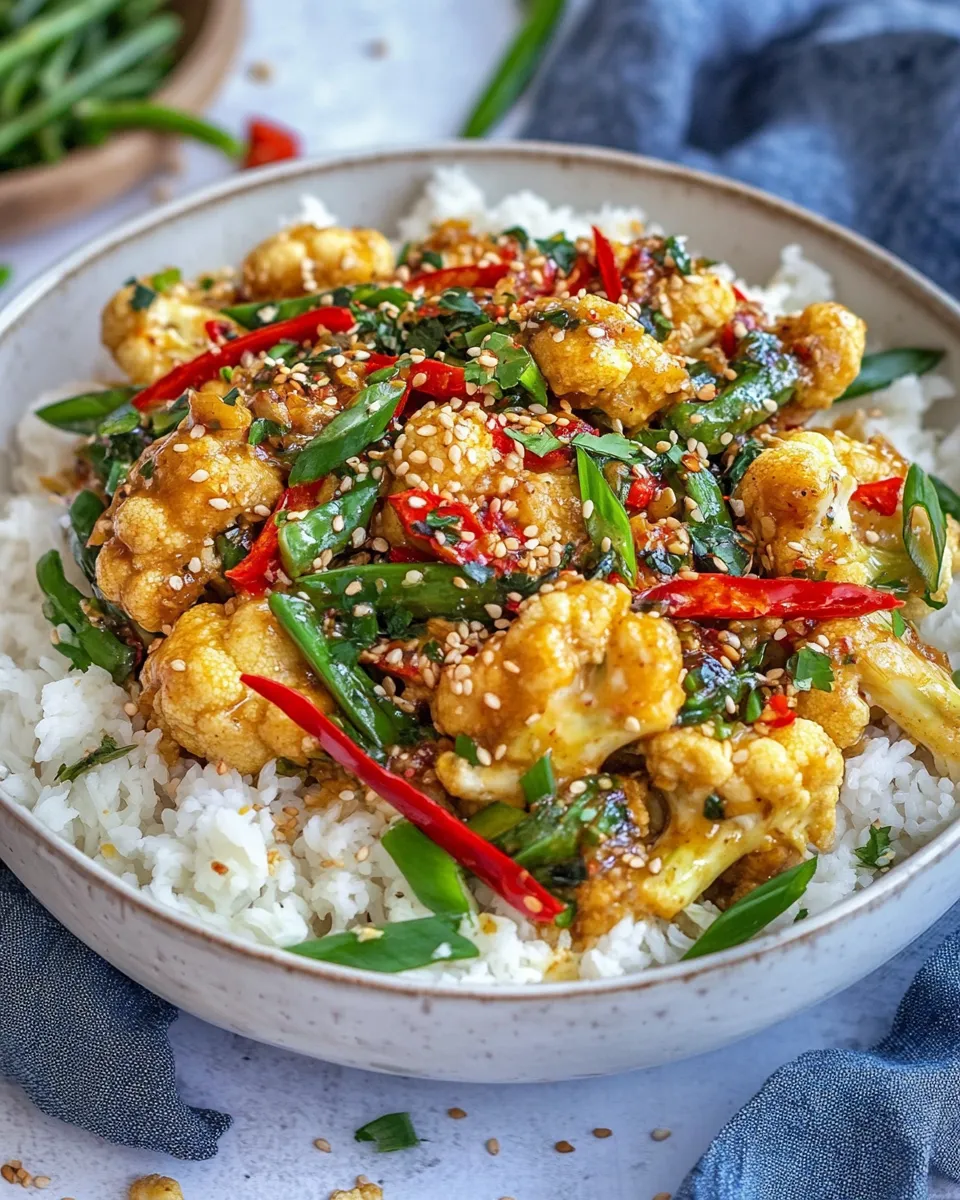
Remove the skillet from the heat and transfer the Kung Pao Cauliflower to a serving dish. Enjoy it hot, garnished with extra peanuts or green onions if desired.
Better-for-You Options
If you’re looking to make your Kung Pao Cauliflower even healthier, consider these alternatives:
- Use low-sodium soy sauce to reduce sodium intake.
- Substitute coconut sugar for cane sugar for a lower glycemic index.
- Incorporate more vegetables such as bell peppers or carrots for added nutrition.
- Swap out the peanuts for sunflower seeds if you have nut allergies.
Behind the Recipe
This Kung Pao Cauliflower recipe is inspired by the rich flavors of traditional Kung Pao chicken, which originated from Sichuan cuisine. The dish typically features a combination of chicken, peanuts, and vegetables in a spicy sauce. By swapping in cauliflower and chickpeas, we create a vegetarian version that maintains the essence of the original while being packed with plant-based goodness. The result is a vibrant, satisfying dish that can be enjoyed on its own or served over rice or quinoa for a complete meal.
Save It for Later
Not ready to feast on your Kung Pao Cauliflower just yet? No problem! Here are some tips to save it for later:
- Store leftovers in an airtight container in the fridge for up to 3 days.
- Reheat in the microwave or on the stovetop, adding a splash of water or broth to prevent drying out.
- This dish can also be frozen for up to a month; just be sure to cool it completely before freezing.
Popular Questions
Can I make Kung Pao Cauliflower ahead of time?
Yes! You can prepare Kung Pao Cauliflower ahead of time and store it in the fridge. Just reheat it when you’re ready to serve.
Is this recipe spicy?
The level of spiciness can be adjusted based on your preference. Feel free to add more or less hot chili powder or flakes to suit your taste!
Can I substitute the chickpeas with another protein?
Absolutely! You can use other plant-based proteins such as tofu or tempeh instead of chickpeas for a different texture and flavor.
What can I serve with Kung Pao Cauliflower?
This dish pairs wonderfully with steamed rice, quinoa, or even noodles. You can also serve it alongside a fresh salad for a complete meal.
Before You Go
Now that you have the ins and outs of making Kung Pao Cauliflower, it’s time to get cooking! This dish is not only a flavorful addition to your meal rotation but also a versatile recipe that can be adjusted to your liking. Whether you serve it over rice, enjoy it as a standalone dish, or add your favorite veggies, you’re in for a delicious treat. So grab your ingredients, fire up that stove, and let the savory aromas fill your kitchen. Happy cooking and bon appétit!
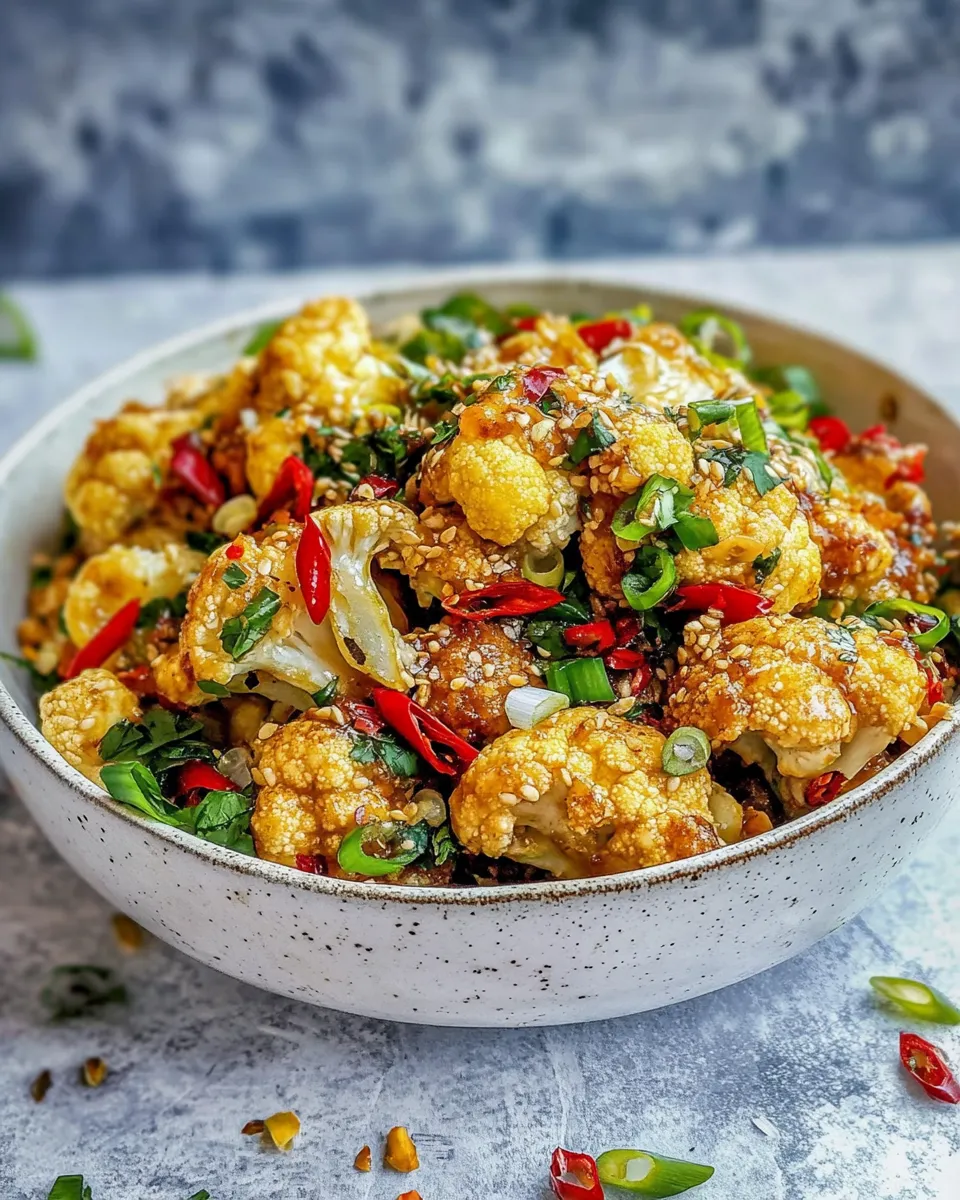
Kung Pao Cauliflower
Equipment
- Large Skillet or Wok
- Cutting board and knife
- Measuring cups and spoons
- Spatula or wooden spoon
- Mixing Bowl
Ingredients
- 21 oz Cauliflower cut into bite-sized florets
- 5 oz Green beans trimmed and cut into 1-inch pieces
- 1 cup Chickpeas (canned) drained and rinsed
- 1 Onion diced
- 2 cloves Garlic minced
- 2 Tbsp Vegetable oil for sautéing
- 4 Tbsp Soy sauce use tamari to make it gluten-free
- 2 Tbsp Cane sugar or vegan honey for sweetness
- 1 cup Vegetable broth to enhance flavor
- 1 Tbsp Rice vinegar for a tangy kick
- 2 Tbsp Corn starch to thicken the sauce
- 1 tsp Ginger powder for warmth
- 1 cup Dry roasted peanuts for crunch
- 1 tsp Hot chili powder or flakes, adjust to taste
- Salt and Pepper to taste
Instructions
Stepwise Method: Kung Pao Cauliflower
- In a mixing bowl, combine the soy sauce, cane sugar, vegetable broth, rice vinegar, corn starch, ginger powder, and hot chili powder. Stir well until the sugar and corn starch dissolve completely. Set this aside to let the flavors meld.
- Heat the vegetable oil in a large skillet or wok over medium-high heat. Add the diced onion and minced garlic, stirring frequently until the onion becomes translucent and fragrant, about 3-4 minutes.
- Add the cauliflower florets and green beans to the skillet. Sauté for about 5-7 minutes, or until the cauliflower is tender and slightly golden.
- Add the drained chickpeas to the skillet, stirring to combine all the ingredients. Cook for another 2-3 minutes until the chickpeas are heated through.
- Pour the prepared sauce over the sautéed vegetables and chickpeas. Stir well to coat everything in the sauce. Allow it to simmer for about 5 minutes, or until the sauce thickens.
- Stir in the dry roasted peanuts and season with salt and pepper to taste. Cook for an additional minute, allowing the peanuts to warm up.
- Remove the skillet from the heat and transfer the Kung Pao Cauliflower to a serving dish. Enjoy it hot, garnished with extra peanuts or green onions if desired.
Notes
- Use low-sodium soy sauce to reduce sodium intake.
- Substitute coconut sugar for cane sugar for a lower glycemic index.
- Add more vegetables like bell peppers or carrots for extra nutrition.
- Swap peanuts for sunflower seeds if you have nut allergies.
- Store leftovers in an airtight container in the fridge for up to 3 days or freeze for up to a month.