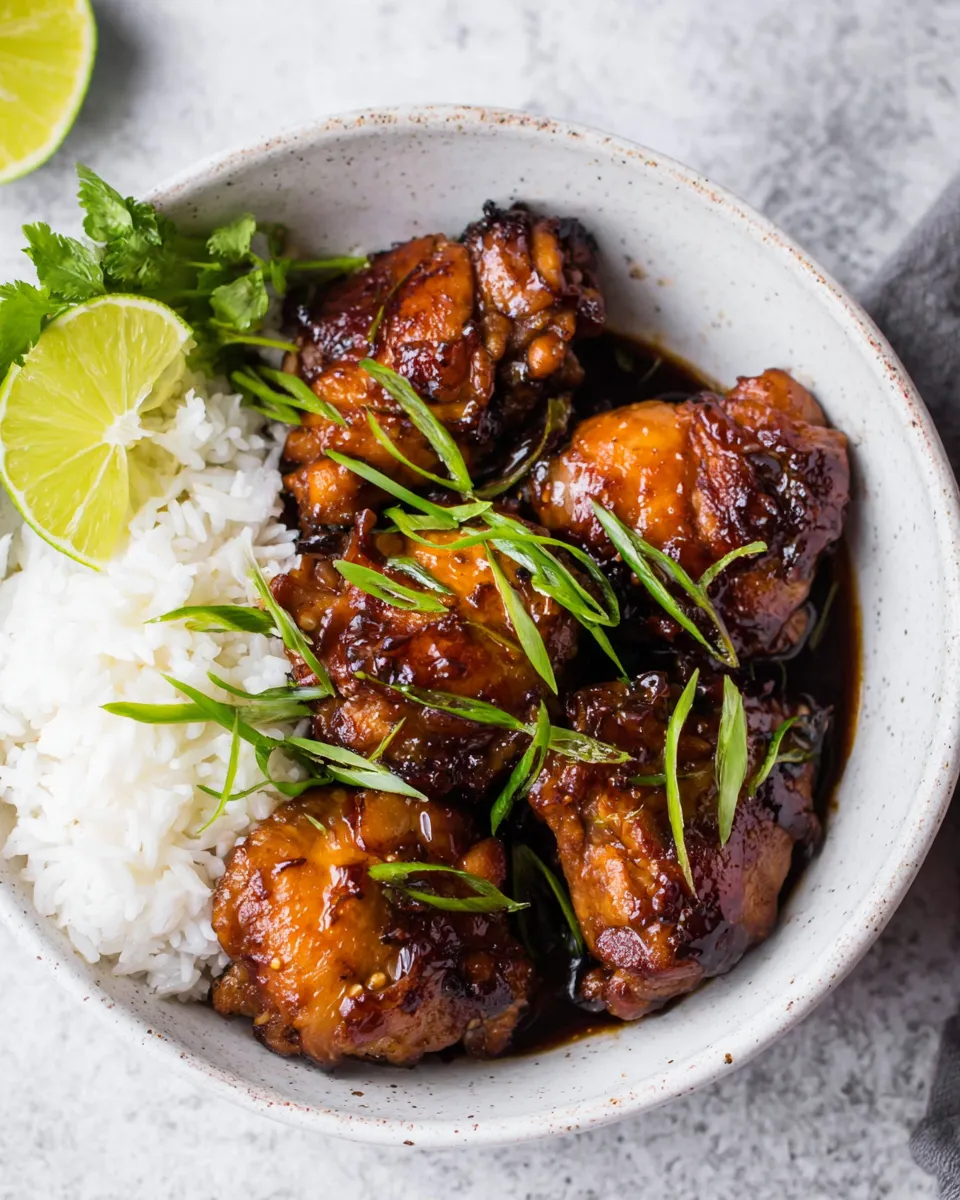
There’s a reason this sticky, savory chicken keeps finding its way into my weeknight rotation: it’s fast, satisfying, and layered with bright, aromatic flavors that feel special without demanding a lot of hands-on time. These Soy Ginger Chicken Thighs are glossy, sweet-umami bites finished with nutty sesame and a burst of scallion. They make an easy dinner on rice, noodles, or a crisp salad and are perfect for meal prep because the sauce only improves after a day or two in the fridge.
Why this recipe works
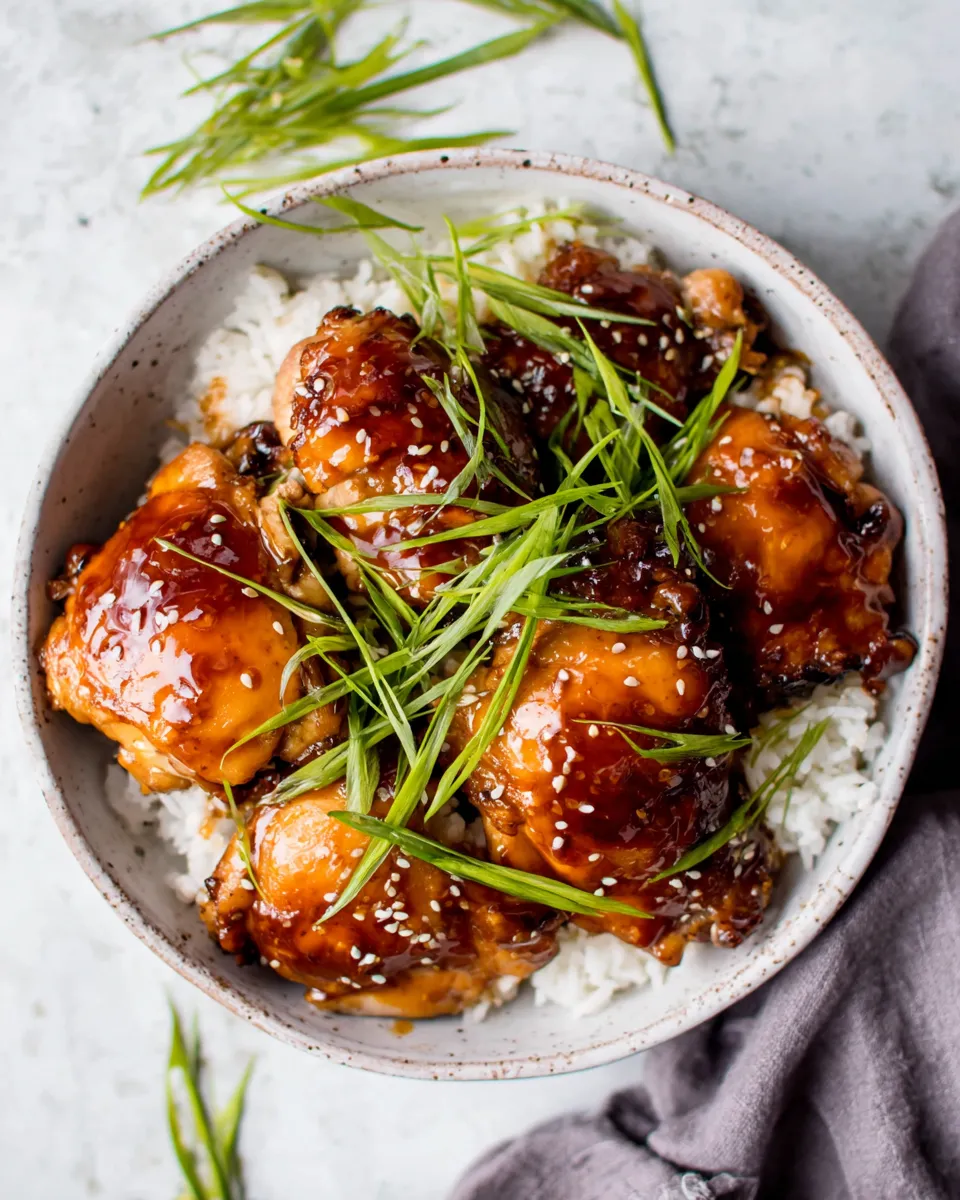
We’re using boneless, skinless chicken thighs — they stay tender and forgiving of high heat and quick cooking. A simple marinade-style sauce made from low sodium soy sauce, rice vinegar, and brown sugar balances saltiness, bright acidity, and caramelized sweetness. Fresh grated ginger and minced garlic keep the profile vibrant and aromatic, while a small amount of toasted sesame oil and sambal oelek introduces toasty depth and a gentle heat. That combination creates a true weeknight hero: minimal fuss, maximum flavor.
Ingredients
- 1.5 pounds skinless boneless chicken thighs
- sesame seeds optional, for garnish
- scallions thinly sliced, optional for garnish
- ½ cup low sodium soy sauce
- ¼ cup rice vinegar
- ¼ cup brown sugar
- 1 tablespoon grated ginger root
- 4 garlic cloves minced
- 1 tsp toasted sesame oil
- ½ tsp sambal oelek
Equipment
- Large mixing bowl or shallow dish for marinating
- Measuring cups and spoons
- Grater or microplane for ginger
- Large skillet (preferably nonstick or cast iron)
- Tongs or a spatula
- Small bowl for sauce straining or finishing, if desired
Prep notes
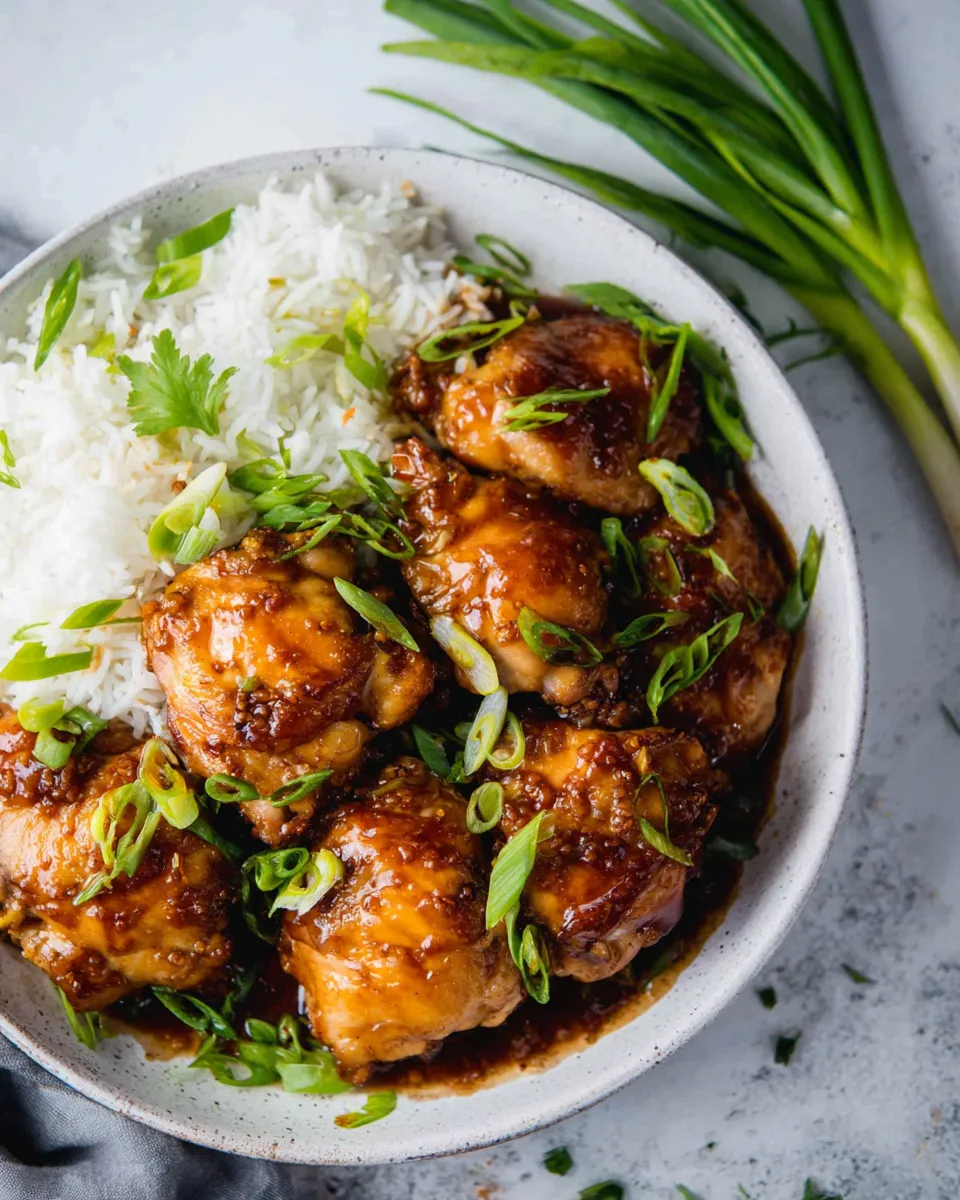
Bring the chicken to room temperature for about 15–20 minutes before you cook. This helps it sear more evenly. Mince the garlic and grate the ginger so they blend into the sauce smoothly. If you prefer a milder heat level, reduce the sambal oelek; for more spice, increase it carefully—half a teaspoon gives a gentle kick in this recipe.
Flavor variations
- Ginger-forward: add an extra ½ tablespoon grated ginger for a zingier bite.
- Garlicky: swap 1 clove for 2 more if you love garlic.
- Sweet and sticky: broil for 1–2 minutes at the end to caramelize the glaze—watch closely so it doesn’t burn.
- Herb finish: top with cilantro instead of scallions for a fresh contrast.
Serving suggestions
These Soy Ginger Chicken Thighs are great served over steamed jasmine rice or sticky rice, tossed with noodles and a handful of blanched greens, or sliced cold over a salad for a lunch-box option. Leftovers reheat well in a skillet over medium heat until warmed through; add a splash of water if the pan gets dry to loosen the sauce.
Step-by-step directions
Below is a clear, stepwise version of the recipe directions rewritten for precision and ease of use. The ingredient amounts are unchanged and the order follows the original approach.
- Make the sauce: In a medium bowl, whisk together ½ cup low sodium soy sauce, ¼ cup rice vinegar, ¼ cup brown sugar, 1 tablespoon grated ginger root, 4 garlic cloves minced, 1 tsp toasted sesame oil, and ½ tsp sambal oelek until the sugar mostly dissolves and the mixture is uniform.
- Combine the chicken and sauce: Place 1.5 pounds skinless boneless chicken thighs into a large mixing bowl or shallow dish. Pour the prepared sauce over the chicken, turning each piece so it is evenly coated. If time allows, cover and marinate in the refrigerator for at least 15 minutes and up to 2 hours. If you’re short on time you can cook immediately; the flavors will be slightly less infused but still delicious.
- Heat your skillet: Warm a large skillet over medium-high heat until hot. Add a small drizzle of neutral oil if your skillet is not well-seasoned; this helps to get a good sear. The goal is a hot surface so the chicken browns quickly without stewing.
- Sear the chicken: Remove the chicken from the marinade, letting excess sauce drip back into the bowl. Place the thighs in the hot skillet in a single layer, making sure not to crowd the pan; you may need to work in batches depending on the size of your skillet. Cook without moving for about 4–5 minutes to develop a golden-brown crust on the first side.
- Flip and add sauce back: Flip each chicken thigh with tongs or a spatula and pour roughly half of the reserved marinade into the skillet around the chicken (not directly on top of very hot oil), letting it bubble and begin to reduce. Cook the second side for another 4–5 minutes, or until the internal temperature reaches 165°F (75°C) and the chicken is cooked through. If working in batches, transfer cooked pieces to a plate and return remaining chicken to the pan, repeating the same process and adding more of the reserved sauce as needed.
- Reduce the sauce to glaze: Once all chicken pieces are cooked, pour any remaining reserved marinade into the skillet. Reduce the heat to medium-low and simmer the sauce, stirring occasionally, until it thickens to a glossy glaze that coats the back of a spoon—about 2–4 minutes. If the glaze becomes too thick, add a tablespoon of water at a time to loosen it slightly.
- Coat the chicken: Return the seared chicken thighs to the skillet (if you moved them earlier) and spoon the hot glaze over each piece, turning the thighs so they are well coated and shiny with sauce. Allow the chicken to cook together with the glaze for 1 more minute so the flavors meld and the sauce clings to the meat.
- Finish and garnish: Transfer the glazed chicken to a serving platter or individual plates. Sprinkle sesame seeds over the top and scatter thinly sliced scallions for a fresh, crisp contrast. Serve immediately with your choice of rice, noodles, or vegetables.
Timing
- Active prep time: 15–20 minutes
- Marinating (optional): 15 minutes to 2 hours
- Cook time: 12–18 minutes total, depending on batch size and skillet
- Total: As little as 30 minutes from start to finish when marinating time is minimal
Tips for success
- Dry the chicken briefly with paper towels before searing to encourage a better crust; the marinade provides flavor and moisture, but excess wetness will steam the meat instead of browning it.
- Use a heavy-bottomed skillet for even heat distribution. Cast iron or a good nonstick skillet works well.
- Keep an eye on the sugar in the glaze as it reduces; high heat can quickly take it from caramelized to burnt.
- Adjust the saltiness by choosing low sodium soy sauce (as listed) and tasting the glaze before serving; a splash more rice vinegar can brighten the sauce if it feels too heavy when reduced.
Make-ahead and storage
Cooked Soy Ginger Chicken Thighs will keep in an airtight container in the refrigerator for up to 3–4 days. Reheat gently in a skillet over medium-low heat to preserve moisture, adding a teaspoon or two of water if the sauce has thickened too much. For meal prep, serve with separate containers of rice and steamed vegetables to keep textures at their best.
Notes on ingredients and swaps
- Low sodium soy sauce: This keeps the final dish balanced and prevents it from becoming overly salty as the sauce reduces.
- Rice vinegar: Its mild acidity lifts the sauce. If you don’t have rice vinegar, apple cider vinegar is a passable substitute at the same quantity, but the flavor will be slightly different.
- Brown sugar: Provides that deep caramel character. Light or dark both work; dark will be richer.
- Toasted sesame oil: A little goes a long way—use the specified 1 teaspoon for a toasty finish without overpowering the other flavors.
- Sambal oelek: For an alternative chili paste, you can use gochujang or Sriracha, but stick to similar quantities to maintain balance.
Final thoughts
These Soy Ginger Chicken Thighs are the kind of recipe that earns repeat appearances because they deliver big flavor with minimal fuss. The balance of savory soy, sharp rice vinegar, warm ginger, and sweet brown sugar makes for a glaze that clings to tender thighs and tastes delicious any night of the week. Try them with sticky rice, a quick cucumber salad, or even wrapped in lettuce for a lighter take.
Enjoy: a simple, flavor-forward dish that’s approachable enough for a weeknight and pretty enough for guests.
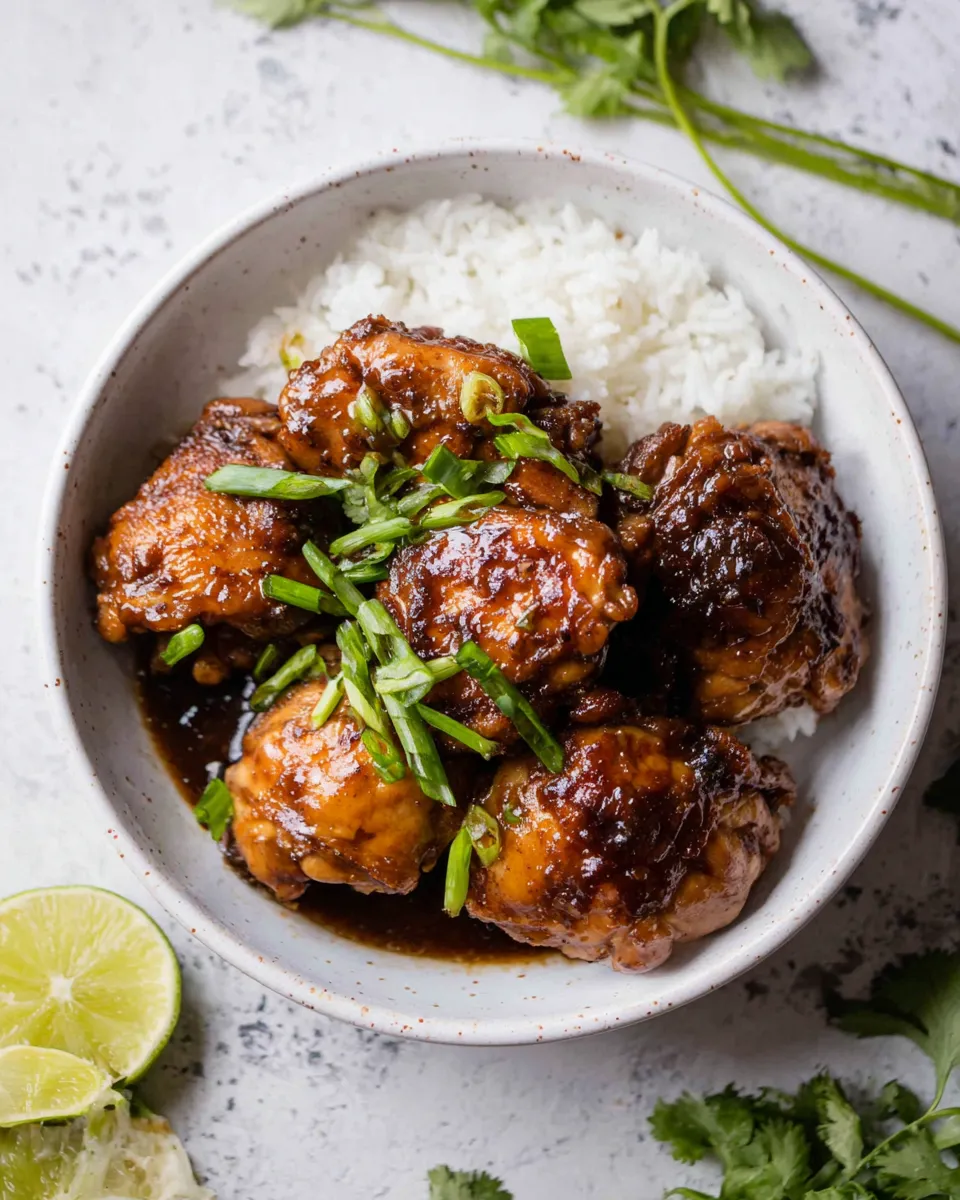
Soy Ginger Chicken Thighs
Equipment
- Baking Sheet
- Foil or parchment paper
- shallow bowl or dish
- Small Bowl
- Whisk or fork
- Measuring cups and spoons
- Instant Read Thermometer
Ingredients
- 1.5 pounds skinless boneless chicken thighs
- 1/2 cup low sodium soy sauce
- 1/4 cup rice vinegar
- 1/4 cup brown sugar
- 1 tablespoon grated ginger root
- 4 cloves garlic minced
- 1 teaspoon toasted sesame oil
- 1/2 teaspoon sambal oelek
- sesame seeds optional, for garnish
- scallions thinly sliced, optional for garnish
Instructions
- Preheat the oven to 425°F (220°C). Line a baking sheet with foil or parchment and set aside.
- In a bowl, whisk together 1/2 cup low sodium soy sauce, 1/4 cup rice vinegar, 1/4 cup brown sugar, 1 tablespoon grated ginger, 4 minced garlic cloves, 1 teaspoon toasted sesame oil, and 1/2 teaspoon sambal oelek until the sugar dissolves.
- Reserve 1/4 cup of the sauce in a small bowl for basting, then pour the remaining sauce over the 1.5 pounds of chicken thighs in a shallow dish, turning to coat and submerge as much as possible.
- Marinate the chicken for at least 30 minutes, or refrigerate overnight for more flavor.
- When ready to cook, transfer the chicken to the prepared baking sheet, letting excess marinade drip off. Discard any remaining marinade from the bowl.
- Bake the chicken at 425°F for 10 minutes.
- Remove the baking sheet, brush the chicken with the reserved 1/4 cup sauce, then return to the oven and bake 5 more minutes.
- Brush the chicken with sauce again, then bake an additional 3–5 minutes, or until an instant-read thermometer inserted into the thickest part reads 165°F; total baking time should be about 18–25 minutes.
- When done, remove from the oven and sprinkle with sesame seeds and sliced scallions if desired, then serve.
Notes
- Line the baking sheet with foil or parchment to prevent the sugar in the sauce from burning.
- Total cooking time for thighs is typically 18–25 minutes.
- Brush the reserved sauce on the chicken at the 10- and 15-minute marks for a glossy glaze.
- You can marinate the chicken overnight for deeper flavor.