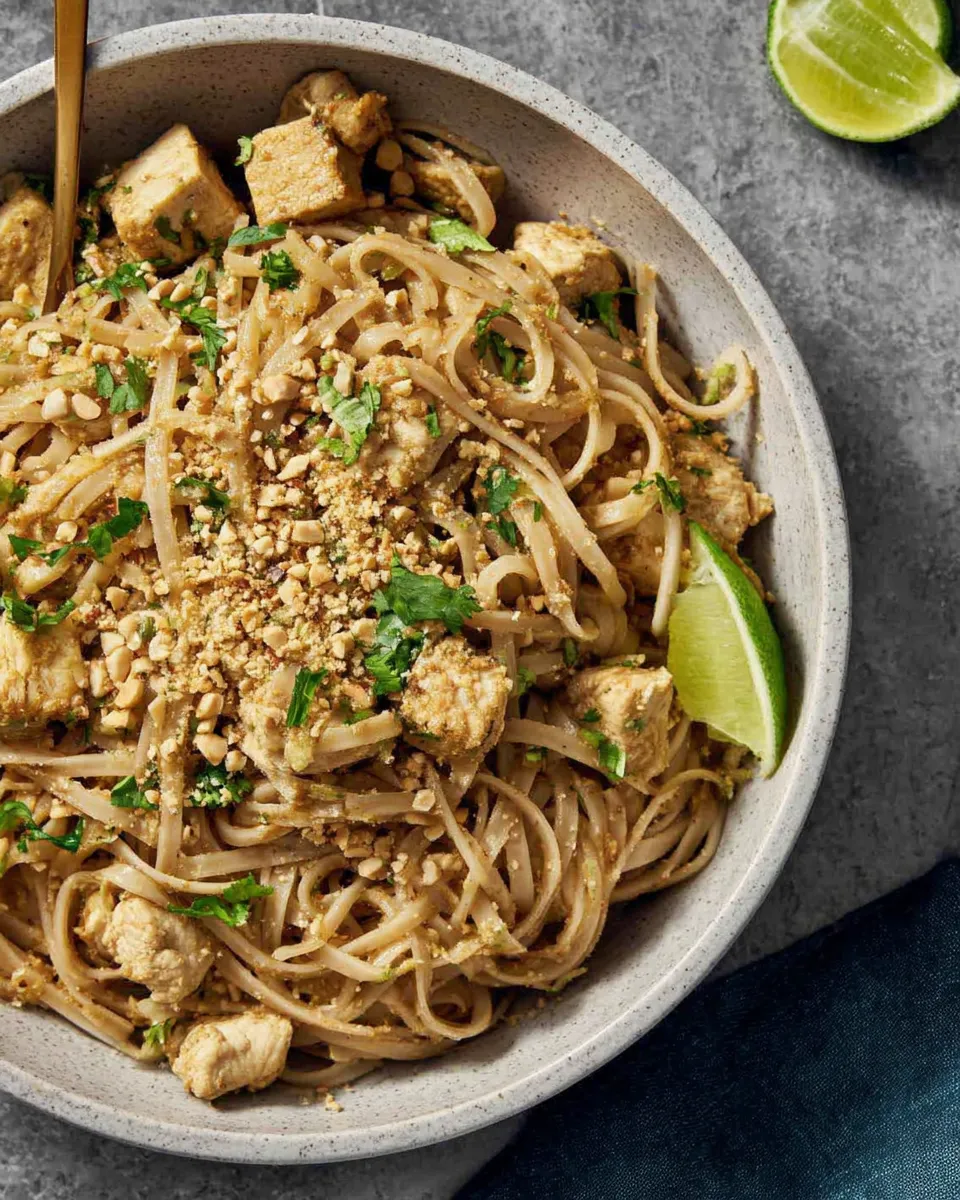
There’s something irresistible about a steaming plate of stir-fried noodles that balances sweet, salty, tangy, and crunchy in every bite. This Pad Thai With Chicken & Tofu is a home-cook’s dream: familiar ingredients, bright flavors, and a texture parade of tender rice noodles, succulent minced chicken, soft cubes of tofu, and crisp bean sprouts. It’s an easy weeknight dinner that feels special enough for guests, too. The sauce is a simple mix of tamarind, brown sugar, and savory sauces that glaze each strand of noodle without being cloying. Follow these steps and you’ll have a plate of Pad Thai that’s satisfying, colorful, and perfectly balanced.
Why you’ll love this Pad Thai With Chicken & Tofu
- Quick to make: about 30–40 minutes from start to finish.
- Balanced flavors: sweet brown sugar, tangy tamarind, and umami from the sauces.
- Textural contrast: soft noodles, crisp bean sprouts, and crunchy peanuts.
- Layered protein: minced chicken and cubed tofu for a hearty meal.
- Customizable heat: serve with ground chili for people who love spice.
Ingredients
- 7 oz rice noodles
- 2 tbsp tamarind puree
- 3 tbsp brown sugar
- 3 ½ tbsp fish sauce
- 2 ½ tbsp oyster sauce
- 5 tbsp vegetable oil
- 3 ½ garlic cloves
- 1 onion, sliced
- 7 oz chicken breast, minced
- 3 eggs, slightly whisked
- 2 ½ cups bean sprouts
- 1 cup tofu, cut into small cubes
- ½ cup green onions, sliced
- ½ cup roasted peanuts, chopped
- lime wedges
- ground chili, optional
- extra bean sprouts for serving
Prep & tips before you cook
Read through the recipe first to have everything ready. Pad Thai comes together quickly, so mise en place is essential: soak and drain the rice noodles, mix the sauce, cube the tofu, mince the chicken, and slice the onion and green onions. Use a wide, hot skillet or wok so you can toss without crowding. If you like a little char on the noodles, cook in batches and avoid steaming them by keeping the pan hot.
Pad Thai With Chicken & Tofu — Step-by-step directions
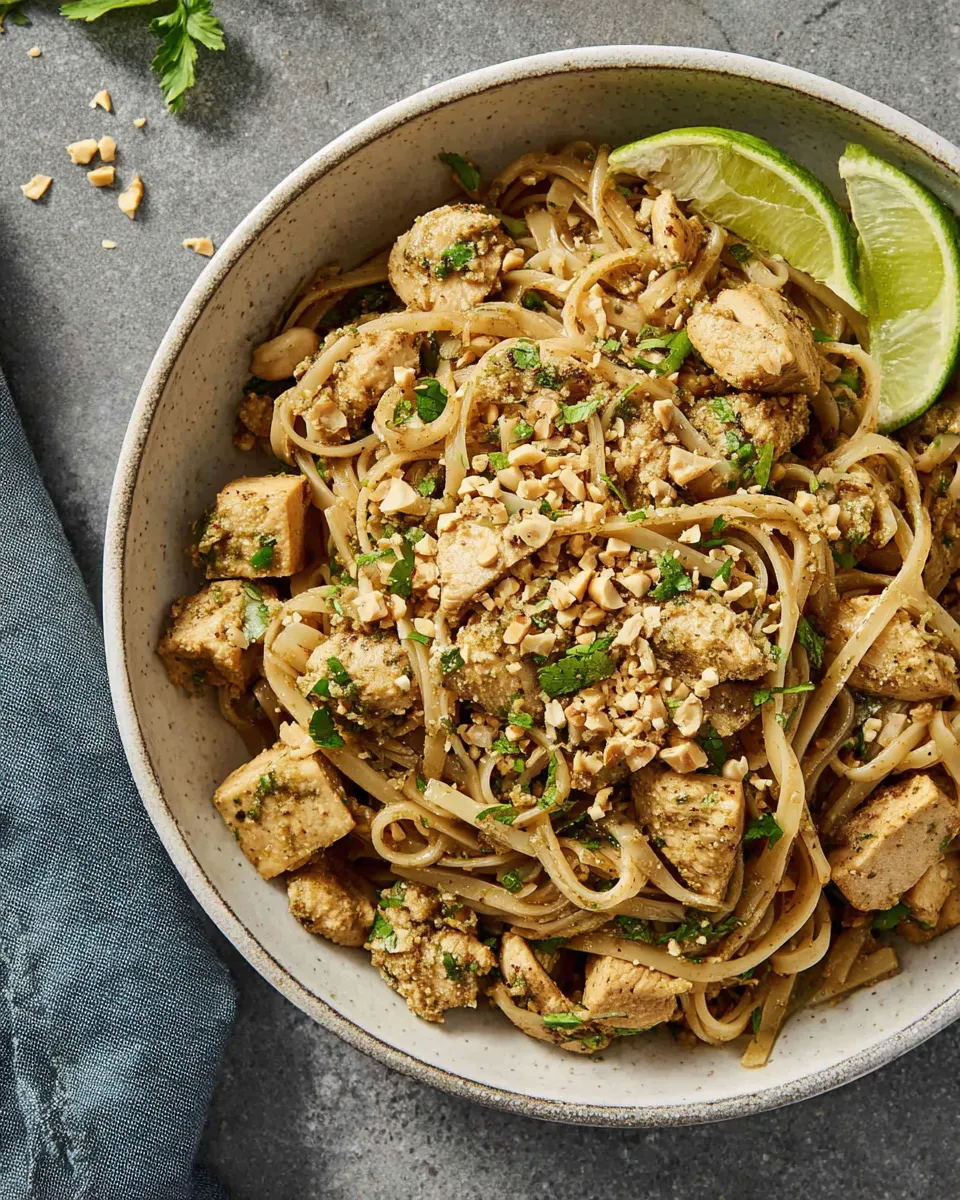
Follow these step-by-step directions that rewrite the original method into clear, actionable steps while keeping the ingredient amounts and order intact.
- Soak the rice noodles. Place the 7 oz rice noodles in a large bowl and cover with warm water. Let them soak until pliable but still slightly firm to the bite (al dente), about 20–30 minutes depending on noodle thickness. Drain well and set aside.
- Mix the sauce. In a small bowl, whisk together 2 tbsp tamarind puree, 3 tbsp brown sugar, 3 ½ tbsp fish sauce, and 2 ½ tbsp oyster sauce until the sugar dissolves and the mixture is cohesive. Taste and adjust quickly if necessary: it should be sweet-tangy with savory depth.
- Prepare aromatics and proteins. Finely mince 3 ½ garlic cloves. Slice 1 onion into thin slices. Cube 1 cup tofu into small, even pieces. Mince 7 oz chicken breast finely so it cooks quickly and evenly. Lightly whisk 3 eggs in a small bowl and set aside.
- Heat the pan and cook the tofu. Warm a large wok or wide skillet over medium-high heat. Add 3 tbsp of the 5 tbsp vegetable oil. When the oil shimmers, add the cubed tofu in a single layer and fry until golden on at least two sides, about 3–4 minutes per side depending on size. Remove the tofu to a plate and reserve.
- Sauté garlic and onion. Add the remaining 2 tbsp vegetable oil to the same pan. Reduce the heat slightly if the pan is smoking. Add the minced 3 ½ garlic cloves and sliced onion, stirring constantly until fragrant and the onion softens, about 1–2 minutes. Avoid burning the garlic—quick, steady stirring keeps it aromatic rather than bitter.
- Cook the minced chicken. Push the sautéed onion and garlic to the side of the pan, then add the minced chicken in the cleared space. Let it sear briefly, then stir and break it apart, cooking until no longer pink and lightly browned, about 3–4 minutes.
- Scramble the eggs in the pan. Move the chicken mixture slightly to create a small well in the center of the pan. Pour in the slightly whisked 3 eggs. Let them set briefly, then scramble gently, mixing them with the chicken and onions until just cooked through.
- Add noodles and sauce. Increase the heat to high. Add the drained rice noodles to the pan and pour the prepared tamarind-brown sugar-fish-oyster sauce over the top. Using tongs or a wide spatula, toss everything together briskly to coat the noodles evenly with sauce. Keep the pan hot so the noodles pick up a little char but don’t stick; if the noodles seem dry, splash a teaspoon of water at a time to loosen them.
- Return tofu and fold in sprouts and green onions. Add the fried tofu back into the pan along with 2 ½ cups bean sprouts and ½ cup sliced green onions. Toss gently but thoroughly so the bean sprouts stay crisp and the green onions soften slightly, about 1 minute.
- Finish and plate. Once everything is heated and well combined, remove the pan from the heat. Stir in or sprinkle ½ cup chopped roasted peanuts for crunch. Taste and adjust seasoning: add more fish sauce for saltiness, brown sugar for sweetness, or a squeeze of lime if you prefer extra tang.
- Serve with garnishes. Divide the Pad Thai With Chicken & Tofu among plates. Serve with lime wedges on the side, extra bean sprouts for extra crunch, and ground chili if desired for heat. Encourage diners to squeeze lime over their portions and add chili to taste.
Serving suggestions
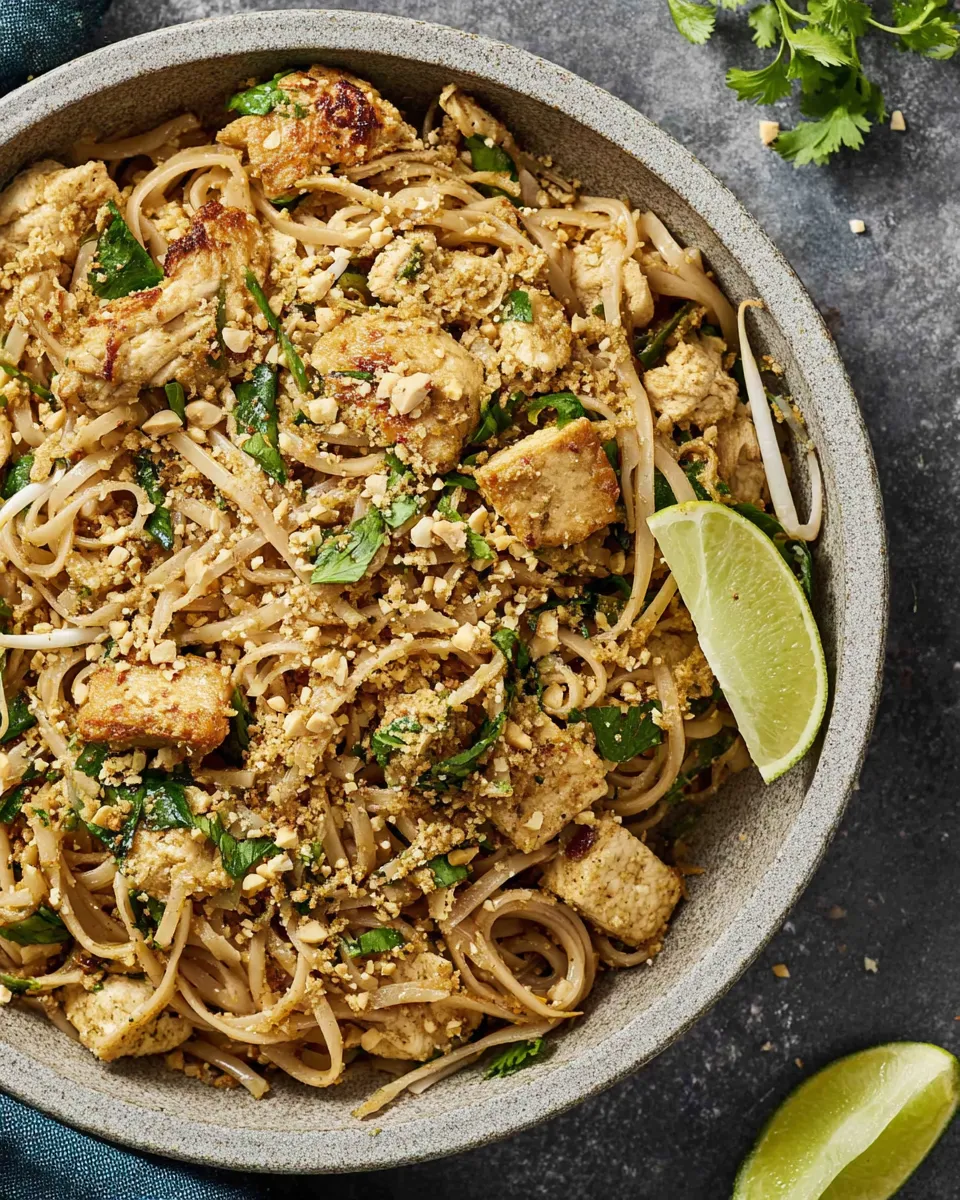
Pad Thai is delightful on its own, but these small additions elevate the experience:
- Extra chopped roasted peanuts for nuttiness.
- Fresh cilantro or Thai basil if you like more herbal brightness.
- Thinly sliced cucumber on the side to refresh the palate.
- A wedge of lime at the table so everyone can adjust acidity.
Make-ahead and storage
If you need to prepare ahead, keep the components separate. Store the noodles and sauce refrigerated for up to 2 days, and reheat in a hot skillet with a splash of oil and a teaspoon of water to revive the texture. Cooked Pad Thai is best eaten within 1–2 days; it will soften over time but still tastes good reheated. Leftover tofu and chicken will keep well when stored promptly in airtight containers.
Ingredient swaps and dietary notes
This version uses minced chicken and tofu for a balanced protein profile. If you prefer a different protein, try shrimp (cook briefly) or firm tempeh. For a nut-free option, omit the peanuts and substitute toasted pumpkin seeds for crunch. The sauce is based on tamarind puree, brown sugar, fish sauce, and oyster sauce—these ingredients create the characteristic Pad Thai profile. If you avoid shellfish-based condiments, consider a soy-based alternative that provides similar savory depth. Adjust the seasoning to suit your taste.
Common mistakes and how to avoid them
- Overcooking noodles: Soak rice noodles until slightly firm; they will finish cooking in the pan. Oversoaked noodles become mushy.
- Burning the garlic: Keep garlic moving in the hot oil and lower heat if it starts to brown too fast.
- Too much sauce: Use the sauce amounts listed, then taste. It’s easier to add more than to correct an overly sauced batch.
- Crowding the pan: Use a big wok or cook in batches for a clean stir-fry technique and better texture.
Flavor notes
Tamarind puree provides bright acidity and a gentle fruity tang that’s essential to authentic Pad Thai flavor. Brown sugar balances that tang with warm sweetness. Fish sauce and oyster sauce bring savory umami that makes the dish craveable. Lime wedges at the table add an immediate lift, and the contrast of soft noodles with crunchy peanuts and crisp bean sprouts is a hallmark of a well-executed Pad Thai.
Final thoughts
This Pad Thai With Chicken & Tofu recipe hits all the right notes: quick, flavorful, and texturally exciting. It’s approachable for cooks of any skill level and highly adaptable, so you can scale it up for a crowd or tweak it to suit kids and spice lovers alike. The step-by-step directions keep the flow simple and predictable, making this version a reliable go-to for busy weeknights or casual dinner parties. When you plate it up, don’t forget the lime and extra peanuts—those small finishing touches turn a good bowl into an unforgettable one.
Enjoy your cooking and the delicious results. Squeeze a lime, sprinkle some chili if you dare, and dig into a warm, flavorful plate of Pad Thai With Chicken & Tofu.
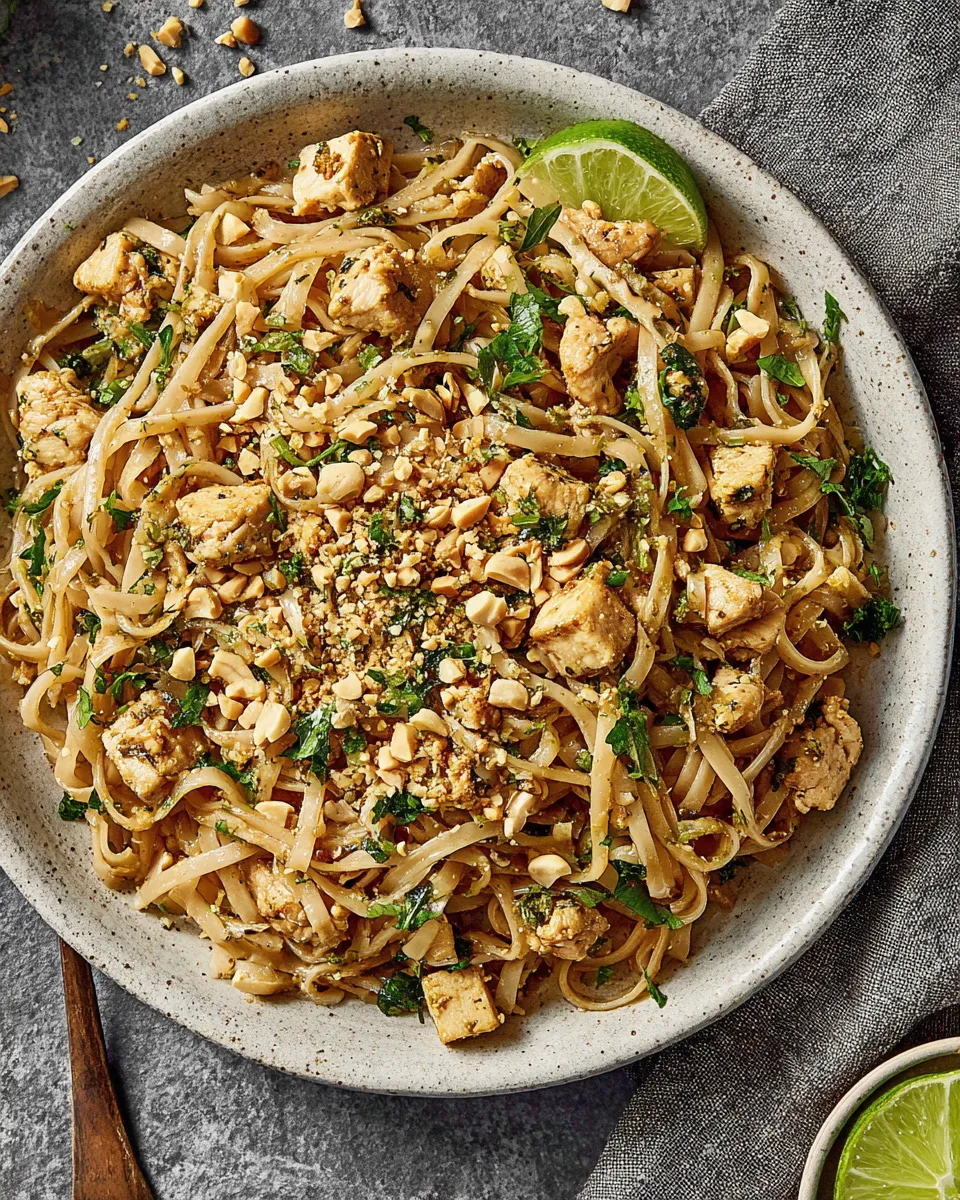
Pad Thai With Chicken & Tofu
Equipment
- Large Bowl
- Wok or large skillet
- Spatula or tongs
- Measuring Spoons
- Knife
- Cutting Board
- Colander
Ingredients
- 7 oz rice noodles
- 2 tbsp tamarind puree
- 3 tbsp brown sugar
- 3.5 tbsp fish sauce
- 2.5 tbsp oyster sauce
- 5 tbsp vegetable oil
- 3.5 cloves garlic, minced
- 1 onion, sliced
- 7 oz chicken breast, minced
- 3 eggs, slightly whisked
- 2.5 cups bean sprouts
- 1 cup tofu, cut into small cubes
- 0.5 cup green onions, sliced
- 0.5 cup roasted peanuts, chopped
- lime wedges
- ground chili (optional)
- extra bean sprouts for serving
Instructions
- Place the rice noodles in a large bowl and cover with boiling water; soak for 5 minutes only, then drain and rinse under cold water to stop cooking.
- In a small bowl, whisk together tamarind puree, brown sugar, fish sauce, and oyster sauce until the sugar dissolves.
- Heat the vegetable oil in a wok or large skillet over high heat until shimmering.
- Add the minced garlic and sliced onion to the hot wok and stir-fry about 30 seconds until fragrant.
- Add the minced chicken and cook, stirring, about 2 minutes until mostly cooked through.
- Push the chicken to one side of the wok, pour the whisked eggs into the empty side, scramble until just set, then combine with the chicken.
- Add the tofu, drained noodles, and bean sprouts, then pour the sauce over; toss gently for 1–2 minutes until the sauce is absorbed and noodles are heated through.
- Stir in the sliced green onions and half of the chopped peanuts, toss briefly, then remove from heat.
- Serve immediately topped with the remaining peanuts, lime wedges, extra bean sprouts, and a sprinkle of ground chili if desired.
Notes
- Do not over-soak the noodles; they should be pliable but still slightly firm.
- Keep the wok very hot for a quick sear and glossy finish.
- Taste the sauce before adding to adjust sweetness or tang as needed.
- Gently lift and turn the noodles with tongs so they don’t break.
- Substitute shrimp or use all tofu to make it vegetarian.