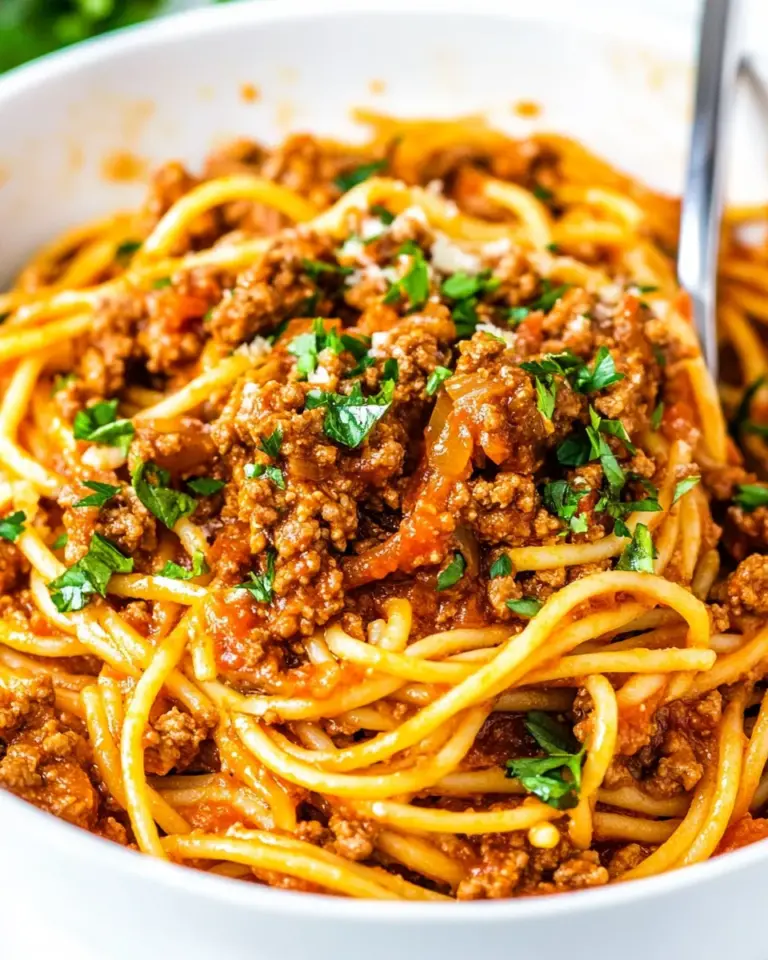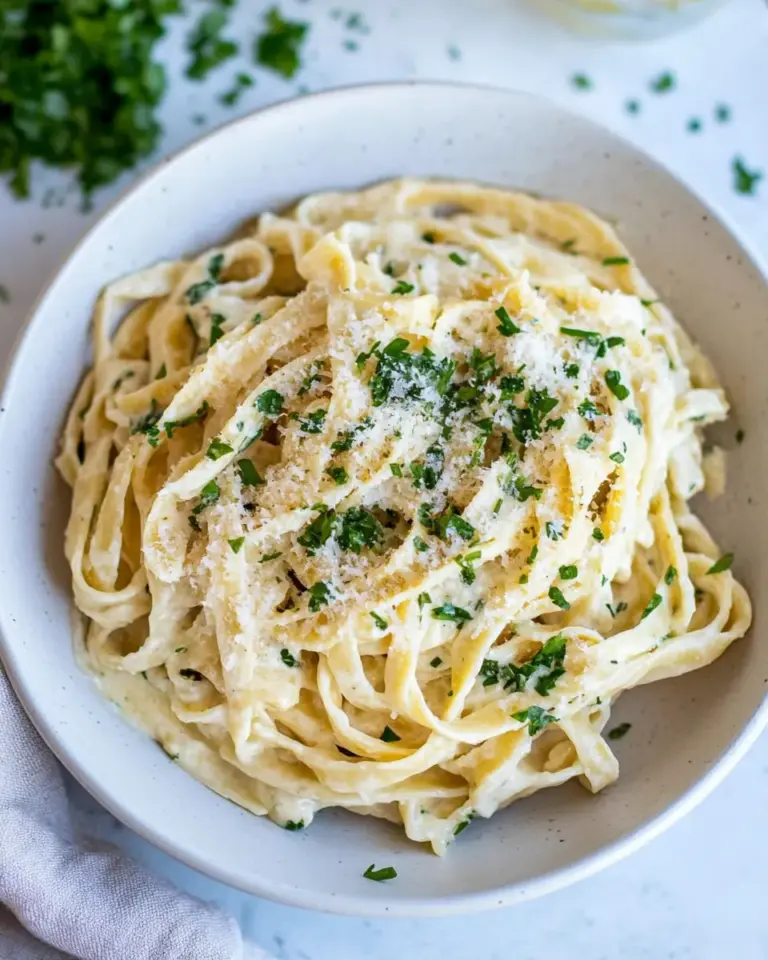
There’s comfort in a big bowl of tomato-scented pasta: simple, satisfying, and easy to love. This Spaghetti Marinara recipe takes pantry-friendly cans of tomatoes, a handful of fresh parsley, and everyday pantry seasonings to create a bright, vibrant sauce that clings to long strands of pasta. It’s the kind of weeknight meal you can make with one pan for the sauce and a pot for the noodles, and it comes together in under an hour.
Below you’ll find a full ingredient list, clear step-by-step directions written for home cooks of any skill level, and a few tips to make this Spaghetti Marinara shine every time. The ingredient amounts are unchanged from the original recipe source; I’ve adjusted only the phrasing so everything reads smoothly in practical kitchen terms.
Ingredients
- 16 ounces spaghetti, or other pasta
- 2 tablespoons olive oil
- 1 onion, finely diced
- 6 cloves garlic, pressed
- 29 ounces stewed tomatoes (2 cans)
- 28 ounces crushed tomatoes (1 large can)
- 2 tablespoons tomato paste
- 1 cup chicken broth
- 1/3 cup chopped fresh parsley
- 1 tablespoon granulated sugar
- 2 teaspoons dried oregano
- 1 teaspoon dried basil
- 2 teaspoons salt
- 1 teaspoon ground black pepper
About This Recipe
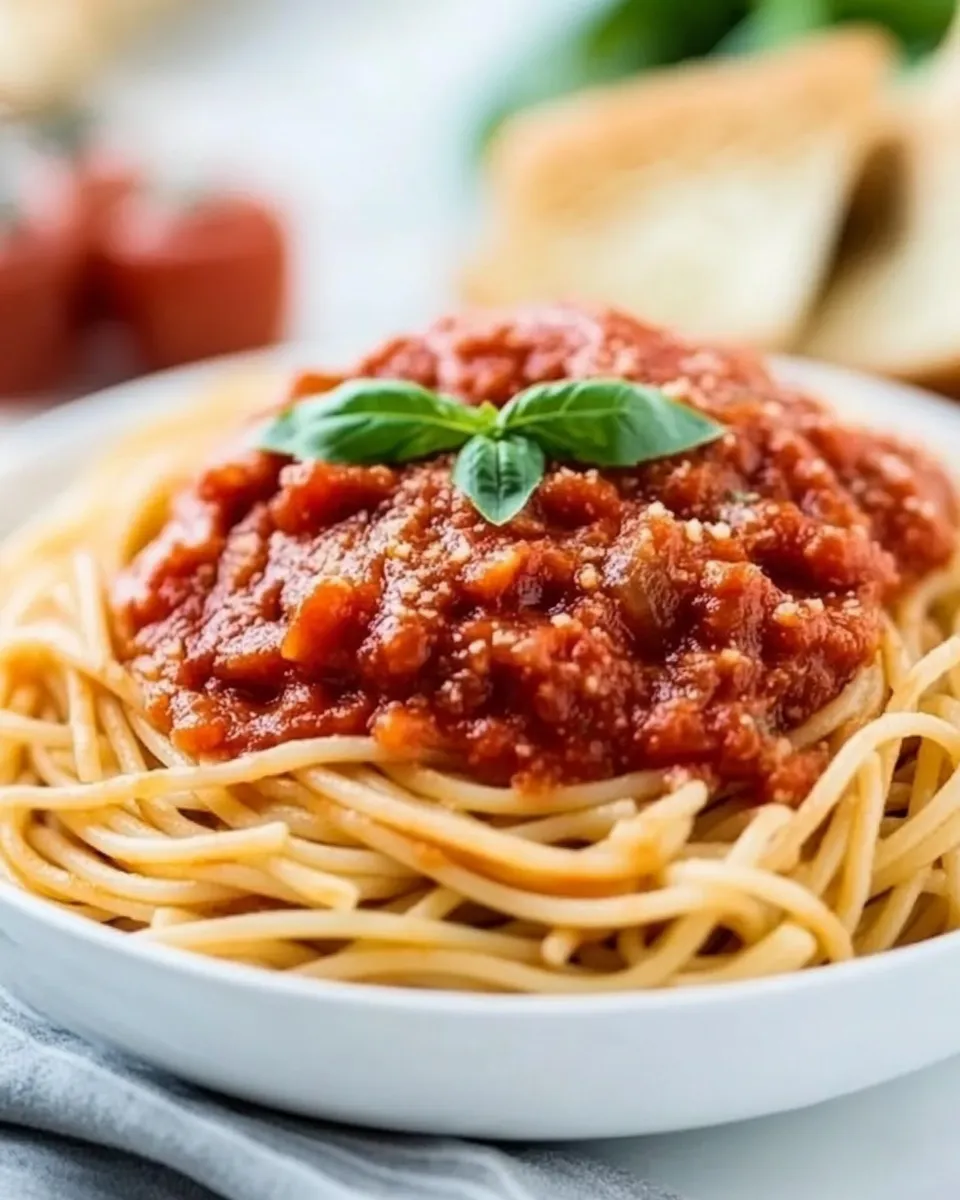
This Spaghetti Marinara is built on bright tomatoes and a fragrant base of onion and garlic. Using both stewed and crushed tomatoes creates a pleasing balance of texture: the crushed tomatoes yield a smooth, silky body while the stewed tomatoes add little pockets of concentrated tomato flavor. The tomato paste deepens the sauce’s color and richness, and a splash of chicken broth loosens the sauce while contributing savory depth. Fresh parsley finishes the dish with a green, herbaceous lift.
Because the ingredient list calls for chicken broth rather than vegetable stock, if you follow the list exactly the result will carry a gentle, savory depth. If you prefer a plant-based version you can substitute vegetable broth one-for-one; otherwise the instructions below preserve the original quantities and sequence to keep the recipe faithful and straightforward.
Equipment
- Large pot for cooking pasta
- Large skillet or saucepan for the sauce
- Wooden spoon or heatproof spatula
- Colander
- Measuring cups and spoons
Step-by-Step Directions
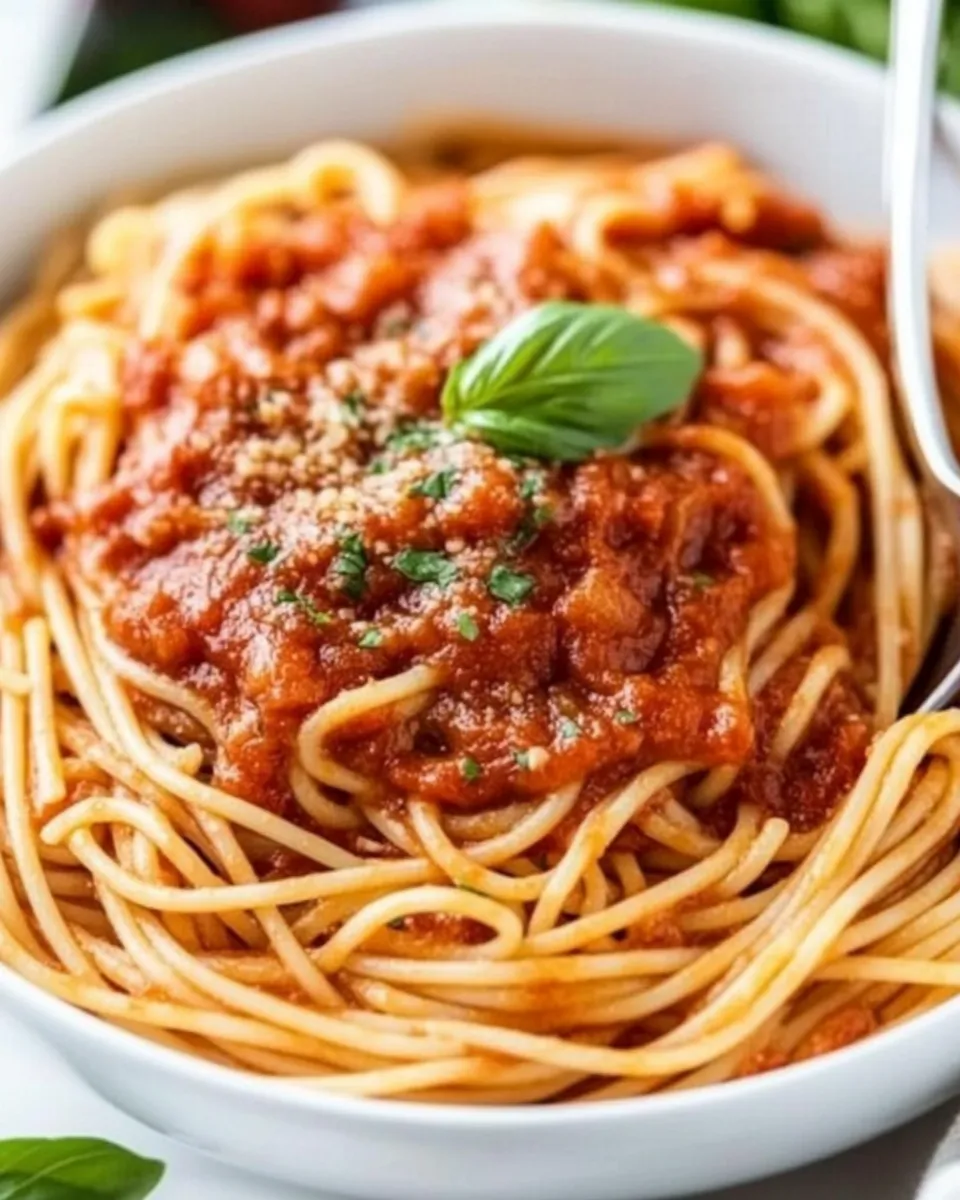
Follow these clear, ordered steps to make the Spaghetti Marinara. I’ve rewritten the directions to be concise and practical while keeping the same ingredient amounts and overall order as the source.
- Bring a large pot of salted water to a rolling boil over high heat. Add 16 ounces spaghetti (or another long pasta) and cook according to the package directions until al dente. Reserve about 1 cup of the pasta cooking water, then drain the pasta in a colander and set aside.
- While the pasta cooks, heat 2 tablespoons olive oil in a large skillet or saucepan over medium heat. Let the oil warm until it shimmers but does not smoke.
- Add 1 onion, finely diced, to the hot oil. Sauté, stirring occasionally, until the onion becomes translucent and soft, about 6 to 8 minutes. Lower the heat if the edges begin to brown too quickly; you want tender, sweet onion as the base for the sauce.
- Add 6 cloves garlic, pressed, to the skillet with the softened onion. Stir immediately and cook for 30 to 60 seconds until the garlic becomes fragrant. Be careful not to let the garlic burn, which can make it taste bitter.
- Pour in 29 ounces stewed tomatoes (two cans). Use a wooden spoon to break up any large tomato pieces so they integrate with the onion and garlic.
- Add 28 ounces crushed tomatoes (one large can) to the skillet. Stir to combine the crushed tomatoes with the stewed tomatoes, onion, and garlic so the sauce begins to come together.
- Spoon in 2 tablespoons tomato paste and stir thoroughly until the paste dissolves into the tomato mixture. This will deepen the sauce’s color, body, and savory concentration.
- Pour in 1 cup chicken broth and stir the sauce to incorporate it. The broth loosens the sauce and adds another layer of savory flavor; bring the mixture to a gentle simmer over medium-low heat.
- Stir in 1/3 cup chopped fresh parsley, 1 tablespoon granulated sugar, 2 teaspoons dried oregano, 1 teaspoon dried basil, 2 teaspoons salt, and 1 teaspoon ground black pepper. Mix well so the herbs and seasonings distribute evenly throughout the sauce.
- Reduce the heat to low and let the sauce simmer, uncovered, for 12–18 minutes. Stir occasionally to prevent sticking, and taste the sauce partway through to adjust seasoning if needed. The sugar helps balance acidity from the tomatoes while the herbs build classic Italian flavor.
- If the sauce becomes too thick, add a few tablespoons of the reserved pasta cooking water or additional chicken broth to reach the desired consistency. If it seems too thin, continue simmering until it reduces to your preferred thickness.
- Once the sauce has developed flavor and a comfortable consistency, return the drained spaghetti to the pot or transfer the pasta to the skillet. Toss the pasta gently in the sauce until each strand is coated. Add a splash of reserved pasta water if needed to help the sauce cling and to create a slightly silky finish.
- Serve the Spaghetti Marinara immediately, garnished with an extra sprinkle of chopped fresh parsley if desired. Season to taste with additional salt or pepper at the table.
Tips and Variations
- Onion color: Cook the onion until just translucent rather than deeply browned to emphasize sweetness over caramelized flavor. For a deeper, richer profile, allow the onion to brown slightly, but watch carefully to avoid burning.
- Garlic handling: Pressed garlic disperses more flavor quickly. If you prefer a milder garlic note, thinly slice the cloves instead and add them a bit earlier so they mellow as they cook.
- Herb swaps: Fresh basil can be used in place of the dried basil called for in the ingredients; add a handful of torn fresh basil leaves at the end of cooking for a bright finish. Keep the dried oregano and dried basil amounts the same if you use the fresh herbs in addition to or instead of dried—reduce the total dried-herb amounts by about one-third if substituting entirely with fresh herbs.
- Broth options: The recipe uses 1 cup of chicken broth to add savory depth. If you prefer a lighter or vegetarian-friendly sauce, use vegetable broth in the same amount.
- Make-ahead: The sauce can be prepared up to 3 days in advance and stored in the refrigerator. Reheat gently on the stovetop and add a splash of water or broth to loosen it before tossing with newly cooked pasta.
- Freezing: This marinara freezes well for up to 3 months. Thaw in the refrigerator overnight and reheat on the stovetop, adjusting seasoning before serving.
Serving Suggestions
This Spaghetti Marinara is classic and versatile. Serve it simply with a green salad and crusty bread to mop up every last bit of sauce. For a heartier plate, pair it with a side of roasted vegetables or a bowl of lemony steamed greens. For a restaurant-style finish, drizzle a little extra-virgin olive oil over each serving and top with freshly grated cheese, if you like.
Storing Leftovers
- Refrigerator: Store cooled leftover sauce in an airtight container for up to 3 days. Reheat on the stovetop over low heat, stirring occasionally.
- Freezer: Cool the sauce completely, pack it into freezer-safe containers, and freeze for up to 3 months. Thaw overnight in the refrigerator before reheating.
Why This Works
The secret to reliable Spaghetti Marinara is balance: acidity from the tomatoes, savoriness from the broth and tomato paste, and aromatic lift from onion, garlic, and parsley. Using both crushed and stewed tomatoes delivers texture without a lot of extra effort, while the small amount of sugar smooths the edges of the tomato acidity without making the sauce taste sweet. The recipe’s seasoning amounts are calibrated to pop on first bite while remaining easy to tweak at the end if you like more herb or more heat.
Final Notes
This Spaghetti Marinara is approachable, forgiving, and well-suited to both weeknight dinners and relaxed weekend meals. The directions above rewrite the original recipe into clear, sequential steps that match the ingredient list exactly, so you can follow along confidently in your kitchen. Whether you keep it minimalist or dress it up with fresh herbs and cheese, this tomato-forward pasta delivers comforting flavor with bright, clean finishes.
Enjoy the long strands of spaghetti coated in a vibrant, herby sauce—and don’t forget to save a little bread to sop up every last bit.
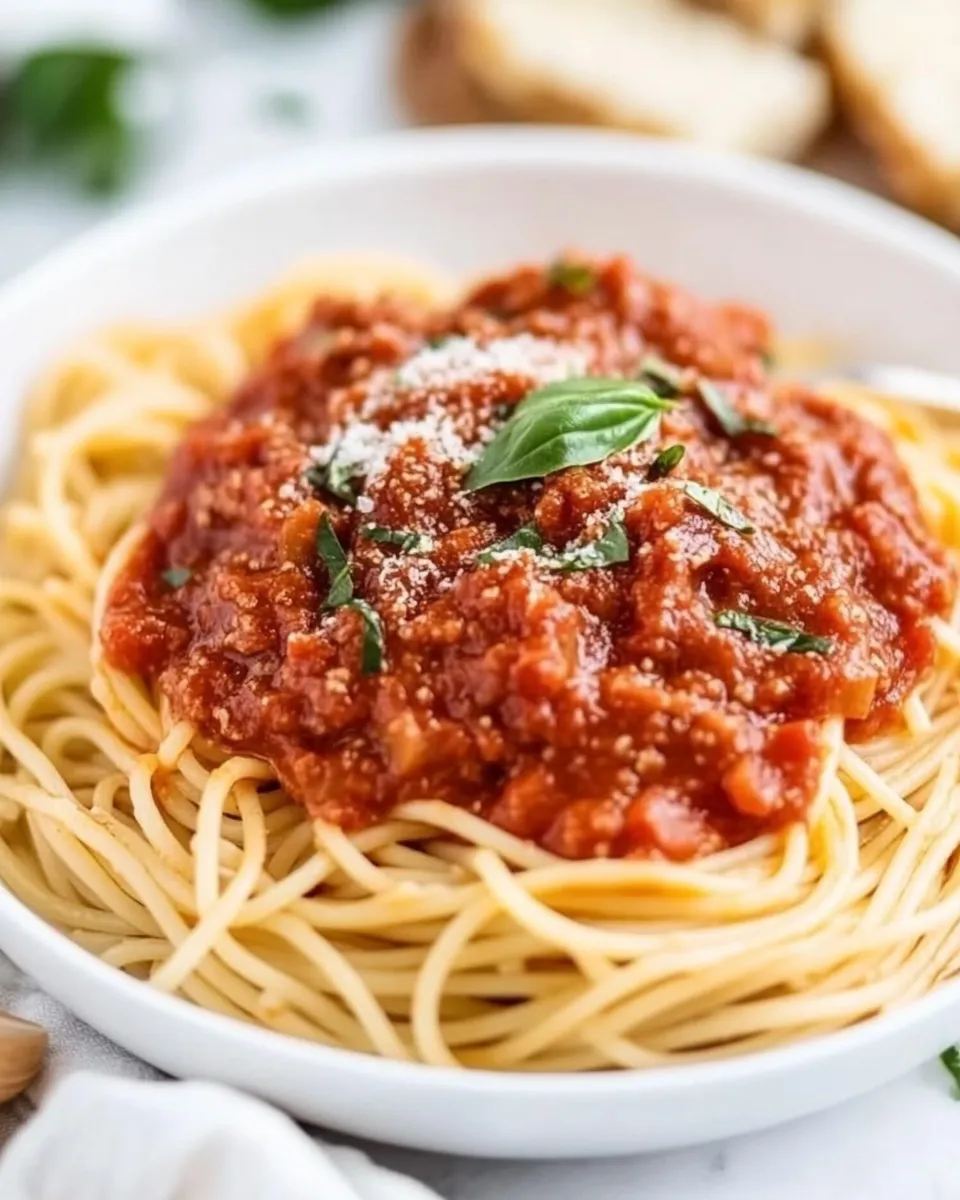
Spaghetti Marinara
Equipment
- Large Pot or Dutch Oven
- Wooden Spoon or Spatula
- Knife and cutting board
- Measuring cups and spoons
- Colander
- immersion blender (optional)
Ingredients
- 16 ounces spaghetti or other pasta
- 2 tablespoons olive oil
- 1 onion, finely diced
- 6 cloves garlic, pressed
- 29 ounces stewed tomatoes (about 2 cans)
- 28 ounces crushed tomatoes (1 large can)
- 2 tablespoons tomato paste
- 1 cup chicken broth
- 1/3 cup fresh parsley, chopped
- 1 tablespoon granulated sugar
- 2 teaspoons dried oregano
- 1 teaspoon dried basil
- 2 teaspoons salt
- 1 teaspoon ground black pepper
Instructions
- Heat the olive oil in a large pot or Dutch oven over medium heat.
- Add the finely diced onion and sauté until translucent, about 5 minutes.
- Add the pressed garlic and cook, stirring, for 30 to 60 seconds until fragrant.
- Stir in the stewed tomatoes, crushed tomatoes, tomato paste, chicken broth, chopped parsley, sugar, oregano, basil, salt, and black pepper until combined.
- Bring the sauce to a simmer, cover, and cook over low heat for 20 to 30 minutes, stirring occasionally; simmer longer (up to 2 hours) if desired for deeper flavor.
- Use an immersion blender to puree the sauce to your preferred texture, or leave it chunky by mashing larger pieces with a wooden spoon.
- Meanwhile, cook the spaghetti according to package directions until al dente, then drain in a colander.
- Add the drained pasta to the sauce and toss to combine, or serve the pasta plain and spoon the marinara over individual portions.
Notes
- Beef or vegetable broth can replace chicken broth.
- To store leftovers, cool and refrigerate in an airtight container for 3–5 days.
- For freezing, cool completely and freeze up to 6 months in a freezer-safe container.
- Thaw overnight in the refrigerator before reheating on the stove.
- This recipe yields about 8 servings and can be doubled or halved as needed.