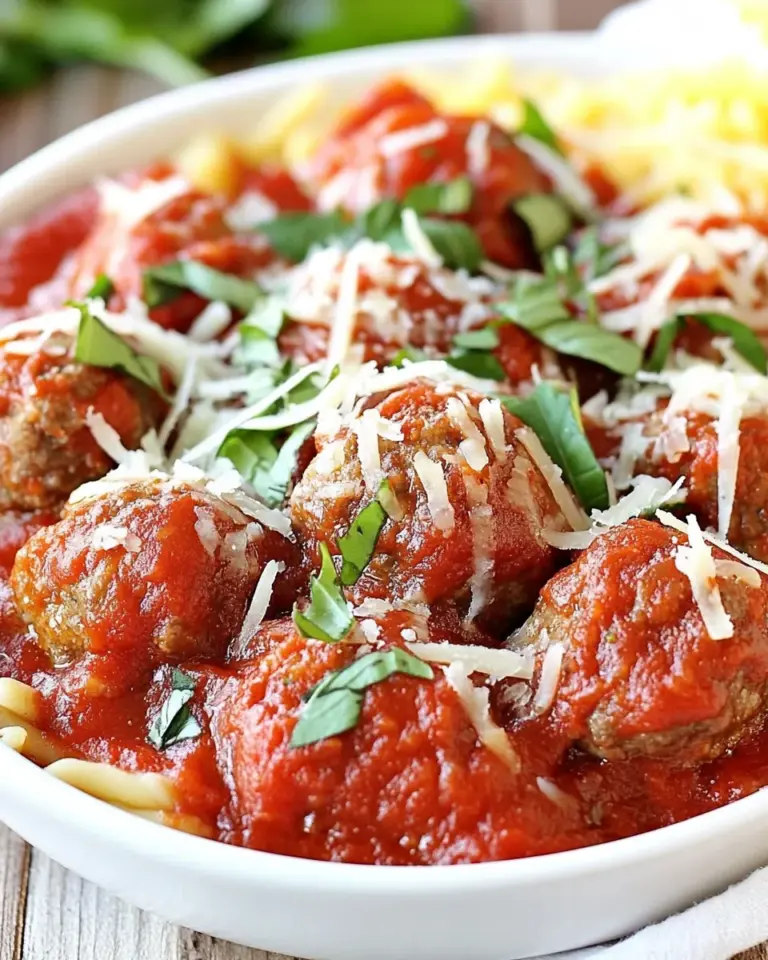
This is the kind of comfort food that takes you right back to the lunchroom trays, the warm steam rising from a slice of bread tucked beside a heaping scoop of sauce-soaked spaghetti. With pantry-friendly seasonings and simple, straightforward steps, this version of School Cafeteria Spaghetti & Meat Sauce leans on bold dried herbs and a generous tomato base to create an every-day meal that’s easy to scale for families or batch-cooking for the week ahead. It uses humble ingredients, minimal fuss, and a predictable, cozy finish—exactly what you want when you’re feeding a crowd of hungry kids (or grown-ups craving nostalgia).
Why this recipe works
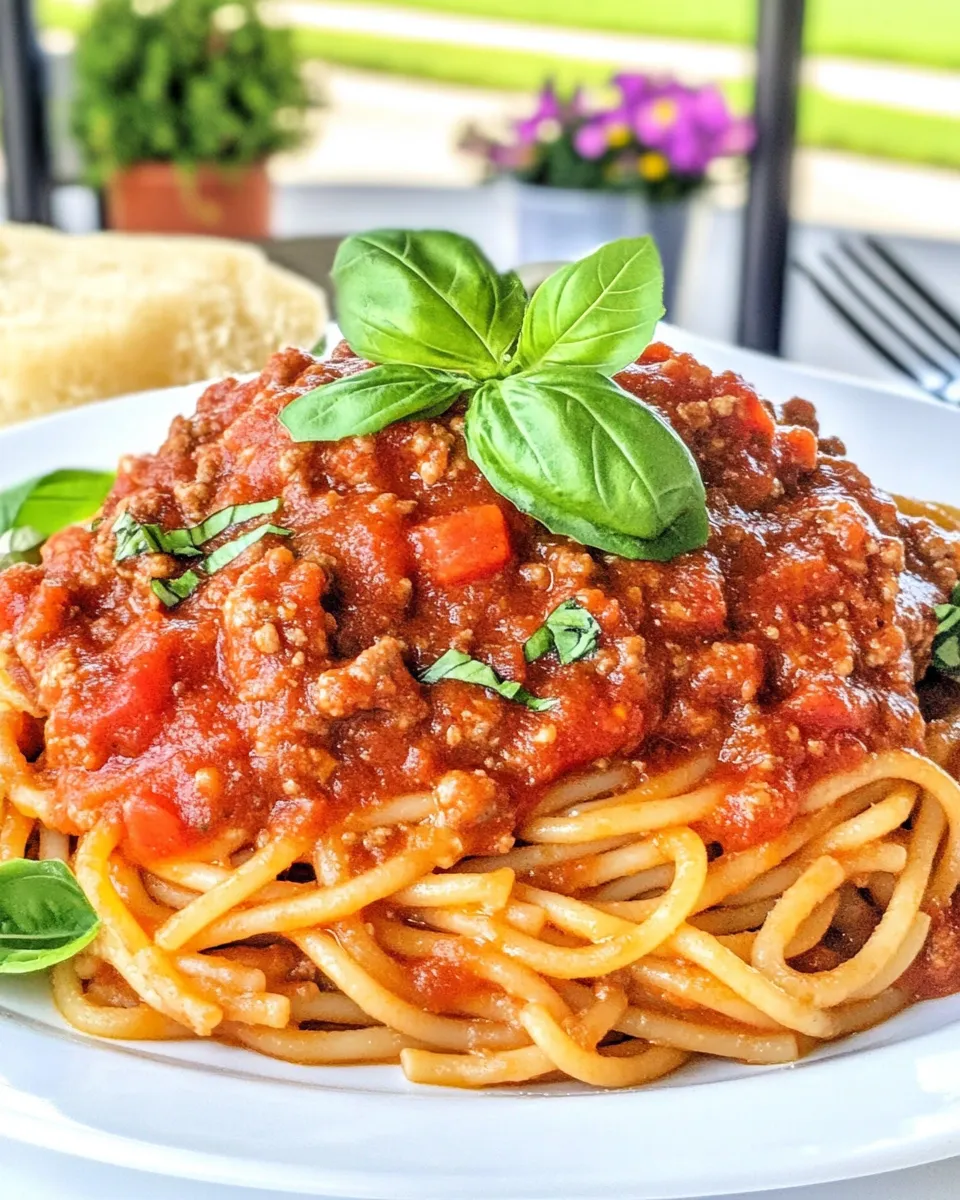
There are three reasons this adaptation of School Cafeteria Spaghetti & Meat Sauce stands out: dependable flavor, simple technique, and household-friendly timing. The meat is seasoned with dried onion and garlic powder, not fresh aromatics, which means you can make the sauce even on a sleepy weeknight without needing to chop anything. Canned whole tomatoes and tomato paste give the sauce body and tang, while a melody of dried herbs—basil, oregano, marjoram, and thyme—creates that classic, slightly sweet-and-savory profile kids and adults both love.
Ingredients
- 2¾ lb lean ground beef
- 2 Tbsp dried minced onions
- 1½ tsp garlic powder
- ½ tsp black pepper
- ½ tsp salt
- 1 (28-oz) can whole tomatoes, undrained
- 1½ (6-oz) cans tomato paste
- 2 cups water
- 4 tsp dried basil
- 4 tsp dried oregano
- 2½ tsp dried marjoram
- 1½ tsp dried thyme
- 1 lb spaghetti, cooked
Make-ahead and serving tips
You can prepare the sauce up to three days in advance and refrigerate it; flavors actually meld and deepen with a short rest. Reheat gently on the stove over low heat, adding a splash of water if it thickened too much. Leftovers also freeze well—cool completely, portion into airtight containers, and freeze for up to three months. Thaw overnight in the refrigerator before reheating.
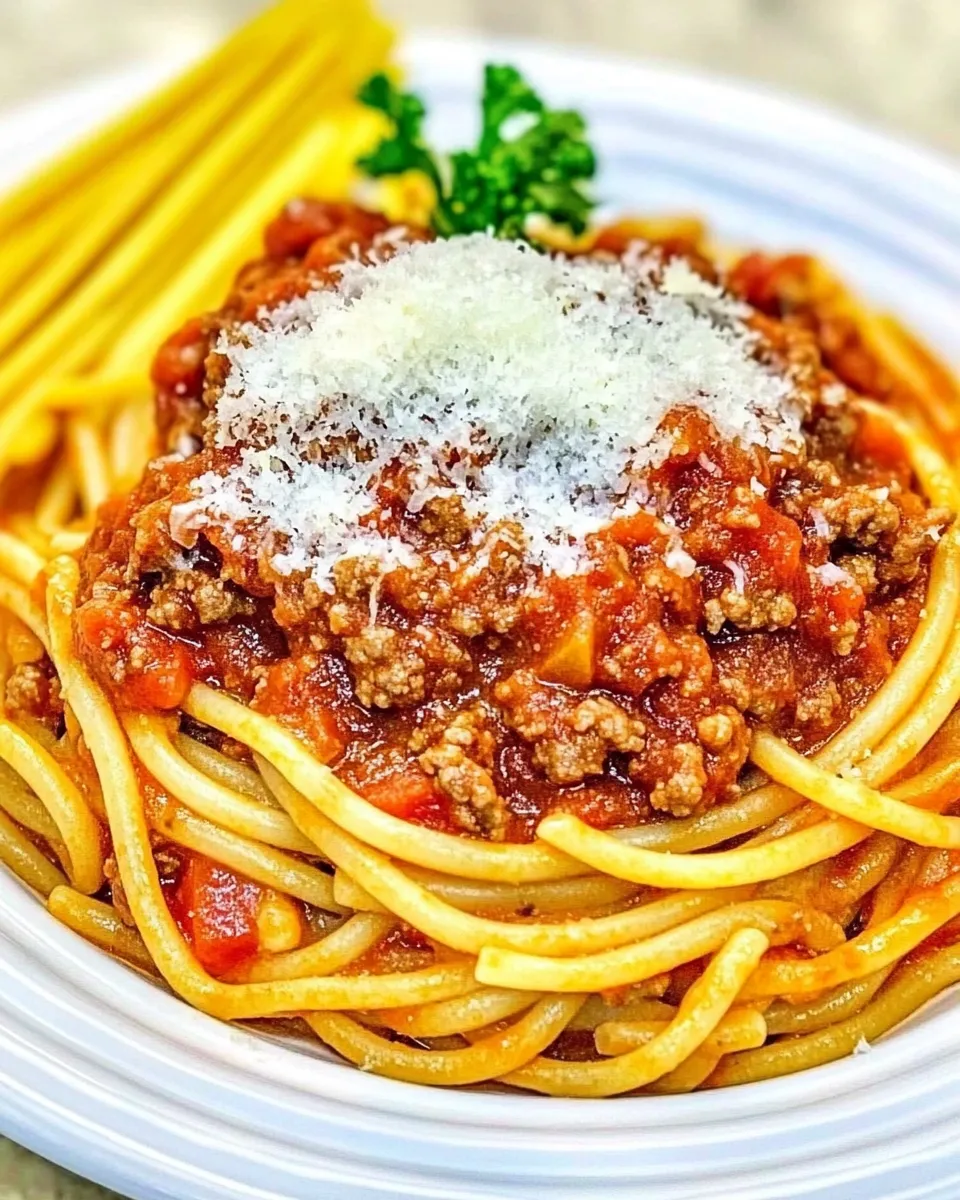
For serving, toss the cooked spaghetti briefly in the sauce to coat the strands, or ladle the sauce over plated pasta. Add a green salad or steamed vegetables on the side to balance the meal. If you want a little extra richness, stir a tablespoon of butter into the hot pasta before adding the sauce.
Kitchen tools you’ll need
- Large deep skillet or Dutch oven
- Wooden spoon or heatproof spatula
- Colander for draining pasta
- Measuring spoons and cups
Step-by-step directions
The directions below are written in clear, ordered steps that follow the recipe’s original sequence while matching the ingredient list exactly.
- Heat a large skillet or Dutch oven over medium-high heat. Add all of the 2¾ lb lean ground beef to the pan, breaking it into chunks with a wooden spoon or spatula.
- Cook the ground beef, stirring and breaking it up, until it is evenly browned and no pink remains, about 8–10 minutes depending on the pan and heat. Drain any excess fat if desired, leaving a thin coating to carry flavor.
- Return the pan to medium heat if you removed it to drain. Sprinkle the 2 Tbsp dried minced onions, 1½ tsp garlic powder, ½ tsp black pepper, and ½ tsp salt over the browned beef. Stir to incorporate and allow the spices to toast lightly for 30–60 seconds—this boosts their aroma.
- Add the entire 1 (28-oz) can of whole tomatoes with their juices into the pot. Use the spoon to break the tomatoes into bite-sized pieces as you stir them into the beef. The tomatoes will create the base of the sauce.
- Spoon in the 1½ (6-oz) cans of tomato paste. Stir thoroughly so the paste blends evenly with the tomatoes and beef, creating a thicker, richer sauce texture.
- Pour in 2 cups water and stir to thin the mixture slightly; this helps the sauce simmer evenly and keeps it from becoming too dense.
- Sprinkle in the dried herbs: 4 tsp dried basil, 4 tsp dried oregano, 2½ tsp dried marjoram, and 1½ tsp dried thyme. Stir until all the seasonings are evenly distributed through the sauce.
- Bring the sauce to a gentle simmer over medium heat, then reduce the heat to low. Allow it to simmer, uncovered, for 20–30 minutes, stirring occasionally. Simmering softens the tomato flavor and lets the herbs infuse the meat and sauce.
- While the sauce simmers, cook 1 lb spaghetti according to package directions in a large pot of salted boiling water. Cook until just al dente so it holds up when mixed with the sauce. Drain the pasta in a colander and return it to the pot or a warm serving bowl.
- Taste the simmered sauce and adjust seasoning if needed, adding a pinch more salt or pepper to preference. If the sauce is too thick, stir in a little additional water to reach the desired consistency.
- To serve, either toss the cooked spaghetti with enough sauce to coat the noodles evenly, or plate the spaghetti and spoon the meat sauce over the top. Serve immediately.
Notes and swaps
- If you prefer a chunkier sauce, keep larger pieces of the canned tomatoes when you break them up. For a smoother texture, pulse the whole tomatoes briefly with a hand blender before adding them to the pan.
- For a lighter version, you can brown the beef and then spoon off more of the fat before adding tomatoes, though some fat helps carry flavor and aroma.
- If you like a touch of sweetness to balance the tomatoes, stir in a teaspoon of sugar during the simmer. A splash of red wine added with the water will deepen flavor if you have it on hand and enjoy it.
- The dried herbs in this recipe are intentionally generous to mimic the big, familiar flavor often found in school kitchens. If you prefer subtler seasoning, reduce each dried herb by half and taste as the sauce cooks.
Serving ideas and variations
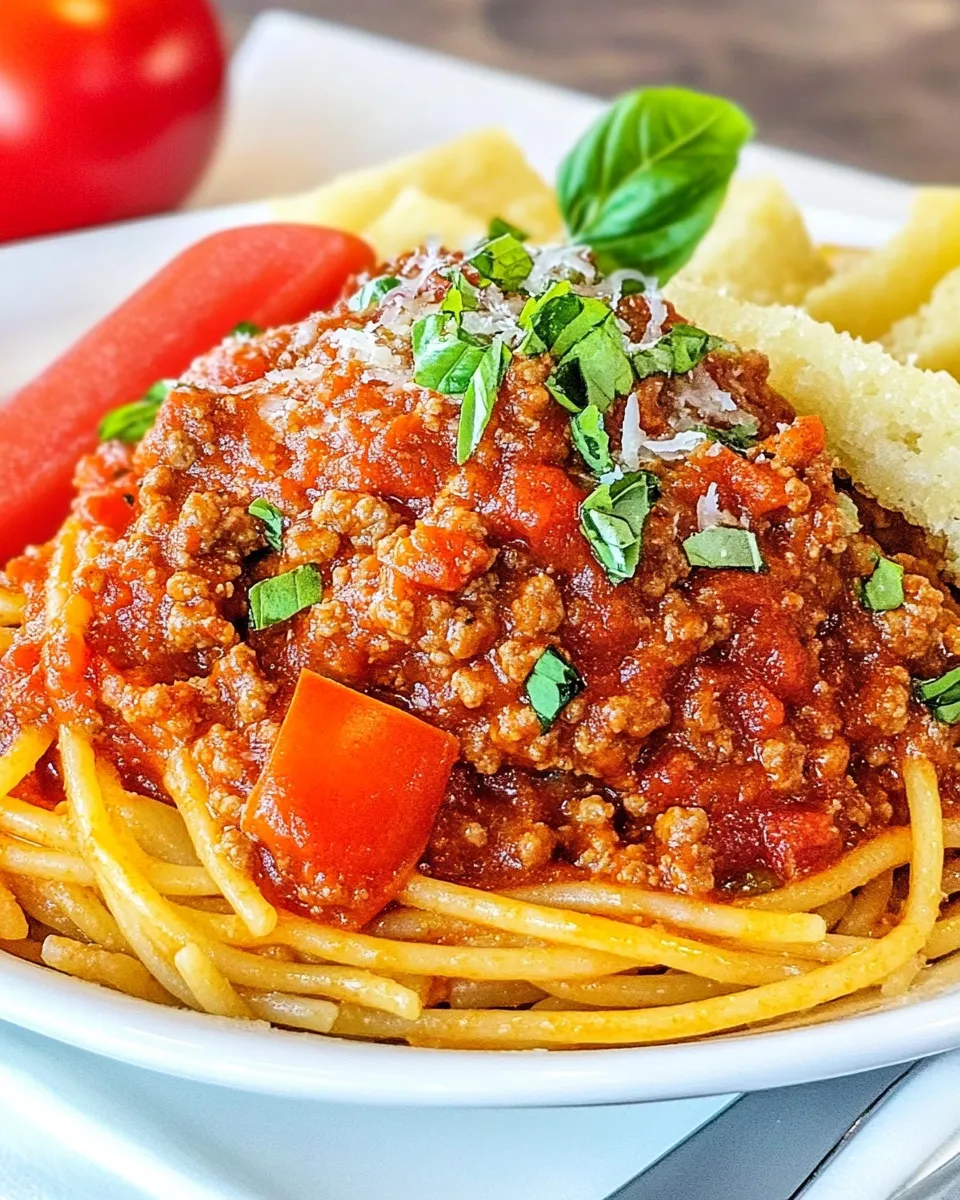
This School Cafeteria Spaghetti & Meat Sauce is a blank canvas. Top it with grated cheese or nutritional yeast for an extra layer of savory richness. Stir in cooked vegetables—bell peppers, shredded carrots, or chopped mushrooms—when you add the tomatoes for a heartier, vegetable-forward sauce. To convert into a baked spaghetti casserole, toss the cooked spaghetti with the sauce, transfer to a baking dish, sprinkle with your choice of cheese, and bake at 375°F (190°C) until bubbly and golden, about 20–25 minutes.
Why this mirrors that classic cafeteria feel
The nostalgia comes from its uncomplicated comfort: ample sauce, familiar dried herbs, and a straightforward meat base. School kitchens often used shelf-stable ingredients and large-batch-friendly techniques, which is exactly what this recipe honors—cans of tomatoes and tomato paste, dried onion and garlic seasonings, and robust dried herbs. The result is a dependable plate of pasta that feels both timeless and deeply satisfying.
Storing and reheating
Store cooled sauce in airtight containers in the refrigerator for up to 3 days. For longer storage, freeze in portions for up to 3 months. To reheat refrigerated or thawed sauce, warm gently on the stove over low heat, stirring occasionally; add a splash of water if it has thickened. Reheat cooked spaghetti by briefly plunging into boiling water or microwaving with a damp paper towel to restore moisture before tossing with sauce.
Final thoughts
When you plate a serving of School Cafeteria Spaghetti & Meat Sauce, you get a familiar, comforting dish that’s practical enough for weeknights and nostalgic enough to feel like a warm memory. The ingredient list is straightforward, the steps are forgiving, and the result makes enough to feed a family or provide reliable leftovers. If you want to scale this up, double or triple the sauce—these proportions hold up well in larger pots for gatherings or make-ahead meal prep.
Give it a try on a busy evening when you want something satisfying without complicated prep. It’s warm, hearty, and exactly the kind of plate that brings people together around the table.
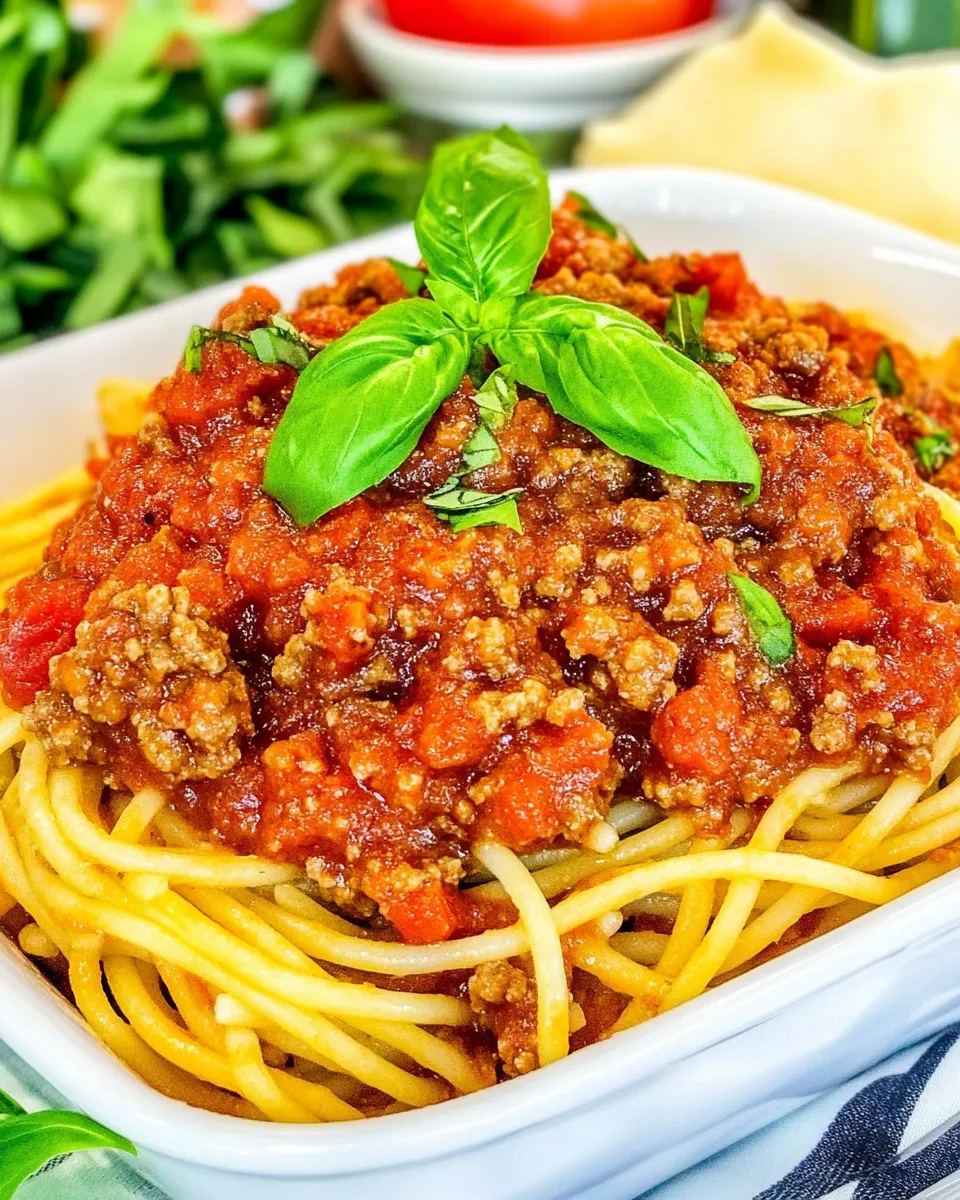
School Cafeteria Spaghetti & Meat Sauce
Equipment
- 12-inch Non-Stick Skillet
- meat masher or wooden spoon
- Can opener
Ingredients
- 2.75 lb lean ground beef
- 2 tbsp dried minced onion
- 1.5 tsp garlic powder
- 0.5 tsp black pepper
- 0.5 tsp salt
- 28 oz whole tomatoes undrained (1 can)
- 9 oz tomato paste about 1½ (6-oz) cans
- 2 cup water
- 4 tsp dried basil
- 4 tsp dried oregano
- 2.5 tsp dried marjoram
- 1.5 tsp dried thyme
- 1 lb spaghetti cooked
Instructions
- Heat a large (12-inch) non-stick skillet over medium-high heat. Add the lean ground beef and cook, breaking it up with a meat masher or spoon, until browned and no longer pink, about 6–8 minutes.
- Drain excess fat from the skillet and return it to the stove over medium heat.
- Add the dried minced onion, garlic powder, black pepper, and salt to the browned beef and stir to combine.
- Stir in the whole tomatoes with their juices, the tomato paste, and the water. Use a spoon (or your hands before adding, if preferred) to break up the whole tomatoes into bite-sized pieces.
- Add the dried basil, oregano, marjoram, and thyme and stir until evenly distributed.
- Bring the sauce to a gentle boil, then reduce heat to low and simmer, uncovered, for 30 to 45 minutes, stirring occasionally, until flavors meld and sauce thickens.
- Stir the cooked spaghetti into the skillet with the sauce and toss until the pasta is evenly coated. Serve warm.
Notes
- You can substitute ground turkey or Italian sausage for the beef.
- Use this sauce on any pasta you have on hand.
- Substitute oregano if you don't have marjoram.
- Break up whole tomatoes by hand or with a spoon before or after adding.
- To convert fresh herbs to dried, use 1 tbsp fresh = 1 tsp dried.
- The recipe requires about 9 oz tomato paste (1½ 6-oz cans).