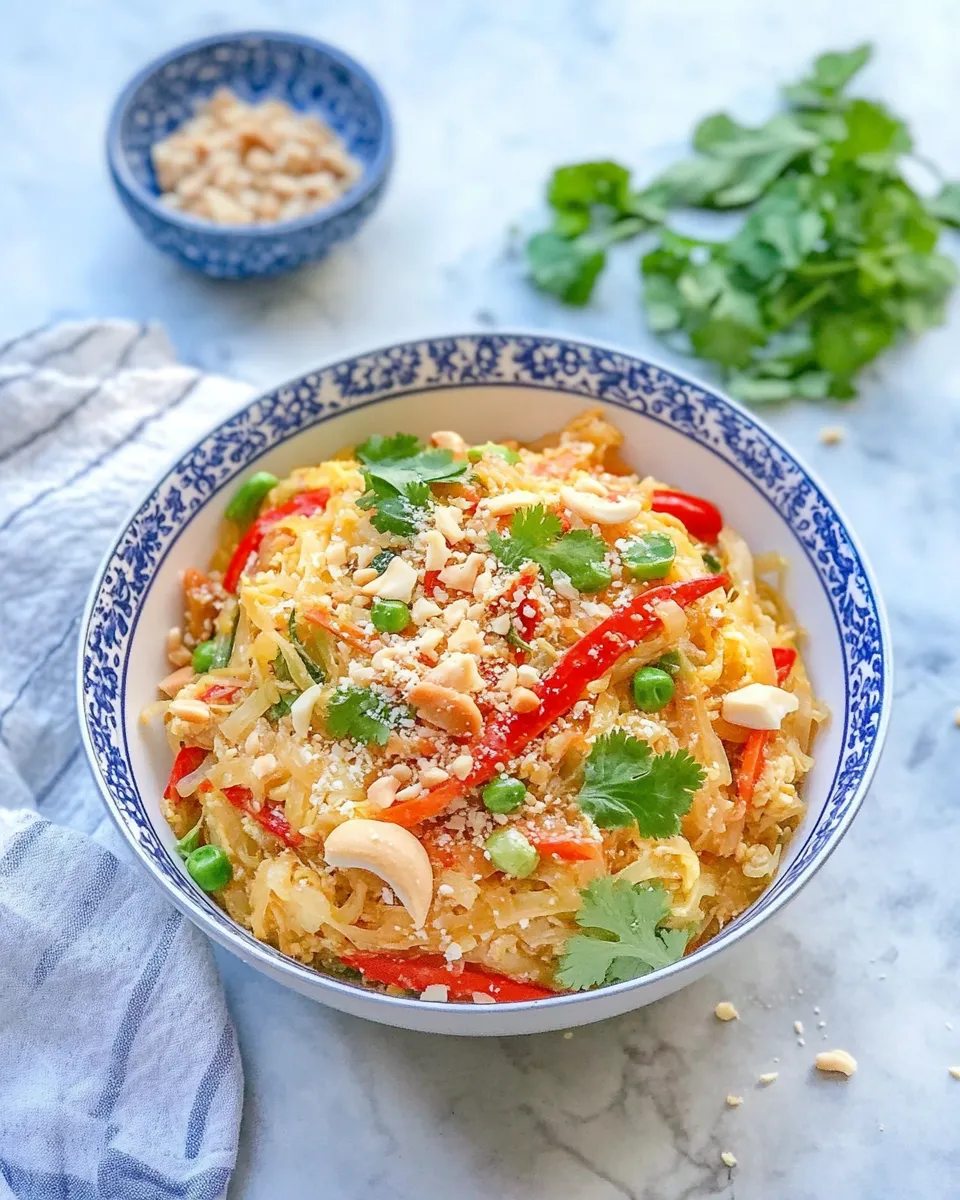
This Spaghetti Squash Pad Thai is everything I love about weeknight dinners: bright, tangy, slightly spicy, and full of satisfying texture. It swaps rice noodles for roasted spaghetti squash so you get the cozy slurp of Pad Thai with a lighter feel and a boost of veggie goodness. The shrimp cooks quickly and absorbs the tangy cashew-lime sauce, while roasted squash strands soak up every last drop. This recipe serves about 2–3 hungry people and is easy to scale.
Why you’ll love this version
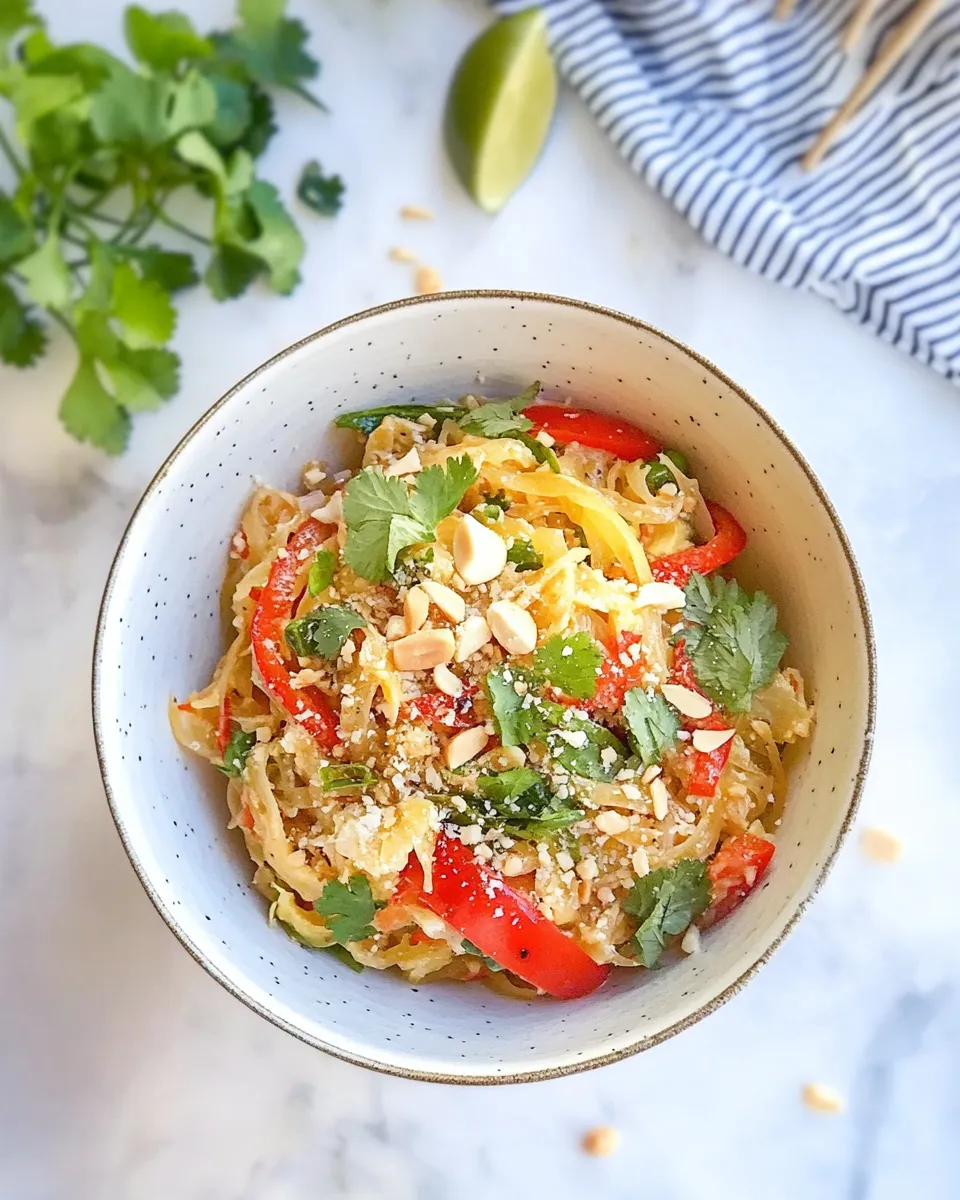
This interpretation keeps the soul of classic Pad Thai—sweet, salty, sour, and a little heat—while making it a little lighter and naturally gluten-reduced by using liquid aminos as a lower-sodium soy option. A creamy cashew butter sauce gives the dish a rich, nutty backbone without overpowering the bright citrus and chili notes. Texturally, roasted spaghetti squash strands are tender with a slight bite, matching beautifully with tender shrimp, crunchy cashews, and crisp bell pepper. It comes together in about 35–45 minutes depending on how long you roast the squash, and the ingredient list is simple and pantry-friendly.
Ingredients
- 4 tablespoons coconut oil, separated
- 1 small spaghetti squash, roasted
- 1 red bell pepper, cut into match sticks
- 1 jalapeño, seeded and chopped
- 1-1/2 cup grated carrot
- 3 cloves garlic, minced
- ½ pound shrimp, peeled and deveined
- 2 tablespoons raw cashews, chopped
- 2 tablespoons cashew butter
- 2 tablespoons lime juice
- 2 tablespoons liquid aminos or low-sodium soy sauce
- 1 tablespoon pure maple syrup (see note)
- 1 tablespoon red chili sauce, such as sriracha
- 2 teaspoons fresh ginger, peeled and grated
Note on ingredients
If you prefer a nut-free sauce, swap the cashew butter for 2 tablespoons of tahini and replace the chopped cashews with toasted sunflower seeds. The body and tang will shift a little, but the dish will still be delicious and balanced. The maple syrup provides a gentle sweetness that plays beautifully with the lime juice and chili sauce; if you want a more neutral sweetener, use a mild agave or light brown rice syrup in the same amount.
Equipment
- Baking sheet
- Large skillet or wok
- Mixing bowl
- Fine grater or microplane
- Tongs or fork to separate squash strands
How to roast the spaghetti squash
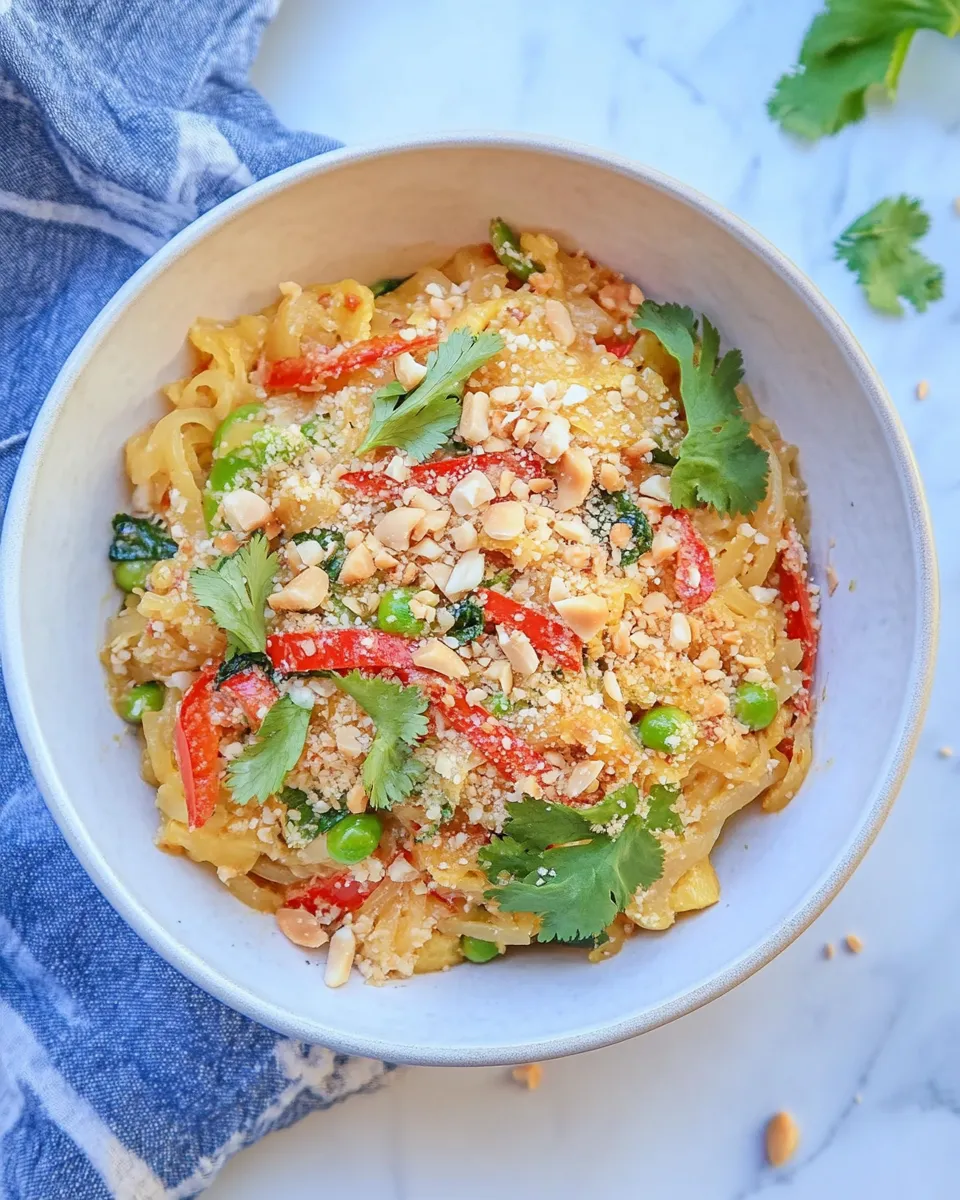
Roasting the squash is the first step and it sets the texture for the entire dish. Preheat your oven to 400°F (200°C). Carefully slice the small spaghetti squash in half lengthwise and scoop out the seeds. Brush the cut sides lightly with 1 tablespoon of coconut oil and place the halves cut-side down on a baking sheet lined with parchment or foil. Roast for 30–40 minutes, until the flesh is tender and you can easily scrape the strands with a fork. When it’s cool enough to handle, use a fork to tease out the spaghetti-like strands into a bowl and set aside. Keep them warm while you prepare the rest of the dish.
Sauce and flavor base
In a small bowl, whisk together the cashew butter, lime juice, liquid aminos or low-sodium soy sauce, maple syrup, red chili sauce, and grated ginger until smooth. If the sauce is too thick to pour, add a teaspoon of warm water at a time until it loosens just enough to coat the squash and vegetables. Taste and adjust: you should get a lively balance of sweet, salty, sour, and spicy. Set the sauce aside so it’s ready when your pan is hot.
Step-by-step instructions
- Prepare the spaghetti squash as described above: roast at 400°F (200°C) until tender, then scrape out strands and set aside.
- Warm a large skillet or wok over medium-high heat. Add 1 tablespoon of the coconut oil and swirl to coat.
- Add the chopped jalapeño and minced garlic to the hot skillet. Sauté for about 30–45 seconds, stirring constantly, until fragrant but not browned.
- Add the ½ pound peeled and deveined shrimp to the skillet in a single layer if possible. Cook for 1–2 minutes per side, until the shrimp are pink and opaque throughout. Transfer the cooked shrimp to a plate and set aside.
- Reduce heat to medium. Add another tablespoon of coconut oil to the same skillet. Toss in the red bell pepper cut into match sticks and the grated carrot. Sauté for about 3–4 minutes, stirring occasionally, until the vegetables begin to soften but still retain some crispness.
- Return the cooked shrimp to the skillet with the vegetables. Pour the prepared cashew-lime sauce over the shrimp and vegetables and stir to combine. Allow the sauce to warm through for about 30–60 seconds so the flavors meld.
- Add the roasted spaghetti squash strands to the skillet and drizzle the remaining 2 tablespoons of coconut oil over them (you used two tablespoons so far; use two more now to reach 4 tablespoons total). Gently toss everything together with tongs or two forks so the sauce evenly coats the squash, shrimp, and veggies. Cook for 1–2 minutes more just until the strands are heated through; avoid overcooking so they stay tender but not mushy.
- Stir in the chopped raw cashews and check seasoning. If you’d like more acidity, add a little extra lime juice; for more heat, add a squirt of red chili sauce. Taste and adjust to preference.
- Remove the skillet from the heat and serve immediately, garnished with additional cashews or a wedge of lime if desired.
Serving suggestions
Serve this Spaghetti Squash Pad Thai straight from the skillet for casual weeknight dinners, or arrange it on a shallow platter for a more elegant presentation. It pairs nicely with a crisp green salad or steamed greens for extra color. Add freshly chopped cilantro or sliced green onions for a fresh finish, and a lime wedge for the table so each person can add brightness to their bowl.
Make-ahead and storage
You can roast the spaghetti squash up to 2 days in advance and store the strands in an airtight container in the refrigerator. The sauce can be whisked together and refrigerated separately for up to 3 days. When ready to serve, reheat the squash briefly in a skillet with a splash of coconut oil, then add the sauce, vegetables, and shrimp as directed. Leftovers keep well for 2–3 days in the fridge; reheat gently on the stovetop to avoid overcooking the shrimp.
Tips for success
- Use a small spaghetti squash for tender strands that mimic noodle bite—larger squash can be watery or too soft.
- Don’t overcrowd the pan when cooking shrimp; a quick sear in a single layer gives the best texture.
- Keep the squash strands slightly underdone if you plan to reheat leftovers; they will finish cooking when combined with the hot sauce and vegetables.
- Adjust the heat by altering the amount of red chili sauce. If you want milder heat, use half a tablespoon and add more later if needed.
Flavor variations
If you want to play with the profile, try these simple swaps: use scallops or shredded chicken instead of shrimp; replace cashew butter with almond butter for a slightly different nuttiness; or add a tablespoon of fish sauce if you prefer a deeper umami punch—use it sparingly and taste as you go. For a vegetarian twist, omit the shrimp and toss in extra firm tofu cubes that have been pressed, cubed, and pan-seared.
Why spaghetti squash works here
Spaghetti squash holds sauce beautifully because its strands create pockets for flavor without becoming soggy like some noodle substitutes. Its neutral, subtly sweet taste lets the cashew-lime sauce and chili shine while adding fiber and a gentle vegetable backbone to the dish. Between the nutty cashew elements, citrus brightness, and smoky-sweet coconut oil, the finished plate is balanced and crave-worthy.
Quick pantry checklist
Before you start, confirm you have these essentials: coconut oil, cashew butter, liquid aminos or low-sodium soy sauce, pure maple syrup, red chili sauce, fresh lime, garlic, and ginger. The fresh aromatics (garlic, ginger, jalapeño) are small investments that lift the whole dish, so prioritize freshness if you can.
Final thoughts
This Spaghetti Squash Pad Thai is proof that weeknight dinners can be both bright and satisfying without sacrificing comfort. The balance of textures—tender squash strands, crisp vegetables, crunchy cashews, and succulent shrimp—keeps every bite interesting. It’s a feel-good plate to serve any night of the week, whether you’re feeding a small family or you want a flavorful lunch that reheats beautifully.
Printable recipe summary
Serves: 2–3. Total time: 35–45 minutes.
Ingredients: See full list above.
Instructions: Follow the step-by-step directions listed in the instructions section above.
Enjoy this bright, nutty, and slightly spicy Spaghetti Squash Pad Thai—an easy way to get a Pad Thai fix with a vegetable-forward twist.
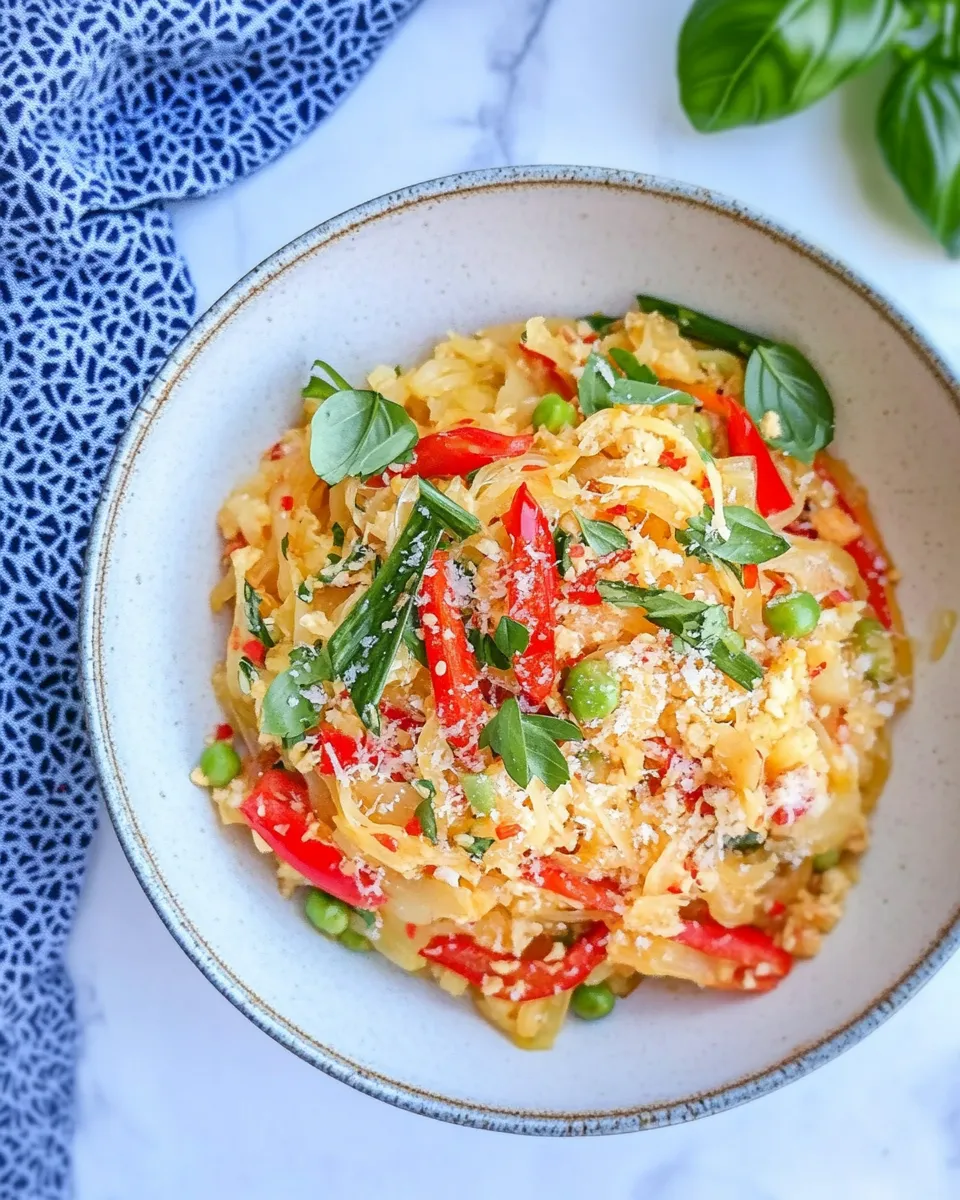
Spaghetti Squash Pad Thai
Equipment
- Large baking sheet
- Sharp Knife
- Spoon
- small blender or food processor
- medium non-stick skillet
- Spatula
Ingredients
- 4 tablespoons coconut oil separated
- 1 small spaghetti squash roasted
- 1 red bell pepper cut into match sticks
- 1 jalapeño seeded and chopped
- 1-1/2 cup grated carrot
- 3 cloves garlic minced
- 1/2 pound shrimp peeled and deveined
- 2 tablespoons raw cashews chopped
- 2 tablespoons cashew butter
- 2 tablespoons lime juice
- 2 tablespoons liquid aminos or low-sodium soy sauce
- 1 tablespoon pure maple syrup see note
- 1 tablespoon red chili sauce such as sriracha
- 2 teaspoons fresh ginger peeled and grated
Instructions
- Preheat oven to 400°F (200°C). Trim the ends of the spaghetti squash and cut it in half lengthwise. Scoop out the seeds and discard.
- Brush each squash half with 1 tablespoon of the coconut oil (reserve remaining oil), season with salt and pepper, and place cut-side down on a baking sheet.
- Bake for 45–55 minutes, until the flesh pulls into spaghetti-like strands easily with a fork. Let cool slightly, then use a fork to scrape out the strands into a bowl.
- While the squash roasts, combine cashew butter, lime juice, liquid aminos (or soy sauce), maple syrup, red chili sauce, grated ginger, and 1 tablespoon coconut oil in a small blender and blend until smooth; set aside.
- Heat 2 tablespoons coconut oil in a medium non-stick skillet over medium heat. Add the red bell pepper and chopped jalapeño and sauté for about 3 minutes, stirring occasionally.
- Add the grated carrot and minced garlic and continue to sauté until the pepper softens but stays slightly crisp, about 3–5 minutes.
- Push the vegetables to one side of the skillet and add the raw shrimp. Cook 1–2 minutes, flip, and cook another 1–2 minutes until shrimp are pink, plump, and cooked through.
- Pour the cashew-ginger sauce into the skillet, stir to combine, and cook 2–3 minutes until heated through and slightly thickened.
- Add the spaghetti squash strands to the skillet and toss gently until all ingredients are evenly coated with the sauce. Cook for 1–2 minutes to heat everything through.
- Serve immediately topped with chopped raw cashews and fresh basil or cilantro if desired.
Notes
- Omit the maple syrup to make the recipe Whole30-compliant.