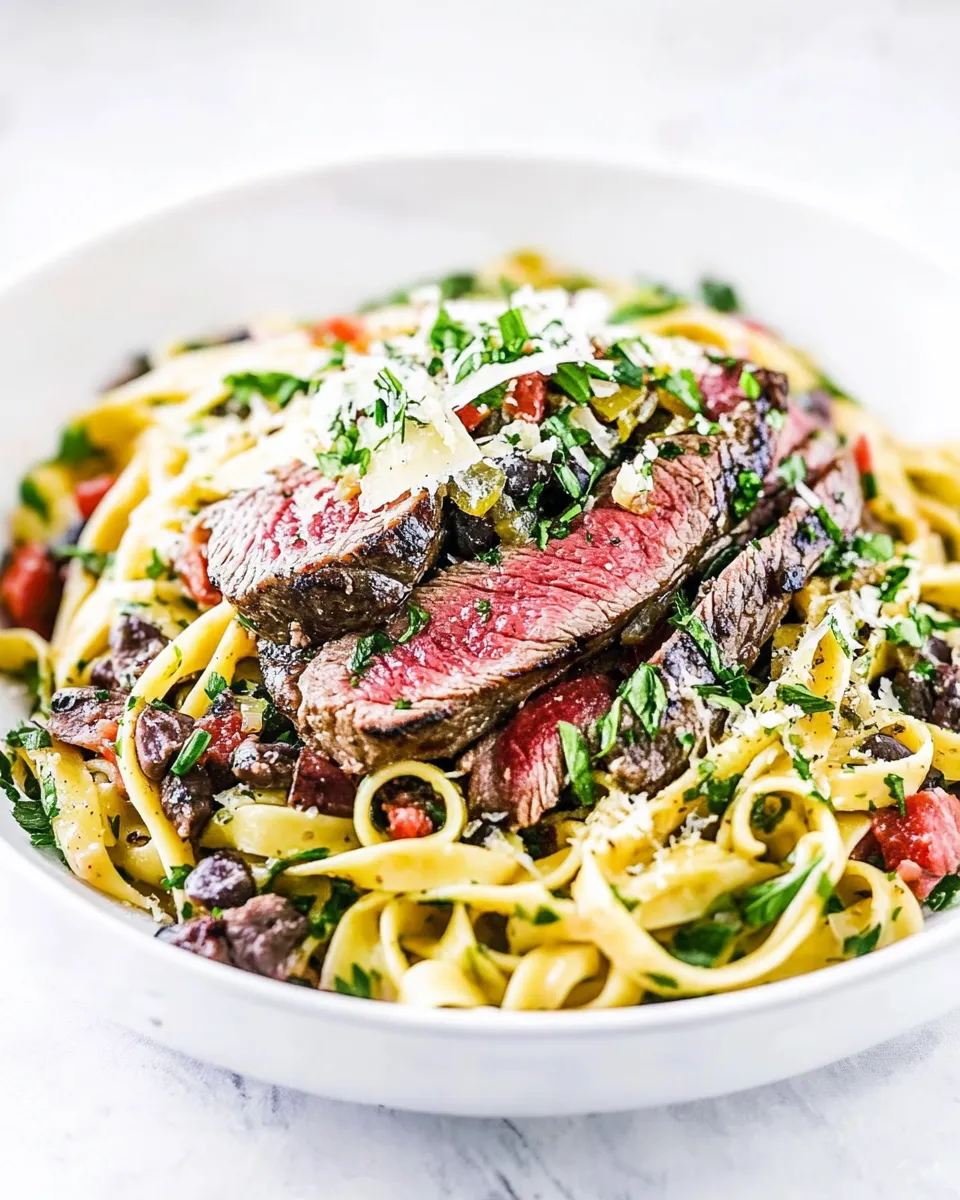
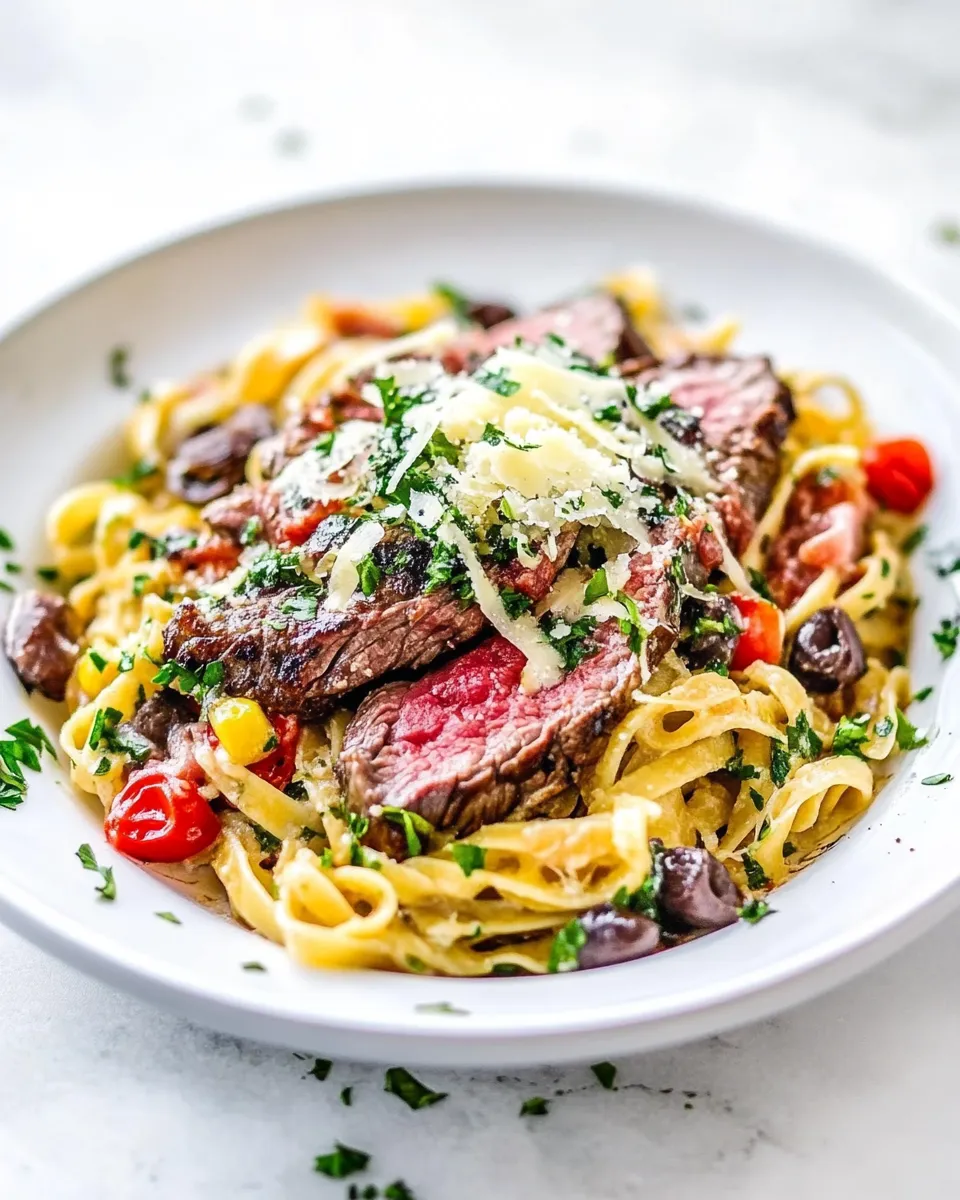
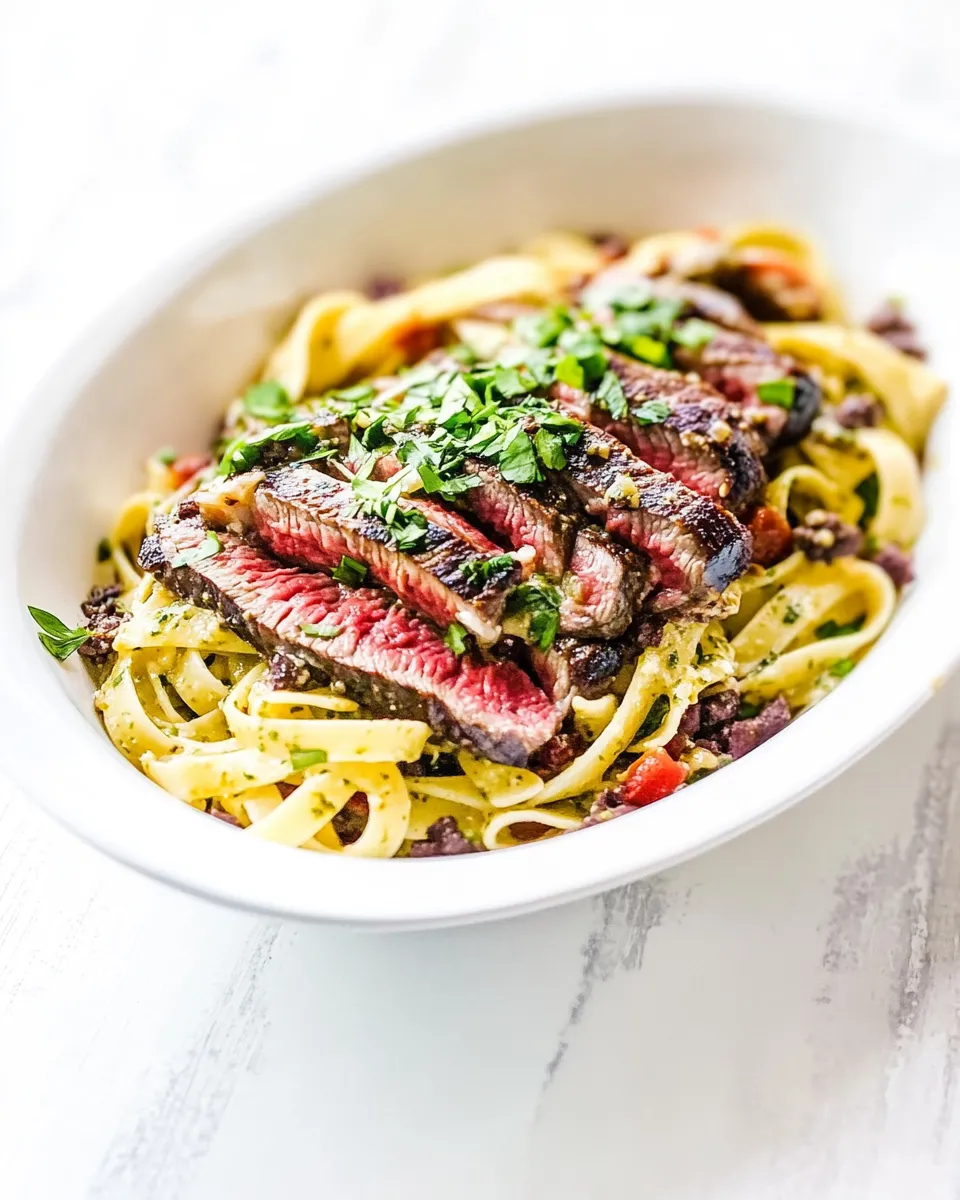
Bright, savory, and a little bit indulgent, this Ribeye Steak Pasta Puttanesca takes the pantry-pleasing punch of classic puttanesca and pairs it with a juicy, seared ribeye. Think briny kalamata olives and capers mingling with blistered cherry tomatoes, garlic, and plenty of freshly grated Parmesan, all tossed through rigatoni and finished with chopped parsley. It’s rich without feeling heavy, and the steak adds a satisfying meaty counterpoint that makes this dish feel special enough for guests but easy enough for a weeknight.
This recipe is written so you can follow along precisely: ingredient amounts are exact and the method is broken into clear, step-by-step directions. Read through once, prep your mise en place, and you’ll have a restaurant-worthy bowl on the table in under 40 minutes.
Why this works
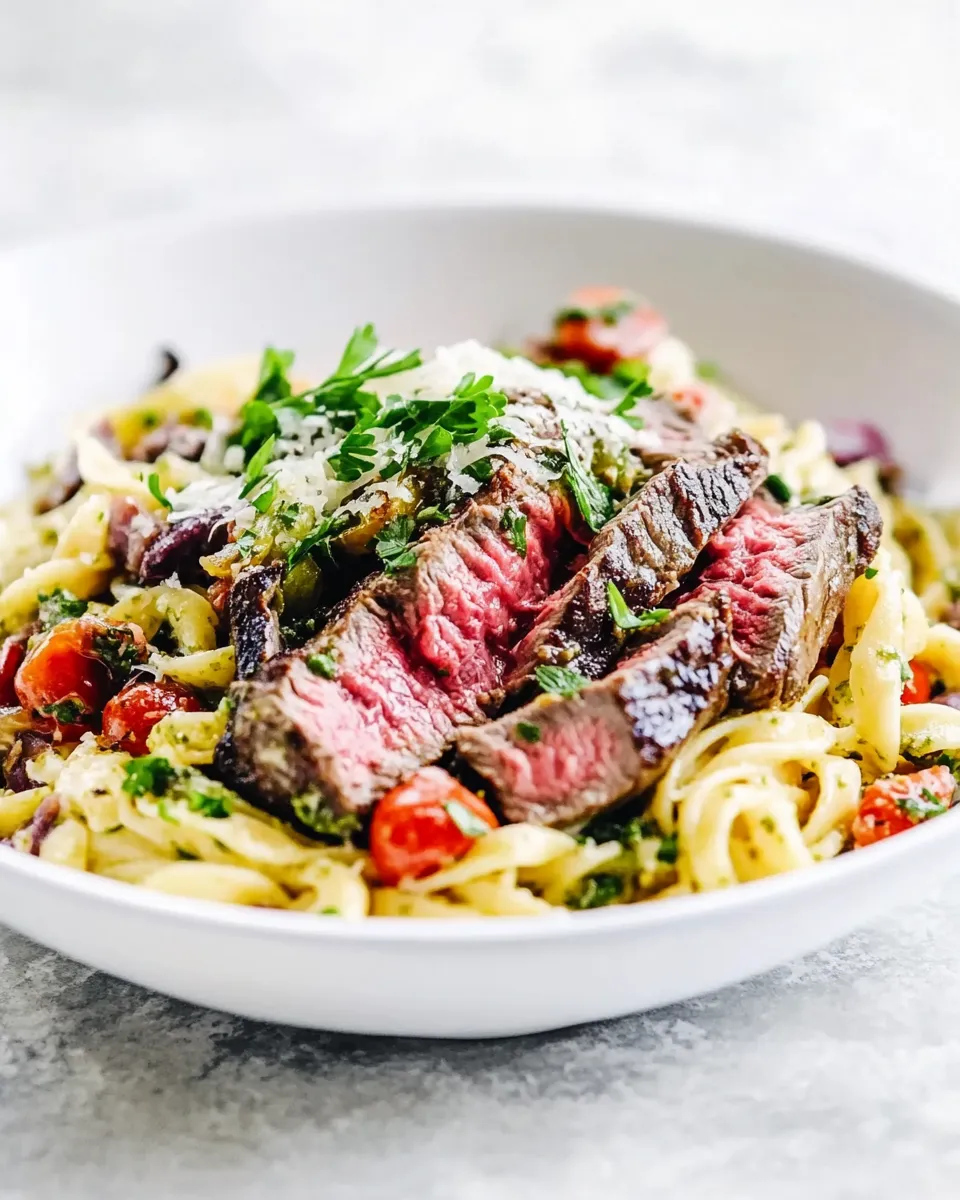
The bold flavors of a puttanesca—tangy tomatoes, salty olives, and sharp capers—are an ideal foil for a well-seared ribeye. A short pasta like rigatoni catches the chunky sauce in its ridges, while reserved pasta water and a scoop of butter and Parmesan create a silky, emulsified sauce that coats each bite. The steak, seasoned simply with salt and pepper and finished with butter, stays the star without overpowering the briny, garlicky sauce.
Ingredients
- 1½ pound ribeye steak
- ½ teaspoon salt
- ½ teaspoon pepper
- 1 tablespoon butter (unsalted)
- 1 tablespoon olive oil
- 12 ounce pasta (I used rigatoni)
- 1 tablespoon butter (unsalted)
- 4 cloves garlic (minced)
- 1 pint cherry tomatoes (about 1 lb)
- ½ cup Kalamata olives (pitted)
- 2 tablespoon capers (drained)
- ½ teaspoon salt (or to taste)
- ¼ teaspoon pepper (or to taste)
- 1 cup reserved pasta water
- 1 cup Parmesan cheese (freshly grated)
- ¼ cup fresh parsley (chopped)
Equipment
- Large pot for boiling pasta
- Large skillet (preferably heavy-bottomed or cast iron)
- Tongs and a carving knife
- Colander and measuring cup for reserved pasta water
- Wooden spoon or heatproof spatula
Prep
- Let the ribeye sit at room temperature for 20–30 minutes before cooking so it cooks evenly.
- Bring a large pot of salted water to a rolling boil for the pasta—use plenty of water so the rigatoni can move freely.
- Mince the garlic, halve the cherry tomatoes if you like more sauce release, drain the capers, pit and roughly chop the Kalamata olives if they aren’t already pitted, grate the Parmesan, and chop the parsley.
Step-by-step Instructions
- Cook the pasta: Once the water is boiling, add the 12 ounce rigatoni and cook according to package directions until al dente. Before draining, reserve 1 cup of the pasta cooking water in a measuring cup, then drain the pasta in a colander and set aside.
- Season the ribeye: Pat the 1½ pound ribeye steak dry with paper towels. Sprinkle ½ teaspoon salt and ½ teaspoon pepper evenly over both sides of the steak.
- Sear the steak: Heat a large skillet over medium-high heat. Add 1 tablespoon olive oil and 1 tablespoon butter (unsalted) to the skillet. When the butter melts and the pan is hot and shimmering, add the ribeye. Sear the steak undisturbed for about 3–4 minutes per side for medium-rare, or longer to your preferred doneness. Use tongs to turn the steak only once or twice to develop a good crust.
- Rest and slice the steak: Transfer the seared ribeye to a cutting board and tent lightly with foil. Let it rest for about 5–10 minutes so the juices redistribute. After resting, slice the steak thinly against the grain into bite-sized strips or medallions.
- Start the puttanesca base: In the same skillet you used for the steak, reduce the heat to medium. Add 1 tablespoon butter (unsalted). Once melted, add the 4 cloves minced garlic and cook, stirring, for about 30–45 seconds until fragrant but not browned.
- Add tomatoes and aromatics: Add the 1 pint cherry tomatoes to the skillet. Cook, stirring occasionally, until tomatoes begin to blister and break down and release their juices—about 4–6 minutes. If you prefer smaller tomato pieces, gently press a few with your spoon as they cook.
- Add olives, capers, and seasoning: Stir in ½ cup Kalamata olives (pitted) and 2 tablespoon capers (drained). Season the sauce with ½ teaspoon salt and ¼ teaspoon pepper, or adjust to taste. Let the mixture simmer together for another 2 minutes to marry the flavors.
- Bring the sauce together with pasta water: Pour in 1 cup reserved pasta water and bring the skillet to a gentle simmer. Let the liquid reduce slightly, about 1–2 minutes, so it helps loosen any browned bits from the pan and creates a cohesive sauce.
- Toss in the pasta: Add the drained rigatoni to the skillet with the sauce. Toss thoroughly to coat the pasta—use tongs or two spoons to lift and turn so every piece picks up sauce and juicy tomato bits. If the sauce seems too thin, simmer for another minute; if it’s too thick, add a splash more reserved pasta water, a tablespoon at a time.
- Finish with cheese and parsley: Remove the skillet from heat and stir in 1 cup freshly grated Parmesan cheese until it melts into the sauce and helps emulsify it. Fold in ¼ cup chopped fresh parsley to brighten the flavors.
- Plate and top with sliced ribeye: Divide the pasta among bowls or onto a large serving platter. Arrange the sliced ribeye over the pasta, letting some juices from the steak mingle with the sauce. Garnish with an extra sprinkle of Parmesan and a few additional parsley leaves if desired.
Taste and Serving Notes
Give the dish a final taste before serving and adjust salt or pepper as needed—the Kalamata olives and capers add saltiness, so you may need less salt than you expect. This pasta shines hot, but it’s also delicious at room temperature for leftovers. Serve with a simple green salad and crusty bread to soak up the sauce.
Variations and Tips
- Protein swap: If you prefer a different cut of beef, a flank or skirt steak can work, but adjust cooking time and slice very thinly against the grain.
- Pasta shape: Short, ridged shapes like rigatoni, penne, or bucatini are ideal because they hold the chunky sauce. If you use long pasta, you may need to toss in a larger pan.
- Heat factor: Add red pepper flakes with the garlic if you like a spicy kick—start with ¼ teaspoon.
- More sauce: If you like a saucier pasta, double the reserved pasta water and increase tomatoes by half a pint.
- Make-ahead: Cook the steak and keep it sliced in the fridge for up to a day; reheat gently in the skillet with the sauce when ready to serve. Reheat the pasta briefly with a splash of water to loosen the sauce.
Leftovers and Storage
Store leftovers in an airtight container in the refrigerator for up to 3 days. Rewarm gently on the stovetop with a splash of water or broth to re-emulsify the sauce and prevent the pasta from drying out. The steak can be reheated briefly in the microwave or in the skillet—avoid overcooking to keep the slices tender.
Final Thoughts
This Ribeye Steak Pasta Puttanesca balances bold, salty flavors with rich, beefy notes in a way that feels both comforting and sophisticated. The method keeps everything straightforward: cook pasta, sear steak, make the puttanesca base in the steak pan to capture all the caramelized flavor, and finish by tossing pasta with reserved starchy water and Parmesan for a glossy, clingy sauce. Whether you’re cooking for a weeknight dinner or a relaxed weekend supper, this is a dish that delivers big flavor with minimal fuss.
Enjoy every savory mouthful, and don’t be surprised if this becomes your go-to when you want something hearty and a little different from the usual pasta night.
Ribeye Steak Pasta Puttanesca
Equipment
- 12-inch Cast Iron Skillet
- Large Pot
- Colander
- Cutting Board
- Sharp Knife
Ingredients
- 1.5 pound ribeye steak
- 1/2 teaspoon salt
- 1/2 teaspoon black pepper
- 1 tablespoon unsalted butter
- 1 tablespoon olive oil
- 12 ounce pasta (rigatoni suggested)
- 1 tablespoon unsalted butter
- 4 cloves garlic minced
- 1 pint cherry tomatoes about 1 lb
- 1/2 cup Kalamata olives pitted
- 2 tablespoons capers drained
- 1/2 teaspoon salt or to taste
- 1/4 teaspoon black pepper or to taste
- 1 cup reserved pasta water
- 1 cup Parmesan cheese freshly grated
- 1/4 cup fresh parsley chopped
Instructions
- Bring a large pot of salted water to a boil and cook the pasta according to package directions until al dente; drain in a colander and rinse briefly under cold water to stop cooking. Reserve about 1 cup of the pasta cooking water.
- Season the ribeye steak generously on both sides with 1/2 teaspoon salt and 1/2 teaspoon black pepper.
- Heat a 12-inch cast iron skillet over high heat until very hot. Add 1 tablespoon butter and 1 tablespoon olive oil; when the butter melts and the pan begins to smoke slightly, add the steak.
- Sear the steak 5 minutes on the first side, flip and cook about 5 minutes more for medium-rare (adjust time for thickness or desired doneness). Transfer the steak to a cutting board, tent with foil, and rest 5–10 minutes before slicing.
- Discard any excess fat from the skillet, then add the remaining 1 tablespoon butter. When melted, add the minced garlic and sauté about 30 seconds until aromatic.
- Add the cherry tomatoes, Kalamata olives and capers to the skillet. Season with the remaining 1/2 teaspoon salt and 1/4 teaspoon pepper, and sauté about 2 minutes until the tomatoes begin to soften and wrinkle.
- Add the cooked pasta, reserved pasta water, grated Parmesan and chopped parsley to the skillet; toss gently until the cheese melts and the sauce coats the pasta, adding more pasta water as needed for desired consistency.
- Slice the rested steak across the grain into thin slices and arrange over the pasta. Serve warm.
Notes
- A bone-in steak may be used instead of boneless.
- Steak cooking time varies with thickness, so adjust times for doneness.
- For a medium-rare ribeye about 1" thick, 5 minutes per side is typical.
- You can grill the steak 4–6 minutes per side for medium-rare as an alternative.
- Let the steak rest 5–10 minutes before slicing to retain juices.