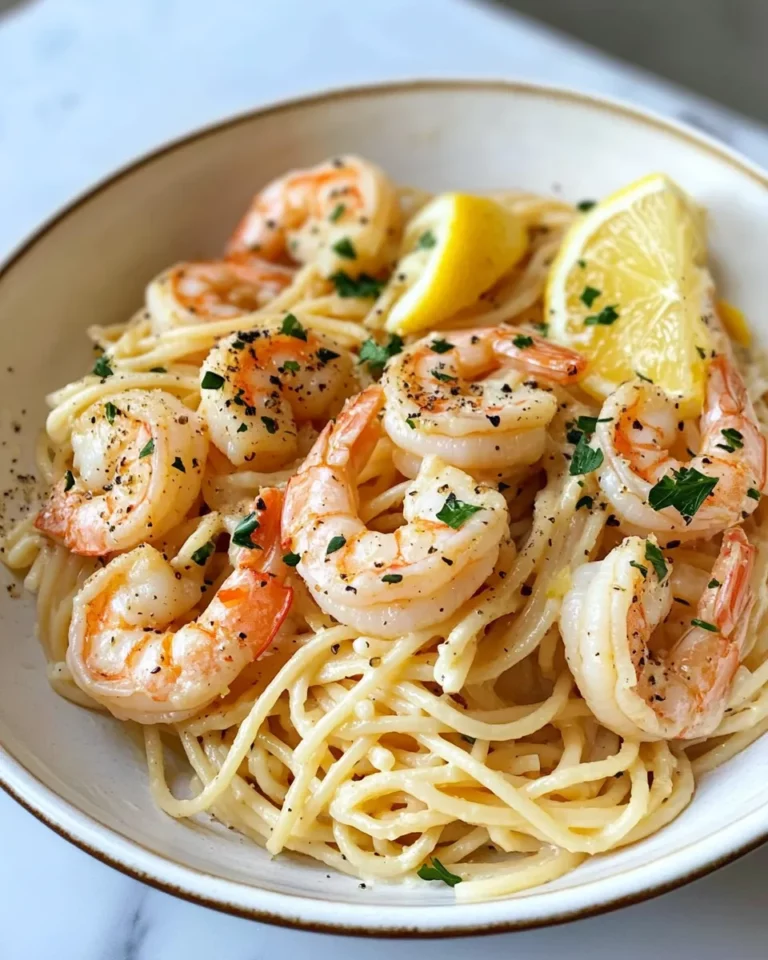
I learned to make Caesar dressing the way you learn a family recipe: by watching, by tasting, and by fixing it when it went sideways. This version is built on a few bold, specific ingredients that do all the heavy lifting — anchovies, raw egg yolks, garlic, lemon, mustard, olive oil, and Parmesan. No mayonnaise, no mystery. Just a tight set of steps that give you the classic creamy, savory, and bright dressing you expect.
Read through the notes before you start. There are small, practical adjustments you can make for safety, texture, and flavor intensity. The directions below are straightforward; follow them, and you’ll have a dressing that clings to greens and stands up to grilled chicken or rustic croutons.
I test this on weeknights and for guests. It stores well for a few days, and it improves the moment you taste and adjust the lemon and salt. Let’s get into the specifics so you can finish this confidently and quickly.
Ingredient Notes
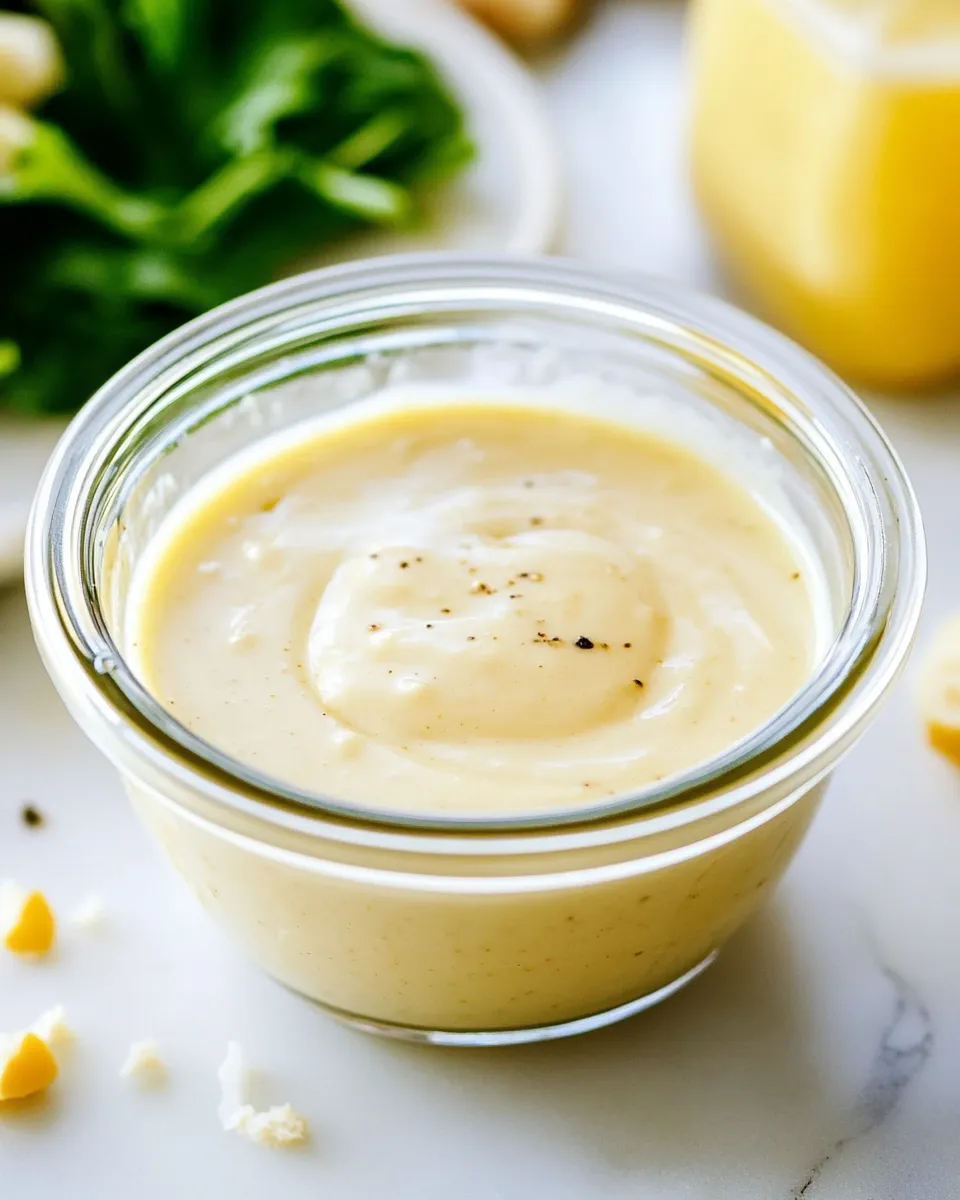
This dressing relies on a short ingredient list where each item has a clear job. Anchovies supply umami and salt. Raw egg yolks emulsify the oil into a silky texture. Garlic adds bite and warmth. Lemon juice keeps the dressing bright. Dijon stabilizes the emulsion and lends a sharp edge. Olive oil is the fat that carries flavor. Parmesan brings cheesiness and body. Understanding each role helps you troubleshoot and tweak without guessing.
Safety note: this recipe uses raw egg yolks. If you’re serving infants, the elderly, pregnant people, or immunocompromised guests, use pasteurized eggs or choose a different dressing. For texture, use a good quality olive oil and freshly grated Parmesan — the difference is noticeable when everything is emulsified.
Ingredients
- 6 anchovies in oil — provides savory umami and salt; use the oil from the tin for extra flavor if you like.
- 2 egg yolks* — the emulsifier; keeps the dressing thick and creamy (consider pasteurized yolks for safety).
- 3 garlic cloves — raw garlic gives assertive flavor; adjust to taste if you prefer milder garlic.
- ¼ cup lemon juice — brightens and balances the richness; use fresh lemon for best acidity.
- 2 teaspoons Dijon mustard — helps stabilize the emulsion and adds a touch of sharpness.
- ½ cup olive oil — the base fat; use a fruity extra-virgin for depth or a milder olive oil if you prefer.
- ½ cup grated Parmesan cheese — builds body, salinity, and cheesy flavor; finely grate for smooth incorporation.
Authentic Caesar Dressing, Made Easy
- Put 6 anchovies in oil, 2 egg yolks, 3 garlic cloves, and 1/4 cup lemon juice into a food processor. Pulse until the mixture is smooth and creamy, stopping to scrape down the sides as needed.
- Add 2 teaspoons Dijon mustard and pulse briefly to combine.
- With the food processor running, slowly drizzle in 1/2 cup olive oil until the dressing thickens and emulsifies; stop and scrape the sides if necessary.
- Add 1/2 cup grated Parmesan cheese and pulse just until evenly combined and smooth.
- Transfer the dressing to an airtight container. Serve immediately or store in the refrigerator.
Why It Works Every Time
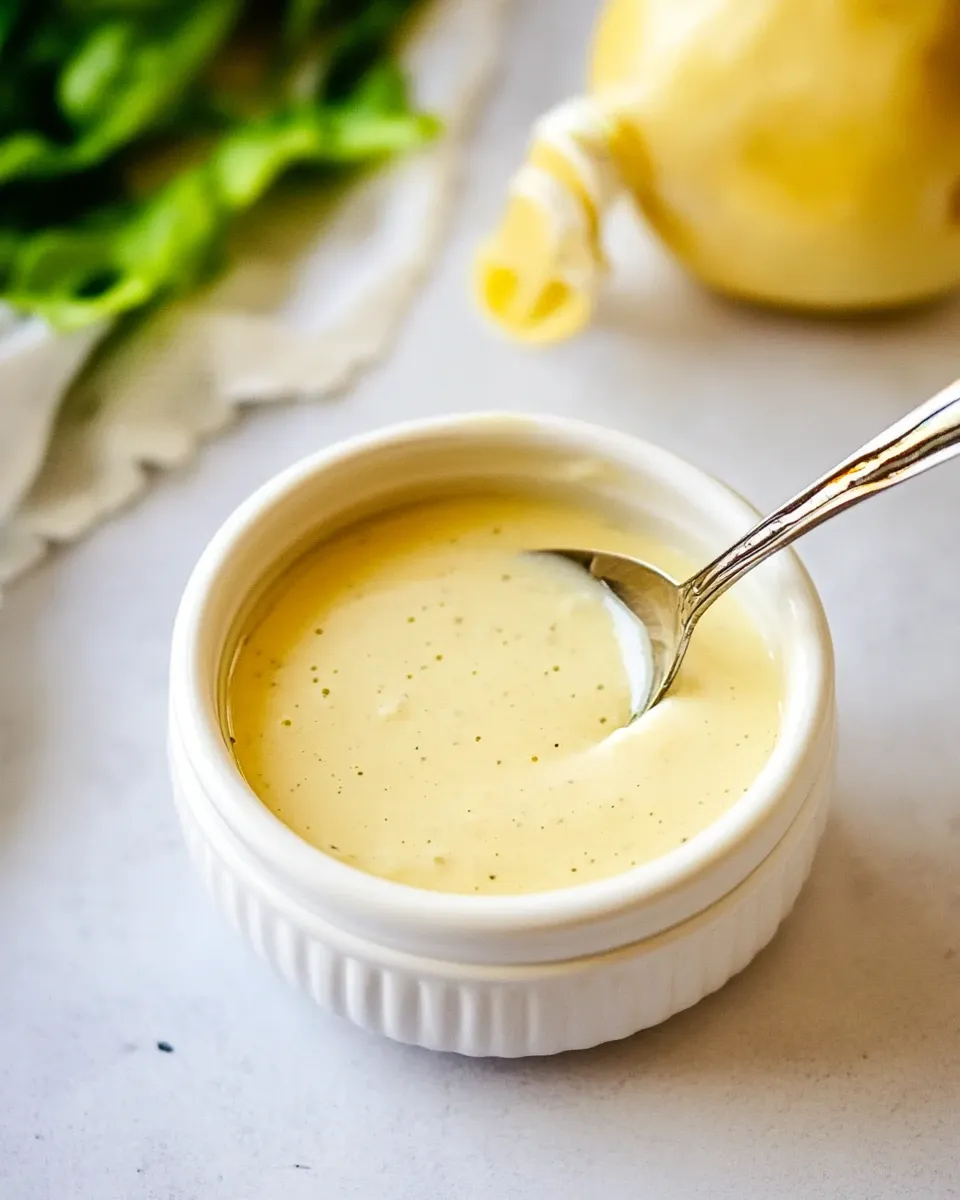
Every ingredient here has a structural reason for being. Egg yolks contain lecithin, a natural emulsifier that lets oil and lemon water combine into a stable, creamy emulsion. Dijon mustard also contains emulsifiers and adds an acid-savory counterpoint that deepens the dressing’s complexity. Anchovies dissolve into the base, distributing umami evenly rather than delivering a single fishy note. Parmesan gives both flavor and slight granular body that helps the dressing cling to leaves.
The method matters as much as the ingredients. Starting with a smooth base of blended anchovy, yolk, garlic, and lemon creates a fine matrix that welcomes oil slowly. Drizzling the oil while the processor runs forces the fat to break into tiny droplets suspended in the watery phase — that’s the emulsion. If you rush the oil, the dressing separates. If your processor pulse-and-scrape routine includes attentive pauses, you’ll get a reliable, silky result.
Flavor-Forward Alternatives
- Smokier umami: Swap 2 of the anchovies for a teaspoon of finely minced capers to shift the briny profile without losing saltiness.
- Less sharp garlic: Roast 1–2 cloves first and use them in place of raw garlic for a sweeter, mellower background.
- Harder, nuttier cheese: Use part Pecorino Romano instead of all Parmesan to introduce sharper, tangier notes.
- Lighter mouthfeel: Use half olive oil and half neutral oil (like grapeseed) to soften the olive oil’s peppery finish.
What’s in the Gear List
- Food processor — makes the emulsion quick and even; a blender or immersion blender also works if you drizzle oil carefully.
- Measuring spoons and cups — accurate ratios matter, especially for the egg yolks, lemon, and oil volume.
- Microplane or fine grater — for fresh-grating Parmesan; pre-grated blends won’t melt into the dressing as smoothly.
- Airtight container or jar — for storing; glass is best so you can see the dressing and adjust with a squeeze of lemon when needed.
Things That Go Wrong
Here are common failures and quick fixes so you don’t end up with a broken sauce or a too-garlicky punch.
Separation and broken emulsion
- If the dressing splits (oil pools or the mixture looks curdled), stop adding oil and pulse in a teaspoon of warm water or another yolk to re-establish the emulsion.
- Also try starting with a fresh yolk in a clean bowl and slowly whisking the split dressing into it; this gives the emulsion fresh lecithin to cling to.
Too salty or too strong
- If the anchovies and Parmesan make the dressing too salty, dilute with a tablespoon or two of plain yogurt or a tablespoon of water and a squeeze more lemon, tasting as you go.
- For overpowering garlic, a small spoonful of sugar is a last-resort neutralizer, but it’s better to start with less garlic and add more after a taste.
Grainy texture
- Using coarsely grated Parmesan or adding the cheese too early can yield a slightly grainy sauce. Pulse just until combined and use freshly grated cheese for the smoothest result.
Seasonal Flavor Boosts
Caesar dressing is surprisingly adaptable to seasonal produce. In spring, toss the dressing with tender romaine, peas, and shaved asparagus. The dressing’s brightness pairs well with crunchy, early greens. In summer, use it on a warm chicken and tomato salad — the acid cuts through ripe tomatoes and the anchovies bolster savory summer produce. In autumn, a Caesar with roasted Brussels sprouts or thinly sliced roasted beets is excellent; the roasted notes complement the anchovy-Parmesan backbone. In winter, use the dressing to enliven bitter greens like kale or radicchio; massage a little into the leaves before serving to soften them.
Chef’s Rationale
I keep this formula tight because each element performs a unique function. Anchovies anchor the flavor profile without making it fishy. The egg yolks and Dijon produce the texture and stability you expect from an authentic Caesar. Lemon provides the necessary acid to cut fat and wake up other flavors. Parmesan returns the cheese note native to Caesar and supplies granular heft. Olive oil carries all those flavors and determines mouthfeel. If you want to mess with components, change texture or intensity — not the roles.
When I teach this recipe, I emphasize patience during the oil drizzle and tasting at the end. Little adjustments — another squeeze of lemon, a pinch more cheese, or a modest splash of olive oil — get you from good to right for your palate.
Refrigerate, Freeze, Reheat
Store the dressing in an airtight container in the refrigerator for up to 3–4 days. Separation may occur on standing; shake or whisk to reincorporate. Because this contains raw egg yolks, avoid freezing — freezing changes the texture and safety profile, and thawed yolks can become grainy.
Never reheat this dressing. Heat will break the emulsion, alter the flavor, and compromise the egg yolk. Use it cold or at room temperature by taking it out of the fridge 10–15 minutes before serving so it loosens slightly and pours easily.
Helpful Q&A
- Q: Can I use whole eggs instead of yolks? — A: Whole eggs add more water and can thin the dressing. Yolks make a richer, more stable emulsion; if you use whole eggs, use them sparingly and be prepared for a lighter texture.
- Q: Are anchovies mandatory? — A: They’re central to the classic taste. If you truly can’t use them, increase Parmesan slightly and add a touch of caper brine for brinier notes, but expect a different profile.
- Q: Can I make this in a blender? — A: Yes. Use the same process: blend the base, then with the blender running, slowly pour the oil in a thin stream to form the emulsion.
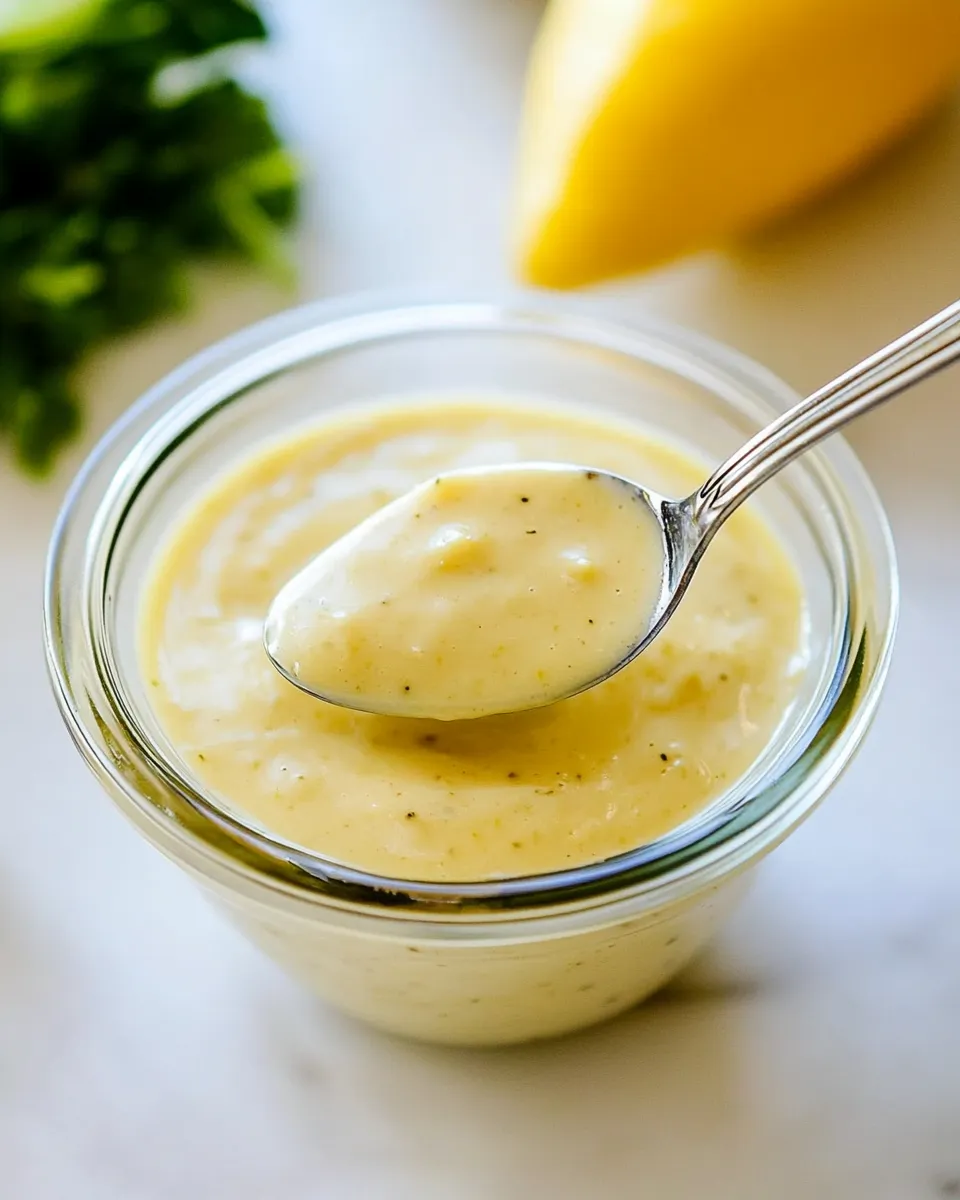
- Q: How do I know when the dressing is done? — A: It should be glossy, thick enough to coat the back of a spoon, and balanced between bright lemon, salty anchovy/Parmesan, and the richness of the yolks.
- Q: Is there a vegan version? — A: Not within this recipe’s authentic framework; you would need to substitute both the yolks and anchovies and use different emulsifiers and flavorings to mimic the profile.
The Takeaway
This Authentic Caesar Dressing is short on ingredients but big on technique. Respect the order: blend the savory base, add mustard, drizzle oil slowly, and finish with Parmesan. Taste and adjust. Use pasteurized yolks if safety is a concern. Store chilled and use within a few days. Follow those rules and you’ll get a classic, clingy, richly flavored Caesar dressing every time — reliable enough for everyday salads and confident enough for guests.
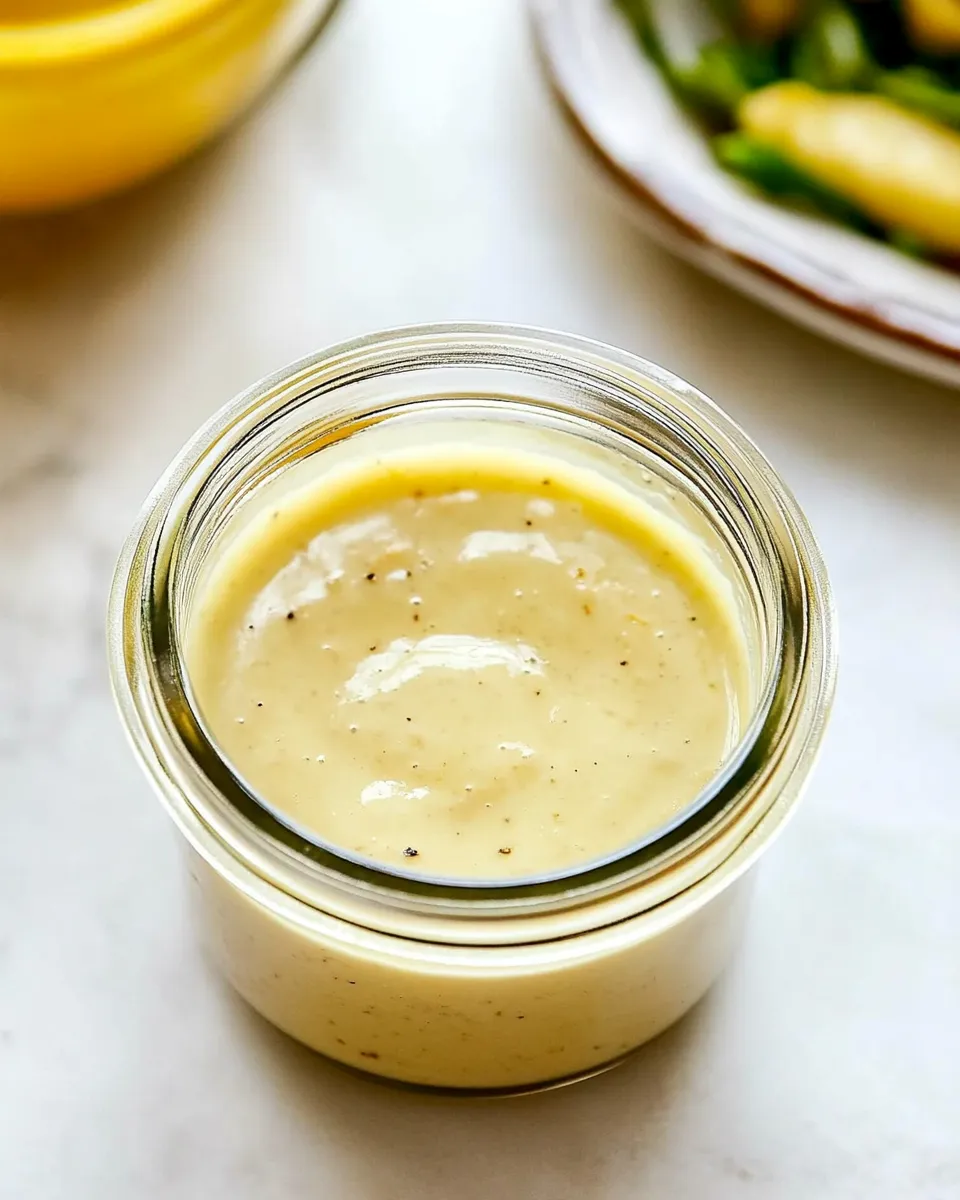
Authentic Caesar Dressing
Equipment
- Food Processor
Ingredients
Ingredients
- 6 anchovies in oil
- 2 egg yolks*
- 3 garlic cloves
- 1/4 cuplemon juice
- 2 teaspoonsdijon mustard
- 1/2 cupolive oil
- 1/2 cupgrated parmesan cheese
Instructions
Instructions
- Put 6 anchovies in oil, 2 egg yolks, 3 garlic cloves, and 1/4 cup lemon juice into a food processor. Pulse until the mixture is smooth and creamy, stopping to scrape down the sides as needed.
- Add 2 teaspoons Dijon mustard and pulse briefly to combine.
- With the food processor running, slowly drizzle in 1/2 cup olive oil until the dressing thickens and emulsifies; stop and scrape the sides if necessary.
- Add 1/2 cup grated Parmesan cheese and pulse just until evenly combined and smooth.
- Transfer the dressing to an airtight container. Serve immediately or store in the refrigerator.
Notes
*If you don't want to use raw eggs, greek yogurt or mayonnaise is a good substitute.