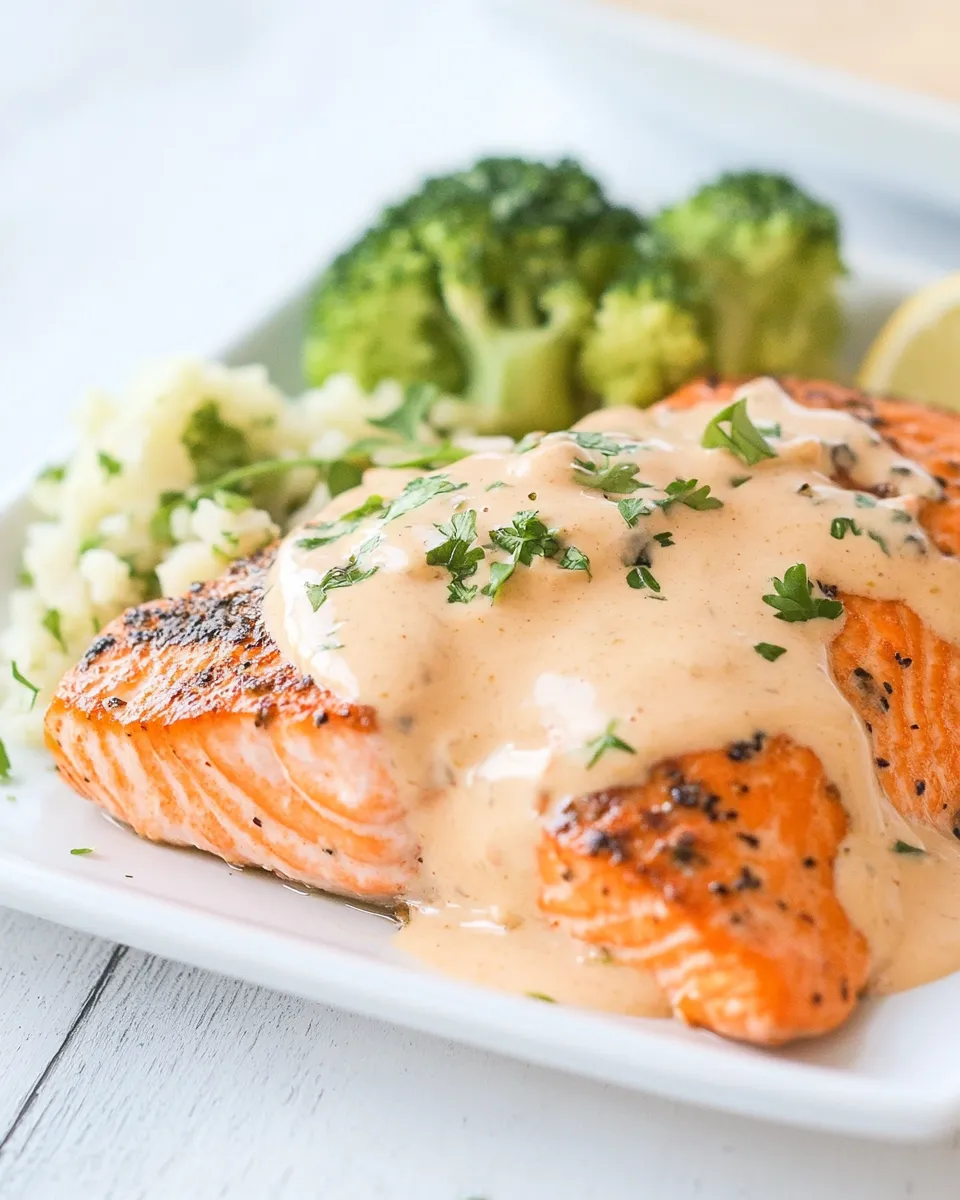
I love a dinner that feels a little special but comes together without a fuss. This Baked Salmon with Creamy Coconut Ginger Sauce is just that — tender, flaky salmon roasted to perfection, finished with a luxuriously silky coconut-ginger sauce that wakes up the plate with bright lime and a gentle back-note of heat. It’s one of those recipes that looks and tastes like you spent hours fussing, when in reality it’s all about a few quality ingredients and a straightforward technique. Serve it with steamed rice, roasted vegetables, or a crisp salad for a balanced meal that’s weeknight-friendly enough to make any night feel celebratory.
Before we get into the step-by-step directions, here’s the simple ingredient list you’ll need. The recipe yields six 6-ounce portions, making it ideal for a family dinner or for sharing with friends.
Ingredients
- Six 6-ounce portions skinless salmon fillets
- 2 tablespoons extra virgin olive oil
- 1 tablespoon chilled salted butter, cut into 6 pieces
- sea salt and freshly ground black pepper, to taste
- 1½ cups canned coconut milk (don’t use light)
- 1½ teaspoons chili paste
- 1½ teaspoons grated fresh ginger
- 3 teaspoons freshly squeezed lime juice
- 1½ teaspoons fish sauce
- 1 tablespoon packed light brown sugar
- chopped chives for garnish (optional)
Why this recipe works
This Baked Salmon with Creamy Coconut Ginger Sauce pairs a simple roast technique with a sauce that balances creaminess, acidity, sweetness, and heat. The full-fat canned coconut milk gives body and a velvety mouthfeel; fresh ginger provides aromatic warmth; lime cuts through the richness; and just a touch of chili paste adds liveliness. A dab of chilled salted butter placed on each fillet melts into the fish as it rests, adding glossy richness and a gentle finish. The result is bold but well-balanced: a dinner that’s both comforting and fresh.
Equipment
- Rimmed baking sheet or shallow roasting pan
- Parchment paper or a silicone baking mat (optional, for easy cleanup)
- Small saucepan
- Whisk or spoon
- Instant-read thermometer (optional, for precise doneness)
Taste and texture notes
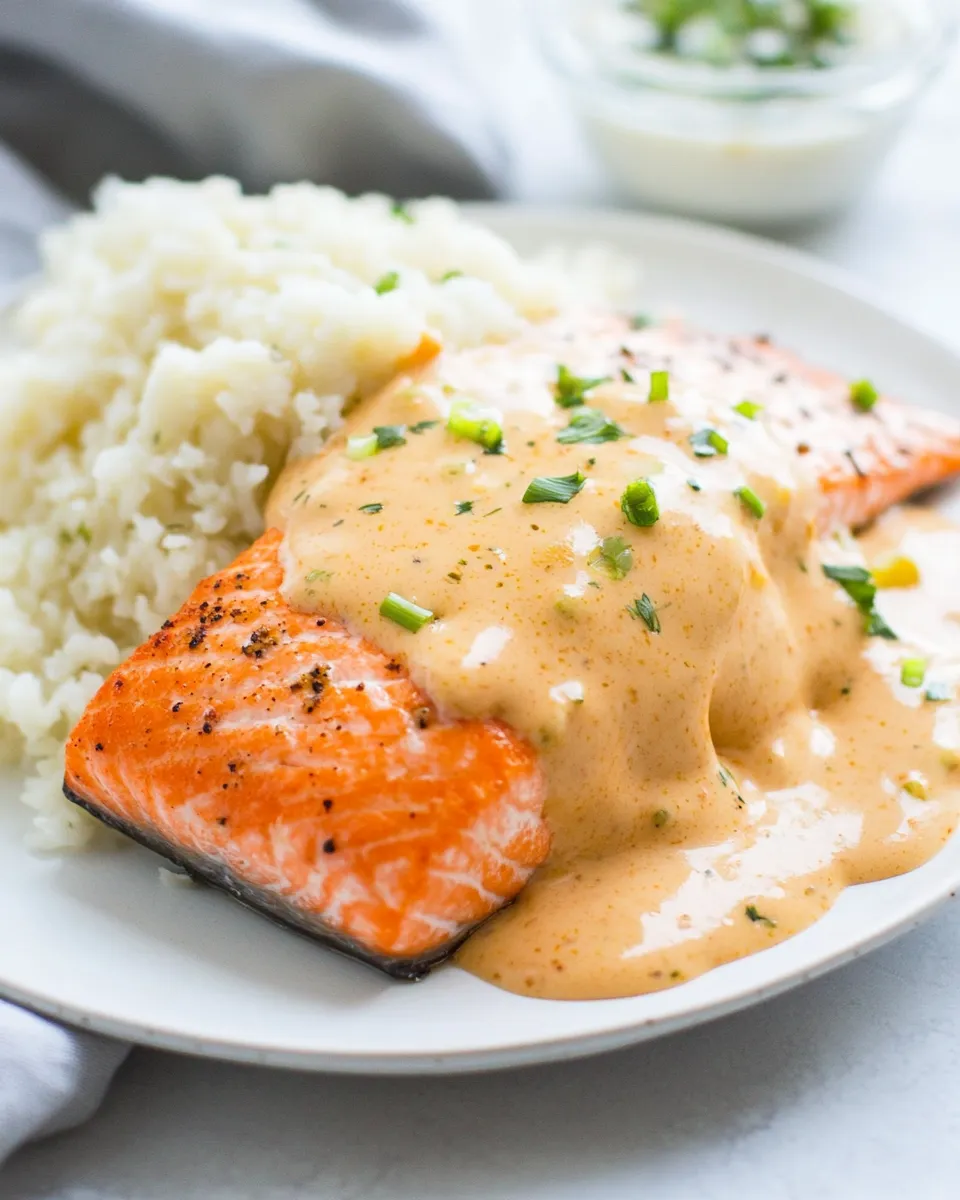
The salmon bakes quickly and stays moist if you avoid overcooking. The sauce is creamy and slightly silky, with the subtle grain of fresh ginger. Chili paste gives a gentle warmth rather than overpowering heat. If you prefer more brightness, add an extra half teaspoon of lime juice to the sauce at the end. Garnish with chopped chives for a pop of color and onion-y freshness.
Step-by-step directions
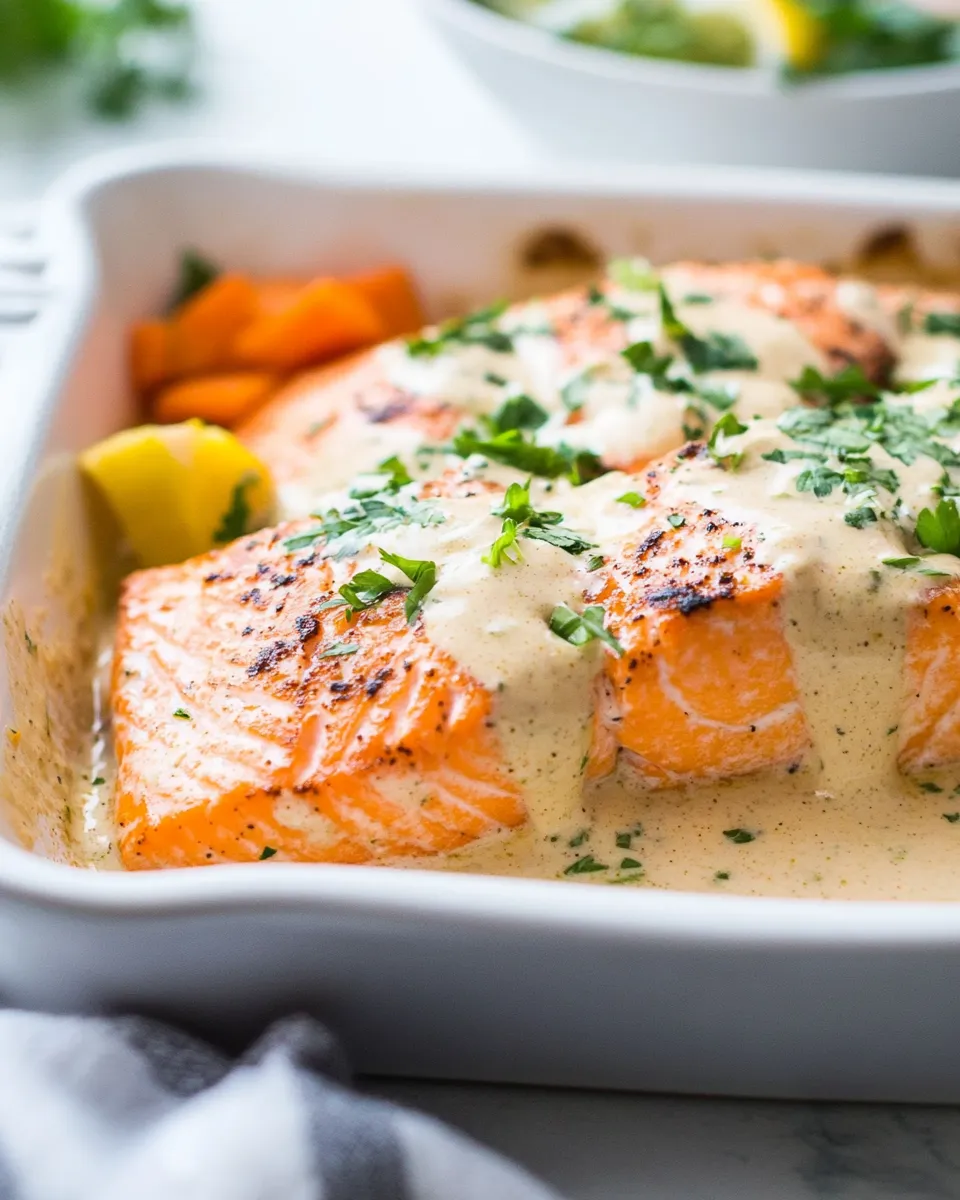
Follow these steps closely for the best results. The directions have been rewritten for clarity while preserving the original ingredient quantities and order of operations.
- Preheat your oven to 425°F (220°C). Line a rimmed baking sheet with parchment paper or a silicone baking mat if you like—this makes cleanup easier.
- Pat the six 6-ounce portions skinless salmon fillets dry with paper towels. Drying the surface helps the fish brown slightly in the oven and ensures even seasoning.
- Place the fillets on the prepared baking sheet, spacing them evenly so hot air can circulate around each piece.
- Drizzle the 2 tablespoons extra virgin olive oil evenly over the fillets, then rub the oil gently over both sides. This adds flavor and helps the seasonings adhere.
- Season the fillets with sea salt and freshly ground black pepper to taste. Use a light hand at first; you can always add a pinch more after the fish is cooked.
- Slide the baking sheet into the preheated oven and bake the salmon fillets until they reach your desired level of doneness. For medium, aim for an internal temperature of about 125–130°F (52–54°C); for medium-well, 135–140°F (57–60°C). Depending on thickness, this typically takes 8–14 minutes. Check the thickest fillet with an instant-read thermometer or by testing: the flesh should flake easily with a fork and still look moist.
- While the salmon bakes, make the sauce. Combine 1½ cups canned coconut milk (do not use light), 1½ teaspoons chili paste, 1½ teaspoons grated fresh ginger, 3 teaspoons freshly squeezed lime juice, 1½ teaspoons fish sauce, and 1 tablespoon packed light brown sugar in a small saucepan over medium-low heat.
- Whisk the sauce ingredients together and warm gently until the mixture is steaming and the sugar has dissolved, about 3–4 minutes. Do not boil aggressively; a gentle simmer is enough to meld the flavors. Taste and adjust seasoning if needed — add a little more lime juice for brightness or a pinch more brown sugar if you prefer it sweeter.
- Remove the sauce from heat and keep it warm. If it seems too thin, cook a minute longer on low heat to slightly reduce and thicken; if it becomes too thick, whisk in a tablespoon or two of warm water until it reaches your desired consistency.
- When the salmon fillets are done, remove them from the oven and transfer them gently to a serving platter or individual plates. Place 1 piece of the 1 tablespoon chilled salted butter, cut into 6 pieces, on top of each fillet so it starts to melt into the hot fish. The chilled butter adds a glossy finish and a gentle, savory note.
- Spoon the warm creamy coconut ginger sauce over and around the fillets, or serve the sauce on the side for guests to add as they like. If desired, sprinkle chopped chives over the top for color and a fresh bite.
- Serve immediately with steamed rice, cauliflower rice, or a light vegetable side. Leftover sauce can be refrigerated for up to 3 days and rewarmed gently on the stove.
Quick tips and substitutions
- If you prefer a milder chili flavor, reduce the chili paste to 1 teaspoon. For a bolder kick, add up to 2 teaspoons.
- Use full-fat canned coconut milk for the creamiest sauce; light coconut milk will produce a thinner, less-silky texture.
- If your fish fillets are particularly thick, you can tent them loosely with foil for the last few minutes to prevent over-browning while ensuring even cooking.
- To keep the sauce ultra-smooth, whisk it continuously while it warms. If small bits of ginger remain, that’s fine — they add texture and freshness.
- For a citrus variation, swap half of the lime juice for orange juice to add a sweeter, fruitier note that complements brown sugar well.
Make-ahead and storage
You can make the sauce up to two days ahead and refrigerate it in an airtight container. When ready to use, gently reheat it on the stove over low heat, whisking to reincorporate any separated coconut milk. Cooked salmon is best eaten the day it’s prepared, but leftover salmon will keep in an airtight container in the refrigerator for up to 2 days. Reheat gently in a low oven (about 275°F / 135°C) until warmed through, then add a fresh squeeze of lime to revive the flavors.
Serving suggestions
- Steamed jasmine or basmati rice — spoon the creamy sauce over the rice for a saucy, comforting plate.
- Lightly steamed or roasted green vegetables such as broccolini, green beans, or asparagus — their slight bitterness cuts the richness of the coconut sauce.
- A crisp side salad with a lime or rice vinegar dressing to echo the citrus notes in the sauce.
- For a lower-carb option, serve the salmon over cauliflower rice or a bed of mixed greens.
Flavor pairings
The interplay of coconut, ginger, lime, and brown sugar here mirrors flavors commonly found in Southeast Asian cooking. Pair this Baked Salmon with Creamy Coconut Ginger Sauce with a simple cucumber salad tossed with rice vinegar, a sprinkle of sesame seeds, and a pinch of sugar, or offer pickled vegetables on the side to add contrast to the creamy sauce.
Final notes
This Baked Salmon with Creamy Coconut Ginger Sauce brings comfort and brightness to the table in equal measure. It’s simple enough for a weeknight and elegant enough for a dinner party. The step-by-step method keeps things foolproof: pat, season, bake, and finish with a quick sauce that requires just a few minutes on the stove. The chilled butter finishing touch is small but transformative — it melts into the hot fillets, adding sheen and a subtle savory richness that ties the dish together.
If you try it, I’d love to hear how you served it and any tweaks you made. Happy cooking!
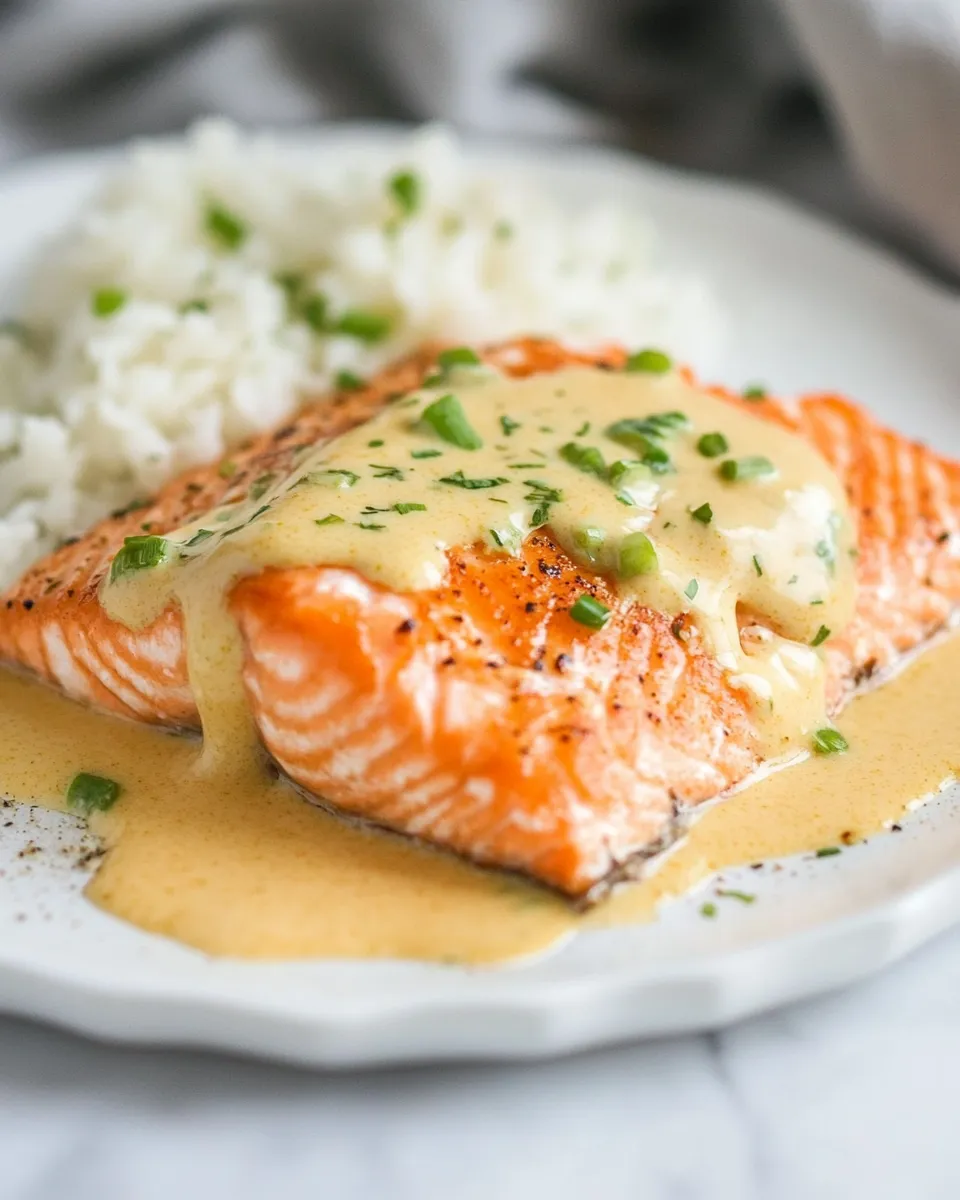
Baked Salmon with Creamy Coconut Ginger Sauce
Equipment
- 9x13 inch Baking Dish
- nonstick spray
- Measuring Spoons
- Measuring cup
- Medium Saucepan
- Spatula or spoon
- Oven
Ingredients
- 6 6-ounce portions skinless salmon fillets
- 2 tablespoons extra virgin olive oil
- 1 tablespoon chilled salted butter cut into 6 pieces
- sea salt and freshly ground black pepper to taste
- 1.5 cups canned coconut milk do not use light
- 1.5 teaspoons chili paste
- 1.5 teaspoons grated fresh ginger
- 3 teaspoons freshly squeezed lime juice
- 1.5 teaspoons fish sauce
- 1 tablespoon packed light brown sugar
- chopped chives for garnish (optional)
Instructions
- Preheat the oven to 375°F (190°C) and spray a 9x13-inch baking dish with nonstick spray.
- Place the six salmon fillets in the prepared dish with space between each piece.
- Drizzle the 2 tablespoons of olive oil over the fillets and top each fillet with one piece of the chilled butter.
- Season the salmon generously with sea salt and freshly ground black pepper.
- Bake the salmon for 13 to 16 minutes, or about 13–16 minutes depending on thickness, until cooked through and it flakes easily with a fork.
- While the salmon bakes, combine the coconut milk, chili paste, grated ginger, lime juice, fish sauce, and brown sugar in a medium saucepan and bring to a boil.
- Reduce heat to low and simmer, stirring often, until the sauce thickens slightly. Remove from heat.
- When the salmon is done, spoon or drizzle the creamy coconut ginger sauce over each fillet and garnish with chopped chives, if desired.
Notes
- Chili paste like Sambal Oelek works well and is found in the Asian section.
- Use full-fat canned coconut milk for a richer sauce.
- Adjust chili paste to taste for more or less heat.
- Slice lime fresh for the best flavor.