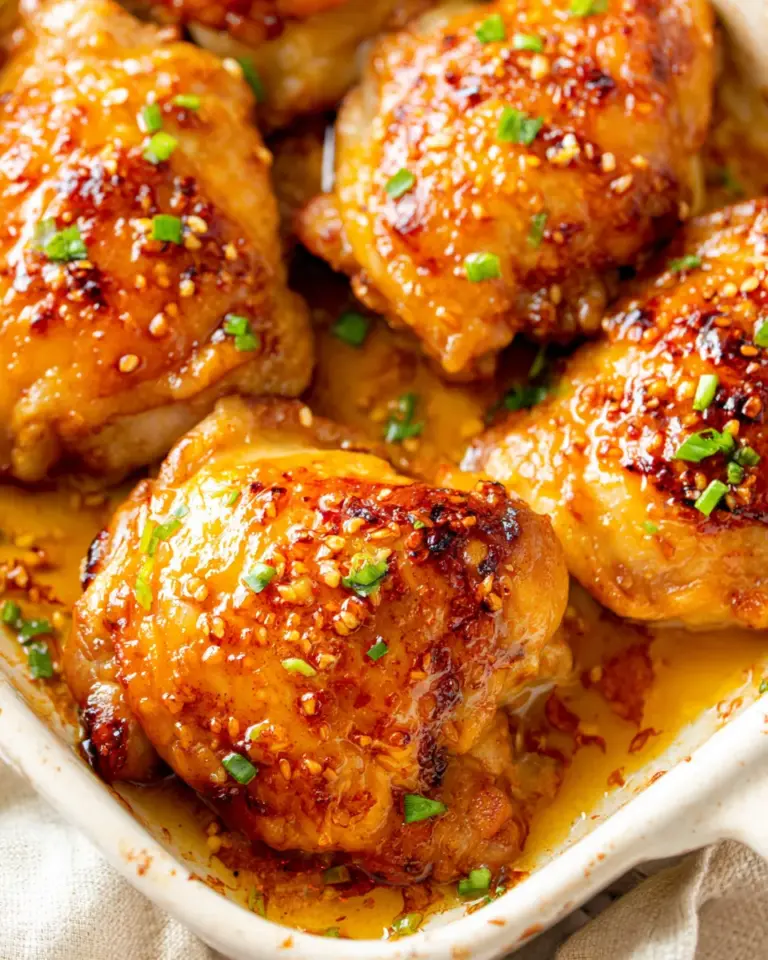
This Balsamic Chicken is a simple, weeknight-friendly dish that feels special enough for guests. Bright, tangy balsamic vinegar meets a touch of honey and sharp Dijon mustard, creating a glossy, flavorful sauce that clings to tender chicken breasts. With just a handful of pantry staples and minimal hands-on time, you can have a satisfying, protein-forward meal in under 30 minutes.
Why you’ll love this recipe
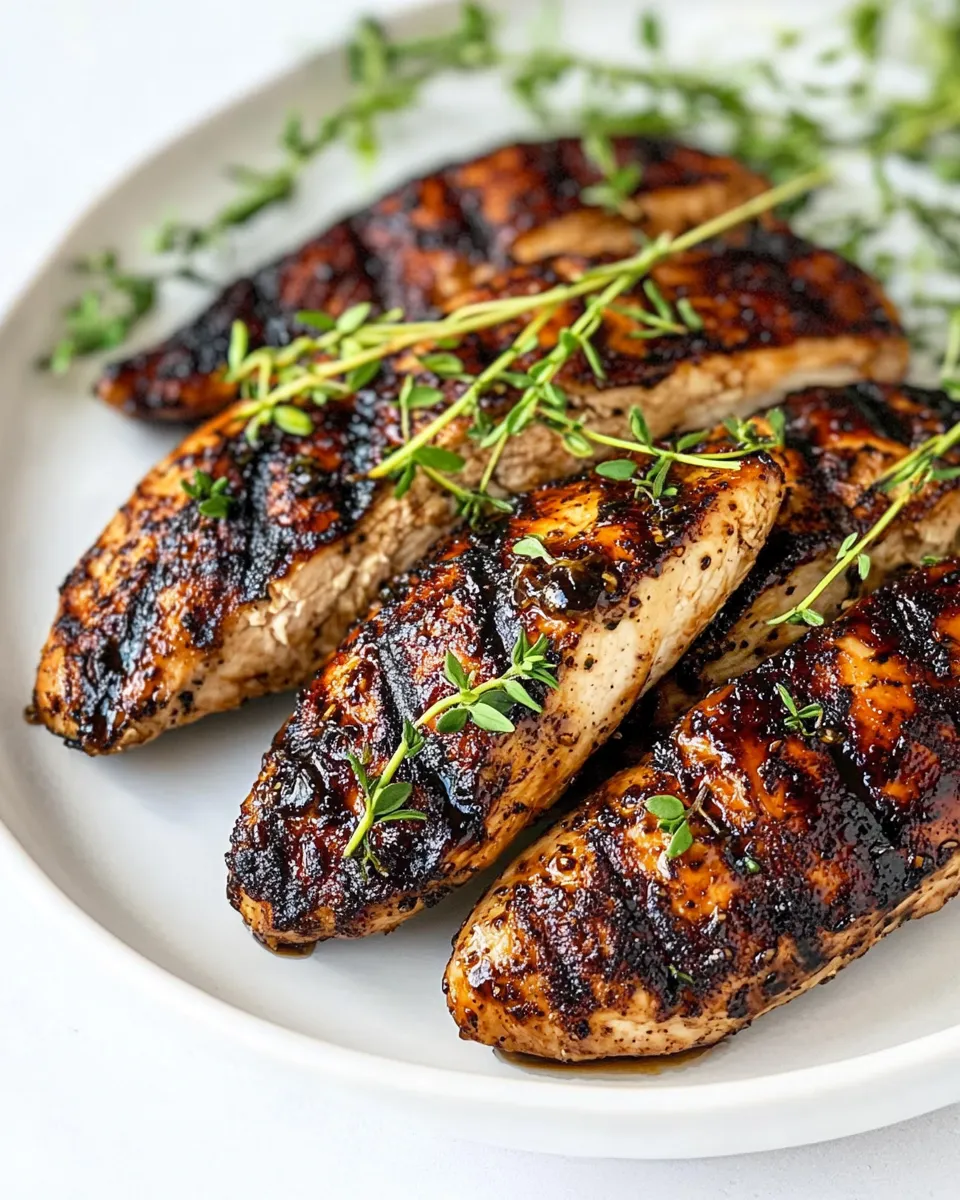
There’s a reason balsamic-based sauces show up so often: they provide a balance of sweet and acidic notes that make chicken sing without masking its natural flavor. This recipe uses a small amount of honey and Dijon mustard to deepen the sauce, while garlic and Italian seasoning add savory aromatics. A couple tablespoons of extra-virgin olive oil keep the chicken juicy and give the sauce a silky finish. Finish with chopped fresh parsley for color and a bright herbal lift.
Ingredients
- 1/3 cup balsamic vinegar
- 1 tablespoon honey
- 4 teaspoons Dijon mustard
- 2 tablespoons extra-virgin olive oil, divided
- 2 cloves garlic, minced
- 1 1/4 teaspoons Italian seasoning
- 4 boneless, skinless chicken breasts (about 1.5 pounds total)
- Salt and freshly ground black pepper, to taste
- Fresh parsley, chopped, for garnish
Kitchen tools
- Large skillet (preferably nonstick or a well-seasoned stainless steel skillet)
- Mixing bowl
- Measuring cups and spoons
- Tongs or a spatula
- Knife and cutting board
Before you start
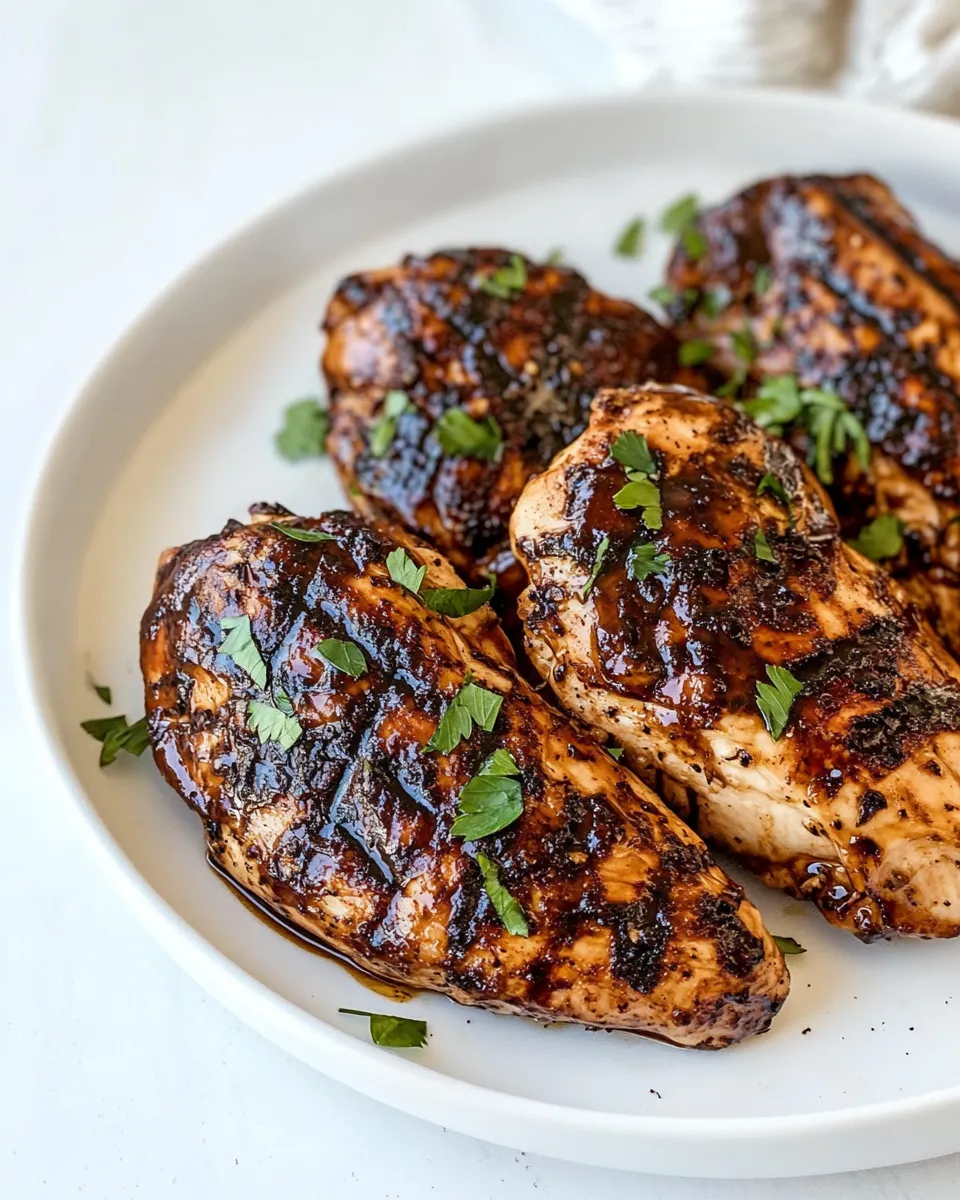
Take the chicken breasts out of the refrigerator 10–15 minutes before cooking so they approach room temperature; this helps them cook more evenly. Pat the chicken dry with paper towels—moisture on the surface prevents a good sear. Mince the garlic finely so it melts into the sauce and doesn’t leave big pieces in the pan.
Step-by-step instructions
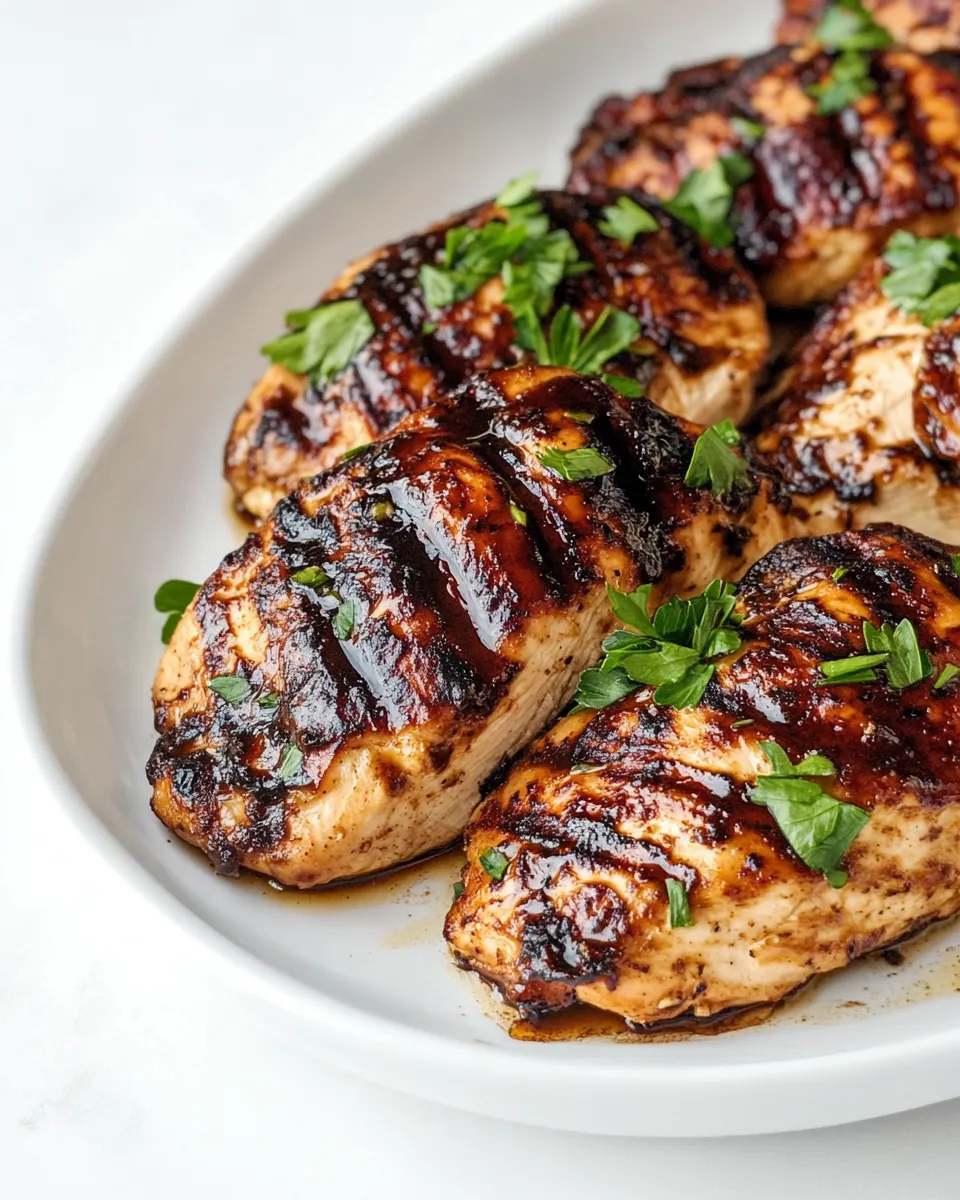
- Make the sauce: In a medium bowl, whisk together 1/3 cup balsamic vinegar, 1 tablespoon honey, 4 teaspoons Dijon mustard, 1 clove minced garlic, and 1 1/4 teaspoons Italian seasoning. Whisk until the honey and mustard are fully incorporated and the mixture looks smooth. Set aside.
- Season the chicken: Pat the four boneless, skinless chicken breasts dry. Season both sides of each breast with salt and freshly ground black pepper to taste.
- Heat the skillet: Place a large skillet over medium-high heat. Add 1 tablespoon of the extra-virgin olive oil and let it warm until it shimmers but is not smoking.
- Sear the chicken: Add the chicken breasts to the hot skillet in a single layer, leaving space between each piece. Cook undisturbed for 4–5 minutes, until the underside is golden brown and releases easily from the pan.
- Flip and continue cooking: Turn each chicken breast over with tongs or a spatula. Reduce the heat to medium and cook the second side for another 4–5 minutes. The exact time will depend on the thickness of your breasts; they should reach an internal temperature of 165°F (74°C).
- Add garlic and remaining oil: Push the chicken to one side of the pan and add the remaining 1 tablespoon extra-virgin olive oil to the empty space. Add the remaining 1 clove minced garlic and sauté briefly—about 20–30 seconds—until fragrant. Stir the garlic into the pan but be careful not to let it burn.
- Pour in the sauce: Pour the prepared balsamic-honey-mustard mixture over the chicken breasts, tilting the pan slightly if needed so the sauce pools around the chicken. Spoon some sauce over each piece to coat the tops.
- Simmer and glaze: Reduce the heat to medium-low and let the sauce simmer gently. As it bubbles, spoon the sauce over the chicken repeatedly. Continue to cook for 2–4 minutes more, until the sauce thickens slightly and becomes glossy. The chicken will finish cooking as the sauce reduces.
- Check doneness: Verify the internal temperature of the thickest part of the chicken with a meat thermometer; it should read 165°F (74°C). If you don’t have a thermometer, slice into the thickest piece to ensure the juices run clear and there is no pink in the center.
- Rest and garnish: Remove the skillet from the heat and let the chicken rest for 3–4 minutes to allow the juices to redistribute. Sprinkle chopped fresh parsley over the chicken for a pop of color and freshness.
- Serve: Serve each chicken breast with a generous spoonful of the reduced balsamic sauce. This dish pairs well with roasted vegetables, mashed potatoes, rice, or a crisp green salad.
Notes and variations
- Adjust sweetness: If you prefer a sweeter glaze, add a touch more honey—no more than 1 teaspoon at a time—until it suits your taste.
- Thicker sauce: For a thicker, stickier glaze, remove the chicken once it’s cooked through and let the sauce reduce on medium heat a minute or two longer. Return the chicken to the pan and coat with the thicker sauce just before serving.
- Herbed finish: Swap the chopped parsley for fresh basil or thyme for a different herbal note.
- Veggie add-ins: For a one-skillet meal, add halved cherry tomatoes or sliced mushrooms to the pan after you flip the chicken. Let them cook in the sauce until tender.
- Make it spicy: Stir a pinch of red pepper flakes into the sauce if you want a little heat.
Make-ahead and storage
You can make the sauce ahead and refrigerate it up to 48 hours. Store leftover cooked chicken in an airtight container in the refrigerator for up to 3 days. Reheat gently in a skillet over low heat with a splash of water or extra-virgin olive oil to loosen the sauce. Avoid microwaving at high heat, which can make the chicken dry.
Serving suggestions
- Serve over creamy mashed potatoes so the balsamic-honey sauce soaks into the mash.
- Plate alongside roasted asparagus or green beans tossed with lemon zest for brightness.
- Pair with fluffy rice or couscous to soak up every last drop of the sauce.
- Thinly slice the chicken and serve it over a bed of mixed greens with shaved Parmesan for a light entrée salad.
Troubleshooting
- Sauce too thin: Simmer a little longer to reduce and thicken. Increase heat slightly while watching carefully to avoid burning.
- Garlic burned: If garlic browns too quickly, reduce the heat and add a splash of water or a tablespoon of olive oil to cool the skillet before continuing.
- Chicken dry: Make sure to sear the chicken on medium-high to lock in juices, and allow it to rest after cooking so the juices redistribute. Also, avoid overcooking—remove from heat as soon as it reaches 165°F (74°C).
Final thoughts
This Balsamic Chicken offers a beautiful balance of sweet, tangy, and savory flavors using simple ingredients you likely already have on hand. The method is straightforward: sear the chicken, build flavor with garlic and Italian seasoning, then finish with a glossy balsamic-honey-Dijon glaze. It’s elegant enough for a dinner party but easy enough for a busy weeknight. Give it a try the next time you want a packed-flavor chicken dinner with minimal fuss.
Enjoy—and don’t forget a final sprinkle of fresh parsley for color and brightness.
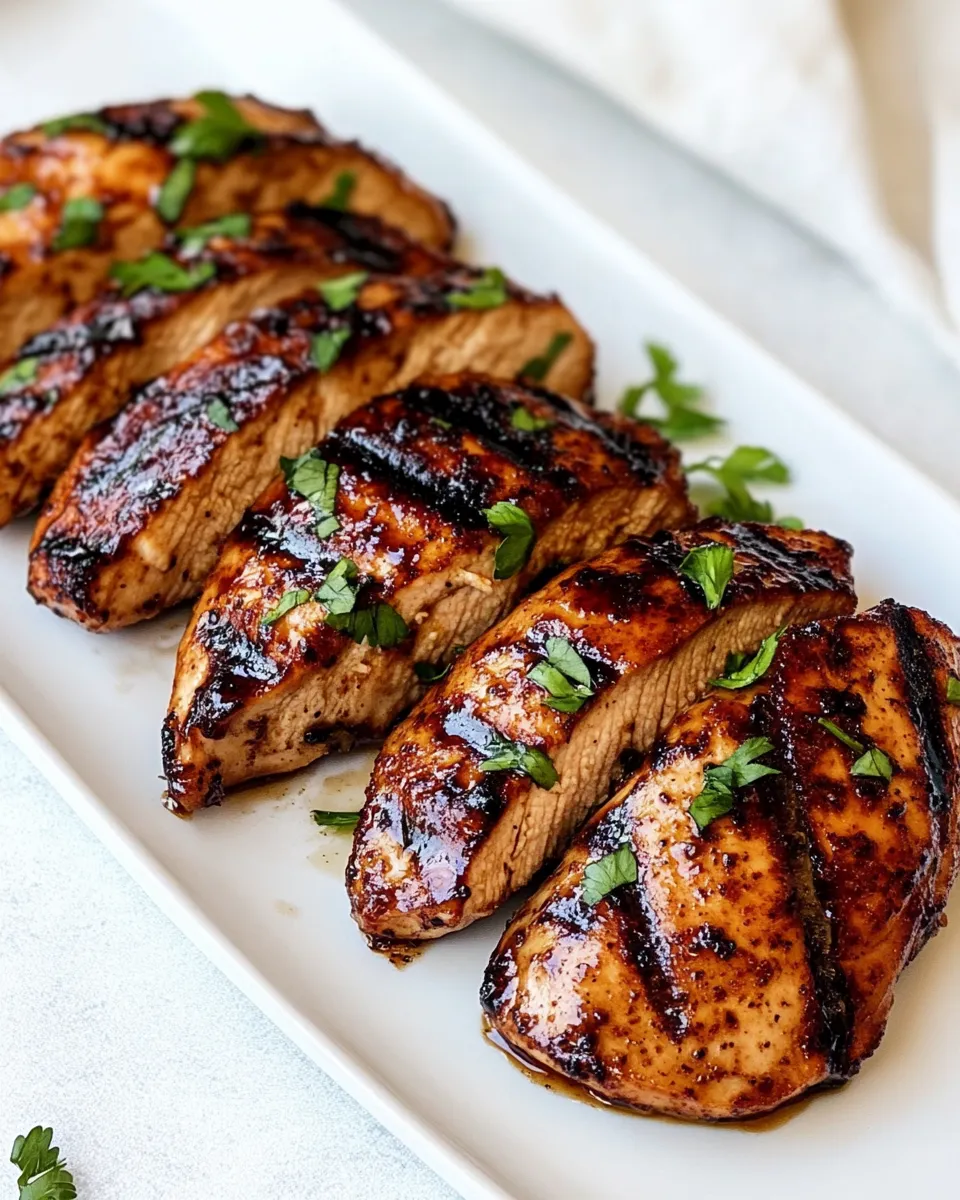
Balsamic Chicken
Equipment
- Bowl
- Measuring cups and spoons
- skillet (oven-safe)
- Tongs or spatula
- Oven
Ingredients
- 1/3 cup balsamic vinegar
- 1 tablespoon honey
- 4 teaspoons Dijon mustard
- 2 tablespoons extra-virgin olive oil divided
- 2 cloves garlic minced
- 1 1/4 teaspoons Italian seasoning
- 4 boneless skinless chicken breasts about 1.5 pounds total
- salt to taste
- freshly ground black pepper to taste
- fresh parsley chopped, for garnish
Instructions
- Preheat the oven to 425°F (220°C).
- In a bowl, whisk together the balsamic vinegar, honey, Dijon mustard, 1 tablespoon of the olive oil, minced garlic, and Italian seasoning until smooth.
- Pat the chicken breasts dry with paper towels and season both sides with salt and freshly ground black pepper.
- Place the chicken in the bowl or a shallow dish with the marinade and turn to coat; let sit for at least 10 minutes.
- Heat an oven-safe skillet over medium-high heat and add the remaining 1 tablespoon olive oil. When the oil is hot, sear the chicken 3 minutes per side until golden brown.
- Pour any leftover marinade over the seared chicken, then transfer the skillet to the preheated oven.
- Bake 13–17 minutes, or until an instant-read thermometer inserted into the thickest part reads 165°F (74°C).
- Remove the skillet from the oven and let the chicken rest 5 minutes, then garnish with chopped fresh parsley and serve.
Notes
- Marinate at least 10 minutes for better flavor.
- Use an oven-safe skillet to avoid transferring the chicken.
- Check internal temperature to ensure doneness.