I love this beef tenderloin because it’s straightforward, impressive, and forgiving when you follow a few habits. It produces a silky interior and a browned crust with minimal fuss: salt ahead, a quick sear, and a short roast. That rhythm keeps the steps clear and the timing consistent, even when you’re juggling sides and guests.
There’s a softness to this method that makes it a go-to for holidays and weeknight celebrations alike. Don’t be intimidated if you haven’t roasted a whole tenderloin before; the technique is more about patience than complexity. A reliable thermometer and a hot skillet are your best friends here.
I’ll walk you through the ingredient essentials, the exact method I use, troubleshooting tips, and ways to adapt this roast to your taste or diet. Practical, direct, and packed with little tips I wish someone had told me on my first try.
The Ingredient Lineup
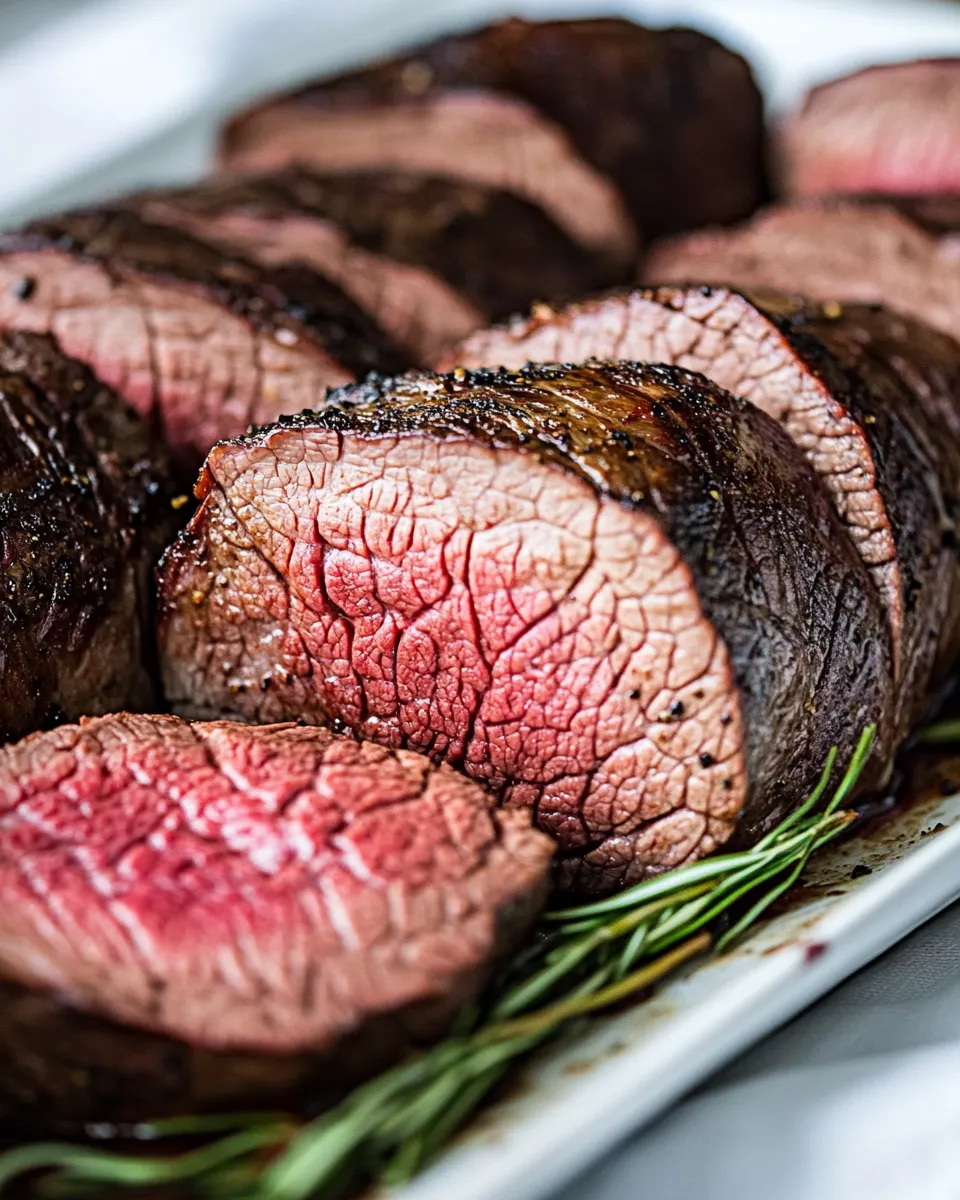
- 13 to 5-lbbeef tenderloin roast — the star of the show; trim and tie if needed so it cooks evenly.
- sea salt — for dry-brining; enhances flavor and helps form a crust during searing.
- Italian Seasoning — a simple herb blend that adds aromatic, savory notes without overpowering the beef.
Make Beef Tenderloin: A Simple Method
- Sprinkle all sides of the 13 to 5-lb beef tenderloin roast with sea salt and place it uncovered in a casserole dish or large Tupperware. Refrigerate up to 12 hours.
- Two hours before cooking, remove the tenderloin from the refrigerator and set it on the counter to come to room temperature. Sprinkle the whole roast evenly with Italian Seasoning.
- Preheat the oven to 425°F (218°C).
- Place a cast-iron or other heavy skillet on the stove and heat it over medium-high until very hot (about 375–390°F if you have an infrared thermometer).
- Transfer the beef tenderloin to the hot dry skillet and sear for 3 to 4 minutes per side, turning to brown all sides and the ends, until the exterior develops a golden-brown crust.
- Move the skillet with the seared tenderloin into the preheated oven. Roast until an instant-read thermometer inserted into the thickest part reads: 115–120°F for rare (about 10–15 minutes), 120–125°F for medium-rare (about 12–18 minutes), or 130–135°F for medium (about 18–25 minutes). Times are approximate—use the thermometer for accuracy. The internal temperature will rise another 5–10°F while resting.
- Remove the tenderloin from the oven and transfer it to a cutting board. Let it rest, uncovered or lightly tented, for 15 minutes.
- Cut the strings off the roast, slice the tenderloin into 1/2-inch slices, and serve.
What Sets This Recipe Apart
This approach is simple and built on technique rather than a long ingredient list. The two-step seasoning—an overnight salt and a fresh herb dusting before cooking—does heavy lifting in flavor. Dry-brining in the fridge concentrates taste and improves texture. The short, high-temperature roast after searing locks in juices without overcooking the center.
You don’t need glazes, compound butters, or complex marinades to make this tender cut sing. The clear focus here is: proper seasoning, a very hot pan to build a crust, and precise temperature control with a thermometer. That economy of technique makes the roast consistently excellent.
Healthier Substitutions
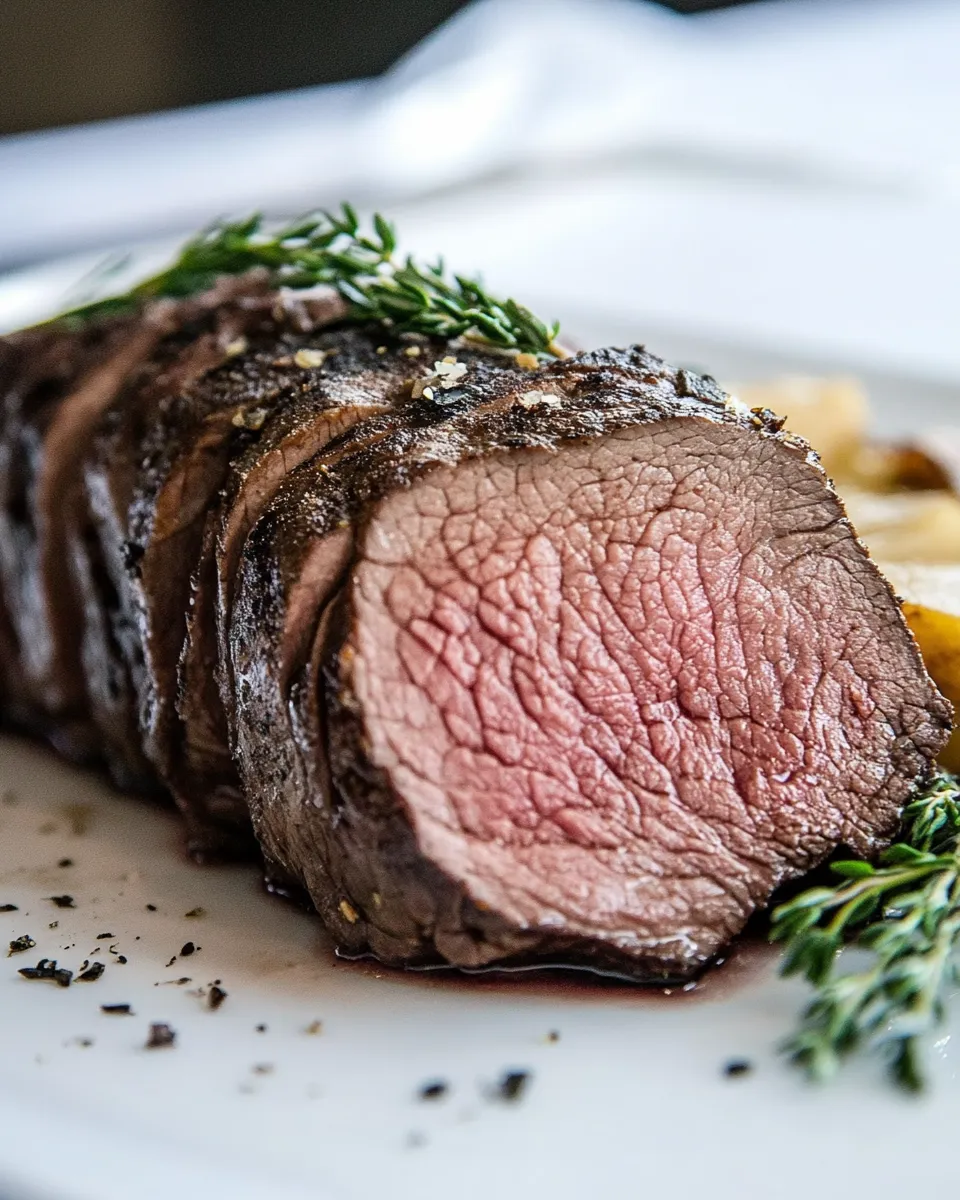
Tenderloin is naturally lean, so you don’t need to strip it down further for a healthier meal, but you can make small adjustments:
- Reduce the sea salt amount or use a lower-sodium salt option if you’re watching sodium. The dry-brine still works with less salt; it will simply be milder.
- Use a fresh herb mix (parsley, rosemary, thyme) instead of a pre-blended Italian Seasoning to control salt or additives in commercial blends.
- Serve with plenty of vegetables or a bright salad to balance richness without changing the roast itself.
Setup & Equipment
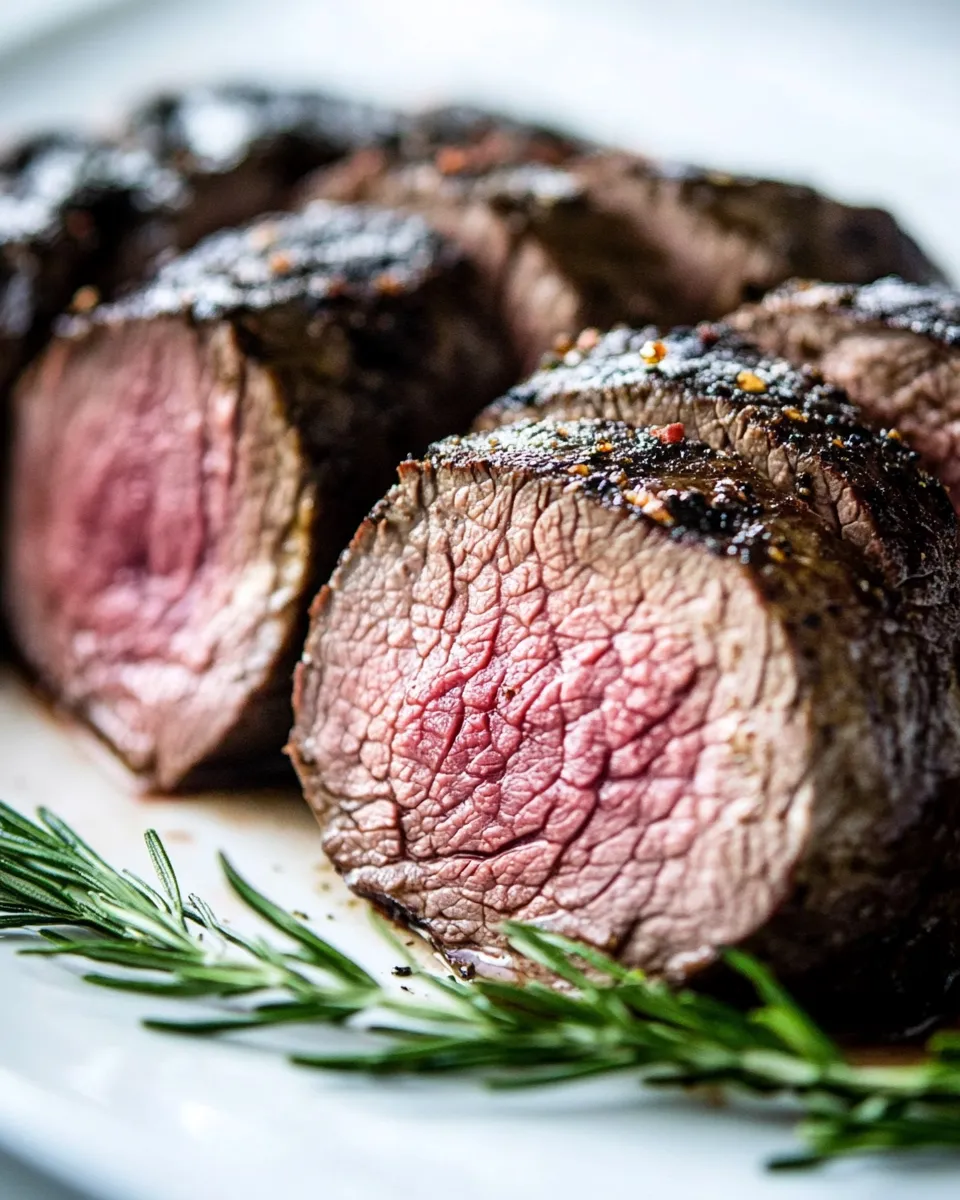
Good equipment makes this straightforward. You don’t need a full pro kitchen, but a few items are essential:
- Heavy skillet (cast iron preferred) — for even, high-heat searing and oven use.
- Instant-read thermometer — the single most important tool for perfect doneness.
- Oven-safe handle mitts or a skillet with an oven-safe handle — you’ll move the pan from stovetop to oven.
- Cutting board and kitchen twine scissors — to rest and slice the roast cleanly.
- Casserole dish or large Tupperware — for the initial uncovered dry-brine in the fridge.
Problems & Prevention
Common issues
Under- or overcooked center: That’s usually timing or thermometer use. Solution: rely on the instant-read thermometer and remember carryover cooking will add 5–10°F while the roast rests.
No crust or soggy exterior
If the roast doesn’t develop a good crust, the pan wasn’t hot enough or the meat was too wet. Prevent it by patting the roast dry before searing (if perspiration or excess moisture is present), and make sure the skillet is screaming hot before you touch the meat to the metal.
Tough slices after resting
Cutting too soon or slicing incorrectly can make the meat seem less tender. Always rest for the full 15 minutes and slice against the grain in 1/2-inch slices as directed.
Tailor It to Your Diet
Beef tenderloin is versatile. Here’s how to fit it into common diets without changing the method:
- Keto or low-carb: No changes needed—this roast is already high protein and low carb.
- Gluten-free: The base recipe uses no gluten-containing ingredients. Confirm your Italian Seasoning is gluten-free if using a store blend.
- Lower sodium: Reduce the initial salt or shorten the dry-brine time; a shorter rest still improves texture but with milder salt uptake.
- Pescatarian/vegetarian: For non-meat eaters, this technique translates to plant proteins in concept—dry season, high-heat sear, and a short oven finish—but that’s a different ingredient list and method entirely.
Flavor Logic
Why salt early? Dry-brining lets salt penetrate and season the meat through osmosis. It also draws out a bit of moisture that then reabsorbs for more evenly seasoned and textured meat. The sear is all about Maillard reaction—high heat creates a flavorful, brown crust that contrasts the soft interior. Italian Seasoning is simply a friendly, aromatic backdrop; it doesn’t compete with the beef’s natural flavor.
The roast’s short, hot time in the oven finishes the interior without turning it dry. Because tenderloin is lean, you want to avoid long roasts at lower temperatures that can push it past the sweet spot. That’s why this combination—dry brine, quick sear, brief roast—works so well.
Keep It Fresh: Storage Guide
Leftovers are great and store well if handled properly. Follow these simple steps:
- Cool: Let slices cool to room temperature no more than two hours after cooking.
- Refrigerate: Store in an airtight container in the fridge for up to 3–4 days.
- Freeze: For longer storage, wrap tightly in plastic and foil or use a vacuum sealer. Freeze up to 3 months. Thaw in the fridge overnight before reheating.
- Reheat gently: Warm slices in a low oven (250–275°F) wrapped in foil for 10–15 minutes, or quickly sear slices in a hot pan for 30–60 seconds per side to avoid overcooking.
Reader Q&A
Q: Can I skip the overnight salt and just season before cooking?
A: Yes. The roast will still be good but not quite as deeply seasoned or texturally improved. If short on time, a few hours on the counter or a 30–60 minute rest with salt will help, but overnight is best for flavor depth.
Q: What internal temperature should I aim for if I like medium-rare?
A: Pull the roast from the oven at 120–125°F for medium-rare; it will rise several degrees while resting. Use an instant-read thermometer inserted into the thickest part to be sure.
Q: Is a whole tenderloin hard to slice neatly?
A: The key is resting and using a sharp knife. Resting lets juices redistribute; a sharp knife gives clean slices. Remove any strings and cut against the grain into uniform 1/2-inch slices for the best presentation.
Wrap-Up
This Beef Tenderloin Recipe is about reliable technique and straightforward seasoning. Plan the salt-ahead step, heat your skillet until it’s truly hot, watch the thermometer, and rest the meat. Follow those basics and you’ll serve a beautiful roast with minimal stress.
Serve the slices simply with pan sauces, roasted vegetables, or a bright salad and you’ll have a meal that looks and tastes like you spent hours—without having to. Enjoy the process, and let the method be your framework for a crowd-pleasing centerpiece.
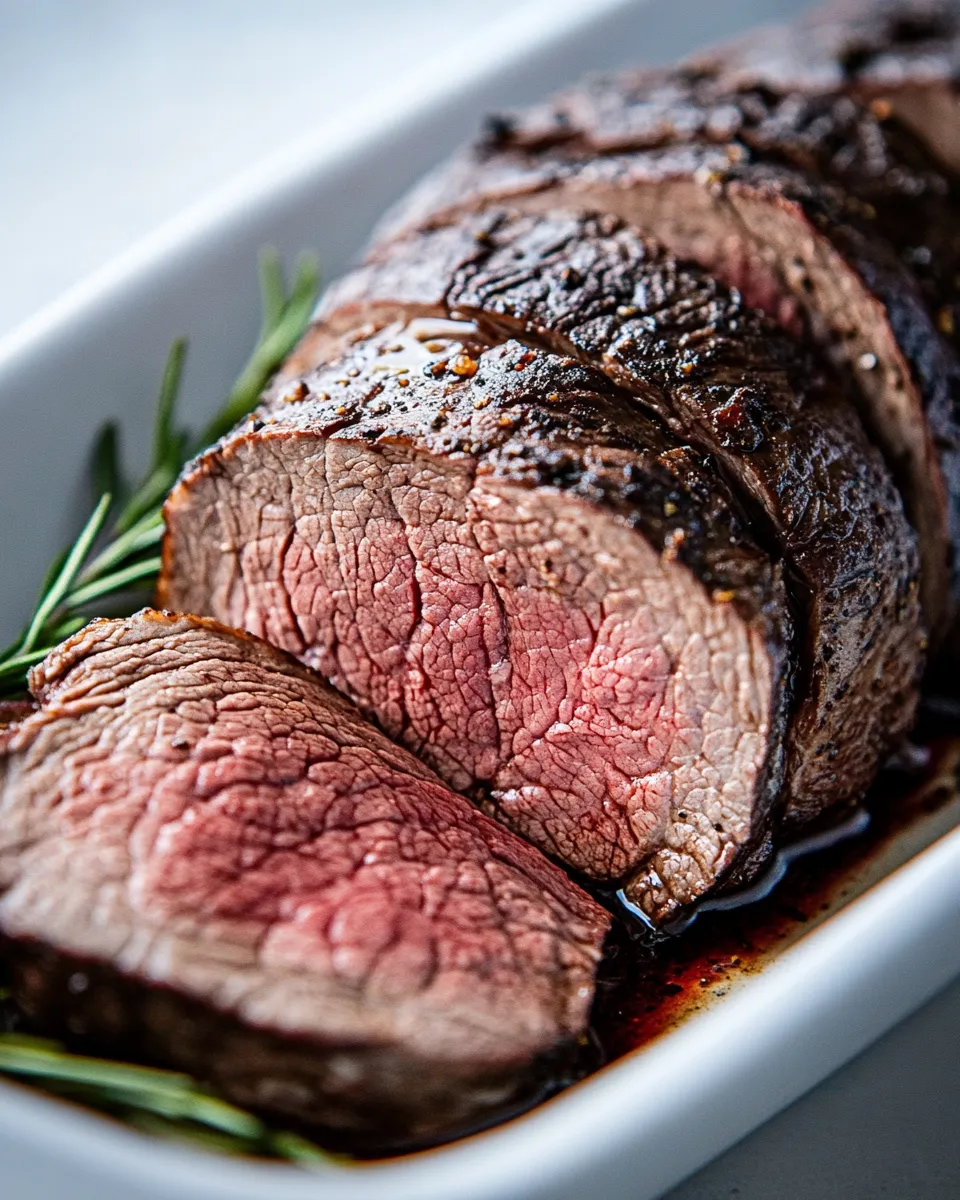
Beef Tenderloin Recipe
Equipment
- cast-iron skillet or heavy skillet
- Oven
- Instant Read Thermometer
- casserole dish or large Tupperware
- Cutting Board
- Knife
Ingredients
Ingredients
- 13 to 5- lbbeef tenderloin roast
- sea salt
- Italian Seasoning
Instructions
Instructions
- Sprinkle all sides of the 13 to 5-lb beef tenderloin roast with sea salt and place it uncovered in a casserole dish or large Tupperware. Refrigerate up to 12 hours.
- Two hours before cooking, remove the tenderloin from the refrigerator and set it on the counter to come to room temperature. Sprinkle the whole roast evenly with Italian Seasoning.
- Preheat the oven to 425°F (218°C).
- Place a cast-iron or other heavy skillet on the stove and heat it over medium-high until very hot (about 375–390°F if you have an infrared thermometer).
- Transfer the beef tenderloin to the hot dry skillet and sear for 3 to 4 minutes per side, turning to brown all sides and the ends, until the exterior develops a golden-brown crust.
- Move the skillet with the seared tenderloin into the preheated oven. Roast until an instant-read thermometer inserted into the thickest part reads: 115–120°F for rare (about 10–15 minutes), 120–125°F for medium-rare (about 12–18 minutes), or 130–135°F for medium (about 18–25 minutes). Times are approximate—use the thermometer for accuracy. The internal temperature will rise another 5–10°F while resting.
- Remove the tenderloin from the oven and transfer it to a cutting board. Let it rest, uncovered or lightly tented, for 15 minutes.
- Cut the strings off the roast, slice the tenderloin into 1/2-inch slices, and serve.