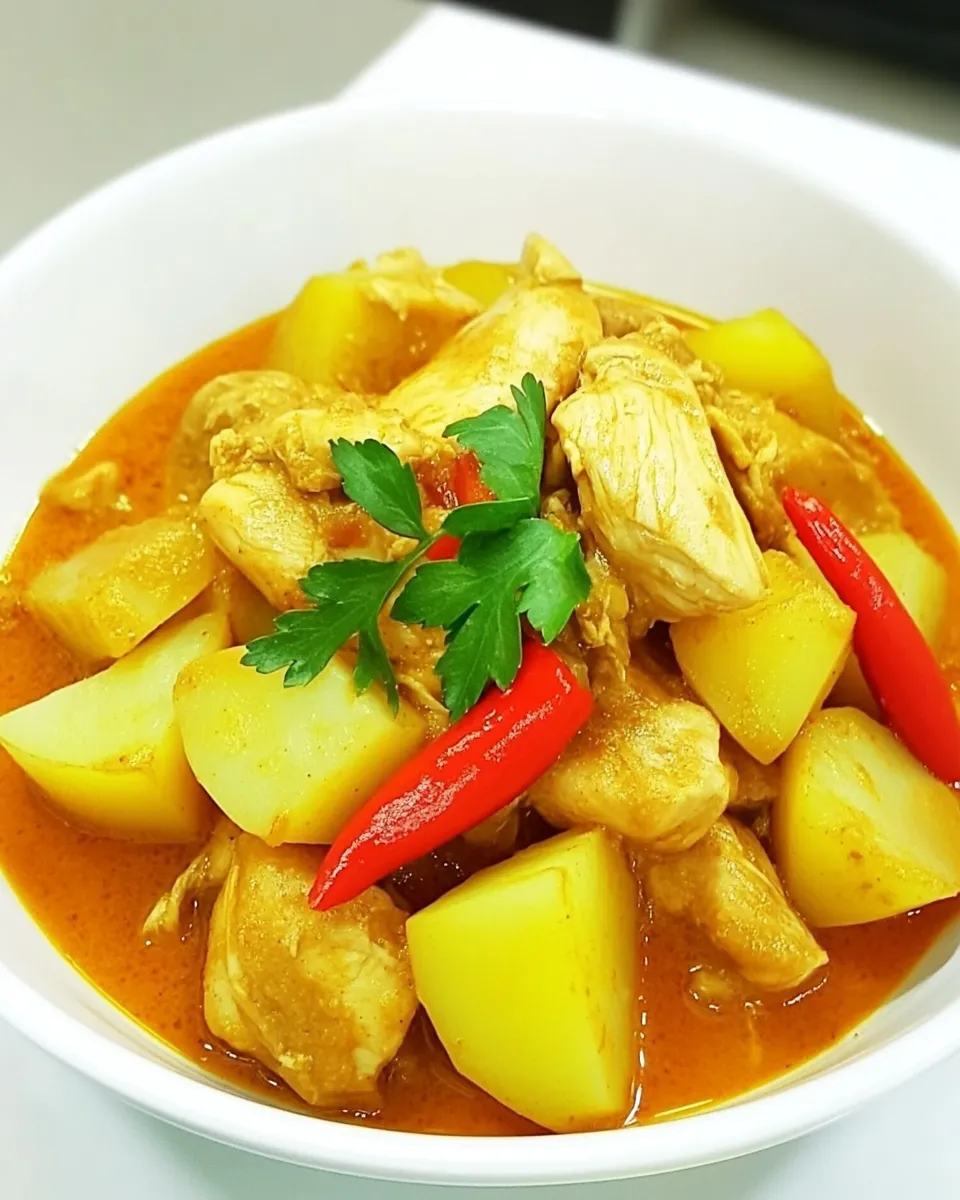
I make this curry on slow weekdays and busy weekends alike. It’s comforting without being fussy, with bone-in chicken that keeps the sauce rich and potatoes that soak up the flavor. The method is straightforward and forgiving, which is why I reach for it when I want something reliable and fragrant on the table.
The recipe centers on a single pack of instant curry paste, a few shallots, bruised lemongrass and coconut milk for a rounded finish. Little technique, big payoff: brown the shallots, bloom the paste, simmer gently until the chicken and potatoes are tender. That’s the core.
You’ll find exact steps below, plus practical tips about timing, tools, and make-ahead storage. No gimmicks — just one dependable curry you can make again and again.
Gather These Ingredients
Ingredients
- 1 pack instant curry paste, 8 oz. or 250 g — the concentrated flavor base; use exactly this amount for balance.
- 8 oz (230 g) potatoes, peeled — cut into chunks so they hold texture and absorb the sauce.
- 2 lbs (900 g) chicken, 4 drumsticks and 4 thighs or 4 leg quarters — bone-in pieces add depth; either option works as listed.
- 3 shallots, peeled and sliced thinly — they caramelize quickly and sweeten the sauce.
- 2 lemongrass, use the white parts only, pounded — bruised to release aroma; remove before serving.
- 1 tablespoon oil — for sautéing the shallots and carrying the curry paste flavors.
- 2 cups water — the cooking liquid; don’t reduce below this if you want the same saucy result.
- 1/2 cup coconut milk — stirred in at the end to round and soften the curry.
- 1 sprig curry leaves, optional — optional aromatics; add near the end if you have them.
Chicken Curry with Potatoes: Step-by-Step Guide
- Prepare ingredients: peel and thinly slice the 3 shallots; peel the 8 oz (230 g) potatoes and cut them into roughly 1-inch (2–3 cm) chunks; pat the 2 lbs (900 g) chicken pieces dry and leave the bone in; take the white parts of the 2 lemongrass stalks and pound/bruise them.
- Heat 1 tablespoon oil in a deep pot over medium heat.
- Add the sliced shallots and sauté until aromatic and lightly browned, about 3–4 minutes.
- Add 1 pack (8 oz / 250 g) instant curry paste to the pot and cook, stirring, for 1–2 minutes until fragrant and well combined with the shallots.
- Add the chicken pieces and the pounded lemongrass to the pot. Stir to coat the chicken with the paste and cook for about 1 minute.
- Pour in 2 cups water, scrape any browned bits from the bottom of the pot, then bring the mixture to a boil over medium-high heat.
- Once boiling, reduce the heat to medium-low, add the potato chunks, cover the pot, and simmer for about 20 minutes, or until the chicken and potatoes are tender.
- When the chicken and potatoes are tender, stir in 1/2 cup coconut milk and add the optional 1 sprig curry leaves if using. Heat gently for 1–2 minutes until warmed through (avoid prolonged vigorous boiling).
- Remove and discard the lemongrass pieces (and the curry leaves sprig, if used). Serve the curry hot.
- Optional make-ahead method: After step 7, you may turn off the heat, let the curry cool, and refrigerate overnight to deepen the flavor. The next day, reheat the curry, stir in the coconut milk and optional curry leaves, heat 1–2 minutes until warmed through, remove lemongrass and leaves, and serve.
What Sets This Recipe Apart
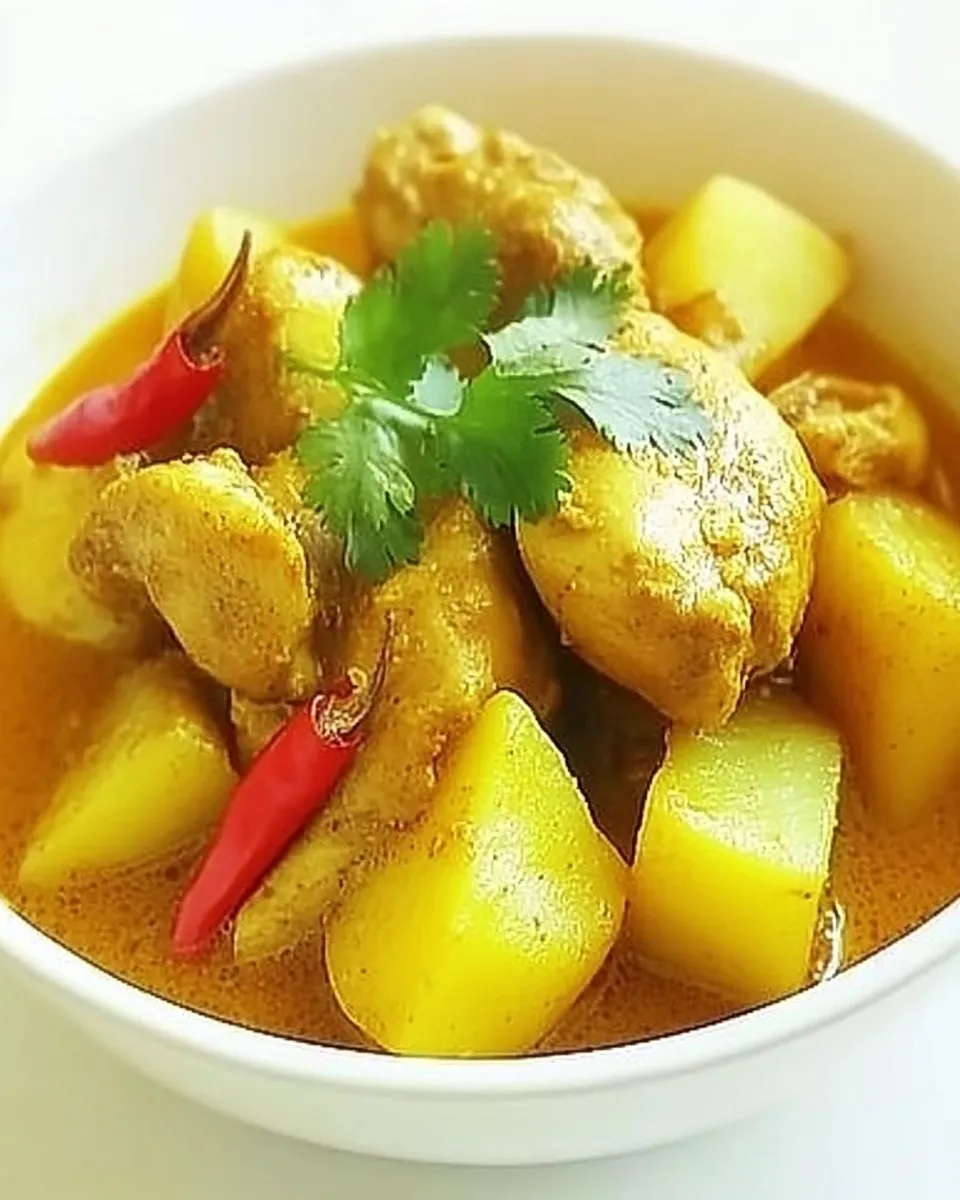
This dish relies on three simple decisions that change everything: bone-in chicken for body, bruised lemongrass for bright top notes, and instant curry paste for consistent, bold flavor. Bone-in pieces release gelatin and richness into the sauce as they cook, so you get depth without extra steps.
Instant curry paste speeds the process without sacrificing complexity. It’s a shortcut that still lets the sautéed shallots and lemongrass shine. Finishing with coconut milk softens the edges and gives the sauce a silkier mouthfeel without diluting the curry paste’s character.
No-Store Runs Needed
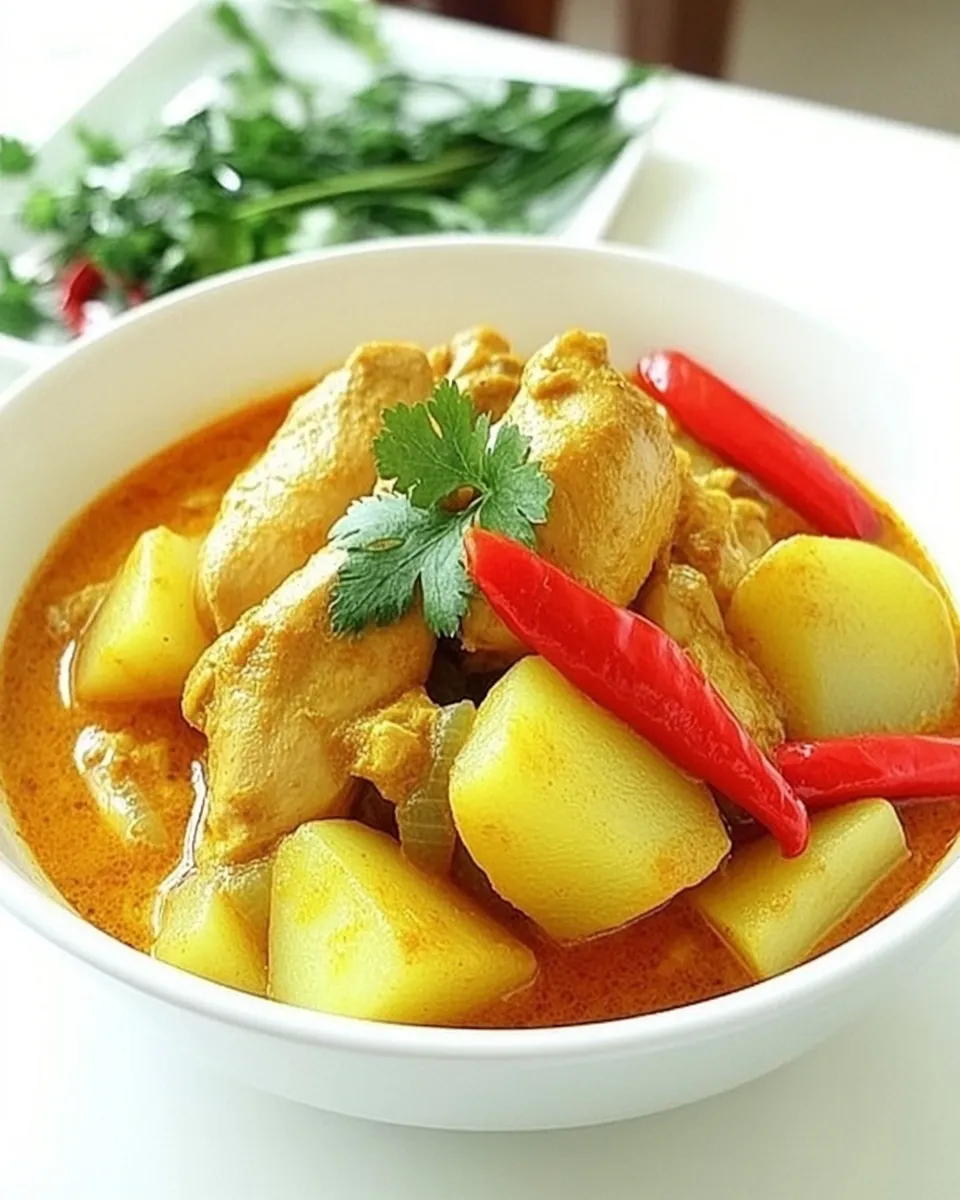
Look through the ingredient list before you start. If you have instant curry paste, a couple of shallots, some potatoes, chicken and coconut milk, you’re good to go. The recipe is designed so pantry staples do most of the work.
The only truly optional item is the curry leaves sprig — useful if you have it, but not required. The rest are straightforward ingredients many people keep on hand.
Essential Tools for Success
- Deep pot with lid — for even simmering and enough space for liquid and chicken.
- Sharp knife and cutting board — for slicing shallots and chopping potatoes cleanly.
- Wooden spoon or spatula — for stirring the curry paste and scraping browned bits.
- Measuring cups and tablespoon — to keep the water, oil and coconut milk amounts accurate.
- Tongs or a slotted spoon — to move chicken pieces and remove lemongrass easily.
Avoid These Mistakes
- Adding coconut milk too early — it should be stirred in at the end to prevent splitting and to keep the flavor balanced.
- Skipping the shallot browning — lightly browned shallots add sweetness and a base layer of flavor; don’t rush this step.
- Over-boiling after adding coconut milk — finish gently for 1–2 minutes to warm through; prolonged vigorous boiling can separate the coconut milk.
- Using boneless pieces when the recipe calls for bone-in — you can, but you’ll lose some of the body and richness the bones add to the sauce.
- Not removing the lemongrass and curry leaves before serving — they’re aromatic helpers, not something to eat whole.
Make It Your Way
Within the recipe’s framework there’s room to adapt to what’s on hand:
- Chicken pieces: use the listed 4 drumsticks and 4 thighs or 4 leg quarters exactly as given; both options are specified in the ingredient list and will yield the intended richness.
- Curry leaves: treat them as optional — add if you have them and skip if you don’t.
- Potatoes: cut into roughly 1-inch chunks so they cook through in the suggested 20 minutes. Reduce the size slightly if you prefer them softer; increase if you want firmer bites.
- Make-ahead: follow the optional method in step 10 to deepen flavor by refrigerating overnight before finishing with coconut milk.
Cook’s Commentary
I love how forgiving this method is. The curry paste does most of the heavy lifting, so your focus is on gentle heat control and timing. Browning the shallots for 3–4 minutes isn’t a test of patience — it’s the moment that turns a good curry into a great one. You’ll smell the change long before you see it.
Two practical notes from experience: first, patting the chicken dry makes the paste adhere and promotes a small amount of sear that deepens flavor. Second, bruising the white parts of the lemongrass releases fragrant oils; don’t skip that step. Always remove the lemongrass before serving — it provides aroma, not texture.
Make-Ahead & Storage
Use the optional make-ahead method in step 10 if you want an even richer curry: cool after step 7, refrigerate overnight, then finish the next day with coconut milk and the curry leaves. Flavors meld beautifully this way.
Storage guidance:
- Refrigerator: keep in a sealed container for up to 3–4 days.
- Freezer: cool completely, then freeze for up to 2 months in a freezer-safe container. Thaw in the refrigerator before reheating.
- Reheating: warm gently on the stovetop until just heated through, then stir in coconut milk and heat 1–2 minutes as directed in step 8. Avoid aggressive boiling after coconut milk is added.
Questions People Ask
How do I know the chicken is done? The meat should pull away easily from the bone and register hot through the thickest part—about the cooking time listed. The recipe’s 20-minute simmer after adding potatoes is designed to ensure both the chicken and potatoes are tender.
Can I skip the lemongrass? You can omit it, but you’ll lose a bright, citrusy note. If it’s not on hand, rely on the curry paste and shallots; the dish will still be tasty but slightly less aromatic.
What if the sauce is too thin or too thick? To thicken, simmer uncovered a bit longer before adding coconut milk so some liquid evaporates. To loosen, add a small splash of water and heat briefly. Remember the recipe’s liquid quantities are calibrated for a balanced sauce.
Final Thoughts
This Chicken Curry with Potatoes is one of those dependable recipes that asks for minimal fuss and rewards you with steady, layered flavor. Follow the steps in order, respect the small details (shallot browning, bruised lemongrass, gentle finish with coconut milk), and you’ll have a satisfying main that keeps well and scales comfortably.
Make it tonight, or make it ahead for an even deeper taste tomorrow. Either way, it’s a practical, fragrant curry that fits into real life — and into a busy week.
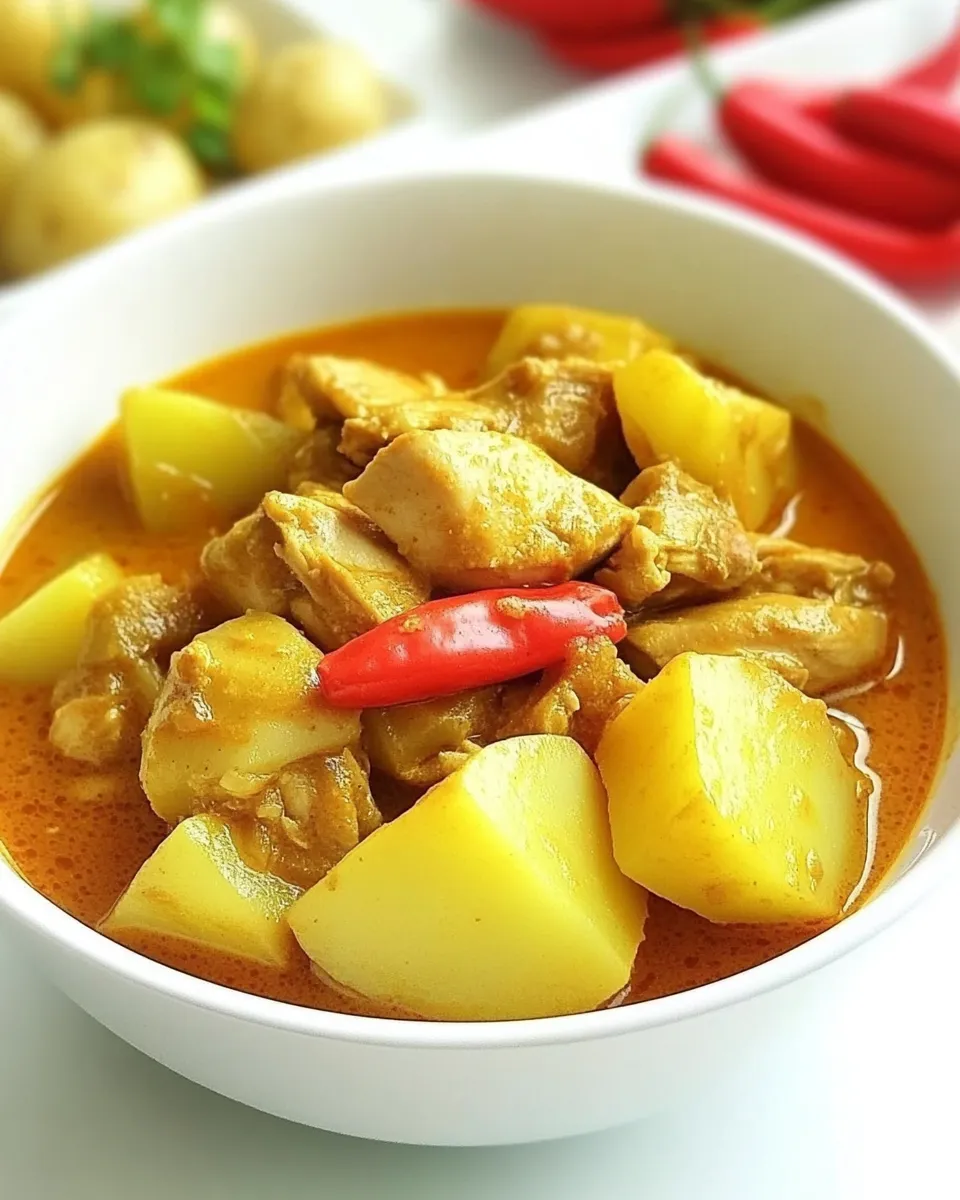
Chicken Curry with Potatoes
Equipment
- deep pot
- Knife
- Cutting Board
- Spoon
Ingredients
Ingredients
- 1 packinstant curry paste 8 oz. or 250 g
- 8 oz 230 gpotatoes, peeled
- 2 lbs 900 gchicken, 4 drumsticks and 4 thighs or 4 leg quarters
- 3 shallots peeled and sliced thinly
- 2 lemongrass use the white parts only, pounded
- 1 tablespoonoil
- 2 cupswater
- 1/2 cupcoconut milk
- 1 sprigcurry leaves optional
Instructions
Instructions
- Prepare ingredients: peel and thinly slice the 3 shallots; peel the 8 oz (230 g) potatoes and cut them into roughly 1-inch (2–3 cm) chunks; pat the 2 lbs (900 g) chicken pieces dry and leave the bone in; take the white parts of the 2 lemongrass stalks and pound/bruise them.
- Heat 1 tablespoon oil in a deep pot over medium heat.
- Add the sliced shallots and sauté until aromatic and lightly browned, about 3–4 minutes.
- Add 1 pack (8 oz / 250 g) instant curry paste to the pot and cook, stirring, for 1–2 minutes until fragrant and well combined with the shallots.
- Add the chicken pieces and the pounded lemongrass to the pot. Stir to coat the chicken with the paste and cook for about 1 minute.
- Pour in 2 cups water, scrape any browned bits from the bottom of the pot, then bring the mixture to a boil over medium-high heat.
- Once boiling, reduce the heat to medium-low, add the potato chunks, cover the pot, and simmer for about 20 minutes, or until the chicken and potatoes are tender.
- When the chicken and potatoes are tender, stir in 1/2 cup coconut milk and add the optional 1 sprig curry leaves if using. Heat gently for 1–2 minutes until warmed through (avoid prolonged vigorous boiling).
- Remove and discard the lemongrass pieces (and the curry leaves sprig, if used). Serve the curry hot.
- Optional make-ahead method: After step 7, you may turn off the heat, let the curry cool, and refrigerate overnight to deepen the flavor. The next day, reheat the curry, stir in the coconut milk and optional curry leaves, heat 1–2 minutes until warmed through, remove lemongrass and leaves, and serve.
Notes
Malaysian curries taste different compared to Thai curries. First of all, we don’t use fish sauce and sugar in Malaysian curries. Also, Malaysian curries are not as rich and milky as we use much less coconut milk, so the tastes of the various spices really shine through.
Hence, Malaysian curries are more spice-laden and aromatic in my opinion. According to my Indian friends, Malaysian curry is closest in taste to Indian curry.
Buying Guide:
You can buy
Instant curry paste
on Amazon. This is the brand I use.