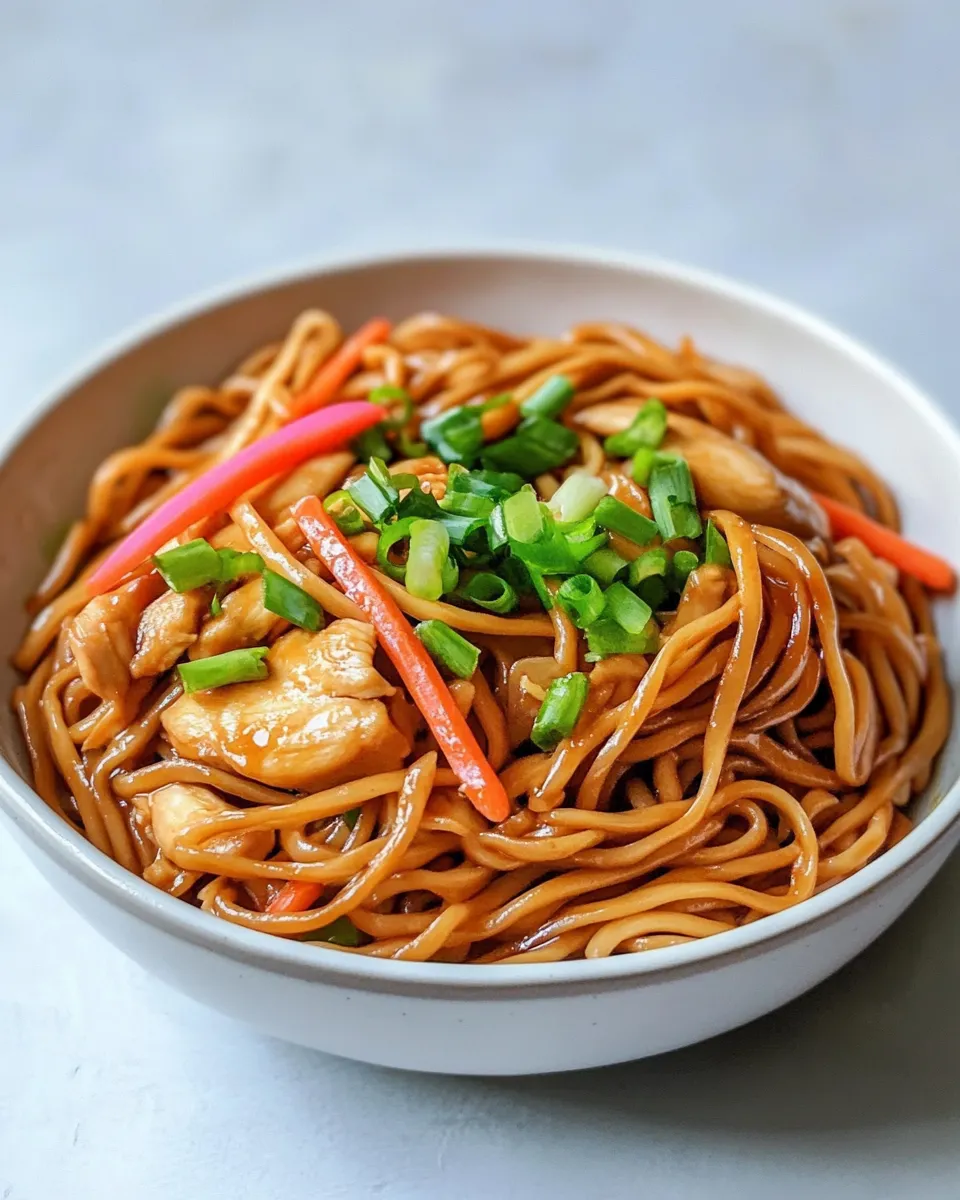
I make this Chicken Yakisoba when I want a fast weeknight dinner that still feels thoughtful. It’s one of those stir-fries that wears well for leftovers, but it’s happiest fresh off the pan—bright, saucy, and a little caramelized at the edges.
This version leans on a simple, bold sauce and fresh yakisoba noodles. You don’t need exotic tools or obscure ingredients; everything can be prepped in advance so the actual cooking is quick. I’ll walk you through the ingredients, step-by-step instructions, and sensible swaps so you can adapt it to what’s in your kitchen.
Read on for practical tips from my test kitchen, what to avoid, and how to store or reheat leftovers so the noodles stay as good as possible. Let’s get the pan hot and make a dinner that becomes a keeper.
Ingredient Rundown
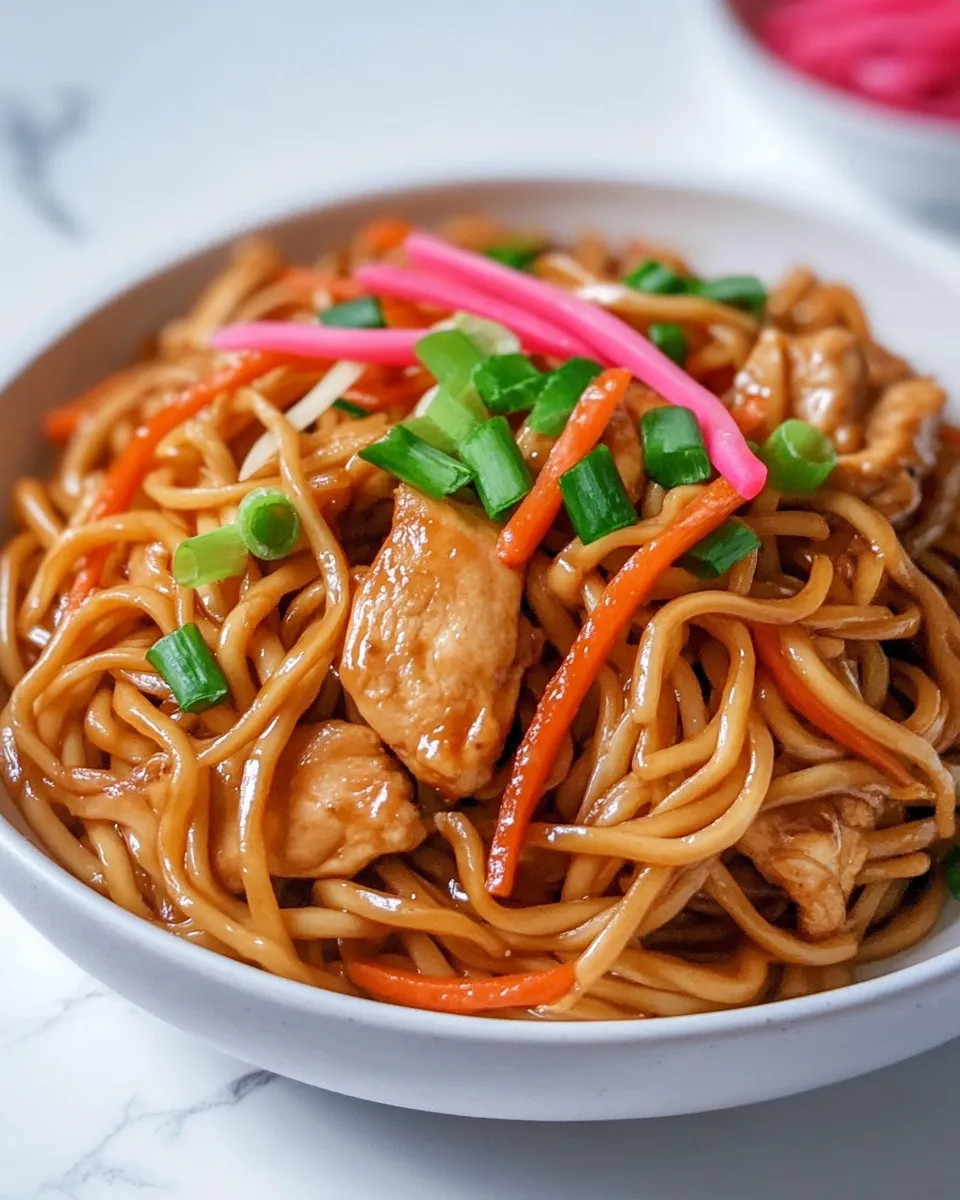
Below are the ingredients used in this recipe with a short note or tip for each. I keep these measured and listed exactly as provided so you can follow the recipe with confidence.
- 1/4 cup soy sauce — Provides the savory, salty backbone for the sauce; use regular or low-sodium depending on preference.
- 2 tablespoons Worcestershire sauce — Adds tangy depth and umami that rounds the sauce.
- 2 tablespoons ketchup — Gives sweetness, acidity, and the familiar yakisoba flavor note.
- 1 tablespoon oyster sauce — Concentrated umami and a touch of sweetness to balance the sauce.
- 1 tablespoon brown sugar — Helps the sauce glaze the noodles and creates light caramelization.
- 1/2 teaspoon sesame oil — A little sesame oil at the finish for aroma and nuttiness.
- 12 ounces fresh yakisoba noodles — Fresh is ideal for texture; if using frozen or chilled, follow package directions to loosen.
- 1 tablespoon ginger, grated — Fresh ginger brightens the sauce and cuts through richness; don’t skip.
- 2 cloves garlic, minced — Builds savory flavor; add with the ginger in the sauce mix.
- 2 tablespoons vegetable oil — Neutral oil for stir-frying; reserve the amount as directed for browning and vegetables.
- 1 pound chicken breast or chicken thighs, cut into thin, bite-size pieces — Thighs stay juicier; breasts will be leaner. Thin pieces brown faster.
- 2 carrots, peeled and cut into matchsticks — Add sweetness and crunch; slice thin so they cook quickly.
- 1 small onion, finely diced — Provides sweetness and a savory base; dice finely to distribute flavor.
- 1 red bell pepper, thinly sliced — For color, sweetness, and texture contrast.
- 2 cups Napa cabbage or green cabbage, shredded — Cabbage softens and soaks up sauce; Napa yields a more tender result.
- 2 green onions, thinly sliced, for garnish — Fresh finish that adds a mild onion bite and color.
Chicken Yakisoba Made Stepwise
- In a small bowl, whisk together 1/4 cup soy sauce, 2 tablespoons Worcestershire sauce, 2 tablespoons ketchup, 1 tablespoon oyster sauce, 1 tablespoon brown sugar, 1/2 teaspoon sesame oil, 1 tablespoon grated ginger, and 2 cloves minced garlic until smooth.
- Heat 1 tablespoon vegetable oil in a large skillet over medium-high heat until hot. Add the 1 pound chicken pieces in a single layer and cook, turning occasionally, until browned and cooked through, about 8–10 minutes. If the pan becomes crowded, cook the chicken in batches, adding the remaining 1 tablespoon vegetable oil as needed and transferring cooked chicken to a plate.
- Meanwhile, cook the 12 ounces fresh yakisoba noodles according to package instructions. Drain well in a colander and separate any clumped noodles.
- If the skillet is dry, add the remaining vegetable oil. Add 2 carrots (peeled and cut into matchsticks), 1 small onion (finely diced), 1 red bell pepper (thinly sliced), and 2 cups shredded Napa or green cabbage. Stir-fry over medium-high heat until the vegetables are crisp-tender, about 3–4 minutes.
- Add the drained noodles, the cooked chicken, and the sauce from step 1 to the skillet. Toss or stir thoroughly to coat everything in the sauce and cook over low to medium-low heat until heated through and the sauce clings to the noodles and ingredients, about 2–3 minutes.
- Remove from heat, garnish with 2 thinly sliced green onions, and serve promptly.
Why This Recipe is a Keeper
This Chicken Yakisoba hits a reliable balance of savory, sweet, and tangy. The sauce layers soy, Worcestershire, ketchup, and oyster sauce for complexity without many steps. Fresh yakisoba noodles take the sauce well—no need for lengthy simmering.
Texture matters: seared chicken pieces, crisp-tender vegetables, and noodles that have absorbed sauce make every bite interesting. It’s fast to cook, scales easily, and responds well to small tweaks, which is exactly what I look for in a dependable weeknight dish.
Substitutions by Category
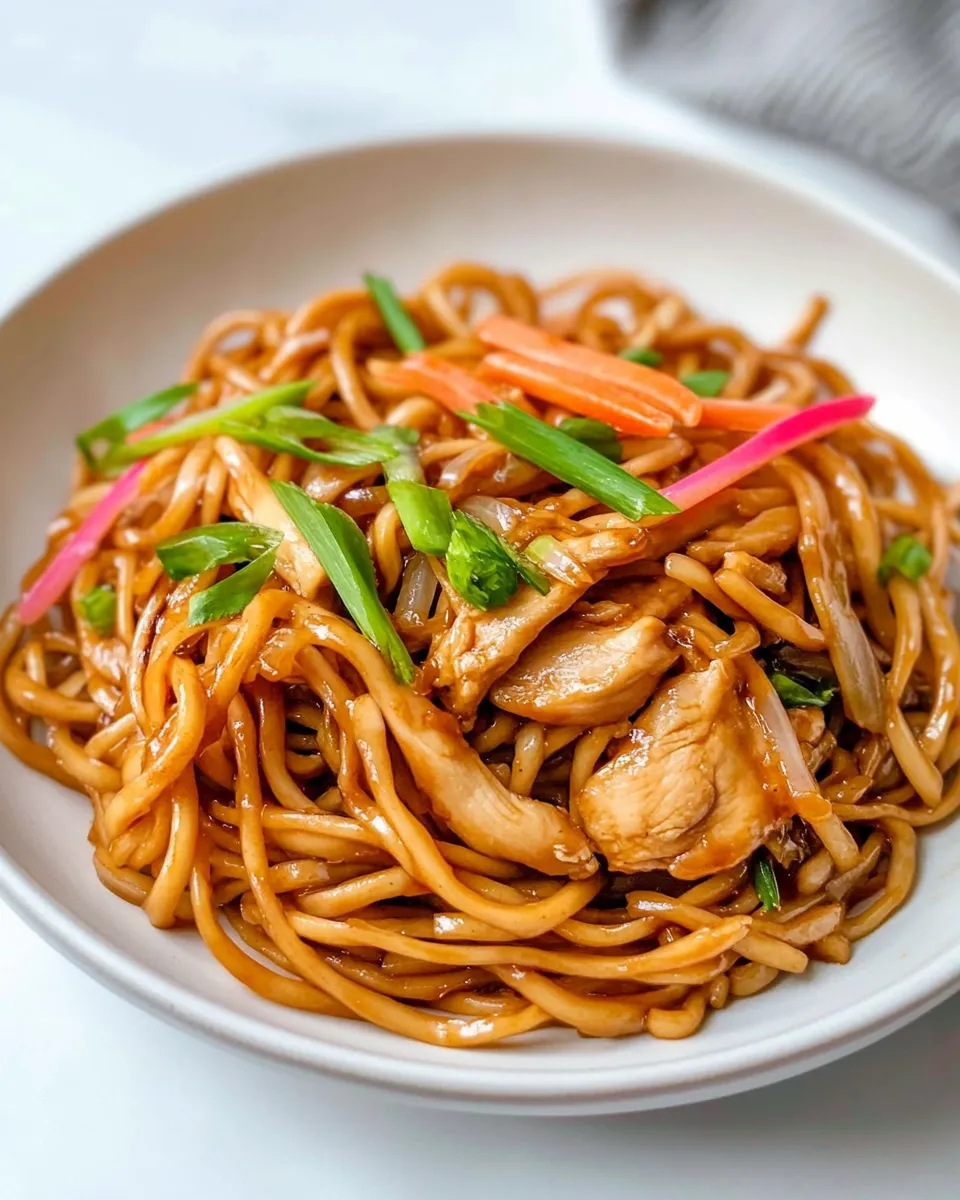
Here are practical swaps grouped by ingredient type so you can adapt the recipe without breaking the flavor balance.
Proteins
- Chicken thighs or breasts — The recipe allows either. Thighs stay juicier; breasts are leaner. Keep pieces thin for fast cooking.
- Other proteins — If you want a non-poultry option, thinly sliced pork or tofu (firm, pressed, and halved) can be used; adjust browning and cook time accordingly.
Noodles & Vegetables
- Yakisoba noodles — If you can’t find fresh yakisoba, use fresh ramen-style noodles or even udon; cook and drain as directed on their package.
- Cabbage — Napa gives a tender finish; green cabbage is firmer and slightly more robust. Both work—shred thinly for even cooking.
Sauces & Flavoring
- Soy sauce — Low-sodium works fine; taste the sauce before adding to the pan and adjust if you prefer saltier.
- Oyster sauce — If you need a vegetarian option, mushroom-based stir-fry sauce can mimic the umami.
- Worcestershire / ketchup — These create signature yakisoba notes; leaving one out will change the profile, but you can slightly increase brown sugar for sweetness if you omit ketchup.
Essential Tools for Success
Good technique needs a few simple tools:
- Large, heavy skillet or wok — Gives enough surface area for browning and tossing noodles without crowding.
- Sharp knife and cutting board — Thin, uniform cuts on chicken and vegetables speed cooking and produce even texture.
- Colander or strainer — For draining noodles well so they don’t water down the sauce.
- Mixing bowl and whisk — For emulsifying the sauce ingredients before adding to the pan.
Avoid These Mistakes
Crowding the pan. If you add all the chicken at once to a too-small pan, it will steam instead of brown. Work in batches if necessary.
Not draining noodles. Excess water dilutes the sauce and prevents it from clinging. Drain and gently separate clumps so the sauce coats evenly.
Overcooking the veggies. Aim for crisp-tender—cook the carrots and cabbage until they’re slightly softened but still have bite. They finish cooking with the noodles and sauce.
Tailor It to Your Diet
Low-sodium: use low-sodium soy sauce and taste before adding additional salt. You can also reduce the Worcestershire slightly.
Vegetarian: replace chicken with firm tofu and use a vegetarian oyster sauce alternative (mushroom stir-fry sauce). Keep the ketchup and Worcestershire decisions in mind—some Worcestershire sauces contain anchovies; use a vegan substitute if needed.
Gluten-free: substitute tamari or a gluten-free soy sauce and make sure your Worcestershire and oyster sauce alternatives are labeled gluten-free. Choose gluten-free noodles if necessary.
Notes from the Test Kitchen
I tested this recipe twice with both chicken breasts and thighs. Thighs tolerated the high heat better and stayed moist after browning; breasts will work if you cut them thin and watch the timing. Browning builds flavor, so don’t rush that step.
When I prepped all vegetables and the sauce before heating the pan, the whole cook time dropped to under 15 minutes. That mise en place step is the difference between rushed and relaxed weekday cooking.
For presentation, I lightly charred some of the vegetables by giving them an extra minute in the hot pan. It adds a layer of smoky flavor that plays nicely against the sweet-savory sauce.
Store, Freeze & Reheat
Store leftovers in an airtight container in the refrigerator for up to 3 days. The noodles will continue to absorb sauce, so they firm up slightly but remain tasty.
Freezing is not ideal because the texture of fresh noodles and vegetables changes on thawing. If you do freeze, use within 1 month and expect a softer texture after reheating.
Reheat gently in a skillet over medium-low heat with a splash of water or a teaspoon of oil to loosen the sauce. Stir frequently until heated through. Microwaving works for a quick fix—cover and heat in short intervals, stirring between bursts to avoid hot spots.
FAQ
- Can I make this ahead? Yes. Cook the components, cool quickly, and store separately if possible. Reheat in a skillet and add a splash of water to revive the sauce.
- What if I only have dried noodles? Use a quick-cooking fresh-style noodle or cook dried noodles according to package instructions, drain well, and toss immediately to separate.
- Can I add more vegetables? Absolutely. Snow peas, bean sprouts, or mushrooms work well. Add ones that cook quickly toward the end so texture stays pleasant.
- How do I keep my chicken from drying out? Cut pieces thin, sear over high heat to develop color, then finish in the pan with the sauce so they don’t overcook.
Next Steps
Try this Chicken Yakisoba once as written, then tweak one variable at a time—try thighs instead of breasts, or add a handful of bean sprouts at the end. Keep notes about what you liked so the next batch is even better.
If you enjoyed the balance of tang and umami here, explore other noodle stir-fries and swap the sauce base for teriyaki or a chile-garlic variation to expand your weeknight repertoire. Enjoy the cooking—and the leftovers.
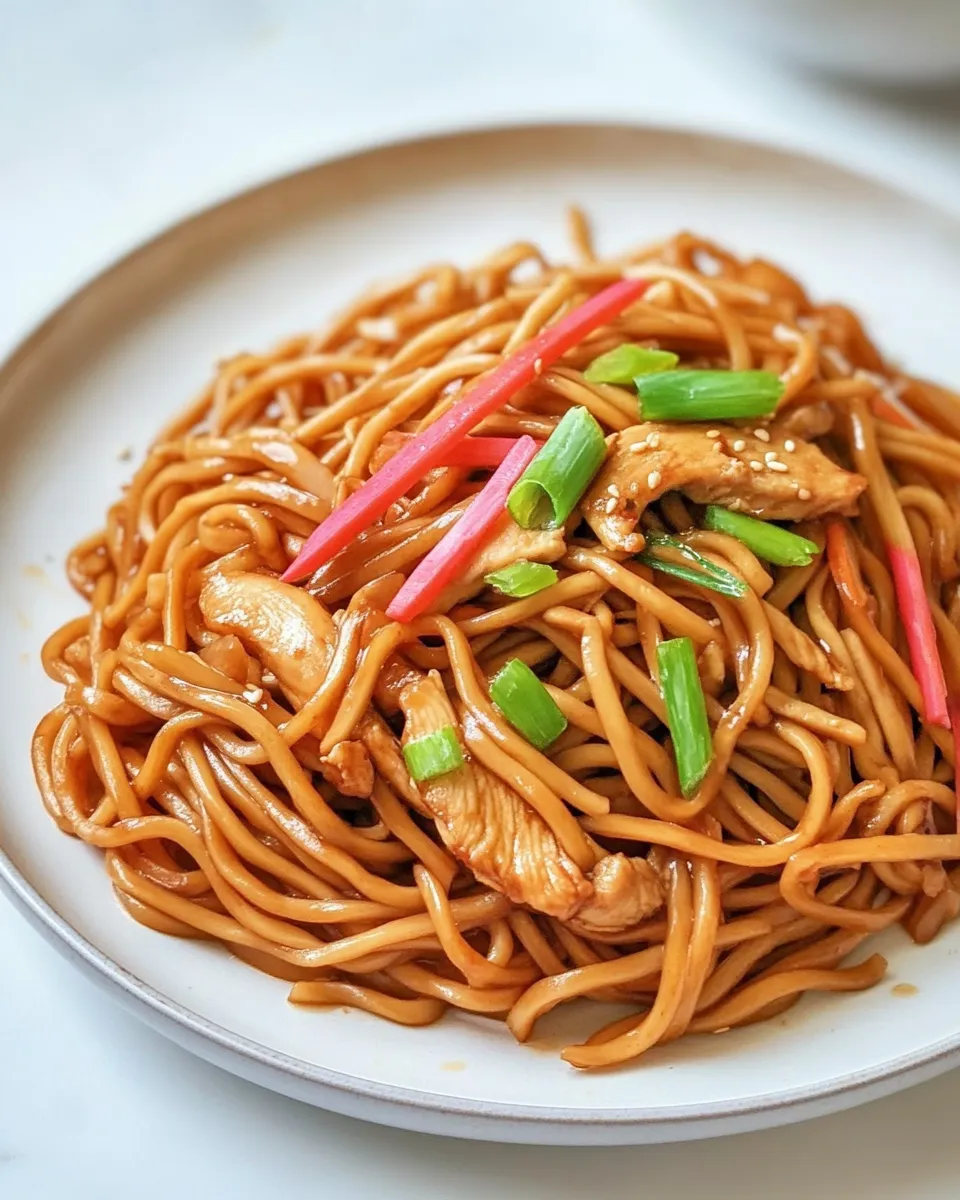
Chicken Yakisoba
Ingredients
Ingredients
- 1/4 cupsoy sauce
- 2 tablespoonsWorcestershire sauce
- 2 tablespoonsketchup
- 1 tablespoonoyster sauce
- 1 tablespoonbrown sugar
- 1/2 teaspoonsesame oil
- 12 ouncesfresh yakisoba noodles
- 1 tablespoongingergrated
- 2 clovesgarlicminced
- 2 tablespoonsvegetable oil
- 1 poundchicken breast or chicken thighscut into thin bite-size pieces
- 2 carrotspeeled and cut into matchsticks
- 1 small onionfinely diced
- 1 red bell pepperthinly sliced
- 2 cupsNapa cabbage or green cabbageshredded
- 2 green onionsthinly sliced for garnish
Instructions
Instructions
- In a small bowl, whisk together 1/4 cup soy sauce, 2 tablespoons Worcestershire sauce, 2 tablespoons ketchup, 1 tablespoon oyster sauce, 1 tablespoon brown sugar, 1/2 teaspoon sesame oil, 1 tablespoon grated ginger, and 2 cloves minced garlic until smooth.
- Heat 1 tablespoon vegetable oil in a large skillet over medium-high heat until hot. Add the 1 pound chicken pieces in a single layer and cook, turning occasionally, until browned and cooked through, about 8–10 minutes. If the pan becomes crowded, cook the chicken in batches, adding the remaining 1 tablespoon vegetable oil as needed and transferring cooked chicken to a plate.
- Meanwhile, cook the 12 ounces fresh yakisoba noodles according to package instructions. Drain well in a colander and separate any clumped noodles.
- If the skillet is dry, add the remaining vegetable oil. Add 2 carrots (peeled and cut into matchsticks), 1 small onion (finely diced), 1 red bell pepper (thinly sliced), and 2 cups shredded Napa or green cabbage. Stir-fry over medium-high heat until the vegetables are crisp-tender, about 3–4 minutes.
- Add the drained noodles, the cooked chicken, and the sauce from step 1 to the skillet. Toss or stir thoroughly to coat everything in the sauce and cook over low to medium-low heat until heated through and the sauce clings to the noodles and ingredients, about 2–3 minutes.
- Remove from heat, garnish with 2 thinly sliced green onions, and serve promptly.