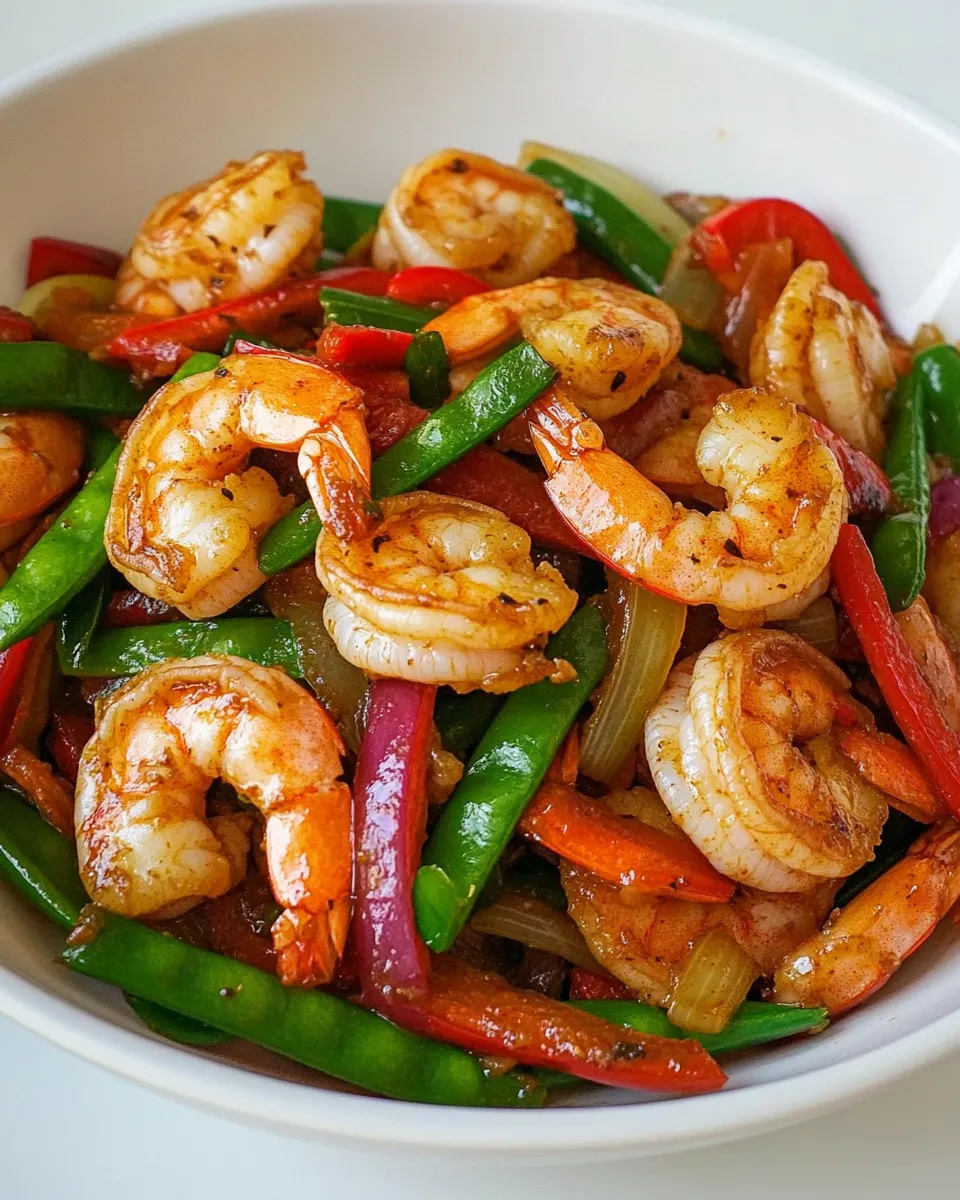
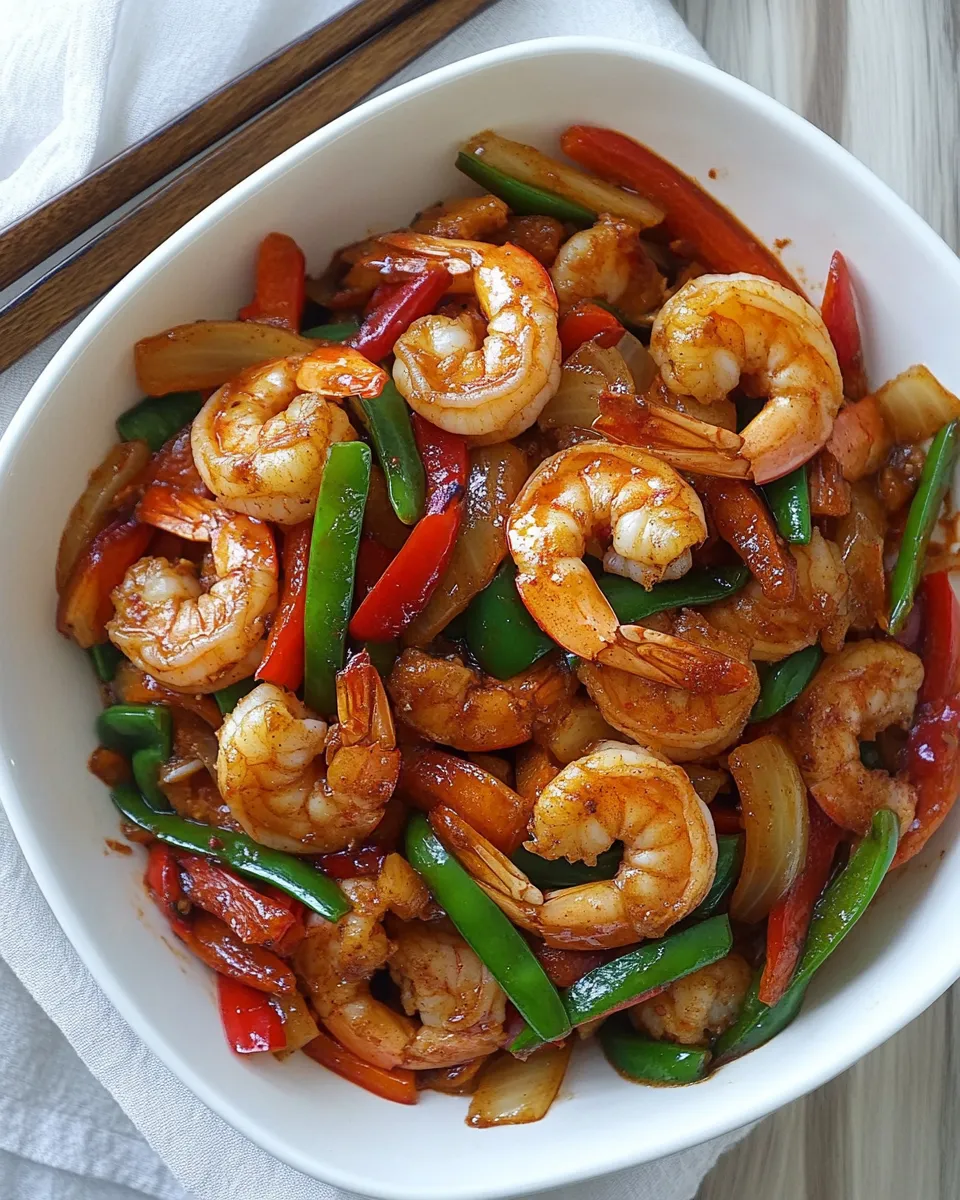
This is my go-to weeknight stir fry: fast, bold, and oddly forgiving. The shrimp cooks in minutes, the sauce comes together in a bowl, and the vegetables stay bright because you blanch them first. I love it when a dinner feels like it came from a restaurant but only takes one pan and a pot.
There’s a little char on the onion, a snap from the peas, and a glossy chili-sauce coating on every shrimp. It hits the right balance of sweet, salty, and spicy without needing a dozen pantry items. You’ll be in and out of the kitchen in about twenty minutes once you’ve prepped.
Below I walk through the exact process, share why this works so reliably, and give useful swaps and make-ahead tips so you can customize it without breaking the balance. Practical, clear, and tested so you can cook with confidence.
Ingredient List
- 2 to 3 cups snap peas, trimmed — blanching locks in color and crunch; trim ends before boiling.
- 2 red bell peppers, cut into strips about 1 inch long — provides sweetness and color; slice roughly the same size as the peas for even bites.
- 3 tbsp sesame oil — the primary cooking fat; gives a toasty aroma and authentic stir-fry flavor.
- 1 large sweet onion, sliced — caramelizes slightly for sweetness and texture contrast.
- 2 cloves garlic, minced — builds savory depth; add after the onion to avoid burning.
- 1 1/2 lbs. raw shrimp, peeled and tails removed — the star protein; use medium-large shrimp for best texture.
- 1 tbsp chili garlic sauce — the heat and flavor anchor; adjust to taste if you prefer milder or hotter.
- 1/4 cup soy sauce — salty backbone and umami; use reduced-sodium if watching salt.
- 1 tsp minced ginger — bright, aromatic lift that cuts through the richness.
- 1 tsp corn starch — thickens the sauce quickly; dissolve fully to avoid lumps.
Cooking (Chili Shrimp Stir Fry): The Process
- Bring a medium pot of water to a boil. Add 2 to 3 cups trimmed snap peas and 2 red bell peppers (cut into ~1-inch strips). Boil 2 to 3 minutes until crisp-tender, then drain and set aside.
- While the vegetables cook, heat a large skillet or wok over medium-high heat.
- Add 3 tablespoons sesame oil to the hot skillet. When the oil is hot and shimmering, add 1 large sweet onion, sliced. Cook, stirring frequently, until the onion is slightly charred and tender, about 5–7 minutes.
- Stir in 2 cloves minced garlic and cook until fragrant, about 30 seconds.
- Add the drained snap peas and red pepper strips to the skillet, stir to combine, and cook for an additional 2 minutes.
- In a small bowl, whisk together 1 tablespoon chili garlic sauce, 1/4 cup soy sauce, 1 teaspoon minced ginger, and 1 teaspoon corn starch until the corn starch is fully dissolved.
- Add 1 1/2 lbs raw shrimp (peeled and tails removed) to the skillet and cook, tossing, until the shrimp begin to turn pink, about 1–2 minutes.
- Pour the sauce into the skillet and toss to coat everything. Continue cooking, stirring, until the shrimp are opaque and cooked through and the sauce has thickened, about 1–2 minutes.
- Remove from heat and serve immediately.
Why You’ll Keep Making It
This dish is consistently fast and satisfying. Prep time is short because the blanch-and-stir method keeps the vegetables bright while reducing skillet cook time. Shrimp cooks in a heartbeat, so the whole meal feels instantaneous without sacrificing texture.
The sauce is simple but powerful: soy sauce for salt and umami, chili garlic sauce for heat and depth, a touch of ginger for brightness, and corn starch to finish everything with a glossy coating. It’s more than the sum of its parts, and you’ll find yourself reaching for it when you want something quick that still feels special.
Texture-Safe Substitutions
- If you need a softer bite: Cook the snap peas and peppers a little longer when blanching, or sauté them slightly longer in the skillet. They’ll lose some snap but will be gentler for sensitive teeth.
- For a vegetarian option: Swap shrimp for firm tofu (press and cube) and add it to the skillet earlier to develop a crust before tossing with sauce.
- If you prefer a meat alternative: Thinly sliced chicken breast or thigh can work; slice small and cook until just opaque. Expect longer cook times than shrimp.
- Lower-chill heat: Reduce the chili garlic sauce to 1/2 tablespoon or omit it and serve sriracha at the table.
Cook’s Kit
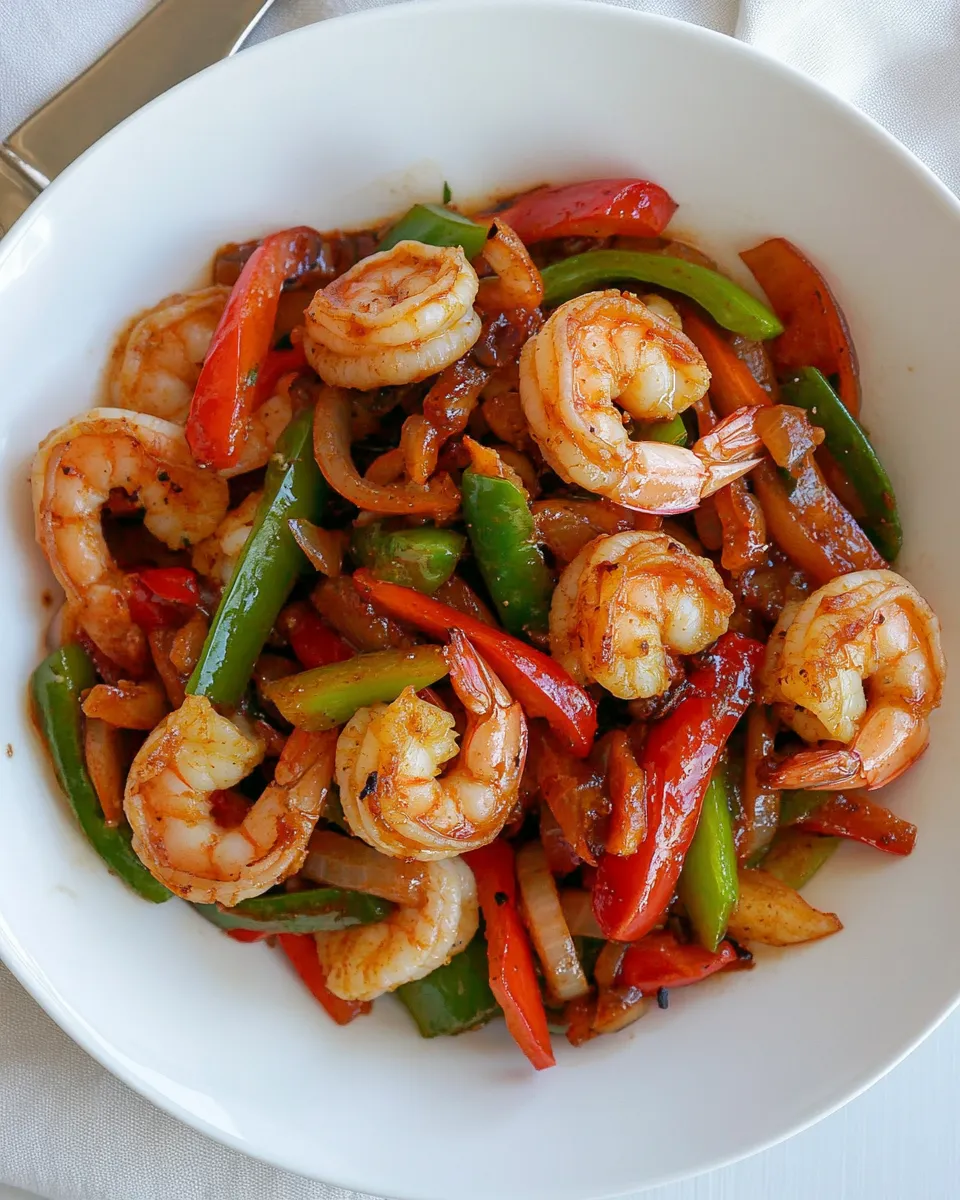
- Large skillet or wok — a wide surface ensures quick, even cooking and easy tossing.
- Medium pot — for blanching the snap peas and peppers.
- Wooden spoon or spatula — for stirring without scraping nonstick surfaces.
- Small bowl and whisk or fork — to mix the sauce and dissolve the corn starch.
- Colander — to drain the blanched vegetables quickly.
Common Errors (and Fixes)
- Overcooked shrimp: Shrimp cooks fast. Fix: Remove shrimp the moment it turns opaque and pink. If you overcook, slice against the grain and serve immediately with a bright squeeze of lemon or lime to add moisture.
- Soggy vegetables: Boiling too long or overcrowding the pan causes limp veggies. Fix: Stick to the 2–3 minute blanch time and make sure the skillet is hot before adding vegetables back in.
- Watery sauce: Not dissolving the corn starch or adding too much liquid will keep the sauce thin. Fix: Whisk corn starch fully into the sauce before adding; if sauce is thin, simmer a minute more to concentrate, or whisk another 1/2 tsp corn starch with a little water and stir in.
- Burnt garlic: Garlic added too early will scorch. Fix: Add garlic after onions are softened and lower the heat briefly if the pan is too hot.
- Flavor too salty: Soy sauce can dominate. Fix: Use low-sodium soy sauce next time or add a splash of water, vinegar, or a pinch of sugar to balance.
Better-for-You Options
You can lighten the dish without losing its character. Swap regular soy sauce for low-sodium soy sauce to cut sodium. Reduce sesame oil to 2 tablespoons and use a neutral oil (like avocado) for higher smoke point if you’re working at very high heat. Increase the vegetable ratio—add more snap peas or toss in thinly sliced broccoli—to boost fiber and volume without many extra calories.
If you’re avoiding corn products, replace the corn starch with arrowroot powder in a 1:1 ratio as a thickener. Keep in mind arrowroot thickens at lower temperatures and yields a slightly clearer sauce.
Chef’s Rationale
There are reasons for each step. Blanching the snap peas and peppers first stops them from overcooking in the pan and preserves color and snap. Searing the onion in sesame oil builds a toasty, savory base that layers flavor before you add the aromatics. Garlic and ginger go in right before the vegetables return so they stay bright and fragrant, not burnt.
The shrimp goes in briefly to just begin changing color; this keeps them tender. Tossing the sauce in at the end does two things: it brings everything together quickly and lets the corn starch hit hot liquid to thicken fast, coating the shrimp and vegetables rather than pooling on the plate. The whole method focuses on timing and temperature more than complex technique, which is why it’s so reliable.
Make Ahead Like a Pro
Prep work is your friend. Trim the snap peas, slice the red peppers and onion, mince the garlic, and measure the sauce ingredients into a small container (hold off on adding the corn starch until right before cooking if you prefer). Store these prepped items in the fridge for up to 24 hours.
Shrimp will keep raw in the refrigerator for up to 24 hours if you buy fresh; otherwise, thawed frozen shrimp are fine. If you want to take an extra step, blanch the vegetables and cool them quickly in an ice bath, then store in the fridge. Reheat briefly in the skillet during the final toss so they regain warmth without overcooking.
FAQ
- Can I use frozen shrimp? Yes. Thaw completely and pat dry before cooking. Wet shrimp will release water and dilute the sauce.
- Is sesame oil necessary? It gives a characteristic flavor. If you don’t have it, use a neutral oil and finish with a teaspoon of toasted sesame oil at the end for aroma.
- How spicy is this? The level depends on your chili garlic sauce. Start with the 1 tablespoon called for; reduce to 1/2 tablespoon if you want milder heat.
- Can I double the recipe? You can, but use a very large skillet or work in batches to avoid overcrowding, which leads to steaming rather than searing.
- What should I serve it with? Steamed jasmine rice, brown rice, or cauliflower rice all work. Noodles are also a great option; toss the cooked noodles in at the end with the sauce so everything is evenly coated.
Ready, Set, Cook
Keep your mise en place tight: ingredients prepped, sauce whisked, pan hot. Work fast once the shrimp hits the skillet and trust the timing—2 minutes here, 2 minutes there. Plate immediately so the sauce stays glossy and the shrimp stay tender. A final squeeze of lime or a sprinkle of sliced scallions brightens everything and makes the dish feel finished.
Make it tonight. The steps are straightforward, the payoff is high, and once you’ve made it a couple of times you’ll instinctively adjust heat and timing to your taste. That’s when a recipe becomes your recipe—and this one is made to be customized.
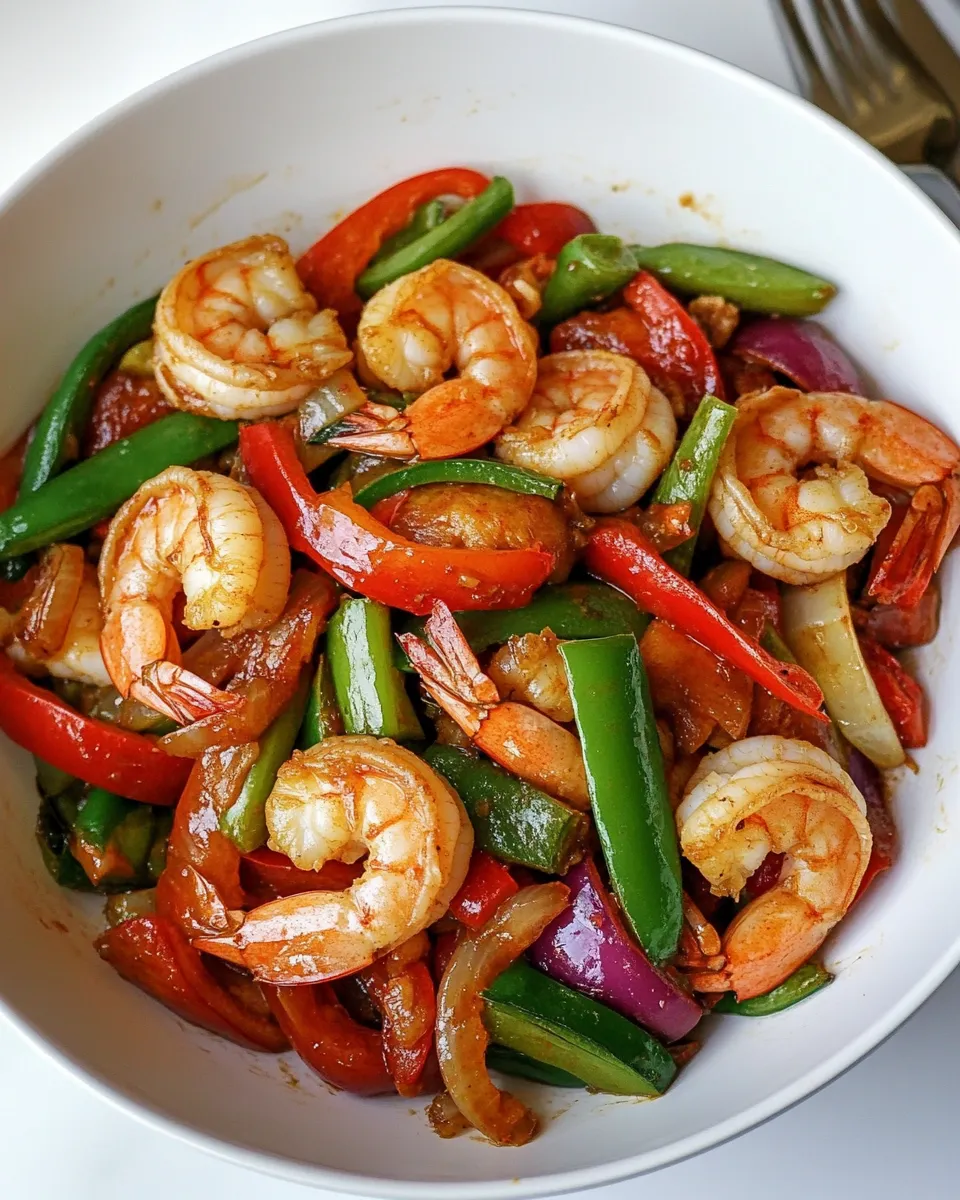
Chili Shrimp Stir Fry
Equipment
- Medium pot
- Large Skillet or Wok
- Small Bowl
Ingredients
Ingredients
- 2 to 3 cupssnap peas trimmed
- 2 red bell peppers cut into strips about 1 inch long
- 3 tbspsesame oil
- 1 largesweet onion sliced
- 2 clovesgarlic minced
- 1 1/2 lbs.raw shrimp peeled and tails removed
- 1 tbspchili garlic sauce
- 1/4 cupsoy sauce
- 1 tspminced ginger
- 1 tspcorn starch
Instructions
Instructions
- Bring a medium pot of water to a boil. Add 2 to 3 cups trimmed snap peas and 2 red bell peppers (cut into ~1-inch strips). Boil 2 to 3 minutes until crisp-tender, then drain and set aside.
- While the vegetables cook, heat a large skillet or wok over medium-high heat.
- Add 3 tablespoons sesame oil to the hot skillet. When the oil is hot and shimmering, add 1 large sweet onion, sliced. Cook, stirring frequently, until the onion is slightly charred and tender, about 5–7 minutes.
- Stir in 2 cloves minced garlic and cook until fragrant, about 30 seconds.
- Add the drained snap peas and red pepper strips to the skillet, stir to combine, and cook for an additional 2 minutes.
- In a small bowl, whisk together 1 tablespoon chili garlic sauce, 1/4 cup soy sauce, 1 teaspoon minced ginger, and 1 teaspoon corn starch until the corn starch is fully dissolved.
- Add 1 1/2 lbs raw shrimp (peeled and tails removed) to the skillet and cook, tossing, until the shrimp begin to turn pink, about 1–2 minutes.
- Pour the sauce into the skillet and toss to coat everything. Continue cooking, stirring, until the shrimp are opaque and cooked through and the sauce has thickened, about 1–2 minutes.
- Remove from heat and serve immediately.